Green Begins With You

Meg has a J.D. in Urban, Land Use and Environmental Law. She focuses on maintaining the balance of community and environmental health, healthy lifestyles, and encouraging sustainable living.

There are so many different ways to be “green” nowadays. Being green can mean anything from reducing the miles you drive in your car every day to growing your own food. For many people, recycling is the first big step into reducing waste and helping the environment.

Most people are familiar with the phrase, “Reduce, Reuse, Recycle.” The idea is that reducing waste is the most important step. Reusing items also helps reduce waste but still allows for consumption. And then comes recycling. If you are unable to avoid consuming products that will cause waste, it is important to consume products that are recyclable (or at least the packaging is recyclable). While recycling still has a higher carbon footprint that reducing or reusing, it at least prevents waste from entering our already overflowing landfills and allows us to reuse those materials in another form.
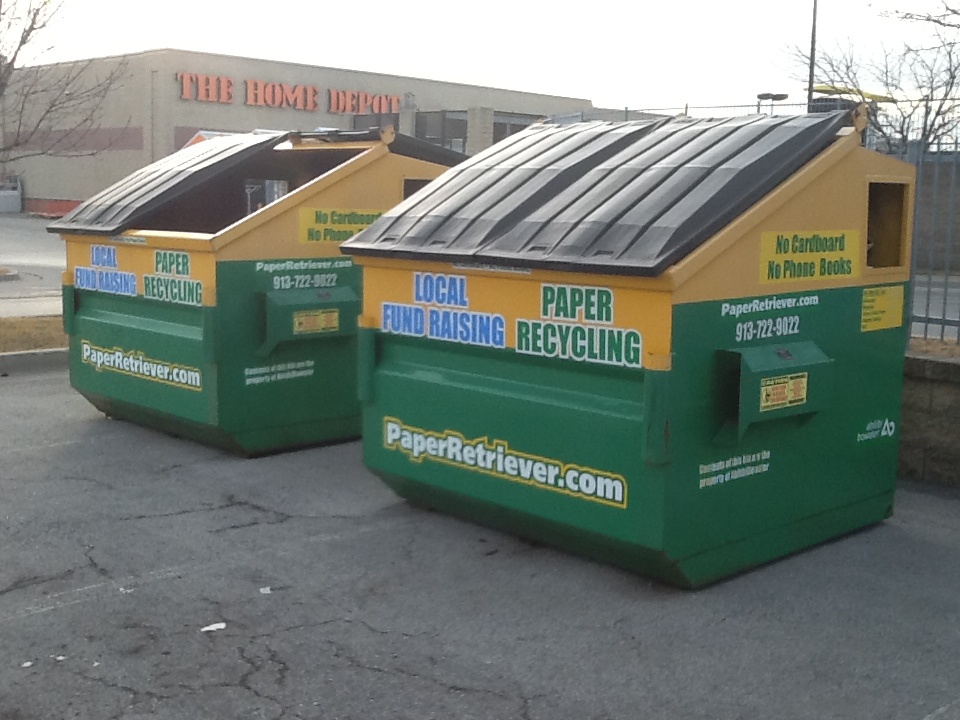

Recycling is easy. In most places, it’s ridiculously easy. Many refuse companies like Deffenbaugh, Unicycler, etc. offer curbside pick-up of both trash and recycling. In Petaluma (and other parts of California), our waste management service also provides a green waste bin for compost and yard waste. Between recycling and compost, we rarely have more than a single bag of trash in the week. Often times, we don’t even put out the trash bin every week because there’s hardly anything to put out.

Green bins can be found all over the place. In parks, airports, office buildings. Where do you see green bins? We’d love to know!

Hands Around Shollenberger: A day to demonstrate commitment to a local gem

Meg has a J.D. in Urban, Land Use and Environmental Law. She focuses on maintaining the balance of community and environmental health, healthy lifestyles, and encouraging sustainable living.

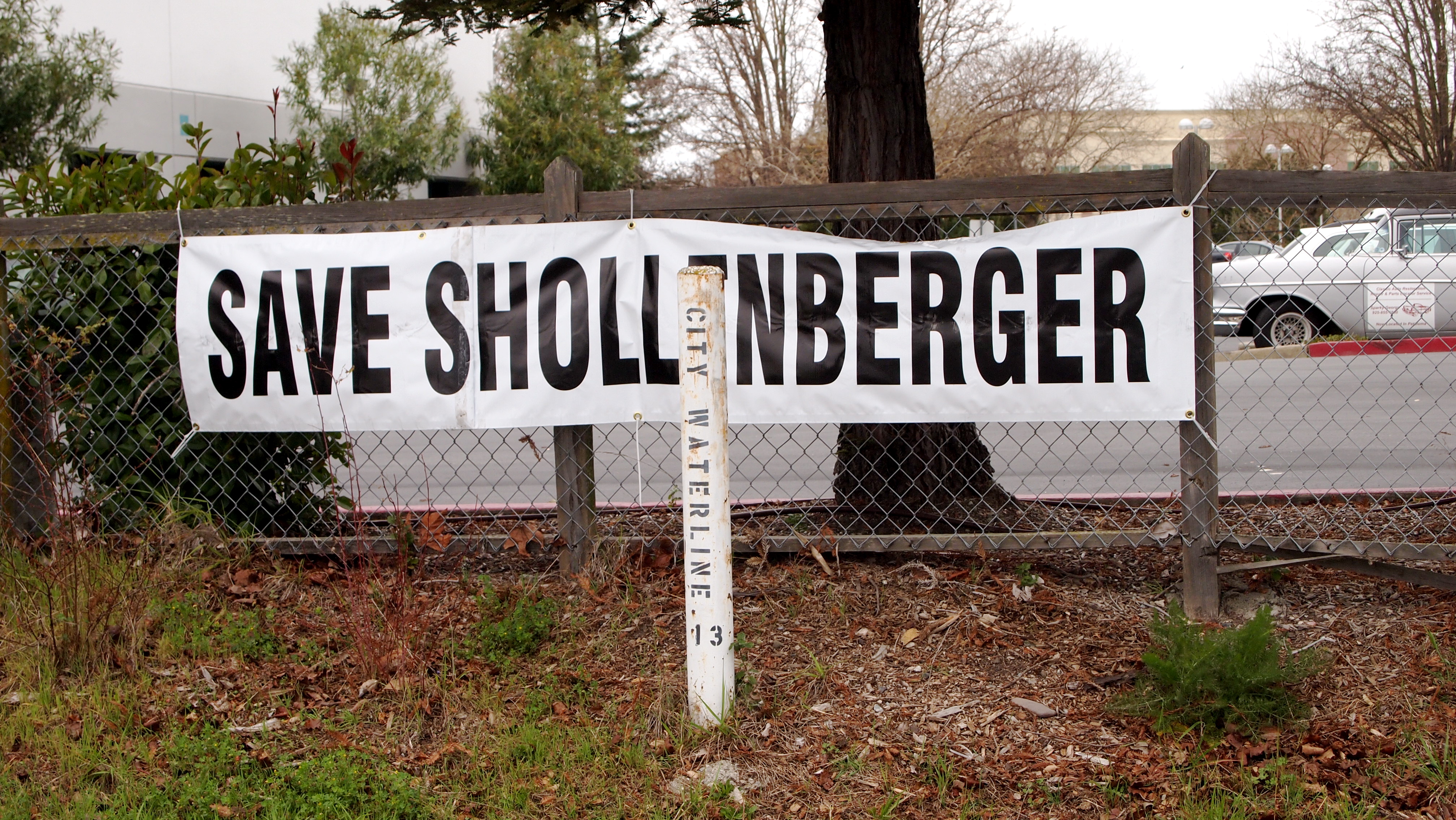
Shollenberger Park is located on the south side of Petaluma. It also sits on the east side of the Petaluma River. This wonderful park is home to a huge variety of birds, many of which do not have an equally safe environment close by. The habitat created by the wetlands and the surrounding park is ideal for both birds and bird watchers alike, while also creating a beautiful sanctuary for walkers, runners, families and their canine companions. My husband and I have brought Lily and Cousteau here several times.

Though I am new to Petaluma, I have quickly become aware of the dedication to preserving local gems such as Shollenberger Park. Many of them fall under siege from developers and changing times, but the support from the community to protect these areas is quite amazing. Shollenberger in particular is at risk of having a new neighbor, an asphalt plant, which would be located directly across the river. Environmentalists are concerned that this addition would compromise the integrity of the wetlands and surrounding habitats, as well as destroying valuable resources for local wildlife.

As a demonstration of their commitment to protecting the park, over 1300 people gathered at Shollenberger on Sunday for “Hands Around Shollenberger.” Supporters wore red, as a Valentine’s Day dedication to the park, and stood hand to hand all the way around the two-mile trail. It was an amazing site to see. Neither the cold nor the wind could keep these hearty souls away. At 3:00pm, a plane flew overhead to take an aerial photograph of the event. I am excited to see the results. It truly was inspiring to see the dedication from local citizens to preserving Shollenberger Park.

If you are interested in learning more about the effort to protect Shollenberger, I recommend visiting the Save Shollenberger Website here.

Made in the USA Series: The U.S. auto industry gets a well-earned nod during the Super Bowl

It has been a tumultuous 4 years in the automotive industry. The bankruptcies of General Motors and Chrysler as well as the near bankruptcy of Ford Motor Company shook Detroit to it’s core. Stock prices plummeted as we watched what appeared to be the end of Detroit’s influence in the industry. It was a roller coaster ride. But, that was then. This is now.

Yesterday was Super Bowl Sunday. It seems that everyone watched the game. Even people who don’t care about football watch the ads. I loved the Volkswagen ad focused on a dog’s motivation to become physically fit, and was bemused by Chevrolet’s spoof of the Mayan calendar’s 2012 doomsday predictions. But it was Clint Eastwood, in Chrysler’s ad, “Halftime in America,” that inspired us to envision a new era of national rebirth.

http://youtu.be/_PE5V4Uzobc

Released before the Super Bowl was Chrysler’s new advertising campaign, “Imported From Detroit.” The message of the ads is that we don’t “have to cross an ocean to obtain luxury.” But is this message accurate? We did some checking and found that there seems to be a rebirth of the U.S. automobile industry. In addition to manufacturing plants throughout the world, foreign and domestic automobile manufacturers have significant operations in the U.S. Here are just some of the companies with manufacturing and/or assembly operations in the United States—

Domestic Companies 

Ford Motor Company—Ford, Lincoln and Mercury in Michigan; Missouri; Illinois, Kentucky; and Minnesota.

General Motors–Buick in Michigan; Cadillac in Michigan and Texas; Chevrolet in Michigan, Missouri, Ohio, Kansas, Kentucky, Indiana and Louisiana.

Chrysler—Chryslers in Michigan; Dodge in Michigan and Ohio; and Jeep in Detroit, Ohio and Illinois. Chrysler announced on February 3, 2012, that it will add 1,800 jobs at its plant in Belvidere, Illinois, where it assembles the Dodge Dart, Jeep Patriot and Jeep Compass.

Foreign Companies 

Honda—Ohio, Indiana and Alabama.

Mercedes Benz—Alabama.

BMW—South Carolina.

Infiniti—Mississippi.

Acura—Ohio.

Suzuki—Georgia and Tennessee.

Volkswagen—Tennessee. Its new plant in Tennessee employs 2000 workers and was recently recognized for its commitment to environmentally responsible manufacturing.

There is a lot to celebrate for the U.S. economy in the revitalization of this industry. We had a rough “first half” in our economy, but we are rebuilding. The economy is growing. And we are going to have a much better “second half.”

Made in the USA Series: Clothing. What to do when there is no “Made in the USA” Choice?

Meg and I are pretty careful with our shopping choices. So we took the challenge and rummaged through our closets.  Almost none of our clothing is made in the U.S.A.  More than 50 % of my clothes are made in China with a smattering from SE Asia, Mexico and countries I have never heard of before.  Only a few things from St. John Knit, Eileen Fisher and Talbot’s, plus some really old clothes were made in the U.S. Meg’s clothes are primarily from China and SE Asia, with a few things made in Italy. The occasional “off” brand will be made in the U.S., but otherwise, the majority of our closets are filled with shirts, sweaters, shoes, bags, belts, etc. that have “Made in China” stamped somewhere.

So the issue for today is what to do when you shop for clothing or other items not made in the U.S.A.  It is really important to understand that all clothing made outside of the U.S.A is not the same.  One of the most important terms we had never heard about before this week was SA8000, a tool to implement UN conventions already in place. It has been described as the “first universal standard for ethical sourcing”.   Designed to advance human rights among workers on a global basis, it is a voluntary program based on setting standard for businesses. It was developed, and is overseen, by Social Accountability International, a non-profit organization.  It accredits and monitors organizations for the purpose of setting standards for ethical working conditions. SA8000 standards include:

1)    minimum age 15; 14 in developing countries;

2)    prohibits forced labor;

3)    provides safe and healthy work environment, access to bathrooms and potable water;

4)    respects the right of workers to form and join trade unions and bargain collectively;

5)    prohibits discrimination based on race, caste, origin, religion, disability, gender, sexual orientation, union or political affiliation, or age; prohibits sexual harassment;

6)    prohibits corporal punishment,  mental or physical coercion or verbal abuse;

7)    limits work to 48 hours per week with overtime at premium wages up to 12 hours per week;

8)    requires living wage, no disciplinary deductions from wages.;

9)    requires companies that want to gain and maintain certification to integrate the standards of SA8000 into their management systems and practices.

Worldwide, as of 2010, companies in 62 countries were participating in the SA8000 certification process.  These companies employ more than 1.3 million people in SA8000 certified facilities, in countries such as China, India, Turkey, Viet Nam and Brazil.  Many U.S. companies are committed to contracting only with suppliers who are SA8000 certified, including such companies as Levi Strauss, Nike and Eileen Fisher.  We are struggling to find a list of U.S. companies that support SA8000, so if you can’t identify immediately whether a company is in compliance, we encourage you to ask.  We sure will!

UPDATE on 2/10/12: If you would like to see a list of Member Companies and Brands, please visit the following link:

Member Companies and Brands for Social Accountability Certifications

What is the United Nations Global Compact and why does it matter?

Meg has a J.D. in Urban, Land Use and Environmental Law. She focuses on maintaining the balance of community and environmental health, healthy lifestyles, and encouraging sustainable living.

Anyone who cares about global competition and free trade, will also care about the United Nations Global Compact. Like SA 8000, a global social accountability standard for decent working conditions, it focuses on the areas of human rights, labour, the environment and anti-corruption.  There are many prominent U.S. businesses that have committed to the principles of the compact: Levi Strauss, Coca Cola, PepsiCo, Price Waterhouse auditors and Nike are all participants.

Each business that joins the UN Global Compact is expected to embrace the 10 fundamental principles of the Compact, to the best of their ability and within their realm of influence. As listed on the organization’s website, here are the 10 principles:

Human Rights:

1)             support and respect the protection of internationally proclaimed human rights; and

2)             protect against human rights abuses.

Labor:

3)             uphold the freedom of association and the right to collective bargaining

4)             the elimination of all forms of forced and compulsory labour;

5)             the effective abolition of child labour; and

6)             the elimination of discrimination in employment and occupation.

Environment:

7)             support a precautionary approach to environmental challenges;

8)             undertake initiatives to promote greater environmental responsibility; and

9)             encourage the development and diffusion of environmentally friendly technologies.

Anti-Corruption:

10)          work against all forms of corruption, including extortion and bribery.

The Compact is designed as a forum for businesses globally to collaborate within a practical framework to exchange best practices and facilitate the development of sustainable business methods. According to its website, www.unglobalcompact.org, the Compact has over 8700 corporate participants in 130 countries. With this kind of participation, there is certainly hope that businesses can start working together on a global level to infuse human rights, labor, environment, and anti-corruption ideals at a global level, and that those ideals can have an impact locally.

It should not surprise us that companies that take to heart the provisions of SA 8000 are often committed to a broader range of compacts focused on global equity, protection of the environment and protecting our natural resources.  We believe the principles of the UN Global Compact and SA 8000 are important in “shifting the balance” toward a healthier planet.

Made in USA Series: The Grocery Store

Meg has a J.D. in Urban, Land Use and Environmental Law. She focuses on maintaining the balance of community and environmental health, healthy lifestyles, and encouraging sustainable living.

I have always made an effort to buy local. Usually this has translated into frequenting the local farmers’ market or perhaps stopping by a roadside stand. However, I still go to the grocery store for most of my food items. This is where the challenge begins.

The bulk of my grocery items tend to be fresh produce. I know a lot of people buy frozen veggies and canned goods, but something about fresh, crunchy fruits and vegetables just makes me happy. They smell better, taste better, and overall make me feel better. But does it matter where exactly they come from? I think so. Not necessarily for health reasons, though many would say this is a factor, but also for environmental and economic reasons. Buying locally grown produce helps support local farms (economic benefit) as well as increased sustainability (environmental benefit).

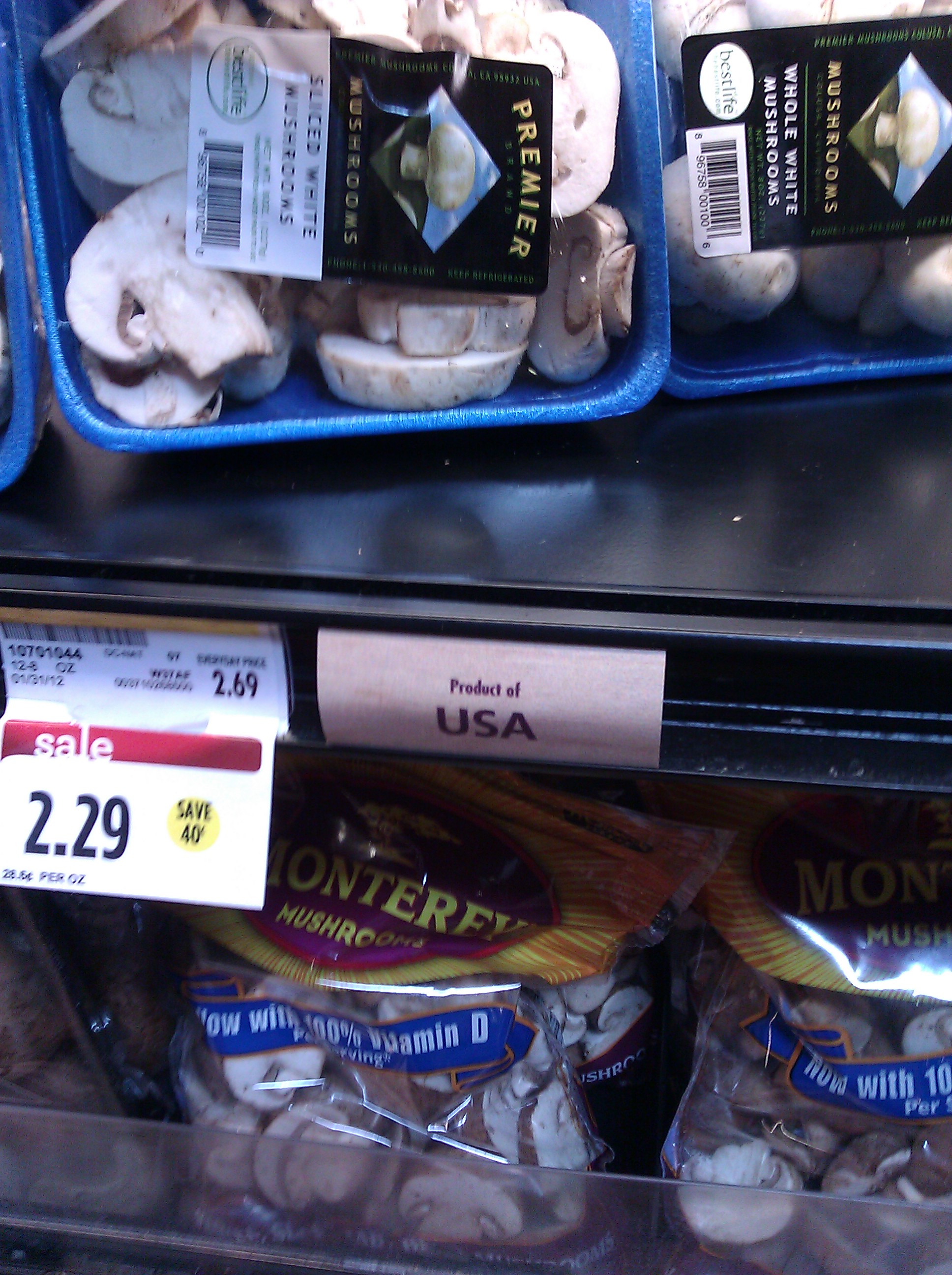
If you’re standing in the grocery store and you want to buy tomatoes, as I was the other day, most of the labels are likely to say “Product of Mexico” on them. (Please note, I have nothing against Mexico, or any other country where many things are grown, I just think it’s important to support U.S. farms and lower our carbon footprint by buying in the U.S.). However, if you search through the different tomato varieties, you can find some that say “Product of USA.” They may cost the same. The Mexico tomatoes might be a little cheaper. But think about the cost of getting those Mexico tomatoes into your grocery store compared to the USA tomatoes. It took more gasoline, they’ve likely traveled at least a day longer and are therefore not as fresh, and they’re not products of U.S. farms. It’s like outsourcing our call centers to India. We’ve outsourced our tomatoes to Mexico. But why? We certainly don’t need to if we can produce tomatoes here in the U.S. Well, I pose that it’s because when faced with the decision of which tomatoes to buy at the store, many people will still buy the tomatoes produced in Mexico. It’s not that they mean to choose between Mexico and USA, they just don’t think about it.

So here is my challenge to you, a challenge I am currently taking on myself. Try to buy fresh produce that says “Product of USA” on the sticker. It’s not as difficult as you might think. Sure, there are a few things you might sacrifice. Last week I couldn’t find any grapes from the U.S., nor could I find local bananas. But everything else has a U.S. grown version if you just take the time to look. Tomatoes, peppers, all kinds of lettuce, fennel, apples, oranges, berries…the list goes on.

Please feel free to share what kinds of produce you can find with a USA sticker, and what produce you can’t find. It will be interesting to see what kinds of U.S. grown fruits and vegetables are more easily available around the country.

To Kill a Mockingbird Re-released 1-31-12

One of my favorite gifts is an autographed copy of the 35th anniversary edition of the book, To Kill a Mockingbird, first published in 1960.  In the Pulitzer Prize winning novel authored by Harper Lee, she writes about racial injustice, human tragedy and the impact individuals can have through triumph and failure.  It is studied in high schools, college class rooms and law schools.  It teaches us about justice, integrity and the best of family values.  It motivates us to be better people, to fight against injustice and to respect and value diversity.

 My favorite quote from the book is when Atticus gives advice to Scout:

           First of all…if you can learn a simple trick, Scout, you’ll get along a lot better with all kinds of folks.  You never really understand a person until you consider things from his point of view…until you climb into his skin and walk around in it.

Gregory Peck starred in the 1962 movie by the same name.  He portrays Atticus Finch, a small town lawyer, who defends an African-American man wrongfully accused of rape.  His daughter, Scout, is
portrayed by Mary Baddham, who narrates the story through the eyes of a child.  The movie was nominated for 8 academy awards.  Gregory Peck won an Oscar for Best Actor.  He was later honored with the Presidential Medal of Freedom for his lifetime humanitarian efforts.  Perhaps, like many others, he was motivated by the character he portrayed.

The movie is being rereleased today, the 50th anniversary of the movie.  It has been digitally remastered and restored.  Perhaps it is time for all of us to reread the book or watch the movie as a reminder of committing ourselves to being the best we can be.

Chasing the Mayflower

I am fascinated by what I call “my tribe.”  Meg and I are part of a great family and I have always wanted to know more about it: countries of origin, religious affiliations, and all the factors that influence a family through the generations.  When mom and dad moved out of our long time family home, I came upon family records and photographs about which I had no previous knowledge.  Among the records was a copy of my grandmother’s family tree tracing her Lewis family back to Westerly, Rhode Island in the late 1660’s.  I began researching the Lewis and Mesle families and was hooked.  My brother-in-law gave me a subscription to a genealogy research site for Christmas that fed my interest.

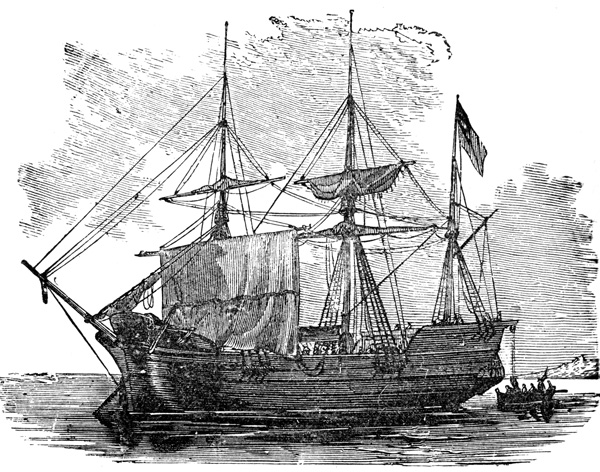
Grandmom considered joining the Daughters of the American Revolution (DAR), but disagreed with its refusal to allow Marion Anderson sing in Constitution Hall in 1939.  Knowing we had ancestors who served in the revolutionary army spurred my interest even further.  Many months of painstaking research established in my mind the accuracy of grandmom’s family tree and helped me locate proof that Elnathan Terry had served in the Revolution.  Researching his family led me to Sprague Project, a wonderful internet source, Sprague Project Database. Through the Sprague Project, I traced Elnathan Terry back to Thomas Rogers, John Rogers, Richard Warren and Francis Cooke.  The book, Revolutionary War Veterans, Chenango Co. NY, provided significant information, confirmed Elnathan’s service and  confirmed his relationship to my Lewis family.

With evidence in hand sufficient to establish for me the Mayflower connection, I decided to apply for membership in the Mayflower Society, one of the many historical organizations focused on the Mayflower and its passengers.  The proof necessary to join the society is far more rigorous than the proof necessary to satisfy me.  (Once I found my great-grandfather, Horatio Lewis was buried in the family plot with Elnathan Terry, my questions were answered).  But it required 6 months or more contacting libraries, genealogy societies and researching on-line records to find the proof that should satisfy the Mayflower Society.  Some members of the family were easy to trace, because of grandmom’s family tree, but others eluded proof.  One ancestor, Freeborn Lewis, who married Esther Terry, died very young, leaving his widow and their children.  She married again and moved to Iowa, where she died.  Records related to Freeborn and Esther and their son, Lorenzo Lewis, were the hardest to trace.  The last piece of the proof came from Myra Shattuck’s Bible, located in the Guernsey Memorial Library in Norwich, NY.

Six years after beginning my family research, I am ready to finally submit my Mayflower Society application.  Relying heavily on Mayflower histories, DAR records, family records, and the wonderful assistance of staff in genealogical libraries, I have found and copied my records, completed the Mayflower Society application and am ready to submit it.  Wish me luck.

For those interested in genealogy, my direct lineage, through Rogers’ Mayflower family to the present, in chronological order: Thomas Rogers, John Rogers, Hanna Rogers, Benjamin Terry, Benjamin Terry, Private Elnathan Terry, (who married Mary Kenyon, a Mayflower descendant from the Warren/Cooke families), Esther Terry, Lorenzo Lewis, Horatio Daniel Lewis, Mary Ocelia Lewis, Frank Carl Mesle, Catharine Ann Mesle, Meghan Ann (Meg) McCollister.

Walking in Hilton Head’s Maritime Forest

Hilton Head Island, S.C. is a barrier island protecting South Carolina’s coast from the ocean.  It has oak and pine forests, salty marshes and sandy beaches.  It is rich with alligators, snakes, swamp lands and golf courses.  It is amazingly beautiful.

I was fortunate to have meetings on Hilton Head Island, S.C. with some of my favorite people.  We stayed at The  Inn at Harbour Town, a wonder destination by almost any standard.  But you can’t visit this island without spending some time either playing golf, biking or walking.  I am a walker.

Sea Pines Development, where our inn is located, is a planned eco-friendly development designed and developed by Charles and Joseph Fraser.  Every land owner is required to sign low impact covenants agreeing to protect the land and the environment. It was further designed to protect sea views and limit the removal of trees.  The original plan reserved  one-fourth of the land for recreation including lands developed with picnic areas, wildlife areas, and biking and hiking trails.

I was fortunate to take a tour of the nature trail.  Our guide, Rita Kerman, is a “Master Naturalist.”  She generously shared with us her knowledge of, and passion for, this special area.  She explained that we were walking in a maritime forest, distinguished because the trees and plants are compatible with the salty soil adjacent to the ocean.  She showed us sweet gum trees ringed with rows of small holes drilled into the bark by yellow-bellied sap sucker woodpeckers in search of the sweet sap. She explained that after the woodpeckers drill these holes, the sweet, sticky gum attracts and traps insects that then  become food for other birds. She further explained that the sweet gum balls are a source of shikimic acid, an ingredient in a vaccine for avian flu. This has been described as saving the world one sweet gum ball at a time!

We learned about red bay ambrosia beetles that are destroying red bay and wax myrtle trees, and are now attacking avocado trees.  The potential loss of trees seems comparable to the mass destruction of Dutch Elm trees in the Mid-West.

As we walked in the forest and immediately adjacent to ponds and man-made canals, we were reminded that alligators were nearby in the murky waters, where they live and breed in close proximity to human populations.

Near the end of our journey we came across a sign posted on the trail with a lovely poem that ended with these words, “Spend an hour with the earth and her nature and I promise that you”ll surely see, the truest meaning of the season…the one Best Christmas present you could receive.”

A beautiful walk it was, indeed.

SOPA and what it means for online content

Meg has a J.D. in Urban, Land Use and Environmental Law. She focuses on maintaining the balance of community and environmental health, healthy lifestyles, and encouraging sustainable living.

There is a bill in Congress right now called Stop Online Piracy Act (SOPA). It aims to stop websites that facilitate copyright or intellectual property infringement by allowing the Department of Justice to seek court orders against those websites.

In response to the bill, Google and Wikipedia are on “blackout” today. If you go to Google.com, you will see the image blacked out. If you click on the blacked out image, you will be directed to a page that says, “End Piracy, Not Liberty.” Wikipedia’s homepage reads, “Imagine a world without free knowledge.”

The bill is not designed to put the user at risk of facing charges. Instead, it would target the websites, many of them overseas, that facilitate the downloading of illegal content. The “powers that be” in the internet industry are opposed to the bills because they say it would mean Congress would regulate what content was available to users, therefore limiting free speech. Proponents of the bill say it will end piracy and prevent content providers from losing billions of dollars in content purchases.

In an interview with a CNN correspondent in Silicon Valley, there was a discussion about whether or not this bill is the best way to accomplish the goal of ending piracy. One example was given of how people used to download music illegally through sites like Napster, then iTunes started selling music and all of a sudden people were buying music again. The suggestion was that Hollywood should innovate regarding the marketing and sale of content, as opposed to increasing web censorship through legislation. CNN also fully disclosed that its parent company, Time Warner Cable, is supporting the bill.

This is an interesting issue that seems to focus on who should be in charge of our access to the internet and web content. I am curious to see how discussions go in Congress and whether the bill passes.