A Walk in the Park: Shollenberger Park in Petaluma

Meg has a J.D. in Urban, Land Use and Environmental Law. She focuses on maintaining the balance of community and environmental health, healthy lifestyles, and encouraging sustainable living.

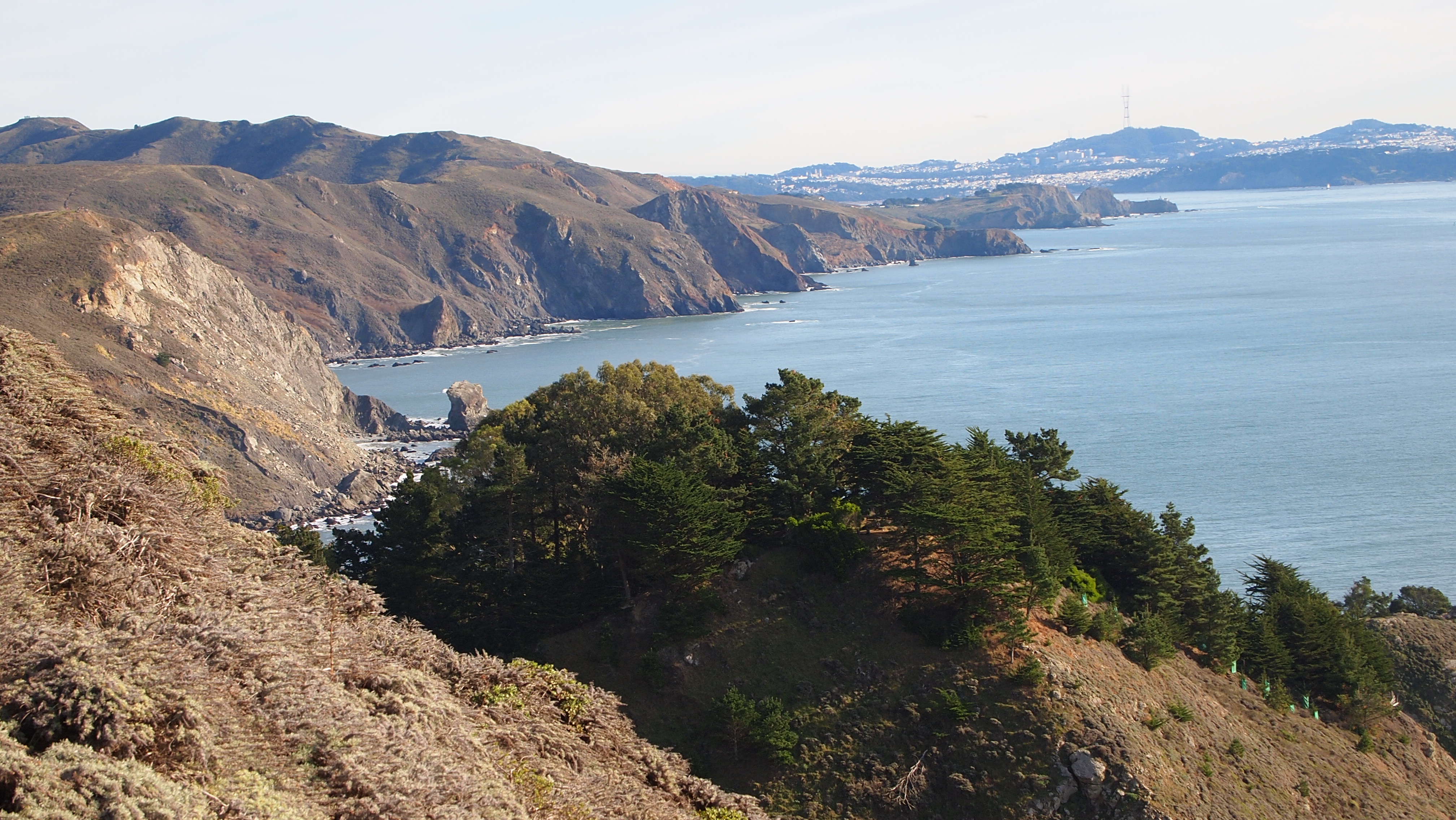
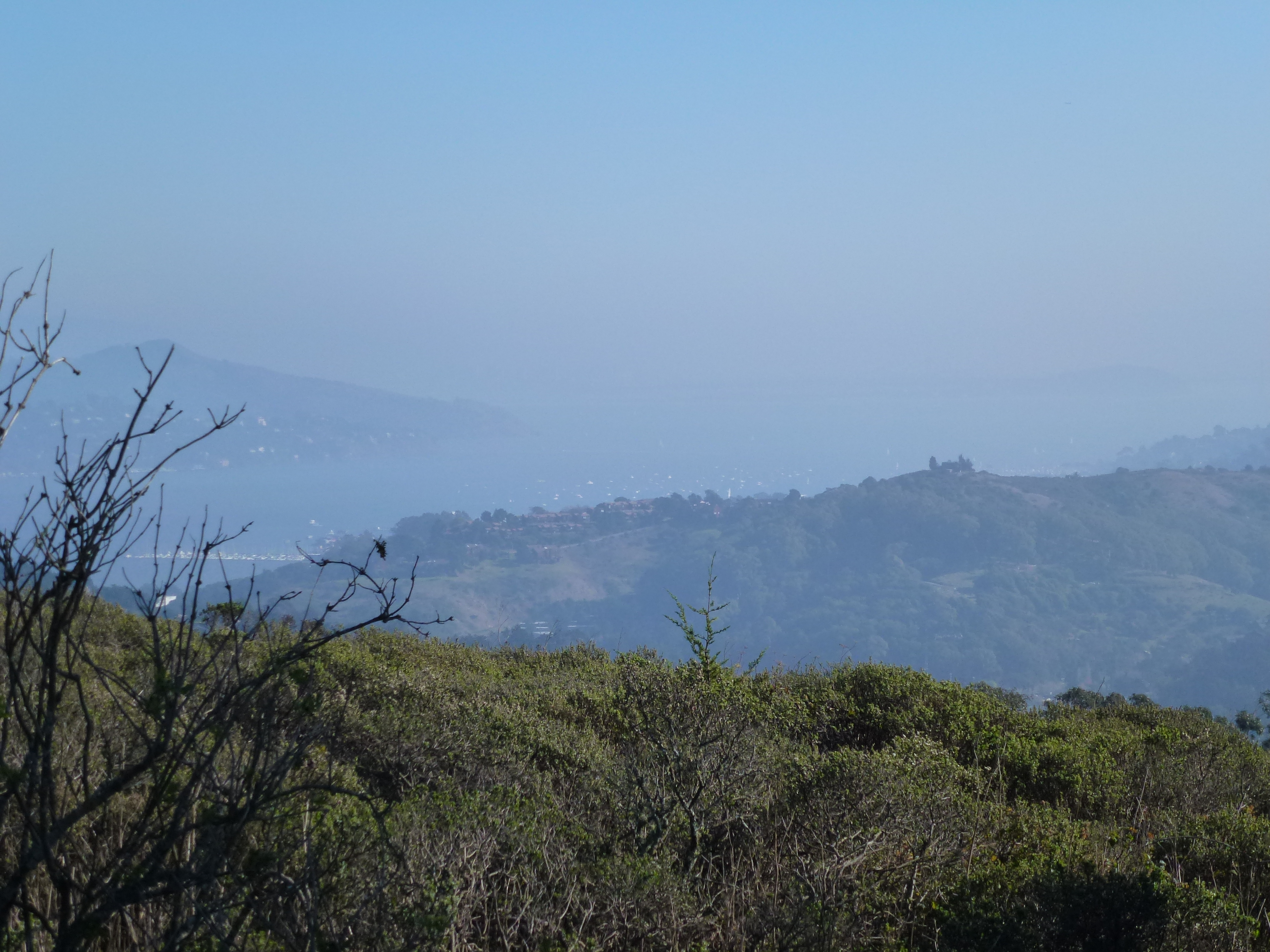
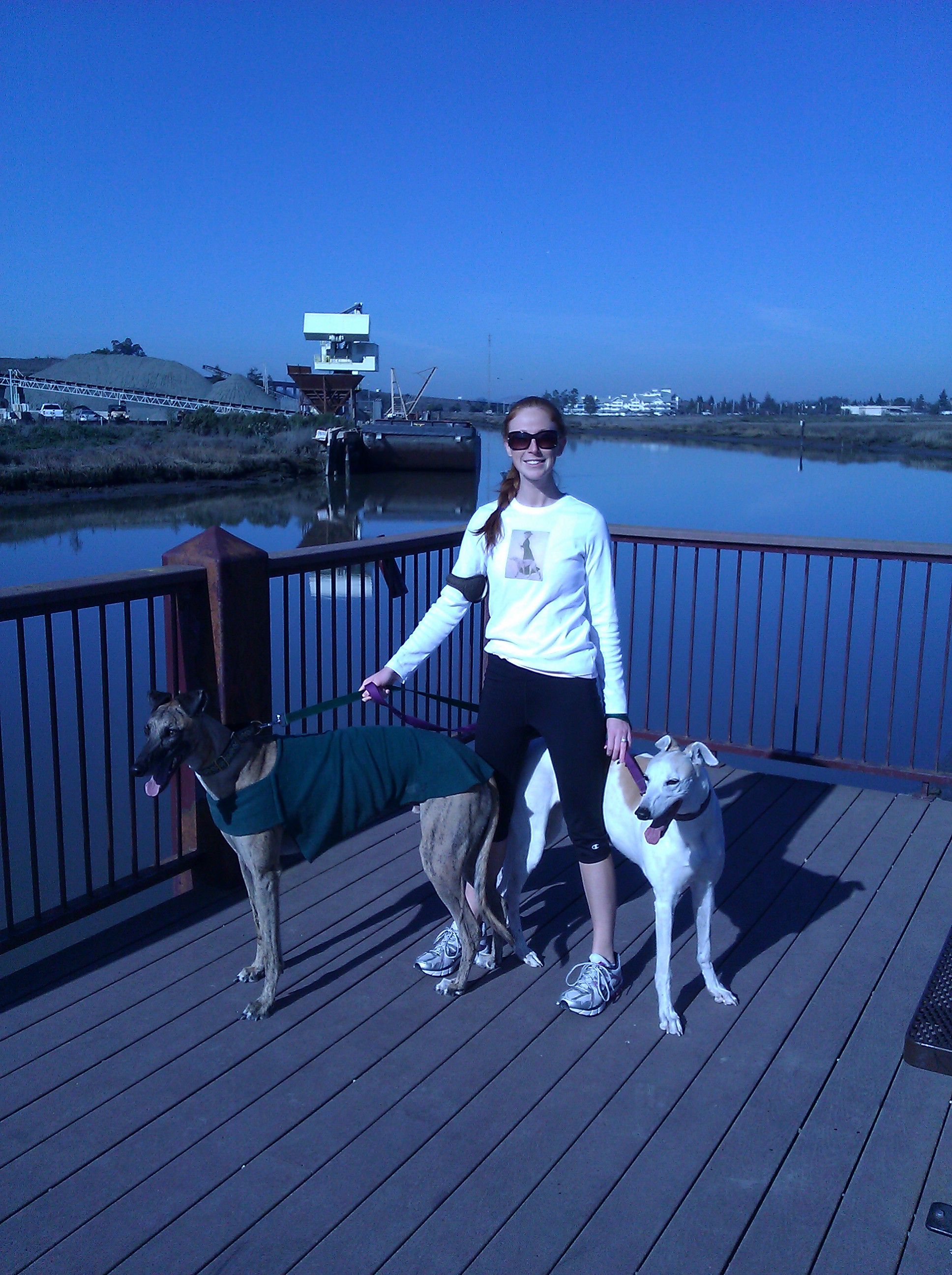
This past weekend we decided to take Lily and Cousteau for a walk around Shollenberger Park on the south end of Petaluma. The park is a 165-acre area with a two-mile trail surrounding wetlands and mudflats. On the north end of the park, another trail juts off toward the marina that goes a mile through a marsh. The park also abuts the Petaluma River, which is a beautiful sight to see. To give you an idea of the flow of things, the river flows downstream to San Pablo Bay, which connects into San Francisco Bay, which connects, of course, to the Pacific Ocean.

Shollenberger is a great place to go for a walk, run, or casual stroll. The whole park is filled with different kinds of birds. There are ducks, geese, swans, vultures, avocets, gulls, doves, plovers, falcons, crows, hummingbirds, and more. And that’s just a list of the commonly seen birds in the wetlands! There is a great list of birds on the Petaluma Wetlands website, the organization that oversees the protection and operation of the park. You can see the list at www.petalumawetlands.org.

As we walked around the trail, I could not help but think that this is exactly the type of park that both provides a healthy place for people to visit and a safe haven for local wildlife. It is a place of balance. People can enjoy the trails and the scenery, and the birds and other creatures can live relatively undisturbed. What a wonderful environment.

We continue to explore wonderful places like this in and around our new stomping grounds. Let the adventures continue!

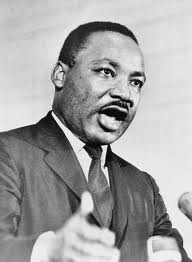
Dr. Martin Luther King, Jr. (1929 – 1968) The Man and his Mission

Martin Luther King was a man of peace, who sought radical transformation.  The power of his
personality and the impact of his words on the civil rights movement cannot be overstated. Dr. King lived in an age when the Ku Klux Klan instilled terror in sections of the South and even into Missouri.  He lived when drinking fountains, schools, buses, housing and employment were highly segregated.  His influence in the civil rights movement extended through the mid 1950’s until his death in 1968.  He changed the national dialogue on issues of race while steadfastly maintaining a commitment to non-violence and the importance of personal integrity.

His famous “I Have a Dream” speech, given August 28, 1963, at the Lincoln Memorial includes these words, “I have a dream that my four little children will one day live in a nation where they will not be judged by the color of their skin but by the content of their character.” It concludes, “Free at last, Free at last, Thank God almighty we are free at last.”

A disciple of Mahatma Gandhi’s message of nonviolence, Dr. King constantly reminded his followers that love is better than hate, that character and integrity are the measure of individuals and society.  Following are some of the quotes that exemplify his message:

Love over hate:

Darkness cannot drive out darkness; only light can do that. Hate cannot drive out hate; only love can do that.”

“I have decided to stick to love…Hate is too great a burden to bear.”

“Let no man pull you so low as to hate him.”

 “Love is the only force capable of transforming an enemy to a friend.”

Non-violence

“Returning violence for violence multiplies violence, adding deeper darkness to a night already devoid of stars.”

 “The choice is not between violence and nonviolence but between nonviolence and nonexistence.”

 “We must live together as brothers or perish together as fools.”

 The Importance of Social Commitment

“Never, never be afraid to do what’s right”

 “The ultimate measure of a man is not where he stands in moments of comfort and convenience, but where he stands at times of challenge and controversy.”

 Injustice anywhere is a threat to justice everywhere.”

The day we see the truth and cease to speak is the day we begin to die.

Due to his accomplishments, Dr. King received Time Magazine’s 1963Man of the Year” award and the 1964 Nobel Peace prize.  In 1983, President Ronald Reagan signed the law making Dr. King’s birthday a holiday.  It has been observed since 1986.

Made in the USA: The importance of buying local

Meg has a J.D. in Urban, Land Use and Environmental Law. She focuses on maintaining the balance of community and environmental health, healthy lifestyles, and encouraging sustainable living.

How much of what you buy is actually made in the USA? My mother and I were discussing this very topic the other day. We both make it a point to buy U.S. made products whenever possible. Obviously, it’s difficult to make sure everything we buy is made here, but if you’re patient, you can find many U.S. made options for almost any product.

“Made in USA” used to be a considered a stamp of quality. You knew that if you bought something made here in the States, it was going to be top quality and last forever. While that may still be the case, unfortunately, people just don’t think about where products are made anymore. As a result, it becomes more and more difficult for corporations to justify the “higher cost of labor” to have products made here and not somewhere else. So where do they go? Where does almost every “Made in…” stamp say? China.

I don’t have anything against China. From what I know, and I only know from what others have told me based on their experiences, China is filled with smart, kind people who care about the world and how to keep things in balance. These are definitely concepts I find valuable. My only problem with China, quite frankly, is that everyone here complains about how frustrated they are that we are dependent on China to keep our economy running. I have no idea how to approach that frustration, but I do know that we can all start by buying local.

There are a lot of products still made in the USA, you just have to make an effort to look for them. It may mean you have to be patient at times, but if we all make an effort to avoid buying products made somewhere else, then we can do our part to support our own economy and our own workers. Personally, I have been looking for a desk to use at home for several months now. Part of the wait was because I didn’t find anything I liked, but also because I wanted to desk I bought to be made here. Sure enough, when Jake and I went to the hardware store this week, there it was. A nice, simple desk made by Sauder Woodworking Company, manufactured in Ohio. It wasn’t even expensive, which is usually a concern people have about buying local. It was perfect.

So with that in mind, I challenge you to buy local. Whether you are looking for clothing, appliances, vegetables; with almost every product, you can find something “Made in USA.” Some products may be more expensive, but not all of them are. Some of them are still considered top quality, like St. John Knits, Levi Jeans, Maytag, KitchenAid, Lenox fine china, Simon Pearce glassware. One of my personal favorites, Harley Davidson, has a major manufacturing center in Kansas City. Ford still makes their vehicles in Detroit. If you just take the time to look at the label before you buy, you really can do your part to support the U.S. economy.

Muir Beach Outlook and Stinson Beach

Meg has a J.D. in Urban, Land Use and Environmental Law. She focuses on maintaining the balance of community and environmental health, healthy lifestyles, and encouraging sustainable living.

As if our Saturday outing to Bodega Head was not adventurous enough, Jake and I decided to add another outing to our weekend. For our Sunday adventure, we went south on 101, cut through Mill Valley and Mt. Tamalpais to Hwy 1, past the Muir Beach outlook, and then on to Stinson Beach. What a way to spend a sunny Sunday afternoon!

Our first stop along Hwy 1 was the Muir Beach outlook. I can’t remember exactly where the turnoff was, because it was an unplanned stop, but it was up the hill a mile or two from Muir Beach itself. We pulled into the parking lot, which wasn’t too horribly busy, parked the jeep, and walked over to the outlook. It was definitely worth the extra stop! With picnic tables and old military bunkers/lookouts, it doesn’t look like much at first. And then you see it….the magnificent view of the ocean, Muir Beach, the coast to the north, and even the Sunset District of San Francisco. I highly recommend making a pit stop at this place if you’re driving along Hwy 1!

Next, we made our way to our intended destination, the town of Stinson Beach. We decided to have a late lunch at a restaurant called the Sand Dollar. They had the most amazing crab cakes, and by far the best fish tacos I’ve ever had. Messy, but delicious. After lunch, we walked down to the beach and stood staring at the ocean. There were so many people there. Not so much that it felt crowded, just, lived-in. The weather was sunny, mid-60s, and it felt even warmer because we were somehow blocked from the wind.

As we drove north out of Stinson Beach on Hwy 1, we started discussing the different cultures we see just around the bay area. I’ve traveled quite a bit in my life, so I’m no stranger to culture shock, but I’ve never experienced so many different cultural norms in just a few hundred square miles. You have densely packed urban neighborhoods, expansive grazing fields, grape vines, small beach towns with 400 residents… Each pocket has a different experience to offer. And then you drive out of a small town along the highway, look to your left, and see a group of seals hanging out in the water. Of course, we’re not quite used to this yet, so we pulled over and took a picture, but to see all the different environments for both people and animals is quite spectacular.

Another adventure down, and yet another we’ll have to do again. California is just so remarkable, it may take us awhile to see it all.

Hiking Muir Woods

Meg has a J.D. in Urban, Land Use and Environmental Law. She focuses on maintaining the balance of community and environmental health, healthy lifestyles, and encouraging sustainable living.

To kick off the new year, I suggested to everyone visiting CA for the holiday weekend that we get out and do something outdoors. I thought a hike through Muir Woods would be the perfect way to get some exercise and do some family bonding. We packed up two carloads of people and drove the windy road through Mill Valley to get to the ocean side of the hills, and in we went to the redwood forest. I do have to give a shout out to Jake and Tio for generously dropping the rest of us at the park entrance. They apparently had to park a mile away, hoof it back and forth for the rest of us, and they didn’t complain once…at least not to “management” (aka, me and Auntie). Thank you gentlemen!

So, for those of you who have never been to Muir Woods, it will be difficult to explain how magical and humbling this forest is. Even with all the other visitors walking through and taking pictures, you almost feel as if you’re stuck in a different time, perhaps even walking through a real life “Lord of the Rings” forest. The forest is filled with redwood trees, which according to the brochure, can grow up to over 300 feet tall. How amazing! The land was donated by the Kent family in the early 1900s as an effort to protect the forest from the booming logging industry. President Roosevelt declared it a national monument in 1908.

Muir Woods was very busy on Sunday, with nearly 50,000 visitors according to the park rangers. Nearby attractions were also very crowded, likely due to the beautiful weather we had in the bay area on New Year’s Day. Even the Alcatraz tours were sold out! Of course, that will be something we do when our little brother comes out to visit us in a few months. Oh, the things to see in California!

When I walk through these amazing places, I am reminded that humans are a fairly new species in the history of the world. Redwood trees, for example, live to be hundreds or even several thousand years old. It is a humbling experience to walk among them, and to realize how close we came to wiping them out in the logging of the early 1900s. It is a reminder that people need to be careful of the resources they abuse and to be cautious of our growing impact on the balance of nature.

The hike was indeed a wonderful way to begin the new year.

The Federalist Papers and the Judiciary’s Role in Government

In recent election cycles, the courts have taken a bad rap.  They have been identified as elitist, activist, unpopular and even distrusted by the founding fathers.  I reminded myself it had been some time since I’d actually read the Constitution.  I decided to go “to the source” and re-read our nation’s original documents, to address at least one of the above issues, the opinions of the founding fathers about the  judicial system.  I will let the documents speak for themselves:

1)  In declaring independence from England, what complaint is made in the Declaration of Independence, signed July 4, 1776, about the relationship of King George and the judiciary?  “He [King George] has made Judges dependent on his Will alone, for the Tenure of their Offices, and the Amount and Payment of their Salaries.”

2)  How did the Constitution, adopted September 17, 1787, handle the separation of the powers of the legislative, executive and judicial branches of government?  The Constitution divides the powers of  government in separate articles as follows:

“Article I, Sec. 1:  All legislative Powers herein granted shall be vested in a Congress of the United States…

Article II, Sec. 1:  The executive Power shall be vested in a President of the United States of America…

Article III, Sec. 1:  The judicial Power of the United States shall be vested in one supreme Court, and in such inferior Courts as the Congress may from time to time ordain and establish. …”

3)  What are the Federalist Papers and why do we care?  They are a series of 85 essays, originally titled  Federalist: a Collection of Essays Written in Favor of the New Constitutionpublished in 1788 to gain support for the passage of the Constitution. written to promote the ratification of the Constitution.  They have also had a significant impact on U.S. Supreme Court interpretations of the Constitution.
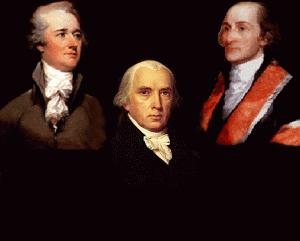
4)  Who authored the Federalist Papers?  Alexander Hamilton, James Madison and John Jay.  Among other roles in the founding of the United States, Alexander Hamilton served as a New York delegate to the Constitutional Convention; James Madison was the fourth President of the United States, was instrumental in drafting the Constitution and was the author of the Bill of Rights; John Jay was the first Chief Justice of the United States.

5)  Do the Federalist Papers address the role of the judiciary and the separation of powers?  Yes.   Federalist # 78 focuses on the relationship between and among the branches of government and the role of the judiciary as it relates to the interpretation of the Constitution.

6)  Why did the Constitution provide for a separation of powers among the three branches of government?   In the Federalist Papers, Alexander Hamilton explains …”there is no liberty, if the power of judging be not separated from the legislative and executive powers.” “The complete independence of the courts of justice is clearly essential in a limited Constitution…. [the courts have the duty] to declare all acts contrary to the manifest tenor of the Constitution void. Without this, all the reservations of particular rights or privileges would amount to nothing.

6)  Do the Federalist Papers describe the role of the judiciary in interpreting the Constitution?  Yes.  Federalist #78 explains that the “interpretation of the laws is the proper and peculiar province of the courts. A constitution is, in fact, and must be regarded by the judges, as a fundamental law. It therefore belongs to them to ascertain its meaning, as well as the meaning of any particular act proceeding from the legislative body. If there should happen to be an irreconcilable variance between the two, that which has the superior obligation and validity ought, of course, to be preferred; or, in other words, the Constitution ought to be preferred to the statute, the intention of the people to the intention of their agents.”  “…under the Constitution, the federal courts would have not just the power, but the duty, to examine the constitutionality of statutes.”

7)  Do the Federalist Papers express a distrust for the judicial branch?  No.  While the Federalist #78 acknowledges that “though individual oppression may now and then proceed from the courts of justice, the general liberty of the people can never be endangered from that quarter; I mean so long as the judiciary remains truly distinct from both the legislature and the Executive.”

 8)  Why did the Federalist #78 describe the judicial branch of government as the weakest of the three branches?  The Executive branch not only “dispenses the honors, but holds the sword of the community.”  The legislature “commands the purse”.  The judiciary “has no influence over either the sword or the purse; no direction either of the strength or of the wealth of the society…”

9)  What is the purpose of the provision in  Article III, Sec. 1 of the Constitution that Judges “shall hold their Offices during good Behaviour [essentially lifetime appointments]?  The Federalist Papers #78 explains that: “from the natural feebleness of the judiciary, it is in continual jeopardy of being overpowered, awed, or influenced by its co-ordinate branches; and that as nothing can contribute so much to its firmness and independence as permanency in office, this quality may therefore be justly regarded as an indispensable ingredient in its constitution, and, in a great measure, as the citadel of the public justice and the public security.

10)  Did the founding fathers consider one branch of government to be superior to others?  No.  The Constitution was written to put the interests of the people, not the interests of government, first. The colonies declared their independence from England because of the tyranny of King George.  The separation and balance of powers is for the protection of people, rather than for some other purpose.  Federalist Papers #78 is clear that the Constitution does not  “suppose a superiority of the judicial to the legislative power. It only supposes that the power of the people is superior to both; and that where the will of the legislature, declared in its statutes, stands in opposition to that of the people, declared in the Constitution, the judges ought to be governed by the latter rather than the former. They ought to regulate their decisions by the fundamental laws, rather than by those which are not fundamental. Further, it is far more rational to suppose, that the courts were designed to be an intermediate body between the people and the legislature, in order, among other things, to keep the latter within the limits assigned to their authority.

11)  What other essays included in the Federalist Papers are of significance in determining the view of the founding fathers concerning the role of the judiciary?  Essay #1 describes the goal of the Constitution as focused on “whether societies of men are really capable or not of establishing good government from reflection and choice.” He and his co-authors along with other leaders including George Washington, believed that the Constitution represented a unique and important change in, and improvement over, prior forms of government.  Essays 4 and 33 deal with the Supremacy Clause set forth in Article V of the Constitution, but those are matters for another day!

Why haven’t I addressed the other issues raised concerning perceived flaws in the judiciary and individual judges?  It is reasonable to believe that people of good will can have differing opinions about individual judges, individual decisions and frailties in any arm of government.  I have no desire to enter that debate.  The humanity and imperfections of each of us individually and collectively are not up for debate.  But what I think is important to recognize is that the Constitutional framework was designed to include a separation of powers of the three arms of government because the founding fathers believed that it was in the best interests of the people to do so. The courts were not considered inferior or superior to the other branches of government.  The courts were, however, considered essential to the creation and fulfillment of our system of Democracy.
The Constitution and the Courts: Marbury vs. Madison

I bet you didn’t wake up this morning thinking about U.S. Supreme Court decisions or even about the U.S. Constitution itself. Occasionally, though, it is good to reflect on the principles of our Democracy.  That brings me to Marbury vs. Madison.

The U.S. Constitution was signed in 1787.  Just 16 years later, in 1803, Chief Judge John Marshall authored the landmark decision of Marbury vs. Madison. In that decision, the Court for the first time declared a statute unconstitutional. The decision itself limited the Court’s power, finding powers granted to the Court in the Judiciary Act of 1801, to be beyond the powers included in Article III of the Constitution.  Article III provides in pertinent part:

Section 1:  The Judicial Power of the United States shall be vested in one supreme Court and in such inferior Courts as the Congress may from time to time ordain and establish. . .

Section 2.  The judicial Power shall extend to all Cases . . . arising under this Constitution, the Laws of the United States, and Treaties made, or which shall be made. . .

The Court explained it’s decision as follows: “the particular phraseology of the constitution of the United States confirms and strengthens the principle, supposed to be essential to all written constitutions, that a law repugnant to the constitution is void; and that courts, as well as other departments, are bound by that instrument”.

The Supreme Court’s exercise of the power of Judicial review of statutory law is in sharp contrast to the British laws. The importance of such review was discussed by the founding fathers during the drafting of the Constitution.  Alexander Hamilton, whose writings  are seen as an important source for Constitutional interpretations, wrote in The Federalist #78, published in 1788, “there is no liberty, if the power of judging be not separated from the legislative and executive powers.”

No case authority or Constitutional Amendment has reversed this important decision placing on the Supreme Court the responsibility to review laws enacted by federal and state legislatures for the purpose of determining whether such legislation is consistent with the Constitution.  Marbury vs. Madison remains the law of the land.

Protests Then and Now–Protests of the 60s, about Peace and Love?

The protests of the 1960s, which continued into the mid-1970s focused on two issues: the unpopular war in Vietnam and the civil rights movements.  The purposes of the protests were clearly articulated and very specific.  Protesters opposed the draft, the war and inequality based on race, sex and class.

The protestors were often college students and young professionals.  They attended class, took exams, held responsible jobs.  On weekends and after hours they demonstrated.  While there were glaring exceptions to the norm, most protests were peaceful and most protesters went home to their own beds at night.  Despite being unpopular among parents, the police, and many educational and government officials, the response to these protests was generally reserved.

The deaths of 4 students at Kent State, May 4, 1970, at the hands of the National Guard, was perhaps the most tragic event associated with the peace movement.  The deaths of 4 African-American children in the Atlanta church, Sept. 15, 1963; the lynching of 3 civil rights workers involved in voter registration in Mississippi; involved in voter registration June 21, 1964; and the assassination of Martin Luther King, in Tennessee, April 4 1968, are the most often remembered deaths of the Civil Rights movement, but they do not stand alone.

Most demonstrations were peaceful.  Protesters marched, congregated in parks, on university campuses, and occasionally near military bases and government buildings.  They lit candles and bonded together.  They attended rock concerts like Woodstock and Cornstalk[1] where much of the music focused on peace, equality and empowerment.   But as much as memories of those who participated in those protests focus on commitment to love, peace, music and equality, some protesters turned violent.  Splinter groups, including the Weathermen, a faction of Students for a Democratic Society, developed radical agendas, called for violent revolution, became involved in criminal activities, took over university buildings and bombed banks and government buildings.

The Paris Peace Accords of 1973 ended U.S. military involvement in Vietnam.  All U.S. soldiers left Vietnam by 1975.  College campus calmed and the peace demonstrations came to an end.  The civil rights movement was transformed from protest marches to structured organizations over a period of time.  Cool heads would differ as to whether the protests caused the integration of schools, buses, restaurants, with the passage and enforcement of legislation.  However, there is no doubt that key legislation occurred almost simultaneously with the protests, including the passage and enforcement of laws such as Equal Employment Opportunity Act of 1964 as amended in 1972, which prohibits discrimination on the basis of race, color, religion, sex and national origin; and Title IX, which prohibits discrimination in education on the basis of sex.

It was a time of love and hate, peace and violence, equality and class/racial struggles; but the times they were a changing!


[1] Seriously, Cornstalk was a big event in rural Kansas.

The Challenge of Illegal Drugs

Meeting the Challenge of Illegal Drugs

Planes, trains and automobiles. What about submarines, buses and cargo ships? Drugs enter the United States through all these forms of transportation. Revenues from illegal drugs worldwide are estimated at $300 billion dollars. In the United States alone, estimated revenues totally $60 billion dollars. This is 13 billion dollars more than the budget of Michigan and 23 billion dollars more than the combined budgets of Kansas and Missouri. The wealth attributed to individual dealers is staggering; one Britain convicted of multiple drug related crimes, is reported to be worth $300 million dollars. He started life as a bouncer!

When my generation thinks of drugs, too many remember the comparatively easy summers of the 60’s and 70’s. If PCP, methamphetamine and cocaine were around, I never heard about it. Marijuana, the drug of choice on many college campuses, could be found in a farmer’s field or purchased from a college classmate. The hippie generation joked about twinkies, grew up, found jobs, raised families and seemed to leave drugs behind.

Fast forward 40 years. The issue of illegal drugs is serious business and we need to be serious about how we respond. The economics of dealing drugs at the local level are discussed by Steven D. Levitt and Stephen J. Dubner, in their book, Freakonomics, chapter 3, Why Do Drug Dealers Still Live with their Moms?The authorsstudiedstreet dealers, ie. “foot soldiers” and concluded that most live at home because their average earnings are below minimum wage for jobs in which the chances of being killed are 1 in 4 . Contrast that to vast sums of money are controlled by international cartels that receive the real profits from drugs. Where does that money go and how is it spent?

A very rough estimate is that annually $10 billion to $30 billion dollars is smuggled South of the border. That money is used to pay those who harvest and/or manufacture drugs; to pay those who transport and sell drugs; to bribes government officials, lavish lifestyles for the drug lords, and terrorism. Terrorism in narrower sense involves funding drug traffickers/terrorists in Afghanistan and throughout that region; terrorism in the broader sense includes the destruction of whole communities in the border towns of Mexico, as well as the violence in the drug communities of our cities.

Drug sales and use sap the life out of our communities, primarily in some neighborhoods within our inner cities. The slogan “an unarmed drug dealer is a dead drug dealer” is more than a slogan. Those engaged in the drug trade too often protect themselves, their drugs and their money with violence, placing themselves, their neighbors and their families at risk of injury or death. The fear of violence and the risk that children will become involved in the drug trade further traumatizes some communities. Inner city street dealers are, in this and all regards, both victims and perpetrators.

So, the question is, what do we do about it? I haven’t a clue. But in the next months I hope to focus my research on various related issues in the hope that I will at least gain a better understanding. I will let you know what I learn.

Dewey’s “Public” and Its Many Problems

Meg has a J.D. in Urban, Land Use and Environmental Law. She focuses on maintaining the balance of community and environmental health, healthy lifestyles, and encouraging sustainable living.

During one of my MPA classes, Politics of Administration, we read a book about the concept of “the public,” how it is formed, and how it is identified.

Review of “The Public and Its Problems”:

In his book “The Public and Its Problems,” John Dewey discusses the concept of “the public” and how its role fits into the history and context of U.S. politics. The reader also uncovers a nexus described between the state, the public and democracy. Dewey describes the problematic nature of the concept of “the public.” After exploring the nexus described by Dewey and the problems with “the public,” I will then explore the most problematic feature of “the public” as it pertains to discussions today, and whether or not the 80 year-old discussion is relevant to political life in the U.S. in 2010.

Throughout the text, Dewey describes a nexus between the state, the public and democracy. These three concepts are intertwined into a system where each depends on the existence of the other. However, part of the difficulty in understanding the significance and meaning of each is knowing how to fit them together in context.

Let us start by trying to understand the concept of “the public.” Dewey says the public exists when the consequences of a conversation or exchange extend outside of the confines of those directly involved in the exchange to affect the lives and welfare of others (Dewey 13). Almost simultaneously with the emergence of “the public” is the emergence of “the state,” which is an entity that involves members of the public bound by shared concerns and interests (33). The state is something to which members of the public belong and identify. However, Dewey does warn that people looking for “the state” will inevitably get lost in the process. It is a concept that is nearly as abstract as “the public” because its existence depends on consequences and the emergence of people who need to be taken care of as a result of those consequences (27).

With the emergence of such entities as the public and the state, a form of government is necessary to govern and administer the needs and concerns of the public. Dewey portrays democracy as a system of government that resulted from fear (86), and a democratic government gave people the ability to participate in their own governing. Within this democratic system, individuals felt free to express their own individualized ideals. Dewey notes that the American Revolution was a revolt against an established government that oppressed individuality (87), and democracy resulted in the U.S. as a form of government administered by the people. Individualism became the new movement within the system of democracy that allowed people to express their own political and social ideals while being involved in the forming of a new political nation.

The nexus of these three concepts converges in their dependence on the existence of each other, but putting them into context is difficult when their boundaries are ambiguous. The public and the state emerge when private exchanges result in external consequences. Democracy is a form of governing the members of the public included in the state, by involving individuals from the public as officials to govern the matters of the public. The challenge arises with the concept of individualism because it inherently discourages unity, a necessary characteristic of a state. Therefore, the development of states must be an ongoing process of experimenting through trial and error, using historical experiences to learn from previous mistakes (33-4).

Dewey sees the public as being problematic mostly because it is difficult to find in the context of a situation. It is an abstract concept to describe an abstract group of people, which makes it difficult to identify. In theory, the public is a community as a whole that is affected by the transactions of private individuals (88), but in practice, it is often very difficult to identify the specific public (and therefore state) affected because of the private nature of the exchanges.

According to Dewey, the difficulty in finding the public lies in the advent of modern technology that impaired the need for face-to-face relationships between members of the public. The very same technologies that create the ease of national interaction also create the ability for individuals to focus on the bettering of their own lives without much personal contact with others (131). The individualistic philosophy utilizing the new technology is a force that detracts from the sense of community. If the needs of the public as a whole are not identified, then those problems cannot be addressed by the officials elected specifically to govern such issues.

The most problematic feature of “the public” as it is invoked and discussed today is that the concept is abstract and the people involved are difficult to identify. Dewey’s discussion of how the Great Society (what we have now) may become the Great Community (the ideal) helps put the sense of individualism and of community into perspective as related to the public. While the Great Society is composed of many groups of people with advanced technology, the Great Community only comes about when individuals share interest and responsibility to the community on common issues (147). The transition can only be accomplished through communication (142). Without communication, the consequences affecting the public through private exchange cannot be identified by governing officials. If the problems cannot be identified, they cannot be solved. Also, if the problems are not identified, the people who suffer from the problems cannot be identified, which creates further confusion about the boundaries of the public.

Even though Dewey’s text was originally published in 1927, I think his discussion still has relevance to political life in the U.S. today. His concerns about the steam engines and the printing press as forms of modern technology that decrease personal relationships apply today using things like the internet and credit cards as substitutes. The concept is still the same, that identifying the public is a challenge, especially with rampant individualism and lack of face-to-face communication.

One thing that I think makes Dewey’s discussion particularly relevant to politics in the U.S. today, perhaps even more so than when his text was first published, is that groups with shared interests and concerns in the modern world (or, a “state”) typically do not share the same political boundaries. People commute, they live out-of-state, they even live in other countries, but they still stay virtually connected to the people they share common interests with through the use of telephones, Skype, email, and any other form of communication technology available today. Dewey’s concern about the boundaries of the state was that geographic lines created arbitrary boundaries when determining who was included in the state and who was not. The technology available in 2010 makes determining those boundaries even more challenging.

Another part of the discussion relevant to the political world today is the idea of controlled inquiry and looking at history to understand context and application. It is important when implementing new ideas in politics and society to have something about the present to compare with the past. By learning what works through experimenting, we can better tweak the form of government that will facilitate the Great Society becoming the Great Community (147).

While his writing style is very difficult to digest, Dewey’s message is actually fairly simple. “The Public” is an abstract group of people that we can only identify once they have something in common. That something in common outlines the boundaries for “the state” and also creates the simultaneous need for administration to protect the interests of the designated public. The next part of his discussion gets confusing with the many problems and methods involved with what comes next: government. Determining political jurisdiction is just the first part of the challenge, then comes the potential for corruption and the ongoing struggle for effective communication. His discussion is still fairly abstract, but it does help us discern the inevitable challenges that present themselves within the ambiguous realm of political life.