All the news that’s fit to print

Layoffs are the order of the day for print media.  An estimated 3775 newsroom jobs were lost in 2011 alone, spread among newspapers large and small. Across the nation, newspapers papers, magazines, even books are giving way to Internet-based news and literature. The Washington Post, an icon in the publishing world, has recently reduced its staff.  Our own Kansas City Star has announced repeated layoffs including, most recently, in mid February, 2012.  As readers we are concerned with the ways in which the loss of traditional sources of information shrinks our ability to gather meaningful date on the important issues of the day.
Does this really matter if Internet sources are ready to provide us information?  The question, at least in part, is whether internet media will assume the mantel of investigative and in-depth reporting, on a local and national level, that inevitably declines as newspapers that have sustained reductions in news room staff.
Remember All the President’s Men, by Bob Woodward and Carl Bernstein? They spent months meeting with an anonymous informer identified only as “deep throat” before publishing a series of articles in the Washington Post exposing the Watergate scandal that resulted in President Nixon’s resignation and prison sentences for key members of his staff.  Our own Kansas City Star has repeatedly exposed incompetence and corruption throughout the metropolitan area.  The repeated reductions in staff leave the news room gutted, with at best only limited ability to seek out corruption, or report more than minimal local news.

The reduction in paid subscriptions and advertising revenues may make staff downsizing inevitable.  At the same time, competition between and among internet news source makes the competition for audiences more intense.  Facing that challenge, the Washington Post has expressed a commitment to continue it’s in-depth reporting, while moving aggressively to increase readership of its Internet paper.  Relying on online metrics to identify the number of clicks each of its articles receives, it is able to monitor constantly the popularity of each article, identify those with limited interest and replace low performing articles on a ongoing basis.  In this environment, is it reasonable to worry that articles about Kardashian weddings and celebrity probation violations will attract larger audiences than  school board meetings, second injury funds and low-level corruption. Focusing news and media attention on “easy news”, ie. news that is easily available through multiple sources, is cheaper and faster than authorizing journalists to spend months on a single article, or even a series of articles, requiring extensive research and exploration. It will be even more of a challenge to find a means by which journalists will be vigilant about reporting the mundane, but critical issues facing local communities.

It is difficult to criticize the paper media.  Their goal in 2012 is not to expand profit, but to secure survival while finding new resources and audiences.  In the interim we must, each of us, support and encourage  journalism that helps us to remain knowledgeable of the challenges that continue to confront us.  Certainly, this is essential to an educated citizenry.

Edward R. Murrow explained the problem this way: “the newest computer can merely compound, at speed, the oldest problem in the relations between human beings, and in the end, the communicator will be left with the problem of what to say and how to say it”.

Reply With Quote

The Few, the Proud, the Montford Point Marines

February is Black History Month.  It is an important time to celebrate African-American history.  It is equally to acknowledge the contributions of our friends of color. The successes of the present arise out of sacrifices from the past.  While they are too many to list, this is a great time to thank the Montford Point Marines who volunteered and served in World War II, after President Roosevelt entered a Presidential Directive integrating the Marine Corps.

We are all familiar with the Buffalo Soldiers formed at Fort Leavenworth in 1866 to fight in the Indian Wars.  We have also heard of the Tuskegee Airmen, the first African-American aviators in the Army Air Corps, who trained at Tuskegee, Oklahoma, beginning in 1941.  However, I had never heard of the Montfort Point Marines. They were activated in August 1942.  Between 1942 and 1949, 20,000 men volunteered to serve in the Marines. They trained in a segregated facility in Montford Marine Camp[1] in Montford Point, N.C.  Point, North Carolina.   Initially, they were trained by white officers.  Quickly African-Americans took over their own training when, by 1943, American Americans finally became noncommissioned officers.  Like the Buffalo Soldiers and the Tuskegee Airmen, they chose to fight, despite segregation, in order to show their national commitment.  Cassandra L. Paschal has written about them that they believed “that if they could show their homeland their valor they would return to a country that in its gratitude would give them all of the freedoms provided in our Constitution.”

Montford Point Marines were assigned to support white troops.  However, they often found themselves in the thick of battle. They served, fought and died in the Pacific Theater in places with names like Saipan, Okinawa, Guam and the Mariana Islands.    Shortly after World War II, in September 1949, President Truman ordered the end of segregation in the armed forces.  Thereafter all armed forces were integrated.

On November 23, 2012, House Resolution 2447 was signed into law by President Obama.  The resolution granted the Congressional Medal or Honor to the Montford Point Marines.  While 11 members abstained from voting, not a single “no” vote was entered.

Equality under the law did not come quickly.  But the service of these brave men has finally been acknowledged and honored. To those who served, “Thank you for your service”.


[1] Renamed Camp Johnson on April 19, 1974, in honor of Sergeant Major, Gilbert H. “Hashmark” Johnson, a Distinguished Montford Point Drill Instructor

Made in the USA Series: The U.S. auto industry gets a well-earned nod during the Super Bowl

It has been a tumultuous 4 years in the automotive industry. The bankruptcies of General Motors and Chrysler as well as the near bankruptcy of Ford Motor Company shook Detroit to it’s core. Stock prices plummeted as we watched what appeared to be the end of Detroit’s influence in the industry. It was a roller coaster ride. But, that was then. This is now.

Yesterday was Super Bowl Sunday. It seems that everyone watched the game. Even people who don’t care about football watch the ads. I loved the Volkswagen ad focused on a dog’s motivation to become physically fit, and was bemused by Chevrolet’s spoof of the Mayan calendar’s 2012 doomsday predictions. But it was Clint Eastwood, in Chrysler’s ad, “Halftime in America,” that inspired us to envision a new era of national rebirth.

http://youtu.be/_PE5V4Uzobc

Released before the Super Bowl was Chrysler’s new advertising campaign, “Imported From Detroit.” The message of the ads is that we don’t “have to cross an ocean to obtain luxury.” But is this message accurate? We did some checking and found that there seems to be a rebirth of the U.S. automobile industry. In addition to manufacturing plants throughout the world, foreign and domestic automobile manufacturers have significant operations in the U.S. Here are just some of the companies with manufacturing and/or assembly operations in the United States—

Domestic Companies 

Ford Motor Company—Ford, Lincoln and Mercury in Michigan; Missouri; Illinois, Kentucky; and Minnesota.

General Motors–Buick in Michigan; Cadillac in Michigan and Texas; Chevrolet in Michigan, Missouri, Ohio, Kansas, Kentucky, Indiana and Louisiana.

Chrysler—Chryslers in Michigan; Dodge in Michigan and Ohio; and Jeep in Detroit, Ohio and Illinois. Chrysler announced on February 3, 2012, that it will add 1,800 jobs at its plant in Belvidere, Illinois, where it assembles the Dodge Dart, Jeep Patriot and Jeep Compass.

Foreign Companies 

Honda—Ohio, Indiana and Alabama.

Mercedes Benz—Alabama.

BMW—South Carolina.

Infiniti—Mississippi.

Acura—Ohio.

Suzuki—Georgia and Tennessee.

Volkswagen—Tennessee. Its new plant in Tennessee employs 2000 workers and was recently recognized for its commitment to environmentally responsible manufacturing.

There is a lot to celebrate for the U.S. economy in the revitalization of this industry. We had a rough “first half” in our economy, but we are rebuilding. The economy is growing. And we are going to have a much better “second half.”

Made in the USA Series: Clothing. What to do when there is no “Made in the USA” Choice?

Meg and I are pretty careful with our shopping choices. So we took the challenge and rummaged through our closets.  Almost none of our clothing is made in the U.S.A.  More than 50 % of my clothes are made in China with a smattering from SE Asia, Mexico and countries I have never heard of before.  Only a few things from St. John Knit, Eileen Fisher and Talbot’s, plus some really old clothes were made in the U.S. Meg’s clothes are primarily from China and SE Asia, with a few things made in Italy. The occasional “off” brand will be made in the U.S., but otherwise, the majority of our closets are filled with shirts, sweaters, shoes, bags, belts, etc. that have “Made in China” stamped somewhere.

So the issue for today is what to do when you shop for clothing or other items not made in the U.S.A.  It is really important to understand that all clothing made outside of the U.S.A is not the same.  One of the most important terms we had never heard about before this week was SA8000, a tool to implement UN conventions already in place. It has been described as the “first universal standard for ethical sourcing”.   Designed to advance human rights among workers on a global basis, it is a voluntary program based on setting standard for businesses. It was developed, and is overseen, by Social Accountability International, a non-profit organization.  It accredits and monitors organizations for the purpose of setting standards for ethical working conditions. SA8000 standards include:

1)    minimum age 15; 14 in developing countries;

2)    prohibits forced labor;

3)    provides safe and healthy work environment, access to bathrooms and potable water;

4)    respects the right of workers to form and join trade unions and bargain collectively;

5)    prohibits discrimination based on race, caste, origin, religion, disability, gender, sexual orientation, union or political affiliation, or age; prohibits sexual harassment;

6)    prohibits corporal punishment,  mental or physical coercion or verbal abuse;

7)    limits work to 48 hours per week with overtime at premium wages up to 12 hours per week;

8)    requires living wage, no disciplinary deductions from wages.;

9)    requires companies that want to gain and maintain certification to integrate the standards of SA8000 into their management systems and practices.

Worldwide, as of 2010, companies in 62 countries were participating in the SA8000 certification process.  These companies employ more than 1.3 million people in SA8000 certified facilities, in countries such as China, India, Turkey, Viet Nam and Brazil.  Many U.S. companies are committed to contracting only with suppliers who are SA8000 certified, including such companies as Levi Strauss, Nike and Eileen Fisher.  We are struggling to find a list of U.S. companies that support SA8000, so if you can’t identify immediately whether a company is in compliance, we encourage you to ask.  We sure will!

UPDATE on 2/10/12: If you would like to see a list of Member Companies and Brands, please visit the following link:

Member Companies and Brands for Social Accountability Certifications

What is the United Nations Global Compact and why does it matter?

Meg has a J.D. in Urban, Land Use and Environmental Law. She focuses on maintaining the balance of community and environmental health, healthy lifestyles, and encouraging sustainable living.

Anyone who cares about global competition and free trade, will also care about the United Nations Global Compact. Like SA 8000, a global social accountability standard for decent working conditions, it focuses on the areas of human rights, labour, the environment and anti-corruption.  There are many prominent U.S. businesses that have committed to the principles of the compact: Levi Strauss, Coca Cola, PepsiCo, Price Waterhouse auditors and Nike are all participants.

Each business that joins the UN Global Compact is expected to embrace the 10 fundamental principles of the Compact, to the best of their ability and within their realm of influence. As listed on the organization’s website, here are the 10 principles:

Human Rights:

1)             support and respect the protection of internationally proclaimed human rights; and

2)             protect against human rights abuses.

Labor:

3)             uphold the freedom of association and the right to collective bargaining

4)             the elimination of all forms of forced and compulsory labour;

5)             the effective abolition of child labour; and

6)             the elimination of discrimination in employment and occupation.

Environment:

7)             support a precautionary approach to environmental challenges;

8)             undertake initiatives to promote greater environmental responsibility; and

9)             encourage the development and diffusion of environmentally friendly technologies.

Anti-Corruption:

10)          work against all forms of corruption, including extortion and bribery.

The Compact is designed as a forum for businesses globally to collaborate within a practical framework to exchange best practices and facilitate the development of sustainable business methods. According to its website, www.unglobalcompact.org, the Compact has over 8700 corporate participants in 130 countries. With this kind of participation, there is certainly hope that businesses can start working together on a global level to infuse human rights, labor, environment, and anti-corruption ideals at a global level, and that those ideals can have an impact locally.

It should not surprise us that companies that take to heart the provisions of SA 8000 are often committed to a broader range of compacts focused on global equity, protection of the environment and protecting our natural resources.  We believe the principles of the UN Global Compact and SA 8000 are important in “shifting the balance” toward a healthier planet.

Made in USA Series: The Grocery Store

Meg has a J.D. in Urban, Land Use and Environmental Law. She focuses on maintaining the balance of community and environmental health, healthy lifestyles, and encouraging sustainable living.

I have always made an effort to buy local. Usually this has translated into frequenting the local farmers’ market or perhaps stopping by a roadside stand. However, I still go to the grocery store for most of my food items. This is where the challenge begins.

The bulk of my grocery items tend to be fresh produce. I know a lot of people buy frozen veggies and canned goods, but something about fresh, crunchy fruits and vegetables just makes me happy. They smell better, taste better, and overall make me feel better. But does it matter where exactly they come from? I think so. Not necessarily for health reasons, though many would say this is a factor, but also for environmental and economic reasons. Buying locally grown produce helps support local farms (economic benefit) as well as increased sustainability (environmental benefit).

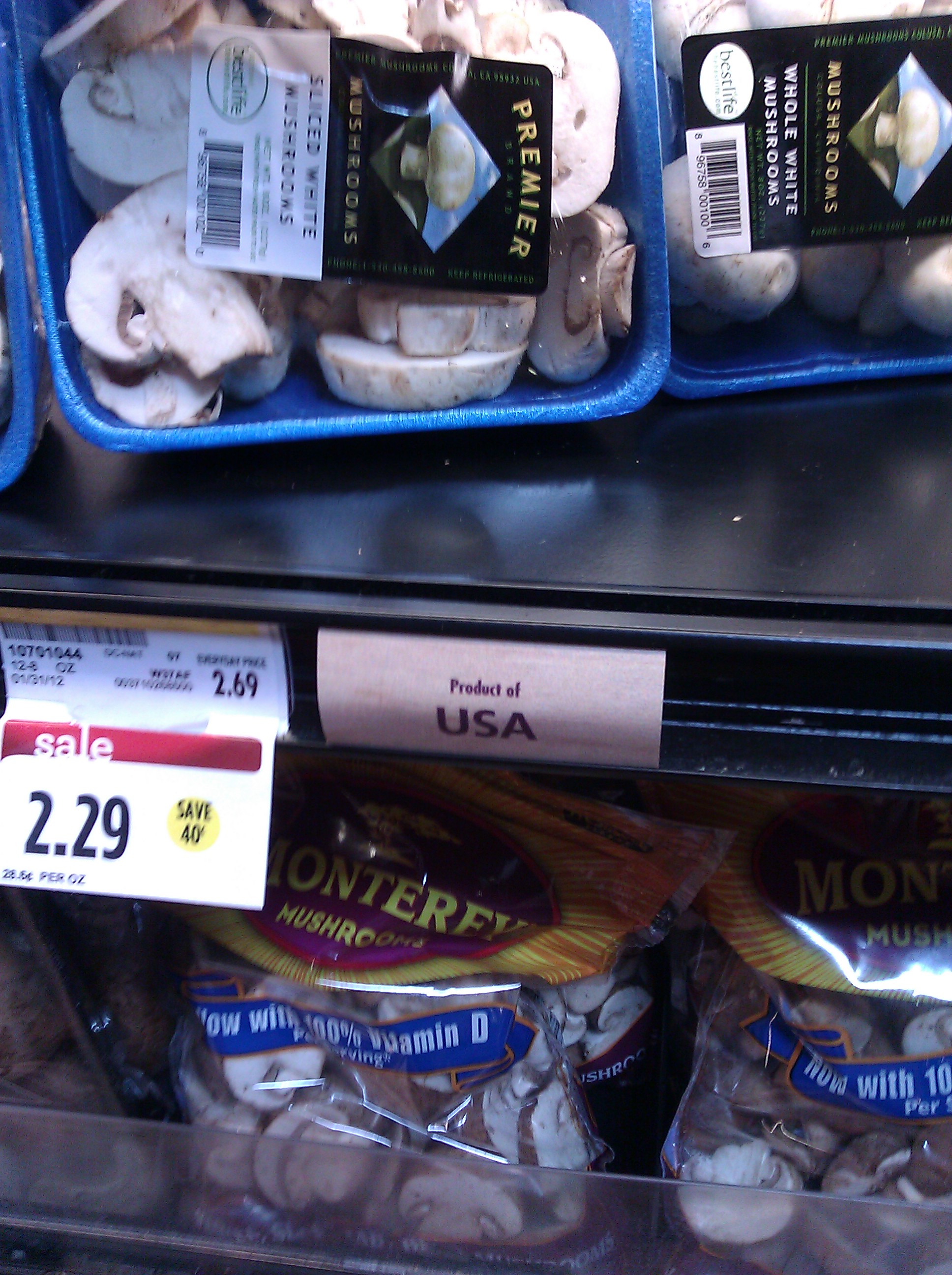
If you’re standing in the grocery store and you want to buy tomatoes, as I was the other day, most of the labels are likely to say “Product of Mexico” on them. (Please note, I have nothing against Mexico, or any other country where many things are grown, I just think it’s important to support U.S. farms and lower our carbon footprint by buying in the U.S.). However, if you search through the different tomato varieties, you can find some that say “Product of USA.” They may cost the same. The Mexico tomatoes might be a little cheaper. But think about the cost of getting those Mexico tomatoes into your grocery store compared to the USA tomatoes. It took more gasoline, they’ve likely traveled at least a day longer and are therefore not as fresh, and they’re not products of U.S. farms. It’s like outsourcing our call centers to India. We’ve outsourced our tomatoes to Mexico. But why? We certainly don’t need to if we can produce tomatoes here in the U.S. Well, I pose that it’s because when faced with the decision of which tomatoes to buy at the store, many people will still buy the tomatoes produced in Mexico. It’s not that they mean to choose between Mexico and USA, they just don’t think about it.

So here is my challenge to you, a challenge I am currently taking on myself. Try to buy fresh produce that says “Product of USA” on the sticker. It’s not as difficult as you might think. Sure, there are a few things you might sacrifice. Last week I couldn’t find any grapes from the U.S., nor could I find local bananas. But everything else has a U.S. grown version if you just take the time to look. Tomatoes, peppers, all kinds of lettuce, fennel, apples, oranges, berries…the list goes on.

Please feel free to share what kinds of produce you can find with a USA sticker, and what produce you can’t find. It will be interesting to see what kinds of U.S. grown fruits and vegetables are more easily available around the country.

To Kill a Mockingbird Re-released 1-31-12

One of my favorite gifts is an autographed copy of the 35th anniversary edition of the book, To Kill a Mockingbird, first published in 1960.  In the Pulitzer Prize winning novel authored by Harper Lee, she writes about racial injustice, human tragedy and the impact individuals can have through triumph and failure.  It is studied in high schools, college class rooms and law schools.  It teaches us about justice, integrity and the best of family values.  It motivates us to be better people, to fight against injustice and to respect and value diversity.

 My favorite quote from the book is when Atticus gives advice to Scout:

           First of all…if you can learn a simple trick, Scout, you’ll get along a lot better with all kinds of folks.  You never really understand a person until you consider things from his point of view…until you climb into his skin and walk around in it.

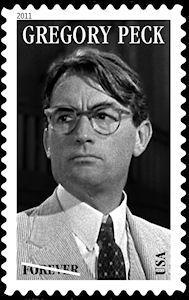
Gregory Peck starred in the 1962 movie by the same name.  He portrays Atticus Finch, a small town lawyer, who defends an African-American man wrongfully accused of rape.  His daughter, Scout, is
portrayed by Mary Baddham, who narrates the story through the eyes of a child.  The movie was nominated for 8 academy awards.  Gregory Peck won an Oscar for Best Actor.  He was later honored with the Presidential Medal of Freedom for his lifetime humanitarian efforts.  Perhaps, like many others, he was motivated by the character he portrayed.

The movie is being rereleased today, the 50th anniversary of the movie.  It has been digitally remastered and restored.  Perhaps it is time for all of us to reread the book or watch the movie as a reminder of committing ourselves to being the best we can be.

SOPA and what it means for online content

Meg has a J.D. in Urban, Land Use and Environmental Law. She focuses on maintaining the balance of community and environmental health, healthy lifestyles, and encouraging sustainable living.

There is a bill in Congress right now called Stop Online Piracy Act (SOPA). It aims to stop websites that facilitate copyright or intellectual property infringement by allowing the Department of Justice to seek court orders against those websites.

In response to the bill, Google and Wikipedia are on “blackout” today. If you go to Google.com, you will see the image blacked out. If you click on the blacked out image, you will be directed to a page that says, “End Piracy, Not Liberty.” Wikipedia’s homepage reads, “Imagine a world without free knowledge.”

The bill is not designed to put the user at risk of facing charges. Instead, it would target the websites, many of them overseas, that facilitate the downloading of illegal content. The “powers that be” in the internet industry are opposed to the bills because they say it would mean Congress would regulate what content was available to users, therefore limiting free speech. Proponents of the bill say it will end piracy and prevent content providers from losing billions of dollars in content purchases.

In an interview with a CNN correspondent in Silicon Valley, there was a discussion about whether or not this bill is the best way to accomplish the goal of ending piracy. One example was given of how people used to download music illegally through sites like Napster, then iTunes started selling music and all of a sudden people were buying music again. The suggestion was that Hollywood should innovate regarding the marketing and sale of content, as opposed to increasing web censorship through legislation. CNN also fully disclosed that its parent company, Time Warner Cable, is supporting the bill.

This is an interesting issue that seems to focus on who should be in charge of our access to the internet and web content. I am curious to see how discussions go in Congress and whether the bill passes.

Dr. Martin Luther King, Jr. (1929 – 1968) The Man and his Mission

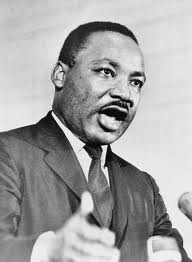
Martin Luther King was a man of peace, who sought radical transformation.  The power of his
personality and the impact of his words on the civil rights movement cannot be overstated. Dr. King lived in an age when the Ku Klux Klan instilled terror in sections of the South and even into Missouri.  He lived when drinking fountains, schools, buses, housing and employment were highly segregated.  His influence in the civil rights movement extended through the mid 1950’s until his death in 1968.  He changed the national dialogue on issues of race while steadfastly maintaining a commitment to non-violence and the importance of personal integrity.

His famous “I Have a Dream” speech, given August 28, 1963, at the Lincoln Memorial includes these words, “I have a dream that my four little children will one day live in a nation where they will not be judged by the color of their skin but by the content of their character.” It concludes, “Free at last, Free at last, Thank God almighty we are free at last.”

A disciple of Mahatma Gandhi’s message of nonviolence, Dr. King constantly reminded his followers that love is better than hate, that character and integrity are the measure of individuals and society.  Following are some of the quotes that exemplify his message:

Love over hate:

Darkness cannot drive out darkness; only light can do that. Hate cannot drive out hate; only love can do that.”

“I have decided to stick to love…Hate is too great a burden to bear.”

“Let no man pull you so low as to hate him.”

 “Love is the only force capable of transforming an enemy to a friend.”

Non-violence

“Returning violence for violence multiplies violence, adding deeper darkness to a night already devoid of stars.”

 “The choice is not between violence and nonviolence but between nonviolence and nonexistence.”

 “We must live together as brothers or perish together as fools.”

 The Importance of Social Commitment

“Never, never be afraid to do what’s right”

 “The ultimate measure of a man is not where he stands in moments of comfort and convenience, but where he stands at times of challenge and controversy.”

 Injustice anywhere is a threat to justice everywhere.”

The day we see the truth and cease to speak is the day we begin to die.

Due to his accomplishments, Dr. King received Time Magazine’s 1963Man of the Year” award and the 1964 Nobel Peace prize.  In 1983, President Ronald Reagan signed the law making Dr. King’s birthday a holiday.  It has been observed since 1986.

Made in the USA: The importance of buying local

Meg has a J.D. in Urban, Land Use and Environmental Law. She focuses on maintaining the balance of community and environmental health, healthy lifestyles, and encouraging sustainable living.

How much of what you buy is actually made in the USA? My mother and I were discussing this very topic the other day. We both make it a point to buy U.S. made products whenever possible. Obviously, it’s difficult to make sure everything we buy is made here, but if you’re patient, you can find many U.S. made options for almost any product.

“Made in USA” used to be a considered a stamp of quality. You knew that if you bought something made here in the States, it was going to be top quality and last forever. While that may still be the case, unfortunately, people just don’t think about where products are made anymore. As a result, it becomes more and more difficult for corporations to justify the “higher cost of labor” to have products made here and not somewhere else. So where do they go? Where does almost every “Made in…” stamp say? China.

I don’t have anything against China. From what I know, and I only know from what others have told me based on their experiences, China is filled with smart, kind people who care about the world and how to keep things in balance. These are definitely concepts I find valuable. My only problem with China, quite frankly, is that everyone here complains about how frustrated they are that we are dependent on China to keep our economy running. I have no idea how to approach that frustration, but I do know that we can all start by buying local.

There are a lot of products still made in the USA, you just have to make an effort to look for them. It may mean you have to be patient at times, but if we all make an effort to avoid buying products made somewhere else, then we can do our part to support our own economy and our own workers. Personally, I have been looking for a desk to use at home for several months now. Part of the wait was because I didn’t find anything I liked, but also because I wanted to desk I bought to be made here. Sure enough, when Jake and I went to the hardware store this week, there it was. A nice, simple desk made by Sauder Woodworking Company, manufactured in Ohio. It wasn’t even expensive, which is usually a concern people have about buying local. It was perfect.

So with that in mind, I challenge you to buy local. Whether you are looking for clothing, appliances, vegetables; with almost every product, you can find something “Made in USA.” Some products may be more expensive, but not all of them are. Some of them are still considered top quality, like St. John Knits, Levi Jeans, Maytag, KitchenAid, Lenox fine china, Simon Pearce glassware. One of my personal favorites, Harley Davidson, has a major manufacturing center in Kansas City. Ford still makes their vehicles in Detroit. If you just take the time to look at the label before you buy, you really can do your part to support the U.S. economy.