Forty Eight Hours in Rural Cuba

Forty-eight hours isn’t much time to get a sense of a nation and its rural challenges.  The poverty is overwhelming.  If there is relief from the poverty it is the fact that Cubans have little opportunity to experience the frustration that results from observing others who do not live in poverty.  But there is no question that Cuba has seemed to work tirelessly to prevent the development of a middle class.

One of the questions raised with regard to rural Cuba was why there are no tractors.  The answer was that by sharing the land among the rural families, individual plots were small enough to be worked relying solely on horses and oxen.  As a result, there is no need for tractors.  So there are none.  Wow.

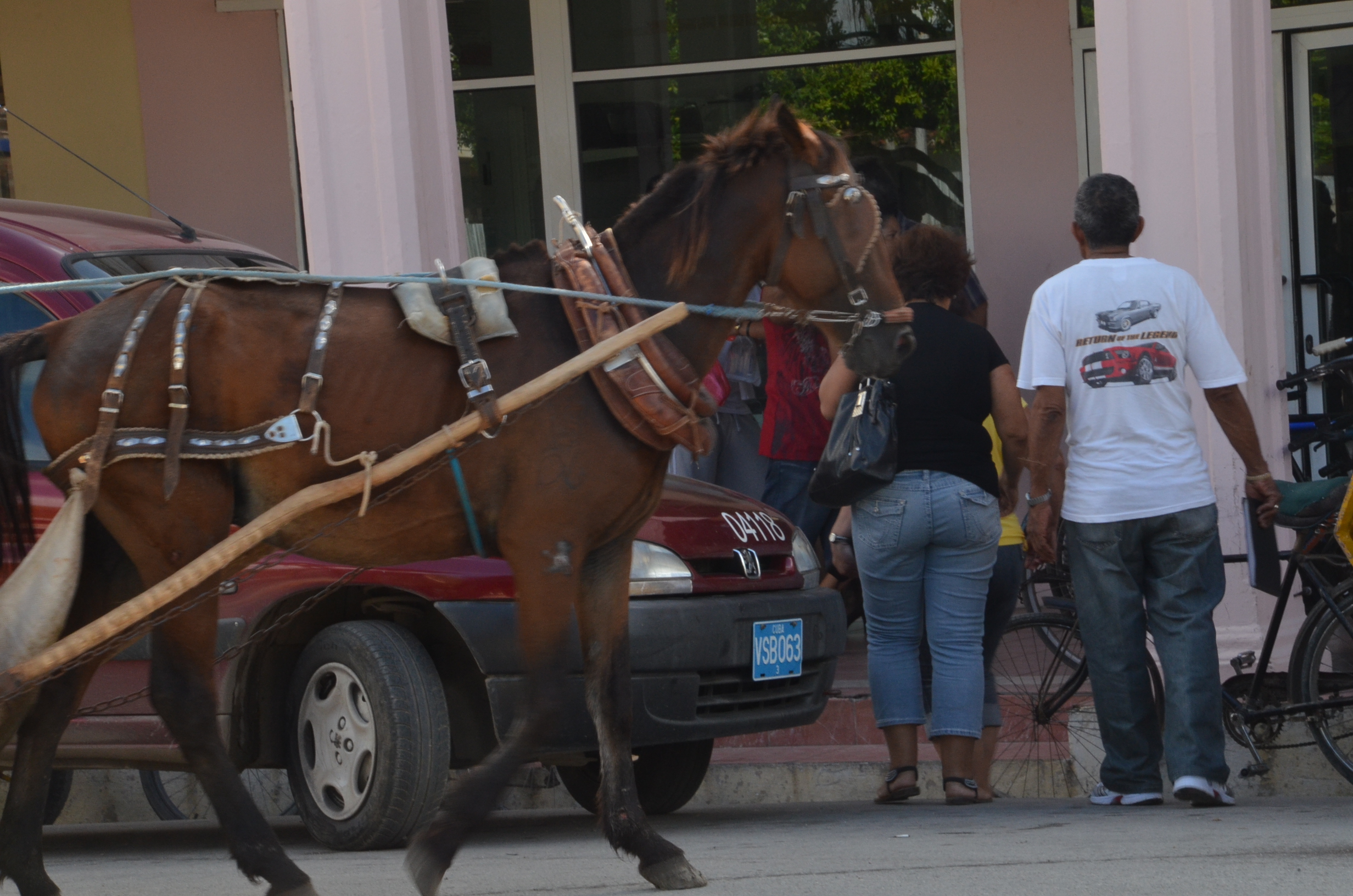
Not only is the land tilled by animals, they are a primary means of transportation.  Riders on horses, wagons used for transporting people and materials.

__

Visiting a country in which we were surrounded by horses and oxen is an exciting, beautiful and exotic and experience. But it is no less a step back into history for most visitors.

The housing is both humble and primitive.  Many homes had only three walls, with the open end of the house facing against the roads, giving families some element of privacy.
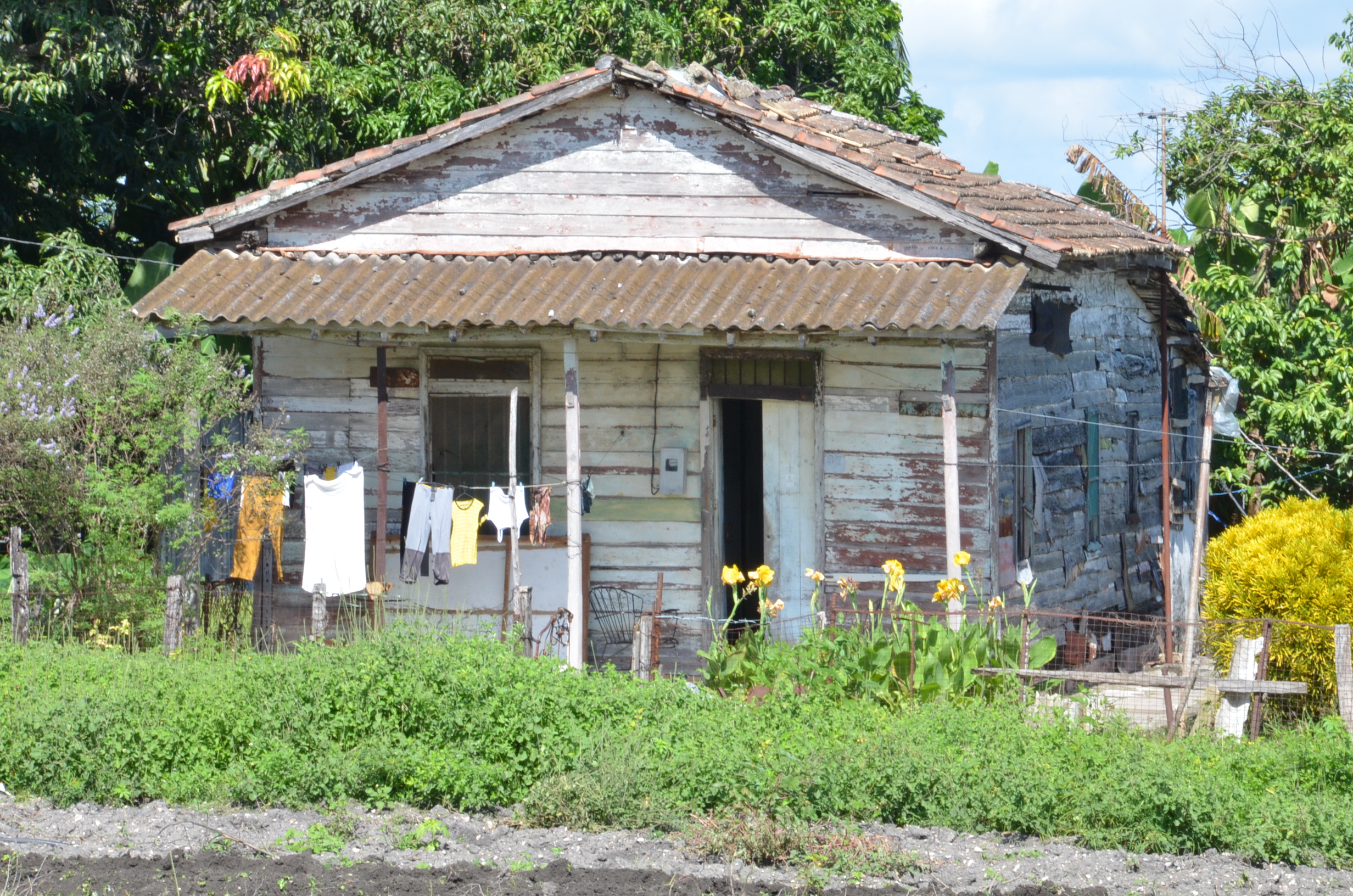
We never saw any evidence of affluence in rural Cuba.

And everywhere along the road we saw laborers, walking with their hats, their bags of unknown purpose, following paths through the countryside, symbolic of the lifestyle that has been chosen for them.

x
Habana: Sunrise Over a Once Forbidden City

Habana, Cuba.  In the states we refer to the city by the name Havana.  But it is their country and it seems they should receive deference in how to spell it.  Long forbidden to U.S. citizens, it is a place like no other.  Just 90 miles from the United States, it is shrouded in mystery.

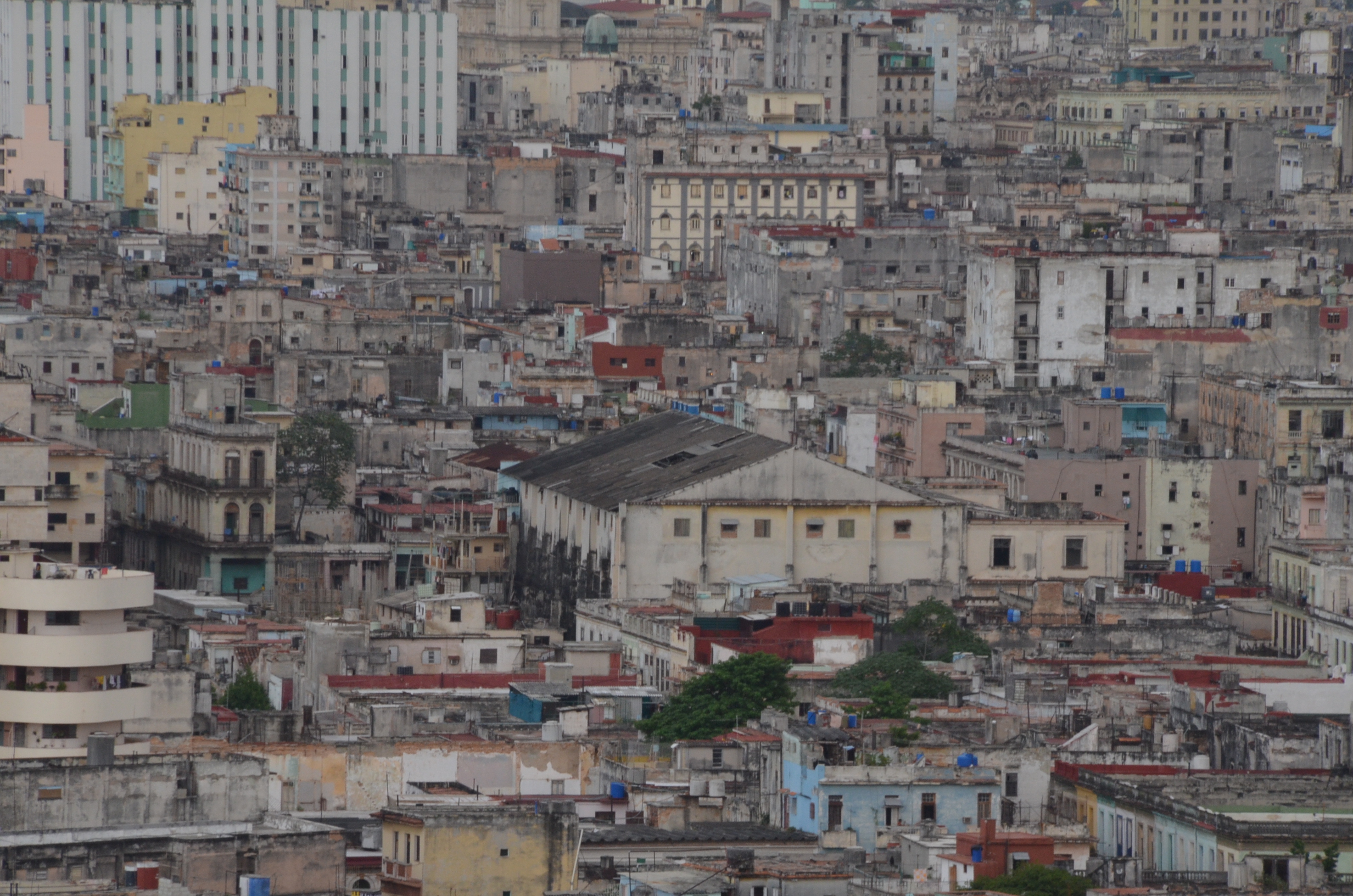
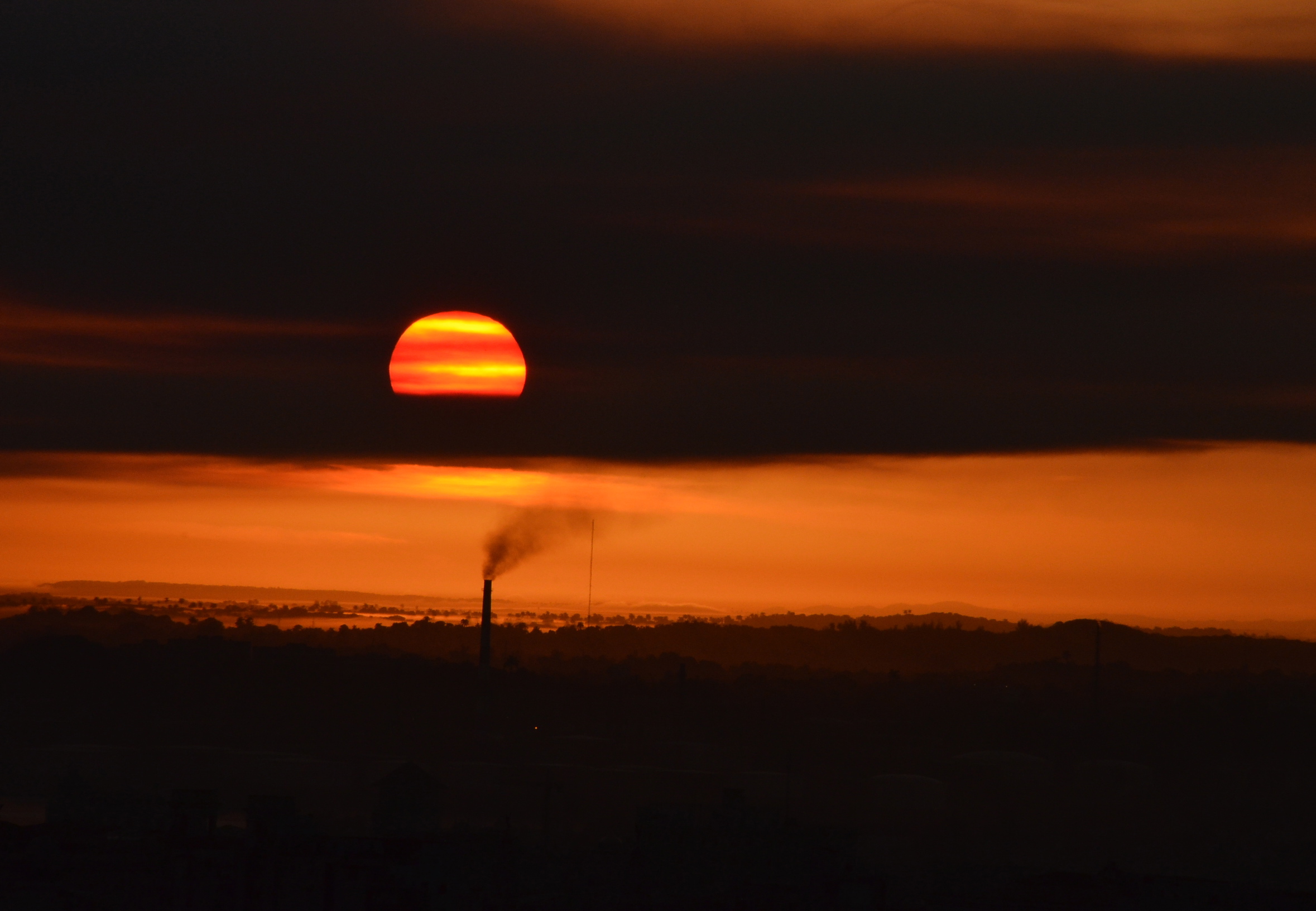
The sunrise over Habana Harbor on the second morning of our visit was as dramatic as the city.  The sun was an intense reddish-orange and the clouds were dark as night.[1]

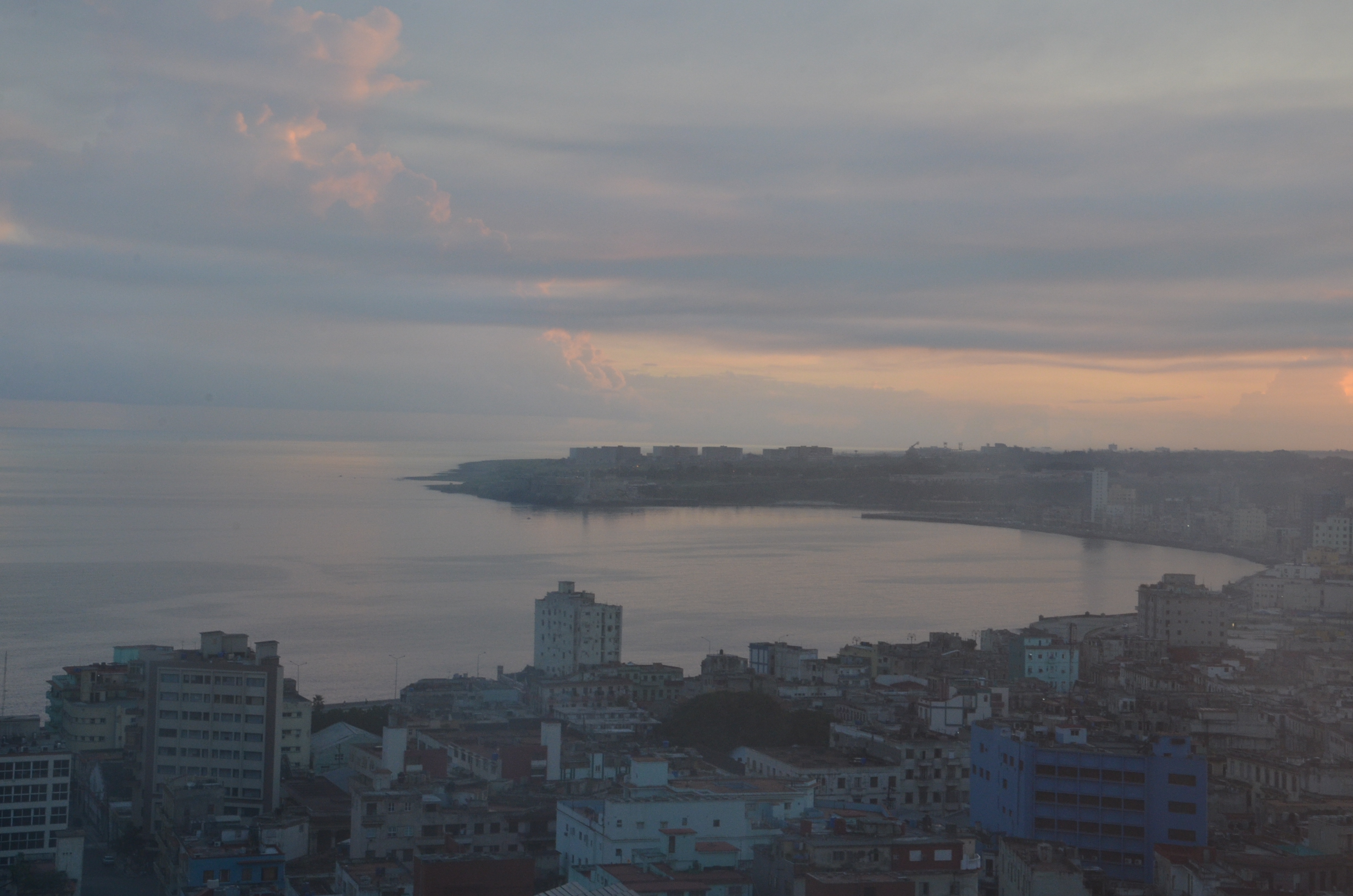
As I watched, the sunlight produced a softer image of the city around us illuminating the sky and the Atlantic Ocean in muted shades of grays and blues.

Within just a few additional minutes, the colors and the texture of the city were in full view.  This photograph reveals the contrast of the beauty and the decay that have enveloped Havana since Fidel Castro’s revolution. A revolution that has resulted in changes that continue to dominate life in Cuba more than 60 years later.

I had anticipated our trip to Cuba would be an exciting and a constantly changing experience for me, and for all the members of our tour.  I was right.

Our journey had really just begun.

[1]  These photographs were taken with my Nikon D5100 camera using a Tamron telephoto lens.  They are not altered or enhanced.  Their beauty and their flaws are all my own.  To stabilize my camera for these slow shots, I leaned against the railing on my 17th floor hotel room and held tight.

Where old cars and young horses collide

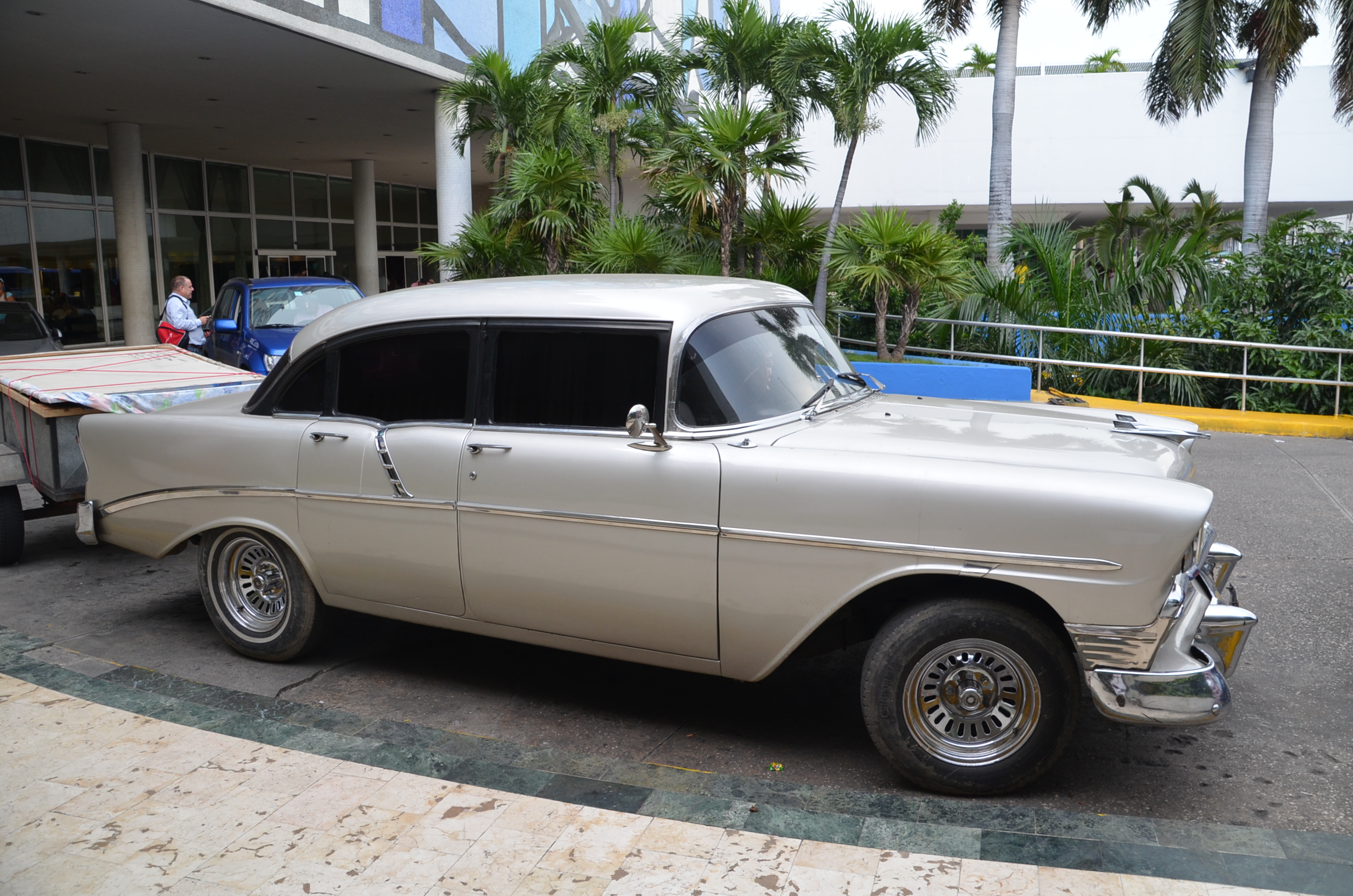
Terry and I are home.  We had a wonderful week.  Terry wanted me to ask you to guess where we went, based on that which has long identified this island nation: old U.S. made cars.  More particularly, cars from the 50’s and into 1960 just a smidge.  Visiting this nation is truly like taking a step–well several steps–back in time!

You will find Chevrolets, Buick’s and Fords serving as taxis standing in front of tourist hotels and in the yards of farmers who have inherited them from their parents.

These ageless automobiles are generally filled with passengers.  No seat is left vacant.  Gasoline is far too precious to assume that anyone would drive alone for long.

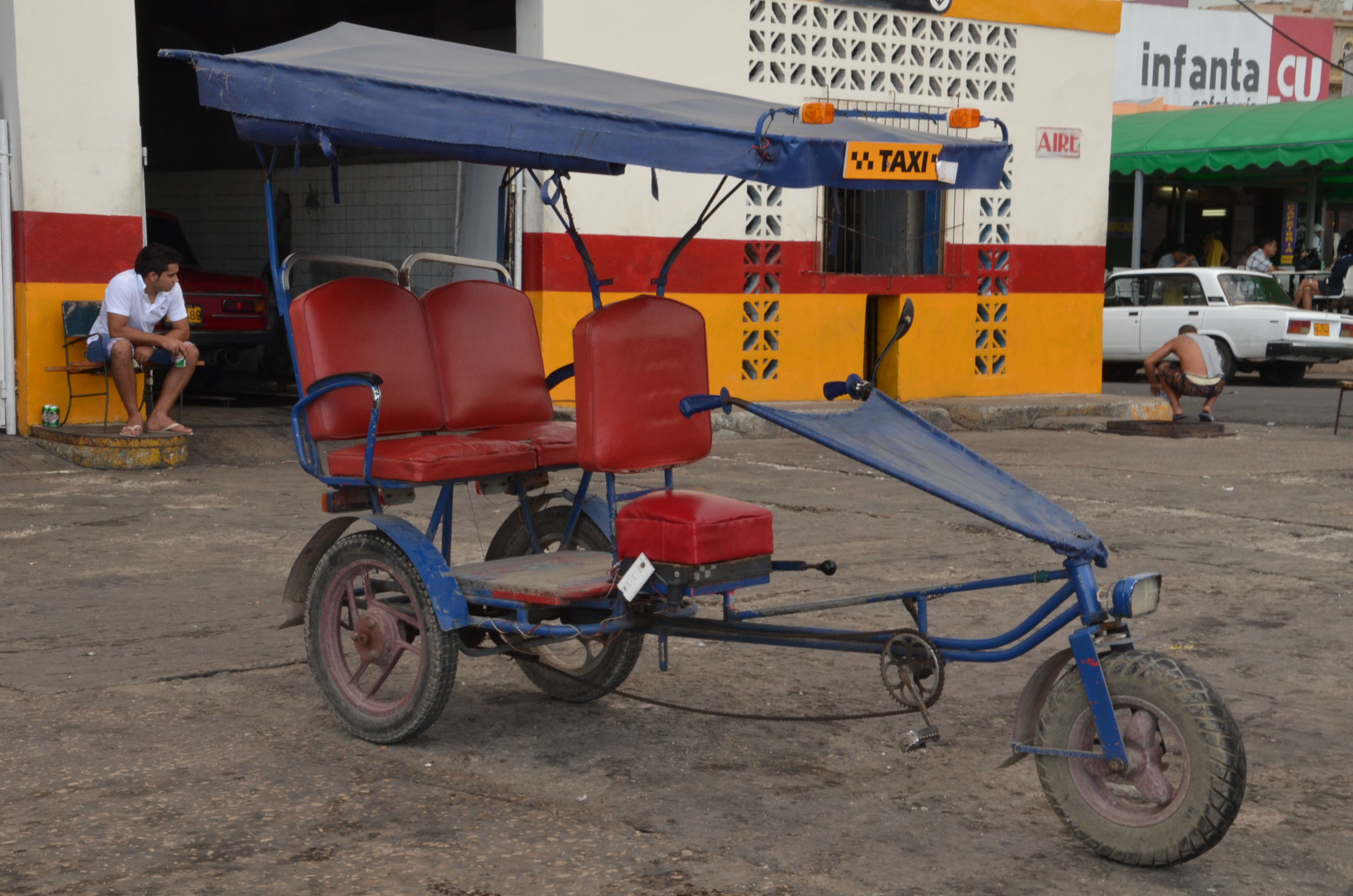
But U.S. made automobiles aren’t the only means of transportation–there are horse and oxen drawn carts; as well as Chinese, Korean and Soviet Block cars.

Years ago the Chinese apparently provided a bicycle for nearly every resident of the island.  They are rarely seen in the cities.  They are everywhere in the countryside.  At least as important, these bicycles, old motorcycles and wagons have been altered into shapes and combinations never anticipated by their manufacturers.

Somehow, the horses, oxen, antiques automobiles all seem to share the road in harmony.  Can you guess the country where we visited?  Of course you can.  But I will share more about our experiences in my next post.

Annandmeg Take a Hiatus

Meg has been on a “sabbatical” from our blog for just over one month.  I only see her smiling face on a fleeting basis.  Here is my last “Facetime” contact with Meg a couple of days ago.  Despite her busy schedule she is still smiling.  “Smile Meg”:

Meg will be back in just over a month.  Now it is time for me to take a brief “hiatus”. By definition, I think, a hiatus is shorter than a sabbatical. Consistent with that concept, Terry and I will only be gone briefly. We have been in a mad scramble to get all our projects in order to have this wonderful opportunity to take a break.

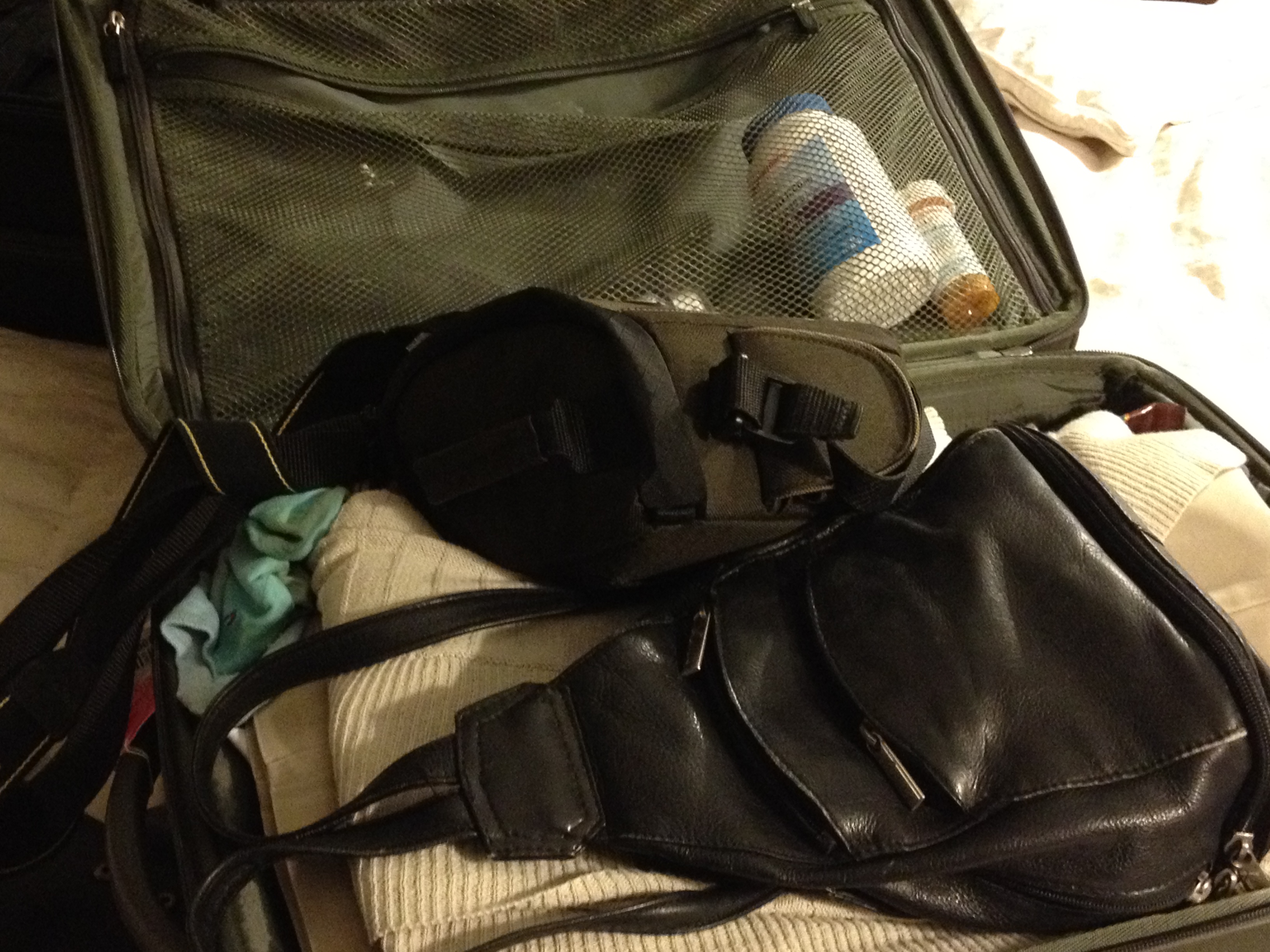
Our bags are packed and we are ready to go:

Casey will spend a week as a farm dog, living in the country with his friends, Dick and Patti.  He was very sad to see us leave.  We are sorry we can’t take him with us:

Terry and I will be traveling.  When we get home I hope we wonderful photographs to show, and great adventures to talk about.  Until we return, I hope your lives, and ours, are filled with adventure. I categorized this post under “Family History” because, for all of us, these are times we will remember for the rest of our lives.   I will be back in a week.  Meg will be back by November 15.

And so, dear friends, be well. Peace!

Sheila Kemper Dietrich Park: Where Urban Renewal is Child’s Play

Within walking distance of Crown Center, Children’s Mercy Hospital, the Juvenile Court building, Ronald McDonald House and a host of children’s and family services, Sheila Kemper Dietrich Park is an oasis in a sea of turmoil.  Few people choose to spend their time at the nearby children’s hospital or any of the children’s agencies.  But the Park is another matter all together.

Located at 26th and Gillham Road, the park is a happy place.  The sight of children and their parents sharing the everyday experience of a swing is a reminder that wounds and illness can heal, troubled children can find joy and estranged  families can be reunited.

As therapeutic as a park can be, this park was in need of a sprucing up.  And it got it.  For the last month or more there was a construction fence around the park.  I was concerned at first that it might be demolished.  But I didn’t need to worry.  Construction crews rejuvenated the park so that it is even better than before.  Urban renewal at it’s best!!

Imagine the fantasy land of a park where a child can experience the thrill and sense of adventure associated with climbing on an old ship (well, not really so old, and certainly not seaworthy) or fending off an artificial sea serpent.  They can maneuver a rope (well sort of) to climb up to the ship.  They can play to their heart’s content while imagining themselves as great adventurers.

Children can wander around cartoon figures that, for young children, are every bit as exciting as the statues at Disneyland, and they are free to all who enter the park.

The park includes children’s slides, swings, jungle gym type climbing equipment.  There are tennis courts on the adjacent property.  Sheila Dietrich Kemper Park is a place where the environment encourages happy thoughts and a spirit of adventure.

For a few minutes at least, the park can remind children and families with loved one’s who are sick or troubled that there can be happy days and happier tomorrows.  And for the neighborhood itself, it is simply a wonderful block where families can experience the simple joys of time together.  For all, the park builds the spirits and inspires us all.

“Thinking Fast and Slow”

Daniel Kahneman, the author of Thinking Fast and Slow, is new to me, but not to others… In 2002 he received the Nobel Prize in Economics.  He is Professor of Psychology Emeritus at Princeton University, Professor of Psychology and Public Affairs Emeritus at Princeton’s Woodrow Wilson School of Public and International Affairs.  

Thinking Fast and Slow focuses on the mind and, in particular, on two very distinct ways of thinking.  System I is thinking that is intuitive and emotional.  System II requires complex analysis of information, requiring a series of steps to work through information to reach a conclusion.

 For those who have read Malcolm Gladwell’s Blink, the concepts of intuitive thinking are well-known.  This is fast thinking.  Fast thinking is thinking that is essentially automatic.  It may be wrong, but it involves recognition of information almost instantaneously, followed as quickly by a rudimentary analysis and application of that information.
Daniel Kahneman, ever the scientist, identifies fast thinking by a very professorial name, “Heruistic” thinking, which, essentially means an “educated guess”, thinking based on factors for analyzing data relying on such factors as easily available information and one’s own experiences.  It is apparent throughout his book, that the author is suspicious of such intuitive thinking.
There are numerous aspects to his discussion of fast thinking.  Among them is that  the type of information an individual can analyze quickly varies from person to person.  Since my own background involves legal analysis, I am more likely to make intuitive decisions when reviewing matters related to the law.  In contrast, my husband’s expertise includes accounting and economic issues.  He will deal quickly with business matters that are outside my area of knowledge.
Decision making relying on fast thinking is potentially subject to serious errors because our intuitive thinking often relies on our own biases and limitations.  In my attempt to understand this concept, I am reminded of the saying “to a hammer, everything is a tack”.

Slow thinking is deliberative.  It differs from fast thinking not only in the speed with which it occurs, but the steps and process by which it happens.  One of Kahneman’s initial examples of deliberative thinking is the process of multiplying 17 x 24.  He opines that most people can’t immediately multiple complex numbers. No question that for me, as for most of us, reaching an answer  to this mathematical process requires a series of steps. There is nothing intuitive about the answer.

Kahneman analyzes various aspects of how we think, the factors that influence the speed and accuracy with which we analyze information, as well as ways in which we can improve the quality of our deliberative activities. While academic in the detail and in the explanations of the concepts on which he relies, the studies and experiments on which he rely represent a significant leap forward in our understanding of the human mind.  He also manages to effectively wrap into this analysis a lesser analysis of the impact of fast and slow thinking on the seemingly unrelated analysis of happiness and pain.

In his conclusion, Kahneman describes the mind as an “uneasy interaction between two fictitious characters:  the automatic System 1 and the effortful System 2.”  Thinking Fast and Slow is a book to be studied, rather than merely read.  Each of us can enhance the quality and accuracy of our decision-making by studying his work.  It is more than worth the effort required.

In Search of Dvarapala

Mysteries are just facts waiting to be discovered.  Since research is as exciting to me as sports are to some of my friends, I love a mystery.  Taking a hiatus from family research, I was trying to come up with a project.  The one that came to mind was  staring me in the face, literally.  It combined Indian history, religion and art.  Perfect, I said to myself.

Over 30 years ago I stumbled on two wonderful little statues in a small antique store.  They were a bit pricey for my recently out of law school budget.  Fortune smiled on me.   I was the only customer who fell for these unusual pieces.  Months later, I returned to the shop. Both statues were still there.  They were discounted and I took the plunge.

I was told the statues had been salvaged when a Hindu temple was destroyed.  They were supposedly purchased by an interior decorator who traded them to the antique dealer as partial repayment on a loan.  I took them home, tried to research them, gave up and put them where I can enjoy them!

The most interesting of these statues (don’t tell the other one) is pictured below:

It is a wonderful carving but other than the dealer’s story, I had no real understanding of his significance.  Technically, he is a “wood & polychrome” statue, meaning only that he is painted in a variety of colors.  It is obvious he has been repeatedly repainted, suggesting only that he is not new and, perhaps, that he was designed more for utilitarian, than artistic, purposes.

A lot has changed in 30 years.  I realized with the internet I should renew my search.  I began by searching terms including Hindu statue, guardian, Hindu art and Indian art.  Eventually I came across the term “Dvarapala” [1] meaning guardian deity, door guardian or wrathful deity. Dvarapala is associated with the temples, shrines  and monasteries of Buddhism, Taoism and Hindu religions.  They are found in such countries as India, Burma, Tibet, Malaysia, Japan, Sri Lanka, Cambodia and China.  These guardians have played a significant religious role throughout much of the world for over a thousand years.

Initially the images of Dvarapala I found on the internet were massive stone or bronze sculptures of ferocious warriors.  Ultimately I came upon a reference to more benign sculptures and continued my quest. Finally, I googled “Dvarapala, 1800s” and discovered this wonderful late 1800s statue, also identified as “wood polychrome”.  The Jaipaul family donated it, with other Indian and Tibetan sculptures, to the Allentown Art Museum, [2] in 2000:

While certainly of finer quality than my own statue, the similarities satisfy me that my home and family are well protected by a Dvarapala.  I promise to treat it with the respect it deserves as a representative of a deity not my own.

__________________________

[1]  In Buddhism “Dharmapala” identifies a wrathful  protector who, similar to the Dvarapala, often guards a monastery or other religious building.

[2]  Allentown, Pennsylvania