The “Dragon Boats are coming”–and friendship comes with them

From X’ian, China, to its sister city, Kansas City, Missouri, come the Dragon Boat races, a wonderful cultural tradition.

The races are held under the  “Sister Cities International Bridge”, where life-sized Chinese warriors guard the foot bridge as it crosses Brush Creek.  The imposing bronze warriors are symbolic of the rich culture of China’s ancient civilization as well as the friendship between our cities.

Festive red ornaments crossing the bridge announce the 12th annual Dragon Boat races held Saturday, June 9, 2012.  The races are part of an annual celebration of the friendship between the people of these two cities.

The celebration includes races involving local university students and corporate teams as well as representatives of China. The event  includes a wonderful display of pageantry, speeches and a colorful dose of Chinese culture.

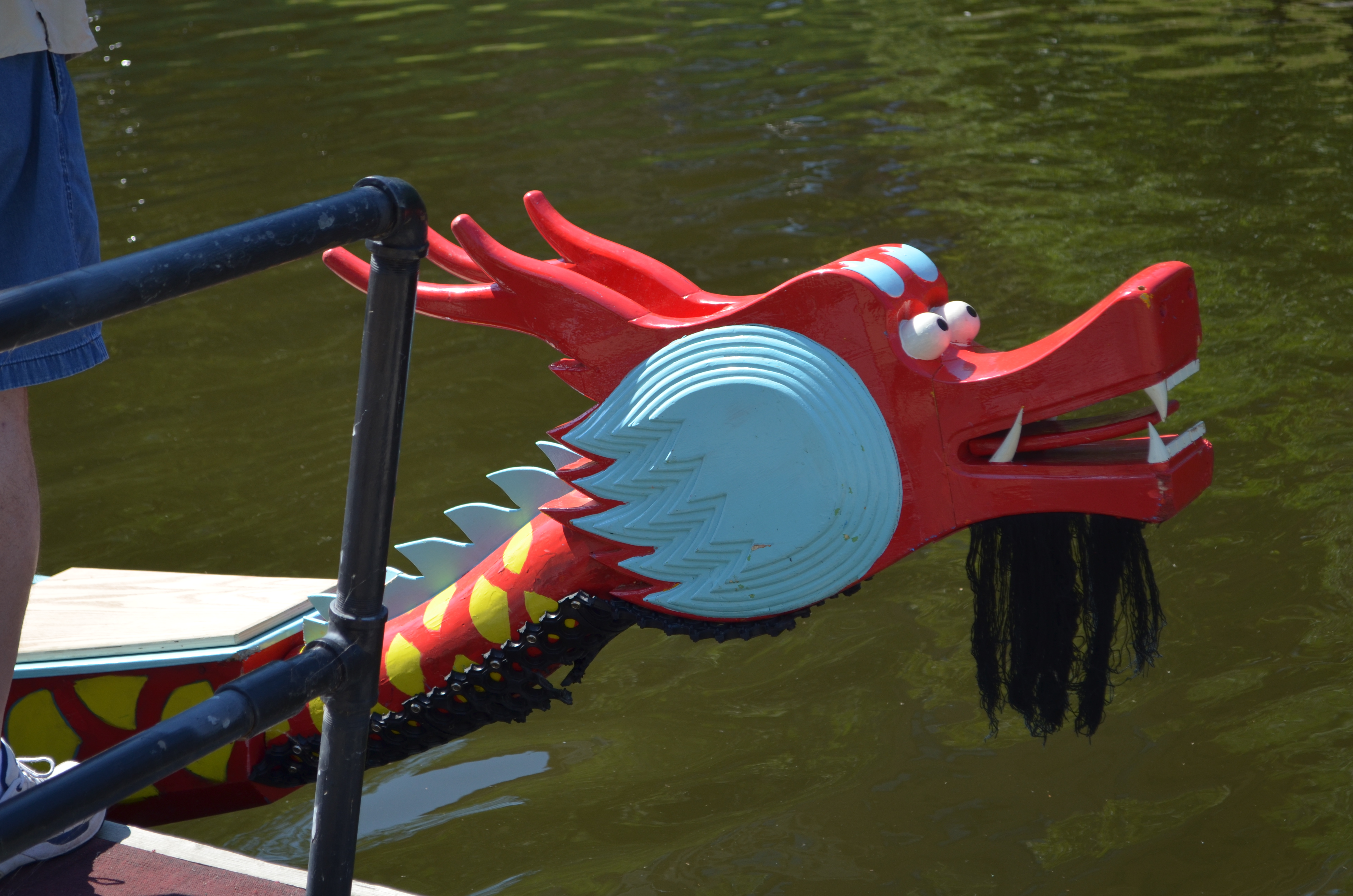
While the celebrations include a ceremony called “waking the dragon”, the dragons of most importance are the decorative dragons that embellish the front of each boat.  These dragons are whimsical and colorfully painted.

At this year’s event, Mayor Sly James not only greeted visitors, he spoke to the crowd, encouraged the celebrants, and also agreed to be  the drummer for Kansas City’s home town team.  Way to go, Sly!

Here, a drummer beats the rhythm for the crew in the first race.  The crew paddles as quickly, or as slowly, as the cadence of the drummer.

On this happy day there were no worries about the politics of our two countries, of the balance of trade, or of jobs lost and found.  It was a celebration and a time of friendship.  A good time was had by all.

Just another Saturday in Sonoma

Jake and I finally had a Saturday to ourselves this weekend, so we tried to come up with something wonderful and exciting to do. We were a little too exhausted to go on a new adventure, so instead we decided to do one of our favorite standby activities…head into Sonoma, drink some wine, and eat some truffle fries.

First we stopped at Cline Cellars, where we got married back in May 2010. We finished off our tasting with their Late Harvest Mourvèdre. It was a port-style red, paired with bittersweet chocolate chunks. Absolutely delicious!

After our tasting, we walked around the Cline grounds. We stopped at the fountain near the courtyard where we were married, and then the courtyard itself.

When we left Cline, we headed to downtown Sonoma, where we met our friend John at the Roche Tasting Room. Since we’re members at Roche, we do go there on the occasional Saturday afternoon. Today, we were delighted to see both John and Harry, who are always a joy to be around and very knowledgeable about wine. And of course, the day would not be complete without El Dorado Kitchen’s truffle fries.

Jake was feeling particularly adventurous at this point, so he decided to order a new favorite called a “Moscow Mule.” It has vodka, lime juice and ginger beer, and it is very refreshing. Mostly, I like the fact that it comes in a copper mug, and I thought it made for a great photo.

It was a great afternoon. I think sometimes we work so hard that we need to remember all the wonderful things to do in the area, and all the joys there are to experience. As we walked along the square, I looked over at one point and saw Jake leaning against the wall, happy as a clam. We really do love living here!

Impact of Health Issues on Poverty in Rural Iowa, Guest Author, Sherry Mesle-Morain

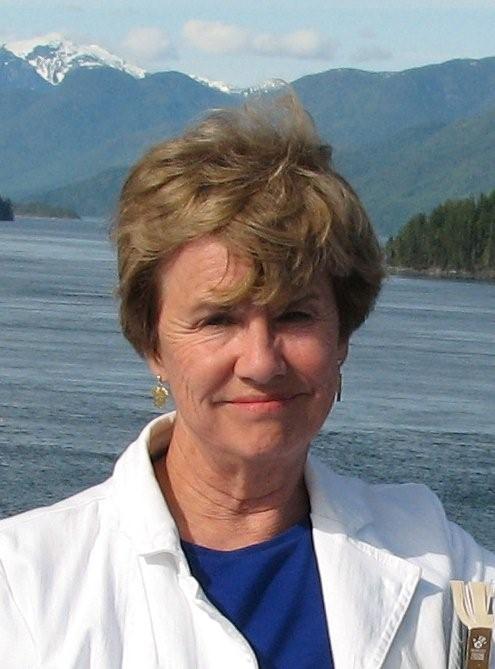
Biography:  Sherry Mesle-Morain received her undergraduate degree from Tufts University, her Master of Education Degree from George Washington University, and her Masters in Social Work from Smith College School for Social Work.  She began her career in financial aid for students at Nazareth College in Pittsford, New York.  After raising two children she returned to academia at Graceland University in Lamoni, Iowa.  She retired as the Director of Financial Aid Services for the university.  Since her retirement she has focused on volunteer activities in Lamoni and, as she says found that people suddenly thought she could do anything.  Her volunteer work with the Community Financial Support Coalition (FSC) guided her thinking to the subject of this blog.

Impact of Health Issues on Poverty in Rural Iowa

Life is good.  Or, I should say, my life is good.  I have a family I love and who loves me.  We are kind to each other.  I have more than plenty to eat and I have nice clothes to wear.  I can afford the gas to drive to Atlantic to see my daughter and Kansas City to see my dad, my sister and my son.  And I have energy to serve my community and to have fun. Not everyone in my small town in Southern Iowa is so blessed.

The City of Lamoni has some generous citizens who contribute to the Lamoni Community Financial Support Coalition (FSC), the mission of which is to provide modest emergency financial assistance to citizens in need—shifting the balance, so to speak.  My stewardship with the FSC is to interview those folks who have requested financial assistance from our small pool of funds.

I began to sense that major medical issues were a primary factor in the lives of the people I meet with, but I know that hunches are not truth.  Then I realized that I had the raw data to do a small statistical analysis of the reasons these good folks are in need of help. Of the 32 people seen, 75% of them or their children had medical issues that ate up their resources and/or kept them from working, at least temporarily, whether full-time or part-time.  Their time off work was anywhere from a couple of weeks to a full year.  One of the things that surprised me when I talked to people who had medical issues was that they took seriously their responsibility to pay their outstanding medical bills.  Many used up their savings paying their bills and others were on payment plans that kept them in poverty.  Some were on Medicaid, which relieved them of constant payments, but they still faced the fact of having no income because of their health issues.  Occasionally someone had gone several days or a week without taking vital medications because they would not get paid for another week and could not afford to pay for their prescriptions. Four women were unemployed because of maternity leave.  They not only could not work during those few weeks, but they also did not have paid maternity leave.  And, of course, when they do go back to work they have to figure out-child care—who will provide it and how will they pay for it.  This is a huge expense that eats up their minimum wage earnings.

Just a few days after I did this analysis I heard a news story on National Public Radio of a national study showing the same results.  Both my analysis and the NPR story of April 20, 2012, by Jennifer Ludden verified my observation.  There are three points Ludden made that I would like to share with you.

1)   Two-thirds of women with young children now work.  Nearly half are their family’s primary breadwinner.  (Of the women I interviewed the majority were living with the fathers of their children, men who were either underemployed or unemployed.  These are serious issues, but that is a subject for another day.)

2)   Because so many companies do not offer paid sick leave or paid vacation, a mother who stays home to care for a sick child is at risk of being told not to return to work.  If it is mom who is sick, she is in the same spot.  She doesn’t get paid to stay home, so she can either care for her children herself when she is sick, or she can put them in day care and go to work sick so as to afford the child care.

3)   Having a baby is a leading cause of temporary poverty.  Many women with no maternity leave end up quitting their jobs to care for a baby.  When they lose those needed jobs it is very hard to get back into the workforce.

While on the national level we have the necessary and intense discussions as to how to address unsolvable problems, how to manage the social safety net, and how to see to it that everyone gets health care, the people who request assistance from the Lamoni Community Financial Support Coalition are in real and immediate need: of diapers and wipes, of formula, of heat and water, of a place to live, of medical care, of gas to get to work and to medical appointments.  The needs do not stop and they are real.

I am amazed at the resilience and optimism of these folks.  But from time to time they need a helping hand to shift the balance in their favor.

Please note: the views expressed by guest authors are not necessarily those of the primary authors of Shifting the Balance.  We do believe it is important to encourage the free flow of ideas and to promote collective action and compromise.  In order to keep the country “in balance” we believe we should work together, and that means sharing and respecting ideas, including those that may be different from our own. 

Night views of the Country Club Plaza

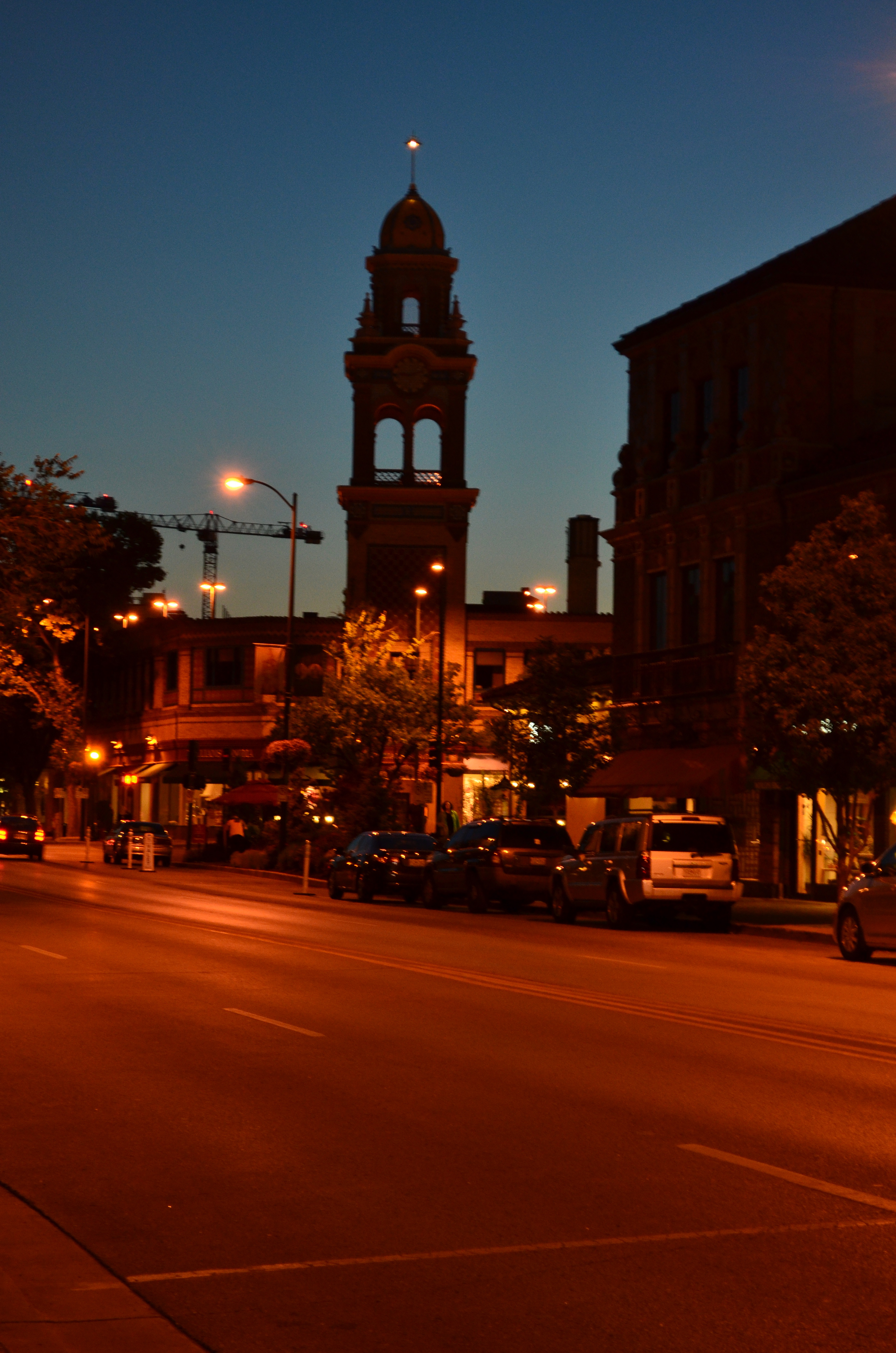
The Country Club Plaza is always beautiful.  The seasons of the year and the time of day significantly impact the images that we see.  These photographs were taken late in the evening, just after the sun set, but before it was completely dark.  (These scenes are best viewed with your brightness setting on high.)

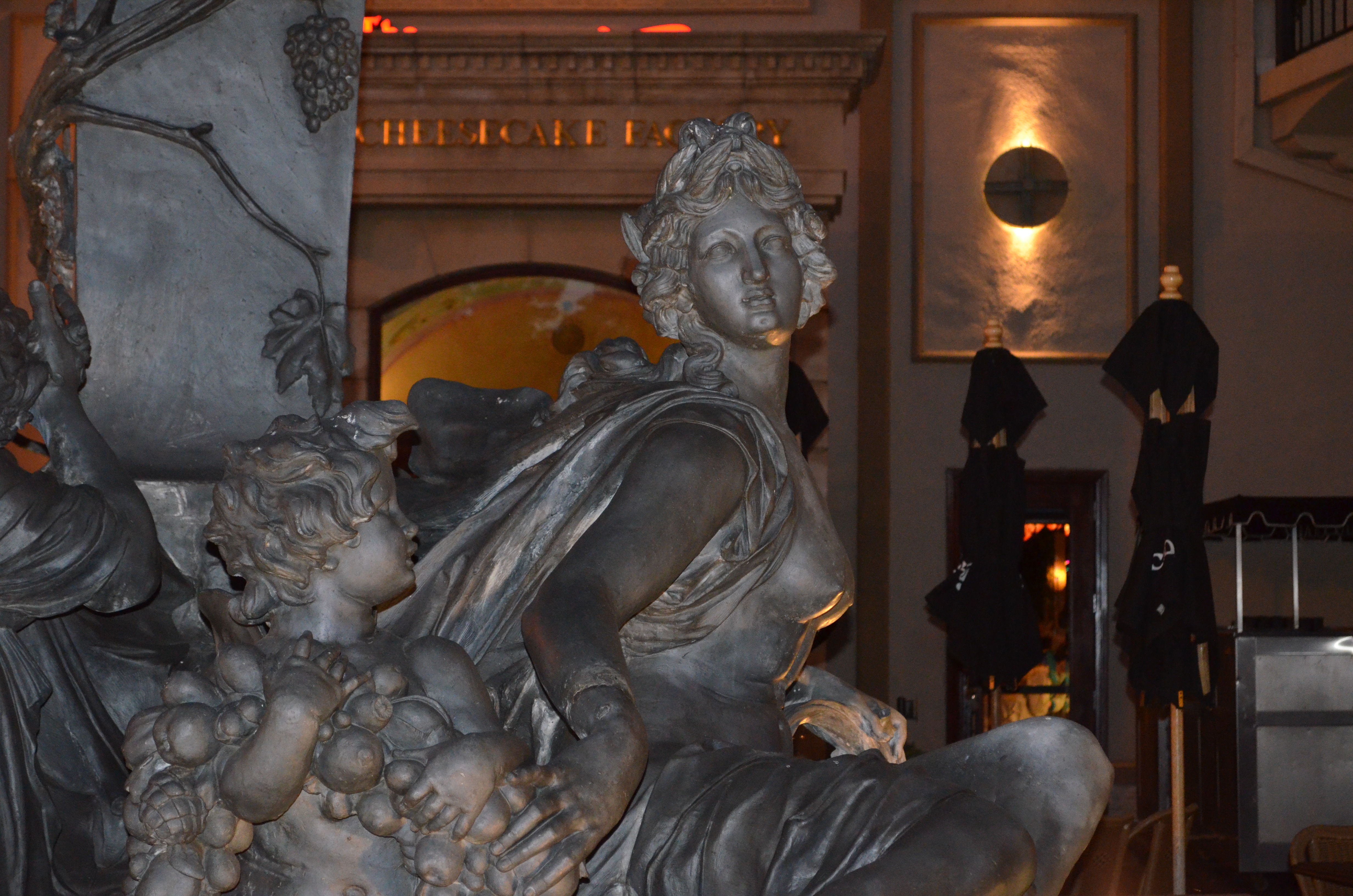
From the Fountain of Bacchus Sculpture, located at the Chandler Court at 47th & Wyandotte, is made of 10,000 pounds of cast lead.

The architecture throughout the Plaza is inspired by the architecture of Seville, Spain.

Night view of Broadway Bridge and Brush Creek, on the Country Club Plaza

The Statute of Ruth, representing the Biblical Ruth, is located at 48th & Wyandotte.  It is formed from white Carrara marble.

Good Morning Petaluma

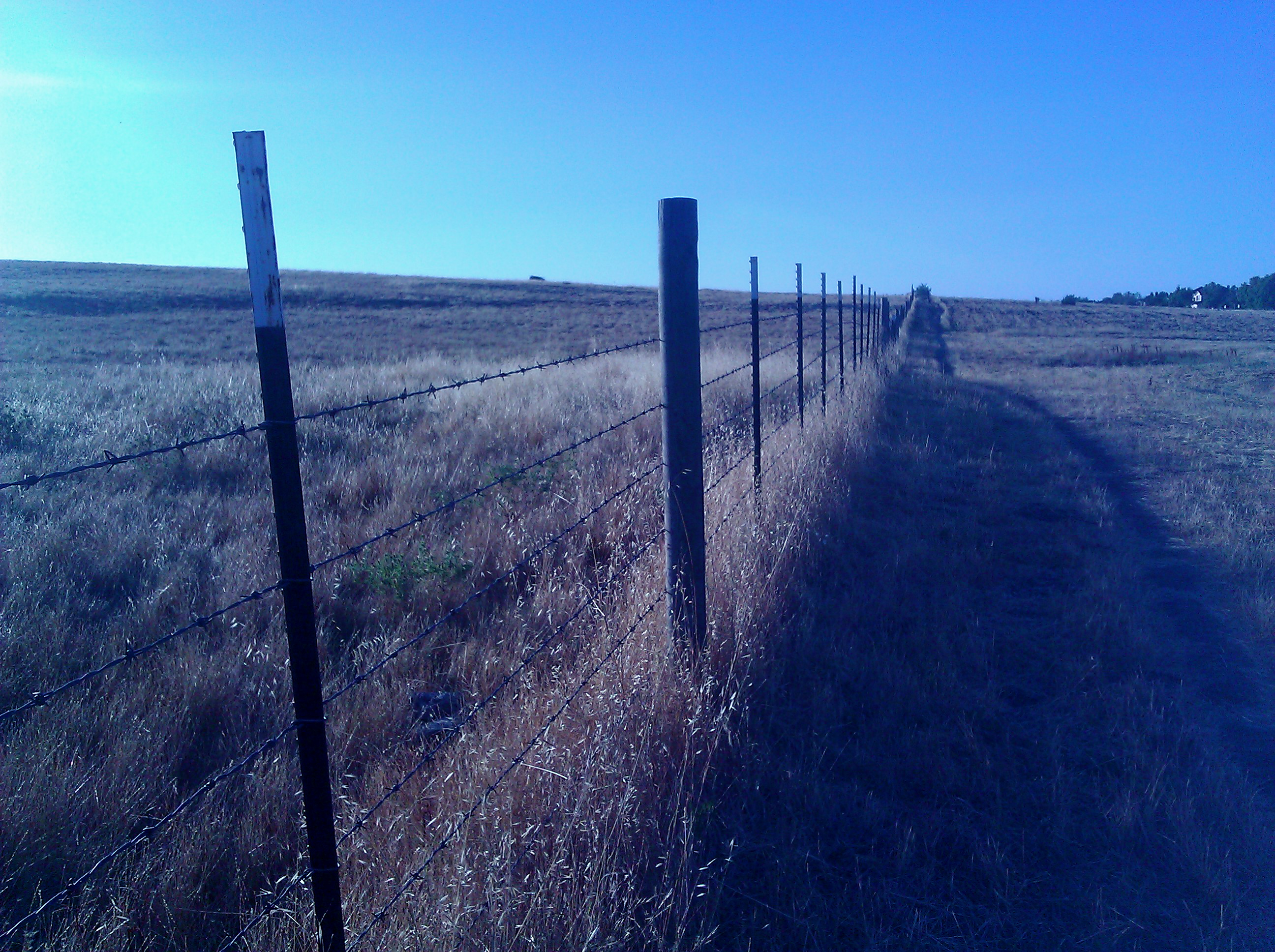
I went for an early morning run the other day, right along the fence line on the east side of Petaluma. With everything going on lately, I find my morning runs to be the most relaxing.

It was a beautiful morning. The sun was coming up, the birds were chirping, and even the cows gave me a “good morning” nod as I passed by. I took this photo from my phone, right along my favorite running trail. It was a beautiful start to a beautiful day.

I hope you have a wonderful day!

High Fashion or Shock Factor

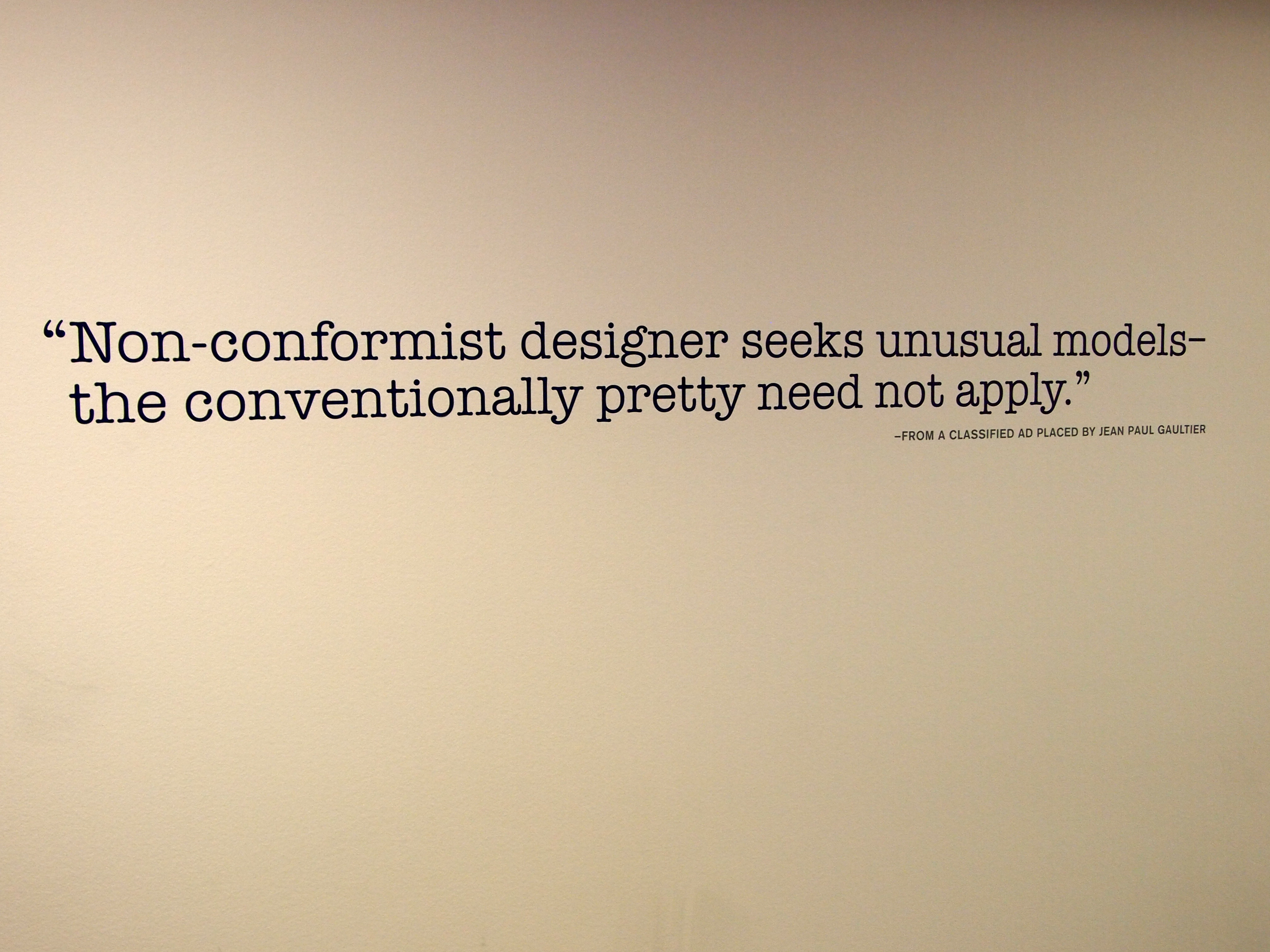
Jake and I visited the de Young Museum in San Francisco’s Golden Gate Park to see the special exhibit on fashion designer Jean Paul Gaultier. The exhibit, “The Fashion World of Jean Paul Gaultier: from the Sidewalk to the Catwalk,” is currently running at the de Young until August 19, 2012.  The exhibit features designs from the 1970s through the 2010.  To give you an idea of Gaultier’s approach, this is the first thing you see when you walk toward the entrance to the exhibit.

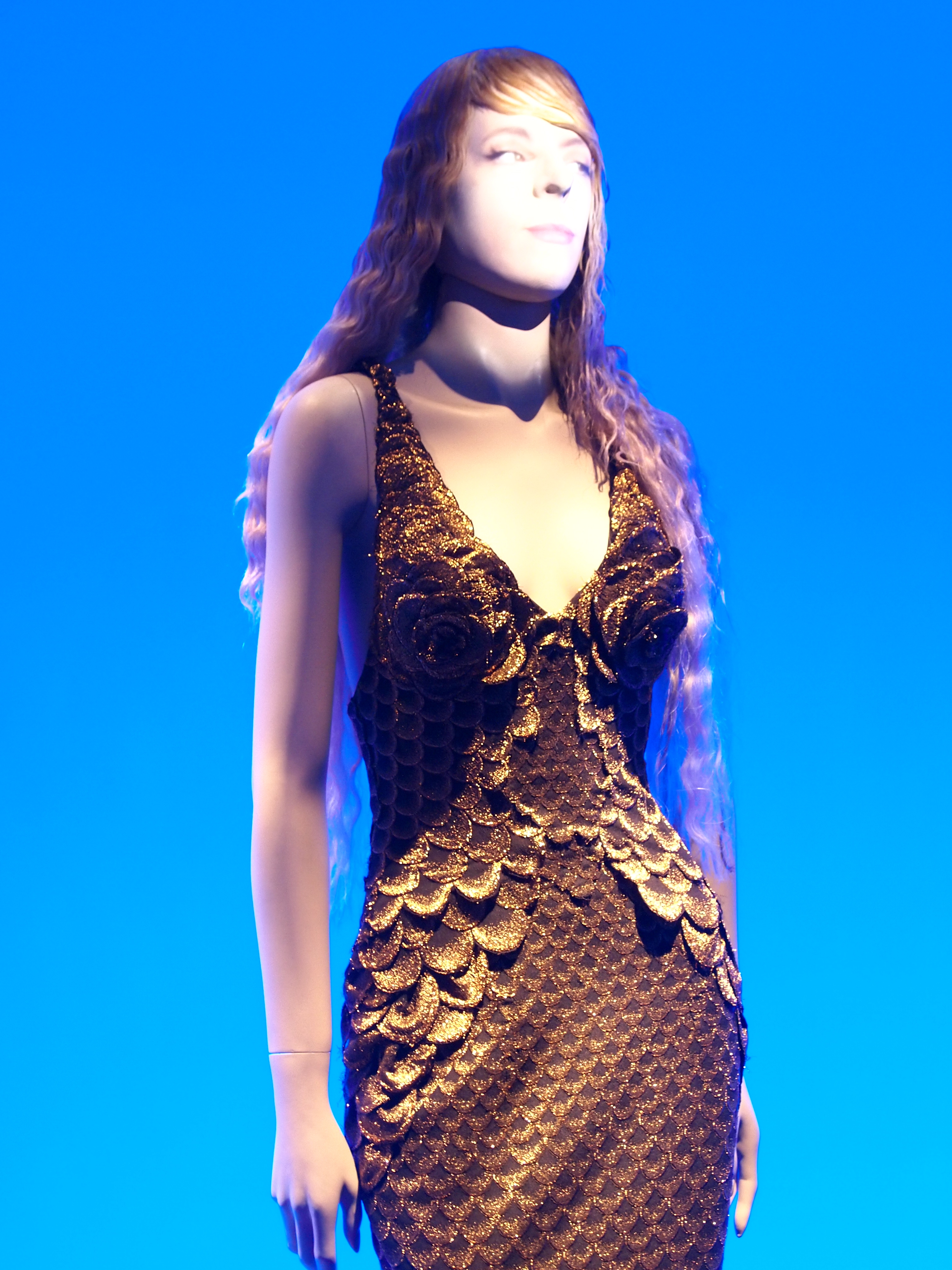
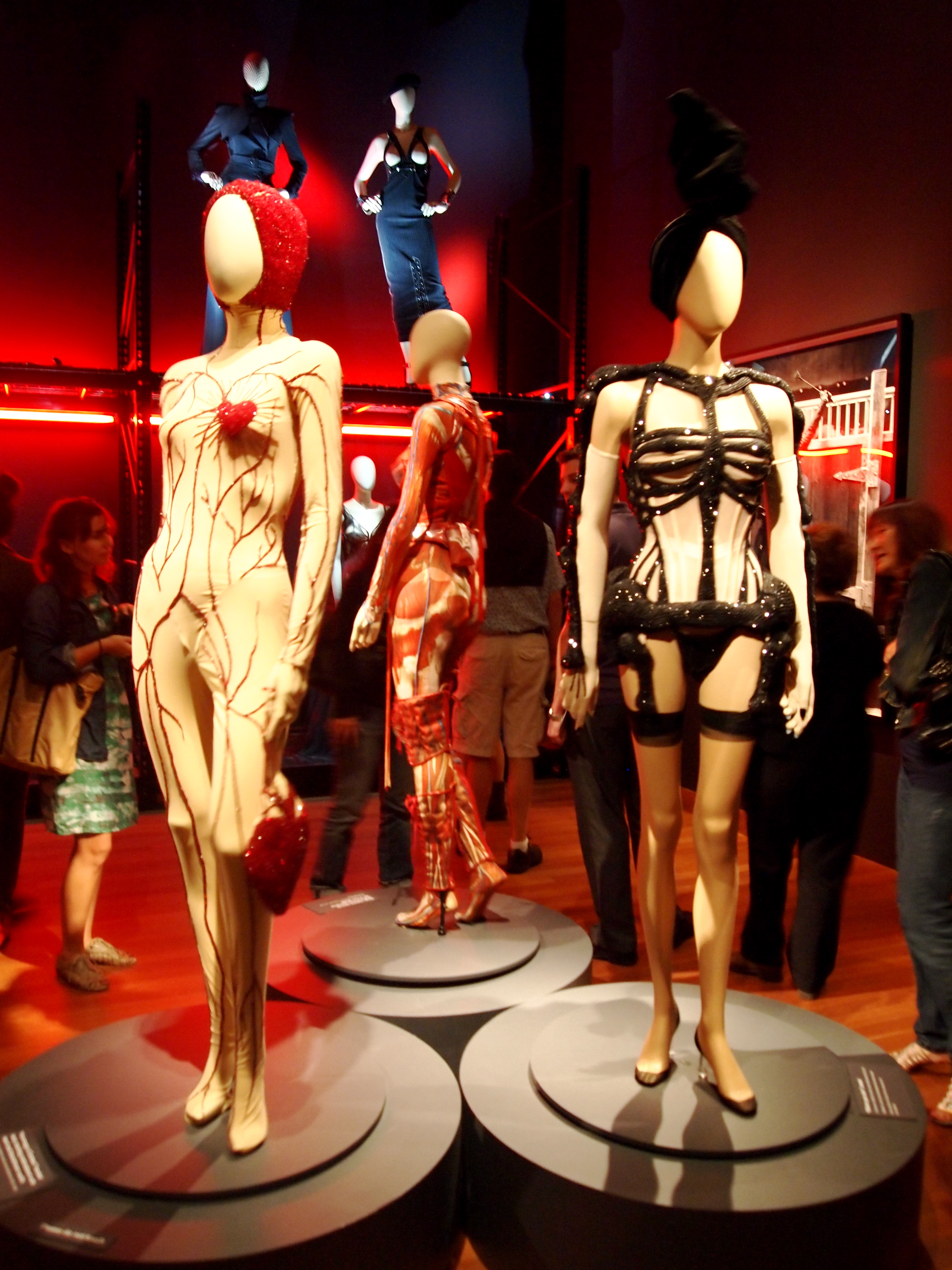
Madonna, Lady Gaga and other celebrities have worn his designs while on tour. His designs are provocative, highly sexual in nature, and reflect the multi-cultural and transgender world of Paris in the 1970s, when Gaultier began as a designer.

I realized part way through the exhibit that I wasn’t taking pictures. Why? Because I was completely entranced with all the crazy designs! Gaultier’s work does have that shock factor, but I also admire his ability to communicate through design. The mannequins at the exhibit’s entrance are facing you when you walk in, but then you see eyes and faces staring at you, and moving! Are they real models? No, they are projections, but it is almost impossible to tell unless you look at them from the side.

The exhibit was incredible. I highly recommend visiting the de Young, both for the Jean Paul Gaultier exhibit and for the permanent exhibits in the museum. It is a modern structure, which is very different from the Legion of Honor we visited earlier in the day, but the setting is just as beautiful, and the artwork incredible. Once again, thank you Auntie and Tio for such an incredible day!

To see more about the exhibit, please visit the de Young website here.

Enjoy!

World War II: They died that others might live

World War II holocaust survivor, Bronia Roslawowski, was born Brucha Kibel, in Turek, Poland, to Tzvi Eliezer (Hersh) Kibel and Bluma Bayrach.  She was born in about 1926 but we were never really sure about her age!  She died July 14, 2010, in her adopted hometown, Kansas City, Missouri, after a long and meaningful life.  She was beloved by all who knew her–and she seemed to know almost everyone.

On September 4, 1939, German armed forces marched into Turek, where Bronia lived with her family.  After two already difficult years, in December 1941, Bronia was sent to Inowroclaw Straflager in Northern Poland.  A “resettlement camp” during the war, it was the first of approximately 5 concentration camps in which Bronia survived the war.  In 1943 she was deported to Auschwitz-Birkenau. She worked in a forced labor camp at Telefunken plant in Reichenbach, escaped the gas chamber in 1944 and was forced on a death march shortly before war’s end. Her right arm was tattooed with the number 57365. Still, despite all that she suffered, she survived.  She was liberated by U.S. servicemen in 1945 and worked briefly in a resettlement camp before moving to the United States.  Only she and a brother survived the war.

Bronia married Mendel Roslawowski, himself a survivor of the camps.  Together they raised his son and her three daughters.  They opened the M & M Bakery at 31st & Woodland.  A popular neighborhood deli, it was a favorite of the local community, medical students and young lawyers.  Her brisket and bagel sandwiches were absolutely priceless.  She had photographs on her walls of children who frequented the deli, many of whom she fed free sandwiches and cookies.  She hugged her customers and seemed to find time to make each of her regulars feel loved.  To Bronia, no one was ever a stranger.

Bronia never forgot her war-time experiences.  She was determined not to let those experiences, or the loss of her family, control her life. She laughed easily and often.  She opened her home to her extended family and her children’s friends–who came to feel like family.  At the same time, anxious to educate her community about the horrors of war, she spoke regularly on behalf of survivors about the holocaust, and worked with the Midwest Center for Holocaust Education.  Her message was a message of love., stating She forgave those who harmed her, insisting they are all God’s children.  She acknowledges the hate and ugliness she saw in the world and she denounced Nazis, but not the German people.  She stated that “you cannot condemn a nation.”  “I don’t hate” she  repeated.   

Prior to her death she was one of 52 Kansas City Holocaust survivors and war refugees whose stories are included in the book From the Heart.  She is also the subject of a children’s book, Love the World, by Maureen Moffitt Wilt focused, obviously on her message of love.  It is beautifully illustrated by Jeff Porter.  The photograph of her family, taken at her granddaughter’s marriage, is an image of a woman who not only survived the war, but thrived.  She lived a rich and full life. Bronia’s life, and her message of love, are reflected in the strength and commitment to family and community of her children, grandchildren and great grandchildren.

For Bronia, her family and all of the other Bronias, the horrors of their early lives gave way, to meaningful lives here in the United States, in Europe and throughout the world.

A victim of hate, she became a messenger for love.  She understand that as she suffered due to the hate and intolerance of others, she also was given a new life by liberation forces.  Neither their sacrifices, nor Bronia’s message of love, should be forgotten.

Kansas City Remembers: The World War I Museum

Memorial Day weekend is a fitting time to remember the sacrifices of our nation’s military forces.  There are few places that symbolize this sacrifice as powerfully as the National World War I Museum, located here in Kansas City. It includes over 55,000 artifacts from the war years, a time line of events during the war years, photographs, armaments, and far more treasures than a visitor can absorb in one visit.  Even the setting is a powerful visual experiences, sitting as it does with one of the most beautiful views of downtown Kansas City.  

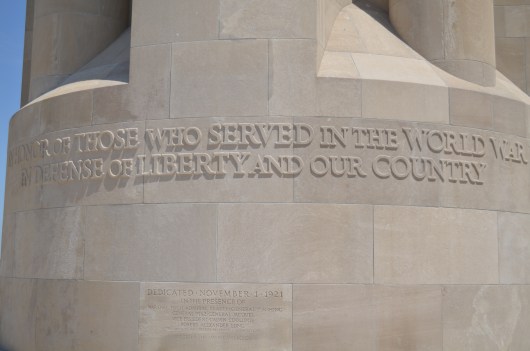
No visitor can reach the museum without first confronting the Liberty Memorial Tower, which sits immediately above the museum, and which is dedicated to the the “Honor of those who served in the World War in Defense of Liberty and our country”.
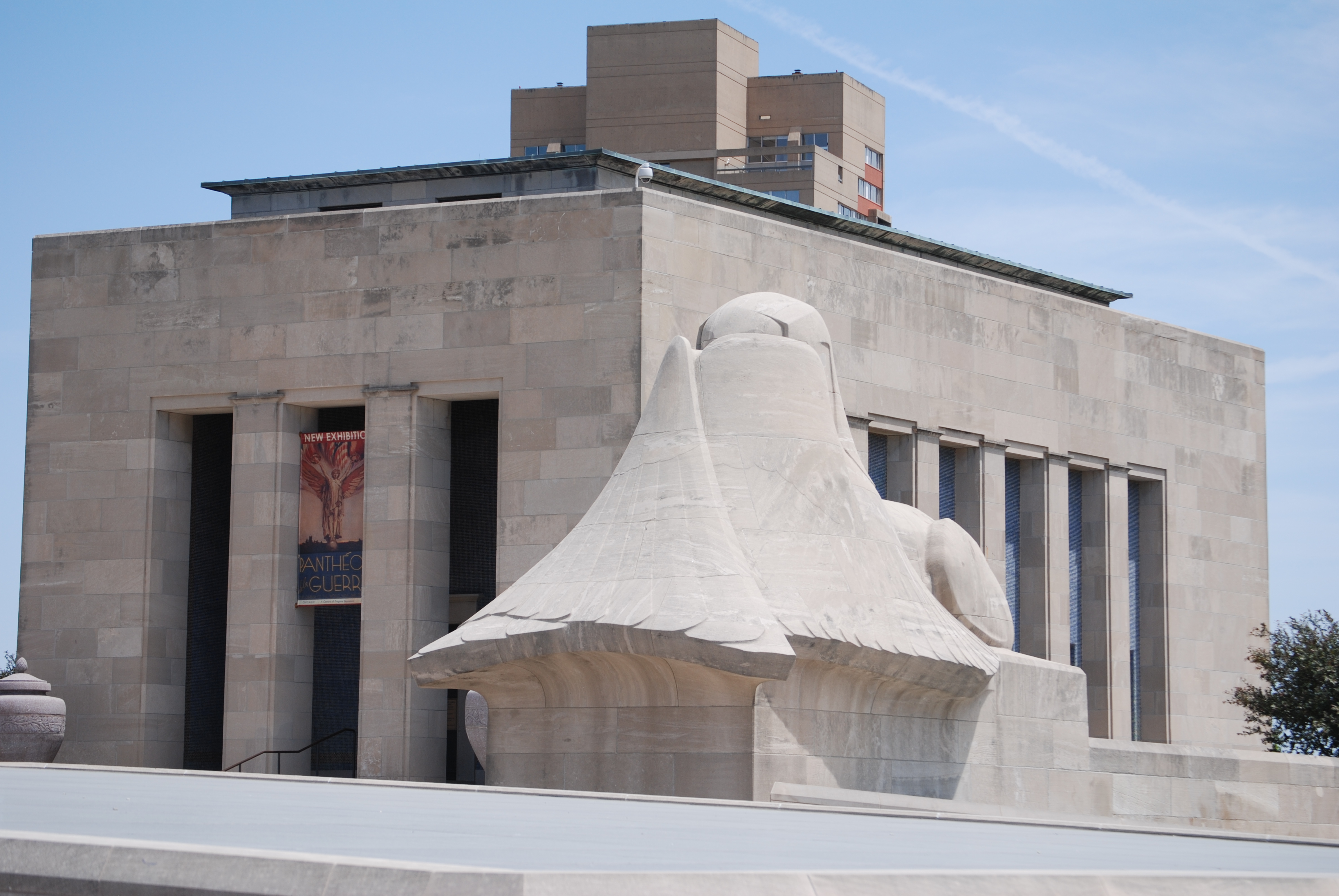
On either side of the tower are two giant sphinxes with wing like coverings concealing their faces, as though they are, themselves, traumatized by the reality of war.  Two concrete buildings sit behind the sphinxes, themselves housing exhibits for the museum.

The banners on the doors that mark the entry to the museum are unassuming.  Once inside, visitors face a vast, but well-organized exhibit.  The various rooms, includes a timeline of the war years, uniforms, posters, banners, video histories and other documentation of the war years.

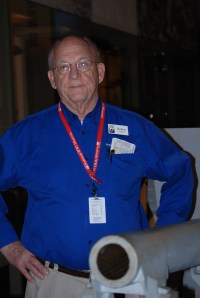
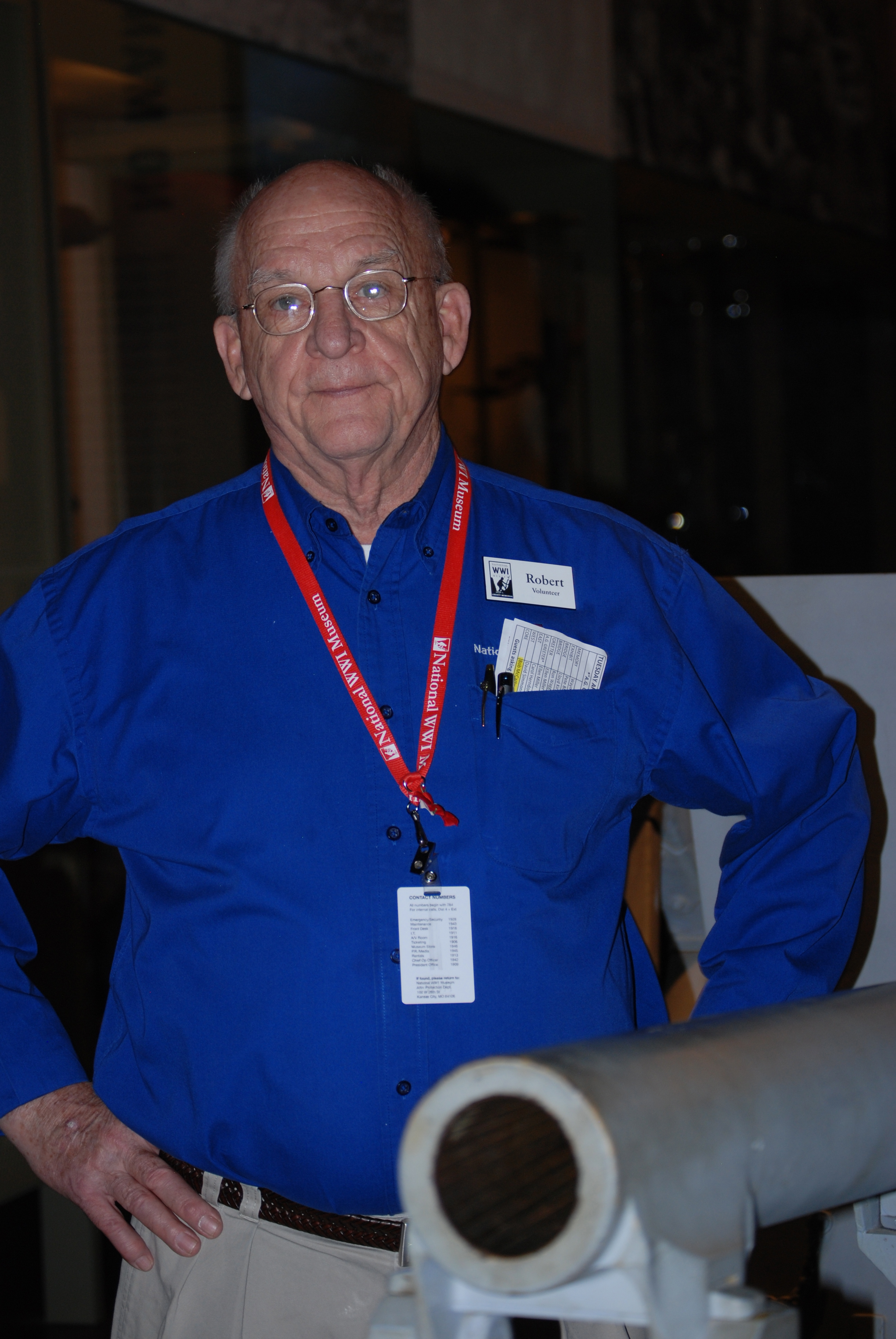
Knowledgeable volunteers are available throughout the building, eager to share their knowledge of the war and of the museum contents.
The munitions they describe are primitive by today’s standards, but were sufficient to cause, in combination with factors such as disease and starvation, horrible destruction to the military forces, civilian populations and the landscape of Europe.  The combined death toll of the military forces exceed 8,528,800.  While World War I was often called the “Great War”, or the war to end all wars, it was neither.  The destruction it caused contributed to events culminating in World War II and influence world affairs even today.

While statistics cannot adequately convey the depth of human misery, they are telling.  The casualty rates for the mobilized forces of the major powers are (approximately) as follows:

Country         Total Forces              Killed  Wounded/Prisoners/Missing        Total Casualties    Percent Casualties

Russia                        12,000,000                   1,700,000            7,450,000         9,150,000              76.3  

Germany                    11,000,000                   1,774,000             6,400,000         7,142,600              64.9  

British Empire           8,904,500                       908,370             2,280,000          3,190,250              35.8    

France                         8,410,000                     1,357,800            4,800,000         6,160,800              73.3  

Austria-Hungary      7,800,000                    1,200,000            5,820,000         7,020,000             90.0      

Italy                              5,615,000                        650,000             1,550,000          2,197,000              39.1  

United States             4,355,000                         116,516                  208,000             323,000                7.1

Because the museum is focused on the war itself, the reality of death surrounds us.  The ancient weapons of various sizes and shapes are on display.  

A restored 1918 Ford Model T ambulance is almost humorous in its quaintness.

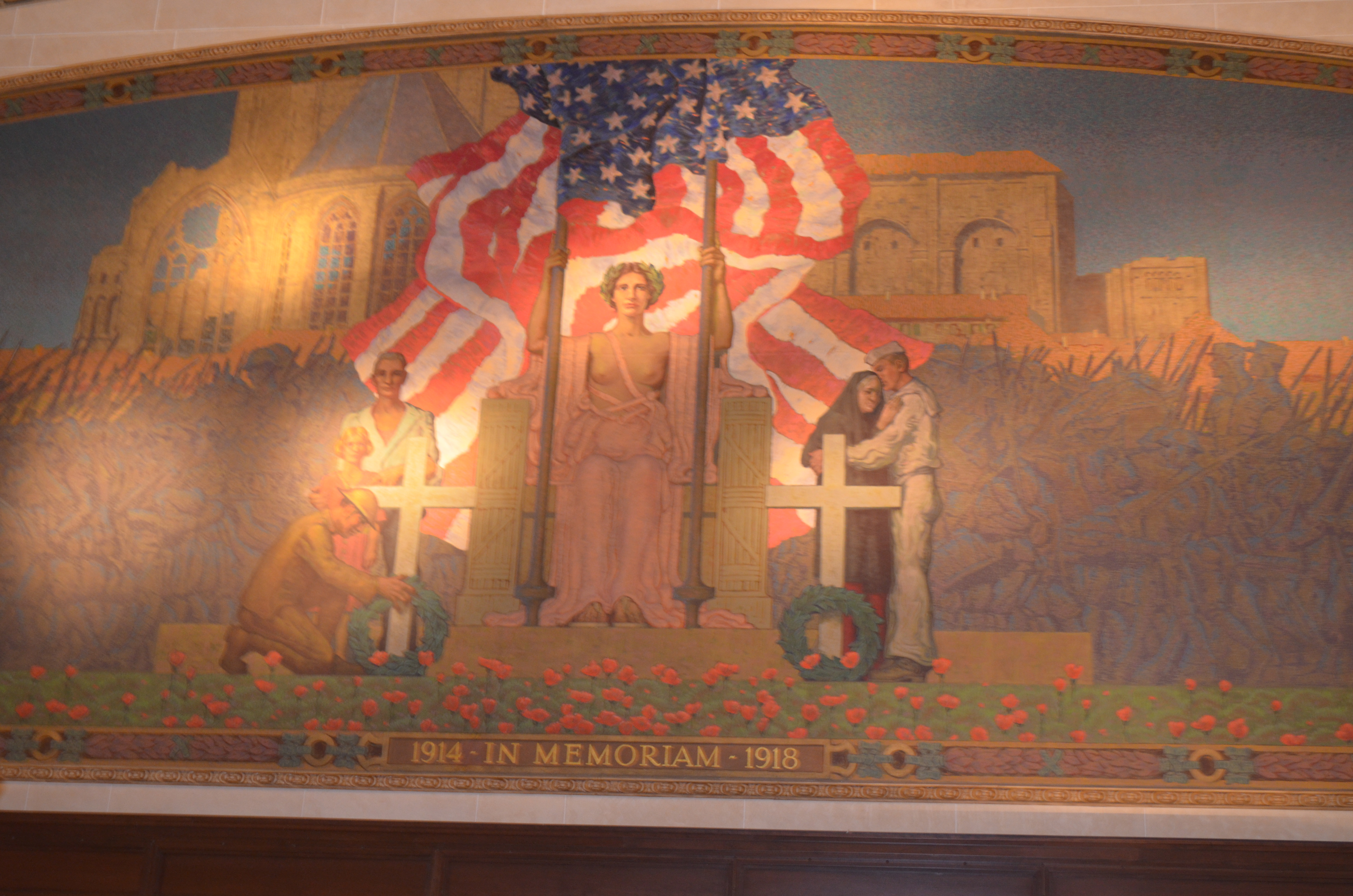
But there is also significant information about the culture of the era as evidenced by murals, photographs, clothing and everyday mementos of the times.

There are life-sized murals which can only be described as glorifying, if not war, than the strength and power of those who are successful in war.
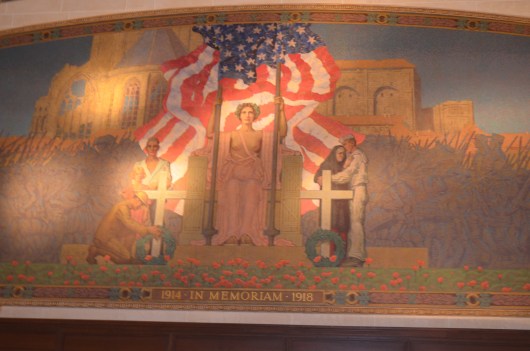
It is easier for the eye to turn to the powerful and positive symbols of hope and accomplishment.  But nothing, in a place dedicated to war, can escape the reality of death.  It is everywhere. In the midst of the exhibits are reminders of the humanness of the suffering.  An example of the power of those posters is one quoting the leader of German mutineers, sentenced to death for his role in the mutiny of members of the German fleet, struggling to end the war:  “I have been sentenced to death today.  Only myself and another comrade; the  others have been let off with fifteen years’ imprisonment.  You have heard why this is happening to me.  I am a sacrifice for the longing for peace; others are going to follow”.

When the United States entered the war in 1917, it mobilized forces for war on the ground, on the seas and in the air.  It was a welcome relief to its allies and helped tip the scales for the war’s outcome.  Because it entered the war more than two years after the war commenced, our casualties were comparatively small.  But each casualty, our own, and those of our enemies, is real.

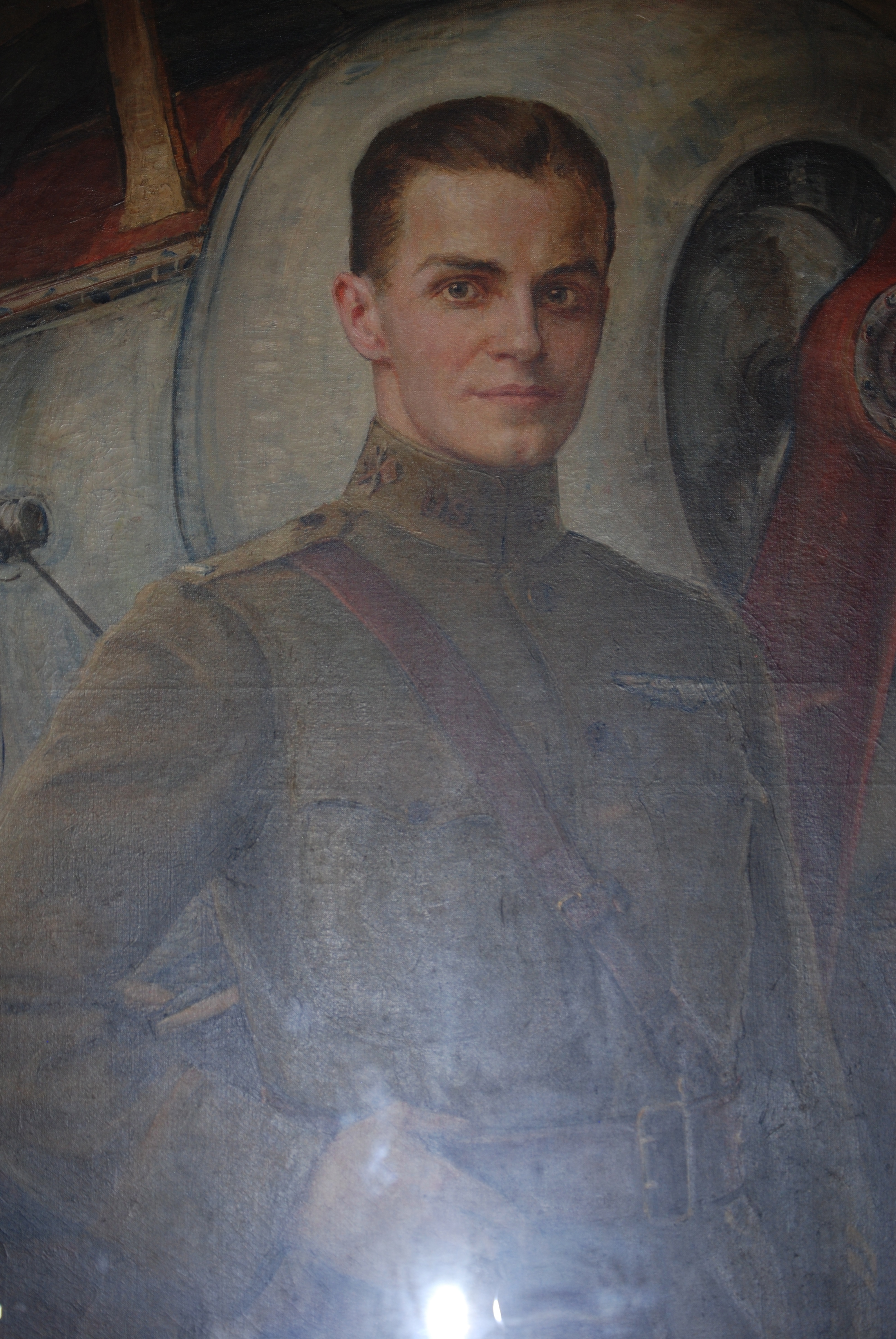
Throughout the museum are portraits, sketches and photographs of those who fought and those who died.  Each had his or her own personal and tragic story.  Each had a family who mourned the lost of their loved one. This portrait is of Lieutenant John F. Richards II, 1st Aero Squadron, killed in action September 26, 1918 over Argonne Forest, (France) part of the final Allied offensive in World War I.  I will not easily forget his face.
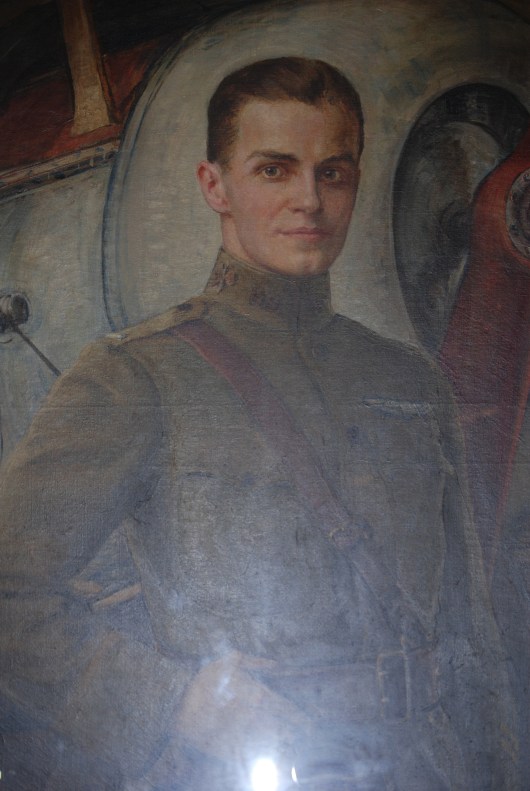
The World War I Museum is a place memorializing one of many tragic wars.  It is a place of sadness.  It is also a place of remembrance.  I would like to believe it is a place of hop.  I am not so sure.  But each of us benefits by being reminded of the devastation that is the inevitable result of human conflict.

When to go to war, whether to go to war and why to go to war are issues that have no easy solutions and I will offer none.  But it is important to be reminded of the tragedy of war and of the sacrifices made by our men and women of the military who make great personal and family sacrifices to protect their nation in times of peace and times of war.  We should never forget them.


Writing on the wall–The “people’s art”.

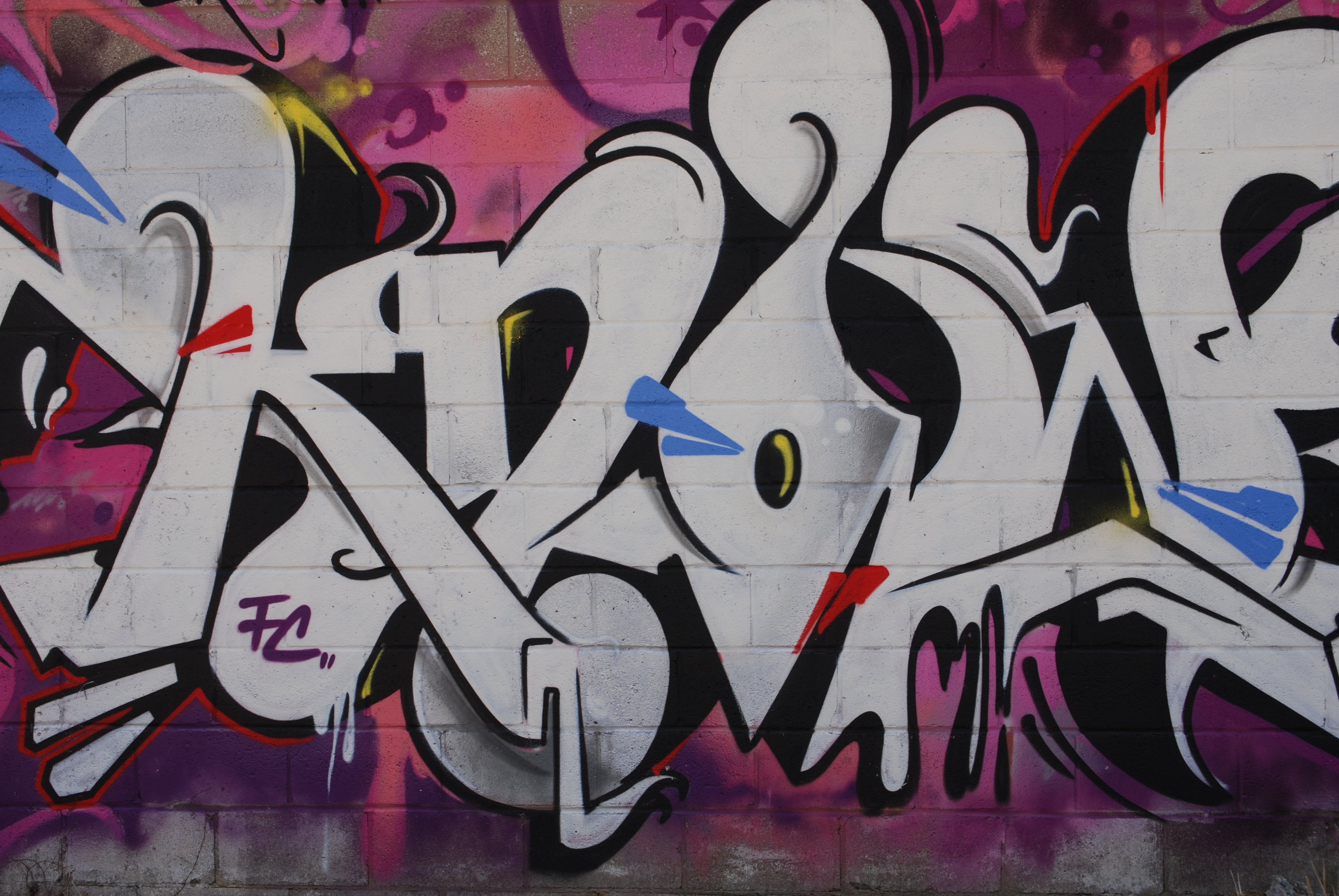
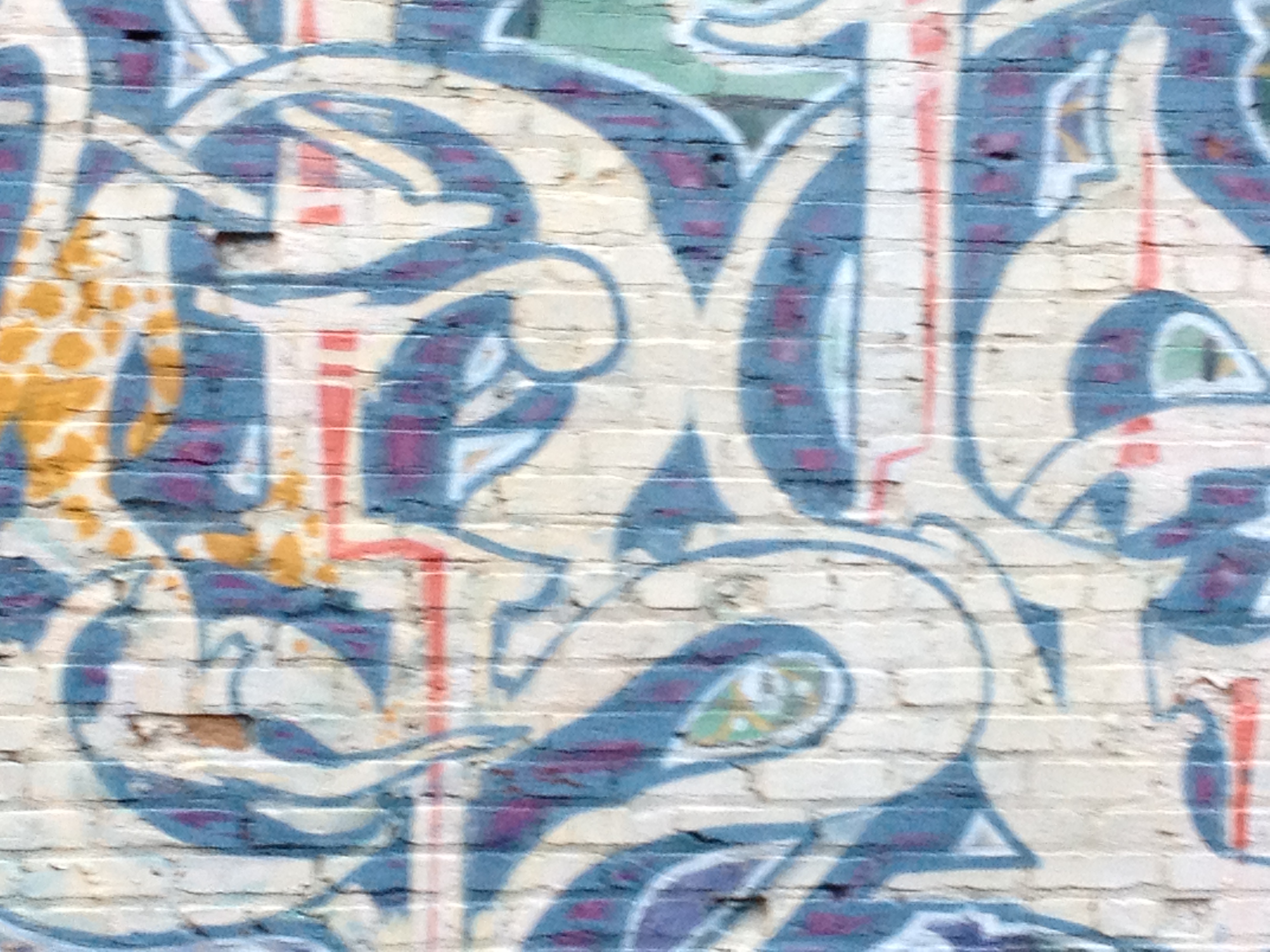
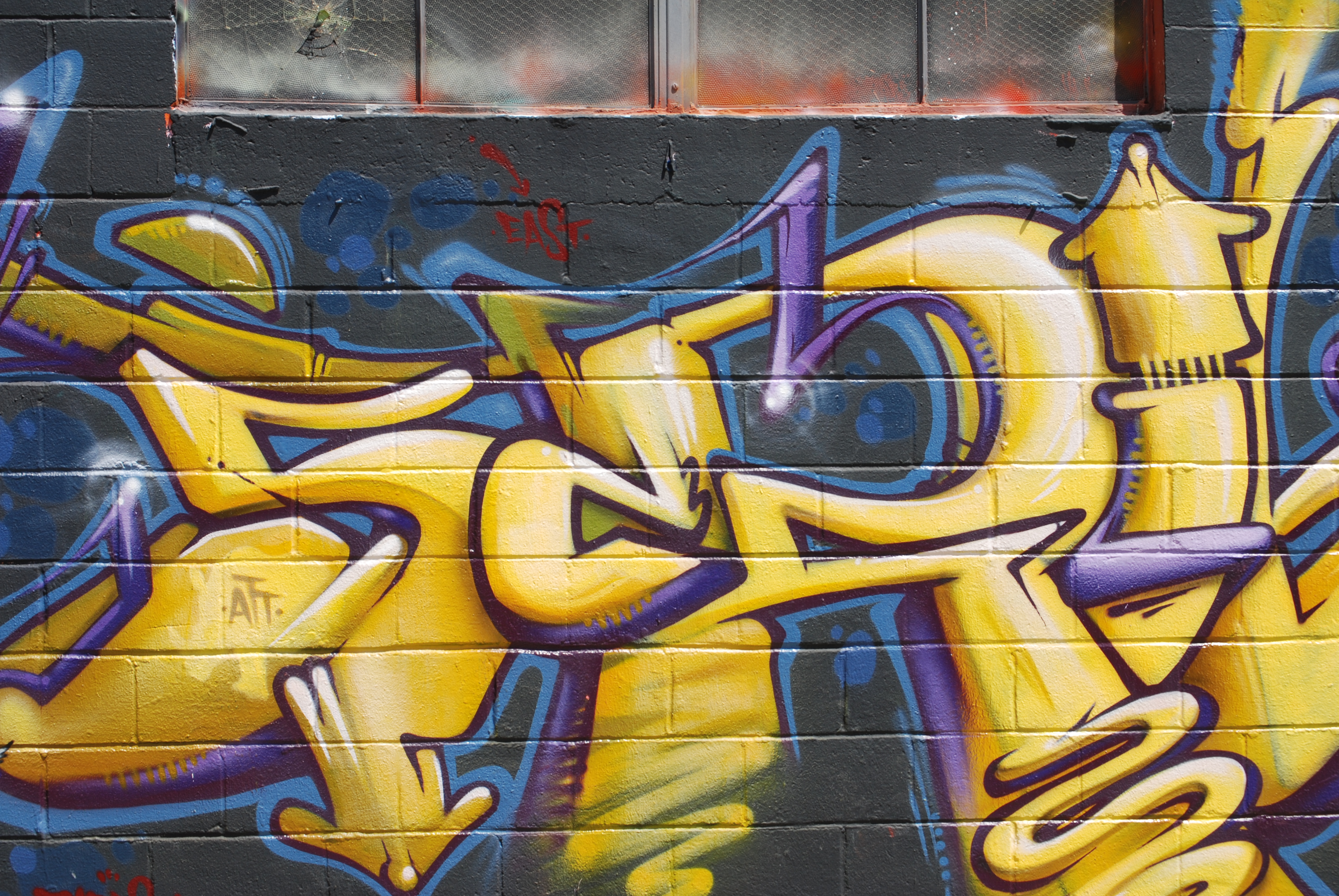
Kansas City’s art is found indoors and outdoors.  It is found in museums, galleries and outdoor parks.  These works of art can be found hidden in plain sight, on the walls of abandoned buildings and warehouses, sometimes in back alleys where only the most adventurous will find them. These street murals are generally skillfully done, and are, while sometimes unwanted, a celebration of life and creativity. While the artists are generally unknown to the general community, the initials of the artists are often included, announcing their skills to those who are part of the inner circle of these artists.
Some of my favorite graffiti is what I like to call “writing on the wall” because that is exactly what it is.  If the writings are actually words, I haven’t deciphered them.  But that does not diminish the skill of the artists, whose creativity never ceases to amaze me.  Here are some of my favorites, found within blocks of downtown, Kansas City.

x

x

x

x

I often wonder, when I find one of these writings, whether the creators are totally unschooled, have been to art classes or are just patient.

Sometimes I wonder where they buy the paint??  Is there a graffiti union?

Men of the Frontier–Kansas City Sculptures

Kansas City’s most famous outdoor sculpture, The Scout, stands high in the hills of Penn Valley Park.  Created by Cyrus E. Dallin, it won a gold medal at the 1915 Panama-Pacific International Exposition in San Francisco.  Purchased by the “Kids of Kansas City” it was dedicated in 1922 as a permanent memorial to local Native American tribes.  I am fortunate to drive by it every work day as I make my way, with thousands of others, along Southwest Trafficway toward downtown Kansas City.  The Scout’s image is on local advertisements, and it inspired the name of an investment fund and a sports team.
Equally magnificent, if not as well-known, is the statute of Massasoit, (Ousamequin) Great Sachem of the Wampanoag, identified as a “friend of pilgrams”, created by Cyrus Dallin and donated to the community by Mr. & Mrs. Miller Nichols.  It stands at 47th & Main, on the East edge of the Country Club Plaza.  Massasoit protected the Pilgram’s from starvation in 1621, shortly after the founding of Plymouth Plantation.  He also negotiated a peace treaty between an affiliation of tribal leaders and the English settlers, which continued throughout his lifetime.  Unfortunately after his death in 1662, peace did not continue.  Four of his five children died in “King Philip’s War” fought from 1675-8 between the English colonists and local Native American tribes.

Robert Macifie Scriver is the sculptor of this powerful image of a cowboy astride a massive bull.  Aptly titled “An Honest Try”, it is inevitable that the bull will win this contest between man and beast.  But it is a wonderful depiction of what we often call the “wild west”.   Easy to miss in a tour of Kansas City art treasures, it is located on Main Street, at the New Board of Trade Building on the South East edge of the Plaza.