Beauties of the Country Club Plaza

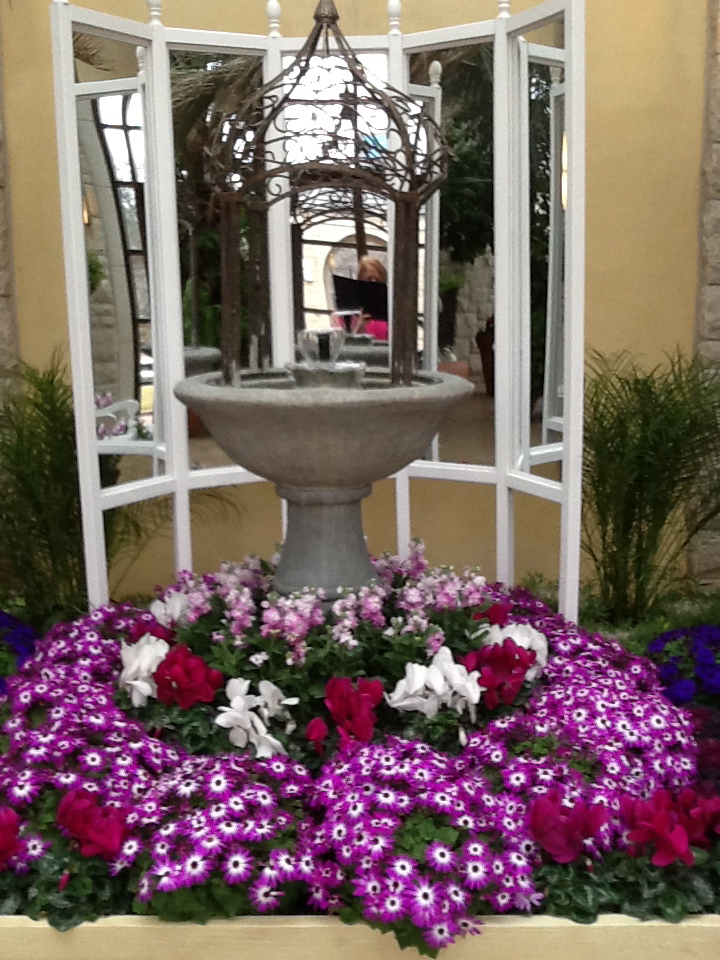
Kansas City’s Country Club Plaza is renowned for its holiday lights in the winter and fountains in the summer. But, it is February. The lights no longer brighten the sky and the fountains will not flow until Spring.

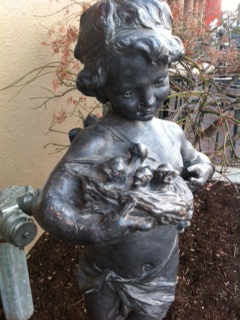
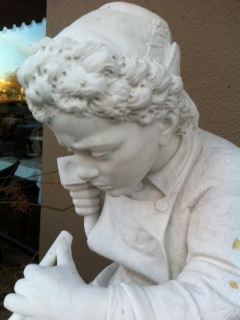
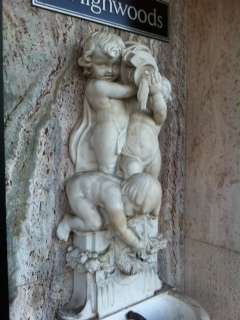
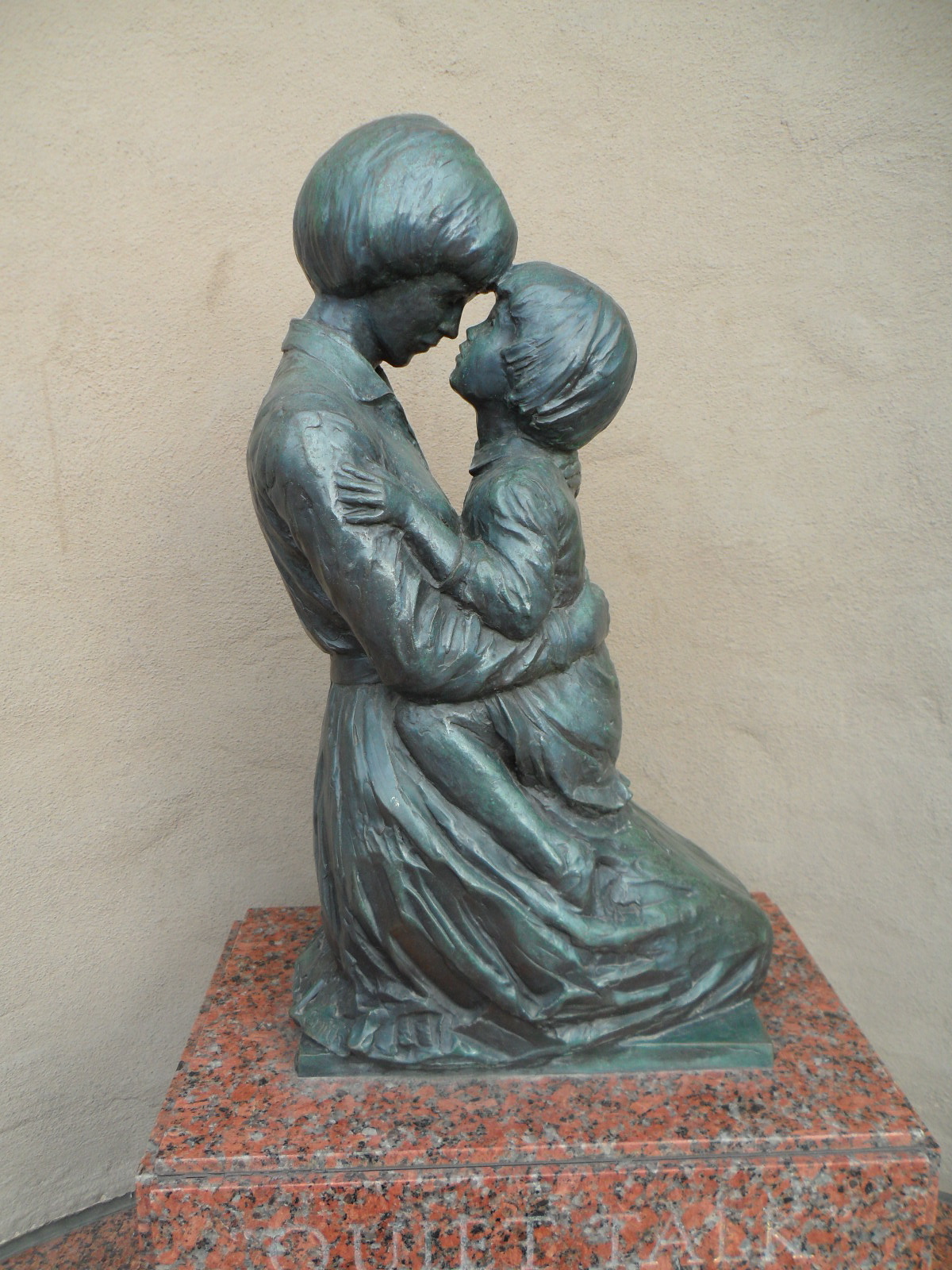
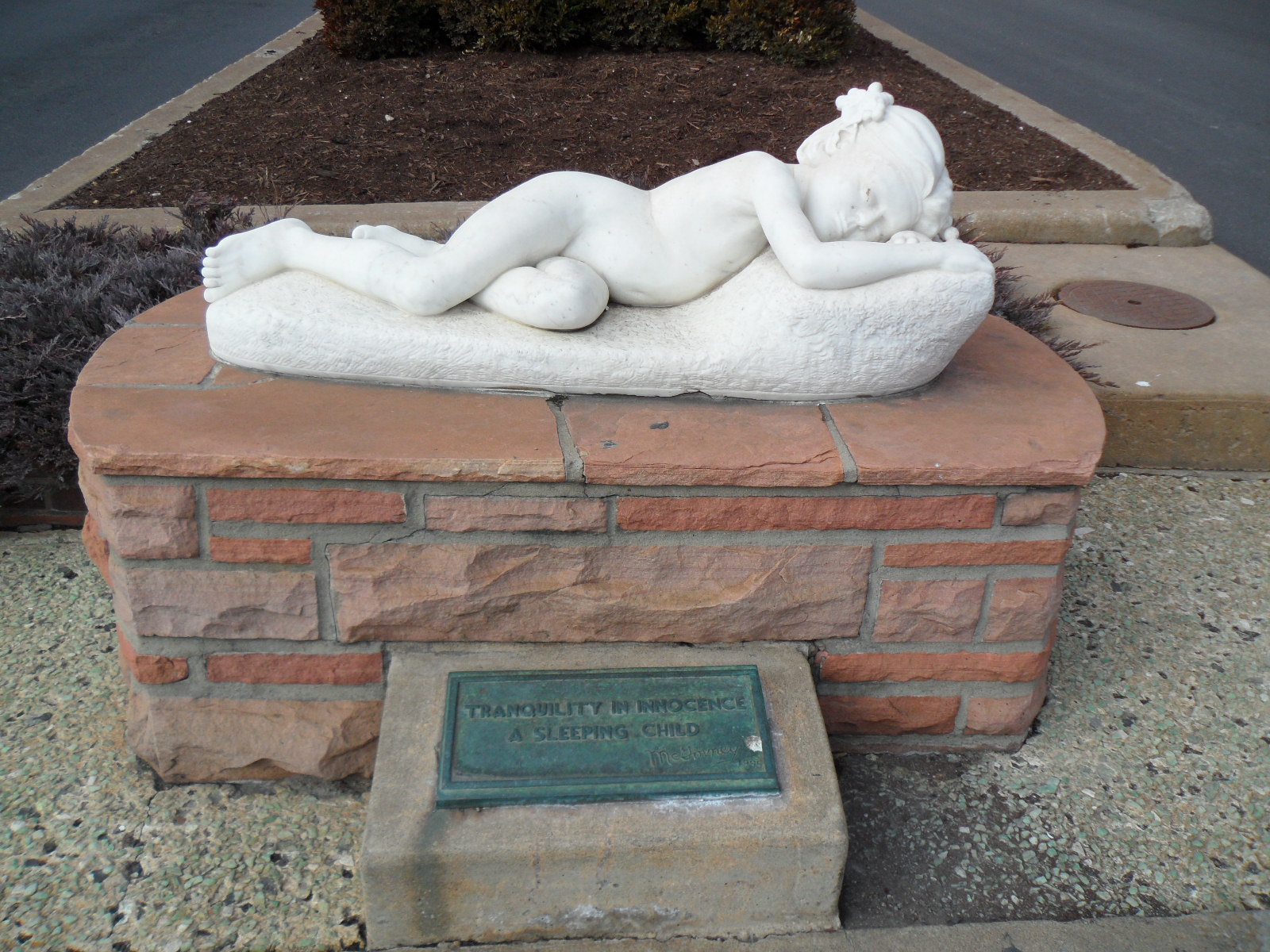
However, do not despair. Beauty still abounds. The Plaza is nothing less than a world-class museum, holding even lifelong residents in awe. Art is everywhere. There are statues cast in places such as Seville, Venice, and even-Utah! There are lovely murals. Even the Spanish architecture itself is beautiful.

We are all drawn to the massive fountains that dominate the environment. But it is winter. Time to focus on the wonderful small treasures, nestled in unexpected places. No less elegant for their diminutive size, they are waiting for the alert tourist or knowing resident.


Made in the USA Series: The U.S. auto industry gets a well-earned nod during the Super Bowl

It has been a tumultuous 4 years in the automotive industry. The bankruptcies of General Motors and Chrysler as well as the near bankruptcy of Ford Motor Company shook Detroit to it’s core. Stock prices plummeted as we watched what appeared to be the end of Detroit’s influence in the industry. It was a roller coaster ride. But, that was then. This is now.

Yesterday was Super Bowl Sunday. It seems that everyone watched the game. Even people who don’t care about football watch the ads. I loved the Volkswagen ad focused on a dog’s motivation to become physically fit, and was bemused by Chevrolet’s spoof of the Mayan calendar’s 2012 doomsday predictions. But it was Clint Eastwood, in Chrysler’s ad, “Halftime in America,” that inspired us to envision a new era of national rebirth.

http://youtu.be/_PE5V4Uzobc

Released before the Super Bowl was Chrysler’s new advertising campaign, “Imported From Detroit.” The message of the ads is that we don’t “have to cross an ocean to obtain luxury.” But is this message accurate? We did some checking and found that there seems to be a rebirth of the U.S. automobile industry. In addition to manufacturing plants throughout the world, foreign and domestic automobile manufacturers have significant operations in the U.S. Here are just some of the companies with manufacturing and/or assembly operations in the United States—

Domestic Companies 

Ford Motor Company—Ford, Lincoln and Mercury in Michigan; Missouri; Illinois, Kentucky; and Minnesota.

General Motors–Buick in Michigan; Cadillac in Michigan and Texas; Chevrolet in Michigan, Missouri, Ohio, Kansas, Kentucky, Indiana and Louisiana.

Chrysler—Chryslers in Michigan; Dodge in Michigan and Ohio; and Jeep in Detroit, Ohio and Illinois. Chrysler announced on February 3, 2012, that it will add 1,800 jobs at its plant in Belvidere, Illinois, where it assembles the Dodge Dart, Jeep Patriot and Jeep Compass.

Foreign Companies 

Honda—Ohio, Indiana and Alabama.

Mercedes Benz—Alabama.

BMW—South Carolina.

Infiniti—Mississippi.

Acura—Ohio.

Suzuki—Georgia and Tennessee.

Volkswagen—Tennessee. Its new plant in Tennessee employs 2000 workers and was recently recognized for its commitment to environmentally responsible manufacturing.

There is a lot to celebrate for the U.S. economy in the revitalization of this industry. We had a rough “first half” in our economy, but we are rebuilding. The economy is growing. And we are going to have a much better “second half.”

What is the United Nations Global Compact and why does it matter?

Meg has a J.D. in Urban, Land Use and Environmental Law. She focuses on maintaining the balance of community and environmental health, healthy lifestyles, and encouraging sustainable living.

Anyone who cares about global competition and free trade, will also care about the United Nations Global Compact. Like SA 8000, a global social accountability standard for decent working conditions, it focuses on the areas of human rights, labour, the environment and anti-corruption.  There are many prominent U.S. businesses that have committed to the principles of the compact: Levi Strauss, Coca Cola, PepsiCo, Price Waterhouse auditors and Nike are all participants.

Each business that joins the UN Global Compact is expected to embrace the 10 fundamental principles of the Compact, to the best of their ability and within their realm of influence. As listed on the organization’s website, here are the 10 principles:

Human Rights:

1)             support and respect the protection of internationally proclaimed human rights; and

2)             protect against human rights abuses.

Labor:

3)             uphold the freedom of association and the right to collective bargaining

4)             the elimination of all forms of forced and compulsory labour;

5)             the effective abolition of child labour; and

6)             the elimination of discrimination in employment and occupation.

Environment:

7)             support a precautionary approach to environmental challenges;

8)             undertake initiatives to promote greater environmental responsibility; and

9)             encourage the development and diffusion of environmentally friendly technologies.

Anti-Corruption:

10)          work against all forms of corruption, including extortion and bribery.

The Compact is designed as a forum for businesses globally to collaborate within a practical framework to exchange best practices and facilitate the development of sustainable business methods. According to its website, www.unglobalcompact.org, the Compact has over 8700 corporate participants in 130 countries. With this kind of participation, there is certainly hope that businesses can start working together on a global level to infuse human rights, labor, environment, and anti-corruption ideals at a global level, and that those ideals can have an impact locally.

It should not surprise us that companies that take to heart the provisions of SA 8000 are often committed to a broader range of compacts focused on global equity, protection of the environment and protecting our natural resources.  We believe the principles of the UN Global Compact and SA 8000 are important in “shifting the balance” toward a healthier planet.

Made in USA Series: The Grocery Store

Meg has a J.D. in Urban, Land Use and Environmental Law. She focuses on maintaining the balance of community and environmental health, healthy lifestyles, and encouraging sustainable living.

I have always made an effort to buy local. Usually this has translated into frequenting the local farmers’ market or perhaps stopping by a roadside stand. However, I still go to the grocery store for most of my food items. This is where the challenge begins.

The bulk of my grocery items tend to be fresh produce. I know a lot of people buy frozen veggies and canned goods, but something about fresh, crunchy fruits and vegetables just makes me happy. They smell better, taste better, and overall make me feel better. But does it matter where exactly they come from? I think so. Not necessarily for health reasons, though many would say this is a factor, but also for environmental and economic reasons. Buying locally grown produce helps support local farms (economic benefit) as well as increased sustainability (environmental benefit).

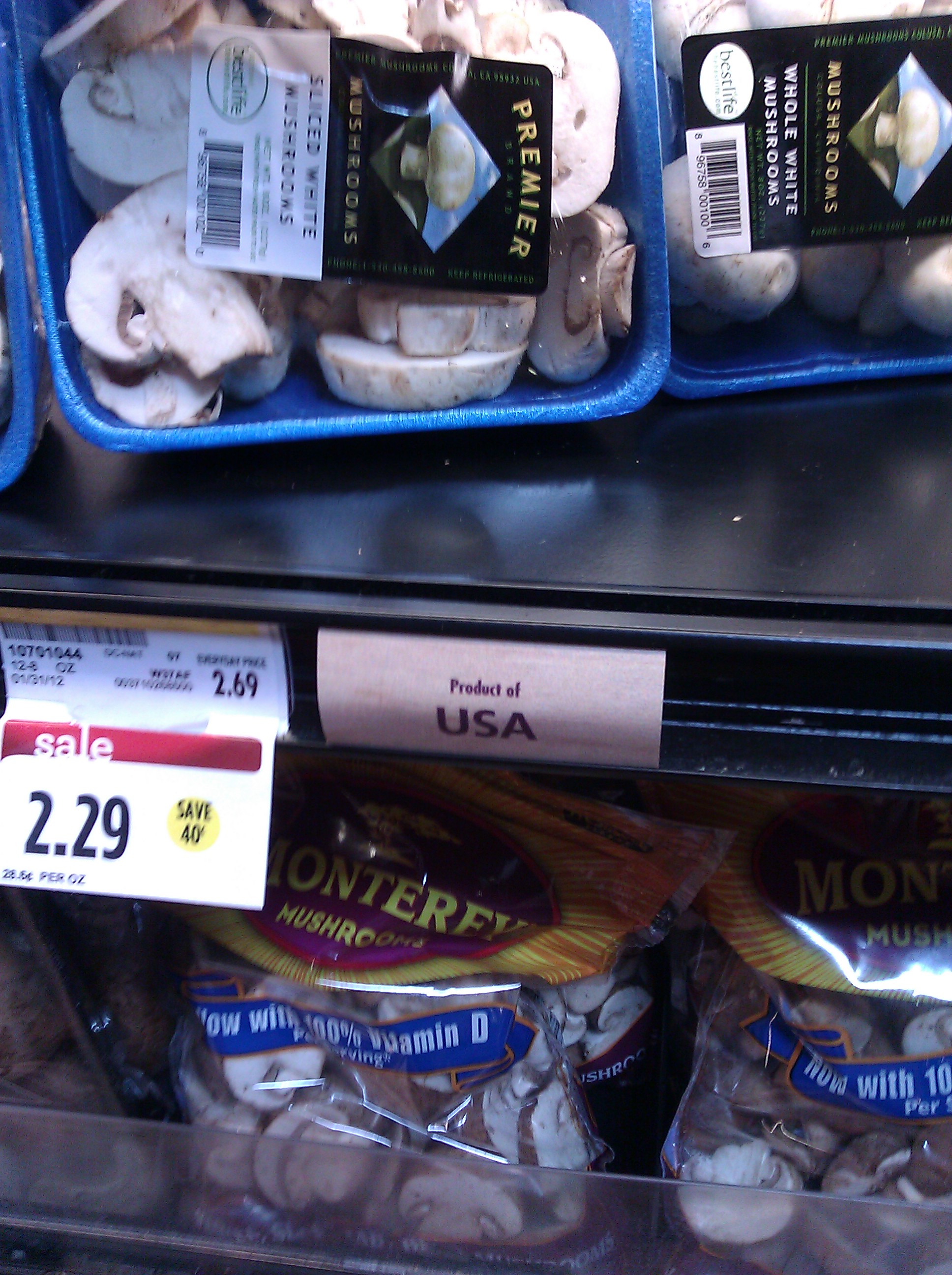
If you’re standing in the grocery store and you want to buy tomatoes, as I was the other day, most of the labels are likely to say “Product of Mexico” on them. (Please note, I have nothing against Mexico, or any other country where many things are grown, I just think it’s important to support U.S. farms and lower our carbon footprint by buying in the U.S.). However, if you search through the different tomato varieties, you can find some that say “Product of USA.” They may cost the same. The Mexico tomatoes might be a little cheaper. But think about the cost of getting those Mexico tomatoes into your grocery store compared to the USA tomatoes. It took more gasoline, they’ve likely traveled at least a day longer and are therefore not as fresh, and they’re not products of U.S. farms. It’s like outsourcing our call centers to India. We’ve outsourced our tomatoes to Mexico. But why? We certainly don’t need to if we can produce tomatoes here in the U.S. Well, I pose that it’s because when faced with the decision of which tomatoes to buy at the store, many people will still buy the tomatoes produced in Mexico. It’s not that they mean to choose between Mexico and USA, they just don’t think about it.

So here is my challenge to you, a challenge I am currently taking on myself. Try to buy fresh produce that says “Product of USA” on the sticker. It’s not as difficult as you might think. Sure, there are a few things you might sacrifice. Last week I couldn’t find any grapes from the U.S., nor could I find local bananas. But everything else has a U.S. grown version if you just take the time to look. Tomatoes, peppers, all kinds of lettuce, fennel, apples, oranges, berries…the list goes on.

Please feel free to share what kinds of produce you can find with a USA sticker, and what produce you can’t find. It will be interesting to see what kinds of U.S. grown fruits and vegetables are more easily available around the country.

Kauffman Garden’s Winter Beauty

It is cold outside and really dreary. I could stay in Hilton Head until Spring or come home and head over to Kauffman Gardens. Even in the midst of winter, Kauffman is filled with beauty and color. Since it can truly be said that one picture is worth a 1000 words, we will let these pictures speak for themselves.

Sophia is in Town

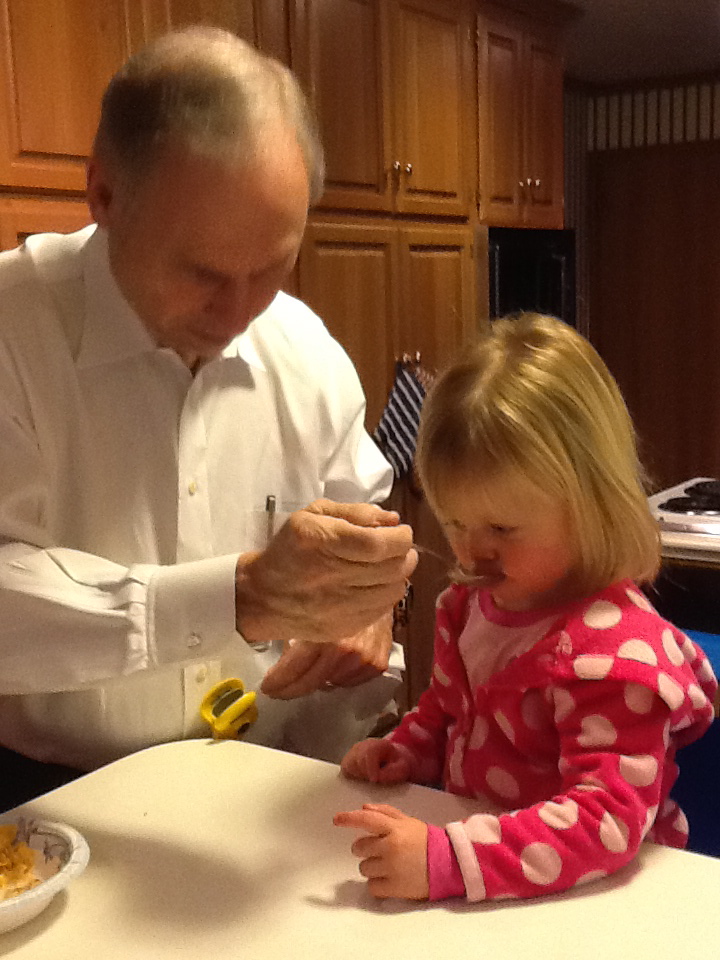
Sophia is in town and all is  right with the world.  My husband is a great guy.  He is a wonderful man who, at age 65, is still a workaholic. He is enticed from work for Sunday drives, to play tennis, or to take one of our many great trips. Then  he returns to work with renewed determination. He loves me, our family, our friends and our dog, Casey. But more than anything else, he loves his granddaughter, Sophia.

Sophia is two.  She lives with her parents in Amsterdam where she is loved and pampered by her wonderful paternal grandparents. We only see her a few times a year when she is  in the States or we are in Europe. When we are not with her we Skype constantly and watch her grow and change through the lens of a camera.

While Terry wishes Sophia lived just around the corner, she doesn’t. We live with life as it is presented to us for good and bad. For now, Sophia is in town and all is right with the world.

A Walk in the Park: Shollenberger Park in Petaluma

Meg has a J.D. in Urban, Land Use and Environmental Law. She focuses on maintaining the balance of community and environmental health, healthy lifestyles, and encouraging sustainable living.

This past weekend we decided to take Lily and Cousteau for a walk around Shollenberger Park on the south end of Petaluma. The park is a 165-acre area with a two-mile trail surrounding wetlands and mudflats. On the north end of the park, another trail juts off toward the marina that goes a mile through a marsh. The park also abuts the Petaluma River, which is a beautiful sight to see. To give you an idea of the flow of things, the river flows downstream to San Pablo Bay, which connects into San Francisco Bay, which connects, of course, to the Pacific Ocean.

Shollenberger is a great place to go for a walk, run, or casual stroll. The whole park is filled with different kinds of birds. There are ducks, geese, swans, vultures, avocets, gulls, doves, plovers, falcons, crows, hummingbirds, and more. And that’s just a list of the commonly seen birds in the wetlands! There is a great list of birds on the Petaluma Wetlands website, the organization that oversees the protection and operation of the park. You can see the list at www.petalumawetlands.org.

As we walked around the trail, I could not help but think that this is exactly the type of park that both provides a healthy place for people to visit and a safe haven for local wildlife. It is a place of balance. People can enjoy the trails and the scenery, and the birds and other creatures can live relatively undisturbed. What a wonderful environment.

We continue to explore wonderful places like this in and around our new stomping grounds. Let the adventures continue!

Dr. Martin Luther King, Jr. (1929 – 1968) The Man and his Mission

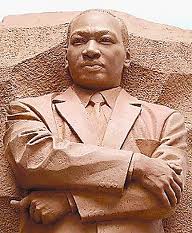
Martin Luther King was a man of peace, who sought radical transformation.  The power of his

personality and the impact of his words on the civil rights movement cannot be overstated. Dr. King lived in an age when the Ku Klux Klan instilled terror in sections of the South and even into Missouri.  He lived when drinking fountains, schools, buses, housing and employment were highly segregated.  His influence in the civil rights movement extended through the mid 1950’s until his death in 1968.  He changed the national dialogue on issues of race while steadfastly maintaining a commitment to non-violence and the importance of personal integrity.

His famous “I Have a Dream” speech, given August 28, 1963, at the Lincoln Memorial includes these words, “I have a dream that my four little children will one day live in a nation where they will not be judged by the color of their skin but by the content of their character.” It concludes, “Free at last, Free at last, Thank God almighty we are free at last.”

A disciple of Mahatma Gandhi’s message of nonviolence, Dr. King constantly reminded his followers that love is better than hate, that character and integrity are the measure of individuals and society.  Following are some of the quotes that exemplify his message:

Love over hate:

Darkness cannot drive out darkness; only light can do that. Hate cannot drive out hate; only love can do that.”

“I have decided to stick to love…Hate is too great a burden to bear.”

“Let no man pull you so low as to hate him.”

 “Love is the only force capable of transforming an enemy to a friend.”

Non-violence

“Returning violence for violence multiplies violence, adding deeper darkness to a night already devoid of stars.”

 “The choice is not between violence and nonviolence but between nonviolence and nonexistence.”

 “We must live together as brothers or perish together as fools.”

 The Importance of Social Commitment
“Never, never be afraid to do what’s right”

 “The ultimate measure of a man is not where he stands in moments of comfort and convenience, but where he stands at times of challenge and controversy.”

 Injustice anywhere is a threat to justice everywhere.”

The day we see the truth and cease to speak is the day we begin to die.

Due to his accomplishments, Dr. King received Time Magazine’s 1963Man of the Year” award and the 1964 Nobel Peace prize.  In 1983, President Ronald Reagan signed the law making Dr. King’s birthday a holiday.  It has been observed since 1986.
Made in the USA: The importance of buying local

Meg has a J.D. in Urban, Land Use and Environmental Law. She focuses on maintaining the balance of community and environmental health, healthy lifestyles, and encouraging sustainable living.

How much of what you buy is actually made in the USA? My mother and I were discussing this very topic the other day. We both make it a point to buy U.S. made products whenever possible. Obviously, it’s difficult to make sure everything we buy is made here, but if you’re patient, you can find many U.S. made options for almost any product.

“Made in USA” used to be a considered a stamp of quality. You knew that if you bought something made here in the States, it was going to be top quality and last forever. While that may still be the case, unfortunately, people just don’t think about where products are made anymore. As a result, it becomes more and more difficult for corporations to justify the “higher cost of labor” to have products made here and not somewhere else. So where do they go? Where does almost every “Made in…” stamp say? China.

I don’t have anything against China. From what I know, and I only know from what others have told me based on their experiences, China is filled with smart, kind people who care about the world and how to keep things in balance. These are definitely concepts I find valuable. My only problem with China, quite frankly, is that everyone here complains about how frustrated they are that we are dependent on China to keep our economy running. I have no idea how to approach that frustration, but I do know that we can all start by buying local.

There are a lot of products still made in the USA, you just have to make an effort to look for them. It may mean you have to be patient at times, but if we all make an effort to avoid buying products made somewhere else, then we can do our part to support our own economy and our own workers. Personally, I have been looking for a desk to use at home for several months now. Part of the wait was because I didn’t find anything I liked, but also because I wanted to desk I bought to be made here. Sure enough, when Jake and I went to the hardware store this week, there it was. A nice, simple desk made by Sauder Woodworking Company, manufactured in Ohio. It wasn’t even expensive, which is usually a concern people have about buying local. It was perfect.

So with that in mind, I challenge you to buy local. Whether you are looking for clothing, appliances, vegetables; with almost every product, you can find something “Made in USA.” Some products may be more expensive, but not all of them are. Some of them are still considered top quality, like St. John Knits, Levi Jeans, Maytag, KitchenAid, Lenox fine china, Simon Pearce glassware. One of my personal favorites, Harley Davidson, has a major manufacturing center in Kansas City. Ford still makes their vehicles in Detroit. If you just take the time to look at the label before you buy, you really can do your part to support the U.S. economy.

Hiking Bodega Head

Meg has a J.D. in Urban, Land Use and Environmental Law. She focuses on maintaining the balance of community and environmental health, healthy lifestyles, and encouraging sustainable living.

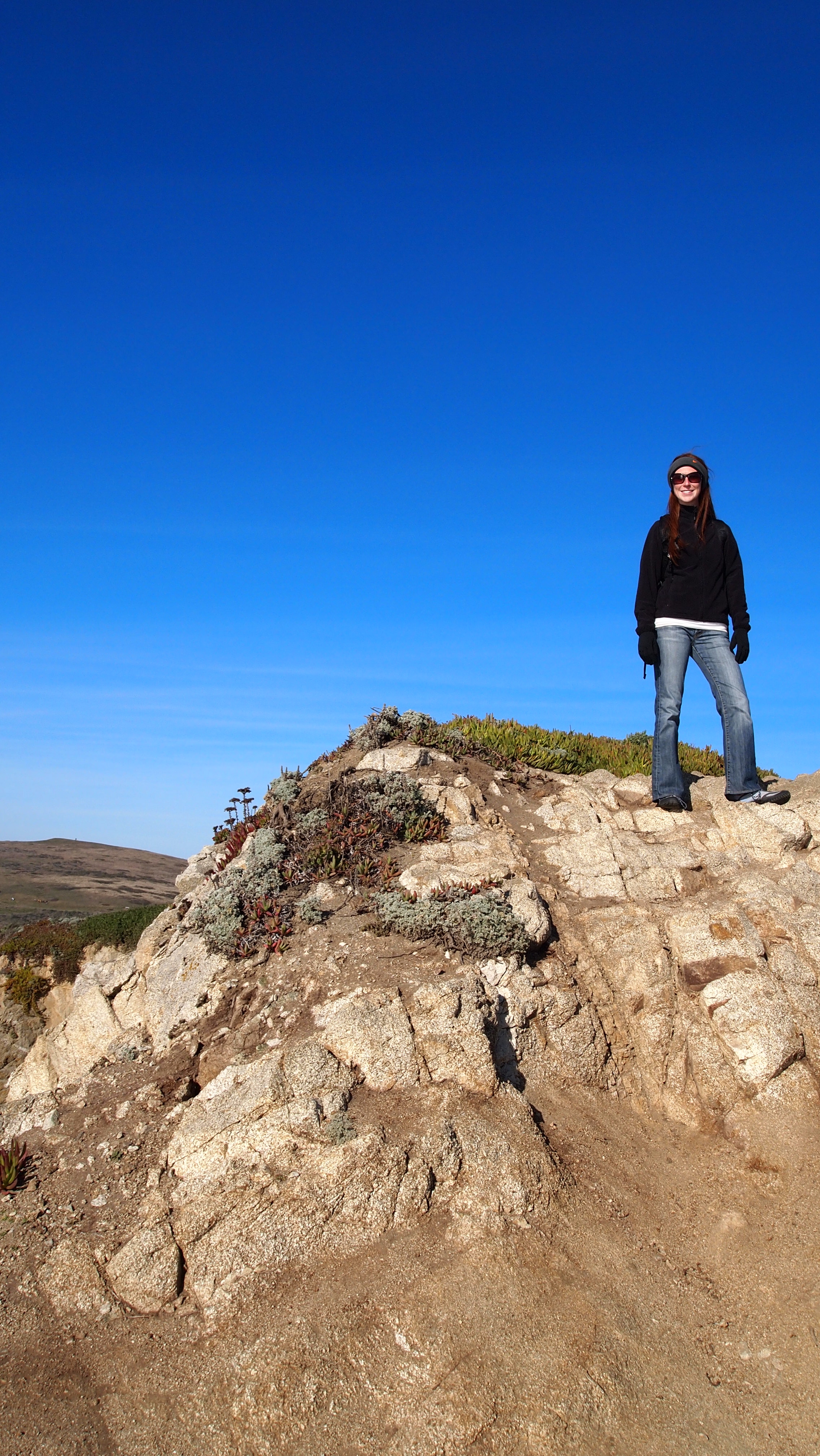
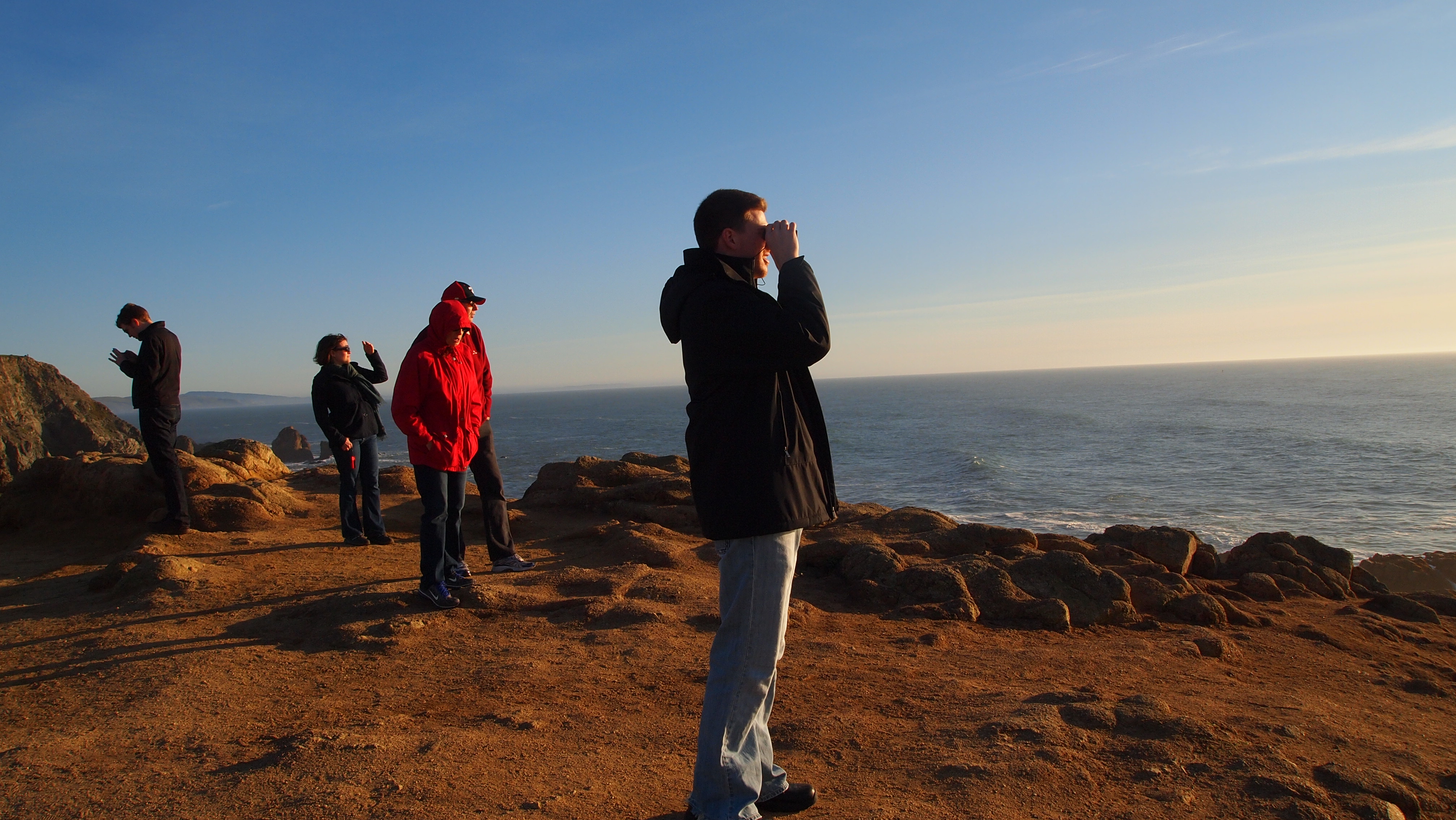
The exploring continues! Yesterday, my husband and I drove out to Bodega Head, a peninsula that juts out into the Pacific Ocean about 30 minutes west of Petaluma. The headlands are a beautiful place to hike around for the afternoon, and even do some whale watching. The hike around the outside loop of Bodega Head is about 2 miles, with an additional mile hike to the north. Of course, if you want to do some serious hiking, you can just keep going along the Sonoma Coast!

Our hike yesterday was lovely. The weather was perfect. 60s and sunny. There was a bit of wind for part of the hike, but overall it was quite nice.

Our first stop was the whale watching point, where local “whale watch” volunteers were waiting to answer any questions and help with whale spotting. We saw a few spouts of water blowing up out of the surface, but did not see any tails. Still, it was an exciting experience.

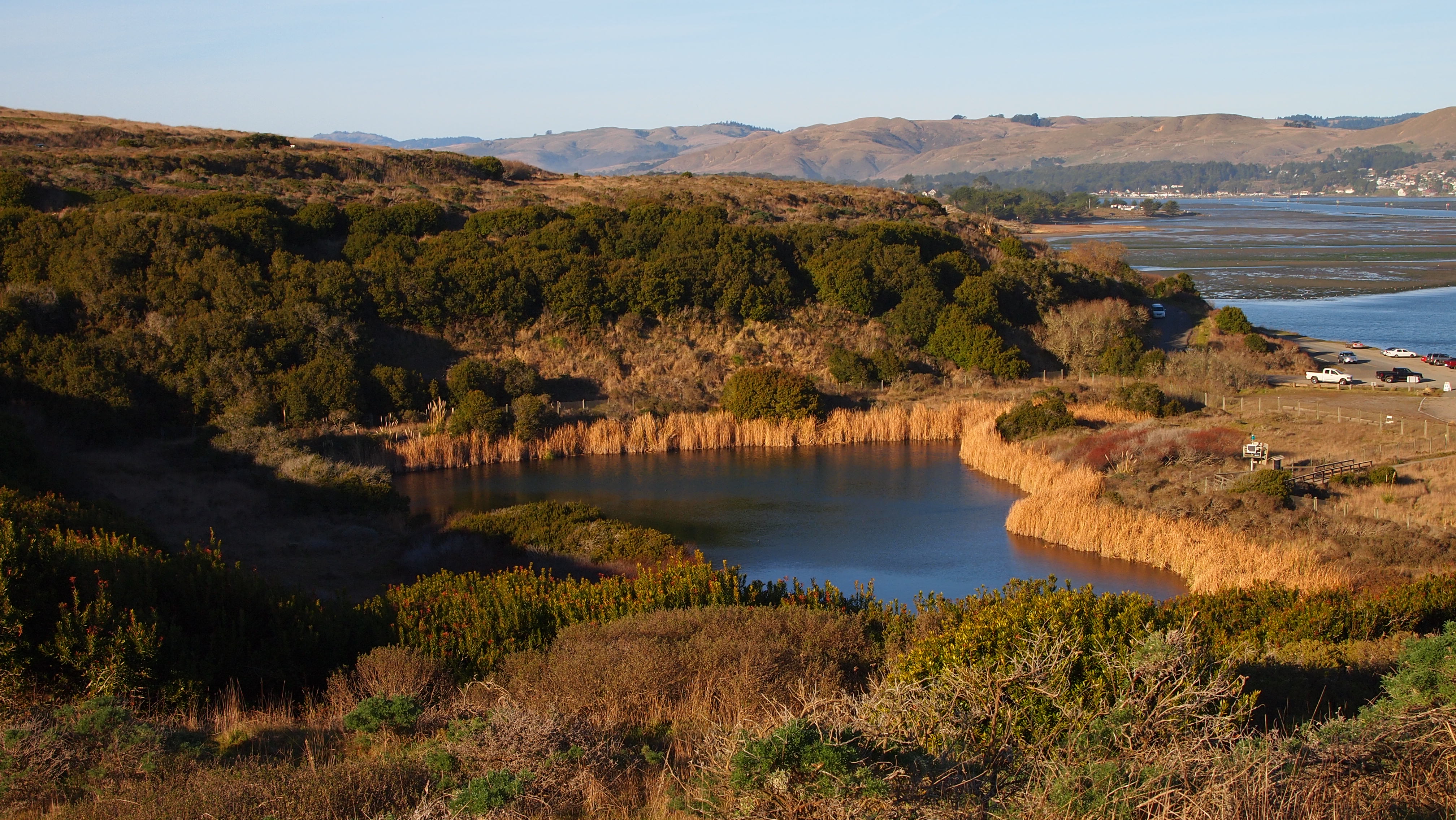
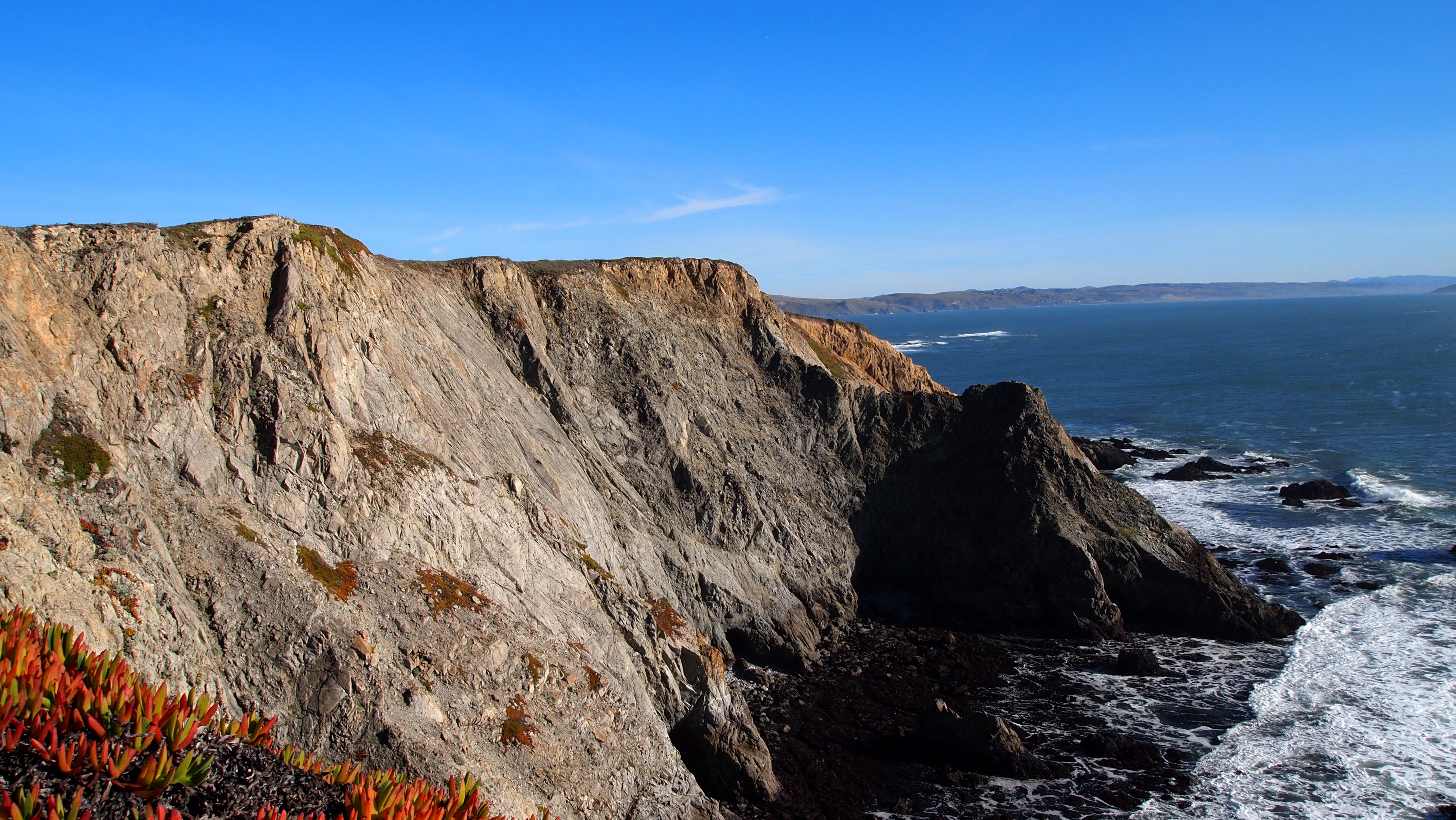
As we continued around Bodega Head, we saw beautiful cliffs, listened to seals and birds in the distance, and saw the “Hole in the Head” dug by PG&E in the 1960s. They had planned to build a nuclear plant on Bodega Head, so they dug a huge hole that would eventually house a nuclear reactor. However, the location of the hole is essentially right on top of the San Andreas fault line, so continuing the project would have been a horrible idea. The hole eventually filled up with rainwater and now serves as a freshwater pond for local wildlife.

Almost at the end of our hike, we had wandered off the beaten path and onto a sparsely used trail. We were still close to the road and the main trail, with the ocean in the background, and what did we see? A family of deer! We must have seen each other at the exact same moment, because right as I jumped up and said “Oh!” (to which Jake immediately thought I had seen something scary, like a snake!), all four deer turned their heads toward us with their ears straight up in the air. All six of us stood perfectly still for at least 30 seconds before any of us moved. As if I thought it would help, I started talking to the deer like I talk to my kids (our greyhounds) when I want them to be calm. Somehow, it worked, and though they wouldn’t let us get close, they did not run away. Eventually, we moved around them, even further off the barely there trail, and they continued grazing nearby. It was beautiful.

Bodega Head is definitely worth visiting. We only hiked about 3 miles, but it you can easily make it longer or shorter depending on where you want to go. Who knows where we’ll venture off to next time!