Oneida Community: From Utopian Community to Silverware Manufacturer

Founded by John Humphrey Noyes in 1848, the Oneida Community was based on the premise that individuals can be free of sin and perfect on earth, not just in Heaven.  The community practiced what has been described as “Bible communism”, in the sense that it practiced a form of communal property based on a belief that freedom from possessions facilitated achieving perfection.  At its peak, shortly before it dissolved in 1881, it had a membership of 306.  While the community has been disbanded well in excess of 100 years, descendants of the members continue to live in apparent harmony and grace in the shadow of the Mansion House, which was at the center of community life.

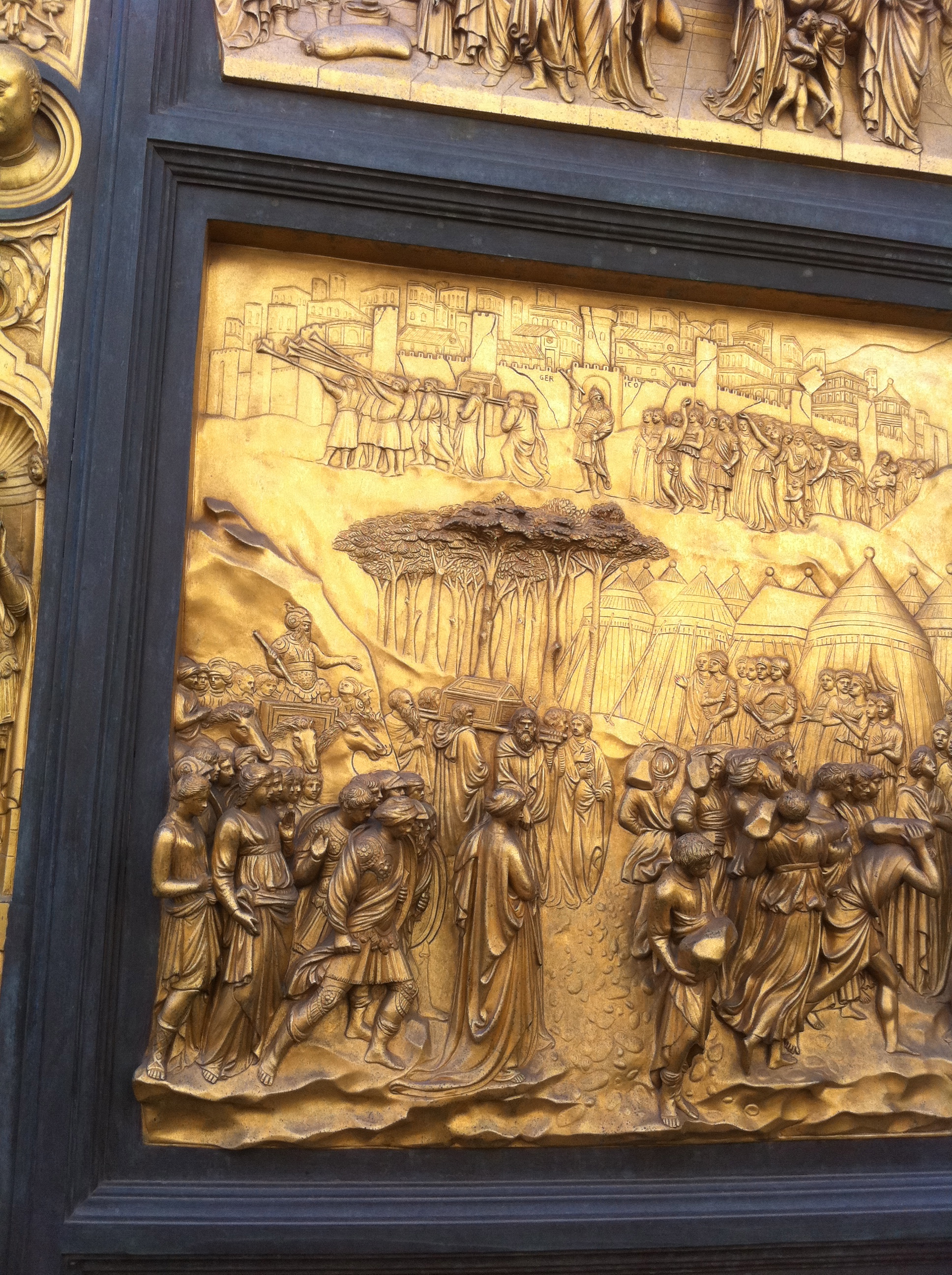
The Mansion House consists of a cluster of buildings sitting in a campus like environment where members of the community lived and prospered.

None of the members of my family were members of the Oneida Community, but it is, nonetheless, a part of what shaped our family values.  Because my  grandfather worked for the Oneida Silver Company, he and my father, aunt and uncle were surrounded by former members of the community and were constantly influenced by the best of its values: equality of the sexes, cultural advancement, education and hard work.

To facilitate the complete integration of women into the life of the community, women rejected the heavy petticoats and restrictive clothing of outside society and wore short, but modest, dresses over long pantaloons. Women were included among the leadership of the community. Men and women shared work duties, rotating among those duties so that each person shared in more routine and more specialized tasks, as well as sharing traditionally male and female tasks.

Criticism of members of the community was considered a significant aspect of the goal of achieving perfection.  Primary reasons for criticism were what was considered inappropriate “special love” such as love of a mother for her birth child that exceeded her love of the children of other women.  I am told that the unwillingness of the community to recognize the inevitability of close ties between a mother and her own child was one of the reasons for the downfall of the commune.  Victorian values in the outside world may have been another. Squabbling among members surely also took a toll.

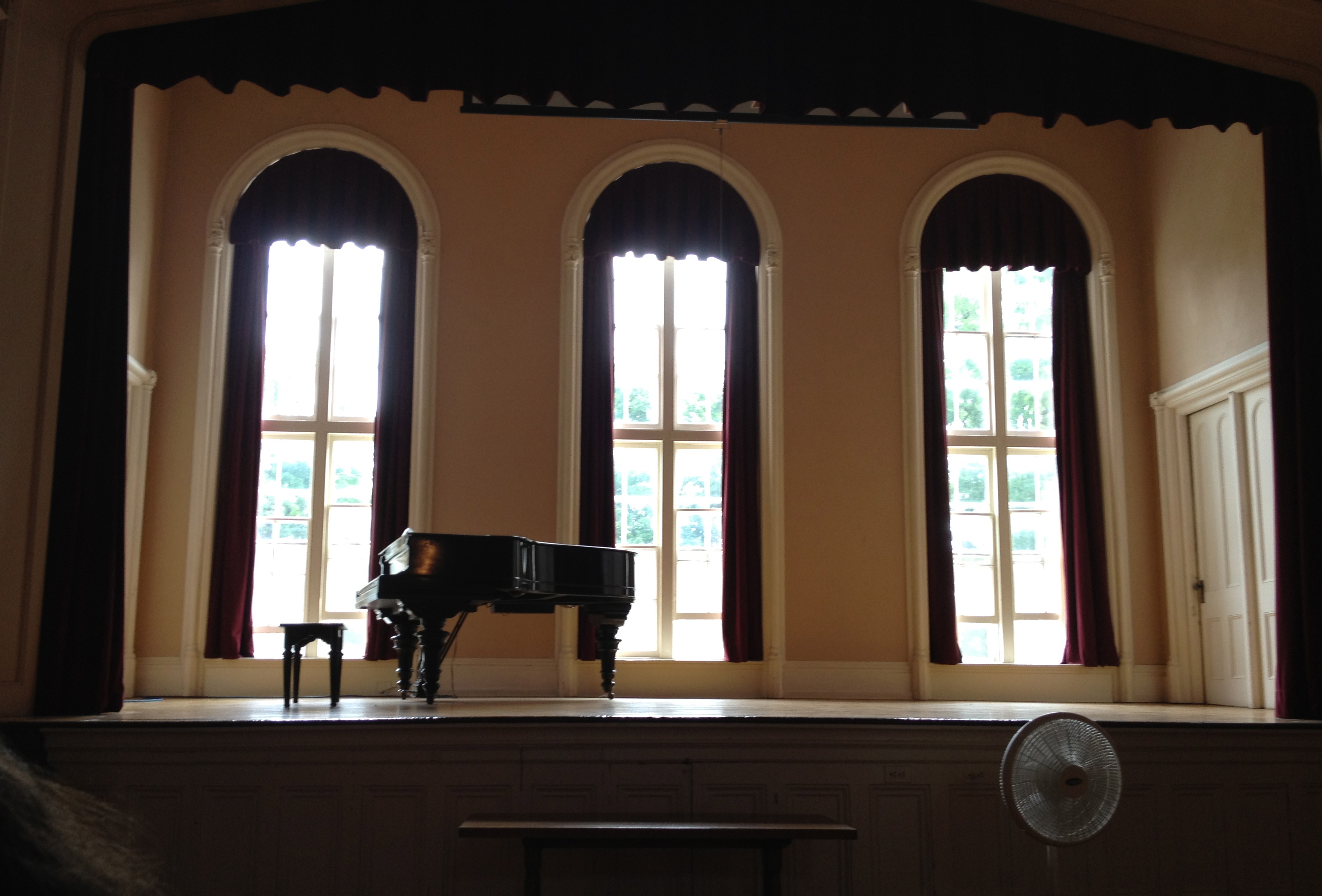
Pride, vanity were often the subject of criticism.  Individuals called for criticism by leaders of the community were expected to remain silent, accept the criticism and use the criticism as a means of furthering their efforts to obtain perfection. This lovely hall served as a center for cultural events, concerts, meetings but also the location for individual criticism.

For many years the community prospered due to its farming, silk and canning operations, but more important as a primary producer of animal traps.  After the commune disbanded the founders and their descendants remained closely connected financially and geographically.  By about 1899, the former members of the commune, under the leadership of P.B. Noyes, son of the founder, acquired a failing silver ware company. Oneida and its employees, including my grandfather, Frank C. Mesle, moved the company from Niagara Falls to Oneida where the company prospered through hard work and innovation.

Many utopian values were incorporated into the life of the company, particularly the concept of sharing wealth and sharing economic challenges.  Executives of the company were given raises only when raises were given to line workers. In periods of recession and depression, all employees shared the available work such that while their hours and their incomes were reduced, no one bore the overwhelming burden of difficult times.

The company reached the height of its financial success in the 1980’s but its revenues declined, and the company essentially disappeared, due to its inability to compete with foreign flatware.  But many of the best the values of the community continue to this day.  Literature, culture, music and hard work resonate throughout the community.  Beautification projects can be seen in Oneida and neighboring Sherrill, NY. even today.

Vote Today: Democracy Depends On It!

Today there are elections all across the country.  Vote for the party, the candidates and the issues of your choice.  But vote.  Democracy depends on it.

Russian River, Meet Pacific Ocean

There is nothing more humbling to me than a massive body of water. Some of my favorite moments have been staring out into the ocean, or perhaps a huge river. The Mediterranean Sea when I was in Turkey. The Amazon River in Peru. The Pacific Ocean in my new home state of California. Well, on one of our recent outings, Jake and I drove up to have dinner along the coast, and we ended up at the Russian River Delta, where the Russian River meets the Pacific Ocean near Jenner, CA.

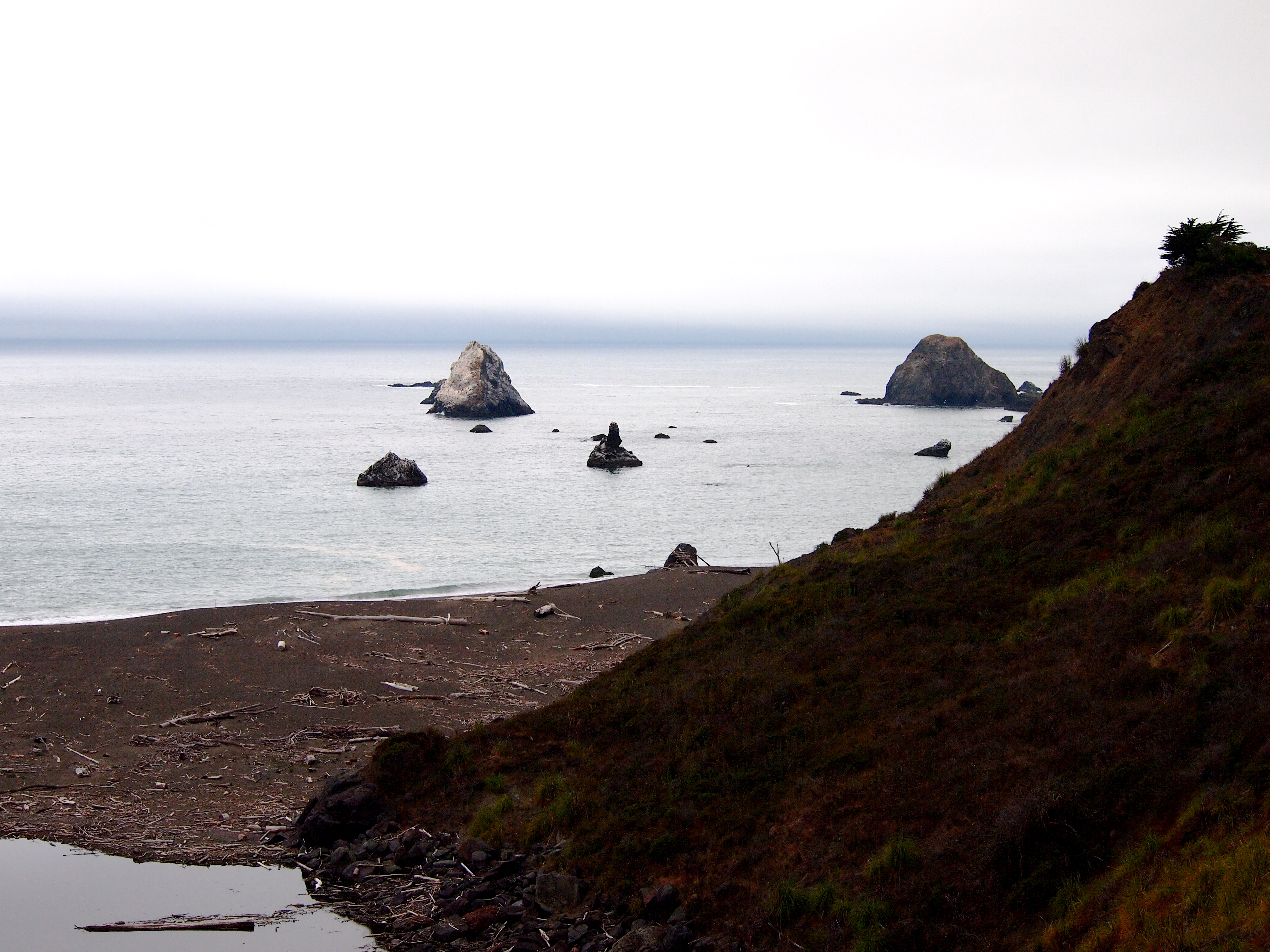
And looking at the delta where the river meets the ocean…

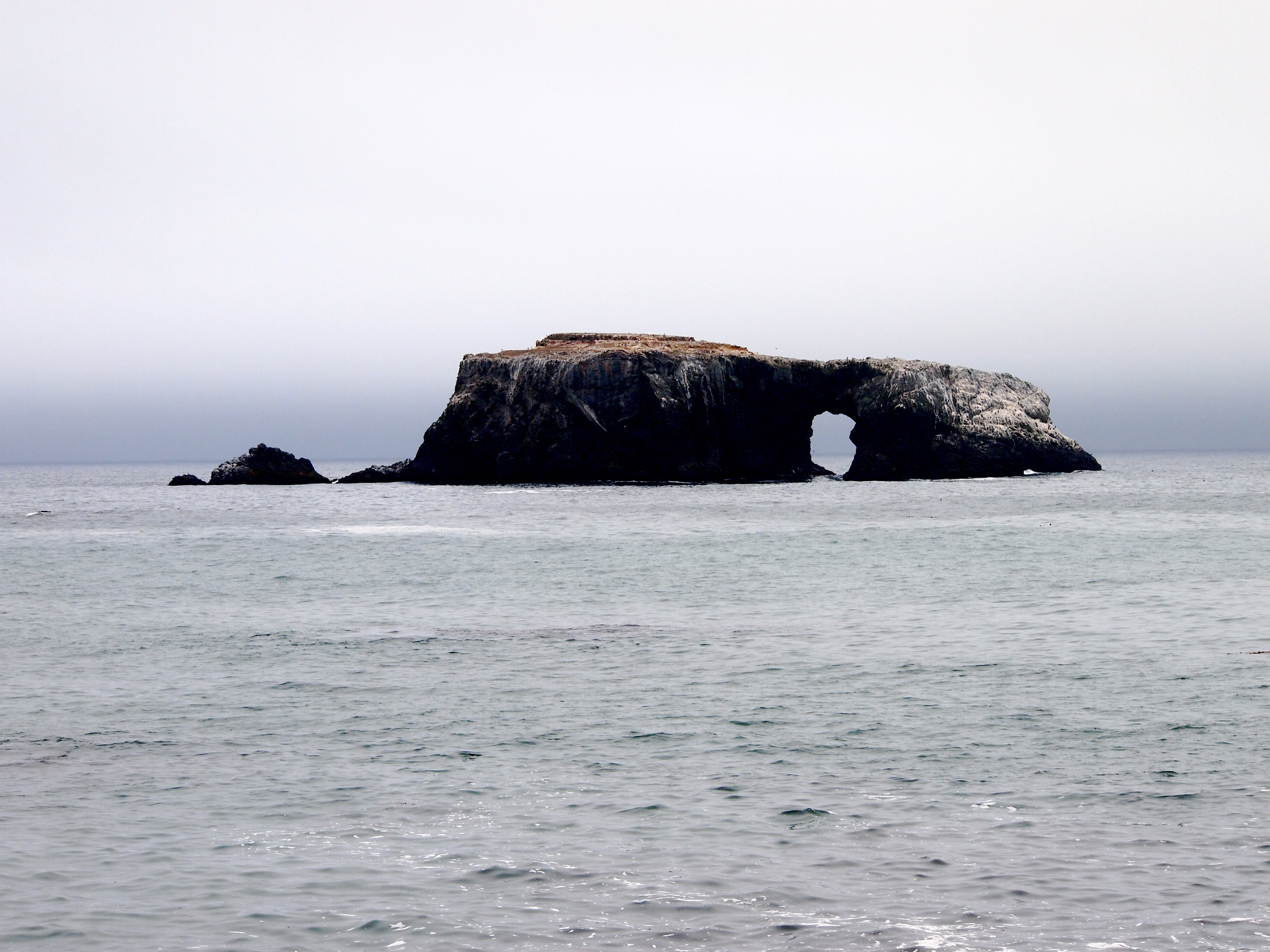
Near the shoreline, the ocean has some beautiful rock formations jutting out from the water.

What a beautiful place, and we live here! If only we could figure out a way to have this view out our back deck….now that would really be something.

I don’t know much about fracking, but I know what it looks like!

We hear so much about hydro fracking, commonly known as “fracking”.  It is the process of fracturing layers of rock using pressurized water to release natural gas and petroleum products from deep in the ground.  It requires an available supply of water and it seems to be significantly adding to our available reserves of natural gas.  BP (yes, that BP) describes fracking this way. [1]

Even though I don’t know anything about the science of fracking, I have seen it up close and personal.  First come the trucks.  They are all shapes and sizes.  They are almost universally big, loud, and heavy.  They damage the roads and churn dust over farmland and trees.  This truck is used to drill the wells, but other trucks deliver pipe and all the other equipment involved in the drilling process.

Water is piped in from the nearest substantial lake or river.  In a drought like this, the tremendous rate at which this water is consumed impacts the availability and cleanliness of water available for humans, livestock and crops. Environmental concerns include water contamination, oil and gas spills, disposal of waste water and other waste products. J. Daniel Arthur [2] estimates the average well consumes 3 to 5 million gallons of water over its lifetime.  It may be too soon to truly assess the potential environmental impact on our air, the water and the land.

Huge storage tanks are placed on the land, surrounded by chain-link fences. They are an eyesore at best.  Perhaps because silos are so common in agricultural areas, this seems to be the least problematic aspect of these fields.

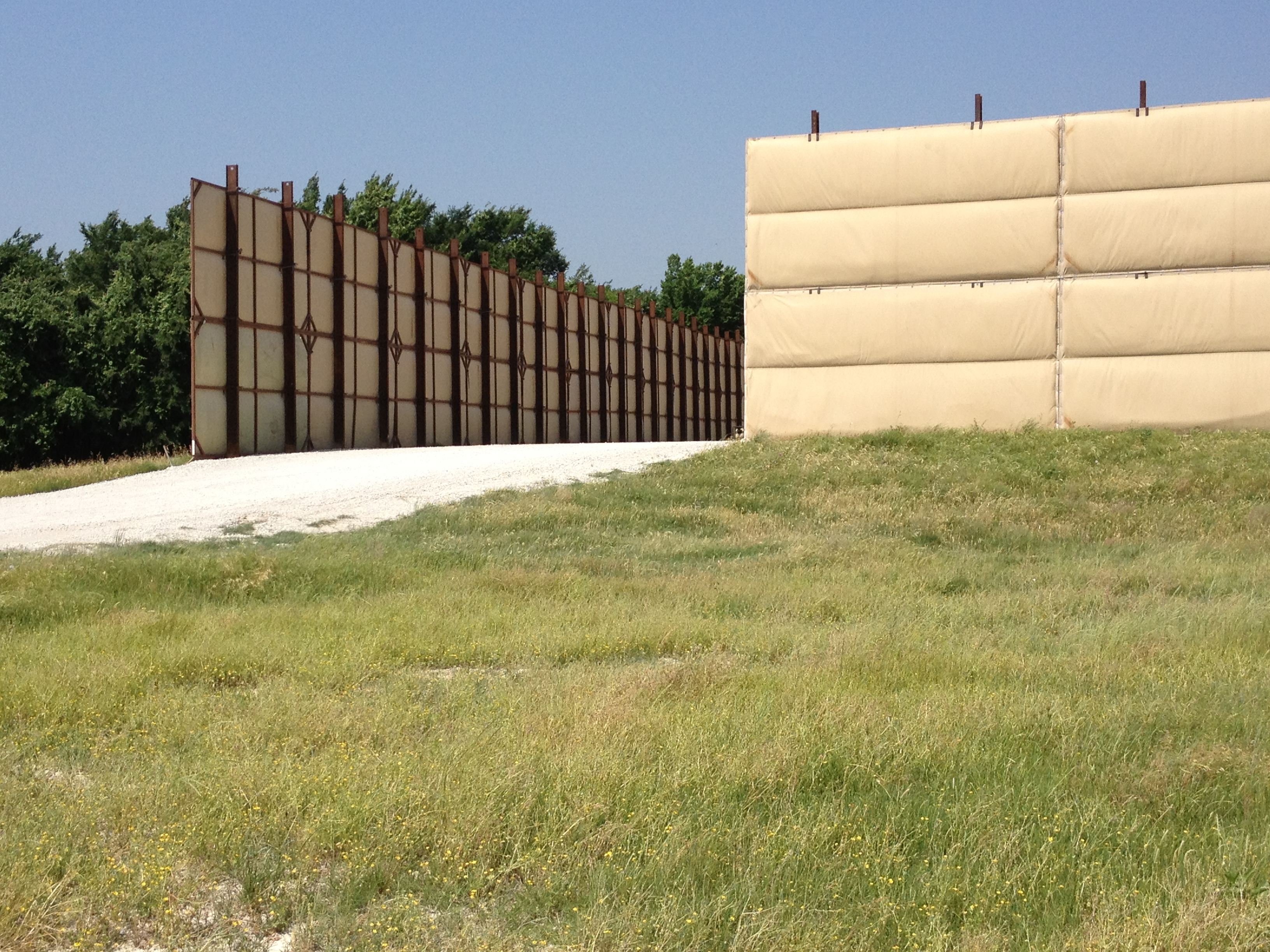
The sounds associated with the drilling process are muted by the baffles that surround the operations.  These baffles are eventually removed. In the meantime, they create a visual barrier to the activities going on inside.

The machinery used in the fracking process is totally beyond my beginning science background.  This equipment reminded me of a grownup science project.  Presumably  it is removed when the well is depleted.  

Hidden from view after they are installed, these large pipes carry natural gas to market.  Buried in the earth, they will be out of sight, but they won’t be out of mind.  Nothing can be built over the land where they are buried.

Whatever the economic benefit to the landowners, the impact of fracturing shale for the purposes of extracting natural gas and other petroleum products, makes us long for the days when energy came from simpler devices.

[1] explxplow.com; bp.com

[2] An overview of modern shale gas development in the United States, 2008.

___________________________________________________

As always, the opinions expressed in this blog do not represent the opinions of our friends, our families or our employers.

Relaxing by the Eel River

A few weekends ago, Jake and I drove up to spend the night pseudo-camping at our friends’ house up in Garberville. It’s up in Humboldt County, about 3 hrs north of Petaluma. Janice and Jerry invited us up for a quick getaway, and little did I know I would be staying right on the Eel River!

For the last several months, I’ve been doing research with my friend David at Friends of the Eel River. One of the major concerns with the Eel River water supply is that much of the water is diverted to the Russian River via PG&E’s Pottery Valley Project. While I’m still learning the ins and outs of the water world in California, it is very exciting for me when I get to see the subject of my research.

According to Janice, the river level was much higher in previous summers. This summer, there is a lot more visible gravel along the river bank than in previous years.

It was a wonderful getaway, though probably too short. We look forward to going back again soon.

To rain or not to rain, that is the question

It is dry, oh so dry.  The impact of this drought is the subject of a future post.  But the question of the moment is whether there will be rain today.  The weather forecast gives us hope that there will be relief from the 105 degree temperatures for at least a few days.  We are also given the promise of rain, precious rain.

Late yesterday afternoon I felt a single drop of rain.  On my drive home I saw a splash or two.  By 8 p.m. I was excited to see a real cloud.  The gray of a rain cloud was fighting against the fluffy white cloud which normally would have seemed lovely and delicate.  Now the dark of the rain cloud holds  our attention.

There were a few more drops and nothing more.  What does today hold?  Precious rain or dry heat?  That is the question.

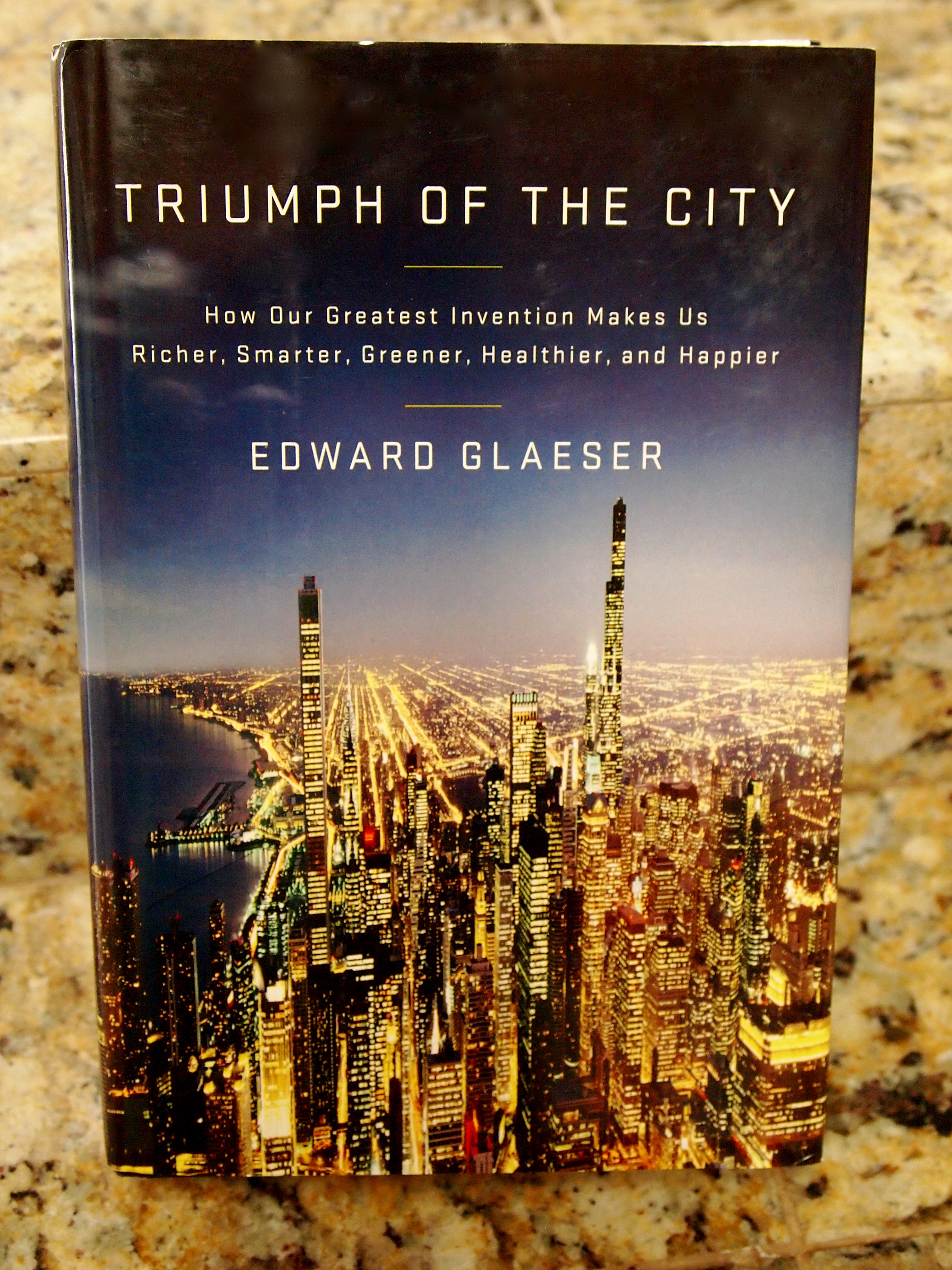
Edward Glaeser’s “Triumph of the City”

Meg has a J.D. in Urban, Land Use and Environmental Law. She focuses on political organizing, environmental policy, and sustainable living.

During the second half of law school, I decided to venture outside of our building and take a few classes in the Public Administration program. I met some wonderful people, great professors, and was able to explore new ideas and approaches to looking at public issues. In one of my classes with Adjunct Professor Jim Scott, I read a book called Triumph of the City, where I explored the structure of a city and what it provides for society. At the same time, I was doing some research about micro-lending with one of my manager’s at MARC, so the idea of investing in human capital really jumped out at me.

Here is an excerpt from my 2011 paper on community development ideas (which overall focused on what tools could be used in Kansas City). This section of the paper revolves around Glaeser’s Triumph of the City, and what ideas I derived from reading the book. Enjoy!

I. The Structure of a City and its Indication for Society – A Look at Triumph of the City
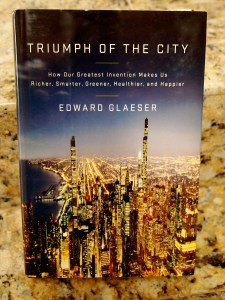
In his book Triumph of the City, Edward Glaeser argues that the city is the optimal structure for human interaction because it promotes human relations, innovation, and the necessary investment in human capital to make society thrive. He argues that cities are healthier and more environmentally friendly than living in suburban or rural communities. Even for cities that have suffered economic hardship, Glaeser holds strong to the idea that the people of a struggling city have a better chance of success than those living outside of cities, because cities foster creative thinking, communication, and investment in human capital. Ultimately, human capital is an essential factor for maintaining a successful community.

Glaeser’s primary argument in this book is that the most important investment you can make for a city is in education and innovation, which ties in with his idea that investment in human capital allows the people within the community to be more productive, make more money, and even be happier than those living elsewhere.[1] Using New York as an example of the archetypal city, he shows how the cluster of human capital helped the city remain successful through several different turnovers of the primary industry. From transportation and shipping in the 1800s, to the garment industry in the 1900s, and then the breakthrough of financial entrepreneurs in the 1970s, New York has remained a successful city through constant innovative thinking and implementation of new ideas. We also see the same example of metropolitan success through the education and ideas in Bangalore, the technology of Silicon Valley, the thinkers of Athens, and the collection of scholars in Baghdad.[2]

Cities foster face-to-face interaction, which helps create an efficient means of relaying ideas and other communications by allowing people to explain things to each other in person, rather than over countless e-interactions that inevitably result in misunderstanding and miscommunication. With multiplicity of cultures mixed together within the bounds of a city, this face-to-face communication is also important to respecting each other’s customs and traditions.

One city that did not succeed the way most cities do is Detroit, but Glaeser urges that Detroit’s decline resulted from a single-industry focus and the lack of investment in human capital.[3] With a struggling auto industry, the city was doomed to decline because its leaders failed to attract new minds and innovative ideas the way New York had done in the 1970s. As a city filled with less-skilled workers focused within a single industry, Detroit had no one to pick up the slack of the declining auto industry which consumed the city. There was a detrimental lack of re-education in the community, which meant the city ultimately lacked the resources to entice new industries.

There are several reliable predictors of urban growth that Glaeser emphasizes, including education and the presence of a poor population. Education is important because the productivity of a city is dependent on the level of edUcation of the population living within the city.[4] Glaeser also points to a city’s poor population as an indicator of the city’s success. Great cities attract poor people, and therefore have a more prevalent poor population than those cities which lack public services and amenities that poor people want and need, and are unable to obtain in rural slums.[5]

One distraction I find in his text is Glaeser’s insistence that the level of education and presence of a poor population are two important indicators of a city’s success, yet he also seems to think they provide the greatest obstacles. He describes the U.S. education system as providing too little learning to too many children. He also describes the overwhelming cost of maintaining public services for cities when the poor populations are largely unable to contribute to such cost. For both of the reasons described above, the wealthier populations move out into the suburbs, where private or charter schools employ better teachers, and money put toward public infrastructure benefits those supporting the cost. It seems to me, the very indicators that Glaeser lists as the most reliable predictors of a city’s success are also the very conditions that then push the money outside of the city, which only furthers a city’s decline.[6]

A city is not necessarily the best structure for everyone at every time. While high-density living is a good structure for encouraging new ideas and innovation, there is also something to be said for the importance of fostering stronger, almost family-like relationships within a smaller community. Strong urban neighborhoods can sometimes create their own familial relationships, but that assumes the members of those communities reach out to each other in person. Some of the same problems people face with the ability of modern technology – mostly, the ability to go through an entire day without actually having to deal with anyone face to face – are the same struggles that people face in the big city. People can be anonymous, they can avoid confrontation, and they can be ignored simply because of the sheer mass of people surrounding them. In a large city, a person can become just a number, whereas in smaller communities, everyone has a name.

Overall, Glaeser’s focus on investment in human capital and strengthening urban cities is very important for halting urban decline, however, there are other factors to consider when determining what the best structure is for society. The city certainly promotes productivity, provides a centralized location for innovation and communication, and has many environmental benefits. Additionally, there are a number of reasons why a city may not be ideal, including a decreased sense of safety, rising costs to support declining public infrastructure, and the potential lack of the sense of community.[7]

However, regardless of the structure, the need for education and entrepreneurship is essential for the continued growth and productivity of any local community. Whether in a city or a rural village, investment in human capital will help society as a whole become better education, more productive, and help individuals receiving the benefit of those investments feel more responsible and accountable to their local community.

—————————————-

[1] Glaeser, Edward, Triumph of the City: How Our Greatest Invention Makes Us Richer, Smarter, Greener, Healthier, and Happier, The Penguin Press, New York, 2011,  6-7

[2] Glaeser, 18-22

[3] 53

[4] 253

[5] 70-71

[6] 258; He acknowledges that cities cannot and should not have to bear the burden or cost of urban poverty alone. Urban poverty and rising costs of maintaining urban public infrastructure certainly contributes to urban flight, but those remaining in the urban core should not then have to pick up the slack just because others decided they did not want to pay for or deal with urban challenges anymore. To me, this is why we need economic development tools to encourage activity and investment in the urban parts of the city. As Glaeser later mentions on p. 268 of his book, those who want to live in the suburbs should be able to do so, but not without understanding the true costs of expanding into the suburbs, and helping to pay for those costs.

[7] While I do believe an urban city is an important structure to maintain in our society, my biggest concern with the way cities work today is that they are also the biggest contributors to the suburban movement. I think suburbs as a structure are generally very taxing on society as a whole. They are great places for families to have a safe place for their children, but cause excessive strain by families living in huge houses, driving huge cars, and generally undervaluing the limited resources available. For cities to truly shine, I think suburbs need to be better controlled, and that is a problem I do not know how to solve.
They’re here, they’re there, they’re everywhere–Canadian Geese

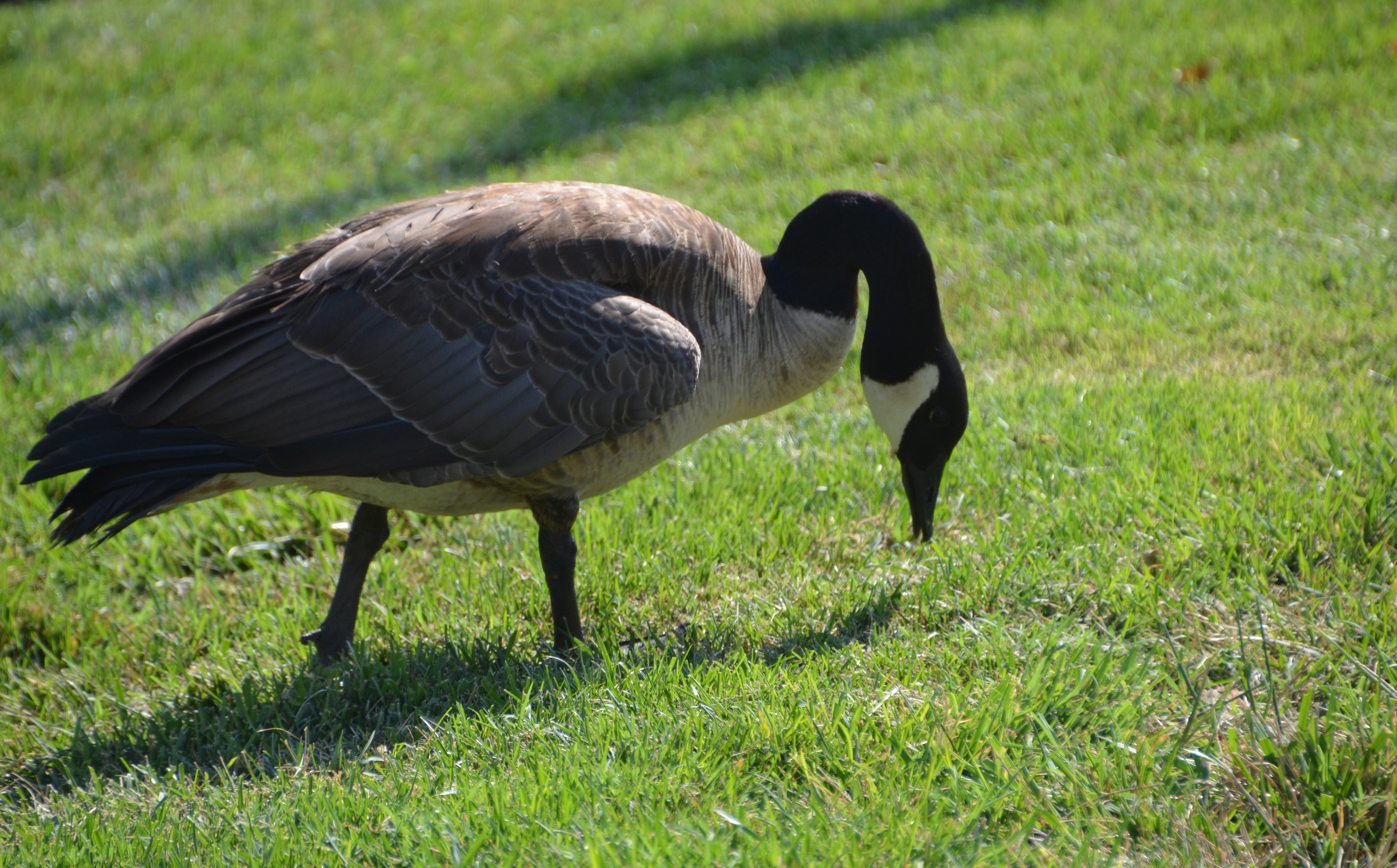
Have you noticed that Canadian geese are everywhere?  No?  They are if you live in the Midwest.  They are in our parks, our ponds, our golf courses, our lakes and rivers.  Ten years ago Kansas City had Canadian geese flying overhead with the change of the seasons.  Slowly we noticed that a few stayed through the winter.  Now they raise their young within a few feet of city traffic. Their waste is on our streets, our sidewalks and in the grass. Plaza traffic literally comes to a halt whenever a mom and her babies cross the street.

With the number of geese so nearby, I thought it would be fun (and easy) to photograph them for the blog.  I took photographs in Loose Park and near Kauffman Garden.  Most of the shots were just boring.  Then I found a beautiful spot on Brush Creek that catches the morning sun at a great angle.  Having seen geese swimming in the area I decided to take my camera to get photographs of the geese just at the beginning of day.

It isn’t that easy. Five mornings I have made the trip, looking for birds that are in the water right at the right place and time to create opportunities to photograph them when the colors of the water are most vibrant.

The geese sleep on open land, maybe 20 or 30 feet from the water.  Depending on factors known only to geese, they begin to move toward the creek between 8:15 and 9:00 a.m.  Most move toward the water in groups, a few move individually.

After arriving at the water’s edge they begin to primp and preen.  Finally, they enter the water, almost en mass, and only slowly spread out as they begin to swim upstream, downstream and under the bridge.

For a few wonderful moments the sun’s rays cause patterns of light to reflect back from the water, causing the beauty of the ducks to combine with the richness of the colors of sun, the rock and shade. When I am lucky I can find a goose in the water at the right time and place to catch them at their photographic best.

All too soon the suns rays are too strong to catch the colors, the ducks have moved too far on the water to easily shoot, and the water itself seems to turn a muddy green.  It is time to leave the geese for another day.

The Basilica di Santa Maria del Fiore in Florence, Italy

The Basilica di Santa Maria del Fiore/Flower, dominates the central square in Florence, Italy.  Construction began in 1296 and was completed in 1436. It stands on the site of an earlier church erected during the 7th century.  Identified as a basilica or duomo, the complex of buildings at the site a cathedral, it is the home congregation for the Archbishop of Florence.  Wow.  When Terry and I visited Florence in 2011, 575 years after it was completed, I had to marvel at the comparatively pristine condition of the complex.

Our day in Northern Italy would not have been complete without visiting this architectural marvel. The architecture is alternately described as  Gothic, Classic and Romanesque, because it has elements of each of those styles and more.  The world was changing in the late 1300’s and the early 1400’s. The architecture of this magnificent structure was changing with it.

At the extreme right in the photograph is the bell tower, or Campanile, the second of the three buildings in the cathedral complex.  It’s design and construction were overseen, until his death, by the famous Italian architect and painter, Giotto di Bondone.  The pink, white and green facade reflects the natural colors of the marble from which the facade of the building was constructed. The intricate designs, exquisite windows and interior and exterior sculptures and Biblical works of art, are characteristic of the churches of Northern Italy built at that time.  But this is no less a masterpiece.

I particularly focused on the gilt bronze panels on the doors that  are situated on three sides of the duomo.  Additional, similar doors are on the baptistery, the third buildings in the cathedral complex.  Like every other aspect of the cathedral, the craftsmanship and detail are of the highest quality.  They evidence that the finest artists and intellectuals gravitated to Florence and helped usher in the Italian Renaissance.  Look at the detail of the faces and the elegance of the horns.

Surrounded by galleries, palaces and museums, the cathedral establishes Florence’s role as a center of  culture in the 1400’s.  Not surprisingly, the historic centre of the city is designated a World Heritage Site by UNESCO.  It shares that designation with Dubrovnik, Croatia, which has also been featured on this blog.

Are we making wise decisions about our charitable contributions?

   [1]

Hopefully, each of us has a charitable heart.  Whether we support educational programs, the arts, disabled veterans, disaster relief, Native Americans, or (name your own favorite cause), we want our charitable moneys to be well spent.  So, the question is, how do we make good decisions about our charitable contributions.

I took this photograph of my dog in an attempt at a little levity.  But it is a significant matter.  Charities and foundations solicit and receive millions of dollars a year from caring contributors like ourselves.

I could set up a charity, comply with the legal requirements and begin to solicit contributions for Kansas City dogs like Casey who have sustained minor injuries.  I could pay myself a salary and an expense account and give nearly nothing for the care of injured animals.  Would anyone contribute?  I hope not, since organizations like Wayside Waifs do such a great job of caring–and finding forever homes–for dogs and cats like Casey.  As evidenced by the fact that Casey is a product of that wonderful organization.

Over $300 billion dollars a years is contributed annually to U.S. charities.  That is an amazing outpouring of generosity from individuals and corporations.  As staggering as the amount of money, we can’t afford to have any of that money wasted.  But it is likely that millions of our dollars fall through the cracks.

All of us have seen, heard or read the tragic stories of human or animal suffering accompanied by a request for money?  I have received solicitations from charities enclosing pennies, dollar bills or a piece of a blanket, accompanied by a request for a contribution.  More important, my 97 year old father has: over, and over, and over again.  Often the same charity sends mailings on a weekly basis.  Sometimes charities with different names, but the same return address, solicit contributions from unknowing but caring individuals–like my dad, who gives generously, but (sorry dad) not always cautiously.  But seriously, why would any charity take my contribution and use my money to send pennies or dollars or trinkets to other potential donors?

Anderson Cooper recently did a special entitled Charity Cheats.   He focused on investigations conducted through AC 360, his program, and research conducted by CNN’s Drew Griffin and David Fitzpatrick.  He focused on charities and fundraising organizations that solicit and collect millions of dollars, but provide almost no funding for services. Primarily, Cooper focused on  the high cost of building mailing lists, and the abuse of in-kind gifts to intended recipients of charitable dollars.

In addition to the abuses on which Anderson Cooper has focused his attention, there are  also charities that pay hundreds of thousands of dollars in salaries to key employees.  A few have been targeted for having huge financial holdings, vast amounts of real estate and supporting elaborate lifestyles for their founders and employees. If these claims are true, how do we protect ourselves from the abuses addressed by Cooper, and others?

Before you open your checkbook to make a contribution to a charity about which you have little information, beware. Most organizations work hard to squeeze every penny out of the donations they receive.  But a few, large and small, are very poor stewards of our money.  So what to do? Find out about charities to which you wish to donate. Numerous watchdog agencies offer assistance in helping us spend our money carefully.  Among them are The Philanthropic Advisory Service of the Council of Better Business Bureaus, the American Institute for Philanthropy, GrantSmart, GuideStar, the National Charities Information Bureau and Charity Navigator. Their methodologies may differ, but they provide information not easily available from other sources.

For many of us, the adage to “put your money where your mouth is” may be the best advise.  When we contribute our time and our money to the same organization, we significantly increase the chances that our money is well spent.  When our goal is provide assistance outside of our own areas of knowledge, looking to the wisdom of experts on evaluating charities may be the best way to protect our contributions and those we seek to benefit.

The opinions expressed in this post do not necessarily represent the opinions of our families, our friends or our employers.  Obviously, Anderson Cooper and the investigative reporters at CNN take seriously the issues in “Charity Cheats” and similar reports.   


[1]Casey was obviously an unwilling model for my photo-shoot.  Hard as I tried to get him to appear in distress, he was having none of it.