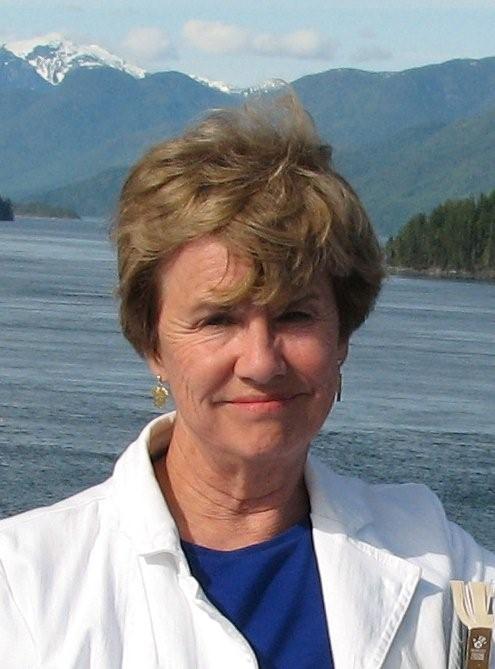
Water, Water Everywhere, in San Francisco Bay….But a precious resource, indeed

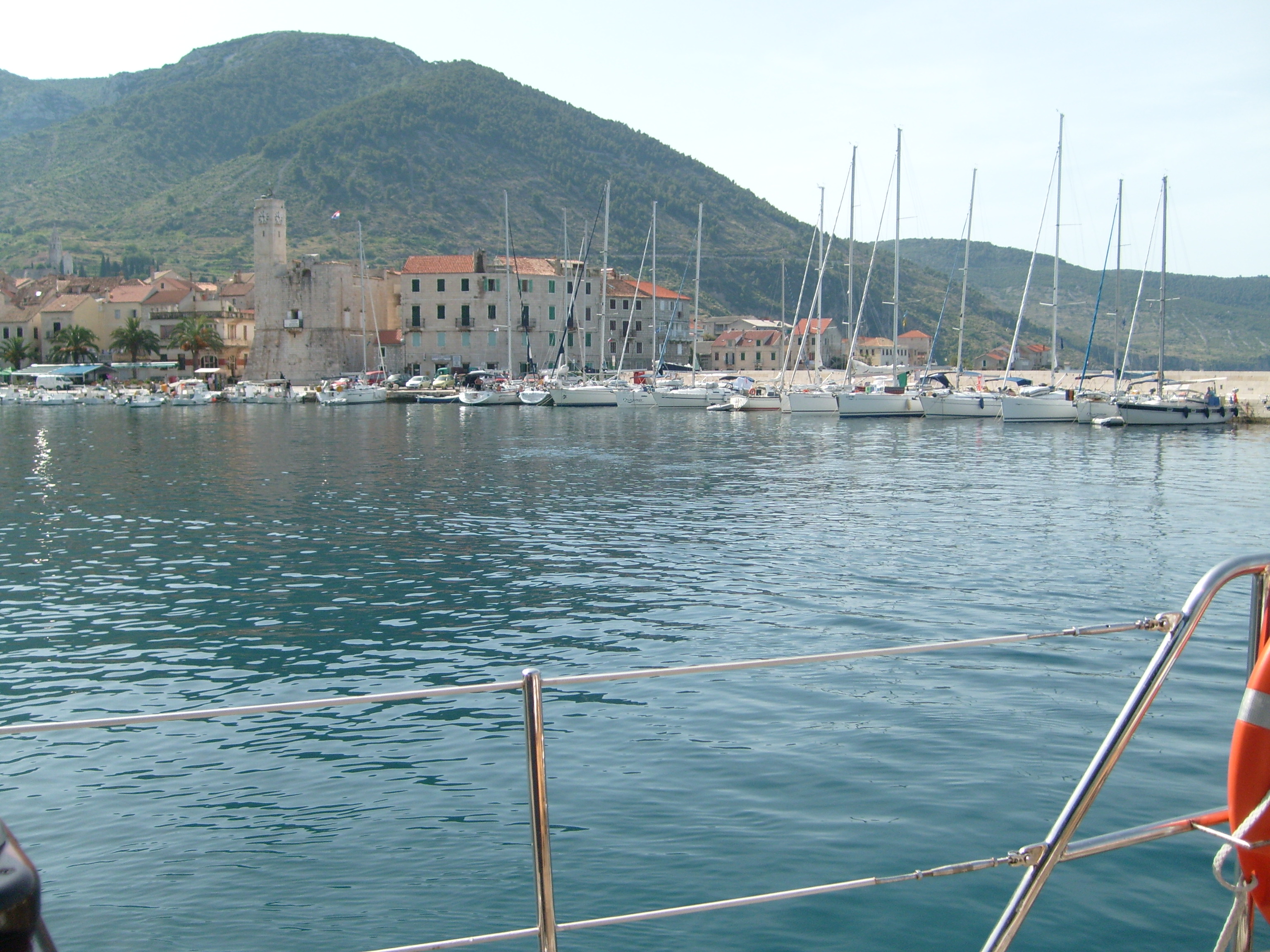
It’s a beautiful part of the world. San Francisco Bay has become our new home this last year, and we’ve loved exploring the area. Last week we took the Larkspur Ferry into the city, and seeing the water and beautiful views reminded me of why I care so much about the health of the environment and protection of our natural resources.

Many of our dinner conversations lately have circled around one of the most precious natural resources: water. With all the water that surrounds us here…the bay, the ocean, the rivers…it is easy to forget how important it is to conserve water. In California, our water bill is by far our highest priced utility. It costs so much because there are so many people in California who draw from a rather limited water supply. It makes me wonder, do people really pay attention to their water usage? When taking a shower, does someone turn on the water and wait 5 minutes for it to get to just the right temperature? What about landscaping. When designing the layout for the front yard, does someone in California choose local plants and landscaping that doesn’t require an excessive amount of water, or lush grass that requires water every other day? These have all been on my mind lately.

I imagine this will be an ongoing discussion for me, so I encourage you to include your thoughts. I am also interested to know how people feel about water usage in different parts of the U.S., or even the world.

I encourage you to take note of the amount of water you use in a day, and see where in your routine you might be able to save a gallon or ten. If everyone made an effort to conserve water, and only use what they needed, surely we could better protect such a precious resource.

Independence Day–a day for reflection and fun

Two hundred thirty-six years ago The Declaration of Independence was adopted by the Continental Congress.  In that document the original 13 colonies declared their freedom from Great Britain.  It states, in part:

We hold these truths to be self-evident, that all men are created equal, that they are endowed by their Creator with                                            certain unalienable Rights, that among these are Life, Liberty and the pursuit of happiness…

Independence Day is a great day on which to remind ourselves of the privileges we hold dear and the sacrifices that have helped shape our nation and our national values.  For me it is a time for gratitude.

Hopefully, it is also a day for celebration: for fun, barbecues, laughter, and fireworks!

Have a safe and happy holiday.

________

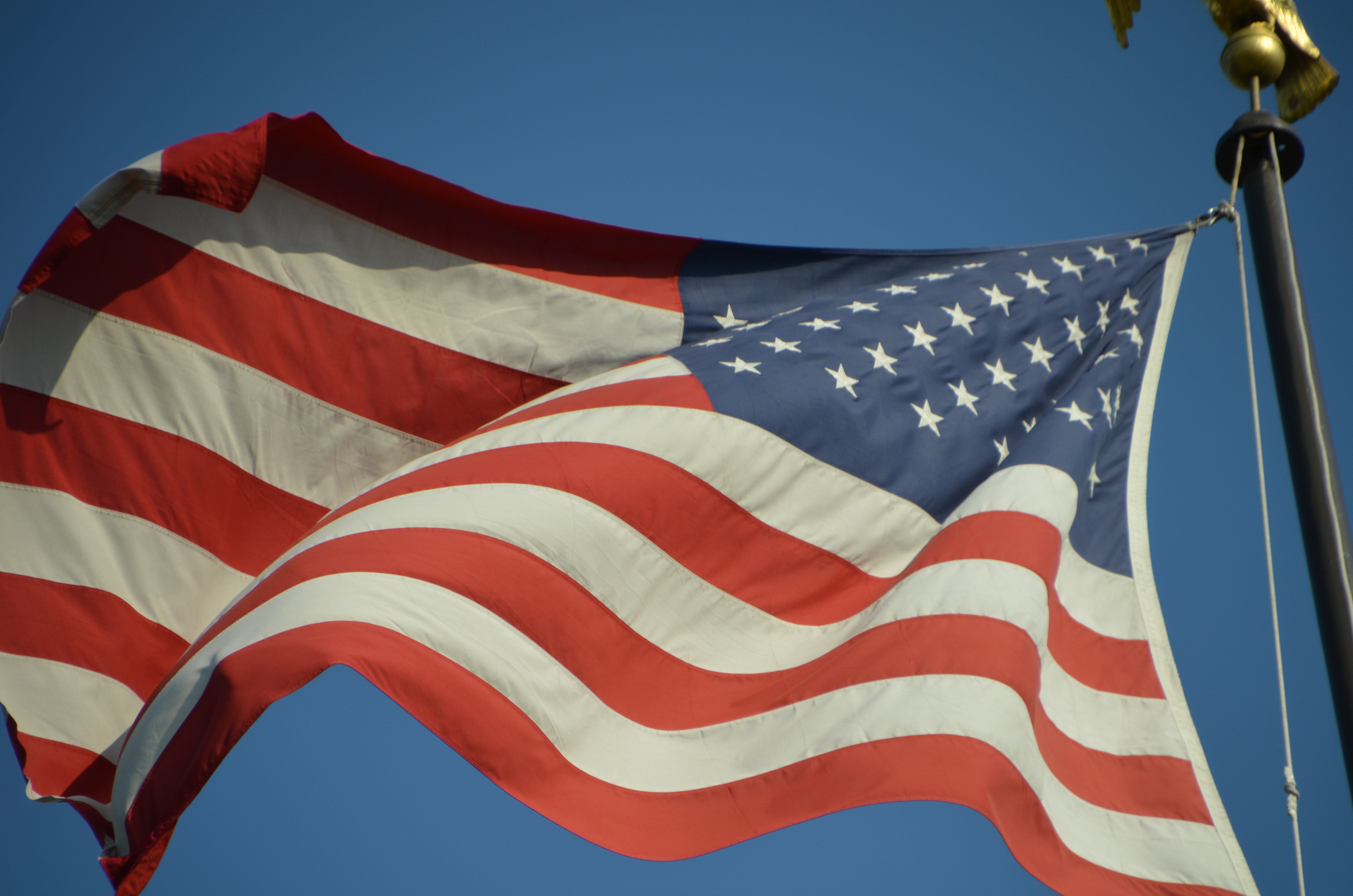
The American flag was photographed July 3 at the Liberty Memorial.  The fireworks were photographed July 3 during the Westwood, Kansas, fireworks display.  All the photographs were taken using my Nikon D5100 camera and Tamron 18-270 zoom lens.  I am trying to learn the secrets of my camera.  I took lots of shots of a nearly limp or semi-limp flag before I finally was lucky enough to catch a couple of shots where the wind had opened the flag .  I had to try numerous settings to get the light and speed right to make it possible for me to catch the fireworks as they raced across the sky.  It will be years before I photograph fireworks with the skill to make it to PhotoBotos, but for now, I think these are fun.

Election politics–Respecting our own values

It is July, Independence Day is just around the corner.  We are in the thick of a Presidential election campaign. Stories concerning President Barack Obama and his Republican opponent, Mitt Romney, fill our newspapers, our television and radio stations and the internet news.

                                                                                                               NYDailyNews.com Samad/Getty

                                                                                                Washington Post  Charles Dharapak-AP

There are weeks you would swear that the insults and barbs are directed at an enemy nation, not at an individuals who are lead and/or seek to lead, this great nation.  Listening to the venom in the political debate, you would swear that neither candidate is fit to be President.  In fact, both of these men are good men.  They are flawed, as are we all.  Their values, and the values of their parties, may be different than yours and mine.  But they are not evil, incompetent or stupid.

Francis John McConnell, a bishop in the Methodist Church and president of DePauw University from 1909-1912, said it well:

“We need a type of patriotism that recognizes the virtues of those who are opposed to us”.

We are so fortunate to live in a country that values its citizens.  Our government is a model for the world.  We are so fortunate to live in a nation with a United States Constitution that speaks to fundamental rights such as freedom, democracy, liberty and the rule of law.  Wouldn’t our founding fathers weep at the level of venom directed at our government leaders; not only our Presidential candidates, but all levels of elected office (and this isn’t the day to talk about the election of judges.)

As fortunate as we are, and have been, our nation has serious problems, and we aren’t going to solve them by demeaning our government leaders through campaigns of hate.  And can’t we stop throwing insulting comments at family and friends who vote for “the other guy”.  Can’t we recognize their virtues?

Isn’t this a time to direct our attention to finding solutions to serious national problems: the economy, immigration policy, strengthening our position as a leader within the community of nations.  Can’t we look for answers together.  Can’t we set aside our anger long enough to find common ground and to focus on solving problems together rather than focusing on new ways to embarrass and harangue those with whom we disagree.  Can’t we make our leaders and each other look good, not bad?

Support the candidate of your choice.  Raise money, go door to door, help the processes of democracy work well.  But at the end of the day, can’t we just find each other’s virtues?

In this opinion we do not intend to speak for our employers, our spouses, our families or our friends.  

Welcome to our family: Caroline Marie Soper

She is a beauty.  I just have to say it!  Born at St. Luke’s Hospital on June 26, 2012, at 2:08 a.m., she didn’t make her entry into this family easy on mom or dad. As is always the case, mom (Dana) bore the brunt of it.  But dad (Jon) was also a trooper.  He was with Dana for the duration.

The maternity ward seemed full with just Caroline’s grandparents and step grandparents.  Caroline, of course, has no idea that she is the source of such joy for her parents and all the members of her extended family.  It will take her years to understand the traditions, stories and values that come with any family, and certainly ours.  It will take a lifetime for her to understand her own value to each of us and to the families of which she is a member.

Sweet Caroline.  Welcome to the family.  You have cousins, parents, grandparents, a great-grandfather, and aunts and uncles all waiting to meet you.  May your life be filled with love and happiness as you bring love  and happiness to us.

Little Boy Lost–in 1869

James Churchill was born May 8, 1863 and died Nov. 22, 1869.  He was 6 years old.  I do not know where he was born.  Presumably he died near Leavenworth, Ks., since he was buried there, by the Missouri River.

More than 125 years later, his tombstone was found, upside down, in an open field.  I have searched high and low but have found no record of his birth or his death.

I believe I have identified his parents.  The tombstone lists his parents as R.D. and S.C. Churchill.  I believe they were David R. Churchill and Sophia C. (Brown) Churchill.  I find no record David and Sophia had a son named James, but they had other children in this same time period.

James was born 2 years after the civil war began, and died 4 years after its end. Most residents of Leavenworth in 1863 were pro-union, since Camp Lincoln, in Fort Leavenworth, was a reception and training center for Kansas volunteers for union soldiers.  Since it seems unlikely confederate loyalists would live within the shadow of a Union stronghold, that suggests the family held anti-slavery beliefs and, more likely that they moved from the North or the East. Of course, nothing is certain.

I doubt the family was traveling west.  In 1862 David Churchill lived at 211 Delaware in Leavenworth.  Someone in the family is listed as a member of the Mayflower Society which may be helpful, because it suggests a family with an interest in its own heritage.

The person who found the tombstone wants very much to return it to the family.  He indicates he took the stone originally because after an extensive search he found no indication of a cemetery, no indication of houses or of any homestead near the land where the stone was found. He offered it to a historical society which was not interested.  (There probably are many other tombstones with similar stories.)

The stone itself evidences a certain level of affluence for Kansas in the 1860’s.  It is not illegible, like many stones from the late 19th century.  Even after so many years of being subject to the weather, it is a substantial stone, with the family information clearly carved and easily read.

Please, if you have any information about the Churchill family, or even about a 19th century cemetery along the river in Leavenworth,  just send me a comment.  Thanks

The day I met the President

Meg has a J.D. in Urban, Land Use and Environmental Law. She focuses on political organizing, environmental policy, and sustainable living.

If you’ve ever met a sitting President, you know what that day feels like. Whether you voted for him or not, it leaves an impression on you. It may be a handshake, a short conversation, or perhaps you met the President in a completely random setting you never expected, like he was out getting ice cream with his family. For me, it was a handshake and a few words at the airport.

While President Obama was in San Francisco a couple of weeks ago, I had the honor of meeting him at the airport. It wasn’t about a campaign. Sometimes it’s just nice to be able to meet the nation’s leader, have him shake your hand and look you in the eye. Not many people get to do that, so I am glad I was given the opportunity.

For me, meeting the President really wasn’t about the politics. It wasn’t about being a Democrat or a Republican. It was about meeting the man in charge, as one of his constituents, and being able to share that experience with others. Well, definitely a cool part about the morning was getting to stand in front of Air Force One. That thing is HUGE!!

Water, Water every where, Nor any drop to drink

In the Rime of the Ancient Mariner[1] , the narrator describes the lack of drinkable water while sailing on an ocean of salt water. 

The lack of available safe, drinkable water can result from many causes: drought, when there simply is no available water; polluted water resulting from toxic waste and agricultural pesticides; water polluted as a result of inadequate treatment of sewage from human and animal waste and water that is too salty to drink.    


Here in the Midwest, water surrounds us.  We have lakes, rivers and streams. We swim in it, bathe in it, freely water our lawns and gardens with it, and simply admire it.  But we are lucky.

Even in parts of the U.S., water is precious.  But while water it California and other western states can be expensive, it is still available.  In agricultural areas, particularly in areas of Texas, ponds may have plentiful water in the spring but dry by late summer.  

In times of drought, the lack of water can ruin a crop or cause ranchers to sell off portions of their herds.  Even then, safe water is almost universally available in the United States for human consumption.   

 World-wide, there is a different story.  Roughly 10% to 11% of the world’s population, between 783 million to 1 billion people, does not have access to safe water[2].  In the developing world, 90% of sewage is discharged untreated into rivers[3].  1.4 million children die every year as a result of diseases caused by unclean water and poor sanitation.  This amounts to around 4,000 deaths a day[4].  The death rate from lack of safe water is greater than the death rate from war.  The lack of water, especially in Sub-Saharan Africa also results in crop failures, frequent famines and also a significant factor in the loss of life of humans and animals.

 In The World is Hot, Flat and Crowded, Thomas Freidman quotes Michael J. Sandel, a political philosopher at Harvard that: “’We have a responsibility to preserve the earth’s resources and natural wonders in and of themselves’ because they constitute the very web of life on which all living creatures on this planet depend.” 

 Clean water is not a partisan issue.  It is not an issue that appeals only to those who are “left leaning” or “right leaning”.  It is a human issue.  We can clean water, dig wells to make it accessible, install pipes and faucets to move it around and make it easy to control the flow and movement of water.  Most of all, we can care about the people for whom the availability of water is a life–and death–challenge.

 ____________________

Our opinions, are our opinions alone, and do not represent the opinions of our employers, our friends, our relatives, our husbands, or even each other.   


[1] Rime of the Ancient Mariner, by English poet Samuel Taylor Coleridge, published in 1798

[2] WHO/UNICEF, WaterAid, Water.Org.

[3] UN

[4] WHO

The “Dragon Boats are coming”–and friendship comes with them

From X’ian, China, to its sister city, Kansas City, Missouri, come the Dragon Boat races, a wonderful cultural tradition.

The races are held under the  “Sister Cities International Bridge”, where life-sized Chinese warriors guard the foot bridge as it crosses Brush Creek.  The imposing bronze warriors are symbolic of the rich culture of China’s ancient civilization as well as the friendship between our cities.

Festive red ornaments crossing the bridge announce the 12th annual Dragon Boat races held Saturday, June 9, 2012.  The races are part of an annual celebration of the friendship between the people of these two cities.

The celebration includes races involving local university students and corporate teams as well as representatives of China. The event  includes a wonderful display of pageantry, speeches and a colorful dose of Chinese culture.

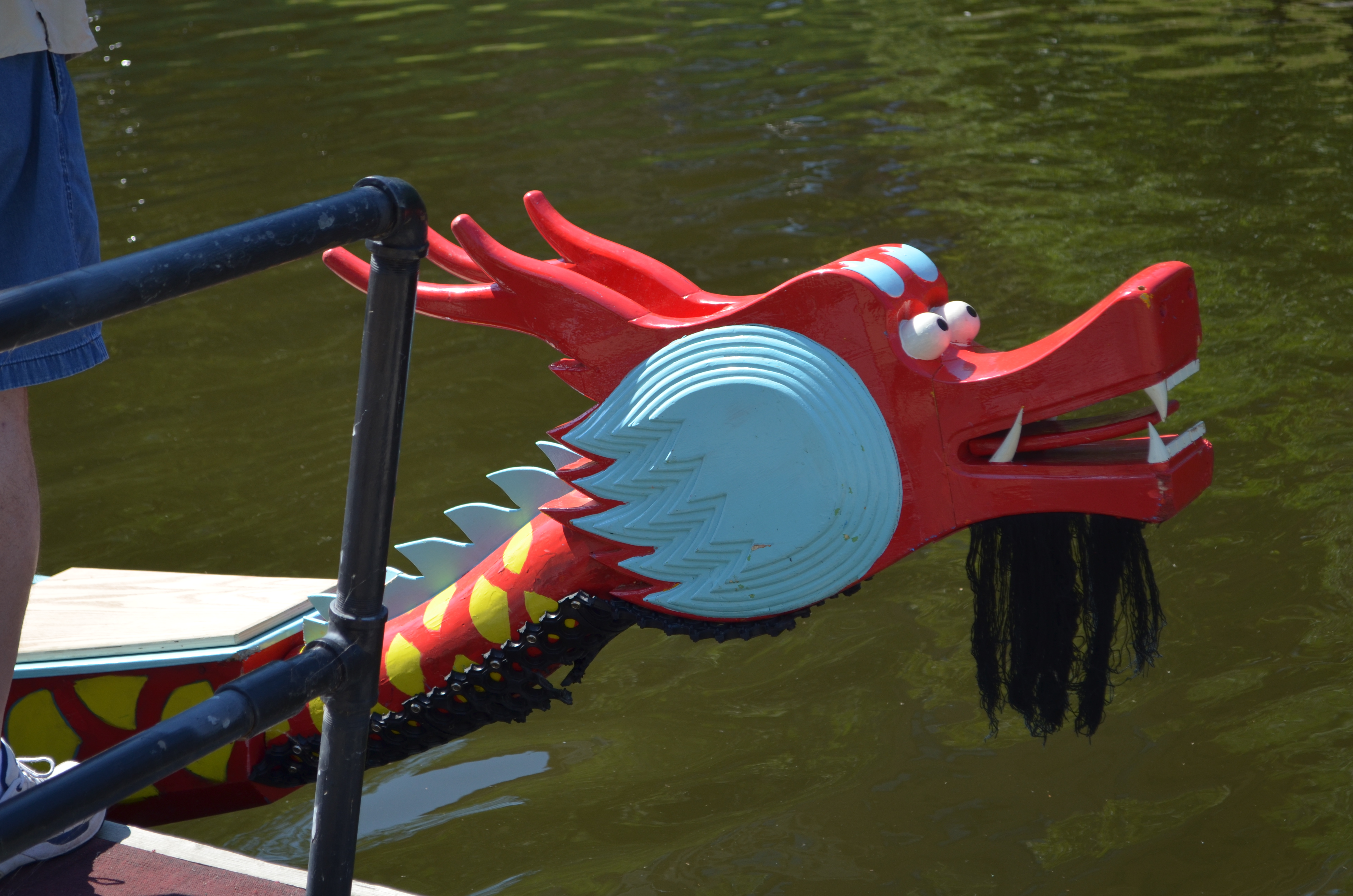
While the celebrations include a ceremony called “waking the dragon”, the dragons of most importance are the decorative dragons that embellish the front of each boat.  These dragons are whimsical and colorfully painted.

At this year’s event, Mayor Sly James not only greeted visitors, he spoke to the crowd, encouraged the celebrants, and also agreed to be  the drummer for Kansas City’s home town team.  Way to go, Sly!

Here, a drummer beats the rhythm for the crew in the first race.  The crew paddles as quickly, or as slowly, as the cadence of the drummer.

On this happy day there were no worries about the politics of our two countries, of the balance of trade, or of jobs lost and found.  It was a celebration and a time of friendship.  A good time was had by all.

Impact of Health Issues on Poverty in Rural Iowa, Guest Author, Sherry Mesle-Morain

Biography:  Sherry Mesle-Morain received her undergraduate degree from Tufts University, her Master of Education Degree from George Washington University, and her Masters in Social Work from Smith College School for Social Work.  She began her career in financial aid for students at Nazareth College in Pittsford, New York.  After raising two children she returned to academia at Graceland University in Lamoni, Iowa.  She retired as the Director of Financial Aid Services for the university.  Since her retirement she has focused on volunteer activities in Lamoni and, as she says found that people suddenly thought she could do anything.  Her volunteer work with the Community Financial Support Coalition (FSC) guided her thinking to the subject of this blog.

Impact of Health Issues on Poverty in Rural Iowa

Life is good.  Or, I should say, my life is good.  I have a family I love and who loves me.  We are kind to each other.  I have more than plenty to eat and I have nice clothes to wear.  I can afford the gas to drive to Atlantic to see my daughter and Kansas City to see my dad, my sister and my son.  And I have energy to serve my community and to have fun. Not everyone in my small town in Southern Iowa is so blessed.

The City of Lamoni has some generous citizens who contribute to the Lamoni Community Financial Support Coalition (FSC), the mission of which is to provide modest emergency financial assistance to citizens in need—shifting the balance, so to speak.  My stewardship with the FSC is to interview those folks who have requested financial assistance from our small pool of funds.

I began to sense that major medical issues were a primary factor in the lives of the people I meet with, but I know that hunches are not truth.  Then I realized that I had the raw data to do a small statistical analysis of the reasons these good folks are in need of help. Of the 32 people seen, 75% of them or their children had medical issues that ate up their resources and/or kept them from working, at least temporarily, whether full-time or part-time.  Their time off work was anywhere from a couple of weeks to a full year.  One of the things that surprised me when I talked to people who had medical issues was that they took seriously their responsibility to pay their outstanding medical bills.  Many used up their savings paying their bills and others were on payment plans that kept them in poverty.  Some were on Medicaid, which relieved them of constant payments, but they still faced the fact of having no income because of their health issues.  Occasionally someone had gone several days or a week without taking vital medications because they would not get paid for another week and could not afford to pay for their prescriptions. Four women were unemployed because of maternity leave.  They not only could not work during those few weeks, but they also did not have paid maternity leave.  And, of course, when they do go back to work they have to figure out-child care—who will provide it and how will they pay for it.  This is a huge expense that eats up their minimum wage earnings.

Just a few days after I did this analysis I heard a news story on National Public Radio of a national study showing the same results.  Both my analysis and the NPR story of April 20, 2012, by Jennifer Ludden verified my observation.  There are three points Ludden made that I would like to share with you.

1)   Two-thirds of women with young children now work.  Nearly half are their family’s primary breadwinner.  (Of the women I interviewed the majority were living with the fathers of their children, men who were either underemployed or unemployed.  These are serious issues, but that is a subject for another day.)

2)   Because so many companies do not offer paid sick leave or paid vacation, a mother who stays home to care for a sick child is at risk of being told not to return to work.  If it is mom who is sick, she is in the same spot.  She doesn’t get paid to stay home, so she can either care for her children herself when she is sick, or she can put them in day care and go to work sick so as to afford the child care.

3)   Having a baby is a leading cause of temporary poverty.  Many women with no maternity leave end up quitting their jobs to care for a baby.  When they lose those needed jobs it is very hard to get back into the workforce.

While on the national level we have the necessary and intense discussions as to how to address unsolvable problems, how to manage the social safety net, and how to see to it that everyone gets health care, the people who request assistance from the Lamoni Community Financial Support Coalition are in real and immediate need: of diapers and wipes, of formula, of heat and water, of a place to live, of medical care, of gas to get to work and to medical appointments.  The needs do not stop and they are real.

I am amazed at the resilience and optimism of these folks.  But from time to time they need a helping hand to shift the balance in their favor.

Please note: the views expressed by guest authors are not necessarily those of the primary authors of Shifting the Balance.  We do believe it is important to encourage the free flow of ideas and to promote collective action and compromise.  In order to keep the country “in balance” we believe we should work together, and that means sharing and respecting ideas, including those that may be different from our own. 

World War II: They died that others might live

World War II holocaust survivor, Bronia Roslawowski, was born Brucha Kibel, in Turek, Poland, to Tzvi Eliezer (Hersh) Kibel and Bluma Bayrach.  She was born in about 1926 but we were never really sure about her age!  She died July 14, 2010, in her adopted hometown, Kansas City, Missouri, after a long and meaningful life.  She was beloved by all who knew her–and she seemed to know almost everyone.

On September 4, 1939, German armed forces marched into Turek, where Bronia lived with her family.  After two already difficult years, in December 1941, Bronia was sent to Inowroclaw Straflager in Northern Poland.  A “resettlement camp” during the war, it was the first of approximately 5 concentration camps in which Bronia survived the war.  In 1943 she was deported to Auschwitz-Birkenau. She worked in a forced labor camp at Telefunken plant in Reichenbach, escaped the gas chamber in 1944 and was forced on a death march shortly before war’s end. Her right arm was tattooed with the number 57365. Still, despite all that she suffered, she survived.  She was liberated by U.S. servicemen in 1945 and worked briefly in a resettlement camp before moving to the United States.  Only she and a brother survived the war.

Bronia married Mendel Roslawowski, himself a survivor of the camps.  Together they raised his son and her three daughters.  They opened the M & M Bakery at 31st & Woodland.  A popular neighborhood deli, it was a favorite of the local community, medical students and young lawyers.  Her brisket and bagel sandwiches were absolutely priceless.  She had photographs on her walls of children who frequented the deli, many of whom she fed free sandwiches and cookies.  She hugged her customers and seemed to find time to make each of her regulars feel loved.  To Bronia, no one was ever a stranger.

Bronia never forgot her war-time experiences.  She was determined not to let those experiences, or the loss of her family, control her life. She laughed easily and often.  She opened her home to her extended family and her children’s friends–who came to feel like family.  At the same time, anxious to educate her community about the horrors of war, she spoke regularly on behalf of survivors about the holocaust, and worked with the Midwest Center for Holocaust Education.  Her message was a message of love., stating She forgave those who harmed her, insisting they are all God’s children.  She acknowledges the hate and ugliness she saw in the world and she denounced Nazis, but not the German people.  She stated that “you cannot condemn a nation.”  “I don’t hate” she  repeated.   

Prior to her death she was one of 52 Kansas City Holocaust survivors and war refugees whose stories are included in the book From the Heart.  She is also the subject of a children’s book, Love the World, by Maureen Moffitt Wilt focused, obviously on her message of love.  It is beautifully illustrated by Jeff Porter.  The photograph of her family, taken at her granddaughter’s marriage, is an image of a woman who not only survived the war, but thrived.  She lived a rich and full life. Bronia’s life, and her message of love, are reflected in the strength and commitment to family and community of her children, grandchildren and great grandchildren.

For Bronia, her family and all of the other Bronias, the horrors of their early lives gave way, to meaningful lives here in the United States, in Europe and throughout the world.

A victim of hate, she became a messenger for love.  She understand that as she suffered due to the hate and intolerance of others, she also was given a new life by liberation forces.  Neither their sacrifices, nor Bronia’s message of love, should be forgotten.