To Kill a Mockingbird Re-released 1-31-12

One of my favorite gifts is an autographed copy of the 35th anniversary edition of the book, To Kill a Mockingbird, first published in 1960.  In the Pulitzer Prize winning novel authored by Harper Lee, she writes about racial injustice, human tragedy and the impact individuals can have through triumph and failure.  It is studied in high schools, college class rooms and law schools.  It teaches us about justice, integrity and the best of family values.  It motivates us to be better people, to fight against injustice and to respect and value diversity.

 My favorite quote from the book is when Atticus gives advice to Scout:

           First of all…if you can learn a simple trick, Scout, you’ll get along a lot better with all kinds of folks.  You never really understand a person until you consider things from his point of view…until you climb into his skin and walk around in it.

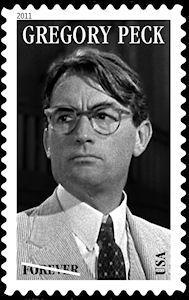
Gregory Peck starred in the 1962 movie by the same name.  He portrays Atticus Finch, a small town lawyer, who defends an African-American man wrongfully accused of rape.  His daughter, Scout, is
portrayed by Mary Baddham, who narrates the story through the eyes of a child.  The movie was nominated for 8 academy awards.  Gregory Peck won an Oscar for Best Actor.  He was later honored with the Presidential Medal of Freedom for his lifetime humanitarian efforts.  Perhaps, like many others, he was motivated by the character he portrayed.

The movie is being rereleased today, the 50th anniversary of the movie.  It has been digitally remastered and restored.  Perhaps it is time for all of us to reread the book or watch the movie as a reminder of committing ourselves to being the best we can be.

Malcolm Gladwell’s View Through his Own Looking Glass

If you haven’t read any of Malcolm Gladwell’s books, I suggest you start with Outliers The Story of Success. I have been a big fan of his ever since I read Blink and Tipping Point.  But as much as I love those books, I really want to encourage those who have not yet encountered his work to start with Outliers.  

Gladwell’s unique world view is evidenced by his lengthy explanation of why a disproportionate
percentage of the very best professional hockey players are born in January through March and almost none are born in December.  The reason, according to Gladwell is that when each grade of children is introduced to hockey, the oldest children in that grade level are more physically mature than the children born later in the calendar year.  They  become, from the beginning, the best players. They are encouraged in the sport.  They receive extra coaching, extra practice time and extra playing time. The best within that group are elevated to the premiere hockey teams, where they play against stiffer competition, and are able to gain the skills essential to become competitive at the highest levels of the sport.  Meanwhile, the youngest players, those born in November and December, lag behind because they are–well–younger and never given the opportunities or encouragement to excel.

Gladwell approaches the remainder of his book in similar fashion.  He focuses on what it is that enhances the opportunities of “extremely successful people,” i.e., Bill Gates among others. He identifies the importance not only of the month of one’s birth, but the year. He explains why an individual born in 1954 and 1955 had significantly enhanced opportunities to excel in computers sciences.  He talks about the importance of mentoring, of access to education, to employment opportunities and to the opportunity to practice, practice, practice.

While he does not discount the importance of intelligence and hard work, he focuses on the advantages individuals gain due to financial security, family connections and even summer academic opportunities. He also addresses the disadvantages and hardships that can stand in the way of success: limited access to education, the life long impact of being burdened with debt and poverty.  He never, ever discounts the role of luck in the good fortunes of extremely successful people.  He also never discounts that luck without hard work is not enough.

In a book that is considered to be at least somewhat autobiographical, he addresses the circumstances of his own success, starting with the story as to how his ancestors moved from slavery to opportunity.

While much of the book deals with the luck that will benefit few of his readers,  the stories and the examples of individuals and groups who study hard, work hard and create their own opportunities are more than worth the read. While much of what he writes seems obvious after I read it, Outliers gives new insight into the impact of luck, class and even intergenerational family values and experiences.

It is one of my favorite books.  I wish you “good reading.”

Happy Holidays from Shifting the Balance

Merry Christmas!

It is a wonderful time of year. We may not have snow in Kansas City, but holiday spirit abounds, and the joy of Christmas is in the air. After all the hustle and bustle getting ready for today, everything’s is now quiet. It has been a day of family, great food, and lots of laughter.

Now that the sun is nearly set on this beautiful day, we are settling in, building a warm fire and pouring a glass of wine. We hope you and your family have a Merry Christmas, a Happy Hanukkah and a joyous New Year.

Meg and Ann

Dewey’s “Public” and Its Many Problems

Meg has a J.D. in Urban, Land Use and Environmental Law. She focuses on maintaining the balance of community and environmental health, healthy lifestyles, and encouraging sustainable living.

During one of my MPA classes, Politics of Administration, we read a book about the concept of “the public,” how it is formed, and how it is identified.

Review of “The Public and Its Problems”:

In his book “The Public and Its Problems,” John Dewey discusses the concept of “the public” and how its role fits into the history and context of U.S. politics. The reader also uncovers a nexus described between the state, the public and democracy. Dewey describes the problematic nature of the concept of “the public.” After exploring the nexus described by Dewey and the problems with “the public,” I will then explore the most problematic feature of “the public” as it pertains to discussions today, and whether or not the 80 year-old discussion is relevant to political life in the U.S. in 2010.

Throughout the text, Dewey describes a nexus between the state, the public and democracy. These three concepts are intertwined into a system where each depends on the existence of the other. However, part of the difficulty in understanding the significance and meaning of each is knowing how to fit them together in context.

Let us start by trying to understand the concept of “the public.” Dewey says the public exists when the consequences of a conversation or exchange extend outside of the confines of those directly involved in the exchange to affect the lives and welfare of others (Dewey 13). Almost simultaneously with the emergence of “the public” is the emergence of “the state,” which is an entity that involves members of the public bound by shared concerns and interests (33). The state is something to which members of the public belong and identify. However, Dewey does warn that people looking for “the state” will inevitably get lost in the process. It is a concept that is nearly as abstract as “the public” because its existence depends on consequences and the emergence of people who need to be taken care of as a result of those consequences (27).

With the emergence of such entities as the public and the state, a form of government is necessary to govern and administer the needs and concerns of the public. Dewey portrays democracy as a system of government that resulted from fear (86), and a democratic government gave people the ability to participate in their own governing. Within this democratic system, individuals felt free to express their own individualized ideals. Dewey notes that the American Revolution was a revolt against an established government that oppressed individuality (87), and democracy resulted in the U.S. as a form of government administered by the people. Individualism became the new movement within the system of democracy that allowed people to express their own political and social ideals while being involved in the forming of a new political nation.

The nexus of these three concepts converges in their dependence on the existence of each other, but putting them into context is difficult when their boundaries are ambiguous. The public and the state emerge when private exchanges result in external consequences. Democracy is a form of governing the members of the public included in the state, by involving individuals from the public as officials to govern the matters of the public. The challenge arises with the concept of individualism because it inherently discourages unity, a necessary characteristic of a state. Therefore, the development of states must be an ongoing process of experimenting through trial and error, using historical experiences to learn from previous mistakes (33-4).

Dewey sees the public as being problematic mostly because it is difficult to find in the context of a situation. It is an abstract concept to describe an abstract group of people, which makes it difficult to identify. In theory, the public is a community as a whole that is affected by the transactions of private individuals (88), but in practice, it is often very difficult to identify the specific public (and therefore state) affected because of the private nature of the exchanges.

According to Dewey, the difficulty in finding the public lies in the advent of modern technology that impaired the need for face-to-face relationships between members of the public. The very same technologies that create the ease of national interaction also create the ability for individuals to focus on the bettering of their own lives without much personal contact with others (131). The individualistic philosophy utilizing the new technology is a force that detracts from the sense of community. If the needs of the public as a whole are not identified, then those problems cannot be addressed by the officials elected specifically to govern such issues.

The most problematic feature of “the public” as it is invoked and discussed today is that the concept is abstract and the people involved are difficult to identify. Dewey’s discussion of how the Great Society (what we have now) may become the Great Community (the ideal) helps put the sense of individualism and of community into perspective as related to the public. While the Great Society is composed of many groups of people with advanced technology, the Great Community only comes about when individuals share interest and responsibility to the community on common issues (147). The transition can only be accomplished through communication (142). Without communication, the consequences affecting the public through private exchange cannot be identified by governing officials. If the problems cannot be identified, they cannot be solved. Also, if the problems are not identified, the people who suffer from the problems cannot be identified, which creates further confusion about the boundaries of the public.

Even though Dewey’s text was originally published in 1927, I think his discussion still has relevance to political life in the U.S. today. His concerns about the steam engines and the printing press as forms of modern technology that decrease personal relationships apply today using things like the internet and credit cards as substitutes. The concept is still the same, that identifying the public is a challenge, especially with rampant individualism and lack of face-to-face communication.

One thing that I think makes Dewey’s discussion particularly relevant to politics in the U.S. today, perhaps even more so than when his text was first published, is that groups with shared interests and concerns in the modern world (or, a “state”) typically do not share the same political boundaries. People commute, they live out-of-state, they even live in other countries, but they still stay virtually connected to the people they share common interests with through the use of telephones, Skype, email, and any other form of communication technology available today. Dewey’s concern about the boundaries of the state was that geographic lines created arbitrary boundaries when determining who was included in the state and who was not. The technology available in 2010 makes determining those boundaries even more challenging.

Another part of the discussion relevant to the political world today is the idea of controlled inquiry and looking at history to understand context and application. It is important when implementing new ideas in politics and society to have something about the present to compare with the past. By learning what works through experimenting, we can better tweak the form of government that will facilitate the Great Society becoming the Great Community (147).

While his writing style is very difficult to digest, Dewey’s message is actually fairly simple. “The Public” is an abstract group of people that we can only identify once they have something in common. That something in common outlines the boundaries for “the state” and also creates the simultaneous need for administration to protect the interests of the designated public. The next part of his discussion gets confusing with the many problems and methods involved with what comes next: government. Determining political jurisdiction is just the first part of the challenge, then comes the potential for corruption and the ongoing struggle for effective communication. His discussion is still fairly abstract, but it does help us discern the inevitable challenges that present themselves within the ambiguous realm of political life.

U.S. role in world affairs, pt. 1: Zakaria’s Post-American World

Meg was home unexpectedly this weekend.  It gave us the opportunity to chat
about many of our favorite topics.  We talked about what it means that the
U.S. is pulling our troops out of Iraq.  How does this impact our image
with friendly and not so friendly governments?  We talked about what it is
that makes us unique.  We talked about our court system, our educational
system, our Constitution and Bill of Rights.  All of these are subjects we
want to talk about in our blog. But as I was struggling with how to share
our ideas, I was reminded of a book I consider to be worth reading.  It is
Fareed Zakaria’s book titled Post-American World, written in 2008.  While
focused on the period before President Obama took office, it remains relevant
today.

In his book, Zakaria talks about the changing role of the United States in
light of the “Rise of the Rest,” particularly resulting from the explosion
of prosperity in China and India.  He describes this “rise” as the most recent power shift of the modern history. First, it was the rise of the west (Western Europe), then the rise of the United States. Now, it’s the rise of the rest of the world, something he describes as leading us to the Post-American World. He talks about our strengths and
challenges as we face this change.  He discusses the rich
contributions from our immigrant populations, particularly in terms of our
technological development, and our related continued leadership in various
areas of technology.  He addresses our role in diplomacy, and notes the
importance of compromise, strategic relationships and innovation.

A significant challenge to which he repeatedly returns is his concern that
we have what he refers to as dysfunctional politics, something that prevents us from
forming clear solutions to our internal economic and various other challenges.

Zakaria doesn’t have all the answers, and you certainly may not agree
with many of his opinions, but it is hard to read his book without grasping
some sense of the challenges we face as a nation in this ever-changing
world.

Picking a Name for a Blog

How do you pick a name for a blog? Meg and I spent a lot of time studying blog sites and reading blogs written by others. We wanted to understand how this works and to reflect on topics we intend to write about. we want flexibility and to write about light and serious subject. we don’t want to talk about partisan issues and we don’t want to add to the venom we see in much of our public dialogue. We do care about education, the environment, healthy lives and healthy communities. We are interested in how we individually and collectively adapt, and contribute, to our changing world.

With all of this in mind we had great mother daughter dialogue as we considered a name. After careful reflection–and some frustration finding a name that had not been taken, we have decided on Shifting the Balance. What does it mean to us;;

Shifting the balance on environmental, health care and similar challenges;

Shifting the balance from emotion based to information based dialogue;

Shifting the balance from unhealthy to healthy life choices on food, physical activity, use of resources both personal and public;

Shifting the balance–well you get the picture.

A year and a bit

A YEAR AND A BIT

It has been an eventful year with both joys and challenges as our lives change and grow. First, Meg and Jake were married on a beautiful May evening, at a lovely vineyard in Sonoma California.

Meg’s last semester of school was packed. She completed her research project for Brush Creek Community Partners, interned for Mid America Regional Council and served as co-director of the IRS Tax Clinic that assists low-income individuals prepare and file their federal and state income tax returns. She was also President of the environmental Law Society. Meg graduated from UMKC Law School in May. I got to “hood” Meg. That was really special for me.

Jake travelled back and forth between Kansas City and Northern California from March until July 1, when he relocated to a mid-sized town in Sonoma County, just an hour from San Francisco. Meg stayed behind to take a Bar prep. course and the Bar. In August she was sworn in as a member of the Missouri Bar and the Bar of the Western District of Missouri. Jake, Meg, and their two dogs, Lily and Cousteau, are now happily at home in California. Terry and I, and our dog, Casey, remain in Missouri.

Meg and I developed the blog as a way to stay connected by writing about matters of interest to both of us. We both like “shifting the balance” because we find that our family discussions often focus on balance in national and personal financial priorities, balance in maintaining health life styles, balance in our use of time, balance in terms of learning from and respecting the views of people across the national spectrum. We believe balance is an important part of individual lives, family lives and the lives of communities. Shifting the balance is necessitated by the constant change that is part of our lives–we grow, we change jobs, move across the country. We deal with almost constant changes in technology, individually and collectively we shift our lives to accommodate recessions, seasons, life stages. Change is constant, balance requires constant accommodation to that change.

Welcome to our blog.

Shifting the Balance

Meg has a J.D. in Urban, Land Use and Environmental Law. She focuses on maintaining the balance of community and environmental health, healthy lifestyles, and encouraging sustainable living.

My mother and I have decided to start a blog. For as long as I can remember, we have talked about everything going on in the world. Naturally, our conversations trend toward identifying problems and then brainstorming possible solutions. Overall, our primary objective has always been to visualize the world in balance.

Now, the tricky thing about balance is that you constantly have to readjust for change. That seems to be one thing people forget. Things are always changing. Ideas. Technology. The DOW. Politicians. People also change in the process. We grow up. We go to school. We start taking the ideas and theories talked about growing up and we learn how to implement ideas into action. First, we have to find the balance in the world, and then we have to figure out how to maintain it.

So here’s where we usually wind up. Our conversations tend to circle around the same things, the environment, politics, community, the economy. We also talk a lot about our dogs, affectionately referred to as “the kids.” Our family (dogs included), our community, healthy foods, excercise…these are all important components to maintaining a healthy and balanced self. The same things are important to a healthy and balanced community. Here, we will continue to brainstorm our ideas for how to maintain, or rather, how to shift back to the balance.