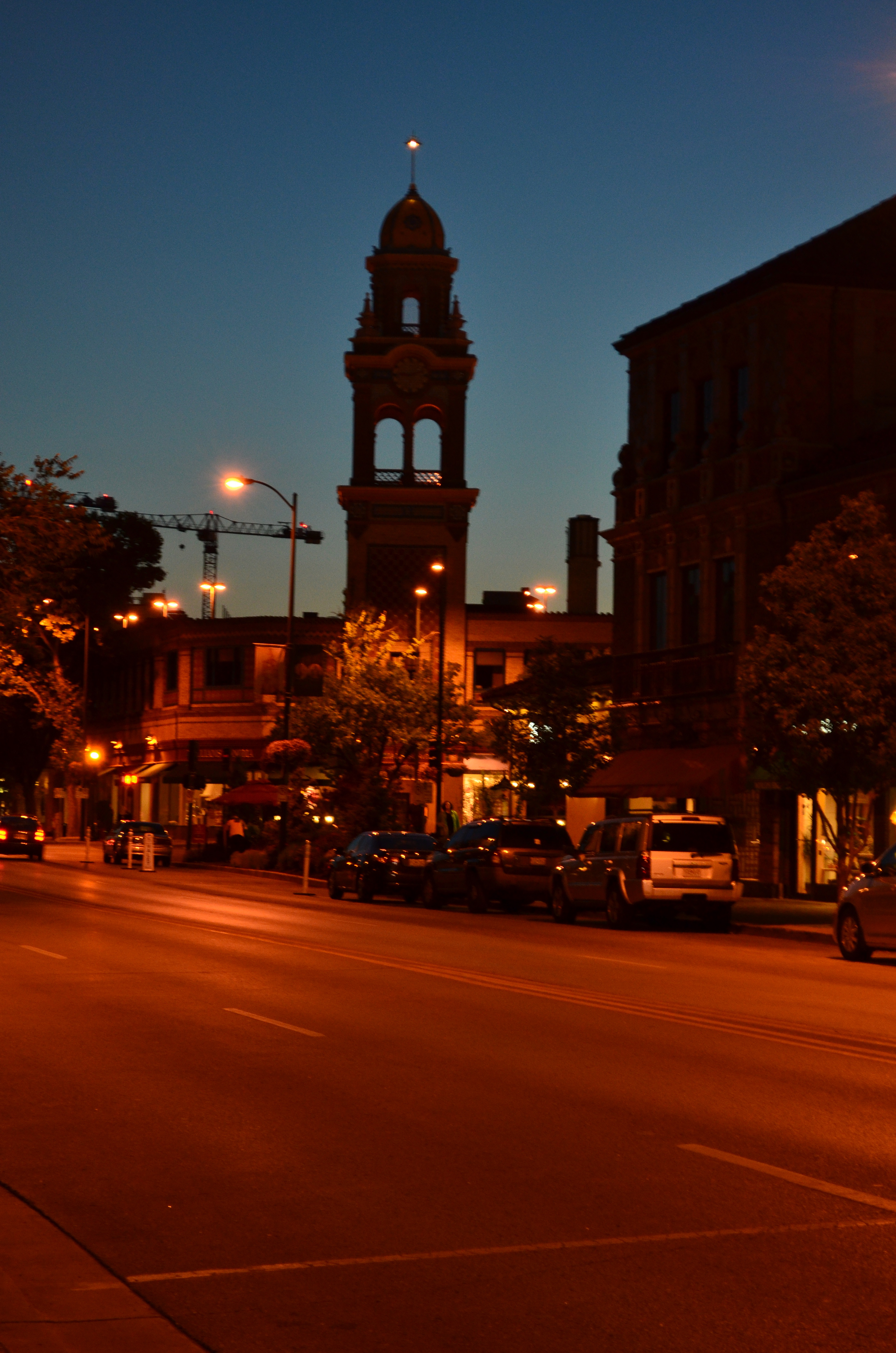
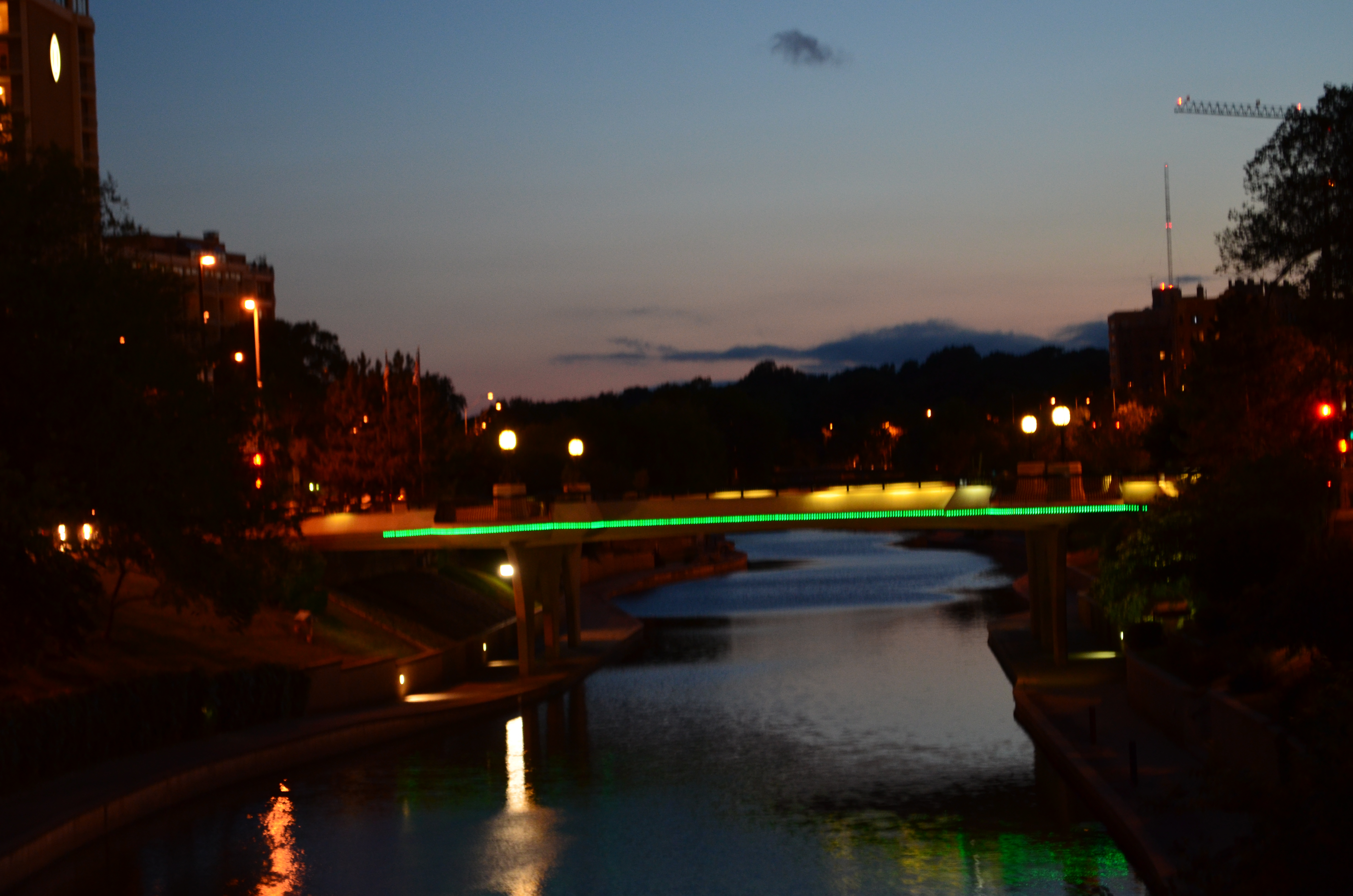
Night views of the Country Club Plaza

The Country Club Plaza is always beautiful.  The seasons of the year and the time of day significantly impact the images that we see.  These photographs were taken late in the evening, just after the sun set, but before it was completely dark.  (These scenes are best viewed with your brightness setting on high.)

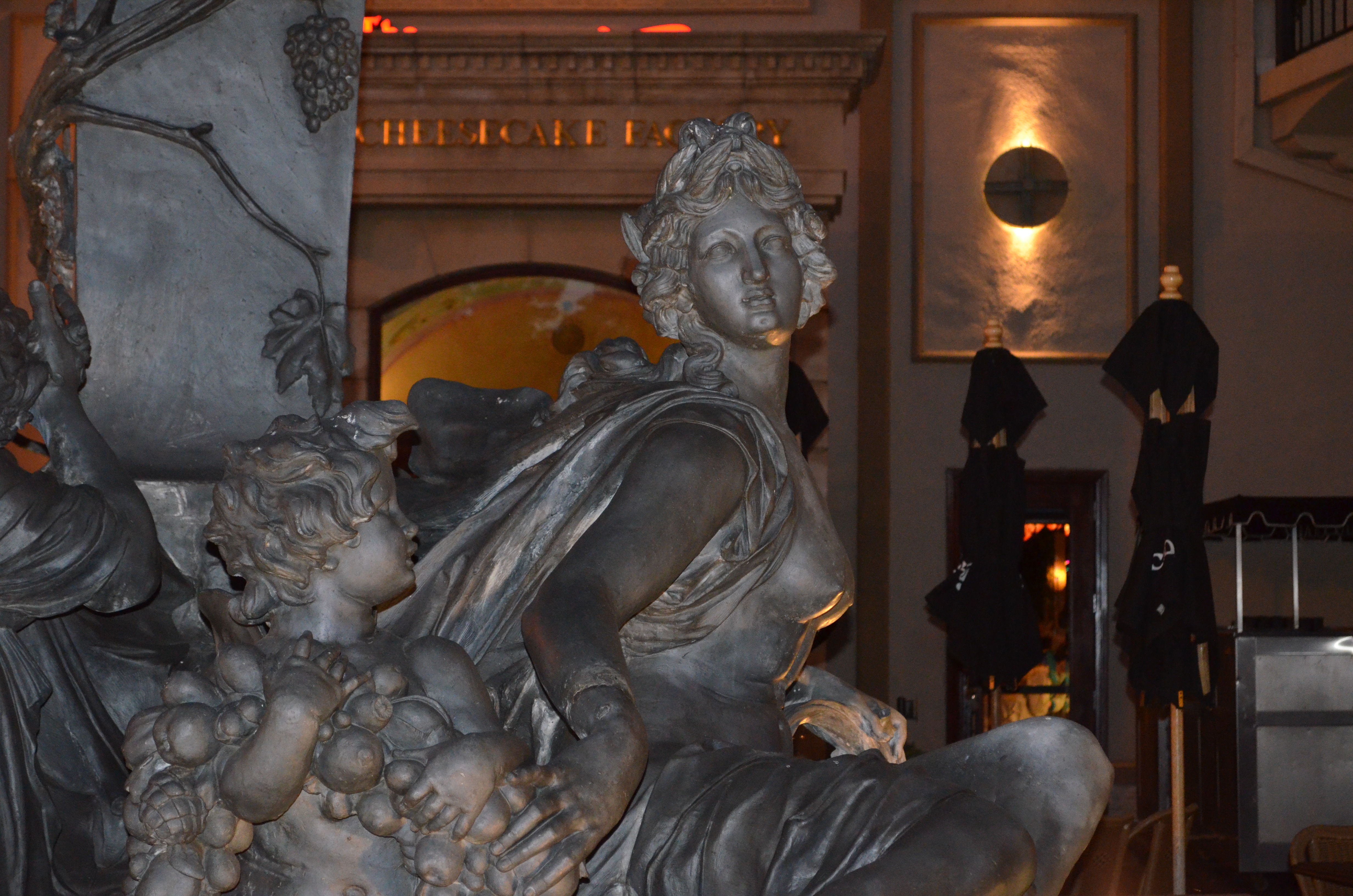
From the Fountain of Bacchus Sculpture, located at the Chandler Court at 47th & Wyandotte, is made of 10,000 pounds of cast lead.

The architecture throughout the Plaza is inspired by the architecture of Seville, Spain.

Night view of Broadway Bridge and Brush Creek, on the Country Club Plaza

The Statute of Ruth, representing the Biblical Ruth, is located at 48th & Wyandotte.  It is formed from white Carrara marble.

High Fashion or Shock Factor

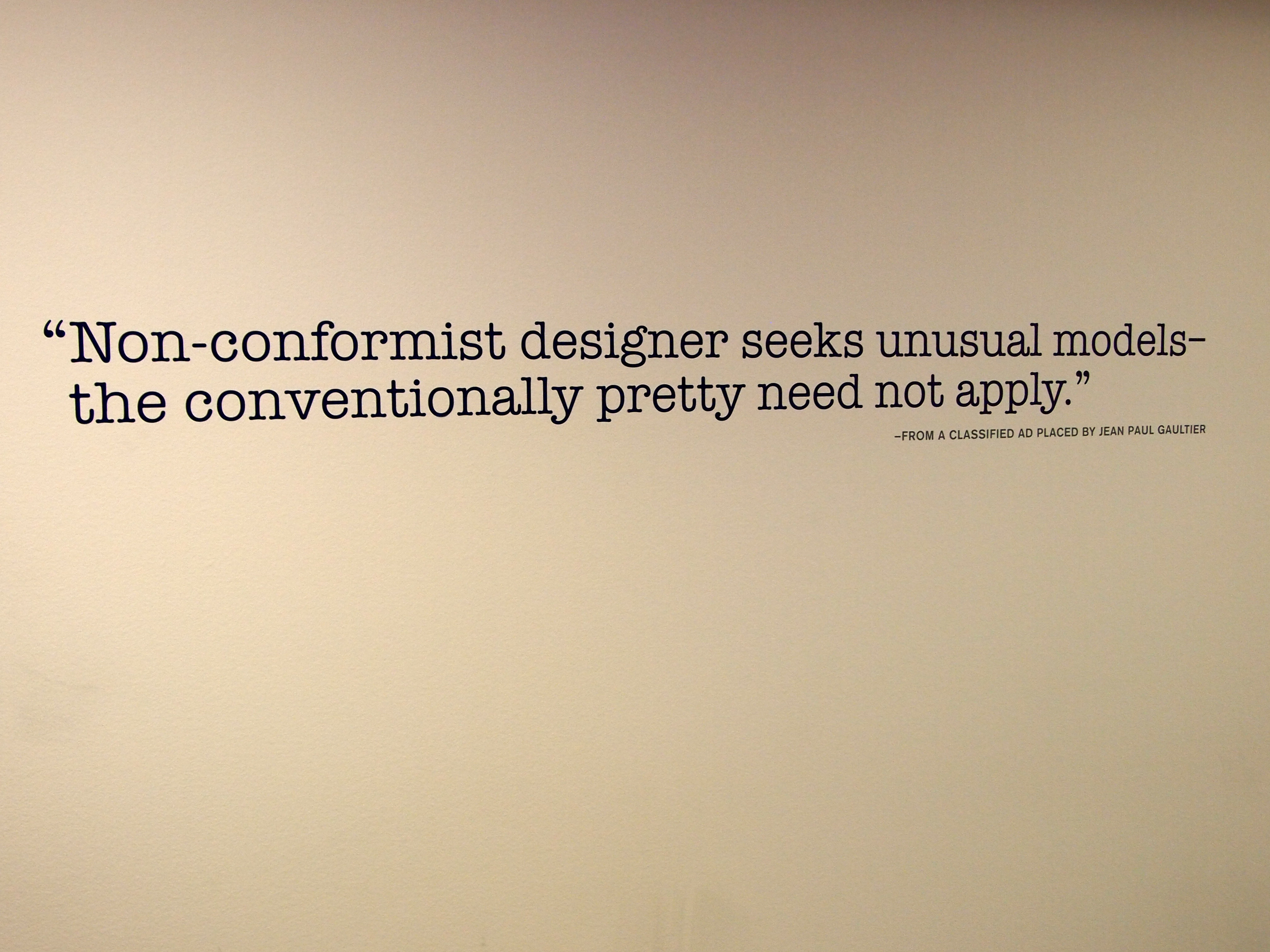
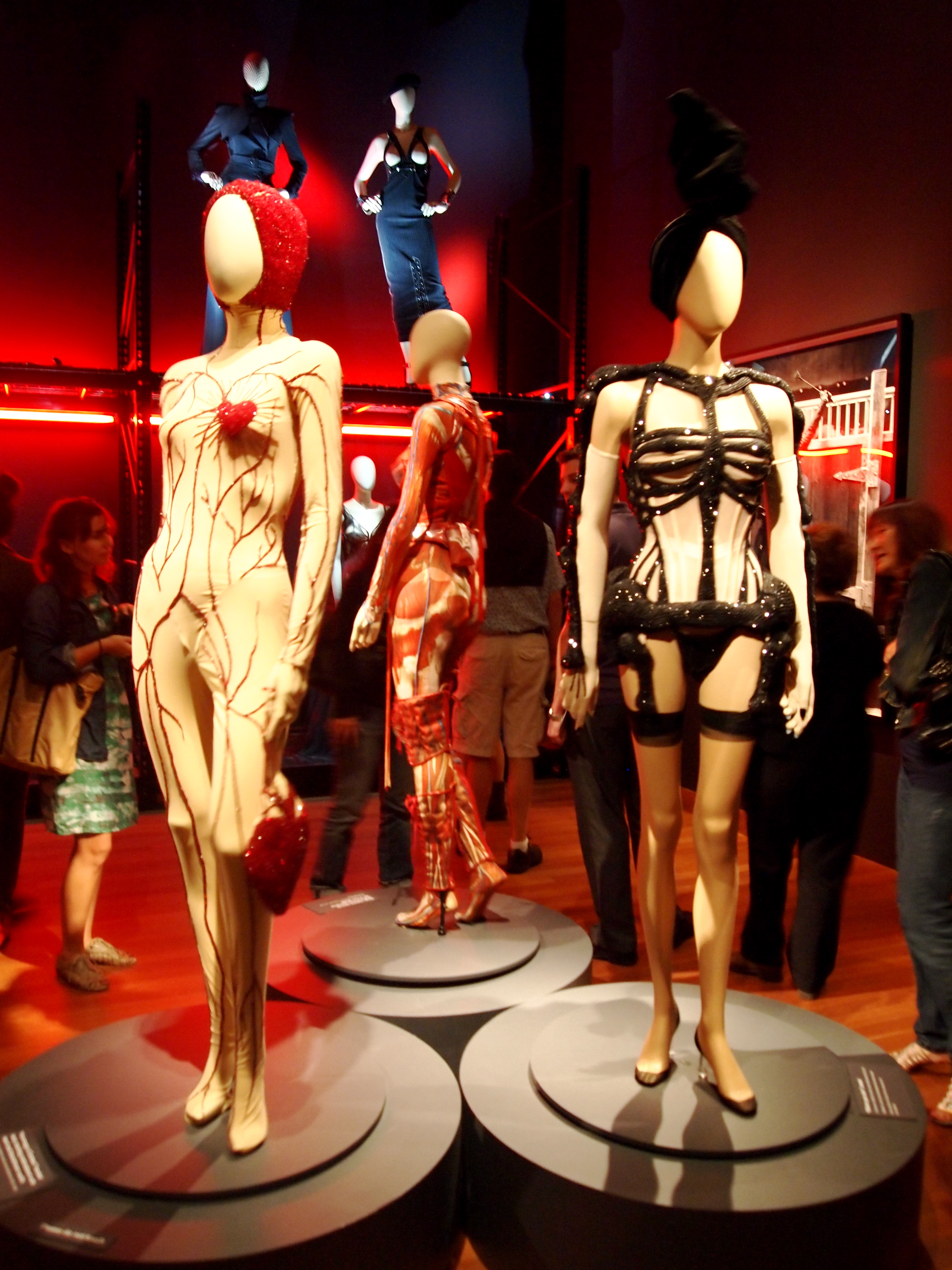
Jake and I visited the de Young Museum in San Francisco’s Golden Gate Park to see the special exhibit on fashion designer Jean Paul Gaultier. The exhibit, “The Fashion World of Jean Paul Gaultier: from the Sidewalk to the Catwalk,” is currently running at the de Young until August 19, 2012.  The exhibit features designs from the 1970s through the 2010.  To give you an idea of Gaultier’s approach, this is the first thing you see when you walk toward the entrance to the exhibit.

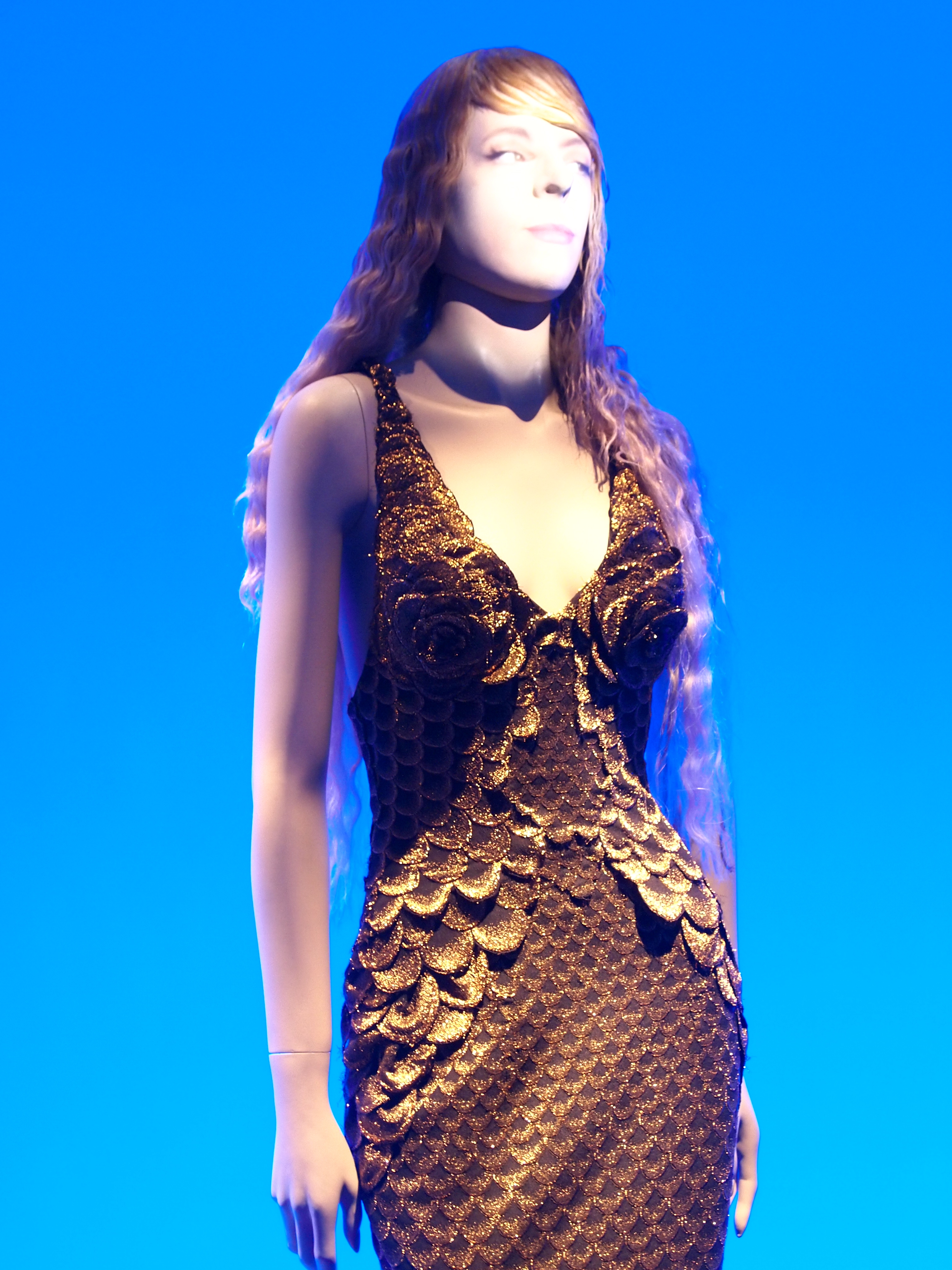
Madonna, Lady Gaga and other celebrities have worn his designs while on tour. His designs are provocative, highly sexual in nature, and reflect the multi-cultural and transgender world of Paris in the 1970s, when Gaultier began as a designer.

I realized part way through the exhibit that I wasn’t taking pictures. Why? Because I was completely entranced with all the crazy designs! Gaultier’s work does have that shock factor, but I also admire his ability to communicate through design. The mannequins at the exhibit’s entrance are facing you when you walk in, but then you see eyes and faces staring at you, and moving! Are they real models? No, they are projections, but it is almost impossible to tell unless you look at them from the side.

The exhibit was incredible. I highly recommend visiting the de Young, both for the Jean Paul Gaultier exhibit and for the permanent exhibits in the museum. It is a modern structure, which is very different from the Legion of Honor we visited earlier in the day, but the setting is just as beautiful, and the artwork incredible. Once again, thank you Auntie and Tio for such an incredible day!

To see more about the exhibit, please visit the de Young website here.

Enjoy!

Kansas City Remembers: The World War I Museum

Memorial Day weekend is a fitting time to remember the sacrifices of our nation’s military forces.  There are few places that symbolize this sacrifice as powerfully as the National World War I Museum, located here in Kansas City. It includes over 55,000 artifacts from the war years, a time line of events during the war years, photographs, armaments, and far more treasures than a visitor can absorb in one visit.  Even the setting is a powerful visual experiences, sitting as it does with one of the most beautiful views of downtown Kansas City.  

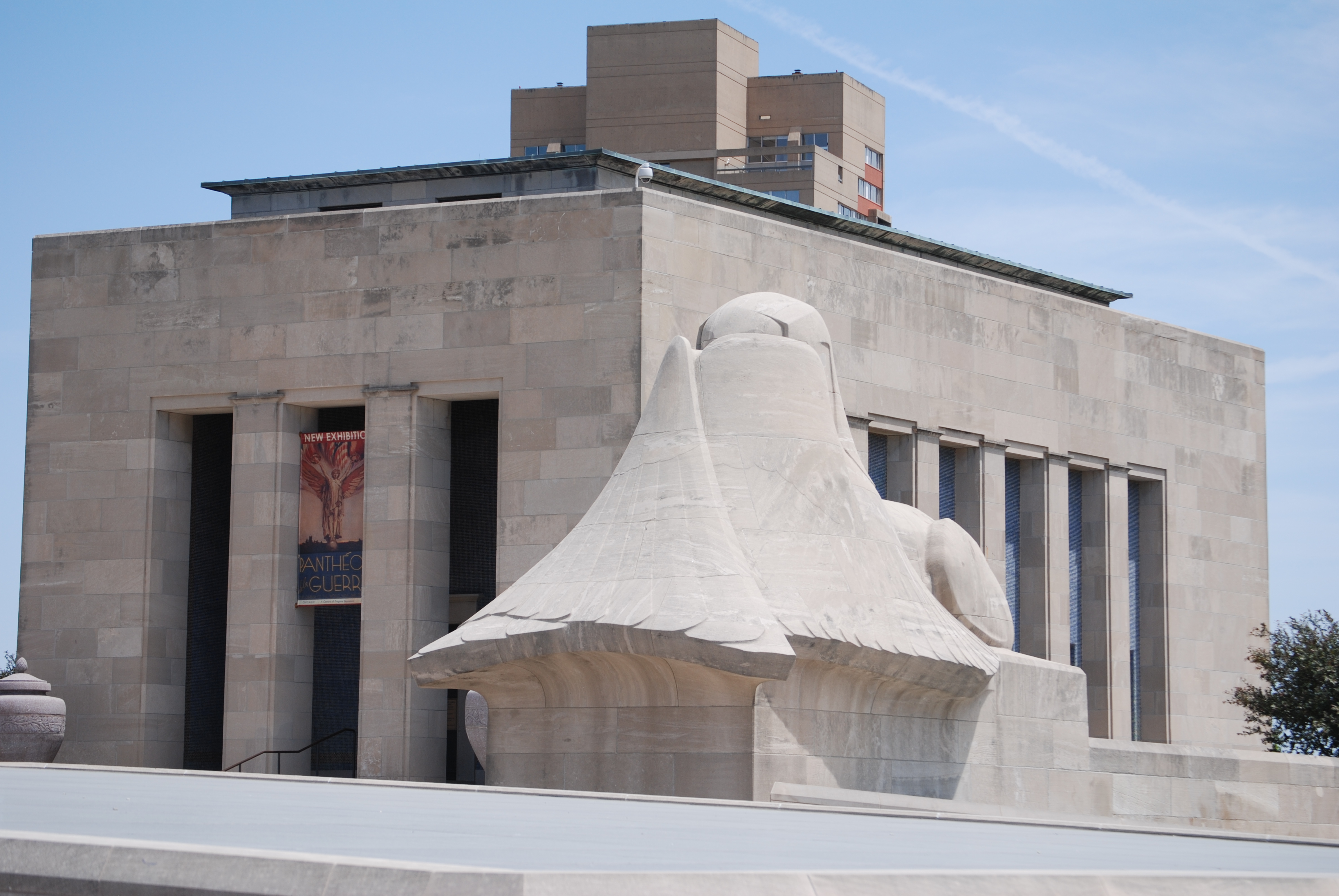
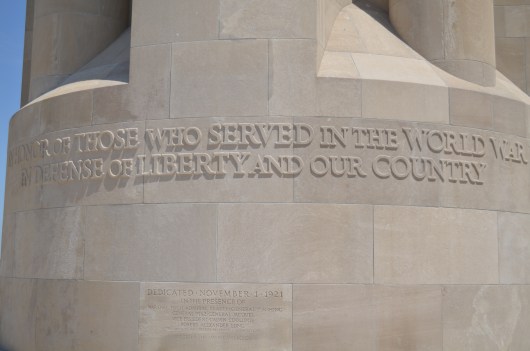
No visitor can reach the museum without first confronting the Liberty Memorial Tower, which sits immediately above the museum, and which is dedicated to the the “Honor of those who served in the World War in Defense of Liberty and our country”.
On either side of the tower are two giant sphinxes with wing like coverings concealing their faces, as though they are, themselves, traumatized by the reality of war.  Two concrete buildings sit behind the sphinxes, themselves housing exhibits for the museum.

The banners on the doors that mark the entry to the museum are unassuming.  Once inside, visitors face a vast, but well-organized exhibit.  The various rooms, includes a timeline of the war years, uniforms, posters, banners, video histories and other documentation of the war years.

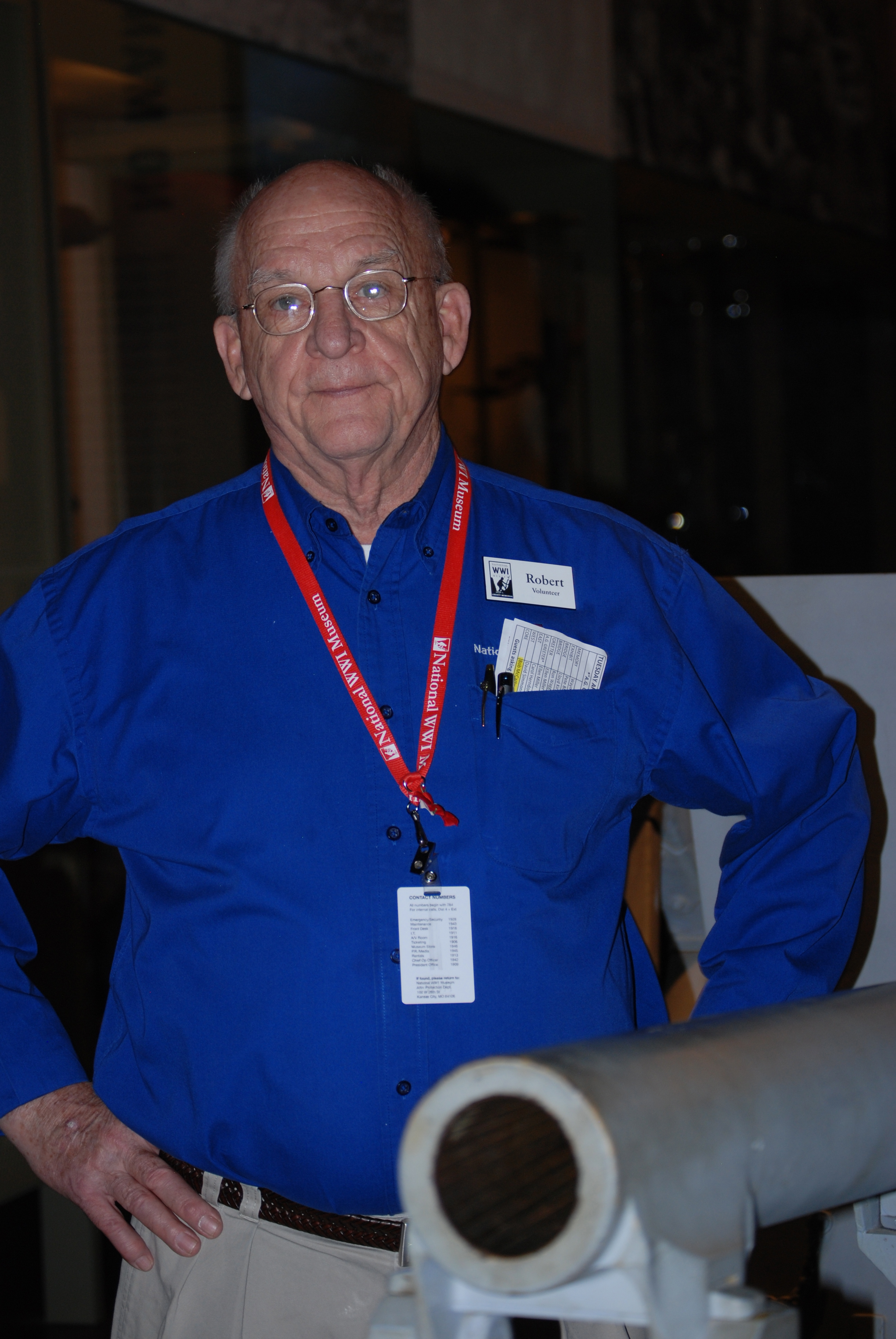
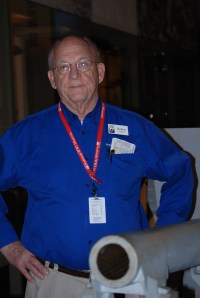
Knowledgeable volunteers are available throughout the building, eager to share their knowledge of the war and of the museum contents.
The munitions they describe are primitive by today’s standards, but were sufficient to cause, in combination with factors such as disease and starvation, horrible destruction to the military forces, civilian populations and the landscape of Europe.  The combined death toll of the military forces exceed 8,528,800.  While World War I was often called the “Great War”, or the war to end all wars, it was neither.  The destruction it caused contributed to events culminating in World War II and influence world affairs even today.

While statistics cannot adequately convey the depth of human misery, they are telling.  The casualty rates for the mobilized forces of the major powers are (approximately) as follows:

Country         Total Forces              Killed  Wounded/Prisoners/Missing        Total Casualties    Percent Casualties

Russia                        12,000,000                   1,700,000            7,450,000         9,150,000              76.3  

Germany                    11,000,000                   1,774,000             6,400,000         7,142,600              64.9  

British Empire           8,904,500                       908,370             2,280,000          3,190,250              35.8    

France                         8,410,000                     1,357,800            4,800,000         6,160,800              73.3  

Austria-Hungary      7,800,000                    1,200,000            5,820,000         7,020,000             90.0      

Italy                              5,615,000                        650,000             1,550,000          2,197,000              39.1  

United States             4,355,000                         116,516                  208,000             323,000                7.1

Because the museum is focused on the war itself, the reality of death surrounds us.  The ancient weapons of various sizes and shapes are on display.  

A restored 1918 Ford Model T ambulance is almost humorous in its quaintness.

But there is also significant information about the culture of the era as evidenced by murals, photographs, clothing and everyday mementos of the times.

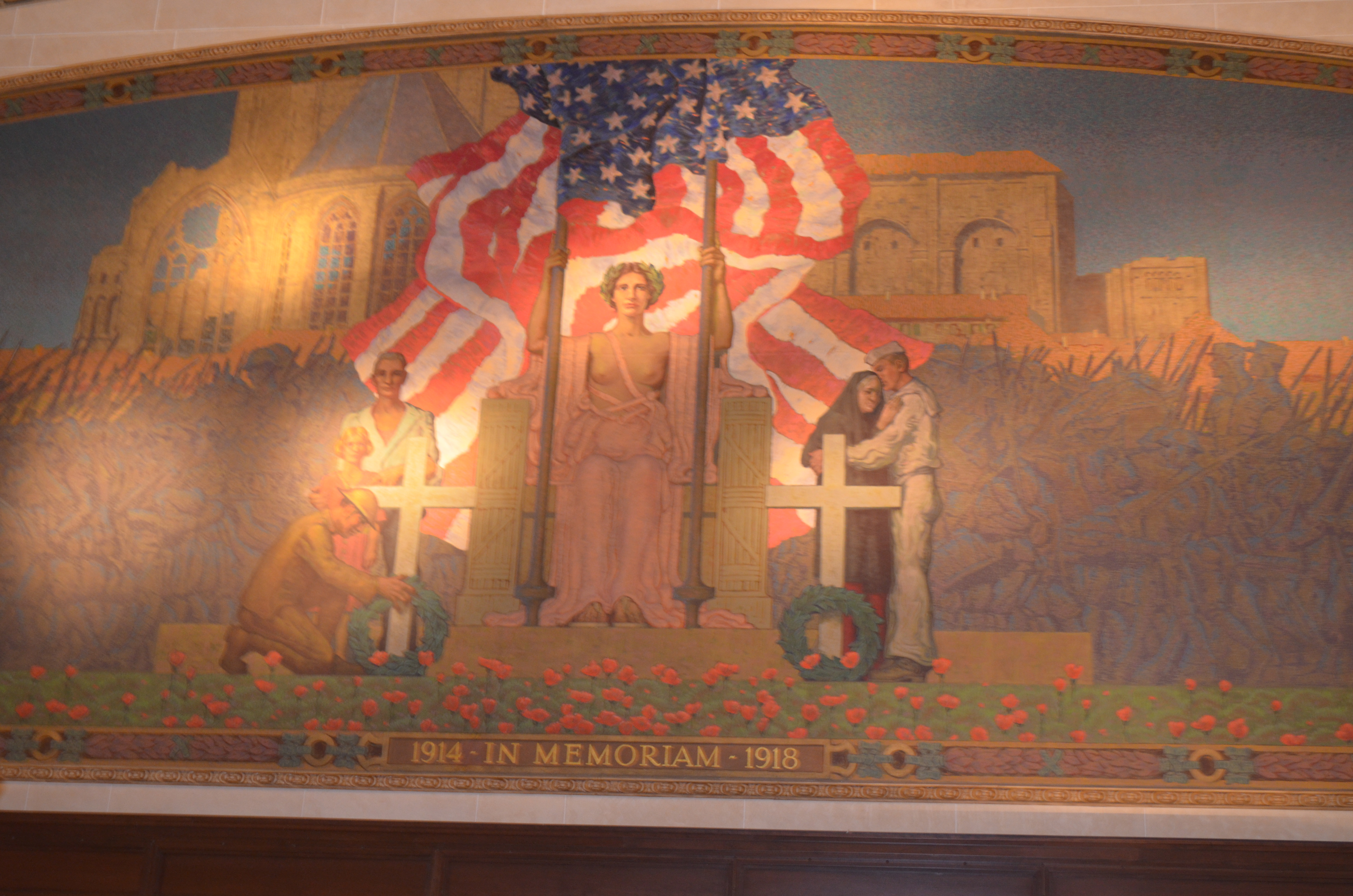
There are life-sized murals which can only be described as glorifying, if not war, than the strength and power of those who are successful in war.
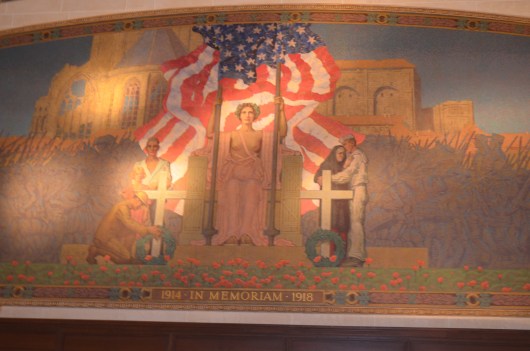
It is easier for the eye to turn to the powerful and positive symbols of hope and accomplishment.  But nothing, in a place dedicated to war, can escape the reality of death.  It is everywhere. In the midst of the exhibits are reminders of the humanness of the suffering.  An example of the power of those posters is one quoting the leader of German mutineers, sentenced to death for his role in the mutiny of members of the German fleet, struggling to end the war:  “I have been sentenced to death today.  Only myself and another comrade; the  others have been let off with fifteen years’ imprisonment.  You have heard why this is happening to me.  I am a sacrifice for the longing for peace; others are going to follow”.

When the United States entered the war in 1917, it mobilized forces for war on the ground, on the seas and in the air.  It was a welcome relief to its allies and helped tip the scales for the war’s outcome.  Because it entered the war more than two years after the war commenced, our casualties were comparatively small.  But each casualty, our own, and those of our enemies, is real.

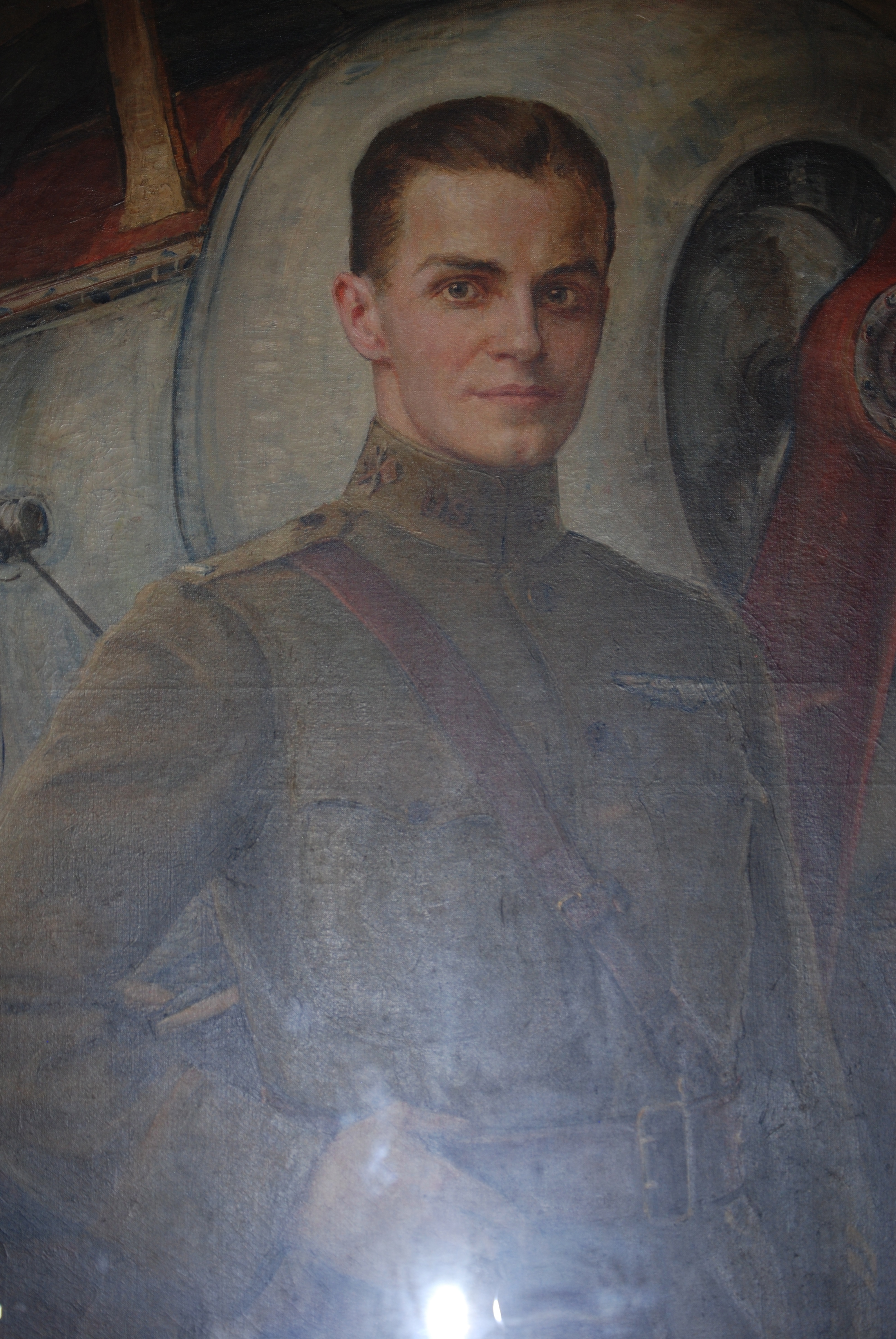
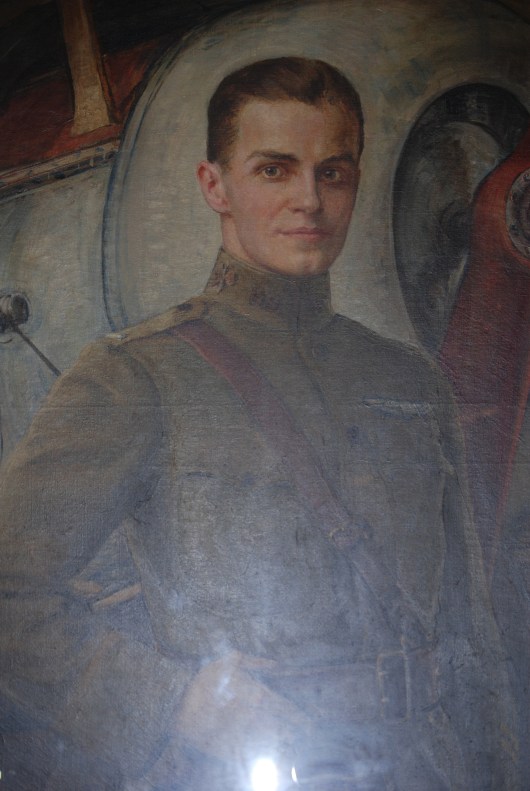
Throughout the museum are portraits, sketches and photographs of those who fought and those who died.  Each had his or her own personal and tragic story.  Each had a family who mourned the lost of their loved one. This portrait is of Lieutenant John F. Richards II, 1st Aero Squadron, killed in action September 26, 1918 over Argonne Forest, (France) part of the final Allied offensive in World War I.  I will not easily forget his face.
The World War I Museum is a place memorializing one of many tragic wars.  It is a place of sadness.  It is also a place of remembrance.  I would like to believe it is a place of hop.  I am not so sure.  But each of us benefits by being reminded of the devastation that is the inevitable result of human conflict.

When to go to war, whether to go to war and why to go to war are issues that have no easy solutions and I will offer none.  But it is important to be reminded of the tragedy of war and of the sacrifices made by our men and women of the military who make great personal and family sacrifices to protect their nation in times of peace and times of war.  We should never forget them.
 

Writing on the wall–The “people’s art”.

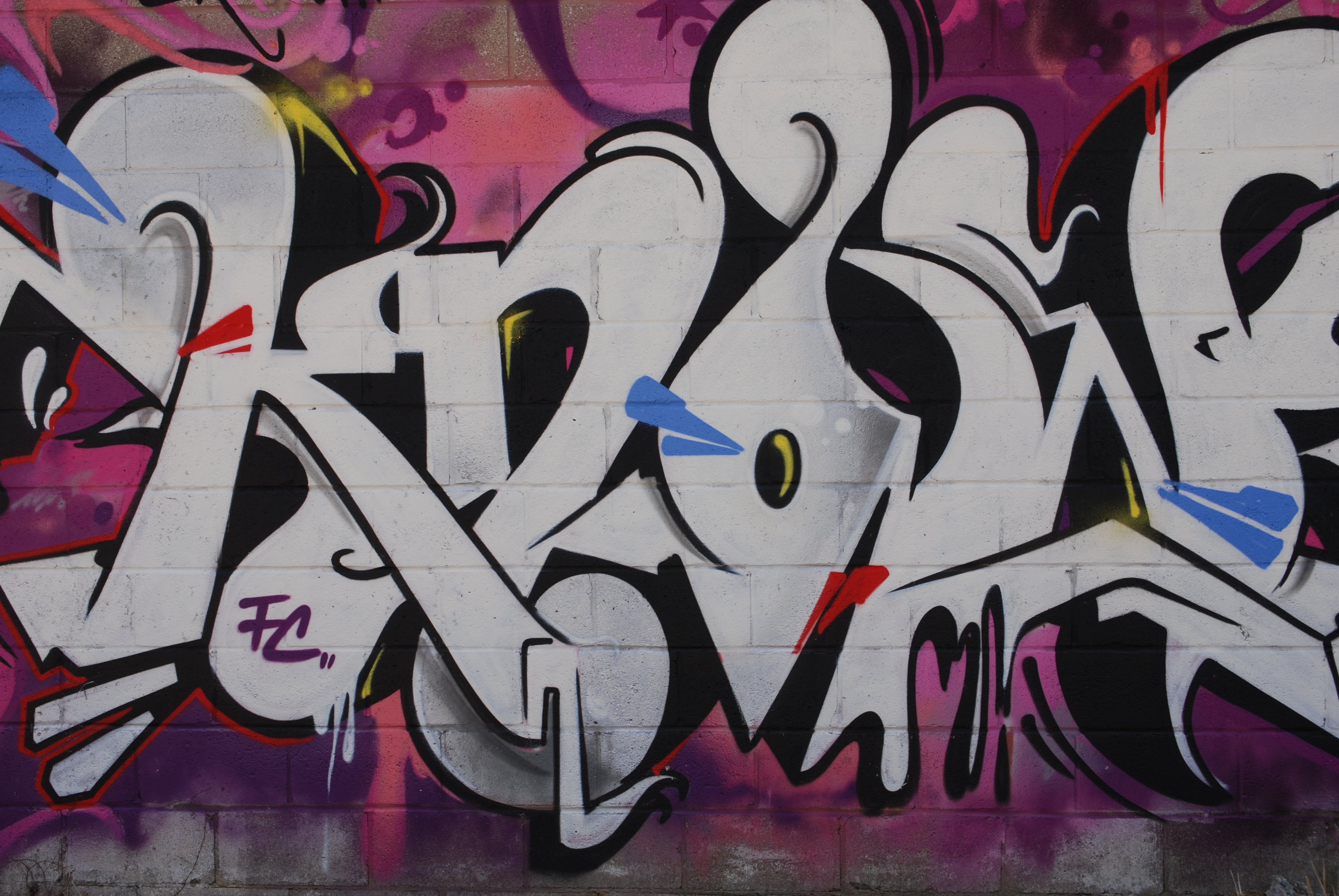
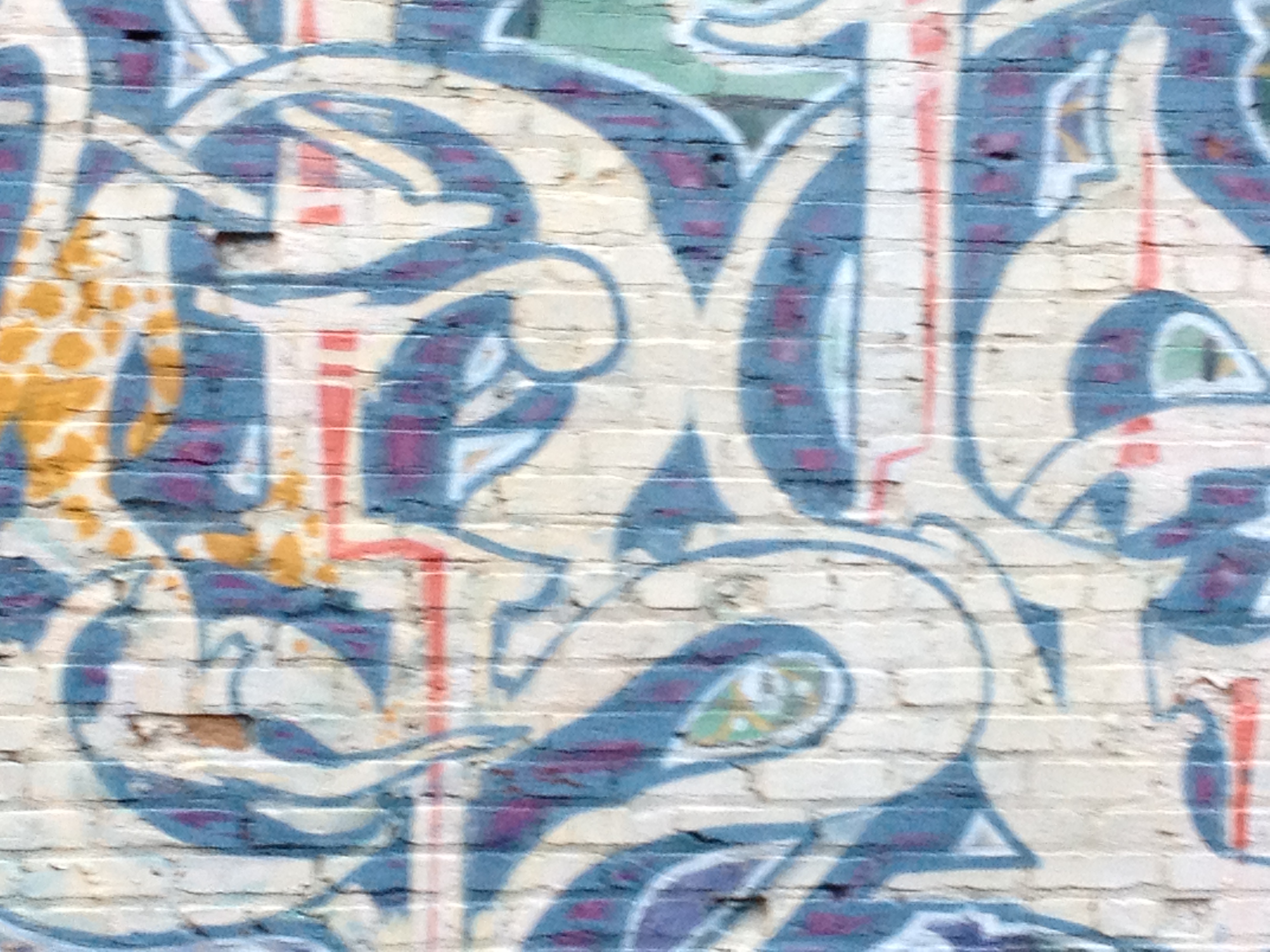
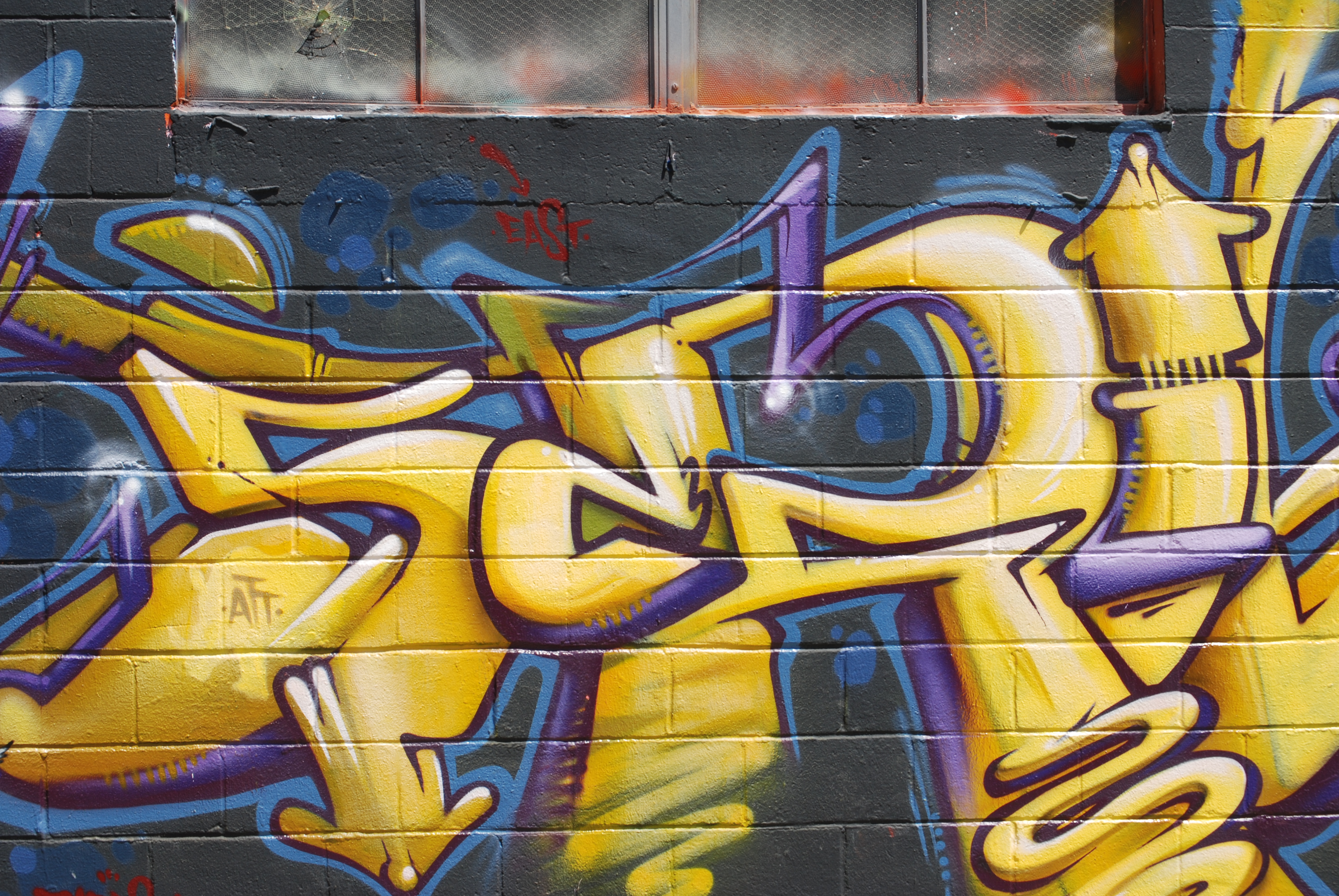
Kansas City’s art is found indoors and outdoors.  It is found in museums, galleries and outdoor parks.  These works of art can be found hidden in plain sight, on the walls of abandoned buildings and warehouses, sometimes in back alleys where only the most adventurous will find them. These street murals are generally skillfully done, and are, while sometimes unwanted, a celebration of life and creativity. While the artists are generally unknown to the general community, the initials of the artists are often included, announcing their skills to those who are part of the inner circle of these artists.

Some of my favorite graffiti is what I like to call “writing on the wall” because that is exactly what it is.  If the writings are actually words, I haven’t deciphered them.  But that does not diminish the skill of the artists, whose creativity never ceases to amaze me.  Here are some of my favorites, found within blocks of downtown, Kansas City.

x

x

x

x

I often wonder, when I find one of these writings, whether the creators are totally unschooled, have been to art classes or are just patient.

Sometimes I wonder where they buy the paint??  Is there a graffiti union?

Men of the Frontier–Kansas City Sculptures

Kansas City’s most famous outdoor sculpture, The Scout, stands high in the hills of Penn Valley Park.  Created by Cyrus E. Dallin, it won a gold medal at the 1915 Panama-Pacific International Exposition in San Francisco.  Purchased by the “Kids of Kansas City” it was dedicated in 1922 as a permanent memorial to local Native American tribes.  I am fortunate to drive by it every work day as I make my way, with thousands of others, along Southwest Trafficway toward downtown Kansas City.  The Scout’s image is on local advertisements, and it inspired the name of an investment fund and a sports team.

Equally magnificent, if not as well-known, is the statute of Massasoit, (Ousamequin) Great Sachem of the Wampanoag, identified as a “friend of pilgrams”, created by Cyrus Dallin and donated to the community by Mr. & Mrs. Miller Nichols.  It stands at 47th & Main, on the East edge of the Country Club Plaza.  Massasoit protected the Pilgram’s from starvation in 1621, shortly after the founding of Plymouth Plantation.  He also negotiated a peace treaty between an affiliation of tribal leaders and the English settlers, which continued throughout his lifetime.  Unfortunately after his death in 1662, peace did not continue.  Four of his five children died in “King Philip’s War” fought from 1675-8 between the English colonists and local Native American tribes.

Robert Macifie Scriver is the sculptor of this powerful image of a cowboy astride a massive bull.  Aptly titled “An Honest Try”, it is inevitable that the bull will win this contest between man and beast.  But it is a wonderful depiction of what we often call the “wild west”.   Easy to miss in a tour of Kansas City art treasures, it is located on Main Street, at the New Board of Trade Building on the South East edge of the Plaza.

An Indian Wedding: Finishing the night with a horse ride, dinner and dancing!

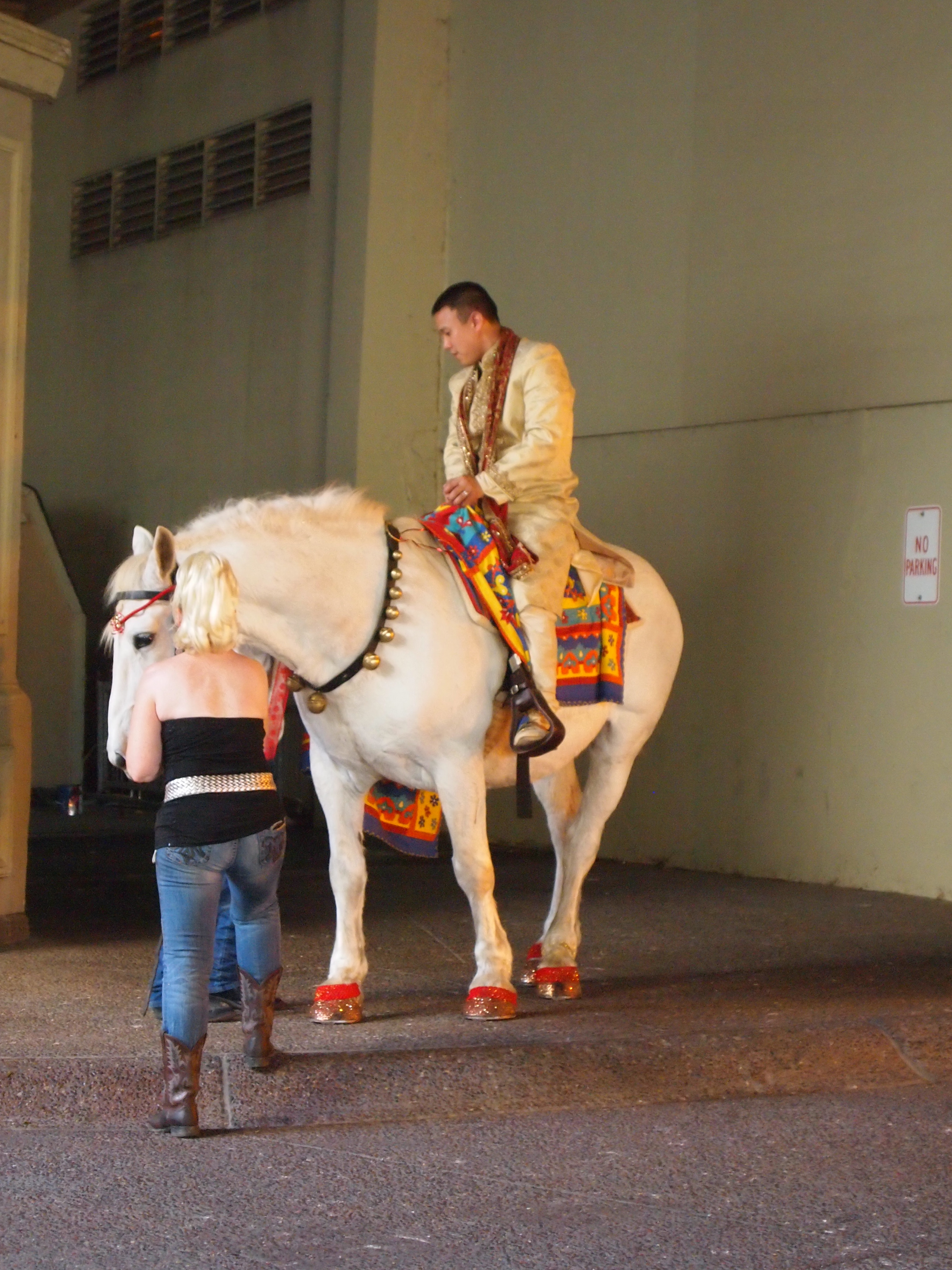
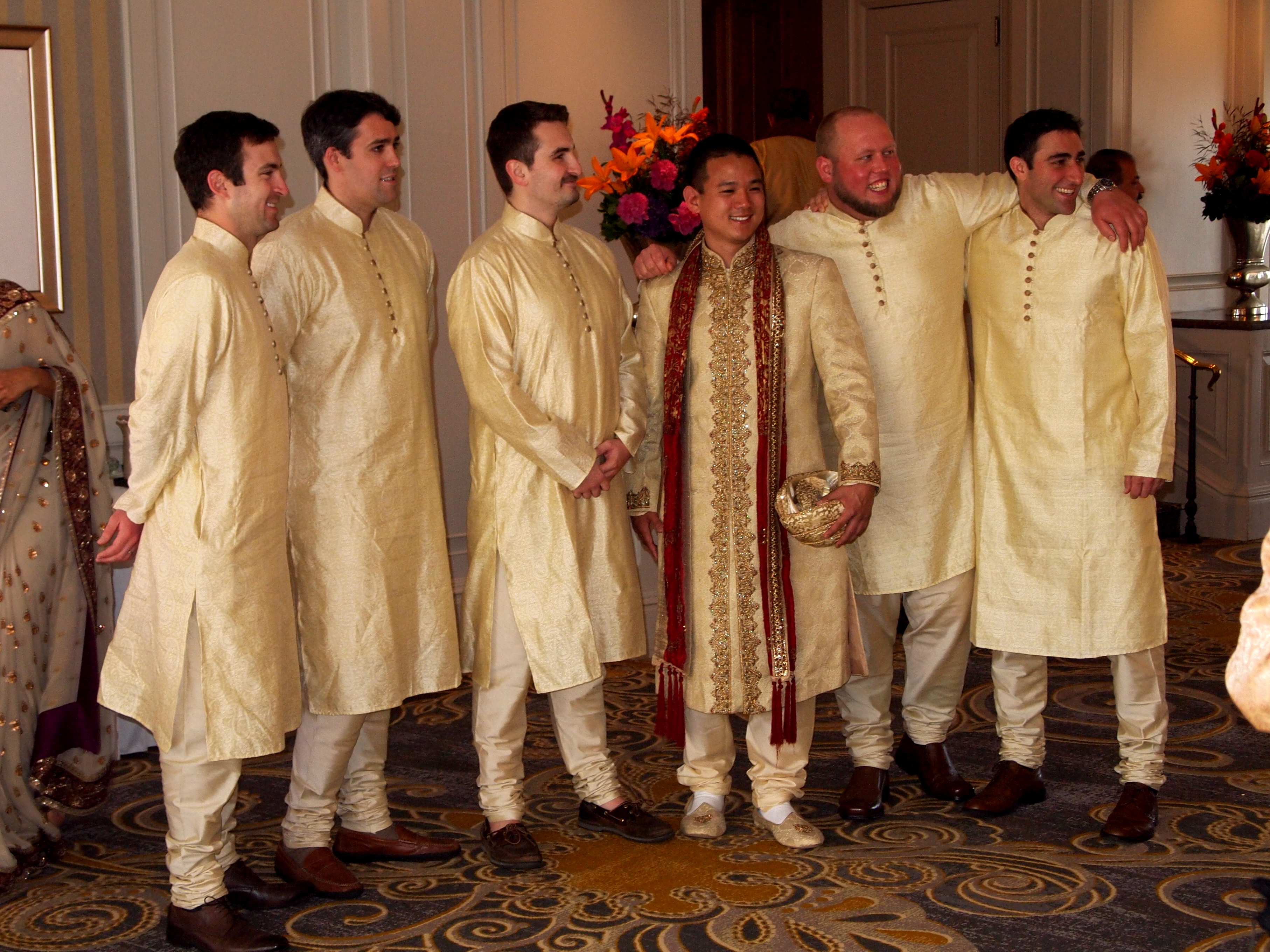
By this point in the wedding festivities, we have seen henna designs, skits, beautiful dresses, delicious food, a stunning bride (and groom!), and a Nikah wedding ceremony. Drumming introduced us to the second part of the wedding festivities on May 5th, 2012, when Noah rode in on a white stallion to the entrance of the reception hall. He looked very handsome in his traditional Indian ensemble, and very confident on the enormous white horse they had for him to ride!

Once Noah rode in on the horse, Natasha’s cousins and bridesmaids gathered around him to participate in a tradition I had never seen. We stole his shoes! And then he had to negotiate with us to get his shoes back. In the end, he paid a lot of money (I hope pre-arranged) and did a little dance. It was a lot of fun. Following the bartering of the shoes, family members gathered to bless Noah with a coconut. They would stand in front of him, touch the coconut to his forehead, and move the coconut in circles in front of his head.

While traditions surrounding Noah’s entrance were taking place, Natasha was upstairs getting changed for the rest of the evening. Her second gown was very similar to her first gown, only in teal instead of red. It was absolutely gorgeous! Noah somehow found time to change as well, from his traditional Indian ensemble into a black tux with teal accents. They were quite the handsome couple.

The reception was held in the grand ballroom of the Intercontinental Hotel on the Plaza. Outside the ballroom, the couple had arranged a photo booth for guests to take fun pictures, appetizers, and refreshing beverages to cool off from the heat outside.

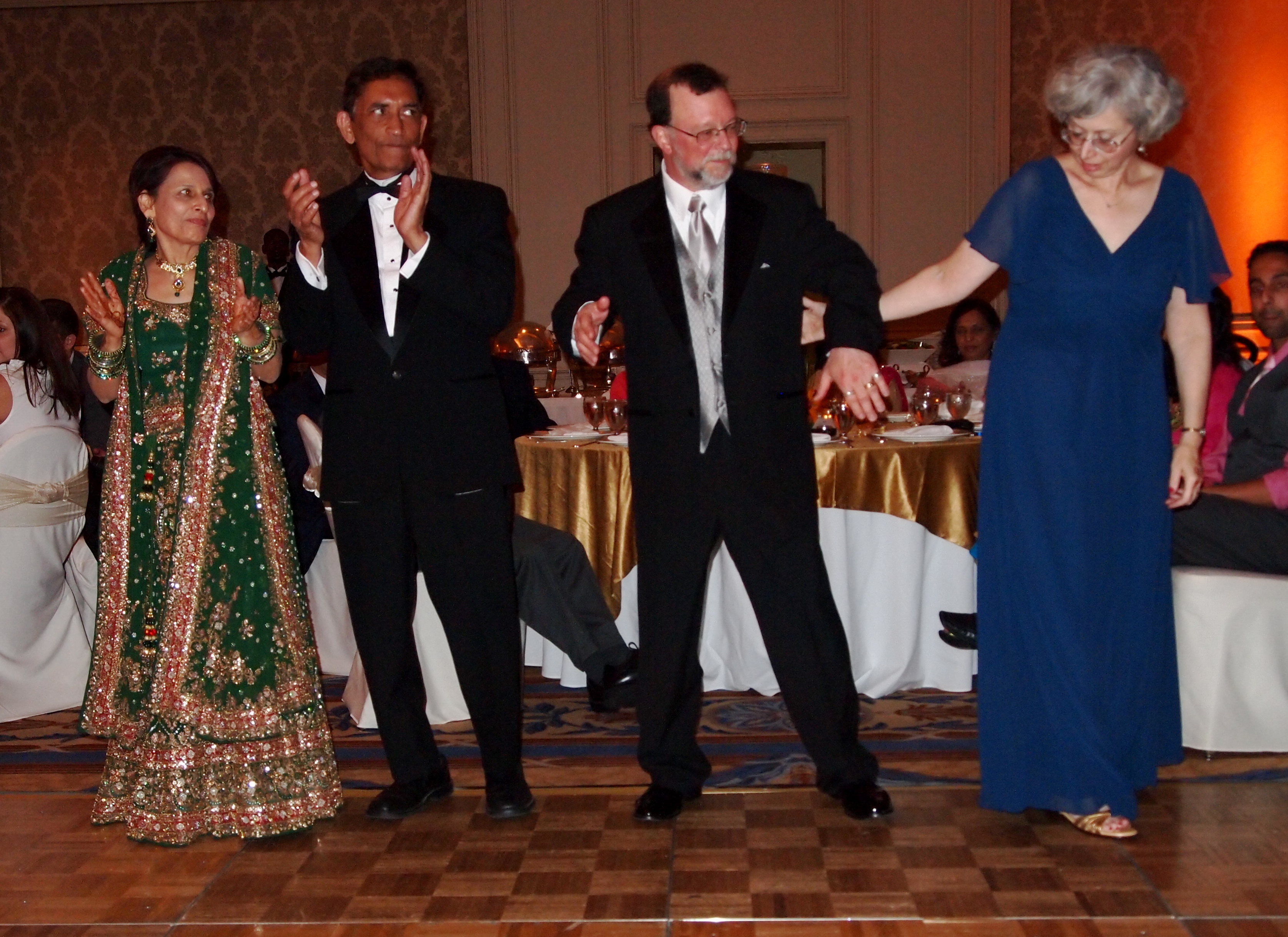
Once the bride and groom were ready to make their grand entrance, we all moved into the ballroom and anxiously awaited their arrival. The families entered first, with the parents dancing in to pre-selected songs. Then Natasha and Noah entered the room to a song of their own selection. As they strutted their way through the room, you could see the excitement on their faces to have reached this part of the day. Time to let loose and have fun! They started with the cake, and then sat down to have dinner.

One of my favorite aspects of this wedding was the incorporation of different cultures. Indian traditions from Natasha’s family, Jewish traditions from Noah’s family. They incorporated prayers from both in the wedding ceremony, and dances from both in the reception. Unfortunately, we didn’t get any pictures of the hora because we were both participating. The bridesmaids joined in the circle, and Jake jumped at the chance to help lift one of the chairs in the center of the circle dance. Such a fabulous time!

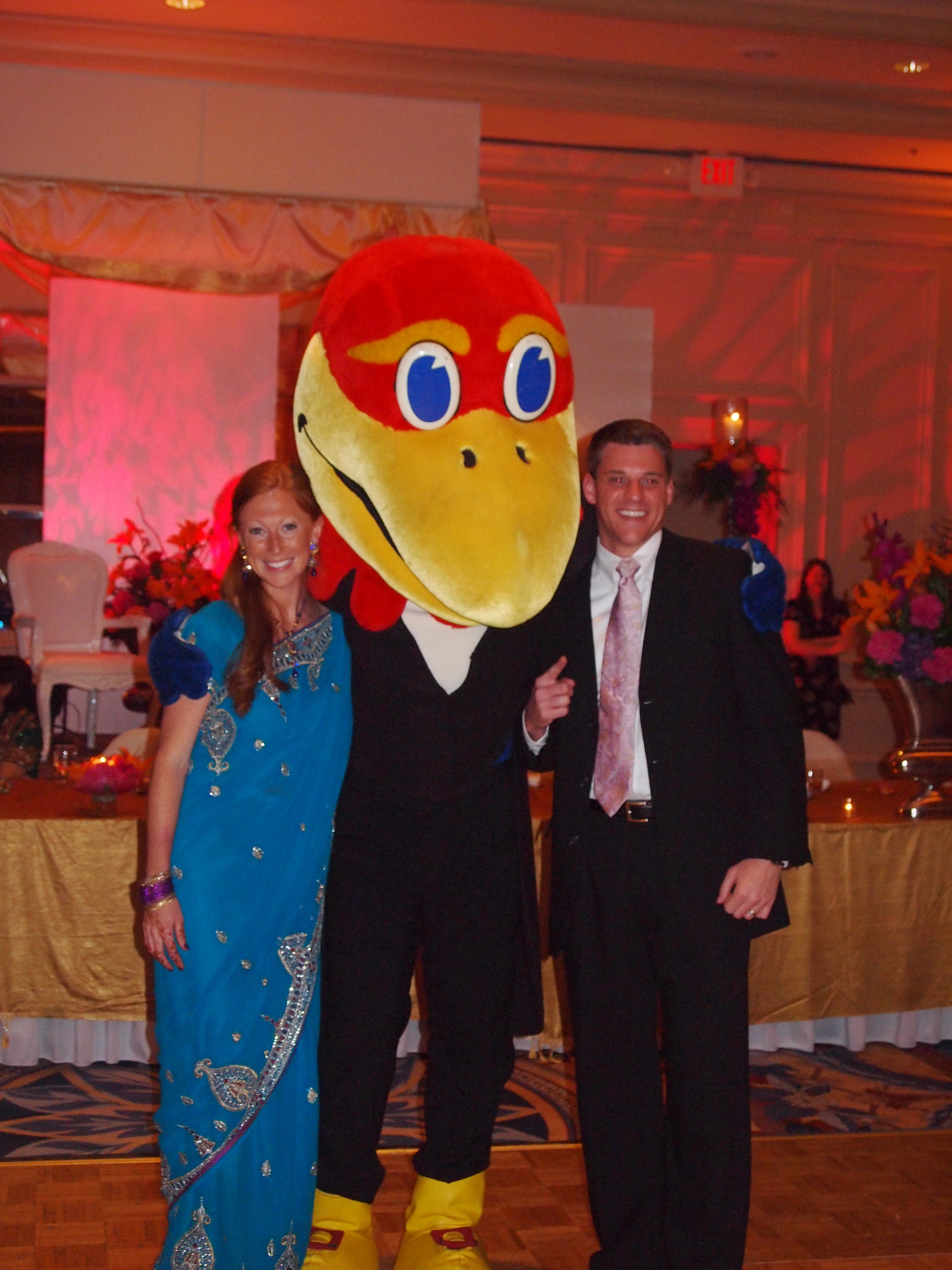
The surprise guest of the evening was….drum roll please!…..Big Jay! The Kansas Jayhawks mascot joined in the festivities for part of the night, competing in a dance off with a representative from the Syracuse Orangemen. He then stayed to take pictures with all of us.

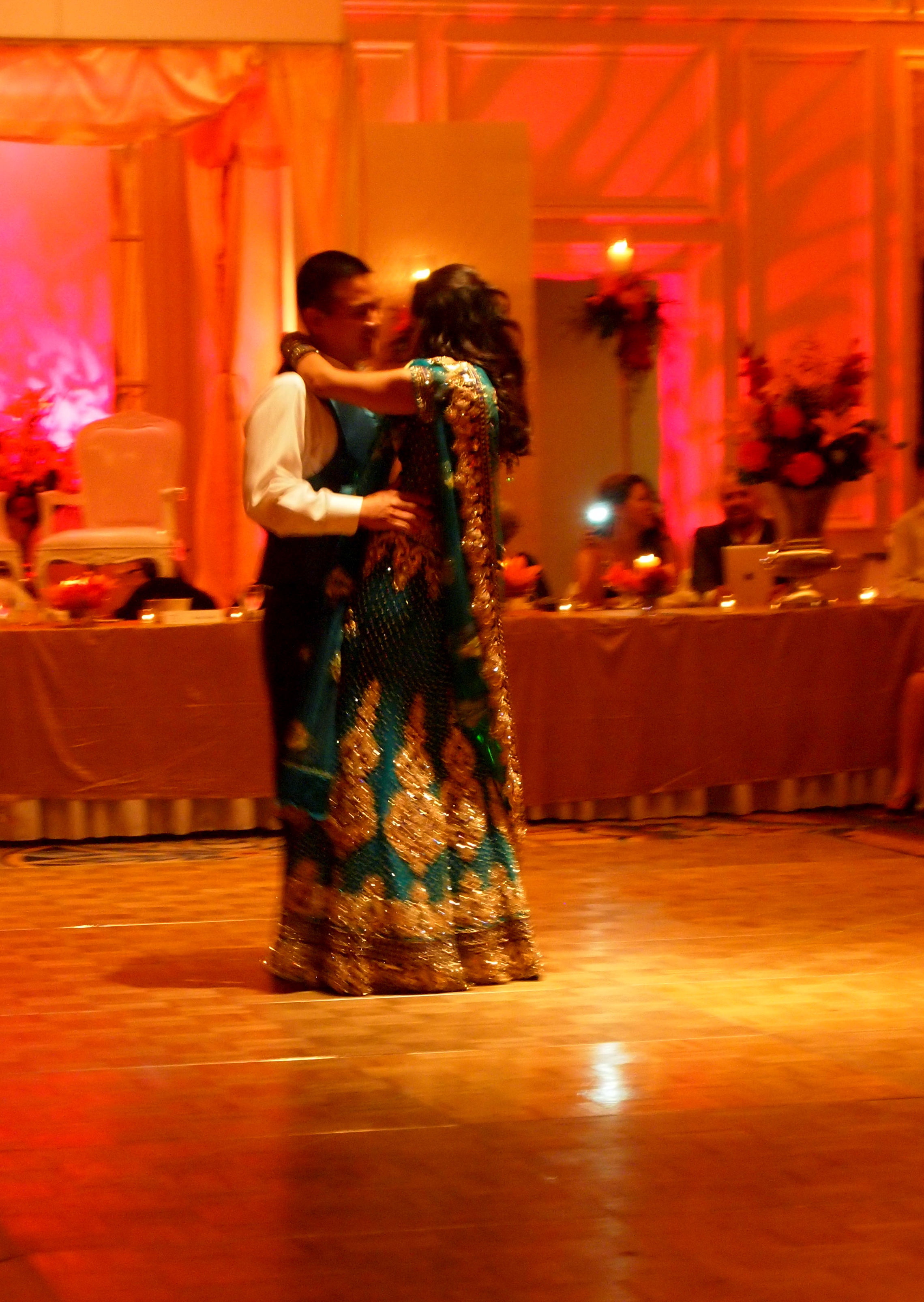
The night finished with a first dance for the bride and groom. It was a beautiful evening and a wonderful way to celebrate the beginning of what I expect to be a strong and happy marriage. Natasha and I have known each other for so long. We grew up together attending Pembroke Hill School, and even created a cool handshake in 5th grade. We played soccer together, learned Spanish together, and still made time to see each other through college. She then went off to med school, while I attended law school. Now, we’re all grown up, with fancy degrees and wonderful husbands.

Natasha and Noah, I am so excited for both of you, and I wish you both all the happiness in the world. Congratulations!

An Indian Wedding: Getting ready for the Wedding Nikah Ceremony

There were many parts to the wedding day for Natasha and Noah. The morning was spent at the hair salon and in the hotel suite getting ourselves primped and ready to begin the day. Mid-day was focused on  Natasha’s preparations. The early afternoon was dedicated to the wedding ceremony itself and to wedding photos afterwards. Following the Nikah and related events, the day changed to the ceremonies associated with the reception.  Natasha’s family received Noah and his family and friends, while Noah rode in on a white horse with drums playing and people dancing. The rest of the evening was spent at the reception, eating delicious Indian cuisine, listening to heartfelt speeches from friends and family, dancing, and of course, celebrating the newlyweds.

I will post the wedding day in two parts simply because there was so much going on that day. Besides, the photos of Natasha getting ready are so stunning, I wanted to share more of them with you.

In every wedding, all eyes wait in anticipation to see the bride’s gown. What does it look like? What is the texture? What style did she choose? In an Indian wedding, the gown for the wedding itself is traditionally red. And it’s not just a gown, it’s a full ensemble. As I mentioned in a previous post, Natasha and her mother, Shaheen, traveled to India to have all the dresses made for both Natasha and her bridesmaids. They picked the fabrics, described the designs they wanted, picked out the jewelry. In the end, they returned with some of the most intricate fabrics I have had the opportunity to see, with the most impeccable detailing.

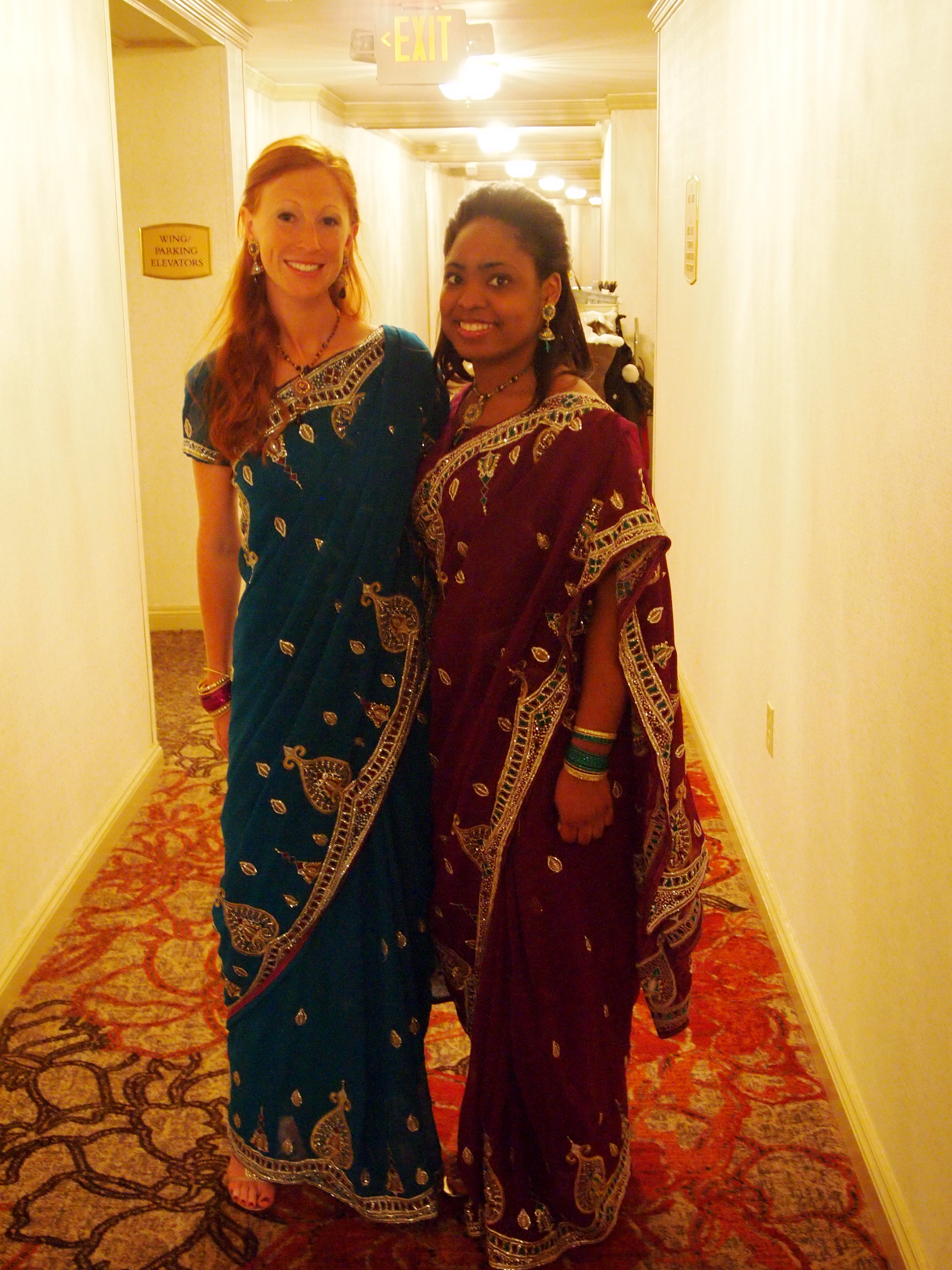
The bridesmaids’ sarees were beautiful, but Natasha’s gowns were beyond stunning. Shes chose “lehenga” style gowns, red for the wedding, and teal for the reception. The gown consisted of a blouse, a floor-length skirt, and a draped fabric called a “dupatta,” which could be worn as a shawl or similar to a veil.

As heavy as the wedding gowns were for Natasha throughout the day (all the fabric, jewels and beading made her heaviest dress over 50 lbs), add her stunning gold heels to the equation, and I admit, I have never been so impressed with a bride’s balancing abilities. Her jewelry consisted of the “maang tikka” (the jewels worn on the forehead), the “chudi” (all the bangles worn on her wrists), the “hathphool” (bracelet connected to a ring), and the dazzling necklace and earring set that was so elaborate it practically molded into a part of her dress. Like I said. She was positively stunning.

The bridesmaids’ sarees were amazing, even if our ensembles were not quite as elaborate. Still, we all felt like princesses for the day. We had a blast getting ready at the salon, and then getting pinned into our sarees at the hotel.

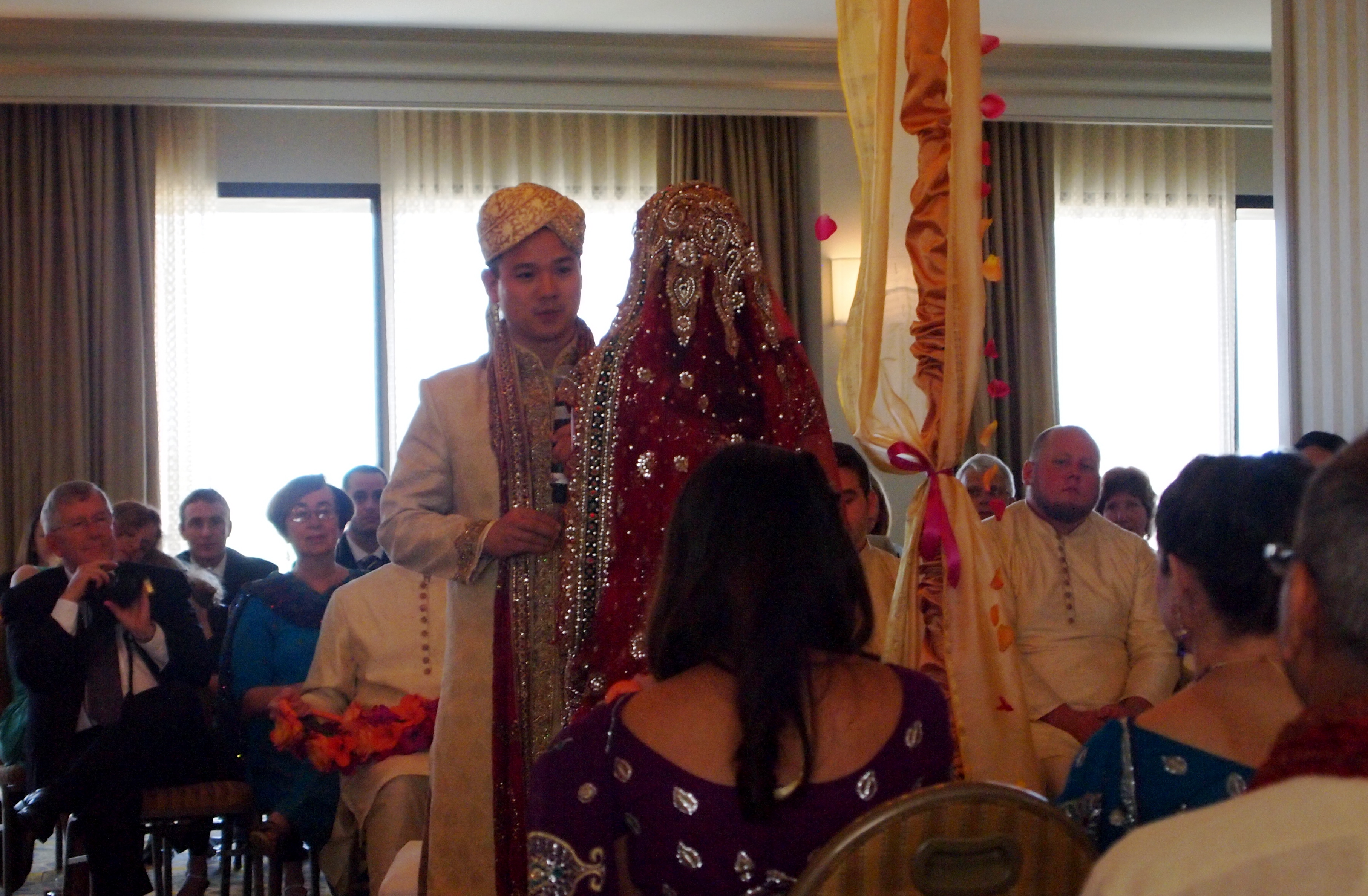
The icing on the cake was getting to help prep Natasha for the day, and especially, for the Nikah ceremony. By the time she reached Noah at the altar, we could see the joy in her eyes.

We were so happy to be a part of the day, and we still had a whole afternoon and evening to come. Little did we know we would get the honor of meeting a special surprise guest! You’ll just have to wait and see who it was!

An Indian Wedding: the Sangeet

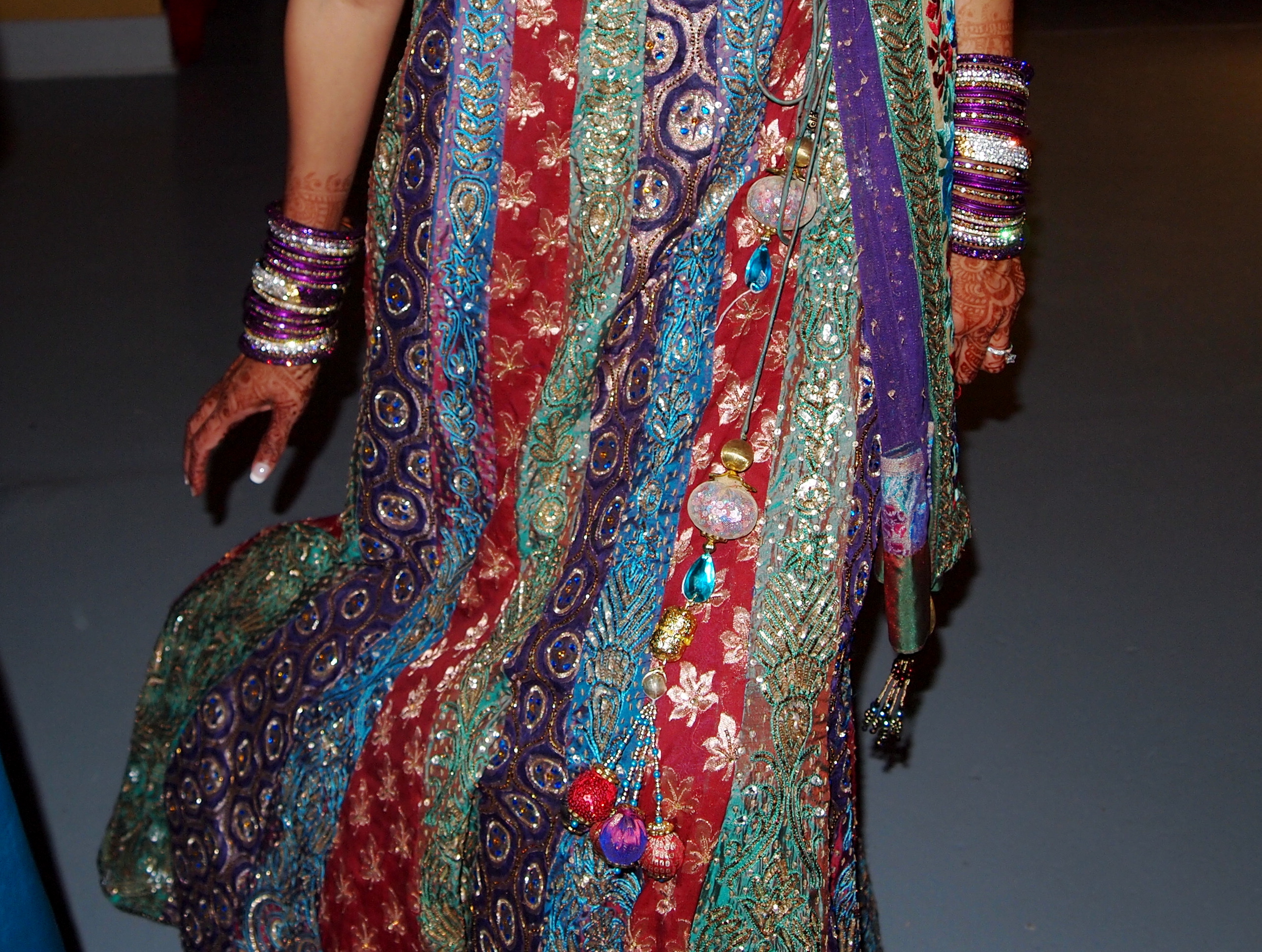
In Indian wedding tradition, a Sangeet is held one or two nights before the wedding ceremony. This is a ceremony of fun and laughter. For each of the ceremonial events, the bride wears a gown specifically created for her.  The gown above is richly colored with intricate designs sewn into each panel of cloth. The Sangeet is also special because it is a time when the families and friends of the bride and groom show their talents through song and dance, and put on a good show for the couple.  Traditionally, it is also an opportunity for the families of the bride and groom to become better acquainted.
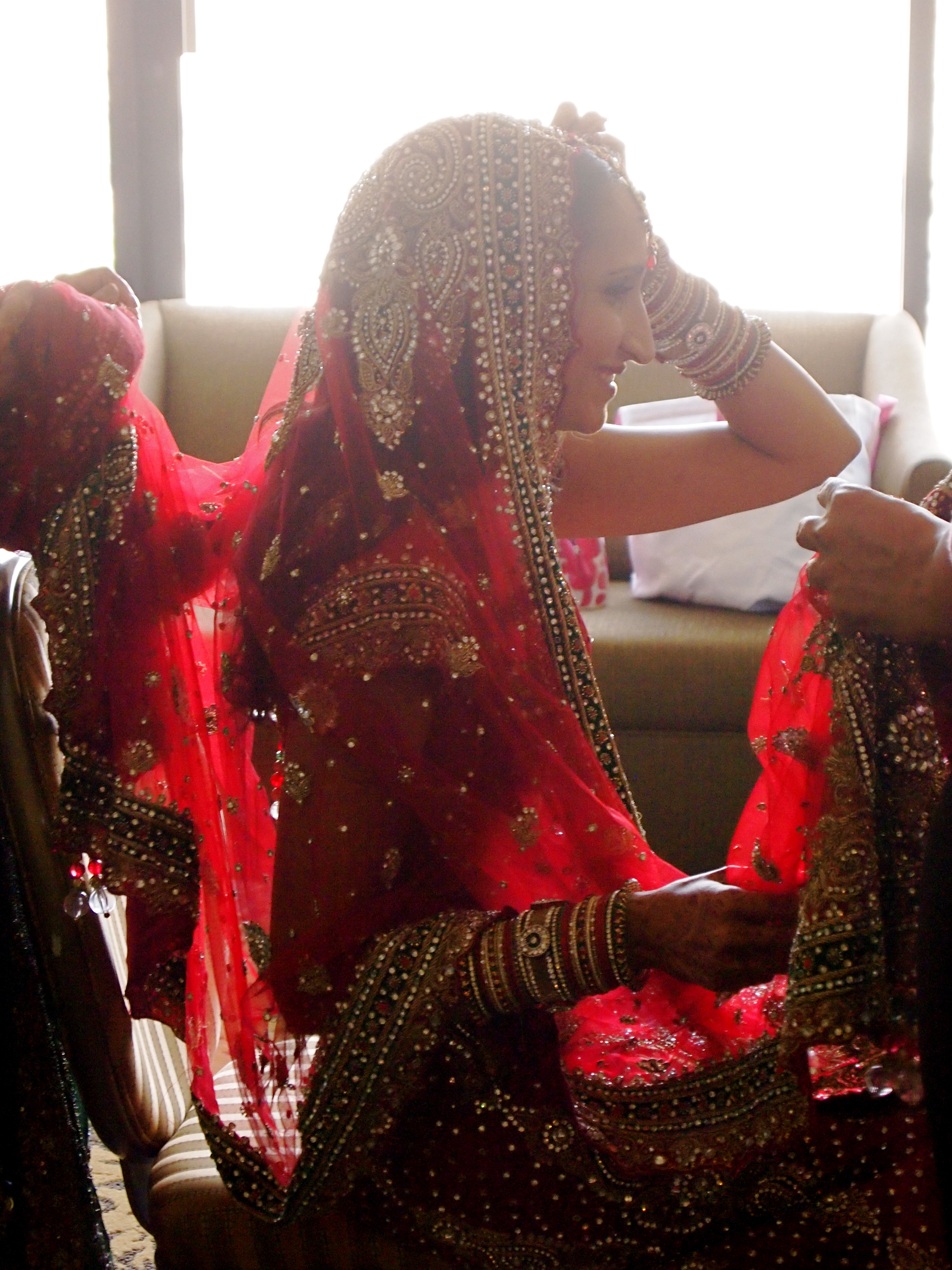
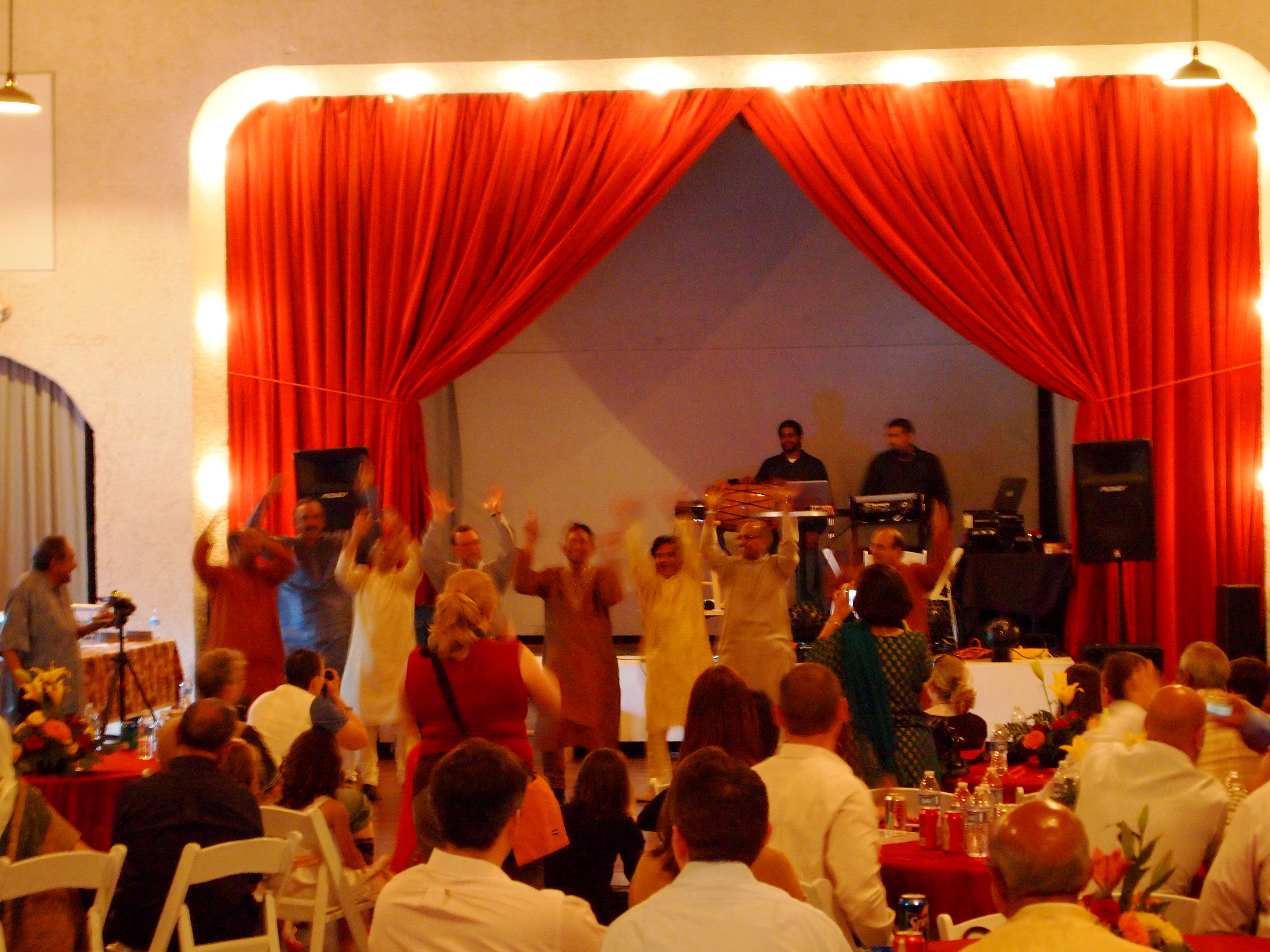
For Natasha and Noah’s Sangeet, the night of celebration was held at the Vox Theater on the Boulevard in Kansas City. They had a large group of family and friends there to participate in the night. Their fathers put together a song and dance. Friends did a skit about how they met. The cousins did an entire medley of traditional dances. During the whole show, Natasha and Noah sat on a special love seat arranged for them on the corner of the stage floor. The show was, naturally, for them.

In addition to enjoying the elaborate songs and dances, we also ate foods that were absolutely delicious food. Natasha’s mom, Shaheen, made the most unbelievable samosas. And the rest of the catered cuisine was positively sublime.

But as I mentioned above, the thing that caught my attention the most during the night was Natasha’s exquisite attire. She wore a multi-colored saree, with blue, teal, purple and red, and of course, gold threading and lots of detail. Her hair was swept to the side and truly exuded the grace and elegance of an Indian princess. Every aspect of her attire reflected Indian art, beauty and culture.  Sadly, the lighting in the venue was not ideal for taking great pictures, but you can still see how stunning she looked.

The final day of celebration was the wedding ceremony and reception. It was a magnificent day with lots of happy surprises!

An Indian Wedding: beginning the weekend with the Mehndi ceremony

One of my best friends from childhood got married this weekend. Natasha and Noah have been together for a long time, and they were finally able to become husband and wife on Saturday May 5th. As Natasha’s family is from India, we were all honored to be involved in a traditional Indian wedding. There were a few Jewish traditions included from Noah’s family as well, but we will wait to explore those until a later post on their wedding day.

The first wedding event was the Mehndi ceremony.

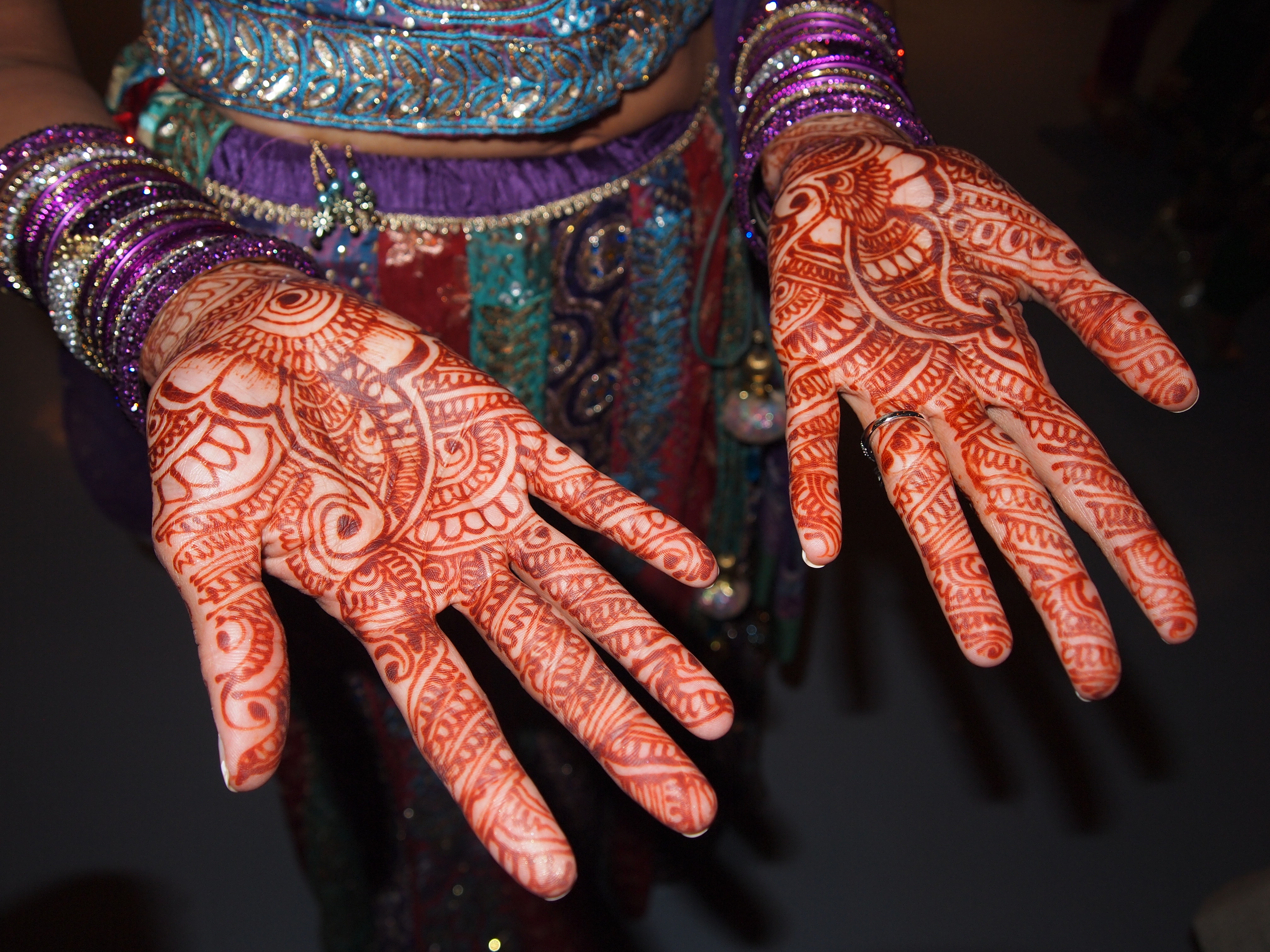
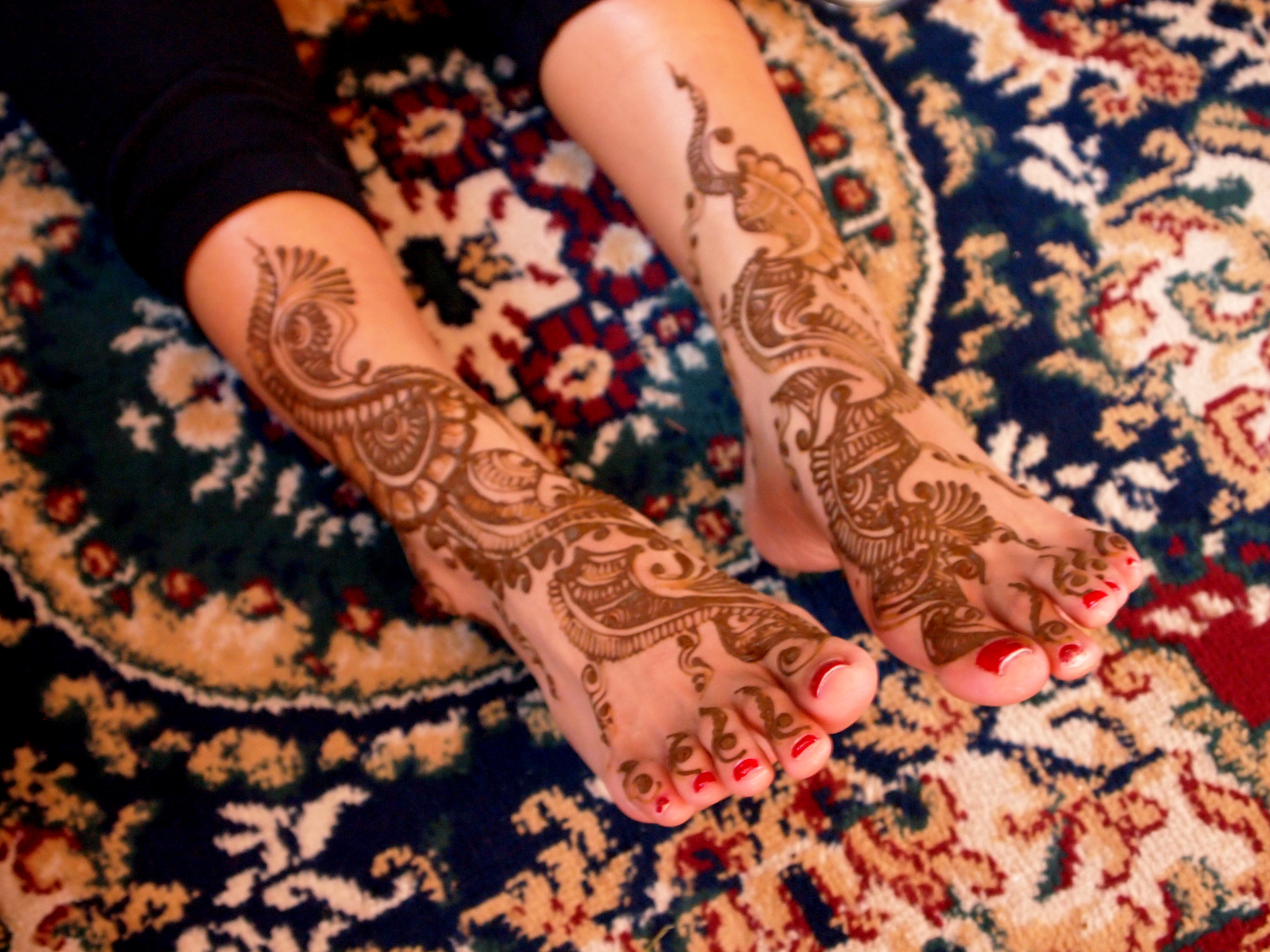
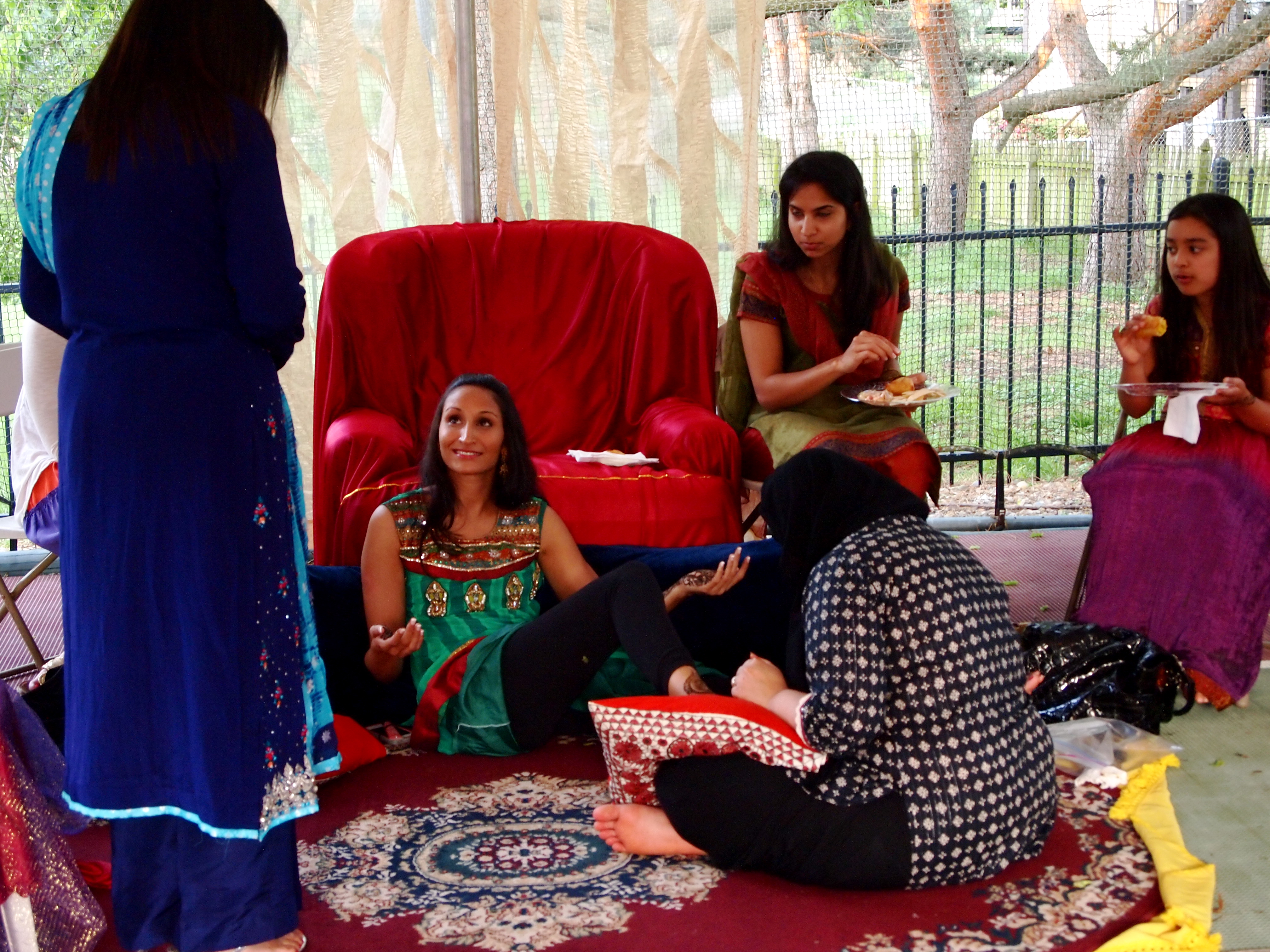
Mehndi is the application of henna as a temporary decoration of the skin. It is a ceremonial art form where intricate patterns are painted onto the bride’s hands and feet before the wedding ceremonies. Hidden in the patterns, the design includes the groom’s name. His challenge is to find his name. For Natasha’s Mehndi, Noah’s name was written in the palm of her hand (can be seen in the bottom picture of her right palm).

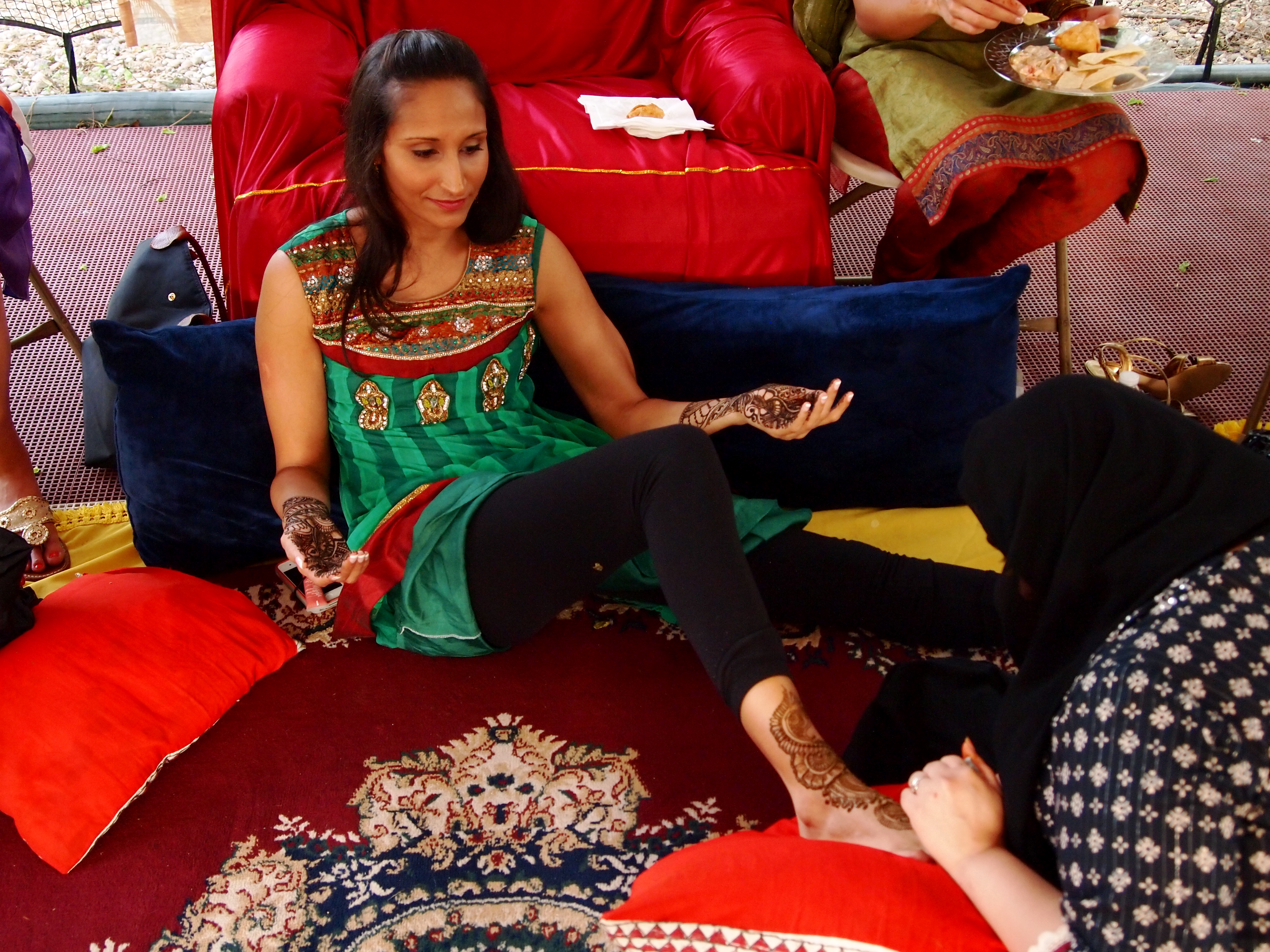
As I understand it, the old tradition was to apply henna to the bride only. In modern times, many of the other women involved in the Mehndi get designs applied as well. As a bridesmaid, I jumped at the opportunity.

Henna is applied to the skin from small cones filled with the paste. The paste then dries on the skin. As it dries, it stains the skin below. Soon the paste begins to crack and brush off, and then you are left with a beautiful reddish-brown stain on the skin. It is a beautiful ritual.

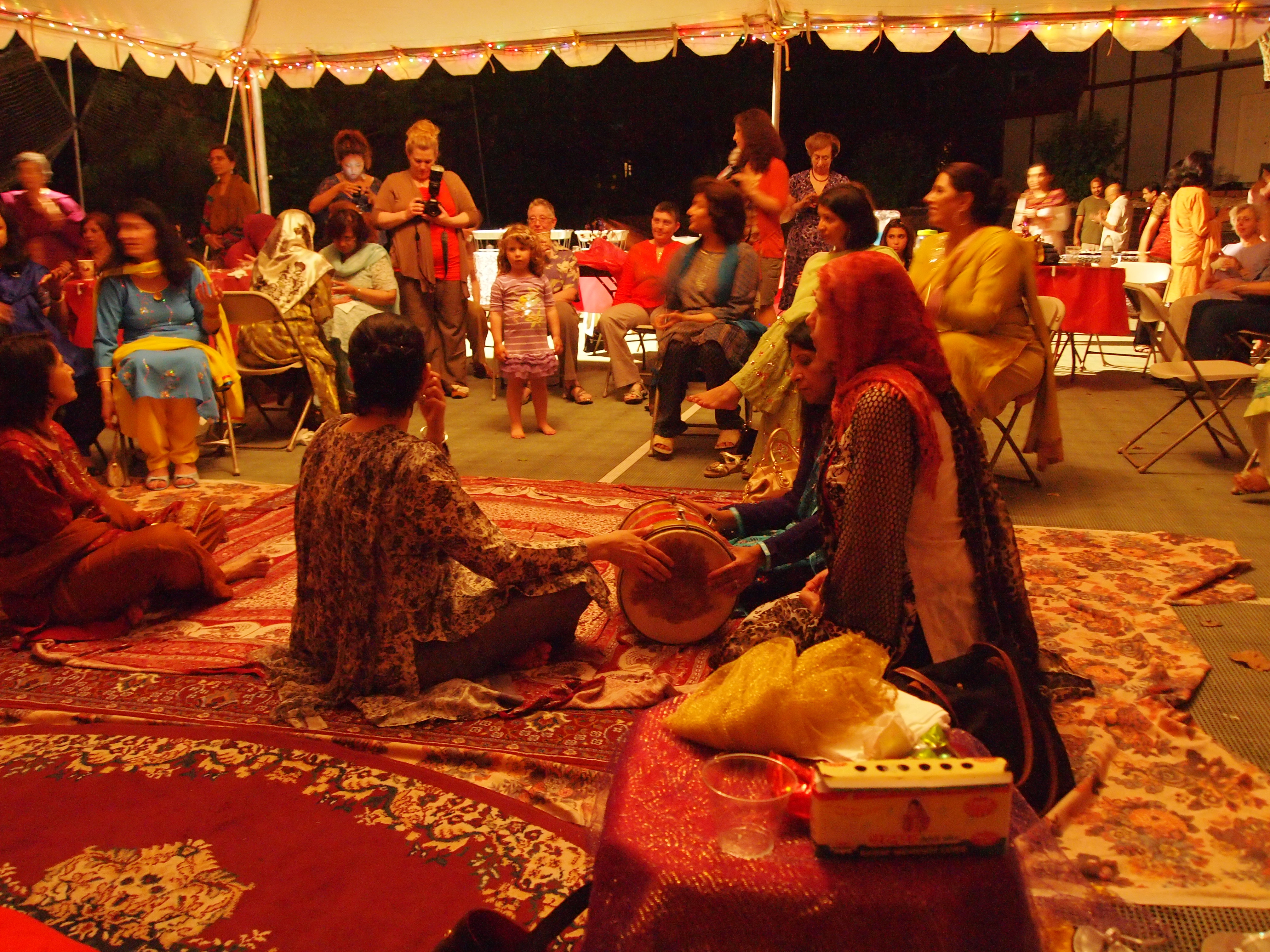
Natasha looked positively stunning as she sat on her “throne” during her Mehndi. She was surrounded by her female friends and family members, and she definitely had the most beautiful designs. Both the backs and palms of her hands were completed covered, and her feet had beautiful designs as well. Following the Mehndi application, the women gathered together to sing, play the drums, and dance.

The Mehndi ceremony was a beautiful way to kick off the weekend of wedding festivities. Natasha looked beautiful, as always, and everyone had a wonderful time. The food was delicious, the music and dancing were joyful. It was a wonderful evening and a great way to start a beautiful weekend.

The Beautiful Women of Crystal Bridges

3 1/2 hours South of Kansas City, just off 71 Highway we arrived at Crystal Bridges Art Museum.  It is beautiful.  It is well-funded.  It is worth the trip.  The works of art inside and outside of the buildings would excite the best of collectors.  I have included just a sample of the beautiful women, memorialized in art, scattered through the gallery.

The Goddess Prosperine  by Hiram Powers ( 1840) is poised and elegant, as is the lady in the oil painting behind her.

Summertime, Mary Cassatt (1894) reminds me of summers on the lake.  The ducks are just a bonus.

Female torso — I failed to identify the artist when we visited the museum, but isn’t she beautiful?

Roses of Yesterday, Harriet Whitney Frishmuth, 1924.  She represents youth and innocence.
      The Reader,  Mary Cassatt (1877) reminds me of Joe in Little Women.
If you enjoy these works of art, take the time to visit this first class gallery. You will not regret it.