Shifting the Balance–9 months, 146 posts and 82 countries later

Nine months ago today, Meg posted our first post on Shifting the Balance.  Since that time our lives have moved forward.  Meg has developed a rewarding pattern to her life in Petaluma. I particularly enjoy the times we all spend together and with other close family and friends.

If you aren’t a blogger, you will have missed one of the curious aspects of blogging. WordPress keeps track of visitors to our blog on a country by country–not individual–basis.  We are now up to 82 countries.  We haven’t figured out how to get the attention of any one of Greenland’s 56,000 residents, but we are still trying. In addition to keeping a tally of every country with visitors to our blog, WordPress actually includes a map for Meg and me.  Here is the map for our blog.  Red records this highest number of visitors, which are from the United States, and visitors from every other country are highlighted in orange, indicating a slightly lesser number of hits:

It is to really fun to watch to see which of our posts are the most popular.  Our photographs usually get views within minutes or a couple of days.  Our articles may receive very few views the day they are posted.  But they may continue to receive views for months.  The most popular of our posts are Meg’s 4 posts focused on Natasha’s wedding and my post comparing Madeleine Albright and Condoleezza Rice.  It is also really rewarding to receive notification that someone “likes” our blog or has commented on a post.  Most of those who “like” us are individuals who view our photographs.  (They are a fairly tight community).

One of our most faithful readers is a young man from Romania, Cristian Mihai.  Born in 1990, he is already an author and a very active blogger himself.  Christian, thanks for regularly “like”ing our photographs.  We love your stuff!!  Romanian music is pretty cool.  Thanks and good luck.

Blogging has become a part of the rhythm of our lives.  Most of our posts capture the fun times of our lives: weekends Meg and Jake spend learning about Northern California, and visits Terry and I make to points of interest in Kansas City.  Occasionally, we write about our travels.  When time permits we review a book or write about issues that are of particular interest to us.

There is supposed to be an art to blogging. Among the suggestions made for successful bloggers is to have a blog theme: something like marketing, travel, photography or cooking.  We read some wonderful specialized blogs and follow Sheila’s Lifestyle Solutions and PhotoBotos among others.  So we really appreciate the specialized blogs. But we just keep rolling along as we write about a wide variety of subjects and post photographs we like.

Our lives are, in some small ways, focused on our blog.  We talk to each other about what we are doing on the blog and who has a post ready for publication.  We also continue to look at our lives and our worlds with eyes toward potential blog posts.  When we see a beautiful building, a fascinating book or article, or just visit a park, we want to share it.  Our posts are also a way for us to communicate with each other. That is satisfaction enough for me.

Thank you for following our blog. Clotilda Jamcracker, (another author and blogger), thanks for “like”ing this post.  Thanks to you all.

World War II: They died that others might live

World War II holocaust survivor, Bronia Roslawowski, was born Brucha Kibel, in Turek, Poland, to Tzvi Eliezer (Hersh) Kibel and Bluma Bayrach.  She was born in about 1926 but we were never really sure about her age!  She died July 14, 2010, in her adopted hometown, Kansas City, Missouri, after a long and meaningful life.  She was beloved by all who knew her–and she seemed to know almost everyone.

On September 4, 1939, German armed forces marched into Turek, where Bronia lived with her family.  After two already difficult years, in December 1941, Bronia was sent to Inowroclaw Straflager in Northern Poland.  A “resettlement camp” during the war, it was the first of approximately 5 concentration camps in which Bronia survived the war.  In 1943 she was deported to Auschwitz-Birkenau. She worked in a forced labor camp at Telefunken plant in Reichenbach, escaped the gas chamber in 1944 and was forced on a death march shortly before war’s end. Her right arm was tattooed with the number 57365. Still, despite all that she suffered, she survived.  She was liberated by U.S. servicemen in 1945 and worked briefly in a resettlement camp before moving to the United States.  Only she and a brother survived the war.

Bronia married Mendel Roslawowski, himself a survivor of the camps.  Together they raised his son and her three daughters.  They opened the M & M Bakery at 31st & Woodland.  A popular neighborhood deli, it was a favorite of the local community, medical students and young lawyers.  Her brisket and bagel sandwiches were absolutely priceless.  She had photographs on her walls of children who frequented the deli, many of whom she fed free sandwiches and cookies.  She hugged her customers and seemed to find time to make each of her regulars feel loved.  To Bronia, no one was ever a stranger.

Bronia never forgot her war-time experiences.  She was determined not to let those experiences, or the loss of her family, control her life. She laughed easily and often.  She opened her home to her extended family and her children’s friends–who came to feel like family.  At the same time, anxious to educate her community about the horrors of war, she spoke regularly on behalf of survivors about the holocaust, and worked with the Midwest Center for Holocaust Education.  Her message was a message of love., stating She forgave those who harmed her, insisting they are all God’s children.  She acknowledges the hate and ugliness she saw in the world and she denounced Nazis, but not the German people.  She stated that “you cannot condemn a nation.”  “I don’t hate” she  repeated.   

Prior to her death she was one of 52 Kansas City Holocaust survivors and war refugees whose stories are included in the book From the Heart.  She is also the subject of a children’s book, Love the World, by Maureen Moffitt Wilt focused, obviously on her message of love.  It is beautifully illustrated by Jeff Porter.  The photograph of her family, taken at her granddaughter’s marriage, is an image of a woman who not only survived the war, but thrived.  She lived a rich and full life. Bronia’s life, and her message of love, are reflected in the strength and commitment to family and community of her children, grandchildren and great grandchildren.

For Bronia, her family and all of the other Bronias, the horrors of their early lives gave way, to meaningful lives here in the United States, in Europe and throughout the world.

A victim of hate, she became a messenger for love.  She understand that as she suffered due to the hate and intolerance of others, she also was given a new life by liberation forces.  Neither their sacrifices, nor Bronia’s message of love, should be forgotten.

The Peace Journalist, a Publication of Park University

In April 2012, Park University’s Center for Global Peace Journalism published Volume 1, No. 1 of its new journal, The Peace Journalist.  Dedicated to “disseminating news and information for and about teachers, students, and practitioners of peace and conflict sensitive journalism”.  Wow.  I opened the pages of the new journal and was immediately fascinated.

Page 3 quotes Mahatma Gandhi, the famous Indian humanitarian who used non-violent protest to oppose British colonial rule before and during World War II and who worked for harmony between India’s Muslim and Hindu populations.  His perspective on journalists is that:  The true function of journalism is to educate the public mind, not to stock the public mind with wanted and unwanted impressions.  A journalist has therefore to use his discretion as to what to report and when.  As it is, journalists are not content to stick to facts alone.  Journalism has become the art of intelligent anticipation of events.

As I reflected on Gandhi’s sentiments and wandered through the pages of this journal, I became aware that my view of journalism seems pretty simplistic.  I have asked only that journalists state the facts and let me decide how to feel about the facts presented to me. I still believe that.  But the focus of the articles in this first volume is far more sophisticated in analyzing the role of what are described as “peace journalists”.

For instance, an article by Dr. Ghassan Rubeiz, an Arab American commentator, focuses on ways in which the media can promote  religious tolerance.  She encourage the publication of what she calls “good news” stories, stories about how a Jewish boy saves an elderly Muslim woman or how a Muslim saves the life of a Jew.  She further advocates for free and honest media that discredits what she refers to as “fear-mongering pundits”.

Another article focuses on training peace journalists in Uganda, particularly to support violence free elections.  In an article analyzing the ethics of peace journalism Julie Dolezilek describes the ethics of peace journalists:  1) their first obligation is to the public; 2) they must report the truth; 3) they should avoiding reporting news that is really just propaganda; 4) they should avoid writing articles that will incite violence of further worsen conflict.  She also comments on the obligation of journalists to anticipate the consequences of their articles before they are written.

I have not yet fully absorbed the material in this new publication.  I don’t even know whether I agree with all of it.  Even as I read the discussion of ethics I respected the conflicting ethical challenges touched on by the author, herself a student at Park. But in this era when we complain constantly about the state of civility in the national and international dialogue and complain about media bias to the left and to the right, isn’t it refreshing to have a new journal focused on these important issues.

Park University has long had a focus on international students and global studies.  Park’s focus on preparing its students to be prepared to participate in the global community positions it as a natural center for such a journal.  I applaud Park and Steven Youngblood, Director of the Center for Global Peach Journalism for this fascinating new journal.

Our Founding Fathers

On July 4, 11776, our founders declared in the Declaration of Independence: “we hold theses Truths to be self-evident, that all Men are created equal and that they are endowed by their Creator with certain unalienable Rights, that among them are Life, Liberty,pursuits Pursuit of Happiness.”  With these words, they began the process of shaping a government that obtains its powers from “the Consent of the Governed.” The Constitution continues in a similar fashion, professing the desire of the people of the United States to “establish Justice”, and to “secure the Blessings of Liberty” to ourselves and our posterity.”  These are powerful words, and the goals expressed in them have shaped this nation.  What kinds of men authored these documents?

When I read Madeleine Albright’s book, The Mighty and the Almighty, her brief description of the philosophical and religious perspectives of our first Presidents intrigued me.  Albright’s own belief in religious tolerance may certainly impact her vision of our founding fathers.  Particularly pertinent is her belief that religion should not be  a source of conflict and hate.  It is reasonable that she focuses on similar attributes in our founding fathers.

What were the beliefs of the men who shaped these documents?  What is it that inspired George Washington and others to create our Constitutional form of government?  How is that these men created a government based on concepts of liberty, freedom and democracy?  What caused them to enact a Constitution that gave so much power and dignity to the common man?  Albright believes they considered themselves to be like the Israelites, guided by God through the wilderness, presumably to the promised land, the a United States.

Almost certainly, the vast majority of early colonial leaders were closely associated with clearly defined religious denominations: Primarily Congregationalists, Puritans, and Anglicans. In contrast are the less clear cut beliefs of a small group of pivotal individuals who took center stage as authors of the Bill of Rights, and the Constitution.  Their letters and speeches suggest they were deep thinkers, wise and thoughtful, “primarily political–not spiritual theorists” who focused  on “civil concepts: democracy, liberty, freedom of the press, freedom of religion, jury trial, all of the fundamental rights we hold dear.”

Consistent with their own political and philosophical beliefs, these men were highly respectful of the wide scope of religious and philosophical beliefs found among the citizenry.  What do we know about their beliefs?  Their religious beliefs appear not to have been stagnant.  They grew and changed as they faced the challenges of building a nation.  Historians describe them as very religious, not very religious, atheists or Deists, depending at least in part on the perspective of the various historians who write about the, while relying on whatever quotes fits.  Without question, they seem to have believed that this new nation should welcome people of different beliefs.

Our first President, George Washington, often acknowledged the importance of a supreme being, while advocating “scrupulous support for religious tolerance” including “Mohametans, Jews or Christians of any sect, or Atheists”.  In Washington’s 1790 letter to the Hebrew congregation of Newport, R.I., he wrote: “The government of the United States gives to bigotry no sanction, to persecution no assistance.”  He made frequent references to a deity, nonetheless, ministers of his time, including the Rev. Bird Wilson, Episcopalian, and Rev. James Abercrombie, Rector of Washington’s church, described him as a “Deist”.  Certainly as Secretary Albright indicates, he was committed to the right of every citizen to worship “according to the dictates of his own conscience”, as he did himself.

Our second President, John Adams, is described by Secretary Albright as a Unitarian who considered liberty “a gift from God” and democracy “a creation of man”.  She describes him as having had little use for the concept of the Trinity.  A prolific writer in the area of philosophical and religious issues, his various writings provide little clarity as to his personal beliefs. Like Jefferson, his religious and philosophical views were intertwined.  His primary concerns appear to have been civil rather than religious.  As a statesman he was dedicated to religious tolerance. Treatises about him quote him as inconsistently stating both that “Our Constitution was made only for a moral and religious people” and in contrast that “This would be the best of all possible worlds, if there were no religion in it.”  I wonder whether this statement was in response to world events of his time.  He expressed concern that people “are often for injustice and inhumanity against the minority”, as demonstrated by “every page of the history of the whole world.” Almost certainly a reference to the French Revolution which occurred almost simultaneously with our own, but with a level of brutality we never experienced.

Albright describes Thomas Jefferson, our third President, as a student of science and ethics.  The controversial nature of his beliefs is evidenced by his opponents’ attacks against him, labeling him an atheist. His own words make this suggestion highly suspect. In his letter to Benjamin Rush, in 1800, he acknowledges God, stating: “I have sworn upon the altar of God, eternal hostility against every form of tyranny over the mind of man.”  But he certainly ascribes to a very personal system of beliefs: “I never submitted the whole system of my opinions to the creed of any part of men whatever in religion, in philosophy, in politics, or in anything else where I was capable of thinking for myself.  Such an addiction is the last degradation of a free and moral agent.”  He had little good to say about Christian clergy, describing them as the “greatest obstacles to the advancement of the real doctrines of Jesus”.  Ouch, my dad would loudly protest against any suggestion that his life’s work is an obstacle to the teachings of Jesus!!

Jefferson is the primary author of the Declaration of Independence.  He and George Mason, authored the Virginia Declaration of Rights, adopted by the Virginia Constitutional Convention on June 12, 1776.  In addition to codifying rights including freedom from excessive bond, separation of the powers of the three branches of government, the right to freedom of the press, and the right to jury trial, the document states that: all men are equally entitled to the free exercise of religion according to the dictates of conscience”; and that it is the mutual duty of all to practice Christian forbearance, love, and charity toward each other.

Jefferson wrote respectfully of atheists in a letter to Thomas Law in June 1814: “If we did a good act merely from love of God and a belief that it is pleasing to Him whence arises the morality of the Atheist? … Their virtue, then, must have had some other foundation than the love of God.”  In a speech to the Virginia Convention in June 1778, he proclaimed:  “Freedom arises from the multiplicity of sects…For where there is such a variety of sects, there cannot be a majority of any one sect to oppress and persecute the rest.”  Finally he states: “Say nothing of my religion.  It is known to my God and myself alone.”  Letter to John Adams, January 1817.

James Madison, the fourth President, and often identified as the “Father of the Constitution” authored major sections of the Federalist Papers, advocating for the passage of the Constitution.  He was certainly one of the greatest champions of that document. Because his early expressions of his religious views are said to have varied greatly from his private statements late in his life, it is difficult to set forth a concise statement of those beliefs.  Early in his political life he described that the “democratic will” is subordinate to the commands of God, but clarified that those commands are “heard and understood in the individual conscience”. Advocating for the Constitution’s language on the separation of church and state, he stated that “Every new and successful example of a perfect separation between the ecclesiastical and civil matters, is of importance;…in showing that religion and Government will both exist in greater purity, the less they are mixed together.”  Letter to Edward Livingston, July 10, 1822.  Madison spoke and wrote frequently on the issue of religious freedom. He authored Federalist Papers #51, in which he wrote a slight variation of his theme, stating that: “In a free government the security for civil rights must be the same as that for religious rights. It consists in the one case in the multiplicity of interests, and in the other in the multiplicity of sects.”

 Last, but not least, of our best remembered colonial leaders is Benjamin Franklin.  Never a President, and always somewhat apart from the main stream even of the late 18th century, his thoughts about faith, only months prior to his death are witty and plain-spoken: “I believe in one God, Creator of the Universe…That the soul of man is immortal…As to Jesus of Nazareth, my opinion of whom you particularly desire, I think the system of Morals and his Religion, as he left them to us, the best the World ever saw or is likely to see; but I apprehend it has received various corrupt changes, and I have, with most of the present Dissenters in England, some doubts as to his divinity; though it is a question I do not dogmatize upon, having never studied it, and think it needless to busy myself with it, when I expect soon an opportunity of knowing the Truth with less trouble.”
What does it matter? It is apparent that they were respected by their peers, that they were able to define themselves as men of integrity who embraced people of good will where ever they found them.  Certainly, in forging a government of people from such varied backgrounds they were able to shape the original “big tent” of which President Ronald Reagan spoke.  But further, they constructed a government in which people were able to come together as equals, with the interests of the majority and the interests of the various minorities all considered and given worth.  They gave respect to the individual, created a government based democratic values and expectations of liberty.  Most important, they gave our citizens a Constitution and Bill of Rights that became the basis for a government that has thrived for over 200 years.  Sadly, they did not protect us from the inhumanity of  slavery or insure the equal treatment of women and minorities.  But over the course of U.S. History. the concepts of liberty, equality and justice have prevailed and these fundamental rights were extended to all citizens.
                                                                                          Out of Many, One

Shifting the Balance –6 Months, 82 Posts and 47 Countries Later

On October 14, 2011, Meg began our first post this way:

My mother and I have decided to start a blog. For as long as I can remember, we have talked about everything going on in the world. Naturally, our conversations trend toward identifying problems and then brainstorming possible solutions. Overall, our primary objective has always been to visualize the world in balance.

This is our 82nd post.  We have been “viewed” in 47 countries including such diverse places as the Netherlands (of course we have family there), Serbia, South Africa, Brazil and Croatia.  Two of our most popular posts have been “I couldn’t resist the tulips”–yesterday, and “The importance of buying local”–in January.

Our focus from the beginning has been about finding and maintaining balance in our lives and in our world.  We sometimes discuss whether we have maintained that focus, because most of what we post is about beauty in the world around us.  Only occasionally do we write a piece about meaningful issues. When we do, we work hard to write in a way to encourage civility and to be open to the opinions of others.  We never want to embarrass ourselves or cause harm to others. But trust me when I say that our opinions really are only Meg’s and mine and not the opinions of our families, our employers, or anyone else.  We do quote from documents such as the U.S. Constitution, international treaties, books and similar information.  Hopefully we do so accurately.

For those who do not blog, it is difficult to explain the personal satisfaction associated with hitting “publish” after researching, drafting, reviewing and editing each post.  More important is that writing a blog encourages us to look at life a little differently.  When I drive by a beautiful statute or see graffiti on the wall, or look at photographs of countries we’ve visited, I try to figure out the best way to share the information with others.  When I read a book, or a newspaper article, I wonder whether others would be interested in learning about it.

Essentially, it causes us to live our lives with greater awareness.  And isn’t greater awareness an essential step toward living life better, while meeting our goal of finding and maintaining balance; consistent with our name Shifting the Balance.     Ann

What do Madeleine Albright and Condoleezza Rice have in Common? Czech Mentors!

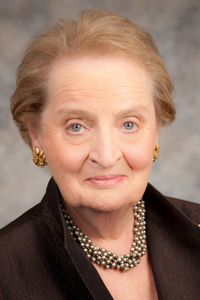
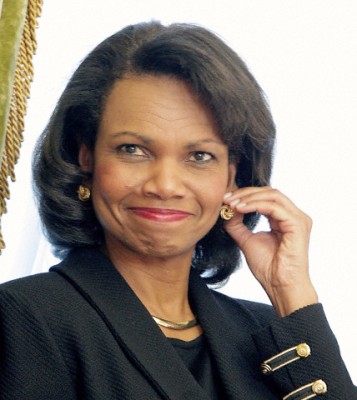
Madeleine Albright and Condoleezza Rice are dynamic women whose influences on U.S. and world events had a significant impact on foreign policy decisions.  Both served as U.S. Secretaries of State.

Albright is a Democrat, politically a moderate.  Rice is a Republican, politically a conservative. They are of different faiths, with different philosophic perspectives. Two powerful, but very different personalities, styles and beliefs. Since reading Madeleine Albright’s book, The Mighty and the Almighty, I have enjoyed discovering her world views, her life experiences and her views of the development of the U.S. as a nation and an international power. But I was still surprised when I learned of the political interconnections between Albright and Rice. It is all about mentors.

In her book,  U.S. Secretary of State Madeleine Albright, the 64th U.S. Secretary of State under President Bill Clinton, describes her values and beliefs.  She describes being influenced by her father, Josef Korbel, a Czechoslovakian diplomat, and by Tomas Garrigue Masaryk, the first President of Czechoslovakia, in whose government Korbel served. Rice also identifies Josef Korbel as a major figure in her life. So, who are these men? And how did they influence two such brilliant and unique individuals?

Tomas Garrigue Masaryk (1850-1937) was born in Hodonin, Moravia. He was a Professor of Philosophy at the University of Prague and a visiting professor at the University of London.  He served in the Austrian Parliament from 1891 to 1893 and 1907 to 1914.  He went into exile in 1914 and organized Czechs and Slovaks living outside Austria-Hungary. He developed a network of exiles who passed intelligence to the Allies while helping to establish the Czechoslovak Legions who fought with the Allies in World War I. He traveled throughout Europe and the United States from 1916 to 1918, encouraging allied leaders to force the “disintegration” of Austria-Hungary. When Austria-Hungary fell at the end of WWI, Masaryk became head of the provisional Czech Federation.  He was elected President by the National Assembly in 1918, 1920, 1927 and 1934.  He died before the Munich Agreement was signed in September 1938. Korbel briefly served in Masaryk’s government.

Masaryk was raised Catholic and, as an adult, converted to the Unitarian faith.  He married a U.S. citizen, also Unitarian.  Albright describes him as an intellect who did not consider belief in God necessary to be moral, but did believe “religious faith, properly understood, did much to encourage and strengthen right behavior.” Masaryk considered humanism and religion to be intertwined, with religion ultimately being about showing respect for every person and helping others.

Josef Korbel was born in what is now the Czech Republic.  He was a young diplomat when he was forced to flee his homeland due to his Jewish heritage when the Nazis occupied Czechoslovakia. He would also have been at risk of arrest due to his diplomatic ties to President Edvard Benes, President of Czechoslovakia after Masaryk’s. He returned to his homeland after World War II, served as ambassador to Luxembourg, and fled again when the communists assumed power in 1948. Sentenced to death in absentia, he was given political asylum in the United States.  It is little wonder he had a keen interest in democracy and a love for this country.   Korbel ultimately moved to the University of Denver where he founded the school bearing his name, the Josef Korbel School of International Studies. Even though he was Jewish by birth, Korbel appears to have espoused no religious faith in his youth, and raised his children in the Catholic faith.

Josef Korbel may be best known as Madeleine Albright’s father, but he was also a mentor to Condoleezza Rice, the National Security Advisor and 66th U.S. Secretary of State under President George W. Bush.  She studied under him at the University of Denver and describes him as a central figure in her life.  Her PhD dissertation dealt with politics and policy under communism in his homeland, Czechoslovakia.

Both Albright and Rice credit Korbel with the belief that “democratic values are at the heart of peace and stability in the world.” Both women have reflected that Korbel considered the United States the “Indispensable Nation” because of its pivotal role in world affairs. They, too, share that belief.

In understanding Secretary Albright, it is helpful to understand her admiration of Masaryk, her father, and the impact both had on her world view. In understanding her father, it is important to recognize that his beliefs were broad enough to nurture two women with such diverse points of view.  It also gives us insight into the values that influence the beliefs of both women and their perspectives of faith and politics in interacting with world and national leaders. We journey on!

Madeleine Albright–Reflections on Religious Diversity in Colonial North America

A good place to start a discussion of Madeleine Albright’s book, The Mighty and the Almighty, is at the beginning.  For purposes of this post, a better place to start is page 16, page 44 in my e-book.  Here she begins her exploration of the religious differences of the earliest colonies.  This precedes  her exploration of the role of faith in the formation of our nation, the United States of America.  While much of my commentary is based directly on The Mighty and the Almighty, I explored some of her references to understand a little more indepth (I know, it is only a post!) the issues she raised.

Differences in Faith in Colonial America

U.S. History 101 teaches us that the Pilgrims came to the New World to escape persecution in Europe and to build better lives.  Secretary Albright focuses on the way the patterns of that migration, and the related early religious conflicts, impacted the development of the colonies.  It is apparent that the English, Dutch, Spanish, French and other colonists brought with them differing views of religion and that their beliefs, and the conflicts among them concerning their beliefs, helped shape the political landscape then and now.

1) The Puritans arrived in the New World fleeing religious persecution in England.  John Winthrop, Governor of the Massachusetts Bay Colony, left England in hopes of building a community that would be a model for “how to live a righteous life,” “escape God’s judgment on the corrupt churches of Europe” and find a refuge from poverty and overpopulation in England while spreading the gospel.   Despite persecution by Anglicans in England, his Puritan colony determined to exclude from full citizenship in their community all but a select view within their own faith.

2) Roger Williams was a theologian in England. Ordained into the Anglican church, he became a Puritan at Cambridge.  Forced out of England, he settled briefly in the Massachusetts Bay Colony.  In 1636 he established Providence Plantation after being banished by the Puritans from Salem/Boston.  His transgression, in the eyes of the leaders of that community, was to oppose taking the lands of Native Americans without compensation and advocating for the separation of church and religious functions. He opposed slavery and advocated for freedom of religion for all groups–Jews, Papists and Mohammedans.  He specifically said about the treatment of Jews elsewhere “for whose hard measure, I fear, the nations and England hath yet a score to pay”.  Like-minded settlers and minority groups, joined him in Rhode Island where they found a safe haven.  (This is important to me because my ancestor, John Lewis, was a founder of Westerly, Rhode Island, formed in 1661.)  Williams is said to have established the first Baptist Congregation in the colonies.  Williams renounced the practice of taking land by force from Native Americans and, instead, entered treaties with them.

3) Reverend Thomas Hooker, a popular Puritan preacher, founded the Hartford Settlement in 1636.  He first came into conflict with other Puritan leaders when he opposed the decision of the Massachusetts Bay Colony to limit voting rights to an elite group within the Puritan faith. He drafted portions of Connecticut’s Constitution which declared the “God given” right of people to pick their own leaders.  On May 31, 1638, he presented a sermon in which he espoused the belief that “the foundation of authority is laid in the free consent of the people” and declared that “God has given us liberty, let us take it.” He also attracted followers who settled portions of Connecticut.

4) William Penn, was born Anglican.  He became a member of the Society of Friends (Quaker) at age 22.  He was imprisoned in England for his beliefs, eventually relocated to the colonies, after authoring a “charter of liberties” for Burlington Settlement in New Jersey. The charter guaranteed free and fair trial by jury, freedom of religion, freedom from unjust imprisonment and free elections. He eventually settled in Pennsylvania Province where he drafted a“Frame of Government” that addressed such rights as freedom of worship, trial by jury, free election, fair trial and fair taxes.  In addition to Quakers, the province attracted Amish, Jews, Huguenots, Mennonites and others. Penn, like Williams, befriended the Native Americans and bought his lands from them rather than taking land by force.

6) While not part of the original 13 colonies, and not a focus of Secretary Albright’s book, Catholics colonized the Southern states and California beginning with the founding of missions in the late 1400s Spanish missionaries and by French traders as early as the late 1600s.  Catholics were also among the founders of Maryland.  Identified as “papists” Catholics were subject to persecution in some colonies until at least the late 1700’s.

There is, of course, far more to this early history than I can presume to understand or to research for my brief summary.  But the ways in which the colonies formed, and the close proximity of these varied and sometimes conflicting religious communities impacted their lives and ours.  The tragedies of their time are truly that–tragedies: the introduction of slavery into the new world, the early wars with native American populations on the East Coast, and the Salem witch trials.  The great successes include, first and foremost, that the colonies became an incubator for the values important to us today: liberty, separation of church and state, freedom of religion and democracy that were nurtured and grew, for over 100 years before the “forging of one nation.”

Next:  From the wisdom of a few men, a great document. The United States Constitution.

The Mighty and the Almighty–Diplomacy and Faith

In my quest for greater understanding of the role of faith in government and diplomacy, I have focused on two books.  Senator John Danforth’s Faith and Politics and Secretary of State Madeleine Albright’s The Mighty and the Almighty.  Senator Danforth is a lifelong Republican.  Secretary Albright has been a Democrat since college.  Both are Episcopalian.  Each served as Ambassador to the UN.  Both advocate that people of faith should be active in government.  Both believe it is essential that there be respect for diversity both within the Christian community and that this respect must extend to those of other faiths and philosophical beliefs.

I focused on Senator Danforth in an earlier post.  Now I will focus on Secretary Albright.  She was born in Czechoslovakia.  Her father was a diplomat.  She was a child when Adolf Hitler was in power.  She emigrated with her family from Czechoslovakia to the United States after communists seized power in her homeland.  Educated at Georgetown University’s Walsh School of Foreign Service, she received her PhD from Columbia University.  Raised Catholic, she converted to the Episcopal faith and, as an adult, came to learn of her Jewish heritage.  Appointed United States Secretary of State during President Clinton’s administration, she served with great distinction from January 1997 to January 2001.

Her unique family history and academic and professional experiences give her a unique perspective on the subject of her book, the role of faith in international diplomacy.  Because of her childhood experiences, she also has special insight into what a privilege it s to live in a free and democratic society.

Secretary Albright’s book is dedicated to “those of every nation and faith who defend liberty, build peace, dispel ignorance, fight poverty, and seek justice.”  Secretary Albright weaves this dedication, and her personal family history, into a scholarly but easily readable narrative of the role of faith in the earliest years of colonial America, through the founding of the Republic and through to the challenges of international diplomacy in a nuclear age.

She discusses separately and together the roles of religious belief and morality.  Her definition of what is moral as essentially that which “we associate with good:  life, liberty, justice, prosperity, health, and peace of mind.”  She describes these characteristics as the opposite of “death, repression, lawlessness, poverty, illness, and fear.”

She worries about the dangers and challenges resulting from the increase in religious passions throughout the world.  She shares the wisdom of religious scholars that effective diplomacy requires that government leaders become more knowledgeable about the faiths and cultures of the countries with whom we interact.  She believes such knowledge is essential in our endeavors to work toward reconciliation rather than toward armed conflict.  Even as she identifies herself as an optimist, she worries “the prospect of a nuclear bomb detonated by terrorists in purported service to the Almighty is a nightmare that may one day come true.”

The Mighty and the Almighty is a goldmine for those who want a brief history of the role of religious conflict on the founding of some of the earliest American colonies, about the religious perspectives of our first four Presidents, George Washington, John Adams, Thomas Jefferson and James Madison.  Because there is no way to do more than touch the surface of the issues raised by Secretary Albright.  It is wonderful material for further posts.

Faith and Politics–Views of a Statesman and a Preacher: John Danforth

John Danforth: U.S. Senator, Ambassador, Special Envoy to Syria, attorney and Episcopal Priest.  His preparation for public office was as unique as the man.  He received his undergraduate degree at Princeton. In 1963 he received graduate degrees from Yale Law School and Yale Divinity School.  He is an Episcopal priest and has been so for almost 50 years.  He is recognized as a true statesman and a person of integrity.  A lifelong Republican, he remains widely respected by “both sides of the aisle.”

In a 2009 interview with Michel Martin, host of NPR’s TELL ME MORE, he described his view of the role of religion in public life:  Religious people are going to be involved in government and in politics, and that’s good and I’m one of them.  But I think when you  do it, it’s important to do it with a great degree of humility and recognize that your point of view is not necessarily God’s point of view, it’s just your political point of view.  And that you have to be tolerant of people who don’t agree with you and not just assume that, well these are evil people.  It’s just a difference in opinion.  

In 2006 he authored Faith and Politics-How the “Moral Debate” is Dividing  America and How to Move Forward Together. I first read his book to understand his opinions on such issues as stem cell research, the Terri Schiavo “right to die” case, school prayer, and  Justice Clarence Thomas’ confirmation proceedings. When I returned to his book, my focus changed to his views on the role of religion in politics.

While Senator Danforth identifies himself as a devout Christian, he rejects the notion that his political positions are God’s positions, and considers the concept very divisive.  He expresses concerns throughout his book about the “takeover” of the Republican Party by the religious right, while supporting the participation of  conservative and liberal Christians in politics.  He continues on to say that the problem is not that Christians are conservative or liberal, but that some are so confident that their position is God’s position that they become dismissive and intolerant toward others and divisive forces in our national life.

He believes that Christianity is supposed to be a ministry of reconciliation, but has become, instead, a divisive force in American political life…something is terribly wrong and we should correct it.  I think there are two aspects to what is wrong: first, our certainty that our political agenda must be God’s agenda, and second, our ineffectiveness in proclaiming the message of reconciliation.   He further states: our attempts to be God’s people in our politics are, at best, good efforts, subject to all the misjudgments and mixed motives that characterize human behavior. We are seekers of the truth, but we do not embody the truth.  And in humility, we should recognize that the same can be said of our most ardent foes.    

Much of Senator Danforth’s focus is general, but he is specific about one element of political life, the character attacks on candidates for governmental positions:  We may never agree on the issues, but we should all agree that in America, the pursuit of a political cause does not warrant the intentional destruction of a fellow human.  

While a primary focus of his book is directed toward Christianity in the political process he rejects the concept that the United States is a “Christian country”.  He  believes that term indicates non-Christians are of some lesser order, not full-fledged citizens of our nation.  He expresses regret about incidents in his life which he considers insensitive to non-Christians participating in two events;  the first at his non-sectarian high school when students, including non-Christians, were expected to sing the hymn “Onward Christian Soldiers”, which concludes “God in three persons, blessed trinity”.  The second a prayer he gave at Yale University which he ended with a reference to the Trinity (God the Father, the Son and Holy Spirit).

Senator Danforth does not minimize the risks arising from the polarization of politics. He writes eloquently of why our political dialogue should move to the middle through compromise of extreme conservative and liberal political and religious beliefs.  He condemns what he considers to be the intentional perpetuation of wedge issues, which he says are harmful to the national interest.  He describes the risks of divisive politics based on religion this way: ...religion has the capacity to draw people together.  But it can also be a powerful force that drives people apart. In the Middle East, Iraq, Sudan, the former Yugoslavia and Northern Ireland, and many other places in the world, religion has been so divisive that people have killed one another, believing they were doing the work of God.

If Danforth is right, if no one has a pipeline to God, doesn’t it mean that he is also right that people of good will should seek to respect our differences as we work together for a better world.  If he is wrong, if there are political leaders who understand perfectly the one ultimate truth, how is that truth to be known and accepted?  The ballot box? The battlefield?  Do we try to force each other to adhere to our separate versions of the truth? What if the wrong “truth” wins?

I’m now ready to move on to retired Secretary of State, Madeleine Albright’s book:  The Mighty and the Almighty. Let’s see what she has to say.                  


The Politics of Faith–Who Speaks for God

I’m a preacher’s kid (that is “PK” for short).  I was raised in church, or it seemed that way.  We were taught that we were part of the one “true” church.  But we were also raised to believe in loving one another, treating others with respect, working hard and following the adage that “to whom much is given, much is expected”.  God was the center of the family.

My family history is replete with relatives who were part of minority Christian religions.  My Mayflower ancestors , Thomas Rogers, John and Francis Cooke were Separatists who moved to the Leiden, Netherlands because of religious persecution in England, before sailing to a better life in Plymouth.  More recent ancestors participated in the Seventh Day Baptist Church, the Free Will Baptist Church, and the Methodist Episcopal Church.  I was always mindful of the ways in which my beliefs compared, and contrasted, with those of more vocal participants in public life.

My grandparents were “God-fearing” people, active in their religion. Unique for their time, they believed, as part of their faith, in equality of the sexes and equality of people of different races.   With the benefit of a rich religious heritage I have been privileged throughout my life to interact with people representing a wide variety of religious and moral perspectives. Many of my closest friends are not Christian.  I have been privileged to see glimpses of the world through their eyes.  I do not find their faith or their morality to be in any way deficient.

As an observer in the political process, I ask myself, what is the role of faith in public life?  How do we remain true to our beliefs, whatever they are, while also remaining true to the other teachings I remember from childhood about respect for others?  How do we  work for a better world when our own understandings of how to make such a world are so limited.  How do we appropriately show respect for the beliefs of others while remaining faithful to our own world views and beliefs.  As I struggled with these issues, it occurred to me that there were two books in my collection I could turn to for wisdom. They are Faith and Politics, by former U.S. Senator John Danforth, and The Mighty and the Almighty” by former U.S. Secretary of State, Madeleine Albright.  I hope  that my exploration of these books will be of interest to our followers.