Siesta Key: a friendly place in Florida

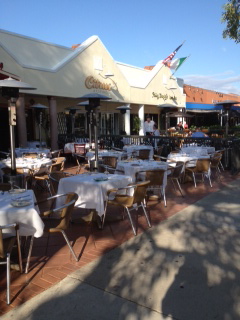
Less than 100 miles North of Naples, but worlds apart, Siesta Key is a place to relax, squish your toes in the sand, run into the waves, and watch the sunset with friends.  It is as unpretentious as it is beautiful.  The restaurants are relaxed.  Children are welcome.  Live music fills the air, mostly in a style that would cause Jimmy Buffet and Willie Nelson to feel right at home.

The restaurants are lit with colorful lights, which sends the message it is the holiday season year round?  The music and the incredible smells of restaurant specialties, such as coconut fried shrimp, pulled pork and barbecue, entice

visitors and locals alike.  Who would choose to eat at home when the restaurants offer such great food and entertainment.  But then, why not eat at home when the grocery stores have such a wide assortment of Florida grown fruits, vegetables and fish  A happy dilemma, indeed.  The housing ranges from very modest to elegant.  While there are rows of lovely high-rise condominiums, it is the smaller homes and cottages that are the most interesting.


Many families have boats docked behind their homes, necessarily small enough to navigate the shallow waters and slide under bridges to reach the Bay.  Situated right on the canals, you can’t help but wonder if the crocodiles are lying in wait in the grasses by the shore.

If it is country clubs you want, or  elegant surroundings, go further south.  But if you are enthusiastic about simple things, like walking alone or with children along the beach, and if you’re excited about watching the ever-changing colors of the water and the sky, visit Siesta Key.

Naples, Florida: a place of sun, water, and glamour

Naples prides itself on it’s natural beauty combined with the elegance of the architecture and the high-end shopping and dining options. Retirees flock here, from the less affluent in trailer parks to the very affluent tucked away in gated communities, with views of golf courses, marinas, boats and canals. The food is amazing; shopping abounds. Life in Naples is truly a change of pace for Northerners getting away from the ice and cold of winter.

Rich or not so rich, everyone has the luxury of the sun, the water and the climate.  What I noticed first about the seniors we encountered was that people appear to be healthy and physically active. Perhaps the easy availability of a multitude of fresh  fruits and vegetables, the broiled fish and shellfish, all make it easy to have a healthy diet. The climate encourages outdoor exercise, and the beauty supports a positive attitude. That was certainly the impact on me.

Water is a major attraction in the area.  Soft sand beaches give way to marinas with power boats.  Sailors go to areas with deep harbors such as Marco Island. Get away for a weekend, the winter or live here all year.  It will take your breath away.

Walking in Hilton Head’s Maritime Forest

Hilton Head Island, S.C. is a barrier island protecting South Carolina’s coast from the ocean.  It has oak and pine forests, salty marshes and sandy beaches.  It is rich with alligators, snakes, swamp lands and golf courses.  It is amazingly beautiful.

I was fortunate to have meetings on Hilton Head Island, S.C. with some of my favorite people.  We stayed at The  Inn at Harbour Town, a wonder destination by almost any standard.  But you can’t visit this island without spending some time either playing golf, biking or walking.  I am a walker.

Sea Pines Development, where our inn is located, is a planned eco-friendly development designed and developed by Charles and Joseph Fraser.  Every land owner is required to sign low impact covenants agreeing to protect the land and the environment. It was further designed to protect sea views and limit the removal of trees.  The original plan reserved  one-fourth of the land for recreation including lands developed with picnic areas, wildlife areas, and biking and hiking trails.

I was fortunate to take a tour of the nature trail.  Our guide, Rita Kerman, is a “Master Naturalist.”  She generously shared with us her knowledge of, and passion for, this special area.  She explained that we were walking in a maritime forest, distinguished because the trees and plants are compatible with the salty soil adjacent to the ocean.  She showed us sweet gum trees ringed with rows of small holes drilled into the bark by yellow-bellied sap sucker woodpeckers in search of the sweet sap. She explained that after the woodpeckers drill these holes, the sweet, sticky gum attracts and traps insects that then  become food for other birds. She further explained that the sweet gum balls are a source of shikimic acid, an ingredient in a vaccine for avian flu. This has been described as saving the world one sweet gum ball at a time!

We learned about red bay ambrosia beetles that are destroying red bay and wax myrtle trees, and are now attacking avocado trees.  The potential loss of trees seems comparable to the mass destruction of Dutch Elm trees in the Mid-West.

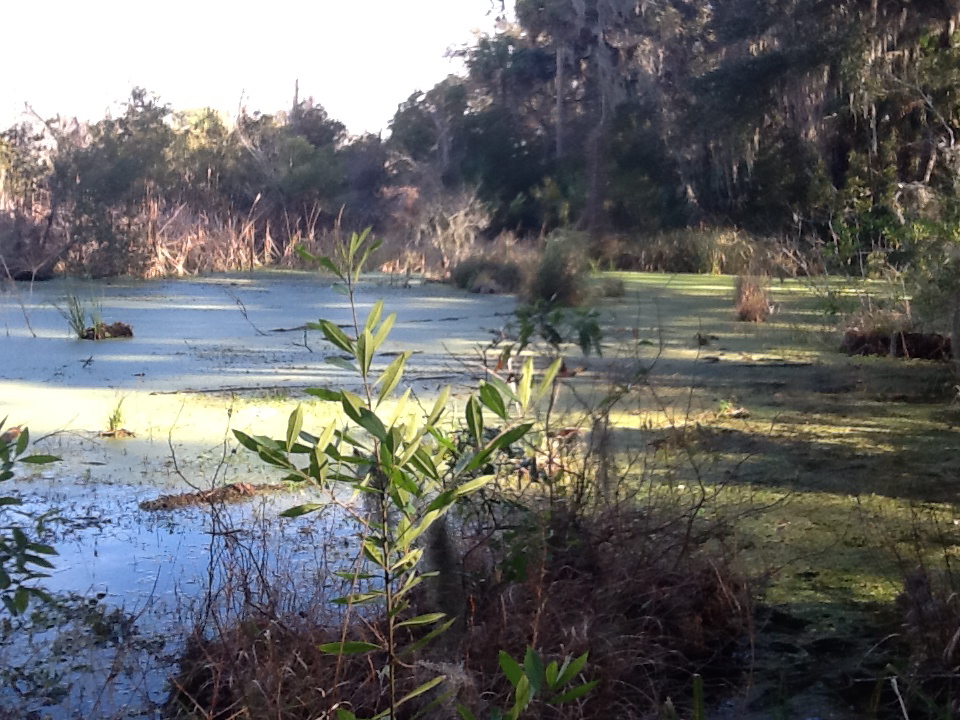
As we walked in the forest and immediately adjacent to ponds and man-made canals, we were reminded that alligators were nearby in the murky waters, where they live and breed in close proximity to human populations.

Near the end of our journey we came across a sign posted on the trail with a lovely poem that ended with these words, “Spend an hour with the earth and her nature and I promise that you”ll surely see, the truest meaning of the season…the one Best Christmas present you could receive.”

A beautiful walk it was, indeed.

Muir Beach Outlook and Stinson Beach

Meg has a J.D. in Urban, Land Use and Environmental Law. She focuses on maintaining the balance of community and environmental health, healthy lifestyles, and encouraging sustainable living.

As if our Saturday outing to Bodega Head was not adventurous enough, Jake and I decided to add another outing to our weekend. For our Sunday adventure, we went south on 101, cut through Mill Valley and Mt. Tamalpais to Hwy 1, past the Muir Beach outlook, and then on to Stinson Beach. What a way to spend a sunny Sunday afternoon!

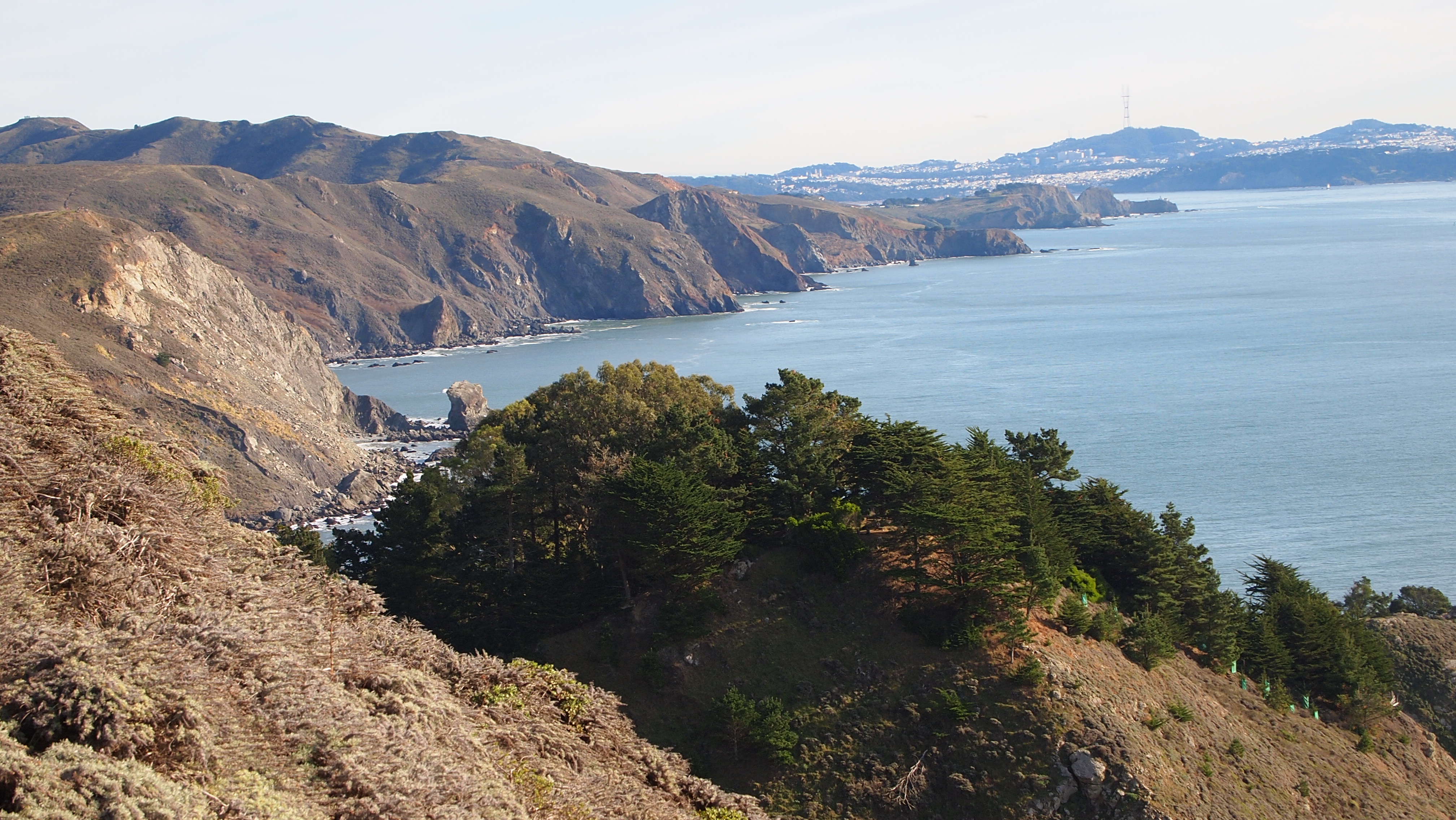
Our first stop along Hwy 1 was the Muir Beach outlook. I can’t remember exactly where the turnoff was, because it was an unplanned stop, but it was up the hill a mile or two from Muir Beach itself. We pulled into the parking lot, which wasn’t too horribly busy, parked the jeep, and walked over to the outlook. It was definitely worth the extra stop! With picnic tables and old military bunkers/lookouts, it doesn’t look like much at first. And then you see it….the magnificent view of the ocean, Muir Beach, the coast to the north, and even the Sunset District of San Francisco. I highly recommend making a pit stop at this place if you’re driving along Hwy 1!

Next, we made our way to our intended destination, the town of Stinson Beach. We decided to have a late lunch at a restaurant called the Sand Dollar. They had the most amazing crab cakes, and by far the best fish tacos I’ve ever had. Messy, but delicious. After lunch, we walked down to the beach and stood staring at the ocean. There were so many people there. Not so much that it felt crowded, just, lived-in. The weather was sunny, mid-60s, and it felt even warmer because we were somehow blocked from the wind.

As we drove north out of Stinson Beach on Hwy 1, we started discussing the different cultures we see just around the bay area. I’ve traveled quite a bit in my life, so I’m no stranger to culture shock, but I’ve never experienced so many different cultural norms in just a few hundred square miles. You have densely packed urban neighborhoods, expansive grazing fields, grape vines, small beach towns with 400 residents… Each pocket has a different experience to offer. And then you drive out of a small town along the highway, look to your left, and see a group of seals hanging out in the water. Of course, we’re not quite used to this yet, so we pulled over and took a picture, but to see all the different environments for both people and animals is quite spectacular.

Another adventure down, and yet another we’ll have to do again. California is just so remarkable, it may take us awhile to see it all.

Hiking Bodega Head

Meg has a J.D. in Urban, Land Use and Environmental Law. She focuses on maintaining the balance of community and environmental health, healthy lifestyles, and encouraging sustainable living.

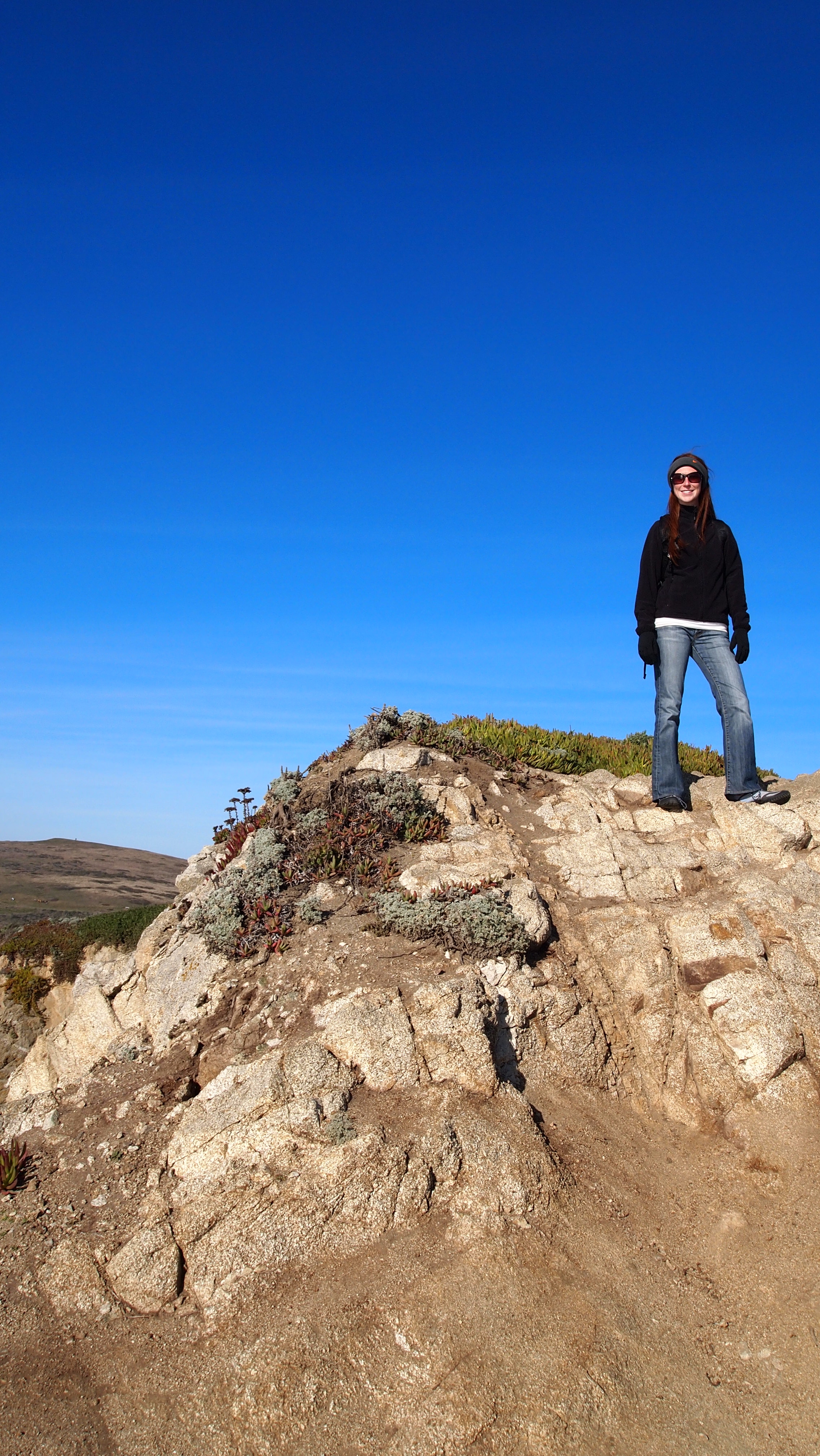
The exploring continues! Yesterday, my husband and I drove out to Bodega Head, a peninsula that juts out into the Pacific Ocean about 30 minutes west of Petaluma. The headlands are a beautiful place to hike around for the afternoon, and even do some whale watching. The hike around the outside loop of Bodega Head is about 2 miles, with an additional mile hike to the north. Of course, if you want to do some serious hiking, you can just keep going along the Sonoma Coast!

Our hike yesterday was lovely. The weather was perfect. 60s and sunny. There was a bit of wind for part of the hike, but overall it was quite nice.

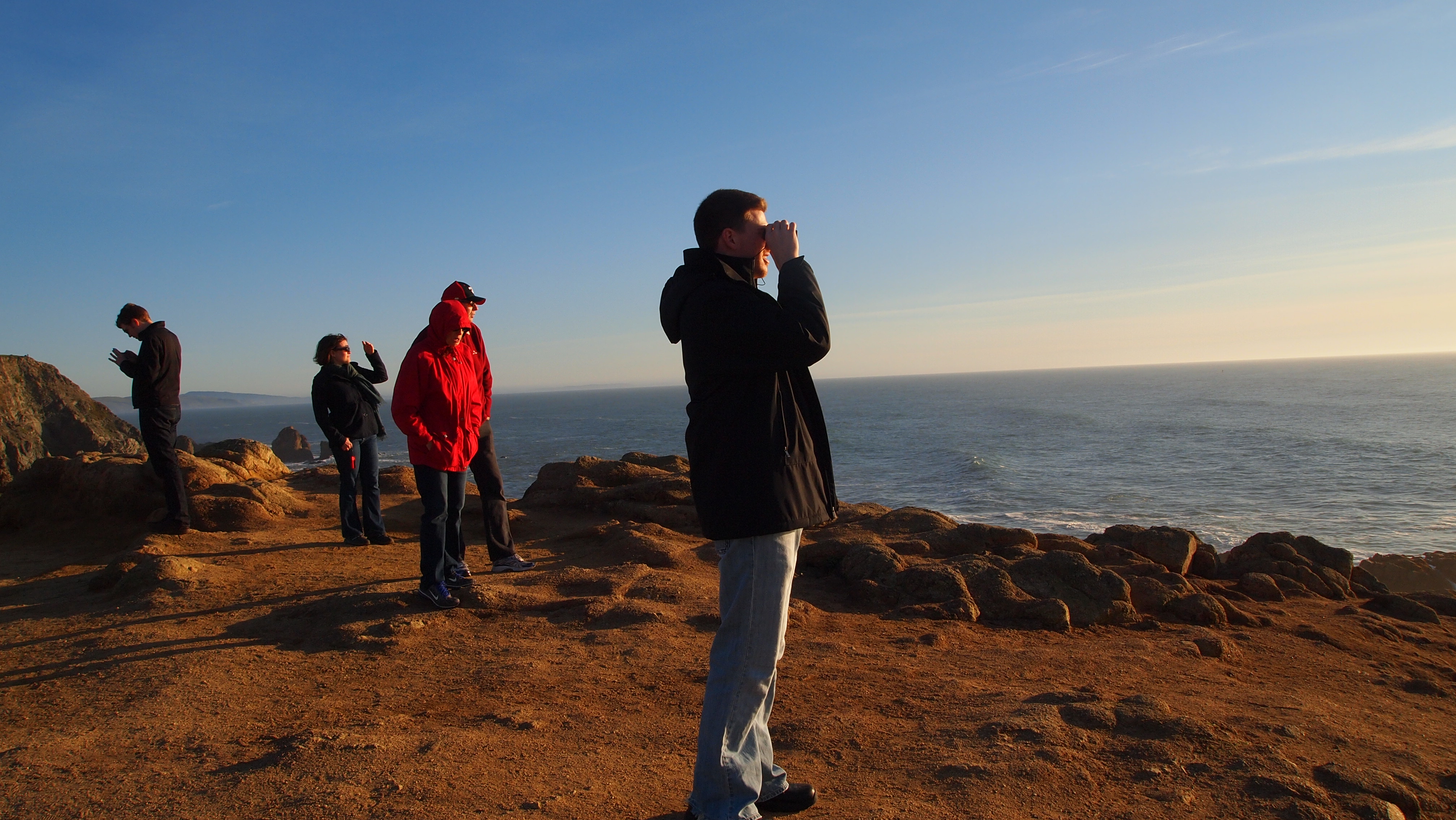
Our first stop was the whale watching point, where local “whale watch” volunteers were waiting to answer any questions and help with whale spotting. We saw a few spouts of water blowing up out of the surface, but did not see any tails. Still, it was an exciting experience.

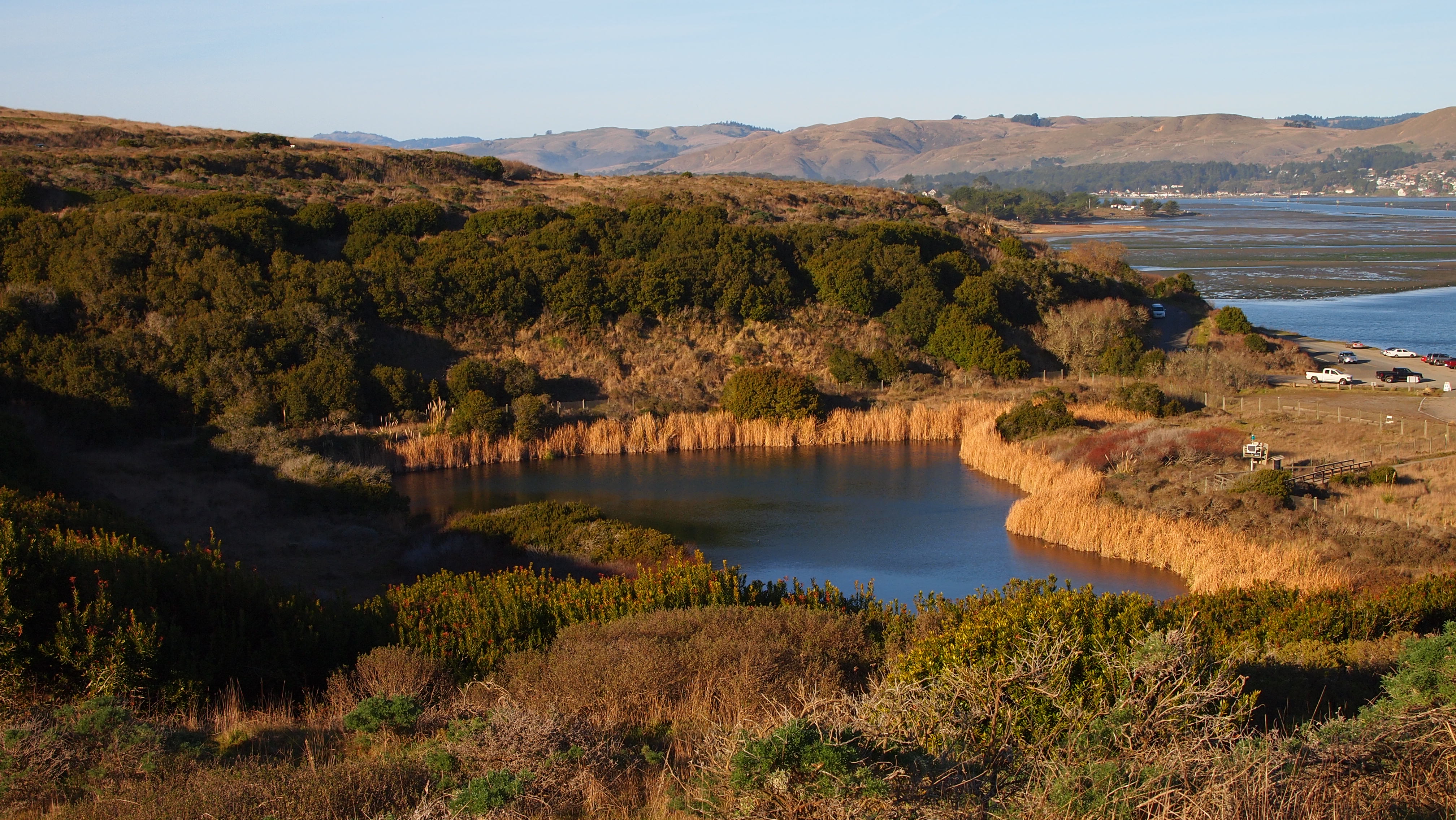
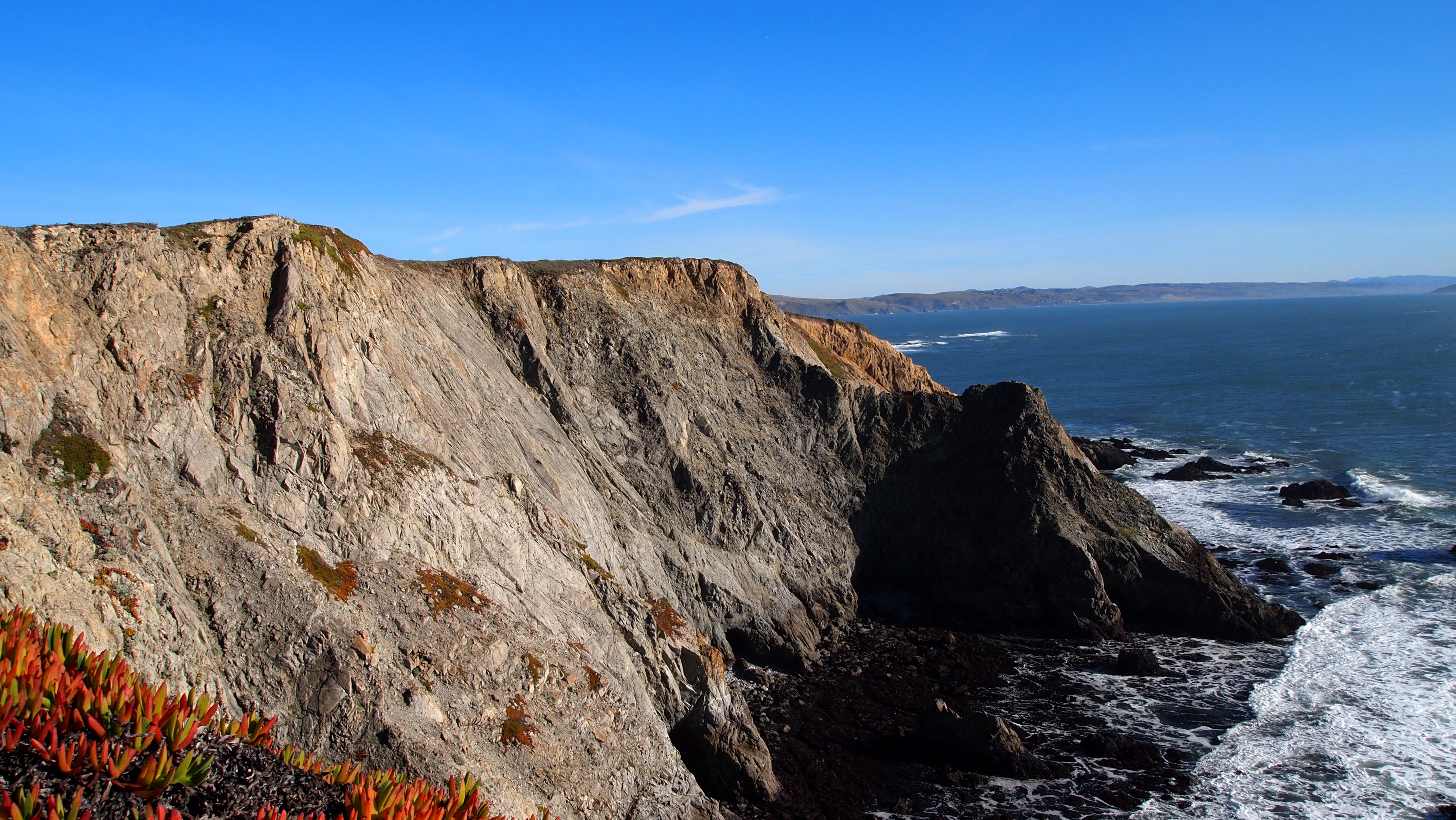
As we continued around Bodega Head, we saw beautiful cliffs, listened to seals and birds in the distance, and saw the “Hole in the Head” dug by PG&E in the 1960s. They had planned to build a nuclear plant on Bodega Head, so they dug a huge hole that would eventually house a nuclear reactor. However, the location of the hole is essentially right on top of the San Andreas fault line, so continuing the project would have been a horrible idea. The hole eventually filled up with rainwater and now serves as a freshwater pond for local wildlife.

Almost at the end of our hike, we had wandered off the beaten path and onto a sparsely used trail. We were still close to the road and the main trail, with the ocean in the background, and what did we see? A family of deer! We must have seen each other at the exact same moment, because right as I jumped up and said “Oh!” (to which Jake immediately thought I had seen something scary, like a snake!), all four deer turned their heads toward us with their ears straight up in the air. All six of us stood perfectly still for at least 30 seconds before any of us moved. As if I thought it would help, I started talking to the deer like I talk to my kids (our greyhounds) when I want them to be calm. Somehow, it worked, and though they wouldn’t let us get close, they did not run away. Eventually, we moved around them, even further off the barely there trail, and they continued grazing nearby. It was beautiful.

Bodega Head is definitely worth visiting. We only hiked about 3 miles, but it you can easily make it longer or shorter depending on where you want to go. Who knows where we’ll venture off to next time!

Hiking Muir Woods

Meg has a J.D. in Urban, Land Use and Environmental Law. She focuses on maintaining the balance of community and environmental health, healthy lifestyles, and encouraging sustainable living.

To kick off the new year, I suggested to everyone visiting CA for the holiday weekend that we get out and do something outdoors. I thought a hike through Muir Woods would be the perfect way to get some exercise and do some family bonding. We packed up two carloads of people and drove the windy road through Mill Valley to get to the ocean side of the hills, and in we went to the redwood forest. I do have to give a shout out to Jake and Tio for generously dropping the rest of us at the park entrance. They apparently had to park a mile away, hoof it back and forth for the rest of us, and they didn’t complain once…at least not to “management” (aka, me and Auntie). Thank you gentlemen!

So, for those of you who have never been to Muir Woods, it will be difficult to explain how magical and humbling this forest is. Even with all the other visitors walking through and taking pictures, you almost feel as if you’re stuck in a different time, perhaps even walking through a real life “Lord of the Rings” forest. The forest is filled with redwood trees, which according to the brochure, can grow up to over 300 feet tall. How amazing! The land was donated by the Kent family in the early 1900s as an effort to protect the forest from the booming logging industry. President Roosevelt declared it a national monument in 1908.

Muir Woods was very busy on Sunday, with nearly 50,000 visitors according to the park rangers. Nearby attractions were also very crowded, likely due to the beautiful weather we had in the bay area on New Year’s Day. Even the Alcatraz tours were sold out! Of course, that will be something we do when our little brother comes out to visit us in a few months. Oh, the things to see in California!

When I walk through these amazing places, I am reminded that humans are a fairly new species in the history of the world. Redwood trees, for example, live to be hundreds or even several thousand years old. It is a humbling experience to walk among them, and to realize how close we came to wiping them out in the logging of the early 1900s. It is a reminder that people need to be careful of the resources they abuse and to be cautious of our growing impact on the balance of nature.

The hike was indeed a wonderful way to begin the new year.

How We Spent Our Summer Vacation–Umbria

Umbria is not a place I had ever thought of going. Tuscany, of course; Umbria, why? But then again, why not? Having no real expectations when we began planning this trip, we became more and more excited about what we would find. Now that we have visited, I can definitely say that it was worth the trip.

We were in Umbria at what must be one of the most beautiful times of year. The landscape is often routine but coupled with hill towns that are anything but. We visited too many towns to describe them all, but our overall experience is enough to recommend to anyone that they include it on their travel list.

We began our first full day in Todi. Like Monticello where we stayed, Todi rises out of the ground with breathtaking beauty. While accessible by car, it is easier to park at the bottom of the hill and take the “funicular” to the top of the hill, ie. the edge of Todi.  A funicular is most effectively described as an outdoor escalator. Two churches were visible at the peak of the hill. There were so many churches in the small towns and cities we visited that I finally decided that building a small church was the best way for a family of affluence to be confident they could be buried in a prestigious building. Throughout the town, stone buildings clung to the hill as though they could literally slide down to the valley below. The residents seemed to be perpetually walking up and down–but never on flat ground. While open to traffic, the stone and brick streets are most used by walkers and a few motor scooters. Tourists were present but did not dominate the town.  The walls of Todi seem to have been built and rebuilt through the centuries as evidenced by the patchwork of brick and stone in the walls. Maybe the walls have, in fact, slid down to the valley as they have weakened. I don’t know. We ate lunch at the Umbria Restaurant, where the view was wonderful and the food quite good. We finished eating at 2:30, at which time the shops, churches and museums closed, not to reopen until 3:30. We immediately realized we would have to alter our travel schedules to adjust to the Italians. They certainly would have no reason to adjust to ours!

Every day seemed to be the best day of our trip. We visited Orvietto and Civita Di Bagnoriego our second day. Two hours in Orvietto was barely enough time to scratch the surface. Again we arrived by funicular. It is a quick way up these steep hills. It was lovely and seemed to be a place where people lived, rather than toured.  There was no funicular at Civita di Bagnoregio. This ancient city is separated from the land around it by a deep valley. It is accessible only by a long walking bridge. The route began with a hike from the car park followed by a steep and extended trek down the hill via a stone stairway, followed by an extended walk to the bridge. The bridge itself begins with a gentle slope before rising more steeply up to the wall of the city. We were told only nine people live here full-time. One of the residents said that their property had been in the family for hundreds of years. There are more restaurants than residents. I never quite figured that out! The food was quite simple but tasty. It was cooked in hot earthen ovens with hot coals continuously placed behind the cooking area. The simplicity of the food did not minimize the obvious challenge required to provide food and cold drinks to those physically fit enough to desire them. The simple church was lovingly tended. Instead of a center rug, decorative cut flowers had been painstaking spread in a pattern over the center aisle. The lives of the inhabitants were also simple. Some living quarters were behind gates and appeared to be carved out of the stone from the hill itself, with only iron fences between the residents and the steep slopes. Not a place for the frail or fearful. Certainly not ADA compliant!

Monday was devoted to St. Francis. I’m not Catholic, but he is my favorite Saint. The Basilica Santa Maria degli Angeli is at the foot of Assisi. It is there that St. Francis is said to have discovered his vocation and where he founded his first small church. This original church sits within the Basilica. During our visit, religious services were actually being conducted in the tiny interior church. St. Claire is buried in the Basilica.  After touring the Basilica we drove the few miles to Assisi. It is more beautiful than I had anticipated, although the tourism seemed incompatible with St. Francis’ humble message. I wondered how he would feel about it all.  More important, as things progressed, I wondered how he would feel about Assisi’s neighbor, Narni.

Narni is another walled town on a hill. A lovely little town, it is famous, if at all, as the location of an inquisition court where trials were held from about 1600 to 1880 A.D. Only fairly recently have the court and the adjacent cell been discovered. It sits immediately below a small church were, presumably the messages of Christ were preached from the pulpit. Below, the court and adjacent cell, where prisoners were held, are small, dark and completely under ground. They appear to have been intentionally hidden. Our guidebook advised us that records concerning this court were found in the Vatican archives sometime after 1970. The instruments of torture depicted in drawings at the site were cruel and barbaric, capable of inflicting horrible pain and humiliation on alleged heretics within a few feet of where others worshipped a loving God. What would St. Francis say?

On Wednesday we traveled to Montefalco, with architecture reminiscent of Latin America, and then to Bevsagna. Interesting towns, the first devoted to wines and linens. Lovely but we declined to buy.

There must be dozens of similar walled cities in Umbria, I have mentioned only a few. While it was a wonderful adventure, we were ready to return to K.C. Of course, we both knew that we will become restless to visit more beautiful and amazing places.  But without question if someone asks about my favorite vacations, I will tell them about Umbria.

How We Spent Our Summer Vacation–Le Mandorelle

How We Spent our Summer Vacation–Le Mandorelle

A week of our trip to Italy was spent with friends.  Together we rented a lovely country home and adjoining guesthouse outside of Monticello, Italy. The route included driving the steep and winding road through Monticello. We were warned to shift into first gear when we saw the Monticello city limit sign. We were glad we listened to the warning. Monticello is as dramatic as it is small.  We no sooner entered the small town than we were leaving it.  Our destination, Le Mandorelle, more than justified the challenge to reach it.  Its owners are former residents of Kansas City. The property is 12 acres and includes a residence with 3 large bedrooms bathroom suites, a guest cottage with two bedrooms, and two baths, 3 dining areas and a large patio area.

In addition to a pool, the grounds include lush gardens with roses in bloom all around us.  There were rows of grapes, olive trees, a vegetable garden and geraniums. The vegetable garden is for guests and we did not hesitate to enjoy the benefits. There were honey bees everywhere. While we were in residence the owners harvested the grapes, olives and honey. He is on the property almost daily, not to bother us but to attend to the farm. We see him in his yellow beekeeper’s protective gear as he harvest the honey. His biggest concern that day is the death of his queen bees and the urgency to replace them. With two days new queens are in residence and the hive is back in business.

Our host gave us a lasagna for our first meal which is truly delicious. It was made from a wonderful sausage, mushrooms, truffles, cheese and pasta. All it needs was to be heated. Despite our combined efforts it took two hours to figure out how to heat the magnificent but confusing gas stove. But with salad, bread and pasta we sat and talked about travels in the past and the week in front of us.  The fully equipped kitchen, outside pizza oven, and supplies of our hosts’ vegetables, wine and olive oil, made meals here a dream.

Finally, the panoramic view added to the pleasure of our residence. Not only did the hills roll unendingly into each other, but the farms and estates themselves followed the curves of the land. The view was not the patchwork of square or rectangular plots we see in Kansas and Missouri but consisted of waves of crops, plowed lands and forests of green. The colors of the landscape include deep greens and straw yellows. The crops included acres of sunflowers drying in place until the seeds are ready to harvest.  Our September stay enabled us to have the satisfaction of watching first hand the completion of the harvest.  It is a special place and we felt privileged to enjoy the property to its fullest.  But now, on to Umbria.

How We Spent our Summer Vacation–40 Hours in Venice

My husband is a wonderful travel planner. Together we have visited some of the world’s beautiful places. Among the beautiful places we have visited is Italy. We have been to Rome and Southern Italy. This year our travels led us to Venice and down through Umbria. We arrived in Italy by air and Venice by ferry. It cost 15 Euros to travel from the airport to the Rialto Bridge. From there we walked to our hotel. There is no real option but to walk. While Venice is famous for gondolas; and while there were also water ferries and water taxis, Venice is simply a place for walking. There are no automobiles in the city which means no taxis. Baby strollers, wheelchairs, bicycles and motorcycles are rarely seem and barely helpful. The combination of bridges, dead-ends and sharp corners aren’t conducive to any other form of travel, and so we walked.

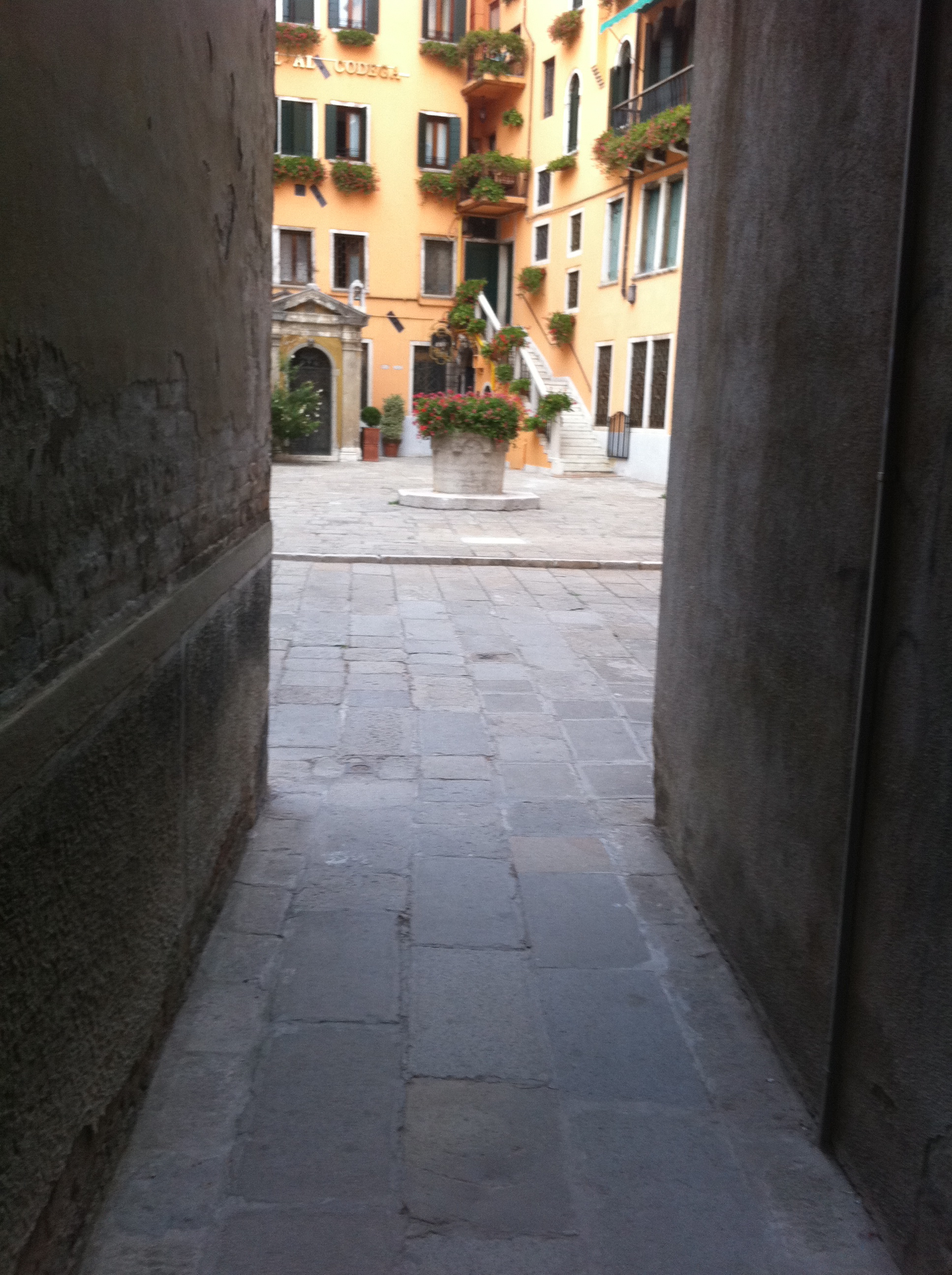
Courtyard in Venice

We easily found our hotel, “Al Codega”, in the heart of Venice. Recently remodeled it was a perfect pick by my travel savvy husband. Close to the Rialto Bridge and Saint Mark’s Square, it was an oasis at the end of a busy day of sight-seeing and shopping. The decor is charming. There is a small hotel bar with service by the concierge/ bartender. He can give you travel advice while serving drinks and offering up chips and peanuts, the only food items available. The bar and breakfast areas had a computer and Wi-Fi access. Sometimes they worked!

When I called Meg to tell her we had arrived, I was amazed to find that my iPhone automatically adds the international access numbers when placing calls to the states. This was new to me. l just punched my phone’s automatic dial for Meg’s number and within seconds heard her voice.

Beautiful gate in Venice

There are a lot of wonderful places to visit in Venice. We missed most of them. There is really no reasonable way to move quickly around Venice to see it all. But considering the beauty of Venice we really didn’t care. Many of the streets, buildings, the canals were breathtaking. We walked through ancient streets and never knew what we were going to run into next. We could find ourselves in blind alleys that led nowhere or come upon a gallery or museum or courtyard. Almost every courtyard had a covered well, presumably once a source of drinking water. And while people sometimes complain about the smells in Venice, the only thing we smelled was the onions, garlic and similar smells of the many restaurants.

We visited the Guggenheim, Harry’s Bar and a host of beautiful, if lesser known churches. We didn’t visit Saint Mark’s Cathedral, the line was too long and our visit too short. We also missed the Vivaldi concerts. They began at 10 p.m. and decided we were unwilling to attempt to find our way back to the hotel that late at night. Venice is simply not a city where we could call a cab if we were lost.

The Guggenheim was lovely. We enjoyed the art, but it was the building, and the proximity to the main canal that is most memorable. We also had a wonderful visit to Harry’s Bar, a well-known bar catering to those willing to spend a bit more for drinks just for the pleasure of people watching.

It was with regret that we left Venice but after 40 hours we said farewell to the city and were on to the next leg of our adventure.