Valle De Vinales: A Cuban Shangri-La

Shangri-La in Cuba you ask?  Well, why not.  Shangri-La is described by James Hilton, the author of 1933 novel, Lost Horizon, as “a mystical, harmonious valley”.  It is depicted in the movie by the same name as a place in many ways comparable to the Eden of the Bible, a place of permanent happiness in which the fertile soil, the kindness of the people and the beauty of the land, creates an environment of peace and contentment.

The Valley De Vinales seems to be such a place.  Only 51 square miles, it is located in the Pinar del Rio Province of Cuba. The Valley has been recognized as a UNESCO Heritage site since 1999 for its combination of “karst” [1] landscape,  in conjunction with its rich culture of architecture, crafts, music and traditional agricultural methods. [2] The valley’s rich soil and temperate climate make it a breadbasket of Cuba.

Traditional farming, relying heavily on use of oxen, enhances the romantic image of the area.

But tobacco is king in the valley, as a result of the combination of rich soil and temperate climate touted as producing the finest quality of tobacco.  While food crops are traditionally cultivated, tobacco farming combines traditional methods with more modern farming techniques.

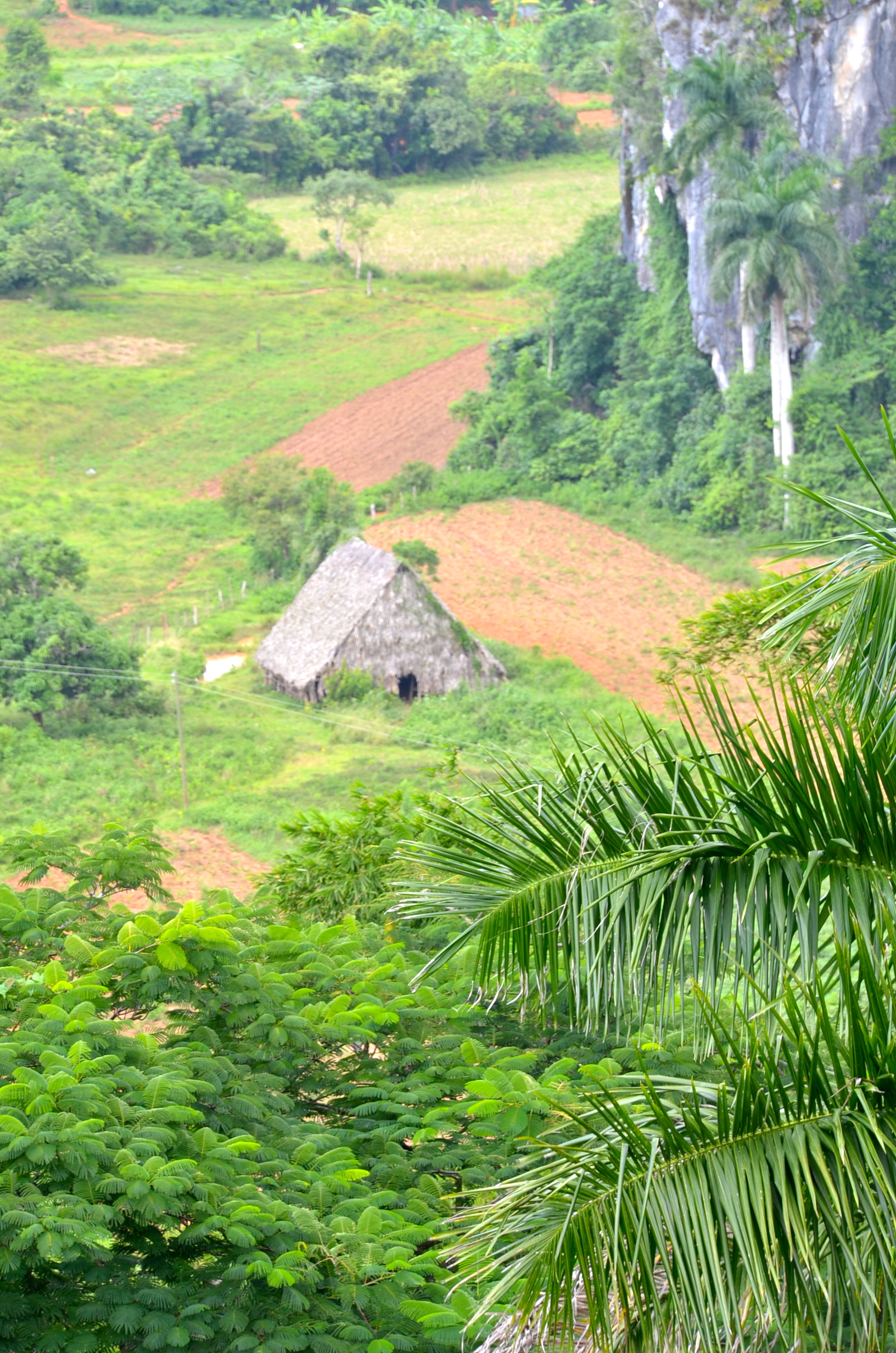
After the harvest of the tobacco, the leaves are dried in specially constructed barns before being sent to cigar factories in nearby Vinales. The thatched barns in which the tobacco is dried are both practical and graceful.  The owner of the tobacco plantation we visited could be the model for the Juan Valdez coffee ads.

While in many ways a blessing for Cuba, it was tobacco that expanded slavery in Vinales.  But Vinales was both curse and blessing, for it was the mountains surrounding the valley that became a home for runaway slaves, who were able to live for extended periods of time in the caves that stretch throughout these mountains.  The descendants of those slaves thrive today in this rich multi-ethnic culture.

The beauty of the valley and the mountains that surround it are not to be soon forgotten.  The Vinales National Park located in the valley helps preserve the historical value of the area.  While tourism has expanded throughout the valley, tourist areas fit into and, in some ways enhance, the natural beauty of the valley.

[1]  Karst is a special type of landscape that essentially identifies a “sinkhole” or sunken area of land.  Karst typically is in an area of soluble rock such as limestone.  The low mountains in the valley are quite fragile, as a result of the erosion of the structure of the mountains by rain and weather, leaving the caves that are described above.  It is this same fragility that causes the depression in the land.

[2]  Even the UNESCO description of the basis for declaring the Valle de Vinales evokes the image of shangra-la!

Have You Voted?

Have you voted.  I have!  I feel really good about it.  I smiled at all of the other early voters as though we have a special bond.  We do.  Whether we agree on all of the candidates, we all understand the importance of voting as an essential element in our Constitutional rights and freedoms.  Our respect as voters for our nation and our democracy ties us more closely together than any of our differences.

If you haven’t voted yet, take the time to do so now.  You will feel better for having done so.  Then wear your “I Voted” stickers as a reminder to your family and friends to vote.  And don’t forget, at the end of the day we are all in this together.

Women’s Suffrage And The Importance of Voting

Because we are on the eve of a national election, I think it is important to remind ourselves, as women, of the sacrifices made by earlier women who worked and sacrificed to secure this basic right for women–the right to vote.

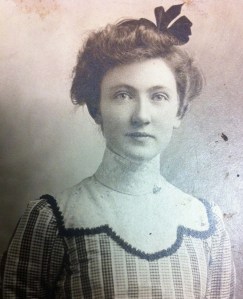
My grandmother, Mary Lewis, was an early feminist and suffragist.  My grandfather, Frank Mesle, being a wise man, wooed her by respecting her beliefs and making them his own.  One of his early letters to her in 1910 included the following quote from an unknown source:  “When the husband gets ready to regard his wife as an equal partner…when he will grant her the same privileges he demands for himself; when he is willing to allow his wife to liver her own life in her own way without trying to ‘boss’ her, we shall have more true marriages, happier homes and higher civilizations.”

It was ten years later, when my own mother was one years old, that women gained the right to vote.  I was born a mere 26 years later.  Not a very long period of time in the history of this country.  But worlds apart in our understanding and expectations of women’s role in society.

Until the  mid to late 1900’s, women were, in many significant respects, under the legal control of husbands and fathers from birth to death, without the right to own property, vote or participate meaningfully in business or government.  The obstacles to equality for women are nowhere better illustrated than in the Supreme Court’s 1873 decision in Bradwell v. Illinois. [1]

Born in 1831, Myra  Bradwell’s husband was a successful lawyer, judge and member of the Illinois General Assembly.  Myra was a teacher, respected citizen and active in the community.  She founded a legal newspaper and supported women’s suffrage reforms, in addition to  engaging in a wide variety of other activities of no small import. She undertook legal training with the hope of being admitted to the Bar of Illinois.  Her application for a license to practice law was rejected by the Illinois State Supreme Court because, as a married woman, she could not enter into any legal contracts–a basic requirement of practicing law [2].  Ultimately Bradwell appealed to the U.S. Supreme Court claiming a violation of the 14th Amendment.  In writing the decision adopted by the  Supreme Court, in language feminists can quote to this day, Justice Joseph Bradley wrote: “The natural and proper timidity and delicacy which belongs to the female sex evidently unfits it for many occupations of civil life…[T]he paramount destiny and mission of woman are to fulfill the noble and benign offices of wife and mother. This is the law of the creator.”

Undeterred by the Supreme Court’s ruling, and presumably rejecting the notion that  God believed women should be so limited, feminists continued to press for Constitutional protections, primarily focused on the right to vote.  Susan B. Anthony, Elizabeth Cady Stanton and others, dedicated their lives to the struggle for women’s rights: woman’s suffrage, the right of women to own property, retain their own earnings, and to have access to academic opportunities.  From as early as the 1850’s, Anthony and Stanton traveled throughout the United States and Europe in support of women’s rights.  On July 4, 1876, in Philadelphia, Anthony presented on behalf of the National Woman Suffrage Association the  Declaration of  Rights of Women of the United States [3]. Her lengthy speech, while compelling, [4] is particularly powerful concerning the denial of a woman’s right to vote:  “ Universal manhood suffrage, by establishing an aristocracy of sex, imposes upon the women of this nation a more absolute and cruel depotism than monarch; in that, woman finds a political master in her father, husband, brother, son….”  Stanton died in 1906, 14 years before her vision of universal women’s suffrage became a reality.  In 1979, in honor of her role in the struggle for women’s rights, the U.S. Mint issued a dollar coin with her image.

The final struggles and success of the so-called suffrage movement is well described in the powerful movie, Iron Jawed Angels[5].  This movie focuses on the period immediately leading up to the passage of the 19th Amendment. It tells the story of the relentlessness of women leaders like Alice Paul and Lucy Burns, who through the early years of World War I fought tirelessly to persuade President Woodrow Wilson to endorse their right to vote.

As the U.S. was entering World War I, some 35 years after the Bradwell decision, suffragists began to picket of the White House.  Their theme was questioning why we should be fighting a war abroad in defense of Democracy when women at home did not experience Democracy.

Despite romantic descriptions of women’s delicacy and timidity, women engaged in the feminist movement behaved, and were treated, without regard to any such perceptions. Their leaders were fined and then imprisoned for 60 days for “obstructing traffic”. They continued to picket.  Alice was sentenced to 7 months in prison.  She was ultimately placed in a solitary confinement and began a hunger strike. Attempts were made to have Alice declared insane. [6] Ultimately she was  force fed by her jailers, who repeatedly fed her through a tube down her throat.  Denied access to the public, their families and even lawyers, it was the husband of one of the leaders of the movement who ultimately advised the press of the treatment of these women.

Learning of the treatment of the suffragists, on January 9, 1918, President Wilson reversed his opposition to women’s right to vote. He urged  Congress to vote in favor of a Constitutional Amendment guaranteeing women’s right, stating:  “we have made partners of the women in this war…Shall we admit them only to a partnership of suffering and sacrifice and toil and not to a partnership of privilege and right?”

On June 4, 1919, the U.S. Senate passed the Nineteenth Amendment, guaranteeing the right to vote, by one vote.  On August 26, 1920, Tennessee became the 36th state to ratify the amendment.  The Amendment became law.

The sacrifices of women like Alice Paul were life changing. Without her bull-headed resistance to the status quo, women’s suffrage may well have been delayed for years.  Her sacrifices and the sacrifices of women before her, secured the beginnings of real change for women’s status as full members of society.

It is important that all women honor and acknowledge the sacrifices from the past.  Please vote on November 6, and every election.  Vote for the candidates of your choice, but vote.

[1] Bradwell v. Illinois, 83 U.S. (16 Wall.) 130 (1873).

[2] It is not to be ignored that she was denied a license because legislatures controlled by men denied her, and all women, basic rights to own property, enters contracts, keep their own earnings and otherwise control their own destinies.

[3] The original Declaration of the Rights of woman and the Female Citizen was written by Olympe de Gouges a French patriot, in 1791.  It is modeled on the Declaration of the Rights of Man and of the Citizen, adopted in 1789 by the National Constituent Assembly during the French Revolution.

[4]  This speech also includes a quote from Abigail Adams, who said: “We will not hold ourselves bound to obey laws in which we have no voice or representation”.

[5]  Released in 2004, the movie starred Hillary Swank.

[6]  Historically,  male doctor, refused to find her insane, stating that bravery in women has sometimes been mistaken for insanity.

________________

The views presented in our blog do not represent the positions of our families, our friends or our employers.

Want To Contribute? Don’t Know How?

Hurricane Sandy left destruction in its path from the Caribbean to Canada.  Hardest hit within the United States are areas along the Coast in New Jersey and New York:  Lower Manhattan, N.Y., Staten Island, N.Y, Atlantic City, N.J. Bay Head, N.J., Jersey Shore, N.J., Hoboken, N.J., the list goes on.

You want to help but you don’t know how.  I was in the same situation.  The easiest solution for me was to enter “Hurricane Sandy, Relief”.  The first charities I found were the American Red Cross, AmeriCares and the Salvation Army.  Finding fewer charities than I expected I next easily determined that organizations such as Save the Children, the Jewish Federations of North America and OxFam (at least in Haiti) have already identified themselves as organizations also committed to providing assistance to the victims of Hurricane Sandy.  There are others I have not been able to research.  Many will also be excellent choices, including a number of charities within the states and cities impacted.

The easiest way to contribute is to go to any of the above web sites or find your favorite charity, that has agreed to fund relief to hurricane victims in the U.S. or the Caribbean.  Most of these organizations make it easy to contribute without writing a checking or addressing and stamping an envelope.  Just follow their directions, indicate the amount you wish to contribute and answer the simple questions in the contribution request (including providing your credit card information).  It is easy, it provides charities virtually instant access to your contribution so that storm victims have access to resources they urgently need.

It is easy, fast, effective.  It is life saving!

____________________

The opinions on our blog are not the opinions of our families, friends or employers.

The Calm Before the Storm

My cute Mama once sent me a beautiful little box engraved with the saying, “Life is not about waiting for the storm to pass. It’s about learning to dance in the rain.” I certainly don’t feel like I’m about to run into a storm, but with all the craziness leading up to November 6th, I’m going to be prepared for anything.

In order to mentally prepare for the exciting days ahead, I’m turning to my go-to method of “going to my zen place.” Usually this consists of an early morning run and a drive to a beautiful spot, with a big body of water, where I can collect my thoughts. However, today I’m going to have to rely on my camera. Here are a few of my favorite “zen” places.

View of San Francisco Bay from Coit Tower.

View of the Golden Gate Bridge from the Marina District in San Francisco.

View of Port Denarau, Fiji.

And last, but certainly not least, the view looking south toward the city from Muir Beach Outlook.

Off to my zen place… have a great weekend everyone!

Justice In Our Courts: A Fair And Impartial Judiciary

The U.S. Constitution provides for a separation of executive, legislative and judicial powers. [1]  The role of the judiciary is unique among the branches of government.  Our courts are accountable to the United States Constitution, federal and state laws, and the constitutions of the individual States.  Most citizens are in agreement that they want judges to be accountable to the law and not to special interest groups.

In 1940, in response to the increased role of politics in the selection of judges, the voters of Missouri amended the Missouri Constitution when they enacted the “Nonpartisan Selection of Judges Court Plan”.  Identified as the Missouri Plan, it has, since that time, served as a model for 34 other states.  Now that plan is challenged in Missouri by a proposed constitutional amendment that would significantly expand the role of politics in the selection of state appellate and supreme court judges.

The current “Missouri Plan” provides for the selection of state supreme court and appellate judges utilizing a non-partisan commission whose role is to review and evaluate candidates for judicial vacancies and to present the Governor with a panel of 3 candidates for a judicial position, from which the governor selects the successful candidate.  The 7 member commission is chaired by a Missouri Supreme Court judge [2], and includes 3 attorneys, elected by Missouri attorneys, and three lay members appointed by the Governor.  The lay members and lawyers serve staggered 6 year terms.  The governor selects the lay members. The commission picks 3 candidates for the judicial position.  The governor selects the judge from the 3 candidates.  A sitting governor is able, in a single term, to select only 2 lay members, giving the governor control over fewer than 1/3 of the members of the commission.  Over a period of two terms the governor has control of three appointments, still a minority of the commission.  In recent years the selection process has been modified to provide increased transparency in the selection process by providing the public significantly more information about the candidates.

On the November 6, the voters will be asked to consider Proposition 3, a proposed amendment to Missouri’s Constitution that seeks to expand the role of politics in the selection process.  Inherent in the proposed changes to Missouri’s Non-Partisan Court Plan is increased politicalization of the judiciary. The proposed constitutional amendment would remove the Supreme Court Judge from the commission and give the governor the authority to appoint 4 members of the commission, 2 immediately on taking office and two more 2 years after taking office, thus giving the governor the ability to appoint in excess of 50% of the commission in his/her first term.

There is currently no organized support for this Constitituonal amendment.  Neither Governor Nixon nor his opponent supports the amendment.  What, then, is the problem?  Elected officials who support the Constitutional amendment in Missouri also support the direct election of appellate judges.  Why you say?  Purportedly the proponents are seeking increased accountability of judges.  But to whom?

The Missouri Plan was implemented in response to efforts by political bosses to control the selection of judges, particularly at the appellate levels.  The perception was that these political bosses wanted judges who were loyal to them and not to the law.  This risk can be the same whether the perceived loss of independence results from the dominance of the governor over the selection process or the need of judicial candidates to face elections, particularly in large metropolitan areas where the cost of an election can be significant, thus requiring them to solicit the large sums of money necessary for political campaigns.

The role of our courts is to fairly and impartially enforce the laws and to do so without bias. Experience in states including Texas and Illinois suggests that the  election of appellate judges significantly changes the dynamic of the court system. The challenge associated with requiring judges to solicit significant campaign contributions and to campaign for office includes, almost necessarily, an expectation by donors that judges will have some accountability to them. How can this be a benefit to the fairness of the judicial process?  It can’t.

When you are asked to support changes to the processes by which judges are selected, ask yourself whether you would want to appear before judges who are responsible to the law, or who are indebted to one or more special interest groups.  Hopefully, the answer is quite clear.  Citizens should reasonably expect that judges are fair and impartial, responsible to uphold the Constitution and be governed by it and by other duly enacted federal and state laws, they protect individual rights and that they provide access to the judicial system.  There is no place in these responsibilities for judges who are–or appear to be–subject to the desires of any special interest.[3]

John Johnston, Past President of the Missouri Bar and strong advocate for the retention of the non-partisan court plan summed it up:  “When we select judges, we want people who will be good umpires, not players.  We want people who will set aside any feelings they have about who should or who should not win.  We want people who will apply the rules that we made as a people through our constitution, or that our elected representatives made through laws, or that our governors made through executive policies.  when any of these rules conflict, we want judges who will say that the people win, and that our most direct voice, the constitution, wins.”

Perhaps the Federalist Papers say it the best:  “there is no liberty, if the power of judging be not separated from the legislative and executive powers.” And further: “The complete independence of the courts of justice is clearly essential in a limited Constitution…” [4][5].

Isn’t that what we all want?  I think so.

[1]  U.S. Constitution, Articles I, II and III.

[2]  By tradition, the Chief Justice sits as the chair of the appellate commission.

[3]  Experience suggests that it is in statewide and major metropolitan elections that we face the greatest challenges associated with expensive elections and the associated concerns about contributors attempting to influence judges.

[4] See our post on The Federalist Papers and the Judiciary’s Role in Government, dated Dec. 29, 2011.

[5] See our post on U.S. Role in World Affairs, Pt. 2: Courts as a Model and Trusted Protector of the Rule of Law, dated Nov. 8, 2011.

________________

The opinions expressed in this blog are not the opinions of our employers, our families or our friends.

Unless You Are A Fish

As Hurricane Sandy approaches the East Coast, citizens who live directly in its path are urged to evacuate, especially from low-lying areas along the water.  Schools are closed, transportation is virtually at a standstill.

So, East Coast residents, take heed.  Unless you are a fish, find shelter.

Good luck and be safe.

Visit Bob’s House: For A Wicked Halloween

The word is out.  K.C. Channel 5 News found him.  The news station coverage of Bob’s house begins with the wicked clown face I presented on our blog on Oct. 1.

I love Halloween.  Actually, I love all holidays.  Give me a reason to celebrate and I am happy to join the fun.  But my passion for the holidays is nothing compared to Bob’s.  While he loves decorating for Christmas, as do many of our friends, he is unique in the wealth of decorations that fill his house before Halloween.

Bob’s house is intentionally creepy.  It is filled with vampires, witches, spiders and other symbols of the holiday.

Skeletons in holiday attire, party outfits and wedding gowns are found in abundance.  The skeletons are fake–

The coffins are real.  Well, sort of.  He paid to have multiple coffins built, in the line of coffins from the early West. Like everything else, they are decorated with colorful displays of ribbons, holiday lights and flowers.  They are overrun with spiders and more (fake) skeletons.

The decorations are the highlight of a visit to his house at Halloween but he does not stop there.  I have it on good authority (Bob) that he is preparing his special homemade goodies for the trick or treaters.

Are you ready for Halloween?

Goodbye Havana

Our trip to Cuba ended much as it began. We were overwhelmed by the beauty and the poverty of this tiny island nation.  But now, after months of preparations, days filled with visual images we will never forget, and photographs that will end up in posts far into the future, it was finally time for us to pack our bags for the journey home.

As we were preparing our bags Saturday night for an early morning departure, I watched the hustle and bustle of Havana.  Neither the city’s great beauty, nor its decay, were visible in this nighttime shot.  Left to admire is just the vibrancy of the city.

It was a memorable experience.  While our visit only touched the edges of this wonderful country, I feel fortunate to have had the opportunity to experience its rich culture, wonderful people and incredible beauty.

If you haven’t experienced Cuba, put it on your bucket list!