Edward Glaeser’s “Triumph of the City”

Meg has a J.D. in Urban, Land Use and Environmental Law. She focuses on political organizing, environmental policy, and sustainable living.

During the second half of law school, I decided to venture outside of our building and take a few classes in the Public Administration program. I met some wonderful people, great professors, and was able to explore new ideas and approaches to looking at public issues. In one of my classes with Adjunct Professor Jim Scott, I read a book called Triumph of the City, where I explored the structure of a city and what it provides for society. At the same time, I was doing some research about micro-lending with one of my manager’s at MARC, so the idea of investing in human capital really jumped out at me.

Here is an excerpt from my 2011 paper on community development ideas (which overall focused on what tools could be used in Kansas City). This section of the paper revolves around Glaeser’s Triumph of the City, and what ideas I derived from reading the book. Enjoy!

I. The Structure of a City and its Indication for Society – A Look at Triumph of the City
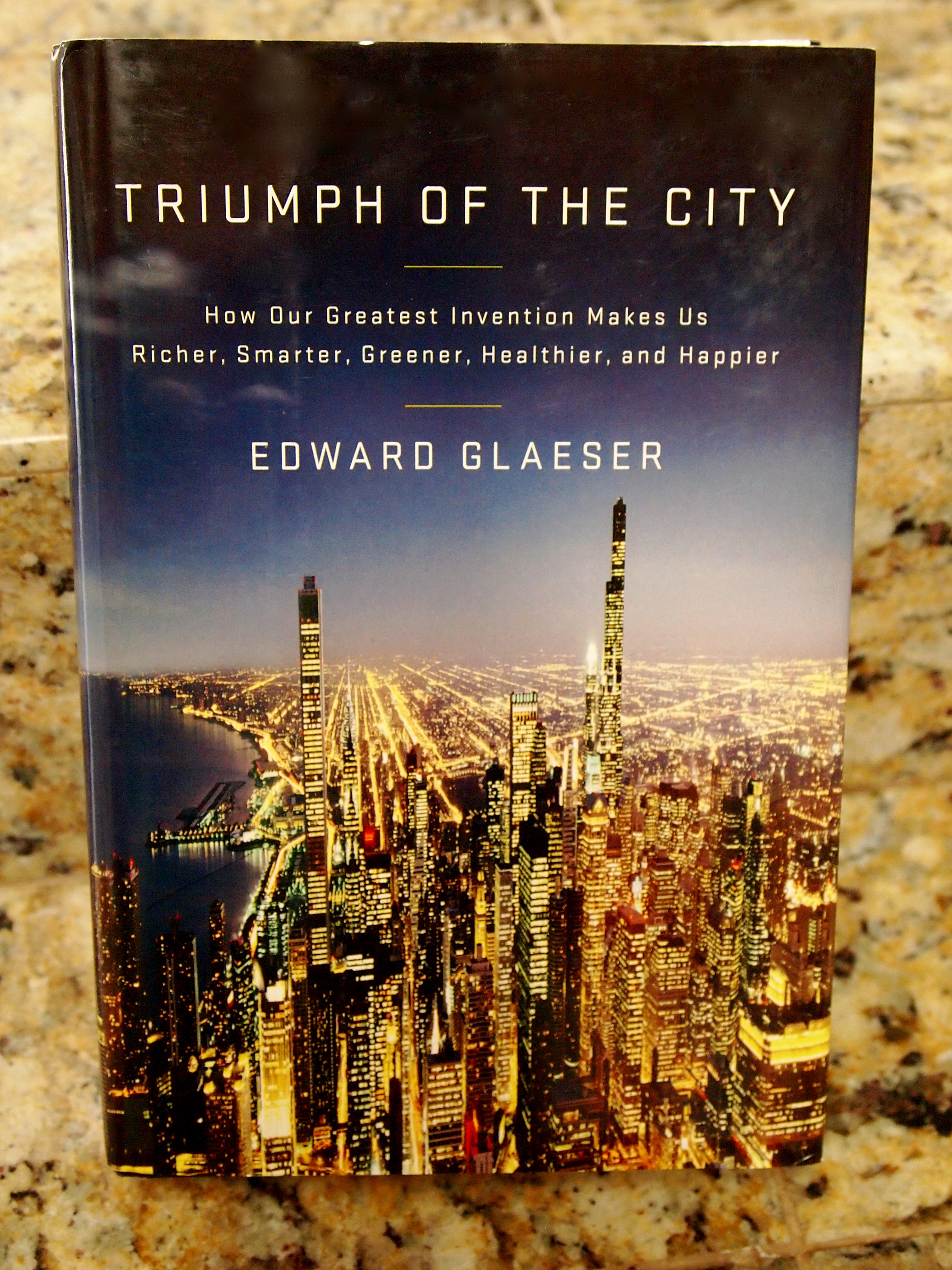
In his book Triumph of the City, Edward Glaeser argues that the city is the optimal structure for human interaction because it promotes human relations, innovation, and the necessary investment in human capital to make society thrive. He argues that cities are healthier and more environmentally friendly than living in suburban or rural communities. Even for cities that have suffered economic hardship, Glaeser holds strong to the idea that the people of a struggling city have a better chance of success than those living outside of cities, because cities foster creative thinking, communication, and investment in human capital. Ultimately, human capital is an essential factor for maintaining a successful community.

Glaeser’s primary argument in this book is that the most important investment you can make for a city is in education and innovation, which ties in with his idea that investment in human capital allows the people within the community to be more productive, make more money, and even be happier than those living elsewhere.[1] Using New York as an example of the archetypal city, he shows how the cluster of human capital helped the city remain successful through several different turnovers of the primary industry. From transportation and shipping in the 1800s, to the garment industry in the 1900s, and then the breakthrough of financial entrepreneurs in the 1970s, New York has remained a successful city through constant innovative thinking and implementation of new ideas. We also see the same example of metropolitan success through the education and ideas in Bangalore, the technology of Silicon Valley, the thinkers of Athens, and the collection of scholars in Baghdad.[2]

Cities foster face-to-face interaction, which helps create an efficient means of relaying ideas and other communications by allowing people to explain things to each other in person, rather than over countless e-interactions that inevitably result in misunderstanding and miscommunication. With multiplicity of cultures mixed together within the bounds of a city, this face-to-face communication is also important to respecting each other’s customs and traditions.

One city that did not succeed the way most cities do is Detroit, but Glaeser urges that Detroit’s decline resulted from a single-industry focus and the lack of investment in human capital.[3] With a struggling auto industry, the city was doomed to decline because its leaders failed to attract new minds and innovative ideas the way New York had done in the 1970s. As a city filled with less-skilled workers focused within a single industry, Detroit had no one to pick up the slack of the declining auto industry which consumed the city. There was a detrimental lack of re-education in the community, which meant the city ultimately lacked the resources to entice new industries.

There are several reliable predictors of urban growth that Glaeser emphasizes, including education and the presence of a poor population. Education is important because the productivity of a city is dependent on the level of edUcation of the population living within the city.[4] Glaeser also points to a city’s poor population as an indicator of the city’s success. Great cities attract poor people, and therefore have a more prevalent poor population than those cities which lack public services and amenities that poor people want and need, and are unable to obtain in rural slums.[5]

One distraction I find in his text is Glaeser’s insistence that the level of education and presence of a poor population are two important indicators of a city’s success, yet he also seems to think they provide the greatest obstacles. He describes the U.S. education system as providing too little learning to too many children. He also describes the overwhelming cost of maintaining public services for cities when the poor populations are largely unable to contribute to such cost. For both of the reasons described above, the wealthier populations move out into the suburbs, where private or charter schools employ better teachers, and money put toward public infrastructure benefits those supporting the cost. It seems to me, the very indicators that Glaeser lists as the most reliable predictors of a city’s success are also the very conditions that then push the money outside of the city, which only furthers a city’s decline.[6]

A city is not necessarily the best structure for everyone at every time. While high-density living is a good structure for encouraging new ideas and innovation, there is also something to be said for the importance of fostering stronger, almost family-like relationships within a smaller community. Strong urban neighborhoods can sometimes create their own familial relationships, but that assumes the members of those communities reach out to each other in person. Some of the same problems people face with the ability of modern technology – mostly, the ability to go through an entire day without actually having to deal with anyone face to face – are the same struggles that people face in the big city. People can be anonymous, they can avoid confrontation, and they can be ignored simply because of the sheer mass of people surrounding them. In a large city, a person can become just a number, whereas in smaller communities, everyone has a name.

Overall, Glaeser’s focus on investment in human capital and strengthening urban cities is very important for halting urban decline, however, there are other factors to consider when determining what the best structure is for society. The city certainly promotes productivity, provides a centralized location for innovation and communication, and has many environmental benefits. Additionally, there are a number of reasons why a city may not be ideal, including a decreased sense of safety, rising costs to support declining public infrastructure, and the potential lack of the sense of community.[7]

However, regardless of the structure, the need for education and entrepreneurship is essential for the continued growth and productivity of any local community. Whether in a city or a rural village, investment in human capital will help society as a whole become better education, more productive, and help individuals receiving the benefit of those investments feel more responsible and accountable to their local community.

—————————————-

[1] Glaeser, Edward, Triumph of the City: How Our Greatest Invention Makes Us Richer, Smarter, Greener, Healthier, and Happier, The Penguin Press, New York, 2011,  6-7

[2] Glaeser, 18-22

[3] 53

[4] 253

[5] 70-71

[6] 258; He acknowledges that cities cannot and should not have to bear the burden or cost of urban poverty alone. Urban poverty and rising costs of maintaining urban public infrastructure certainly contributes to urban flight, but those remaining in the urban core should not then have to pick up the slack just because others decided they did not want to pay for or deal with urban challenges anymore. To me, this is why we need economic development tools to encourage activity and investment in the urban parts of the city. As Glaeser later mentions on p. 268 of his book, those who want to live in the suburbs should be able to do so, but not without understanding the true costs of expanding into the suburbs, and helping to pay for those costs.

[7] While I do believe an urban city is an important structure to maintain in our society, my biggest concern with the way cities work today is that they are also the biggest contributors to the suburban movement. I think suburbs as a structure are generally very taxing on society as a whole. They are great places for families to have a safe place for their children, but cause excessive strain by families living in huge houses, driving huge cars, and generally undervaluing the limited resources available. For cities to truly shine, I think suburbs need to be better controlled, and that is a problem I do not know how to solve.
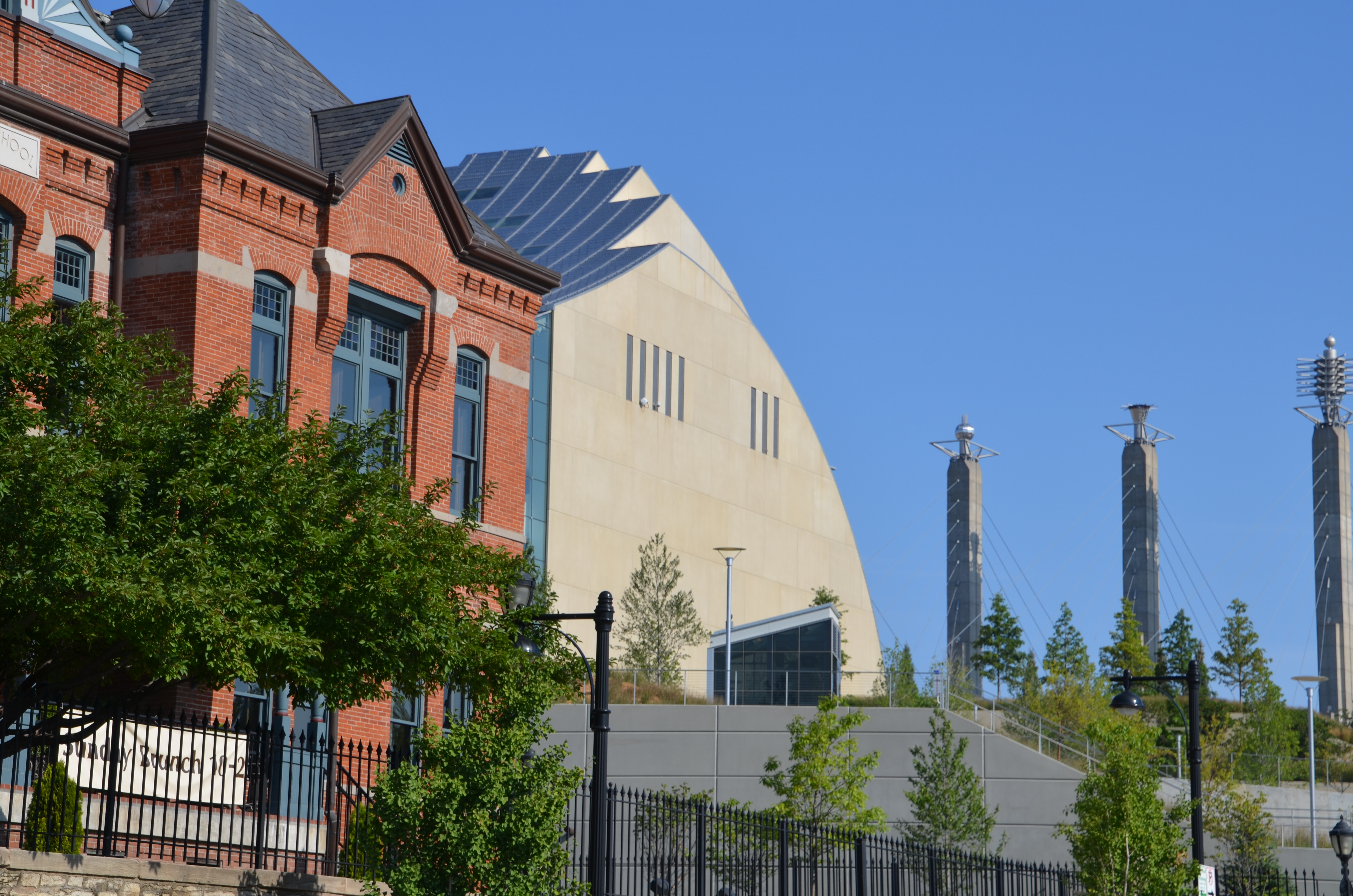
Sunday mornings with Terry–In the shade of Kauffman Center for the Performing Arts

Terry and I are pretty independent souls.  Our work lives keep us busy during the day and our clubs, committees and boards take much of our spare time.  But Fridays after work and Sunday mornings are our time.  Virtually every Sunday morning you will find us in the car with our dog, Casey, with a destination in mind, preferably pet friendly.  We combine breakfast with a drive through an area of the Kansas City metropolitan area that remains unexplored or, in this case, under-explored. This morning was no exception.

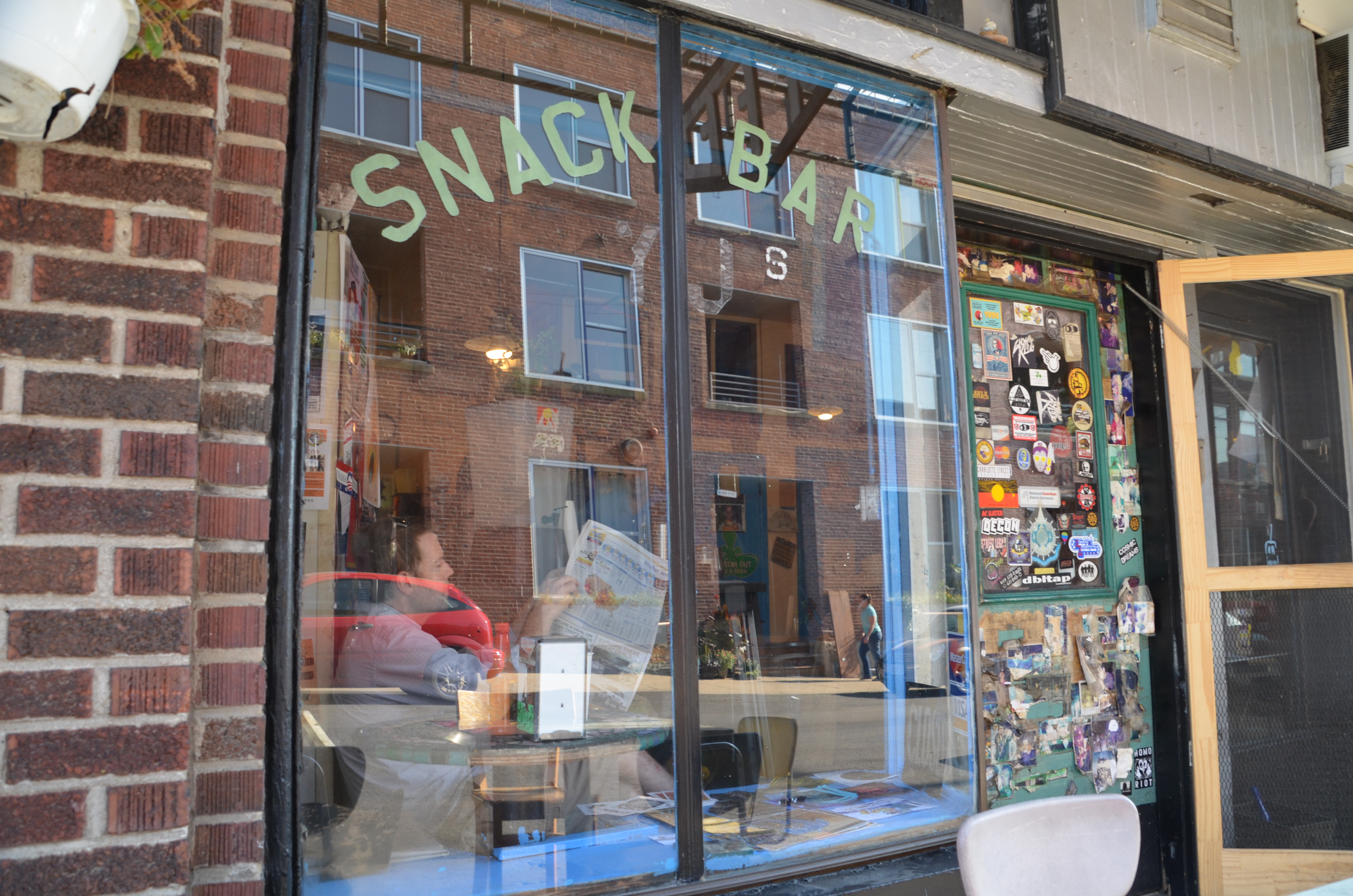
It is hot here.  But Casey would not understand if we don’t include him in the morning explorations. That significantly limits the restaurants where we can eat to those that are dog friendly.   He knows, really knows, the rhythm of our lives and which day of the week is for the three of us.  Today Terry selected a restaurant on the North edge of the Crossroads District of Kansas City.  I walked just a block to photograph this  view of Kauffman, Webster House and the Bartle Hall pylons. Y & J’s Snack Shop is eclectic to say the least.  Obviously a haunt for both young city dwellers and middle age professionals , I had never noticed it until this morning.  But it was inexpensive, the food was good, and Casey was content.  The staff even provided water for pets. The aesthetics of the so-called “snack bar” were minimalist at best.  Tiny, with a kitchen smaller than my own, the cook served such standards as bacon and egg sandwiches, coffee and a variety of breads.  The decor was not even shabby-chic, it was just shabby.  The door was covered with stickers of various sorts.  The tables and chairs were plastic and metal.  Nothing really matched.  But the environment was casual and accepting.  Obviously, many patrons were regulars and felt right at home.  Even for first timers it was a happy place to spend some time.  We wandered the block or so surrounding Y & J’S, and were surprised by the variety of retail stores, coffee shops, businesses and an urban garden, all sharing adjoining spaces.  I can’t even tell you the address, because street signs were few and far between.  But one business had prominently displaced its address as 1818 something.  It was a true urban experience made more satisfying because we know it is part of the rebirth of our central city.

Send me dead flowers

In their 1971 album, Sticky Fingers, Mick Jagger and the Rolling Stones encouraged their audience to “Send me dead flowers”.  Other artists also have written about dead flowers.  There are even bands named Dead Flowers–Joe Getty & The Dead Flowers, David Yellen Band & The Dead Flowers and a fun rock band simply named “Dead Flowers”.

They obviously weren’t talking about this particular flower.  But they could have been!

So dead head your flowers if its time, but don’t forget to stop and appreciate the beauty of a dead flower.

Ann’s Office through the eyes of Color Sketch

Color sketch is a so-called “effects mode” on my Nikon.  Described by photography writer, Chris Hall, as “making something out of nothing”, these photographs prove you can create art out of everyday things.  The first photograph is the view from my office chair.  You can see my clock, weights, M&M machine and books.  In the upper left hand corner is a calendar Meg gave me for Christmas.  The cover is a photograph of my husband, Terry, sitting in the back yard.

The beautiful flowers in this shot are really ink pens Meg gave me for my birthday in 2009.  She was  in the midst of final exams her first year of law school.

These photographs include some of my favorite reminders of Meg and Terry. But color sketch sure does make my office more fun for those who don’t understand the pure pleasure I get from the treasures with which I have chosen to surround myself.

Dr. Sanjay Gupta’s “Chasing Life”

Sanjay Gupta’s book Chasing Life, published in 2007, presents a compelling picture of the ways in which each of us can improve the quality of our lives by diet, significant exercise and other healthy life choices.  Gupta’s focus is on “extending our healthy and active lives longer” while compressing the death process.  He reminds us that chasing life means lowering our risk of heart disease, stroke and diabetes.  He also guides us toward health habits that reduce our risk of developing Alzheimer’s and cancer.

Much of the information in his book is information we really already know, even if we try to ignore it:  a diet of junk food reduces the quality, if not the length, of our lives.   Life decisions such as failing to wear seat belts and bicycle/motorcycle helmets increases the likelihood of serious injury and death.  Tobacco kills.  And we have all heard the statistics on obesity.

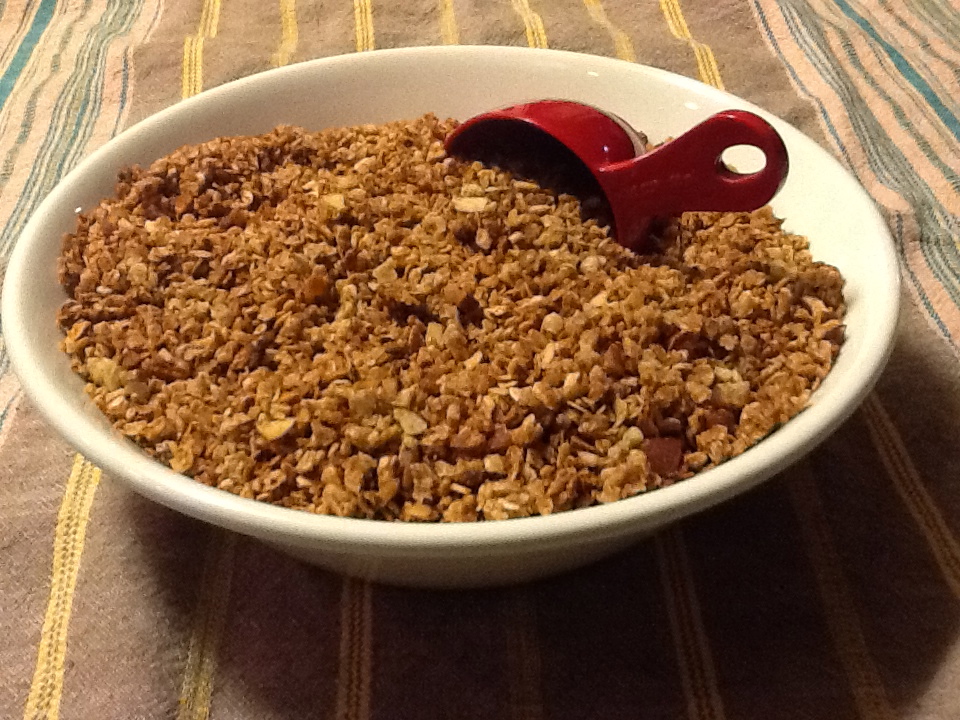
But if you go beyond the extremely obvious to the merely obvious, he has more to say.  Meeting our daily requirement of vitamins, like vitamins A and C, magnesium, fiber C, really is essential.  Fish is far healthier for us than beef.  Supplements are not all created equal.  Grain, is a great source of fiber. I love granola because it is high in fiber and includes healthy grains, nuts and olive oil. Meg likes to add dried fruit.

Not so obvious is that long-term reduction of our calorie intake, even if we are not overweight, has significant health benefits.  It can extend our productive lives–helping us to avoid significant disease. In addition, regular exercise, walking, jogging, bicycling and stretching, is essential to remaining in good shape.  Physical fitness increases our life spans, and at least as important, helps us to become biologically “younger” and happier.

There is so much more information included in Dr. Gupta’s book about aging and health.  He even includes a section on the impact of happiness in encouraging long and healthy lives.  I encourage you to study his book and adopt the life style he espouses.  In keeping with healthy living, take a walk, play tennis, golf, or be like Meg and run miles every day.

Our family didn’t need Dr. Gupta to tell us about health.  Our dad is the most health conscious person I know.  He spent the last 97 years of his life avoiding alcohol, tobacco and caffeine, limiting his sugar, eating a healthy diet, , and exercising daily.  At age 95, he was invited to throw the first pitch at a Kansas City Royal’s game.x  He practiced his pitch before the big day and even got the ball to the plate, if not over it.  Quite a testament for living a healthy life.  Gee dad.  Dr. Gupta would be proud of you.

For most of the rest of us, we need someone we admire to prod us along, encouraging to make healthy decisions in our lives.  So, I encourage you tomorrow to take a walk or a run.  As a reward for your efforts, have a healthy bowl of fruit, instead of ice cream and water instead of wine or beer.  Not the way most of us spend our evenings.  But a whole lot healthier.

Is this just a little too bland for your lifestyle?  Do you need something more exciting than–water?  How about a glass of 100 % grape juice.  You can put it in your favorite wineglass and feel as festive as your friends.

Here’s to your health.  Here’s to a long and happy life.

_________________________________________________________________________________xOn August 30, 2010, dad was invited to throw the first pitch at a Royal’s game.  He is the oldest Eagle Scout  an event honoring Eagle Scouts.  He was the oldest Eagle Scout in the Kansas City area and was among those given a Kauffman lifetime achievement award.  we all attribute his good health and longevity to the care with which he has lived his life.

I am grateful to the Independence Examiner for the photo of dad. He had lots of family in attendance and we have similar photos.  But this one is better.  I have no idea why it appears in “google” with an All-Star game logo at the bottom.

They’re here, they’re there, they’re everywhere–Canadian Geese

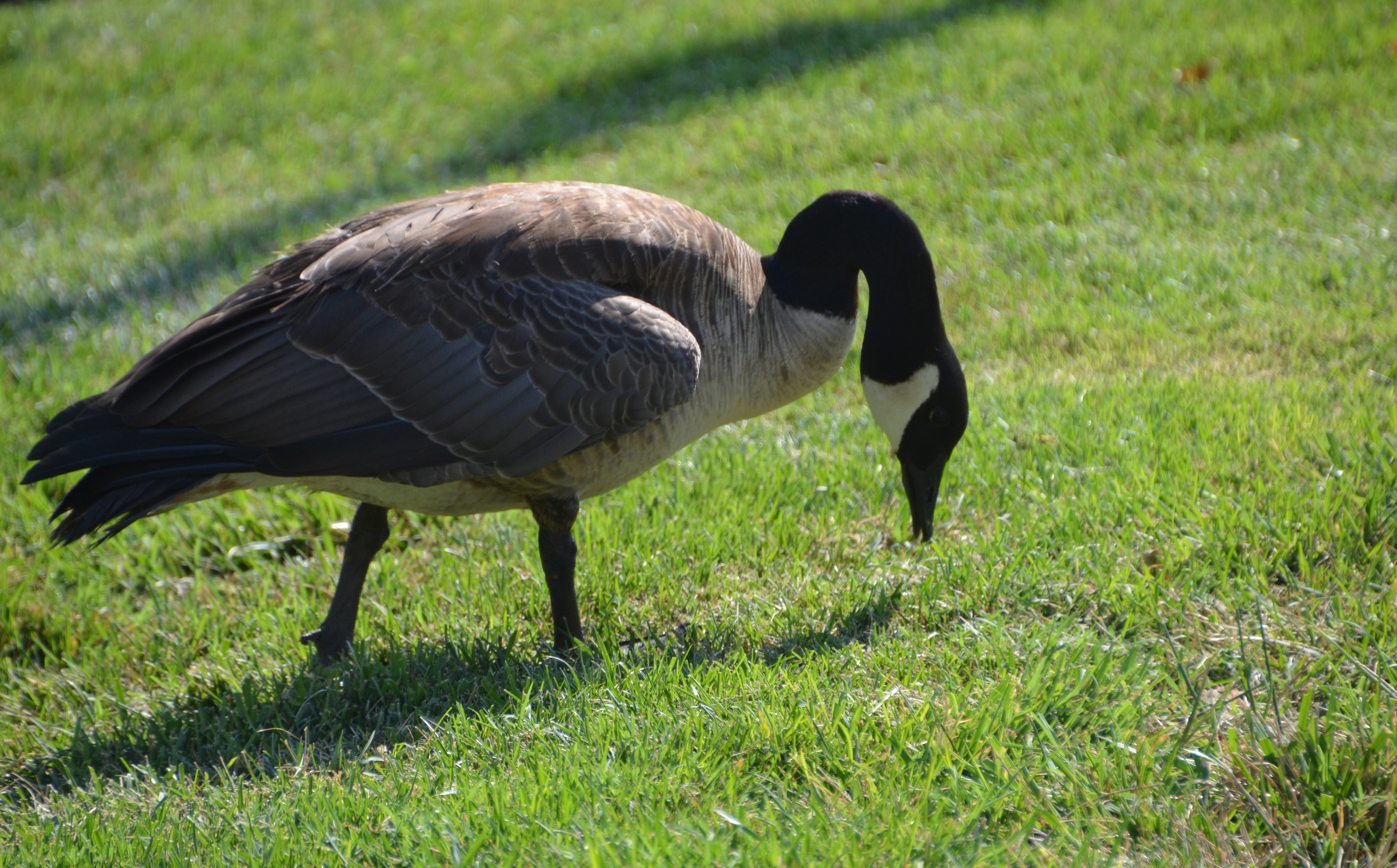
Have you noticed that Canadian geese are everywhere?  No?  They are if you live in the Midwest.  They are in our parks, our ponds, our golf courses, our lakes and rivers.  Ten years ago Kansas City had Canadian geese flying overhead with the change of the seasons.  Slowly we noticed that a few stayed through the winter.  Now they raise their young within a few feet of city traffic. Their waste is on our streets, our sidewalks and in the grass. Plaza traffic literally comes to a halt whenever a mom and her babies cross the street.

With the number of geese so nearby, I thought it would be fun (and easy) to photograph them for the blog.  I took photographs in Loose Park and near Kauffman Garden.  Most of the shots were just boring.  Then I found a beautiful spot on Brush Creek that catches the morning sun at a great angle.  Having seen geese swimming in the area I decided to take my camera to get photographs of the geese just at the beginning of day.

It isn’t that easy. Five mornings I have made the trip, looking for birds that are in the water right at the right place and time to create opportunities to photograph them when the colors of the water are most vibrant.

The geese sleep on open land, maybe 20 or 30 feet from the water.  Depending on factors known only to geese, they begin to move toward the creek between 8:15 and 9:00 a.m.  Most move toward the water in groups, a few move individually.

After arriving at the water’s edge they begin to primp and preen.  Finally, they enter the water, almost en mass, and only slowly spread out as they begin to swim upstream, downstream and under the bridge.

For a few wonderful moments the sun’s rays cause patterns of light to reflect back from the water, causing the beauty of the ducks to combine with the richness of the colors of sun, the rock and shade. When I am lucky I can find a goose in the water at the right time and place to catch them at their photographic best.

All too soon the suns rays are too strong to catch the colors, the ducks have moved too far on the water to easily shoot, and the water itself seems to turn a muddy green.  It is time to leave the geese for another day.

Shifting the Balance–9 months, 146 posts and 82 countries later

Nine months ago today, Meg posted our first post on Shifting the Balance.  Since that time our lives have moved forward.  Meg has developed a rewarding pattern to her life in Petaluma. I particularly enjoy the times we all spend together and with other close family and friends.

If you aren’t a blogger, you will have missed one of the curious aspects of blogging. WordPress keeps track of visitors to our blog on a country by country–not individual–basis.  We are now up to 82 countries.  We haven’t figured out how to get the attention of any one of Greenland’s 56,000 residents, but we are still trying. In addition to keeping a tally of every country with visitors to our blog, WordPress actually includes a map for Meg and me.  Here is the map for our blog.  Red records this highest number of visitors, which are from the United States, and visitors from every other country are highlighted in orange, indicating a slightly lesser number of hits:

It is to really fun to watch to see which of our posts are the most popular.  Our photographs usually get views within minutes or a couple of days.  Our articles may receive very few views the day they are posted.  But they may continue to receive views for months.  The most popular of our posts are Meg’s 4 posts focused on Natasha’s wedding and my post comparing Madeleine Albright and Condoleezza Rice.  It is also really rewarding to receive notification that someone “likes” our blog or has commented on a post.  Most of those who “like” us are individuals who view our photographs.  (They are a fairly tight community).

One of our most faithful readers is a young man from Romania, Cristian Mihai.  Born in 1990, he is already an author and a very active blogger himself.  Christian, thanks for regularly “like”ing our photographs.  We love your stuff!!  Romanian music is pretty cool.  Thanks and good luck.

Blogging has become a part of the rhythm of our lives.  Most of our posts capture the fun times of our lives: weekends Meg and Jake spend learning about Northern California, and visits Terry and I make to points of interest in Kansas City.  Occasionally, we write about our travels.  When time permits we review a book or write about issues that are of particular interest to us.

There is supposed to be an art to blogging. Among the suggestions made for successful bloggers is to have a blog theme: something like marketing, travel, photography or cooking.  We read some wonderful specialized blogs and follow Sheila’s Lifestyle Solutions and PhotoBotos among others.  So we really appreciate the specialized blogs. But we just keep rolling along as we write about a wide variety of subjects and post photographs we like.

Our lives are, in some small ways, focused on our blog.  We talk to each other about what we are doing on the blog and who has a post ready for publication.  We also continue to look at our lives and our worlds with eyes toward potential blog posts.  When we see a beautiful building, a fascinating book or article, or just visit a park, we want to share it.  Our posts are also a way for us to communicate with each other. That is satisfaction enough for me.

Thank you for following our blog. Clotilda Jamcracker, (another author and blogger), thanks for “like”ing this post.  Thanks to you all.

The Basilica di Santa Maria del Fiore in Florence, Italy

The Basilica di Santa Maria del Fiore/Flower, dominates the central square in Florence, Italy.  Construction began in 1296 and was completed in 1436. It stands on the site of an earlier church erected during the 7th century.  Identified as a basilica or duomo, the complex of buildings at the site a cathedral, it is the home congregation for the Archbishop of Florence.  Wow.  When Terry and I visited Florence in 2011, 575 years after it was completed, I had to marvel at the comparatively pristine condition of the complex.

Our day in Northern Italy would not have been complete without visiting this architectural marvel. The architecture is alternately described as  Gothic, Classic and Romanesque, because it has elements of each of those styles and more.  The world was changing in the late 1300’s and the early 1400’s. The architecture of this magnificent structure was changing with it.

At the extreme right in the photograph is the bell tower, or Campanile, the second of the three buildings in the cathedral complex.  It’s design and construction were overseen, until his death, by the famous Italian architect and painter, Giotto di Bondone.  The pink, white and green facade reflects the natural colors of the marble from which the facade of the building was constructed. The intricate designs, exquisite windows and interior and exterior sculptures and Biblical works of art, are characteristic of the churches of Northern Italy built at that time.  But this is no less a masterpiece.

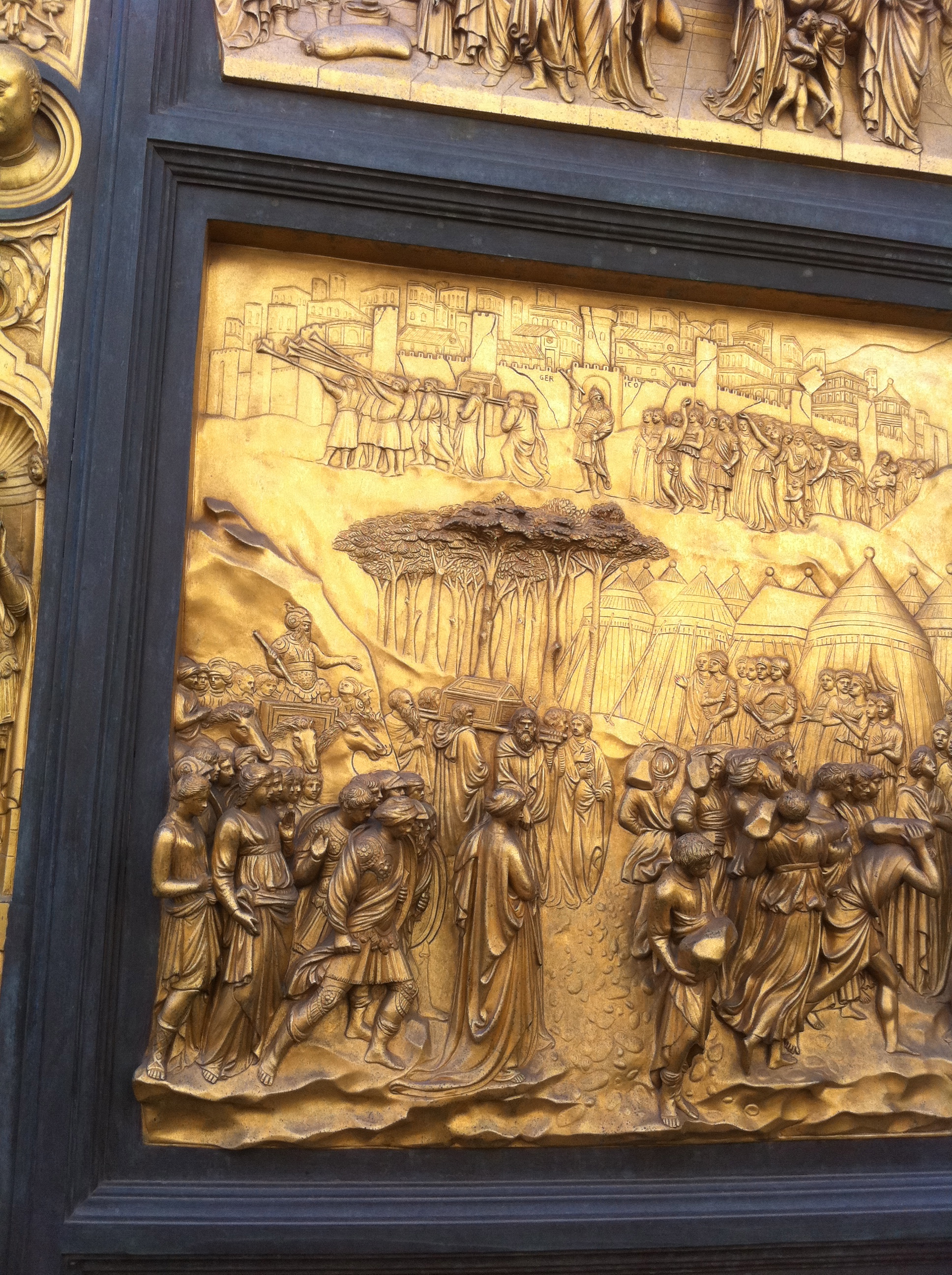
I particularly focused on the gilt bronze panels on the doors that  are situated on three sides of the duomo.  Additional, similar doors are on the baptistery, the third buildings in the cathedral complex.  Like every other aspect of the cathedral, the craftsmanship and detail are of the highest quality.  They evidence that the finest artists and intellectuals gravitated to Florence and helped usher in the Italian Renaissance.  Look at the detail of the faces and the elegance of the horns.

Surrounded by galleries, palaces and museums, the cathedral establishes Florence’s role as a center of  culture in the 1400’s.  Not surprisingly, the historic centre of the city is designated a World Heritage Site by UNESCO.  It shares that designation with Dubrovnik, Croatia, which has also been featured on this blog.

Palace of Fine Arts: a glimpse of ancient Rome in San Francisco’s Marina District

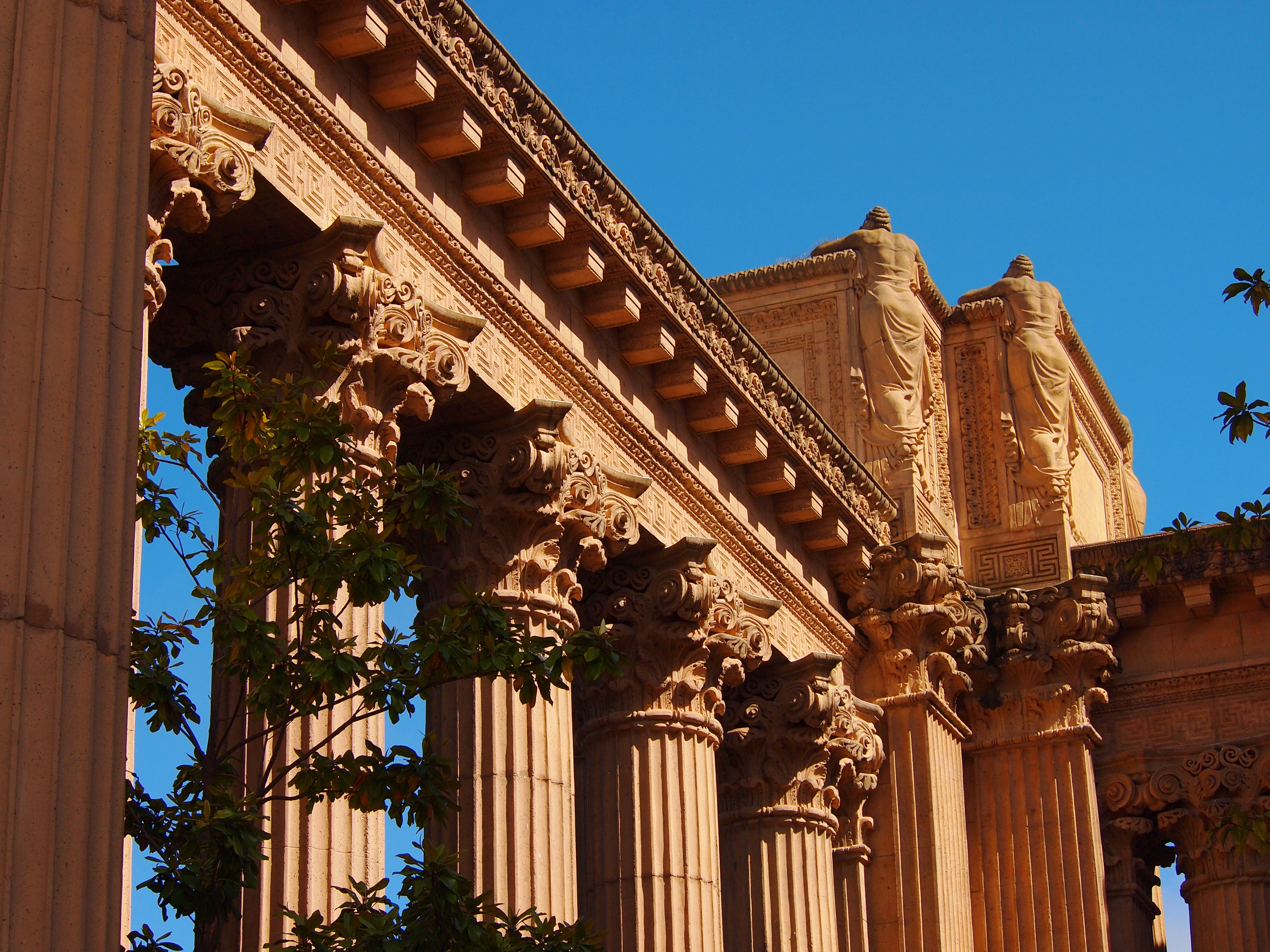
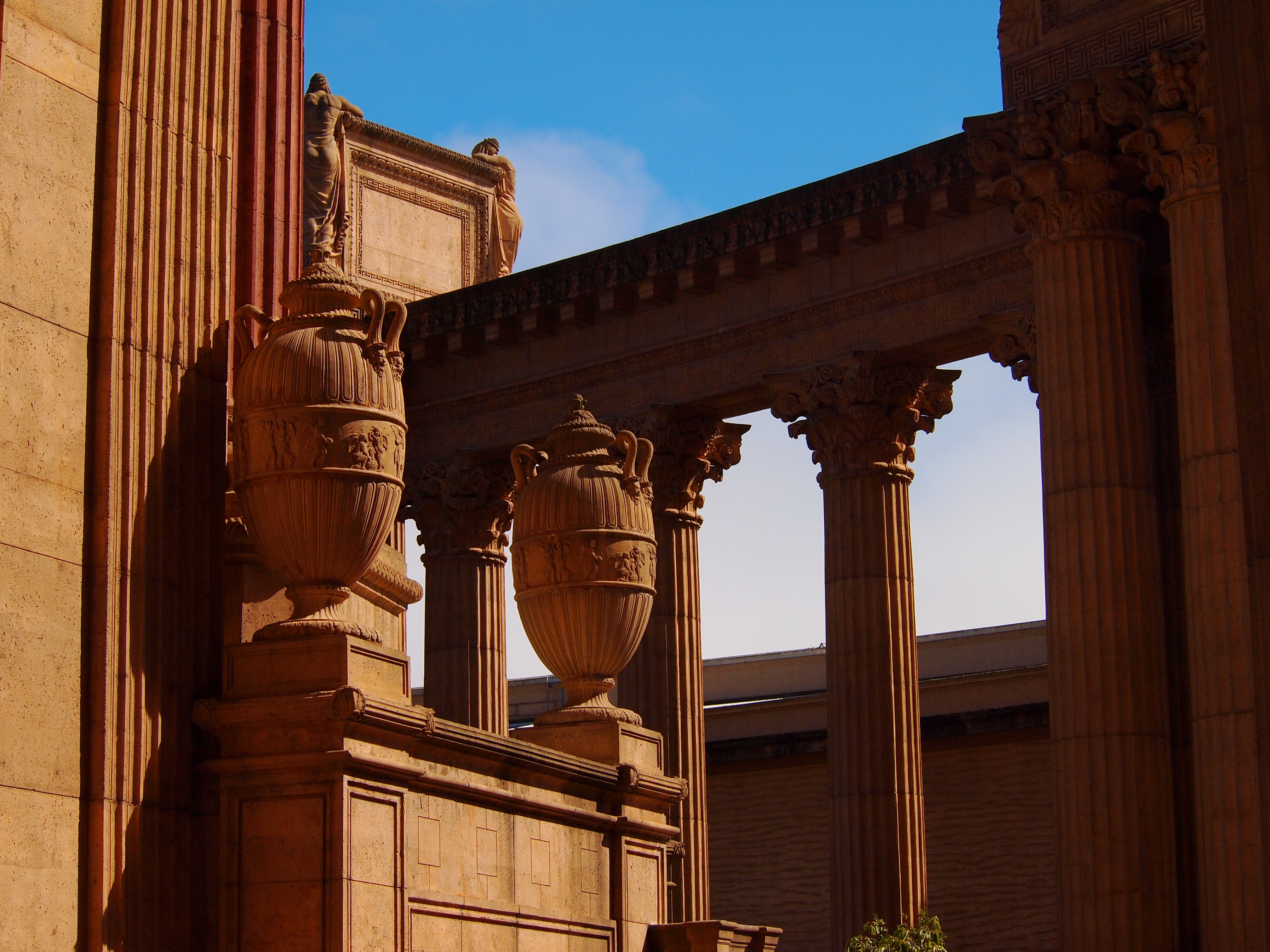
While Derek was in town at the end of June, we visited many of the iconic destinations San Francisco has to offer. One of them was the Palace of Fine Arts. There are few locations in the States that make me feel like I’m wandering the beautiful old architecture of Europe, but this was definitely one of them. With my camera in hand, I proceeded to get lost in the beauty of my surroundings. What a beautiful place to go for an afternoon stroll.

Near the eastern entrance, the tops of these giant columns all have figures facing inward. I don’t know what it means, but it is beautiful architecture.

Looking toward city residences, I thought this was a beautiful view. Wouldn’t it be wonderful to have a house right on the park?!

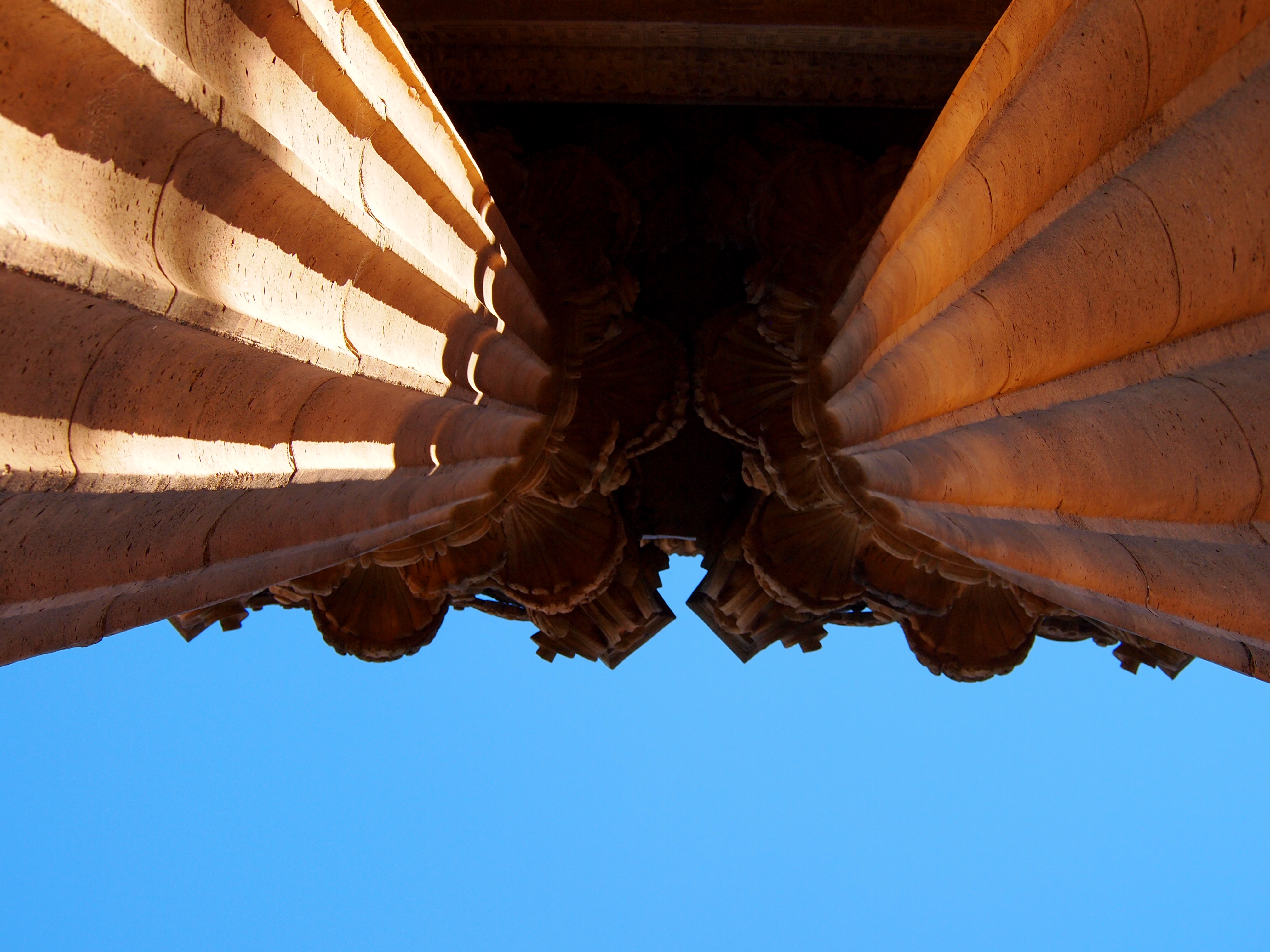
This was my attempt at an artistic shot, looking straight up from underneath a set of columns.

The architecture reminds me of ancient Rome, but the color almost reminds me of ancient Egypt. How fascinating.

It was a lovely visit, and the late afternoon sun created some beautiful shots. I highly recommend adding the Palace of Fine Arts on to your visit into the city. You don’t have to stay long, and parking is free. It truly is a magical place.

“Making Water Fluid” From Snapshots to Great Shots

Anyone who follows our blog knows that I am struggling to master my camera.  I bought Rob Sylvan’s Nikon D5100 From Snapshots to Great Shots, and am making baby steps toward improving my technique.  Chapter 7 on Landscape Photography explains how to get shots with silky or “smooth-flowing” water.  Among the recommendations is to set the ISO at 200 or lower and the shutter speed at 1/15th of a second or slower.

I followed the directions, sort of, and ended up with water that is silky to frozen. The shot was taken at Kauffman Garden, in Kansas City, Mo.  Too me it looks much like glass.

I hope you like it.  If you do like it, give credit to Mr. Sylvan, if you don’t, I guarantee, the fault is all mine.