For the Beauty of the Earth

Today is Earth Day, a day focused on the protection and celebration of our natural environment. Earth Day is a global celebration.  The health of our environment is important here in the U.S., in Central America, in Africa, in Europe and throughout the world.  Our very survival is dependent on clean and adequate water and a plentiful harvest.

So today, we celebrate the beauty of the earth:

We are grateful for clean water for bathing, drinking and farming:

We recognize the importance of our oceans, lakes and rivers and their role in providing food, transportation, drinking water, and other necessities and pleasures in our lives:

We respect the importance of protecting our water, our air and our soil so that we have adequate food to eat and water to drink here in the United States and throughout the world.  We recognize that adequate food and water are important for the health and security of our own families and for our worldwide populations.

While none of us can individually solve the problems of environmental pollution, we can each help to protect our world resources by planting trees, recycling trash, avoid polluting our water, soil and air and reducing our energy consumption.

As we honor the importance of water, earth and air in meeting our basic necessities, we are also grateful for nature’s beauty in our parks and gardens that feed, not the body, but the soul.

On Earth Day 2012, and every day, we wish you well and ask you to GO GREEN.

Jayhawk Pride: Rock Chalk Jayhawk, Go KU!!

My husband and I both went to University of Kansas for undergrad. We are Jayhawks through and through. Naturally, we have been glued to our big screen during the last several weeks of March Madness. With KU’s amazing history of basketball, it’s hard not to get sucked in to the Rock Chalk madness. Beginning in 1898, with the father of KU basketball, James Naismith, the Jayhawks have always been a force to be reckoned with. I even learned a few years ago that Phog Allen, one of Naismith’s players and his successor as head coach, grew up in the same house my grandparents lived in for years. So there you have it, I was destined to be a Jayhawk, and to love KU basketball.

For last night’s big game against Kentucky, we drove into the city to meet some friends (mostly PHS crew: Ryan, Ted, Eddie, Stephanie). We went to the Mad Dog, completely decked out in Kansas gear, some of us wearing the exact same attire we’d worn throughout the whole tournament. Even though we didn’t pull out a win, we still had a blast. I didn’t realize how many Jayhawks there are in San Francisco! Once inside the bar, the level of Jayhawk pride almost made me feel like I was down on Mass. Bill Self would’ve been proud.

Our loss against Kentucky last night was a tough pill to swallow. We all feel a little wounded today, but our guys played their hearts out. Withey even scored a new blocking record. And while we may not yet have another national title under our belt, I’m proud of our players. Trust me, we’ll still be there for them next year, and every year after, no matter how the games end.

For all the other Jayhawks out there, Rock Chalk!

Springtime in Kansas City’s Country Club Plaza

It is a beautiful week in Kansas City. The tulips are in full bloom.

Pansies are everywhere, even in a “wishing well”.

The trees are starting to bud.

The Plaza is all decked out for Easter, with an oversized rabbit, turtle and other brightly colored animals for children to climb on and be photographed with.

Most exciting, the first of the Plaza’s fountains have been turned on.  It is our own little bit of heaven.  Pomona, an original sculpture by Donatello Gabrielli, is the Roman Goddess of the Earth.  She stares out on the Plaza as though aware of our comings and goings.

The Plaza is at it’s very best.  Ready for tourists and locals alike.

Have a great day!

A Place Like No Other–Prague’s Jewish Cemetery

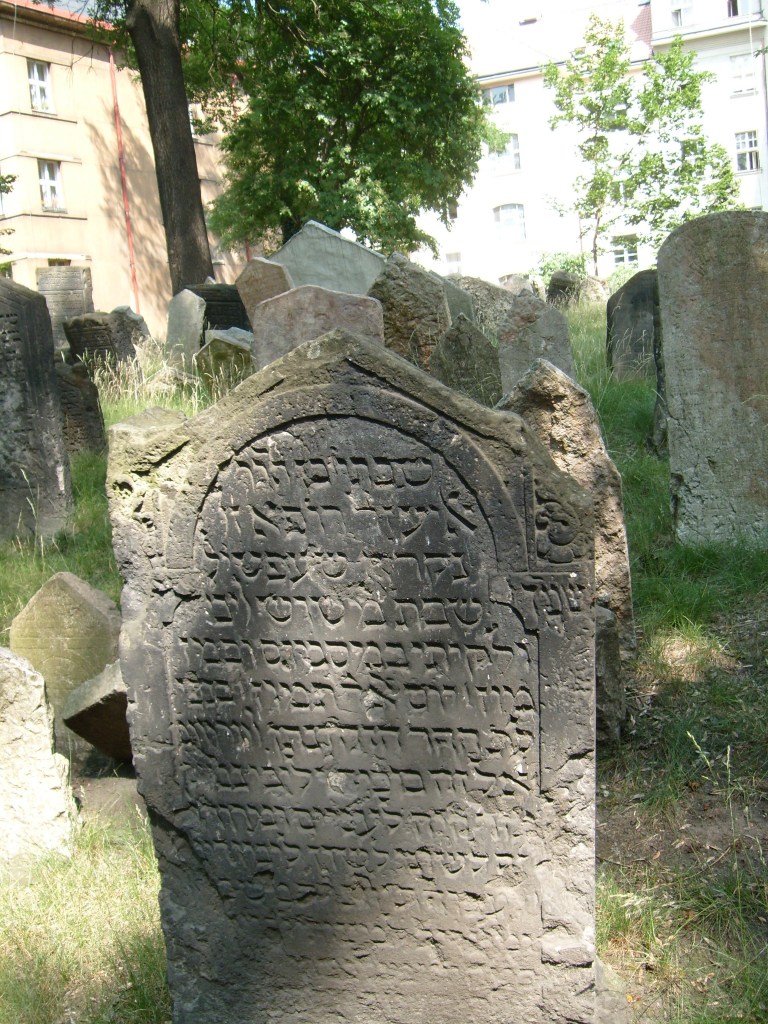
The old Jewish Cemetery in Prague is among the oldest surviving Jewish burial grounds in Europe.  It sits in what is considered the best preserved complex of Jewish historical monuments in Europe, including the Jewish Town Hall and six synagogues. It is a monument to the Jewish Golden Age in Prague.   It was established in about 1439, with the last burial in about 1787.

Unique among cemeteries, the tombstones are so tightly packed that many literally rest one on top of another. The ancient trees wrap themselves around the tombstones as though born from the stone.

For 350 years the Jews of Prague were buried here. It is the resting place of Jews who made Prague their home  when Prague was the cultural center of Jewish Europe.  Especially during the 16th century, Jewish intellectuals throughout Europe gathered in Jewish Town. Many of these greats rest here, in the same cemetery that served the community in times of repression.

The cemetery is surrounded by a massive stone wall, as though the wall alone is sufficient to protect the remnants of this rich culture that extends nearly 650 years into the past.

Madeleine Albright visited this ancient cemetery on a visit to Prague in 1997.  This was not just any trip, but a pilgrimage of sorts.  Within the year, she had learned of her Jewish heritage, a heritage hidden from her family who fled Czechoslovakia in fear of the Nazis and again, years later, the communists.  When she explored the cemetery, she must have learned of the leaders buried here, who, like herself, exercised great power and influence in their times.

Secretary Albright will have been told of the first burial about April 25, 1439, of Avigdor Karo, the “chief rabbi” of Prague, a poet and a scholar of the Kabbalah.  Rabbi Karo lived through the destruction of Prague’s Jewish community in the 1389 Easter massacre in which over 3000 Jews died.  She will have been told of  Mordecai Marcus Meisel, (died 1601), a Philanthropist and leader in Prague, who lived through the persecutions of Jews in the mid-1500’s, financed the construction of Meisel synagogue in 1590-92.  Meisel built a hospital, expanded the cemetery and paved the Jewish ghetto. She will have heard the stories of Rabbi Loew Ben Bezalel, Chief Rabbi of Prague, a significant Talmudic scholar and philosopher,  buried there in 1609. Perhaps she will have been told of Rabbi David Ben Abraham Oppenheim, Chief Rabbi of Prague prior to his death in Sept. 12, 1736. Rabbi Oppenheim, a highly successful business  man, a prolific author and a student of the cabal is said to have had a library of more than  7,000 books.  Many of these books are now housed in Oxford’s library. These are only a few of the 100,00 people buried in these walls.

As powerful as these images must be, with the cemetery symbolizing both life and death, there was more for her to experience. The Pinkas Synagogue sits in the same complex.  Now serving as a museum, the synagogue’s walls identify over 77,000 Czech and Slav holocaust victims.  Among those names are Secretary Albright’s paternal grandparents.  Her grandfather Arnost Korbel, died at Theresienstadt in 1942.  Her grandmother, Olga Korbel, died in Auschwitz in 1944.

My husband I visited the Cemetery and Pinkus Synagogue in 2007.  The list of the dead is a visual testament to those killed in the holocaust.  I  cannot imagine the profound sense of loss that Secretary Albright must have felt, on seeing her Korbel names on those walls. But I wonder, what might happen if I awoke on some future day to learn, as she did, that my heritage was not what I had been raised to believe.  What if I learned I was Chinese, or African,  or Persian, or Jewish.  Would I develop a better understanding of the struggles, hopes and challenges of people of other races and other religions? Can I do that anyway?

Faith and Politics–Views of a Statesman and a Preacher: John Danforth

John Danforth: U.S. Senator, Ambassador, Special Envoy to Syria, attorney and Episcopal Priest.  His preparation for public office was as unique as the man.  He received his undergraduate degree at Princeton. In 1963 he received graduate degrees from Yale Law School and Yale Divinity School.  He is an Episcopal priest and has been so for almost 50 years.  He is recognized as a true statesman and a person of integrity.  A lifelong Republican, he remains widely respected by “both sides of the aisle.”

In a 2009 interview with Michel Martin, host of NPR’s TELL ME MORE, he described his view of the role of religion in public life:  Religious people are going to be involved in government and in politics, and that’s good and I’m one of them.  But I think when you  do it, it’s important to do it with a great degree of humility and recognize that your point of view is not necessarily God’s point of view, it’s just your political point of view.  And that you have to be tolerant of people who don’t agree with you and not just assume that, well these are evil people.  It’s just a difference in opinion.  

In 2006 he authored Faith and Politics-How the “Moral Debate” is Dividing  America and How to Move Forward Together. I first read his book to understand his opinions on such issues as stem cell research, the Terri Schiavo “right to die” case, school prayer, and  Justice Clarence Thomas’ confirmation proceedings. When I returned to his book, my focus changed to his views on the role of religion in politics.

While Senator Danforth identifies himself as a devout Christian, he rejects the notion that his political positions are God’s positions, and considers the concept very divisive.  He expresses concerns throughout his book about the “takeover” of the Republican Party by the religious right, while supporting the participation of  conservative and liberal Christians in politics.  He continues on to say that the problem is not that Christians are conservative or liberal, but that some are so confident that their position is God’s position that they become dismissive and intolerant toward others and divisive forces in our national life.

He believes that Christianity is supposed to be a ministry of reconciliation, but has become, instead, a divisive force in American political life…something is terribly wrong and we should correct it.  I think there are two aspects to what is wrong: first, our certainty that our political agenda must be God’s agenda, and second, our ineffectiveness in proclaiming the message of reconciliation.   He further states: our attempts to be God’s people in our politics are, at best, good efforts, subject to all the misjudgments and mixed motives that characterize human behavior. We are seekers of the truth, but we do not embody the truth.  And in humility, we should recognize that the same can be said of our most ardent foes.    

Much of Senator Danforth’s focus is general, but he is specific about one element of political life, the character attacks on candidates for governmental positions:  We may never agree on the issues, but we should all agree that in America, the pursuit of a political cause does not warrant the intentional destruction of a fellow human.  

While a primary focus of his book is directed toward Christianity in the political process he rejects the concept that the United States is a “Christian country”.  He  believes that term indicates non-Christians are of some lesser order, not full-fledged citizens of our nation.  He expresses regret about incidents in his life which he considers insensitive to non-Christians participating in two events;  the first at his non-sectarian high school when students, including non-Christians, were expected to sing the hymn “Onward Christian Soldiers”, which concludes “God in three persons, blessed trinity”.  The second a prayer he gave at Yale University which he ended with a reference to the Trinity (God the Father, the Son and Holy Spirit).

Senator Danforth does not minimize the risks arising from the polarization of politics. He writes eloquently of why our political dialogue should move to the middle through compromise of extreme conservative and liberal political and religious beliefs.  He condemns what he considers to be the intentional perpetuation of wedge issues, which he says are harmful to the national interest.  He describes the risks of divisive politics based on religion this way: ...religion has the capacity to draw people together.  But it can also be a powerful force that drives people apart. In the Middle East, Iraq, Sudan, the former Yugoslavia and Northern Ireland, and many other places in the world, religion has been so divisive that people have killed one another, believing they were doing the work of God.

If Danforth is right, if no one has a pipeline to God, doesn’t it mean that he is also right that people of good will should seek to respect our differences as we work together for a better world.  If he is wrong, if there are political leaders who understand perfectly the one ultimate truth, how is that truth to be known and accepted?  The ballot box? The battlefield?  Do we try to force each other to adhere to our separate versions of the truth? What if the wrong “truth” wins?

I’m now ready to move on to retired Secretary of State, Madeleine Albright’s book:  The Mighty and the Almighty. Let’s see what she has to say.                  


The Politics of Faith–Who Speaks for God

I’m a preacher’s kid (that is “PK” for short).  I was raised in church, or it seemed that way.  We were taught that we were part of the one “true” church.  But we were also raised to believe in loving one another, treating others with respect, working hard and following the adage that “to whom much is given, much is expected”.  God was the center of the family.

My family history is replete with relatives who were part of minority Christian religions.  My Mayflower ancestors , Thomas Rogers, John and Francis Cooke were Separatists who moved to the Leiden, Netherlands because of religious persecution in England, before sailing to a better life in Plymouth.  More recent ancestors participated in the Seventh Day Baptist Church, the Free Will Baptist Church, and the Methodist Episcopal Church.  I was always mindful of the ways in which my beliefs compared, and contrasted, with those of more vocal participants in public life.

My grandparents were “God-fearing” people, active in their religion. Unique for their time, they believed, as part of their faith, in equality of the sexes and equality of people of different races.   With the benefit of a rich religious heritage I have been privileged throughout my life to interact with people representing a wide variety of religious and moral perspectives. Many of my closest friends are not Christian.  I have been privileged to see glimpses of the world through their eyes.  I do not find their faith or their morality to be in any way deficient.

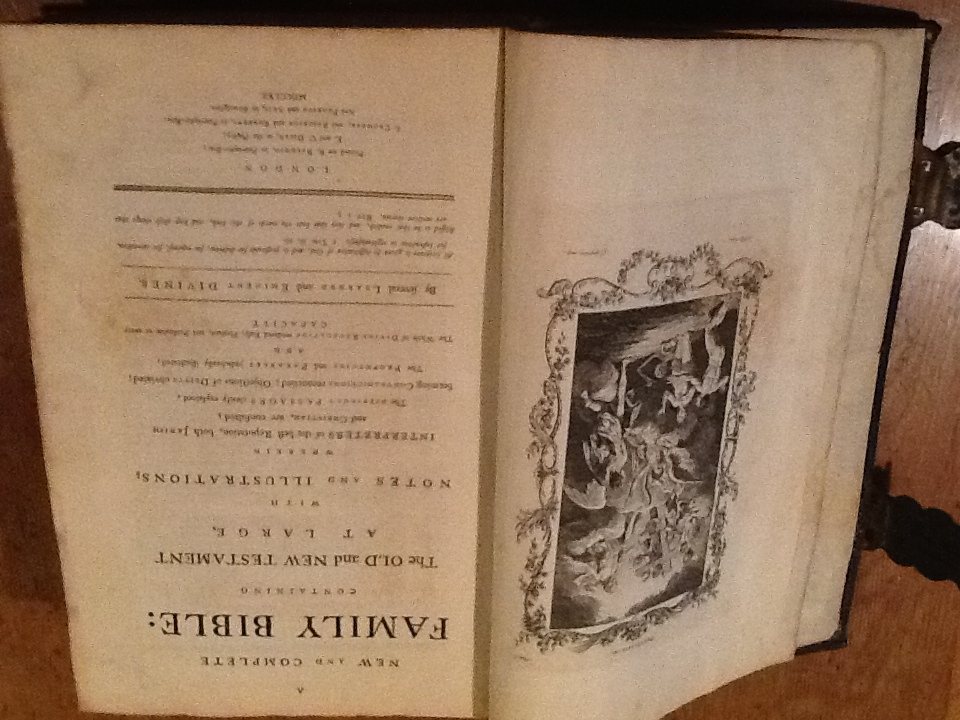
As an observer in the political process, I ask myself, what is the role of faith in public life?  How do we remain true to our beliefs, whatever they are, while also remaining true to the other teachings I remember from childhood about respect for others?  How do we  work for a better world when our own understandings of how to make such a world are so limited.  How do we appropriately show respect for the beliefs of others while remaining faithful to our own world views and beliefs.  As I struggled with these issues, it occurred to me that there were two books in my collection I could turn to for wisdom. They are Faith and Politics, by former U.S. Senator John Danforth, and The Mighty and the Almighty” by former U.S. Secretary of State, Madeleine Albright.  I hope  that my exploration of these books will be of interest to our followers.

Art on the Wall — Kansas City’s East Side

Meg and I love to travel.  When we return home, she returns to Petaluma; I return to Kansas City. Missouri doesn’t have an ocean or a light house.  It doesn’t have sandy beaches.  It doesn’t have mountains.  But Kansas City does have art, lots of art.  Some amazing art is right in plain sight, but we don’t always notice it. I have spent a lot of time driving around the city recording this art. I thought I would share some of the art I found on Kansas City’s East Side.

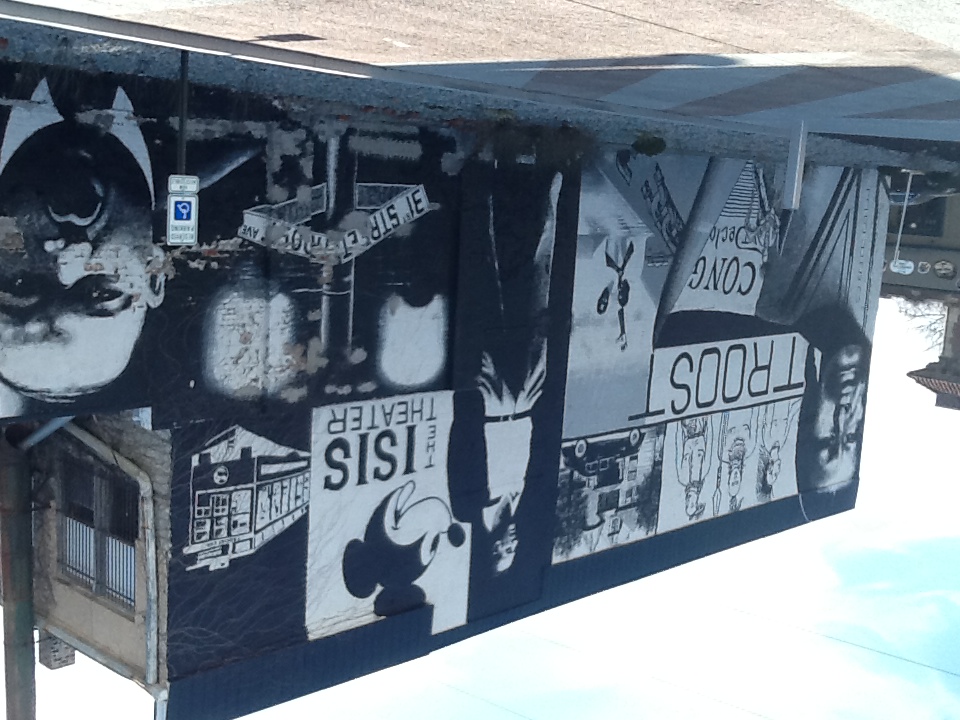
Sometimes the artist is paid well for the paintings or is a professional who volunteers his/her time and talent. This mural on Troost Avenue presents images of Kansas City’s history: Walt Disney, Mickey Mouse, Martin Luther King, Jr., native Americans.

Some art is for children, such as the mural at Operation Breakthrough, which records the images of creatures, large and small.

Sometimes kids create their own art without permission on bridges, abandoned buildings and overpasses, ie graffiti. The vivid colors are impossible to ignore.

Frequently road art captures the essence  of a community  within a community.  Sometimes it conveys hope.


Other times it conveys the joy of creativity and the enthusiasm of youth.

All the news that’s fit to print

Layoffs are the order of the day for print media.  An estimated 3775 newsroom jobs were lost in 2011 alone, spread among newspapers large and small. Across the nation, newspapers papers, magazines, even books are giving way to Internet-based news and literature. The Washington Post, an icon in the publishing world, has recently reduced its staff.  Our own Kansas City Star has announced repeated layoffs including, most recently, in mid February, 2012.  As readers we are concerned with the ways in which the loss of traditional sources of information shrinks our ability to gather meaningful date on the important issues of the day.
Does this really matter if Internet sources are ready to provide us information?  The question, at least in part, is whether internet media will assume the mantel of investigative and in-depth reporting, on a local and national level, that inevitably declines as newspapers that have sustained reductions in news room staff.
Remember All the President’s Men, by Bob Woodward and Carl Bernstein? They spent months meeting with an anonymous informer identified only as “deep throat” before publishing a series of articles in the Washington Post exposing the Watergate scandal that resulted in President Nixon’s resignation and prison sentences for key members of his staff.  Our own Kansas City Star has repeatedly exposed incompetence and corruption throughout the metropolitan area.  The repeated reductions in staff leave the news room gutted, with at best only limited ability to seek out corruption, or report more than minimal local news.

The reduction in paid subscriptions and advertising revenues may make staff downsizing inevitable.  At the same time, competition between and among internet news source makes the competition for audiences more intense.  Facing that challenge, the Washington Post has expressed a commitment to continue it’s in-depth reporting, while moving aggressively to increase readership of its Internet paper.  Relying on online metrics to identify the number of clicks each of its articles receives, it is able to monitor constantly the popularity of each article, identify those with limited interest and replace low performing articles on a ongoing basis.  In this environment, is it reasonable to worry that articles about Kardashian weddings and celebrity probation violations will attract larger audiences than  school board meetings, second injury funds and low-level corruption. Focusing news and media attention on “easy news”, ie. news that is easily available through multiple sources, is cheaper and faster than authorizing journalists to spend months on a single article, or even a series of articles, requiring extensive research and exploration. It will be even more of a challenge to find a means by which journalists will be vigilant about reporting the mundane, but critical issues facing local communities.

It is difficult to criticize the paper media.  Their goal in 2012 is not to expand profit, but to secure survival while finding new resources and audiences.  In the interim we must, each of us, support and encourage  journalism that helps us to remain knowledgeable of the challenges that continue to confront us.  Certainly, this is essential to an educated citizenry.

Edward R. Murrow explained the problem this way: “the newest computer can merely compound, at speed, the oldest problem in the relations between human beings, and in the end, the communicator will be left with the problem of what to say and how to say it”.

Reply With Quote

Old Soil and New Life

I have been focused a lot lately on children. From childhood illness, to separation, to challenges at work, my world currently feels child centered.  Our family now is looking forward to two happy arrivals in the coming months.  As a future great-aunt, I am just filled with love and curiosity about the little ones who will join the current members of our next generation: Elliot, Asher and Sophia. I wonder about how their lives will be impacted by the world around them, the values that will come through our own children and those that will be formed by the outside world.

I love the description of family in Naomi Ragen’s book The Ghost of Hannah Mendes: We are planted in old soil, enriched by the lives of so many who came before us, the nourishment is meant to flow through us on to the newest branches so that every branch grows a little taller and blooms more beautifully still.

Our family is fortunate that Meg’s generation shows every indication of growing tall and blooming beautifully.  They seem to share the best of our family strengths and values rather than our weaknesses.  Universally they care about the environment, a healthy economy, healthy life habits.  They care about respect for human dignity.  They take an interest in government while maintaining a respectful regard for civility and understanding the importance of forming opinions based on research and study rather than on demagoguery.  We have raised them well, and now we rely on them to nurture their own children, nieces and nephews.  Understanding that, and understanding that it is they who will have the primary responsibility to shape the environment in which their children are raised, what wisdom can we pass on to them.

My mother used to say that when you have raised a child you become an expert in raising that child, but that it doesn’t really how to raise another child.  Of course, every child needs to be raised lovingly, with an early focus on healthy diet and healthy life habits. They need to be read to, to be given lots of hugs, and loving discipline.  They need to see modeled the values that have shaped us as strong, productive family.  They need to be intellectually stimulated from an early age, and to have parental involvement in the schools where their educations will continue.

But these basic parental responsibilities (and joys) do not directly speak to respect for the uniqueness of each child. Dr. Mel Levine, in his book A Mind at a Time, describes parenting this way: “Some minds  are wired to create symphonies and sonnets, while others are fitted out to build bridges, highways, and computers; design airplanes and road systems; drive trucks and taxicabs; or seek cures for breast cancer and hypertension . . . Parents have a special responsibility and joy as they get to know well and to cultivate their children’s individual minds.”

So the wisdom I would want to share with them is that parents support  their children best, when they learn to understand and nurture the uniqueness in each of them, helping them to develop their special strengths and to help them to accommodate to their inevitable limitations.  As to the future, I can only chuckle that Forrest Gump’s mother was probably right when she reminded us that “life is a box of chocolates, you never know what you’re going to get.”  I am excited to find out.

The Few, the Proud, the Montford Point Marines

February is Black History Month.  It is an important time to celebrate African-American history.  It is equally to acknowledge the contributions of our friends of color. The successes of the present arise out of sacrifices from the past.  While they are too many to list, this is a great time to thank the Montford Point Marines who volunteered and served in World War II, after President Roosevelt entered a Presidential Directive integrating the Marine Corps.

We are all familiar with the Buffalo Soldiers formed at Fort Leavenworth in 1866 to fight in the Indian Wars.  We have also heard of the Tuskegee Airmen, the first African-American aviators in the Army Air Corps, who trained at Tuskegee, Oklahoma, beginning in 1941.  However, I had never heard of the Montfort Point Marines. They were activated in August 1942.  Between 1942 and 1949, 20,000 men volunteered to serve in the Marines. They trained in a segregated facility in Montford Marine Camp[1] in Montford Point, N.C.  Point, North Carolina.   Initially, they were trained by white officers.  Quickly African-Americans took over their own training when, by 1943, American Americans finally became noncommissioned officers.  Like the Buffalo Soldiers and the Tuskegee Airmen, they chose to fight, despite segregation, in order to show their national commitment.  Cassandra L. Paschal has written about them that they believed “that if they could show their homeland their valor they would return to a country that in its gratitude would give them all of the freedoms provided in our Constitution.”

Montford Point Marines were assigned to support white troops.  However, they often found themselves in the thick of battle. They served, fought and died in the Pacific Theater in places with names like Saipan, Okinawa, Guam and the Mariana Islands.    Shortly after World War II, in September 1949, President Truman ordered the end of segregation in the armed forces.  Thereafter all armed forces were integrated.

On November 23, 2012, House Resolution 2447 was signed into law by President Obama.  The resolution granted the Congressional Medal or Honor to the Montford Point Marines.  While 11 members abstained from voting, not a single “no” vote was entered.

Equality under the law did not come quickly.  But the service of these brave men has finally been acknowledged and honored. To those who served, “Thank you for your service”.


[1] Renamed Camp Johnson on April 19, 1974, in honor of Sergeant Major, Gilbert H. “Hashmark” Johnson, a Distinguished Montford Point Drill Instructor