Madeleine Albright–Reflections on Religious Diversity in Colonial North America

A good place to start a discussion of Madeleine Albright’s book, The Mighty and the Almighty, is at the beginning.  For purposes of this post, a better place to start is page 16, page 44 in my e-book.  Here she begins her exploration of the religious differences of the earliest colonies.  This precedes  her exploration of the role of faith in the formation of our nation, the United States of America.  While much of my commentary is based directly on The Mighty and the Almighty, I explored some of her references to understand a little more indepth (I know, it is only a post!) the issues she raised.

Differences in Faith in Colonial America

U.S. History 101 teaches us that the Pilgrims came to the New World to escape persecution in Europe and to build better lives.  Secretary Albright focuses on the way the patterns of that migration, and the related early religious conflicts, impacted the development of the colonies.  It is apparent that the English, Dutch, Spanish, French and other colonists brought with them differing views of religion and that their beliefs, and the conflicts among them concerning their beliefs, helped shape the political landscape then and now.

1) The Puritans arrived in the New World fleeing religious persecution in England.  John Winthrop, Governor of the Massachusetts Bay Colony, left England in hopes of building a community that would be a model for “how to live a righteous life,” “escape God’s judgment on the corrupt churches of Europe” and find a refuge from poverty and overpopulation in England while spreading the gospel.   Despite persecution by Anglicans in England, his Puritan colony determined to exclude from full citizenship in their community all but a select view within their own faith.

2) Roger Williams was a theologian in England. Ordained into the Anglican church, he became a Puritan at Cambridge.  Forced out of England, he settled briefly in the Massachusetts Bay Colony.  In 1636 he established Providence Plantation after being banished by the Puritans from Salem/Boston.  His transgression, in the eyes of the leaders of that community, was to oppose taking the lands of Native Americans without compensation and advocating for the separation of church and religious functions. He opposed slavery and advocated for freedom of religion for all groups–Jews, Papists and Mohammedans.  He specifically said about the treatment of Jews elsewhere “for whose hard measure, I fear, the nations and England hath yet a score to pay”.  Like-minded settlers and minority groups, joined him in Rhode Island where they found a safe haven.  (This is important to me because my ancestor, John Lewis, was a founder of Westerly, Rhode Island, formed in 1661.)  Williams is said to have established the first Baptist Congregation in the colonies.  Williams renounced the practice of taking land by force from Native Americans and, instead, entered treaties with them.

3) Reverend Thomas Hooker, a popular Puritan preacher, founded the Hartford Settlement in 1636.  He first came into conflict with other Puritan leaders when he opposed the decision of the Massachusetts Bay Colony to limit voting rights to an elite group within the Puritan faith. He drafted portions of Connecticut’s Constitution which declared the “God given” right of people to pick their own leaders.  On May 31, 1638, he presented a sermon in which he espoused the belief that “the foundation of authority is laid in the free consent of the people” and declared that “God has given us liberty, let us take it.” He also attracted followers who settled portions of Connecticut.

4) William Penn, was born Anglican.  He became a member of the Society of Friends (Quaker) at age 22.  He was imprisoned in England for his beliefs, eventually relocated to the colonies, after authoring a “charter of liberties” for Burlington Settlement in New Jersey. The charter guaranteed free and fair trial by jury, freedom of religion, freedom from unjust imprisonment and free elections. He eventually settled in Pennsylvania Province where he drafted a“Frame of Government” that addressed such rights as freedom of worship, trial by jury, free election, fair trial and fair taxes.  In addition to Quakers, the province attracted Amish, Jews, Huguenots, Mennonites and others. Penn, like Williams, befriended the Native Americans and bought his lands from them rather than taking land by force.

6) While not part of the original 13 colonies, and not a focus of Secretary Albright’s book, Catholics colonized the Southern states and California beginning with the founding of missions in the late 1400s Spanish missionaries and by French traders as early as the late 1600s.  Catholics were also among the founders of Maryland.  Identified as “papists” Catholics were subject to persecution in some colonies until at least the late 1700’s.
There is, of course, far more to this early history than I can presume to understand or to research for my brief summary.  But the ways in which the colonies formed, and the close proximity of these varied and sometimes conflicting religious communities impacted their lives and ours.  The tragedies of their time are truly that–tragedies: the introduction of slavery into the new world, the early wars with native American populations on the East Coast, and the Salem witch trials.  The great successes include, first and foremost, that the colonies became an incubator for the values important to us today: liberty, separation of church and state, freedom of religion and democracy that were nurtured and grew, for over 100 years before the “forging of one nation.”

Next:  From the wisdom of a few men, a great document. The United States Constitution.

The Mighty and the Almighty–Diplomacy and Faith

In my quest for greater understanding of the role of faith in government and diplomacy, I have focused on two books.  Senator John Danforth’s Faith and Politics and Secretary of State Madeleine Albright’s The Mighty and the Almighty.  Senator Danforth is a lifelong Republican.  Secretary Albright has been a Democrat since college.  Both are Episcopalian.  Each served as Ambassador to the UN.  Both advocate that people of faith should be active in government.  Both believe it is essential that there be respect for diversity both within the Christian community and that this respect must extend to those of other faiths and philosophical beliefs.

I focused on Senator Danforth in an earlier post.  Now I will focus on Secretary Albright.  She was born in Czechoslovakia.  Her father was a diplomat.  She was a child when Adolf Hitler was in power.  She emigrated with her family from Czechoslovakia to the United States after communists seized power in her homeland.  Educated at Georgetown University’s Walsh School of Foreign Service, she received her PhD from Columbia University.  Raised Catholic, she converted to the Episcopal faith and, as an adult, came to learn of her Jewish heritage.  Appointed United States Secretary of State during President Clinton’s administration, she served with great distinction from January 1997 to January 2001.

Her unique family history and academic and professional experiences give her a unique perspective on the subject of her book, the role of faith in international diplomacy.  Because of her childhood experiences, she also has special insight into what a privilege it s to live in a free and democratic society.

Secretary Albright’s book is dedicated to “those of every nation and faith who defend liberty, build peace, dispel ignorance, fight poverty, and seek justice.”  Secretary Albright weaves this dedication, and her personal family history, into a scholarly but easily readable narrative of the role of faith in the earliest years of colonial America, through the founding of the Republic and through to the challenges of international diplomacy in a nuclear age.

She discusses separately and together the roles of religious belief and morality.  Her definition of what is moral as essentially that which “we associate with good:  life, liberty, justice, prosperity, health, and peace of mind.”  She describes these characteristics as the opposite of “death, repression, lawlessness, poverty, illness, and fear.”

She worries about the dangers and challenges resulting from the increase in religious passions throughout the world.  She shares the wisdom of religious scholars that effective diplomacy requires that government leaders become more knowledgeable about the faiths and cultures of the countries with whom we interact.  She believes such knowledge is essential in our endeavors to work toward reconciliation rather than toward armed conflict.  Even as she identifies herself as an optimist, she worries “the prospect of a nuclear bomb detonated by terrorists in purported service to the Almighty is a nightmare that may one day come true.”

The Mighty and the Almighty is a goldmine for those who want a brief history of the role of religious conflict on the founding of some of the earliest American colonies, about the religious perspectives of our first four Presidents, George Washington, John Adams, Thomas Jefferson and James Madison.  Because there is no way to do more than touch the surface of the issues raised by Secretary Albright.  It is wonderful material for further posts.

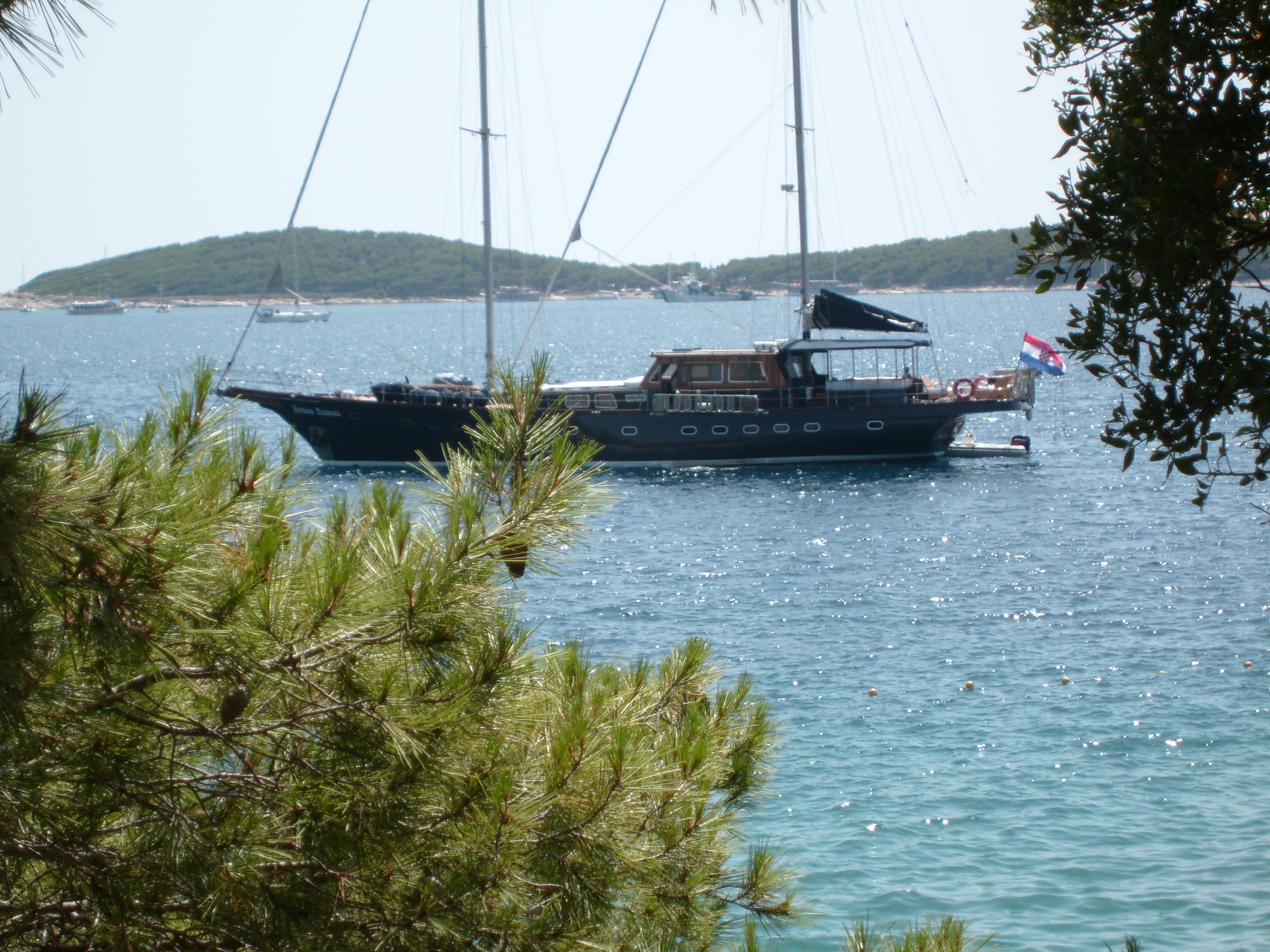
Enchanted Islands-Sailing Dubrovnik to Split (Part 1)

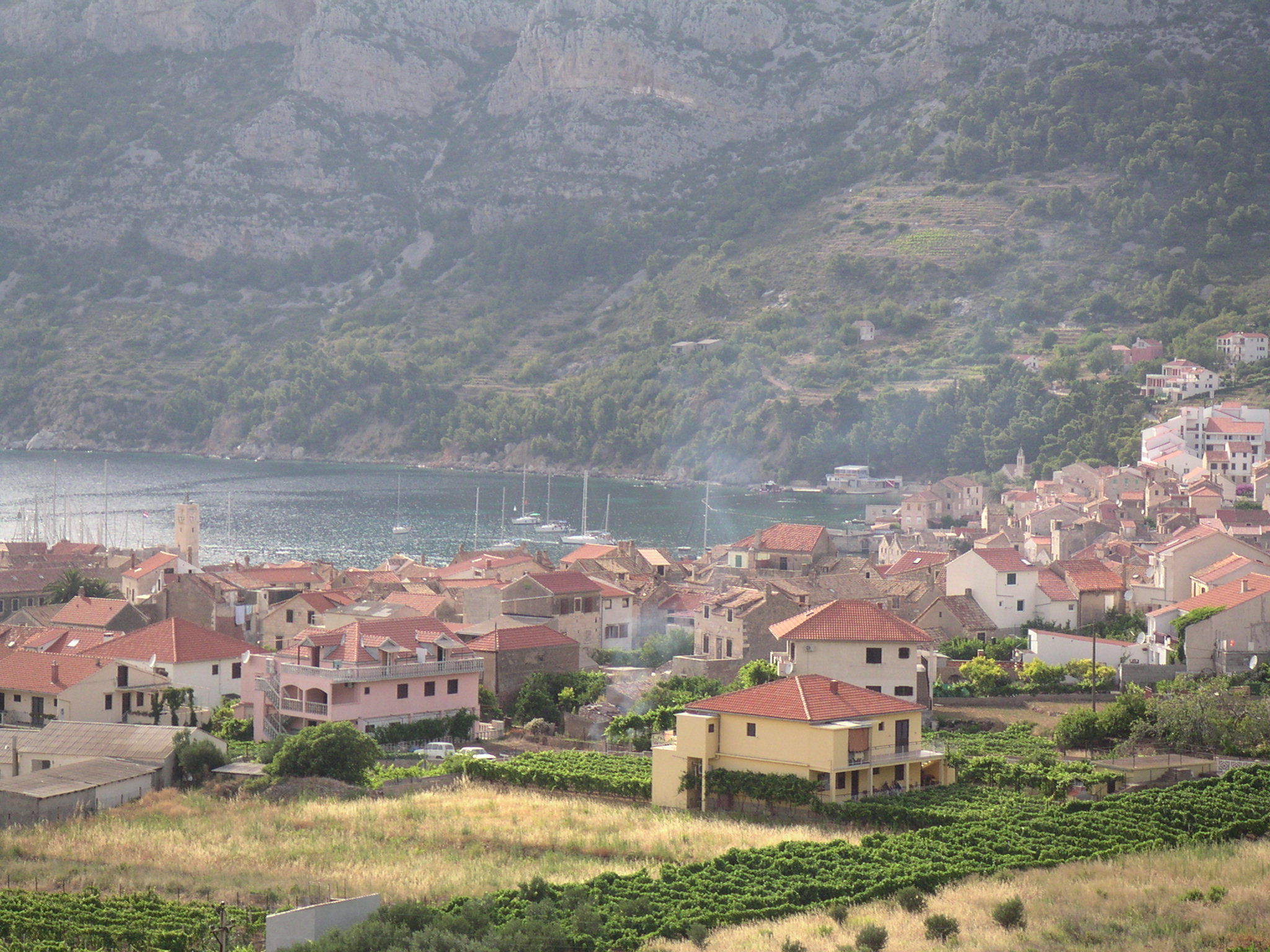
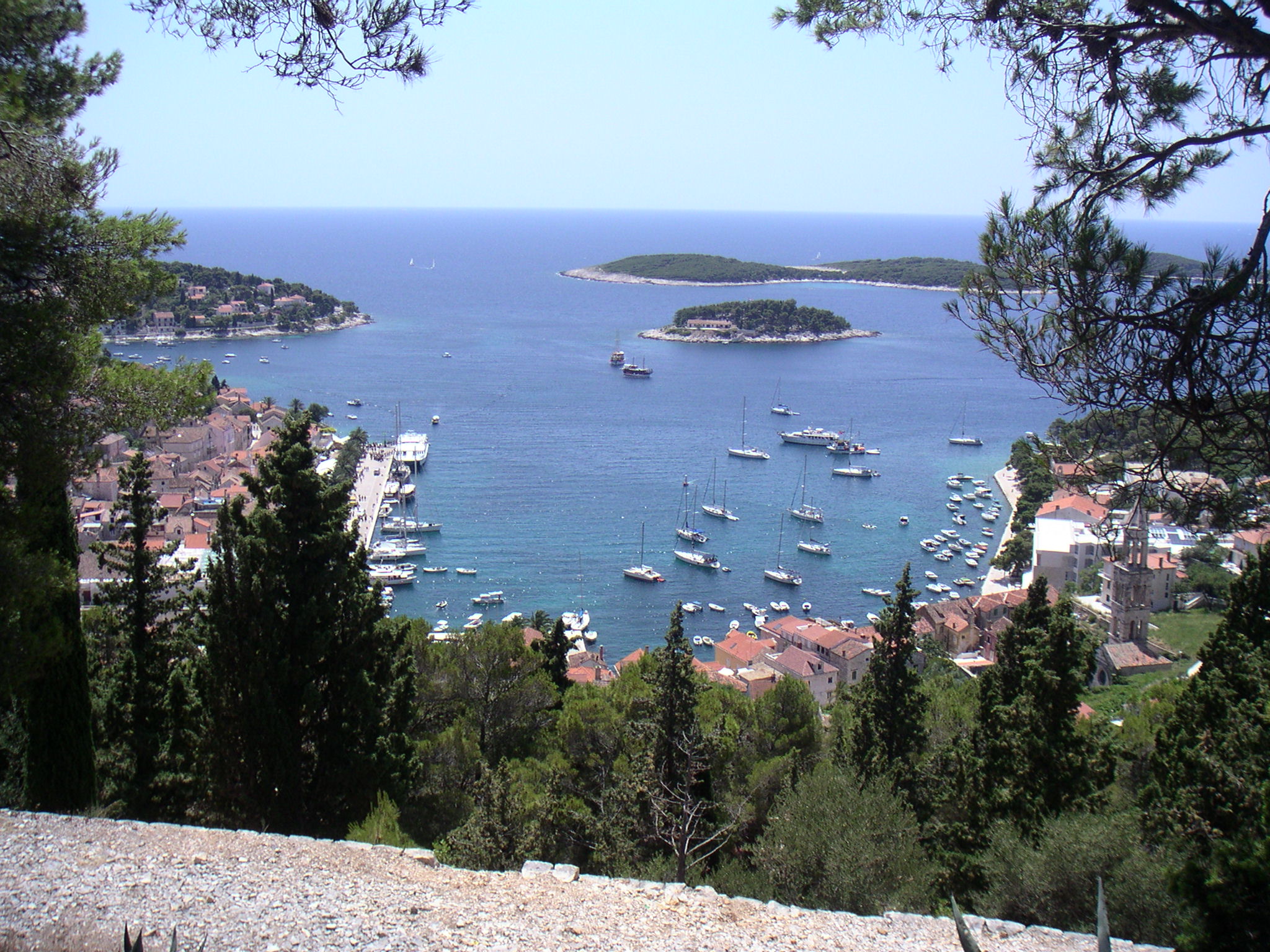
Enchanted islands.  That is the best way to describe them.  When Terry and I left Dubrovnik to begin our week sailing the Dalmatian Coast, we expected a great trip.  But we did not believe it could match the experience we had in Dubrovnik. We were wrong. We expected to see drab buildings left over from World War II followed by years of communist rule.  We were wrong again. With six close friends, we boarded the gulet, “Fortuna Dalmata,” in the harbor outside Dubrovnik and set sail to visit islands, towns and villages as enchanting as their names suggest: Vis, Hvar, Krk, and Komiza. Our crew included experienced sailors and an incredible cook.  They made our island hopping experience as relaxed as it was satisfying. Our food was as good as we would expect in a first class restaurant.  Not surprising, since our chef’s family owns a fine restaurant in Split.  Breakfast included chocolate croissants, fruit, eggs and cereal.  Dinners included veal shank and lobster.  What could be better than dinner served looking out over the sea to the islands nearby. Only 69 of the 1000 or more islands along the Croatian coast are inhabited. The  entire coast has a rich history that extends back long before the birth of Christ.  Various islands and towns along the coast were inhabited by–and/or did battle with–the Romans, Byzantines, Ottomans, Turks and Venetians among others. Many had ruins from those periods.  The fortifications on some islands were evidence of a long history of war. The islands we visited included picturesque rural villages with basic agricultural equipment and few automobiles and taxis. Tractors were common sights.

So were donkeys.
 It was not uncommon to land on islands with Greek and Roman ruins that spoke to their influence along the Dalmatian Coast.
There were shrines and statues to unknown heros.  The sacred nature of the temples and the sculptures, both Christian and pre-Christian were apparent all around us.  The detail of the carving and the powerful portrayals of worship evidence that the populations along the coast were highly religious throughout Croatia’s history.
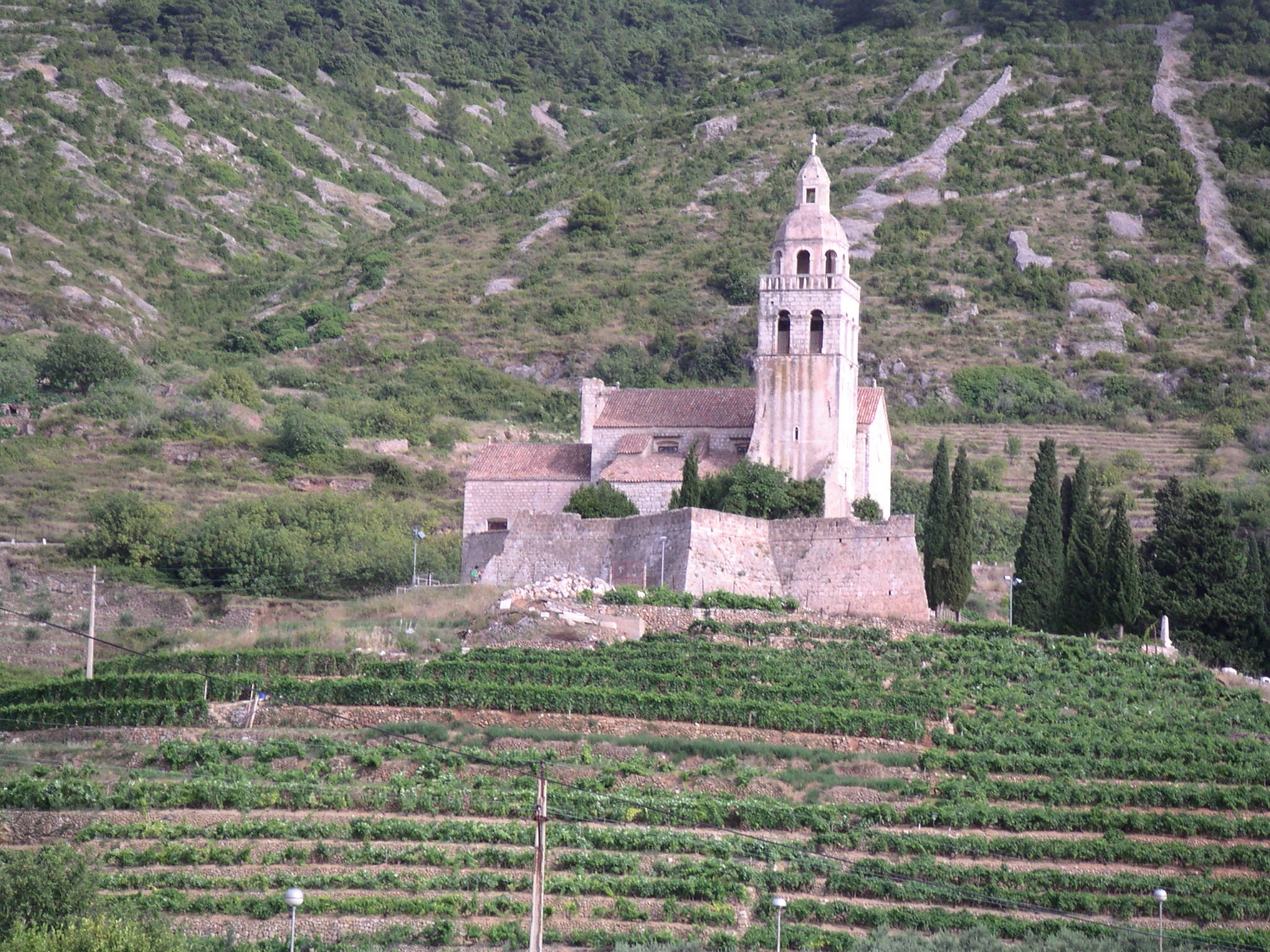
 The 16th century Church of Sv Nikola at Komiza dominated the hillside as it rose up from the terraced land and towers over the cypress.  It’s sleek lines and sculptured beauty seem to rise up to meet the heavens.
While the beauty of the architecture on Vis and Hvar inspired us with man’s creative spirit, we also visited islands where the natural
beauty appeared incapable of existing anywhere other than an artist’s canvas.
Each island had it’s own personality.  We could be inspired in the morning by nature and arrive in the evening on an island where the ornate buildings evidenced centuries of affluence and commerce long before the Americas entered the world stage.  As you can see, I am way underdressed for this highly sophisticated and elegant harbor town.
 Terry was similarly decked out in his favorite sailing stripes as he walked the gang-plank from the Fortuna to the dock.
As we look at the serenity of the coastal town below, it is hard to believe that only twenty years ago Croatia was involved in heavy fighting that left much of the country in shambles.  It was just as difficult to understand that this wonderful part of the world has seen far more than its share of political and military turmoil from pre-historic times to the present.

There wasn’t an island that we didn’t want to visit longer.  Many of the uninhabited islands are little more than rocky crags dotting the water between the larger islands. They cluster together like hens and chickens.

To show you even more of our favorite sites in the Croatian Islands we will post Part 2 later.

Faith and Politics–Views of a Statesman and a Preacher: John Danforth

John Danforth: U.S. Senator, Ambassador, Special Envoy to Syria, attorney and Episcopal Priest.  His preparation for public office was as unique as the man.  He received his undergraduate degree at Princeton. In 1963 he received graduate degrees from Yale Law School and Yale Divinity School.  He is an Episcopal priest and has been so for almost 50 years.  He is recognized as a true statesman and a person of integrity.  A lifelong Republican, he remains widely respected by “both sides of the aisle.”

In a 2009 interview with Michel Martin, host of NPR’s TELL ME MORE, he described his view of the role of religion in public life:  Religious people are going to be involved in government and in politics, and that’s good and I’m one of them.  But I think when you  do it, it’s important to do it with a great degree of humility and recognize that your point of view is not necessarily God’s point of view, it’s just your political point of view.  And that you have to be tolerant of people who don’t agree with you and not just assume that, well these are evil people.  It’s just a difference in opinion.  

In 2006 he authored Faith and Politics-How the “Moral Debate” is Dividing  America and How to Move Forward Together. I first read his book to understand his opinions on such issues as stem cell research, the Terri Schiavo “right to die” case, school prayer, and  Justice Clarence Thomas’ confirmation proceedings. When I returned to his book, my focus changed to his views on the role of religion in politics.

While Senator Danforth identifies himself as a devout Christian, he rejects the notion that his political positions are God’s positions, and considers the concept very divisive.  He expresses concerns throughout his book about the “takeover” of the Republican Party by the religious right, while supporting the participation of  conservative and liberal Christians in politics.  He continues on to say that the problem is not that Christians are conservative or liberal, but that some are so confident that their position is God’s position that they become dismissive and intolerant toward others and divisive forces in our national life.

He believes that Christianity is supposed to be a ministry of reconciliation, but has become, instead, a divisive force in American political life…something is terribly wrong and we should correct it.  I think there are two aspects to what is wrong: first, our certainty that our political agenda must be God’s agenda, and second, our ineffectiveness in proclaiming the message of reconciliation.   He further states: our attempts to be God’s people in our politics are, at best, good efforts, subject to all the misjudgments and mixed motives that characterize human behavior. We are seekers of the truth, but we do not embody the truth.  And in humility, we should recognize that the same can be said of our most ardent foes.    

Much of Senator Danforth’s focus is general, but he is specific about one element of political life, the character attacks on candidates for governmental positions:  We may never agree on the issues, but we should all agree that in America, the pursuit of a political cause does not warrant the intentional destruction of a fellow human.  

While a primary focus of his book is directed toward Christianity in the political process he rejects the concept that the United States is a “Christian country”.  He  believes that term indicates non-Christians are of some lesser order, not full-fledged citizens of our nation.  He expresses regret about incidents in his life which he considers insensitive to non-Christians participating in two events;  the first at his non-sectarian high school when students, including non-Christians, were expected to sing the hymn “Onward Christian Soldiers”, which concludes “God in three persons, blessed trinity”.  The second a prayer he gave at Yale University which he ended with a reference to the Trinity (God the Father, the Son and Holy Spirit).

Senator Danforth does not minimize the risks arising from the polarization of politics. He writes eloquently of why our political dialogue should move to the middle through compromise of extreme conservative and liberal political and religious beliefs.  He condemns what he considers to be the intentional perpetuation of wedge issues, which he says are harmful to the national interest.  He describes the risks of divisive politics based on religion this way: ...religion has the capacity to draw people together.  But it can also be a powerful force that drives people apart. In the Middle East, Iraq, Sudan, the former Yugoslavia and Northern Ireland, and many other places in the world, religion has been so divisive that people have killed one another, believing they were doing the work of God.

If Danforth is right, if no one has a pipeline to God, doesn’t it mean that he is also right that people of good will should seek to respect our differences as we work together for a better world.  If he is wrong, if there are political leaders who understand perfectly the one ultimate truth, how is that truth to be known and accepted?  The ballot box? The battlefield?  Do we try to force each other to adhere to our separate versions of the truth? What if the wrong “truth” wins?

I’m now ready to move on to retired Secretary of State, Madeleine Albright’s book:  The Mighty and the Almighty. Let’s see what she has to say.                  


“Burn Fat, Not Oil”

Meg has a J.D. in Urban, Land Use and Environmental Law. She focuses on maintaining the balance of community and environmental health, healthy lifestyles, and encouraging sustainable living.

Jake and I were in the city on Saturday. We had just visited the Ghirardelli Factory and ordered two of the most delicious ice cream cones known on the planet. Chocolate dipped waffle cones with Ghirardelli chocolate and coffee ice creams. Wow. We walked down toward the waterfront, found a park bench in the sun, and sat down to indulge in our afternoon treat. And then we heard it…


“Burn Fat, Not Oil!” The chanting was not overwhelming. The message, certainly something I can support. The scene, well, it definitely got our attention! It was the World Naked Bike Tour, in full view, and I mean FULL VIEW for all of us to see, riding their bicycles through the crowd. Their message was clear, that we should all get on a bicycle, or walk, or otherwise prevent the consumption of oil to get ourselves from place to place.

(Fair warning, these are images of the cyclists from Saturday, but I blurred out any body parts that were exposed.)

At first, the sight was shocking. Seeing a bunch of grown men and women riding through the streets of San Francisco, completely naked, was not exactly how I anticipated spending my Saturday afternoon or my Ghirardelli ice cream cone. However, after the shock had worn off, I began to see the method to their madness. They were trying to get people’s attention. Quite frankly, it worked, and now I am writing a post about it. Aside from the drastic measures to get people’s attention, which was clearly a success, I do think they have a good point. Too many people use up gallons and gallons of gasoline driving around. It might not always be feasible for someone to walk to the store, or ride a bicycle to work. However, it is important for all of us to do our part in reducing our dependence on foreign oil and coughing more pollution into our atmosphere. Plus, it’s much healthier to get out and move around.

I may not feel comfortable with the idea of riding naked through a heavily populated area (or any public area for that matter), but I do think the people involved in the World Naked Bike Tour on Saturday had a good point. Burn fat, not oil. Get out and move around, and don’t waste gas when it is clearly unnecessary.

The Politics of Faith–Who Speaks for God

I’m a preacher’s kid (that is “PK” for short).  I was raised in church, or it seemed that way.  We were taught that we were part of the one “true” church.  But we were also raised to believe in loving one another, treating others with respect, working hard and following the adage that “to whom much is given, much is expected”.  God was the center of the family.

My family history is replete with relatives who were part of minority Christian religions.  My Mayflower ancestors , Thomas Rogers, John and Francis Cooke were Separatists who moved to the Leiden, Netherlands because of religious persecution in England, before sailing to a better life in Plymouth.  More recent ancestors participated in the Seventh Day Baptist Church, the Free Will Baptist Church, and the Methodist Episcopal Church.  I was always mindful of the ways in which my beliefs compared, and contrasted, with those of more vocal participants in public life.

My grandparents were “God-fearing” people, active in their religion. Unique for their time, they believed, as part of their faith, in equality of the sexes and equality of people of different races.   With the benefit of a rich religious heritage I have been privileged throughout my life to interact with people representing a wide variety of religious and moral perspectives. Many of my closest friends are not Christian.  I have been privileged to see glimpses of the world through their eyes.  I do not find their faith or their morality to be in any way deficient.

As an observer in the political process, I ask myself, what is the role of faith in public life?  How do we remain true to our beliefs, whatever they are, while also remaining true to the other teachings I remember from childhood about respect for others?  How do we  work for a better world when our own understandings of how to make such a world are so limited.  How do we appropriately show respect for the beliefs of others while remaining faithful to our own world views and beliefs.  As I struggled with these issues, it occurred to me that there were two books in my collection I could turn to for wisdom. They are Faith and Politics, by former U.S. Senator John Danforth, and The Mighty and the Almighty” by former U.S. Secretary of State, Madeleine Albright.  I hope  that my exploration of these books will be of interest to our followers.

Life in an Old Tree

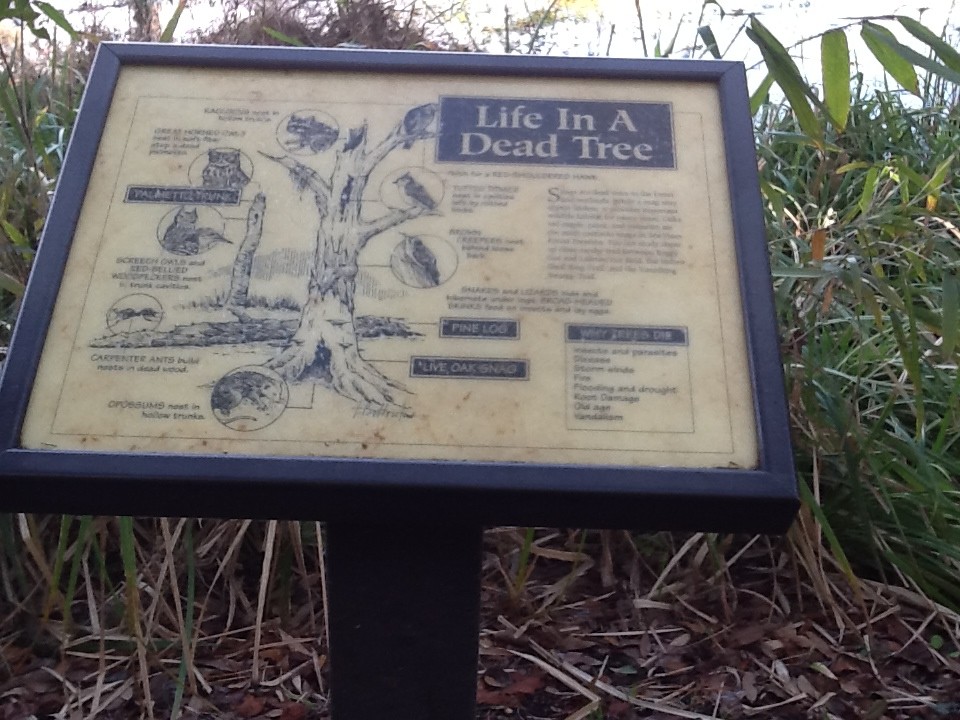
“Life In A Dead tree” reads the sign abutting the nature trail at Sea Pines, Hilton Head. While others may consider a dead tree to be–well, dead–at Sea Pines, the tree is viewed differently, as teeming with life, nurturing life and protecting the environment.  Dead trees are considered to be so valuable that you may need permission to remove a dead tree.


What possible benefit is the protection of a dead tree?  Read the sign!  Dead trees provide a nesting place for birds and small animals while providing building material for their nests.  A fallen tree provides ground cover and shade.  It can provide a breeding area for insects (for good and bad). It provides shelter for small animals and birds from predators, large and small.  It creates a barrier to wind, protecting the soil from erosion.

At the end of the process of decay, it fertilizes and nourishes the earth, providing the nutrients that constantly renew the forest.  A tree submerged in the water provides a place of safety for fish and other aquatic life.  All things considered, there is still plenty of life in that dead tree as it supports and protects new life around it.


International Women’s Day-March 8, 2012

          March is Women’s History Month.  President Obama has described Women’s History Month as a time to reflect on “the extraordinary accomplishments of women” in shaping the country’s history.
          But it isn’t just Women’s History Month.  If you opened up google this morning, you saw the “google doodle” that announces that March 8th is International Women’s Day.  The UN also celebrates March 8th as UN Day for Women’s Rights and International Peace.
          We sometimes need to be reminded of the strides we have made in developing richer, fuller lives for women and our families. We live in an era when our women friends are highly educated, live rich full lives with significant control over our personal destinies.  We are mindful of the educational, employment and personal opportunities available to women in this country. But we recognize that women in many parts of the world live their lives subject to rigid societal expectations, unable to be educated, and unable to control their destinies.  We are also mindful of the current environment in which women’s issues are once again a focus of political and media attention that harkens back to less progressive times.
          Meg and I take seriously the challenge of conflicting personal values concerning the role of women in society.  We recognize that people have differing opinions on a wide variety of issues from child care to contraception to employment opportunities. With that said, we believe in the right of all people to be treated with equal respect and equal dignity. We share U.S Supreme Court Justice Thurgood Marshall’s belief that for women there is little difference between a pedestal and a cage. We believe that Title IX, which requires that women and men receive equal educational opportunities, is invaluable in developing the equal role of women in society.  We respect and appreciate the men in our lives. We consider them our equals and consider ourselves equal to them. We respect the choices of women who dedicate themselves to family, home and community.  We believe that their choices, like ours, contribute to strong families and to rearing children who are happy, and who are physically and emotionally healthy.
          In 1995, Secretary of State Hillary Clinton said at the United Nations Fourth World Conference on Women that “women must enjoy the right to participate fully in the social and political lives of their countries if we want freedom and democracy to thrive and endure.”  What is true of the rights of women in developing countries is also true of women in this country.
           As we support the equal rights of men and women, we should also follow her wisdom that, “What we have to do…is to find a way to celebrate our diversity and debate our differences without fracturing our communities.”  We are grateful for being part of a community of friends who love and care about each other and endeavor to create a better and more just society.

All the news that’s fit to print

Layoffs are the order of the day for print media.  An estimated 3775 newsroom jobs were lost in 2011 alone, spread among newspapers large and small. Across the nation, newspapers papers, magazines, even books are giving way to Internet-based news and literature. The Washington Post, an icon in the publishing world, has recently reduced its staff.  Our own Kansas City Star has announced repeated layoffs including, most recently, in mid February, 2012.  As readers we are concerned with the ways in which the loss of traditional sources of information shrinks our ability to gather meaningful date on the important issues of the day.
Does this really matter if Internet sources are ready to provide us information?  The question, at least in part, is whether internet media will assume the mantel of investigative and in-depth reporting, on a local and national level, that inevitably declines as newspapers that have sustained reductions in news room staff.
Remember All the President’s Men, by Bob Woodward and Carl Bernstein? They spent months meeting with an anonymous informer identified only as “deep throat” before publishing a series of articles in the Washington Post exposing the Watergate scandal that resulted in President Nixon’s resignation and prison sentences for key members of his staff.  Our own Kansas City Star has repeatedly exposed incompetence and corruption throughout the metropolitan area.  The repeated reductions in staff leave the news room gutted, with at best only limited ability to seek out corruption, or report more than minimal local news.

The reduction in paid subscriptions and advertising revenues may make staff downsizing inevitable.  At the same time, competition between and among internet news source makes the competition for audiences more intense.  Facing that challenge, the Washington Post has expressed a commitment to continue it’s in-depth reporting, while moving aggressively to increase readership of its Internet paper.  Relying on online metrics to identify the number of clicks each of its articles receives, it is able to monitor constantly the popularity of each article, identify those with limited interest and replace low performing articles on a ongoing basis.  In this environment, is it reasonable to worry that articles about Kardashian weddings and celebrity probation violations will attract larger audiences than  school board meetings, second injury funds and low-level corruption. Focusing news and media attention on “easy news”, ie. news that is easily available through multiple sources, is cheaper and faster than authorizing journalists to spend months on a single article, or even a series of articles, requiring extensive research and exploration. It will be even more of a challenge to find a means by which journalists will be vigilant about reporting the mundane, but critical issues facing local communities.

It is difficult to criticize the paper media.  Their goal in 2012 is not to expand profit, but to secure survival while finding new resources and audiences.  In the interim we must, each of us, support and encourage  journalism that helps us to remain knowledgeable of the challenges that continue to confront us.  Certainly, this is essential to an educated citizenry.

Edward R. Murrow explained the problem this way: “the newest computer can merely compound, at speed, the oldest problem in the relations between human beings, and in the end, the communicator will be left with the problem of what to say and how to say it”.

Reply With Quote

The Few, the Proud, the Montford Point Marines

February is Black History Month.  It is an important time to celebrate African-American history.  It is equally to acknowledge the contributions of our friends of color. The successes of the present arise out of sacrifices from the past.  While they are too many to list, this is a great time to thank the Montford Point Marines who volunteered and served in World War II, after President Roosevelt entered a Presidential Directive integrating the Marine Corps.

We are all familiar with the Buffalo Soldiers formed at Fort Leavenworth in 1866 to fight in the Indian Wars.  We have also heard of the Tuskegee Airmen, the first African-American aviators in the Army Air Corps, who trained at Tuskegee, Oklahoma, beginning in 1941.  However, I had never heard of the Montfort Point Marines. They were activated in August 1942.  Between 1942 and 1949, 20,000 men volunteered to serve in the Marines. They trained in a segregated facility in Montford Marine Camp[1] in Montford Point, N.C.  Point, North Carolina.   Initially, they were trained by white officers.  Quickly African-Americans took over their own training when, by 1943, American Americans finally became noncommissioned officers.  Like the Buffalo Soldiers and the Tuskegee Airmen, they chose to fight, despite segregation, in order to show their national commitment.  Cassandra L. Paschal has written about them that they believed “that if they could show their homeland their valor they would return to a country that in its gratitude would give them all of the freedoms provided in our Constitution.”

Montford Point Marines were assigned to support white troops.  However, they often found themselves in the thick of battle. They served, fought and died in the Pacific Theater in places with names like Saipan, Okinawa, Guam and the Mariana Islands.    Shortly after World War II, in September 1949, President Truman ordered the end of segregation in the armed forces.  Thereafter all armed forces were integrated.

On November 23, 2012, House Resolution 2447 was signed into law by President Obama.  The resolution granted the Congressional Medal or Honor to the Montford Point Marines.  While 11 members abstained from voting, not a single “no” vote was entered.

Equality under the law did not come quickly.  But the service of these brave men has finally been acknowledged and honored. To those who served, “Thank you for your service”.


[1] Renamed Camp Johnson on April 19, 1974, in honor of Sergeant Major, Gilbert H. “Hashmark” Johnson, a Distinguished Montford Point Drill Instructor