A Lazy Day on Martha’s Vineyard

At the end of my “cousins trip” I met my husband and friends on Martha’s Vineyard.  The only way to get to the island is by ferry, private boat or plane, or Cape Air.  Visitors should only fly Cape Air if they have absolutely no schedule, since Cape Air’s schedule is as relaxed as the island.  We took Cape Air.

We had absolutely nothing to do for the weekend, but–to do nothing.  The company was great, the environment was soothing to the soul.  Martha’s Vineyard is all about being lazy.  And oh, we did that so well.  On the island, it seems that no one is in a hurry.  The boats are slow, the birds are tranquil and the need for speed seems nonexistent.  Even the critters are calm.  We found this old chair sitting abandoned on the beach.  apparently the owner just wants it there in case s/he comes by and wants to sit.  The bicycle seemed to be the same situation.  I did not see any children anywhere nearby. Perhaps the islanders not only live a relaxed lifestyle, but also a trusting one.

Boats are everywhere, but canoes, trawlers and similar low speed boats are preferred to power boats.  And like everything else, there seems to be a casual attitude about guarding one’s possessions.  I suspect nearby clam diggers may have been responsible for this boat.

While life is casual, laid back and relaxed, food, especially lobster, is serious business.  There is nothing better than fresh lobster, fresh corn and key lime pie shared with friends.

Hope you have a great and restful weekend.

“The Betrayal of the American Dream” by James B. Steele

The Kansas City Public Library is one of my favorite places.  While it is an incredible building on the outside, it is what happens inside the building that makes it so special. The library provides for Kansas City the kind of educational opportunities I imagine were available in the times of Socrates.  It is a place to read, study and share ideas; not for glory, grades or a degree, but for the sheer love of learning.

Last night’s lecture by James B. Steele, co-author of The Betrayal of the American Dream, presented the library at its best. The  seating areas on the first and second floors of the library were packed. The audience, while diverse by any standard, included a significant number of bankers, academics, reporters, and business and civic leaders of both political parties.  I could barely see Mr. Steele from my seat behind the second floor bannister. Despite the inconvenient seating arrangements, no one left.  The audience listened with rapt attention as Steele spoke for 40 minutes and took questions for another 40 minutes.

Steele is a native of Kansas, and a graduate of UMKC, so he is a “hometown success”.  He began his career with the Kansas City Times before moving to the national arena.  An author and long time investigative journalist, he and his long time collaborator, Donald L. Bartlett have won two Pulitzer Prizes, in addition to other notable awards.  The book, American: What Went wrong?, a No. 1 New York Times bestseller, is one of the seven books earlier books they co-authored.  

Mr. Steele is a gracious and kindly gentleman, but was quite compelling in his description of the current state of U.S. economics and, particularly the destruction of the middle class; the class he identifies as “America’s Greatest asset”.  He describes ways in which he believes that the middle class has been systematically impoverished, forced to respond to long-term job insecurity and loss of income and benefits in favor of the new ruling elite class. 

His lecture moved through the impact of changing lending practices, loss of employment benefits and high levels of student debt as factors in the movement of the middle class to the status of working poor.  He is concerned that because of inadequate retirement resources our older citizens work later in life, leaving fewer job opportunities for those just entering the work force.  Like Malcolm Gladwell in his book Outliers, Steele is troubled by the long-term repercussions on a generation unable to initially find employment at levels consistent with their skills and education.  Those repercussions can include living with parents, delaying marriage, family and home ownership, as well as lowering life-long career and income potential.

Steele does not point the finger at only one political party, but does point out, as others have, that the failure of bipartisanship among government leaders stifles effective problem solving at a national level. He also describes the negative impact of expanded globalization and movement of U.S. jobs overseas where labor is cheap and companies can often work free of regulation.

I do not presume that Mr. Steele has the answer to all of our problems.  He does, however, in a gracious, professional and forthright manner, cause us to reflect on the economic, social and cultural losses we face as a nation and as a community if we continue to move from a country with a strong middle class to a country dominated by a small but increasingly affluent upper class and a large increasingly impoverished lower class.  Food for thought for all of us.

__________________________

This post does not represent the opinions of our family, our friends or our employers.  Hopefully, I have accurately reported Mr. Steele’s views and comments.

For Aunt Kathie

Aunt Kathie is Lily and Cousteau’s “Aunt” in Kansas City. Kathie is a greyhound rescuer, REGAP volunteer, and foster mom. She was Lily’s foster mom before we adopted her, and she has since adopted the name “Aunt Kathie” since she sat for our kiddos often when we lived in Kansas City.

Well, Lily and Cousteau have been running around the house “naked” lately (meaning, without their collars), and Aunt Kathie wasn’t very happy about that. SO, being the good mommy that I am, I have put their collars back on.

Aunt Kathie, this one’s for you!

For those of you who are not familiar with greyhounds, they are absolutely the sweetest and most loving dogs I’ve ever known. They have very difficult lives while in the racing industry, yet still make amazing companions despite their hardships. Please consider rescuing a retired racer. You can visit your local greyhound rescue group, or visit one of the following groups we’ve worked with: Kansas City REGAP www.kcregap.org, and Wine Country Greyhounds www.winecountrygreyhounds.com.

Cousin Trip–In the Shadow of My Ancestors

My Uncle Dick Mesle was the family historian.  Until I found family photographs, Bibles and other evidences of generations’ past, I had little knowledge of my family history.  For my parents, it was religion that bound us together as a family, not the ancestors whose blood flows through our veins.  But I have long wanted to know “who is my tribe”, where do I belong in this great world.  As a result, when I began to find windows into our family past, I was anxious to pursue them. I have done so from that day to the present, a quest that has continued more than 9 years.

I am not looking for lost treasures, nor am I interested in kingdoms or proof of nobility.  But I am fascinated by the values that unite us as family.  Surely family values, beliefs and even professional interests are likely to continue from generation to generation.  Bankers are likely to raise bankers, teachers are likely to raise teachers.

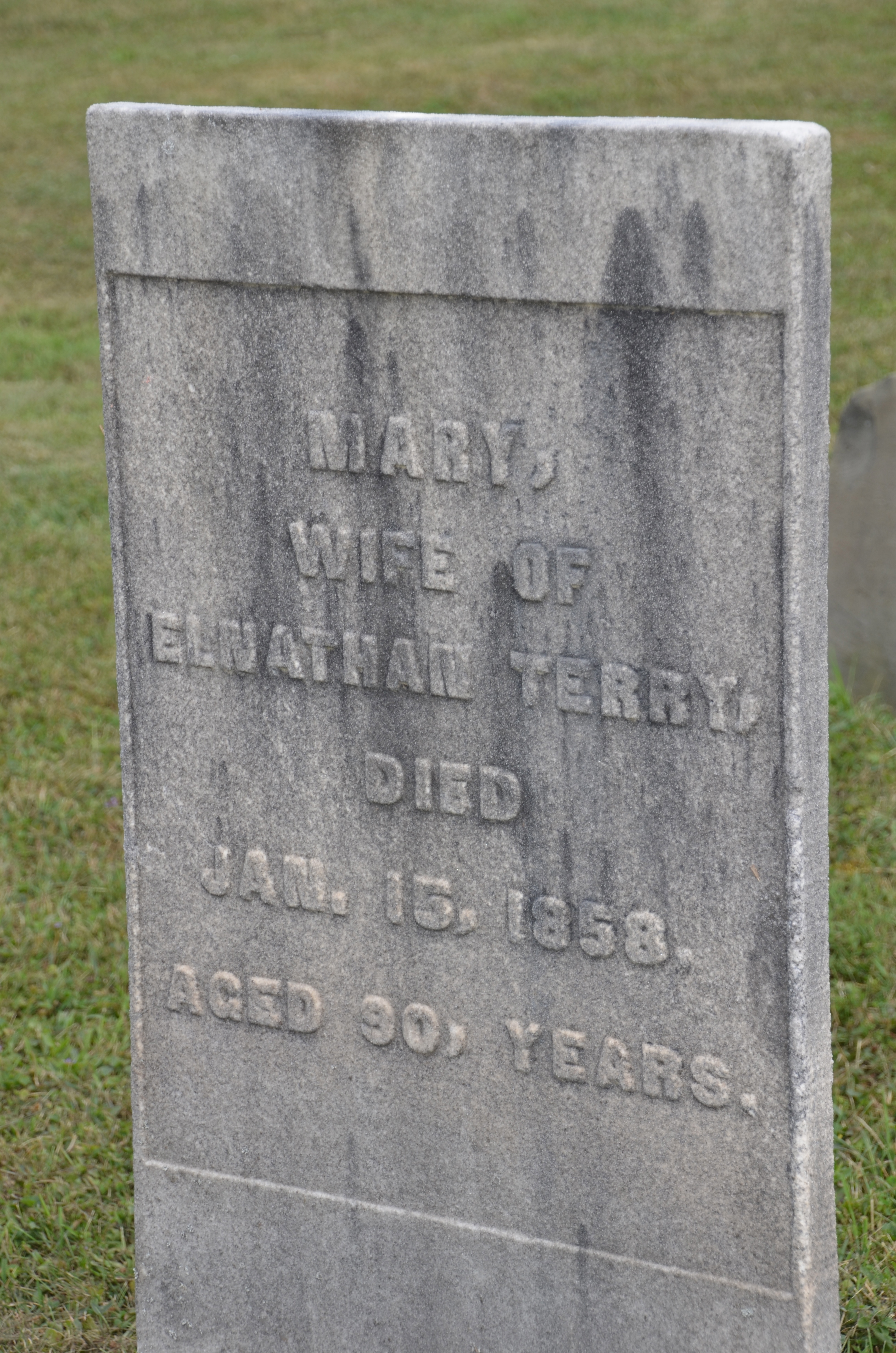
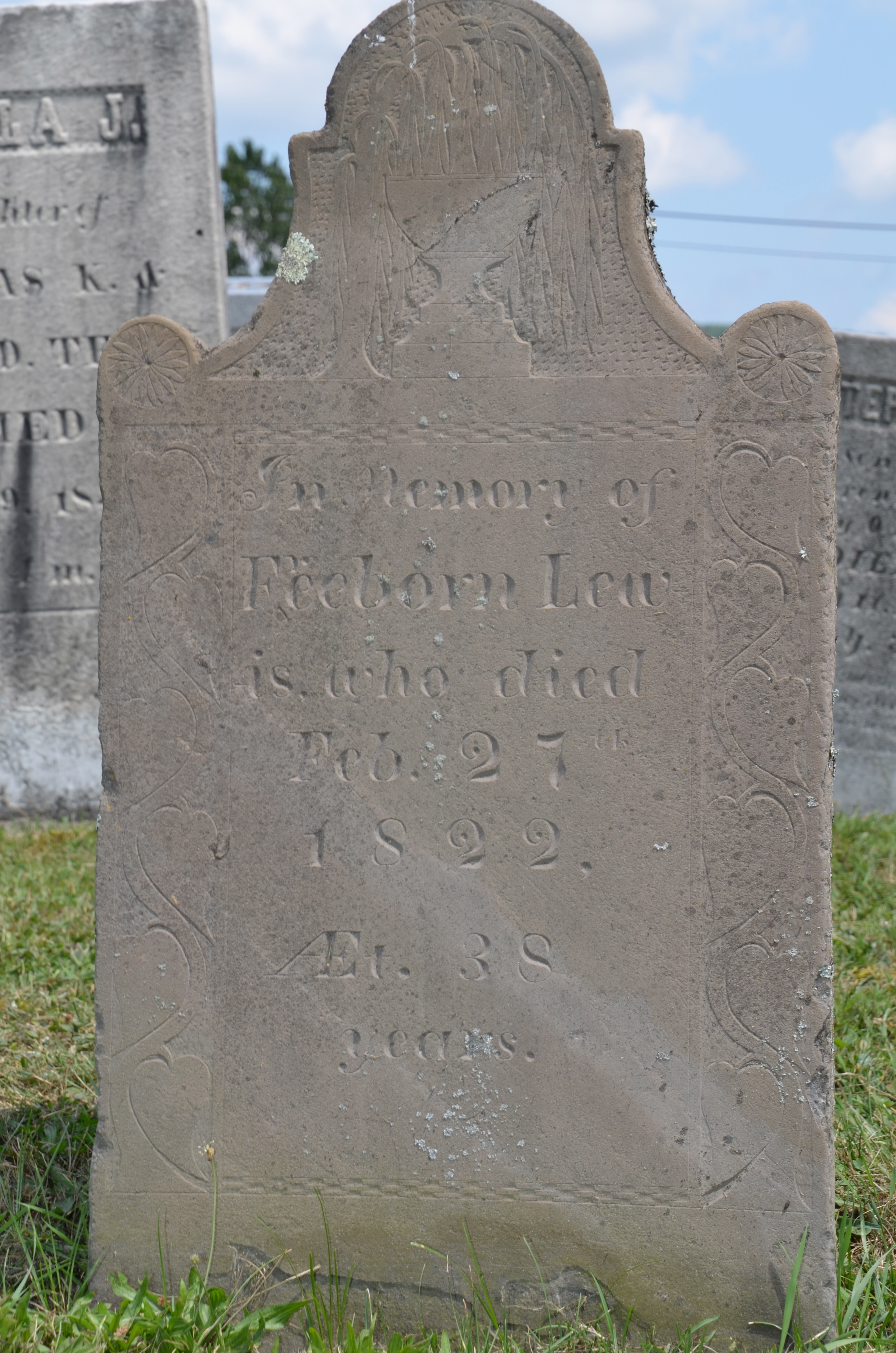
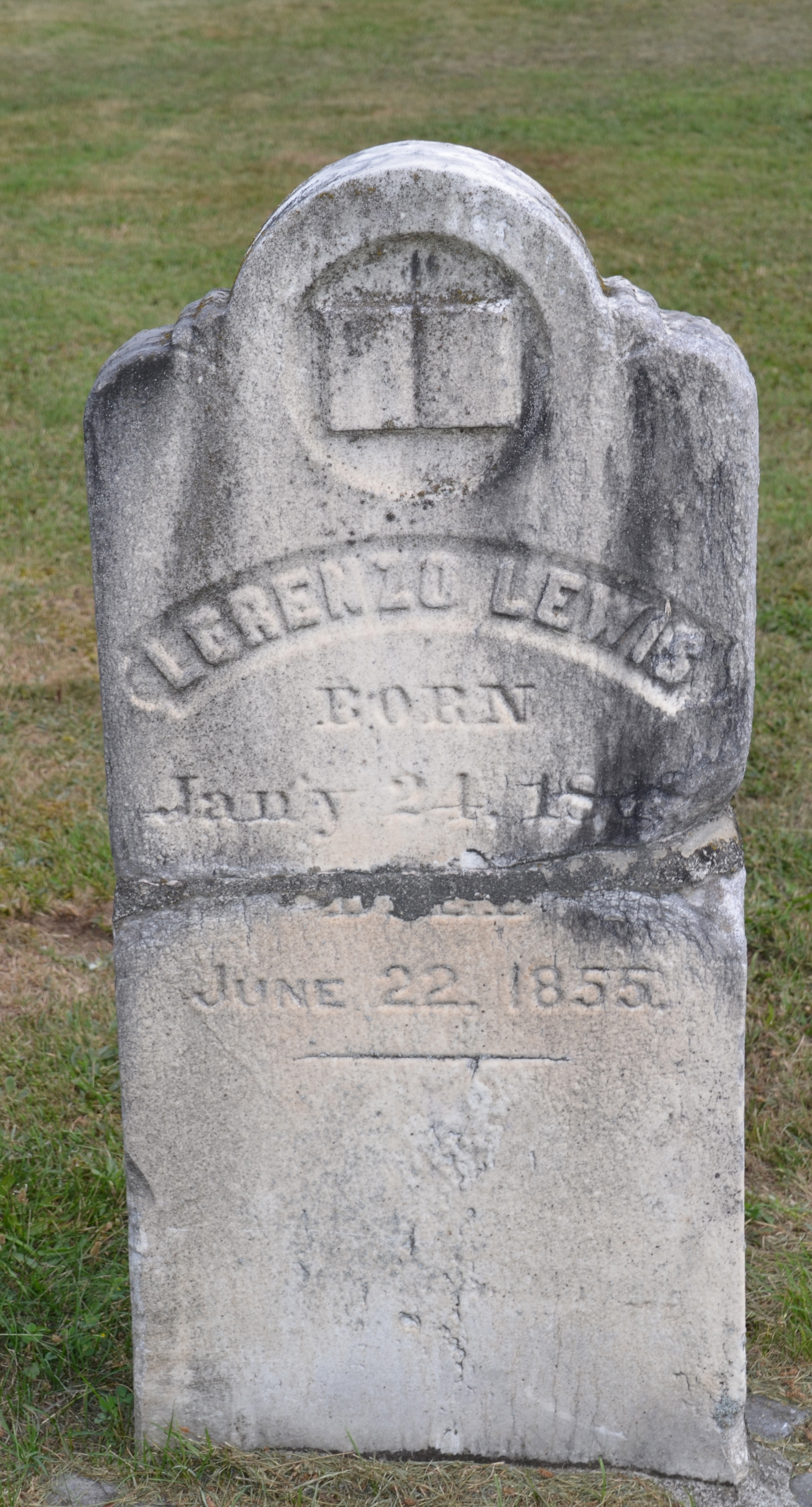
With my husband I have travelled to find where John Lewis was buried in 1691 under an asphalt patch of land in Westerly, Rhode Island.  Now my sister, my cousins and I have walked Section A of Mt. Hope Cemetery, in Norwich, NY.  Here rest generations of Lewis and Terry ancestors: my family.  While I can incorporate these photographs of their gravestones into my genealogical research, for now, the photographs themselves document the close ties that bound the family together in Norwich for more than 100 years.  Here are some of the ancestors I found:

Elnathan Terry (1758-1840): American Revolutionary Soldier.  Served under Captain Gorton, under command of Lt. Caleb Lewis.

Mary Kinyon Terry (1768-1858): Wife of Elnathan Terry.  Mary is a direct descendent of Thomas Rogers, Richard Warren, Francis Cooke and John Cooke, all of whom arrived on the Mayflower.  Elnathan and Mary moved to New York before 1810.

Freeborn Lewis (1784-1822): Married Esther Terry (1787-1865) daughter of Elnathan Terry and Mary Kinyon Terry.  She remarried on Freeborn’s death and is buried in Little Sioux, Harrison County, Iowa.  Freeborn also moved to NY with other Terrys and Lewises by 1810.

Lorenzo Lewis (1808-1855) is the son of Freeborn Lewis and Esther Terry Lewis.  Lorenzo married Mary Ocelia Smith (1815-1879). Lorenzo owned a saw mill in Norwich. He died when his son, Horatio,  was only a year old.  His sons continued and expanded the milling operations.

Daniel Horatio Lewis (1854-1917):  I was elated to finally locate the tombstone of my great-grandfather, Daniel Horatio Lewis. He is the son of Lorenzo Lewis and Mary Ocelia Smith.  He married Victoria Belcher Lewis. He and his brothers Herman and Harris Lewis were in the lumber business, were builders, and owned and operated saw mills in and around Norwich. Herman and another brother, Willard, served with the Union in the Civil War.  Willard died of disease in a prison camp in New Orleans in 1855.

Horatio was also a temperance lecturer.  Victoria was a teacher.  Horatio and Victoria moved with their family to Boston and ultimately moved to Sherrill, NY where they died.  They are buried in Norwich in the Lewis family plots.

After years of research, Mt. Hope Cemetery in Norwich was a wonderful day of discovery.  All along the way, i was aided by the ground crew of the cemetery, who were gracious and enthusiastic about our adventure; and abetted by my sister and cousins, who seemed to thrive on every discovery as much as I did.  A quest, an adventure and a bonding experience.

Summer Fun and Rose Beauty

It is a gorgeous day.  The temperature is well within the range of comfort.  Terry, Casey and I are ready to start our Sunday morning drive.  Casey is anxious.  He unfailingly knows that it is Sunday and rushes us as much as he can, barking and running around at our feet.

For such a beautiful day, I thought I would share with you an image of a rose in full, incredible bloom.

Have a great day!

Oneida Community–Where Giants Walked

“Where giants walked”.  Those are the words our tour guide, the curator of the Mansion House in Oneida, New York, used to describe the Oneida Community.  Disbanded more than 120 years ago, the community grounds still emit a feeling both vibrant and tranquil.

I didn’t know what to expect when the “cousins trip” arrived in Oneida.  What we found far exceeded even my enthusiastic expectations.  We spent a night in the Mansion House where our rooms were simple but lovely.  The environment was so much more.

The Oneida Community was founded in the belief that individuals can become free from sin while still here on earth.  Beyond their religious aspirations, their practical reality involved a focus on hard community labor, culture, music, art and literature.  These values resonated throughout the community.  Beautification of the grounds of the Mansion House and of the surrounding community are evident today.

While much of the Mansion House is plain, befitting a society based on de-emphasizing private property, there was an emphasis on beauty of the common areas.  The great hall that was a central meeting area demonstrates the community’s commitment to perfection in its culture and art.

The grounds are lovely, incorporating gardens, simple fountains and open areas surrounded by trees.


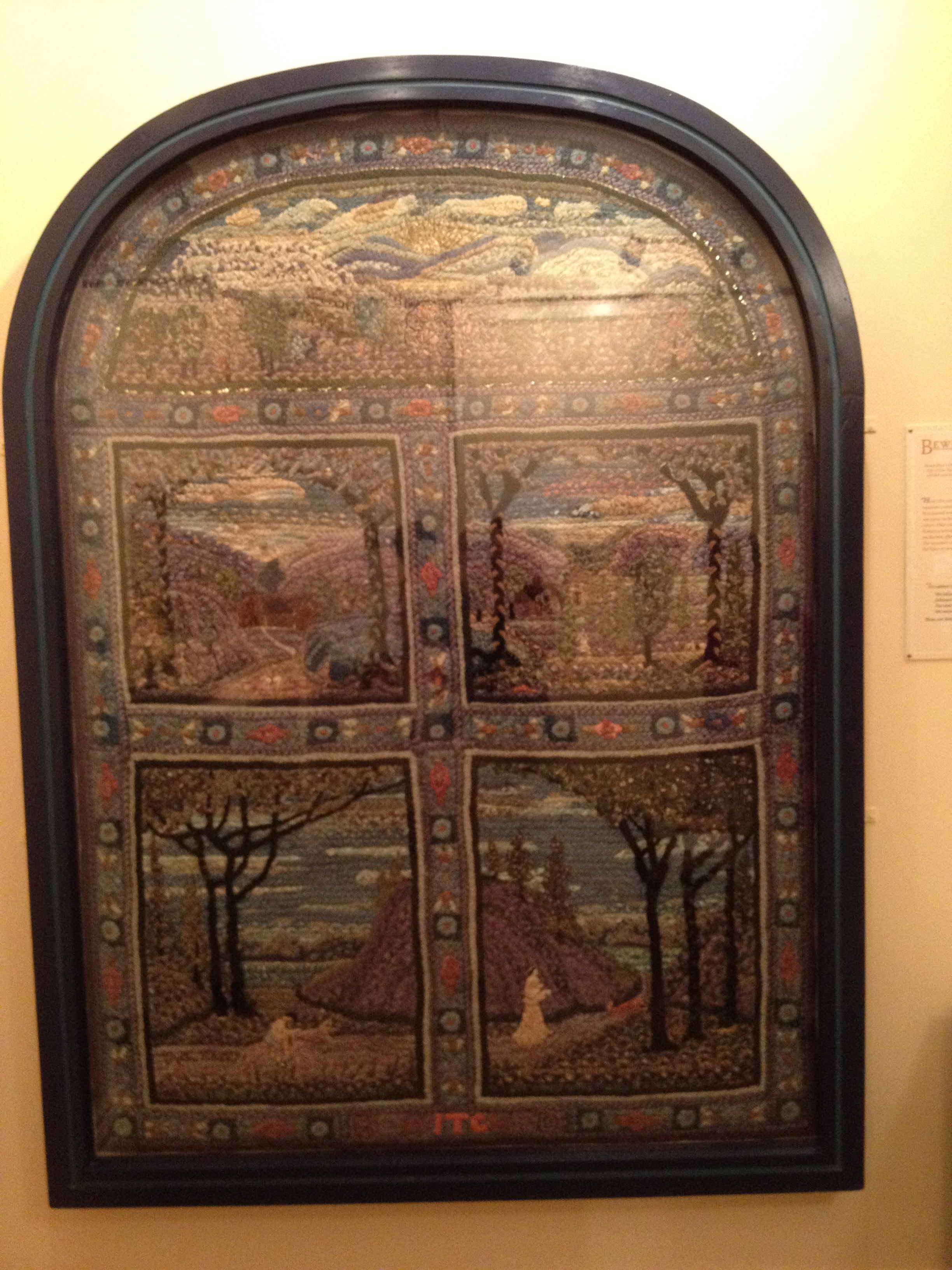
Artistic endeavors were encouraged.  The museum displays beautiful art such as this unique braided rug that are  wonderful works of craftsmanship.

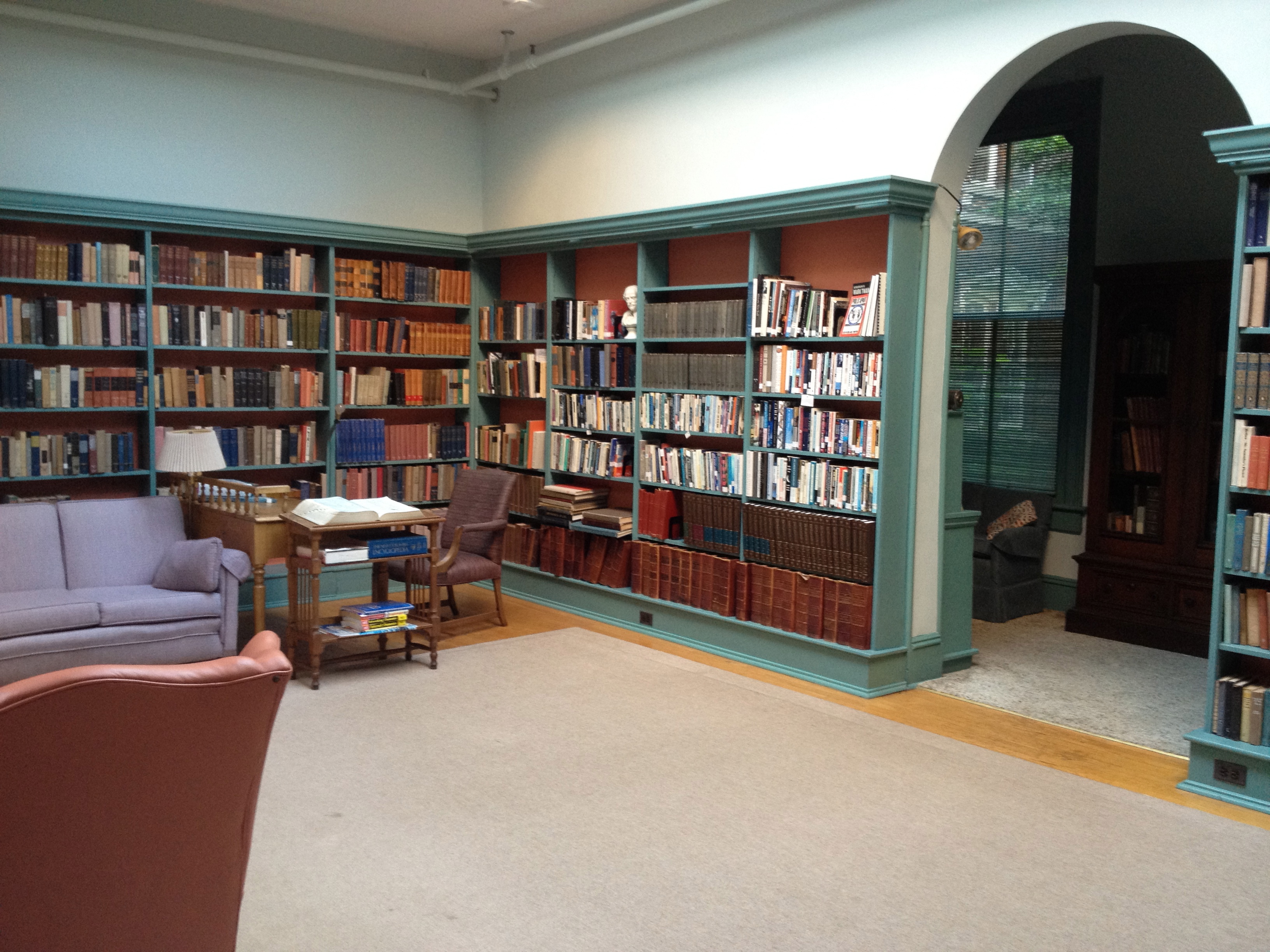
The library was a focal point of daily life, filled with books that were identified as incorporating all of the knowledge important to a learned community.  It remains a great place to visit and study.

While long disbanded as a religious community, descendants of community members continue to live in the shadow of the Mansion House.  While their homes are not elegant, they are as graceful, well-groomed and inviting as the people who live there.

Welcome to “Utopia”.

Oneida Community: From Utopian Community to Silverware Manufacturer

Founded by John Humphrey Noyes in 1848, the Oneida Community was based on the premise that individuals can be free of sin and perfect on earth, not just in Heaven.  The community practiced what has been described as “Bible communism”, in the sense that it practiced a form of communal property based on a belief that freedom from possessions facilitated achieving perfection.  At its peak, shortly before it dissolved in 1881, it had a membership of 306.  While the community has been disbanded well in excess of 100 years, descendants of the members continue to live in apparent harmony and grace in the shadow of the Mansion House, which was at the center of community life.

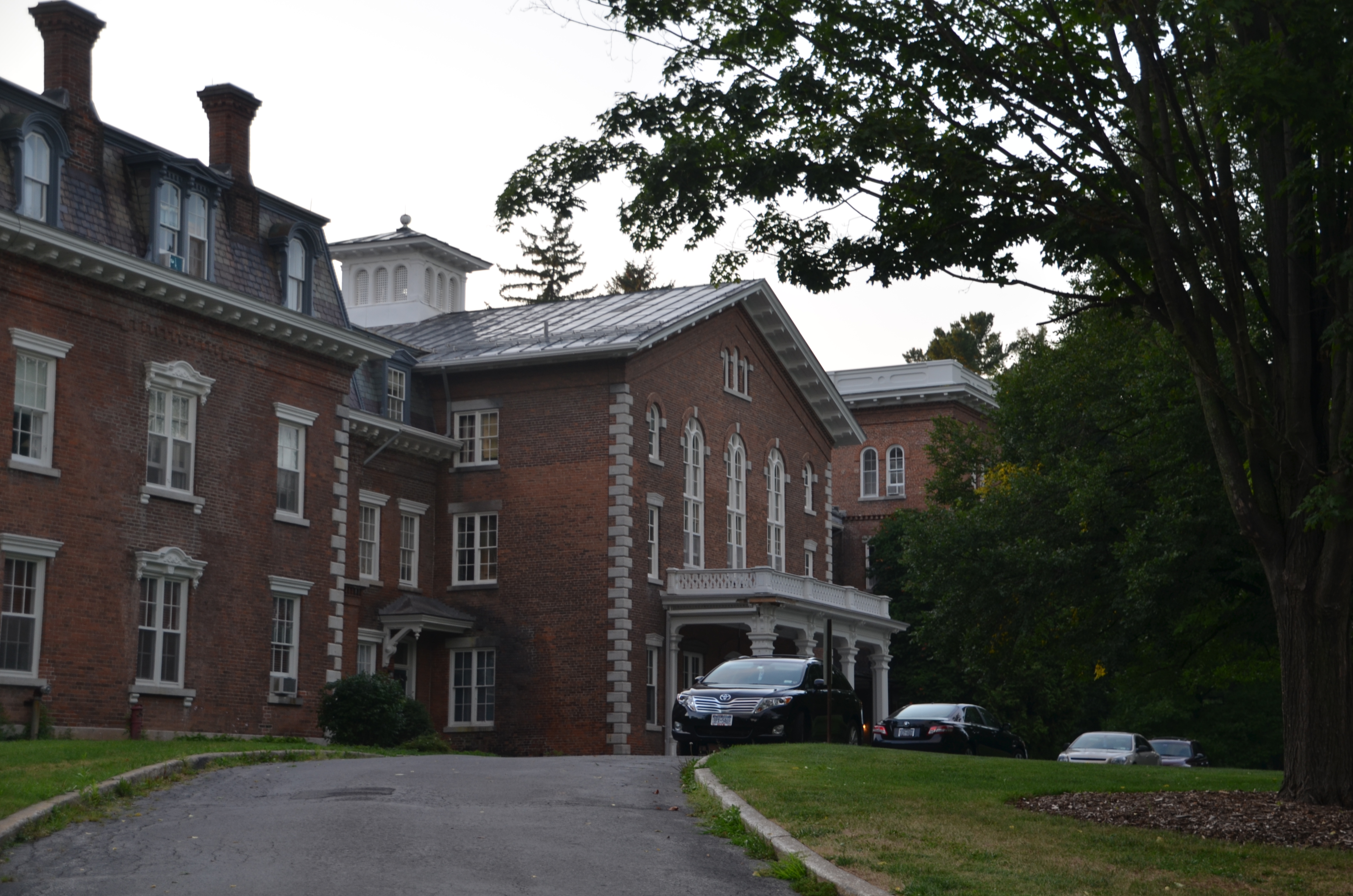
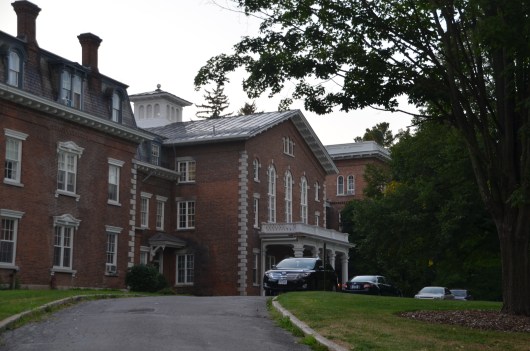
The Mansion House consists of a cluster of buildings sitting in a campus like environment where members of the community lived and prospered.
None of the members of my family were members of the Oneida Community, but it is, nonetheless, a part of what shaped our family values.  Because my  grandfather worked for the Oneida Silver Company, he and my father, aunt and uncle were surrounded by former members of the community and were constantly influenced by the best of its values: equality of the sexes, cultural advancement, education and hard work.

To facilitate the complete integration of women into the life of the community, women rejected the heavy petticoats and restrictive clothing of outside society and wore short, but modest, dresses over long pantaloons. Women were included among the leadership of the community. Men and women shared work duties, rotating among those duties so that each person shared in more routine and more specialized tasks, as well as sharing traditionally male and female tasks.

Criticism of members of the community was considered a significant aspect of the goal of achieving perfection.  Primary reasons for criticism were what was considered inappropriate “special love” such as love of a mother for her birth child that exceeded her love of the children of other women.  I am told that the unwillingness of the community to recognize the inevitability of close ties between a mother and her own child was one of the reasons for the downfall of the commune.  Victorian values in the outside world may have been another. Squabbling among members surely also took a toll.

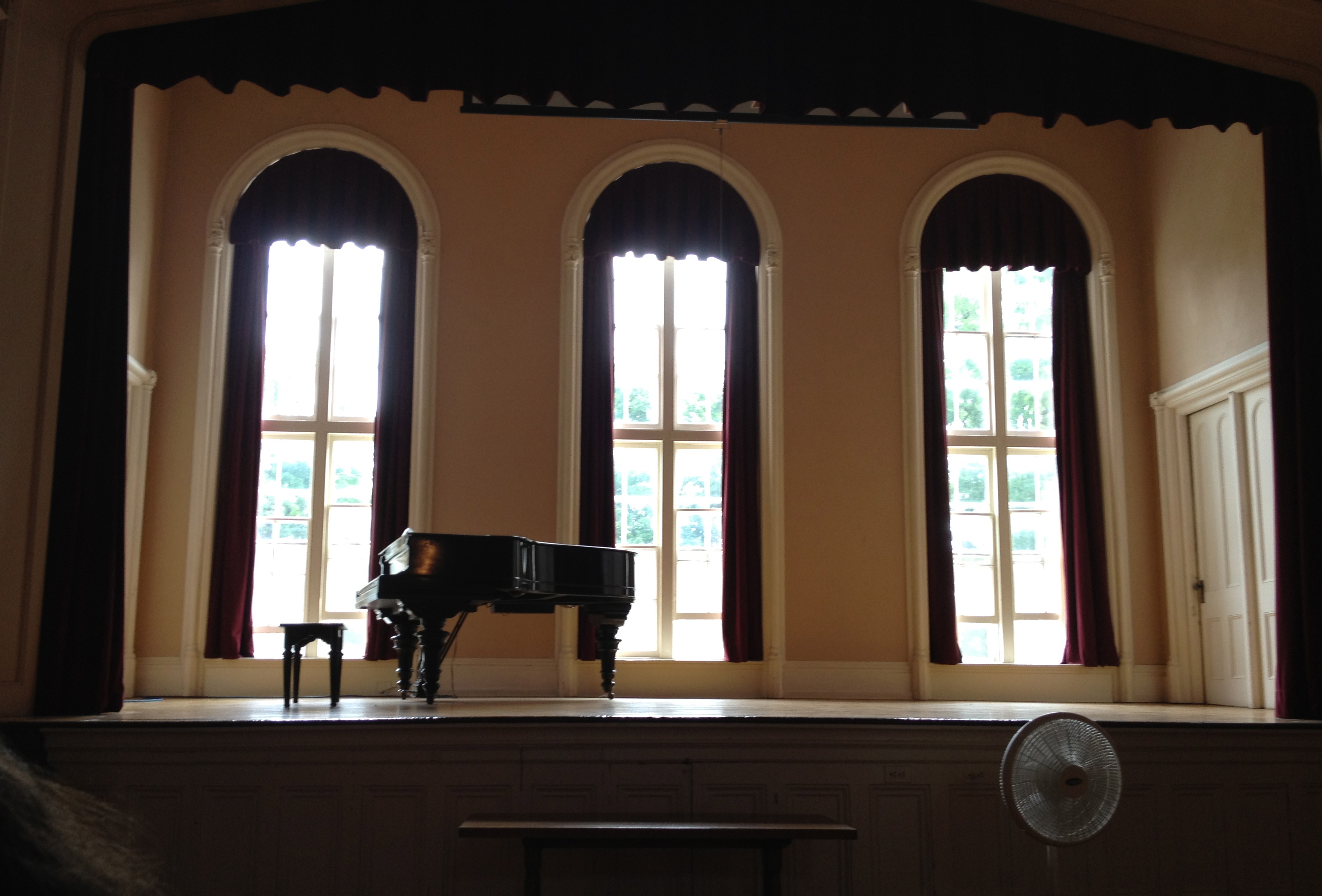
Pride, vanity were often the subject of criticism.  Individuals called for criticism by leaders of the community were expected to remain silent, accept the criticism and use the criticism as a means of furthering their efforts to obtain perfection. This lovely hall served as a center for cultural events, concerts, meetings but also the location for individual criticism.

For many years the community prospered due to its farming, silk and canning operations, but more important as a primary producer of animal traps.  After the commune disbanded the founders and their descendants remained closely connected financially and geographically.  By about 1899, the former members of the commune, under the leadership of P.B. Noyes, son of the founder, acquired a failing silver ware company. Oneida and its employees, including my grandfather, Frank C. Mesle, moved the company from Niagara Falls to Oneida where the company prospered through hard work and innovation.
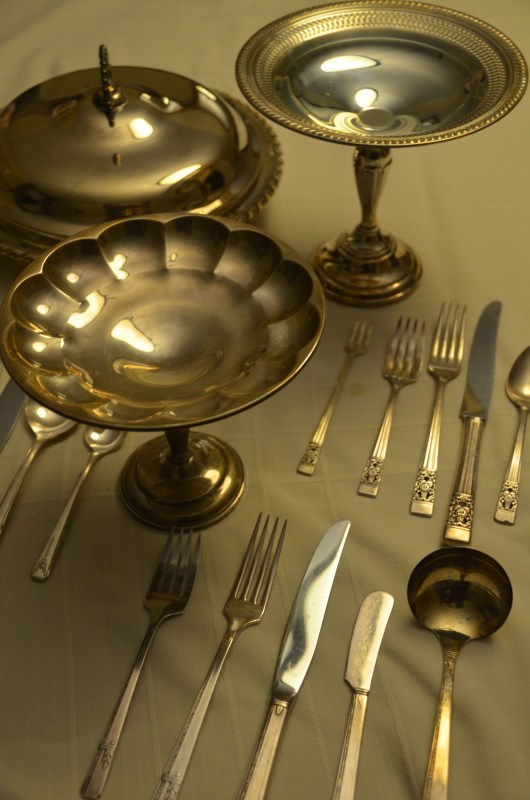
Many utopian values were incorporated into the life of the company, particularly the concept of sharing wealth and sharing economic challenges.  Executives of the company were given raises only when raises were given to line workers. In periods of recession and depression, all employees shared the available work such that while their hours and their incomes were reduced, no one bore the overwhelming burden of difficult times.

The company reached the height of its financial success in the 1980’s but its revenues declined, and the company essentially disappeared, due to its inability to compete with foreign flatware.  But many of the best the values of the community continue to this day.  Literature, culture, music and hard work resonate throughout the community.  Beautification projects can be seen in Oneida and neighboring Sherrill, NY. even today.

Happy Birthday Pud!!

Who’s the best Pud ever? Gee, let me think! That would be, Pud, of course:) Today, Mr. Terry Christenberry turns another year young, and we’re happy to celebrate both in person, by phone, over FaceTime, and well, our handy blog.

Here’s to Terry.  A wise and wonderful husband, father and step-father:

A proud and adoring grandfather:

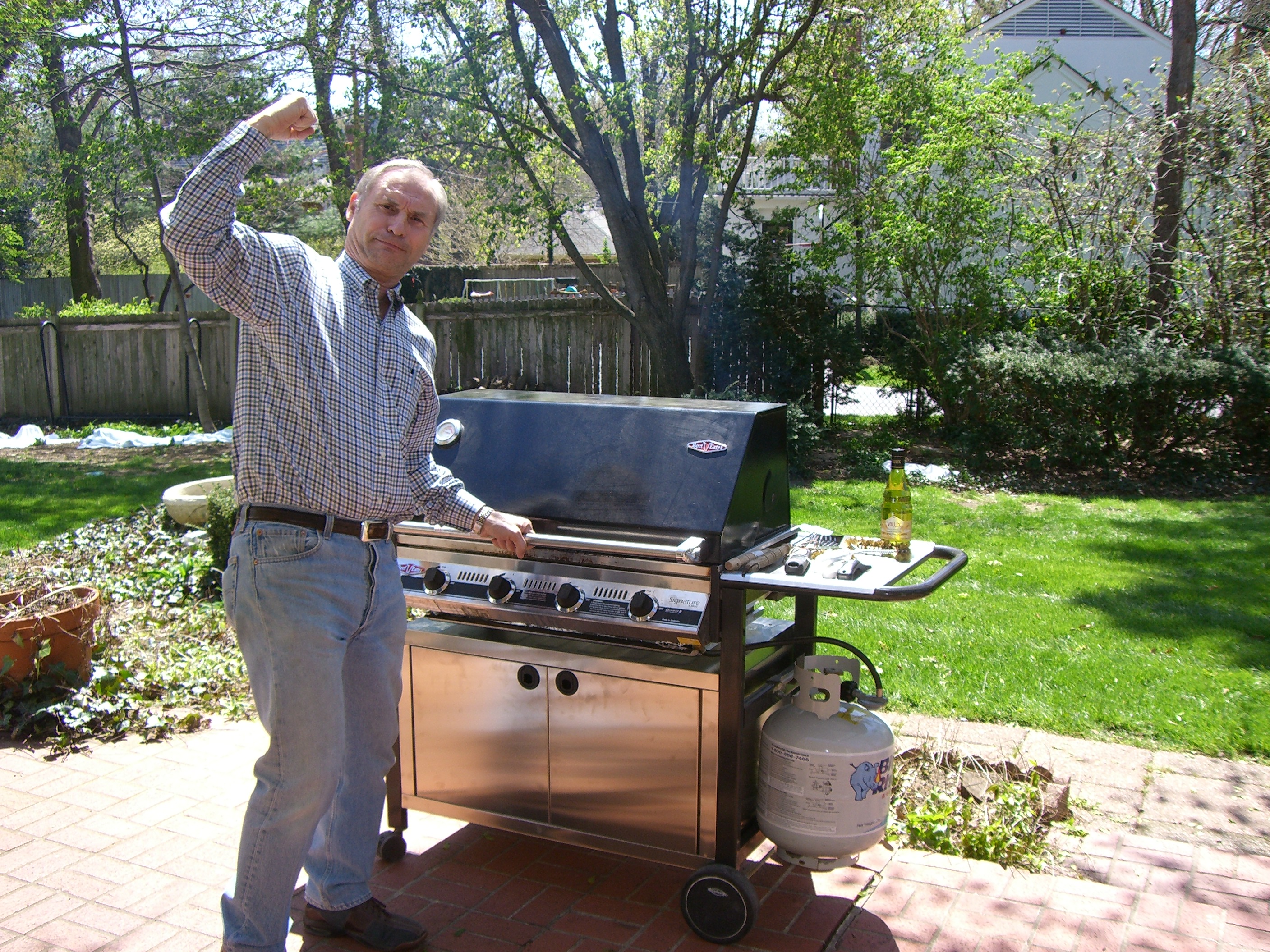
An awesome and macho grill-master:

Pud.  Have an amazing birthday today.  We love you!

Vote Today: Democracy Depends On It!

Today there are elections all across the country.  Vote for the party, the candidates and the issues of your choice.  But vote.  Democracy depends on it.

Russian River, Meet Pacific Ocean

There is nothing more humbling to me than a massive body of water. Some of my favorite moments have been staring out into the ocean, or perhaps a huge river. The Mediterranean Sea when I was in Turkey. The Amazon River in Peru. The Pacific Ocean in my new home state of California. Well, on one of our recent outings, Jake and I drove up to have dinner along the coast, and we ended up at the Russian River Delta, where the Russian River meets the Pacific Ocean near Jenner, CA.

And looking at the delta where the river meets the ocean…

Near the shoreline, the ocean has some beautiful rock formations jutting out from the water.

What a beautiful place, and we live here! If only we could figure out a way to have this view out our back deck….now that would really be something.