Oneida Community–Where Giants Walked

“Where giants walked”.  Those are the words our tour guide, the curator of the Mansion House in Oneida, New York, used to describe the Oneida Community.  Disbanded more than 120 years ago, the community grounds still emit a feeling both vibrant and tranquil.

I didn’t know what to expect when the “cousins trip” arrived in Oneida.  What we found far exceeded even my enthusiastic expectations.  We spent a night in the Mansion House where our rooms were simple but lovely.  The environment was so much more.

The Oneida Community was founded in the belief that individuals can become free from sin while still here on earth.  Beyond their religious aspirations, their practical reality involved a focus on hard community labor, culture, music, art and literature.  These values resonated throughout the community.  Beautification of the grounds of the Mansion House and of the surrounding community are evident today.

While much of the Mansion House is plain, befitting a society based on de-emphasizing private property, there was an emphasis on beauty of the common areas.  The great hall that was a central meeting area demonstrates the community’s commitment to perfection in its culture and art.

The grounds are lovely, incorporating gardens, simple fountains and open areas surrounded by trees.


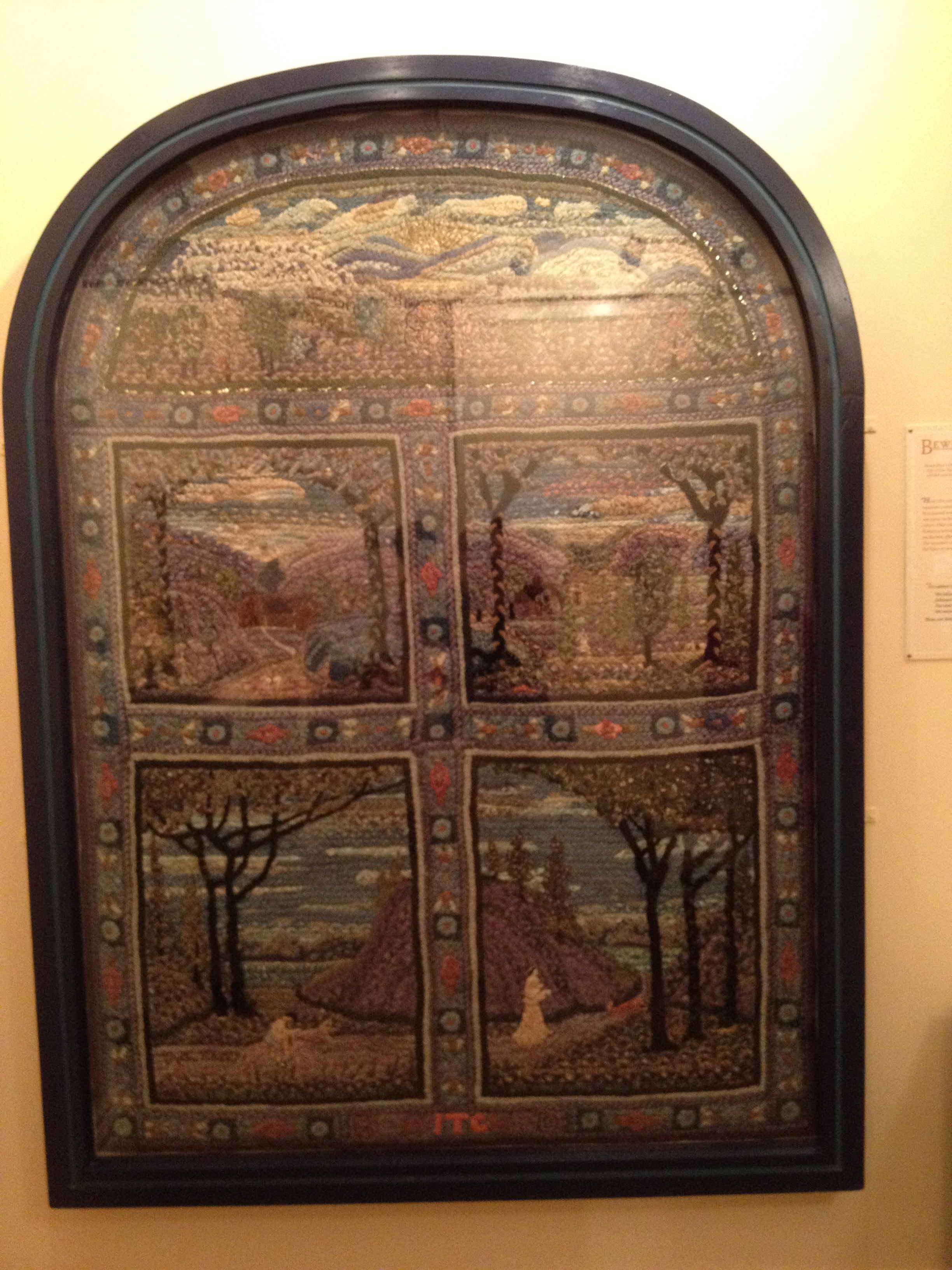
Artistic endeavors were encouraged.  The museum displays beautiful art such as this unique braided rug that are  wonderful works of craftsmanship.

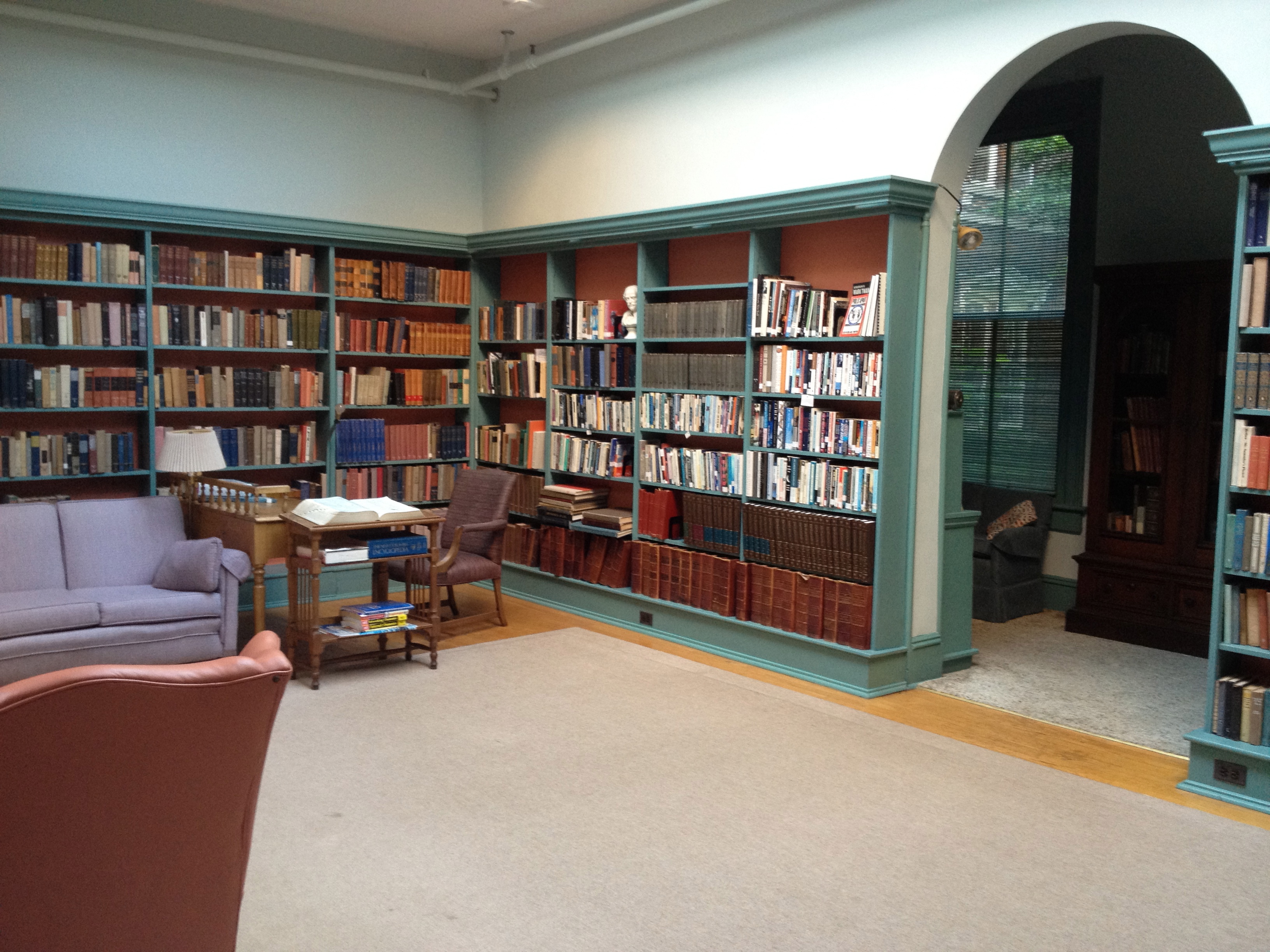
The library was a focal point of daily life, filled with books that were identified as incorporating all of the knowledge important to a learned community.  It remains a great place to visit and study.

While long disbanded as a religious community, descendants of community members continue to live in the shadow of the Mansion House.  While their homes are not elegant, they are as graceful, well-groomed and inviting as the people who live there.

Welcome to “Utopia”.

Oneida Community: From Utopian Community to Silverware Manufacturer

Founded by John Humphrey Noyes in 1848, the Oneida Community was based on the premise that individuals can be free of sin and perfect on earth, not just in Heaven.  The community practiced what has been described as “Bible communism”, in the sense that it practiced a form of communal property based on a belief that freedom from possessions facilitated achieving perfection.  At its peak, shortly before it dissolved in 1881, it had a membership of 306.  While the community has been disbanded well in excess of 100 years, descendants of the members continue to live in apparent harmony and grace in the shadow of the Mansion House, which was at the center of community life.

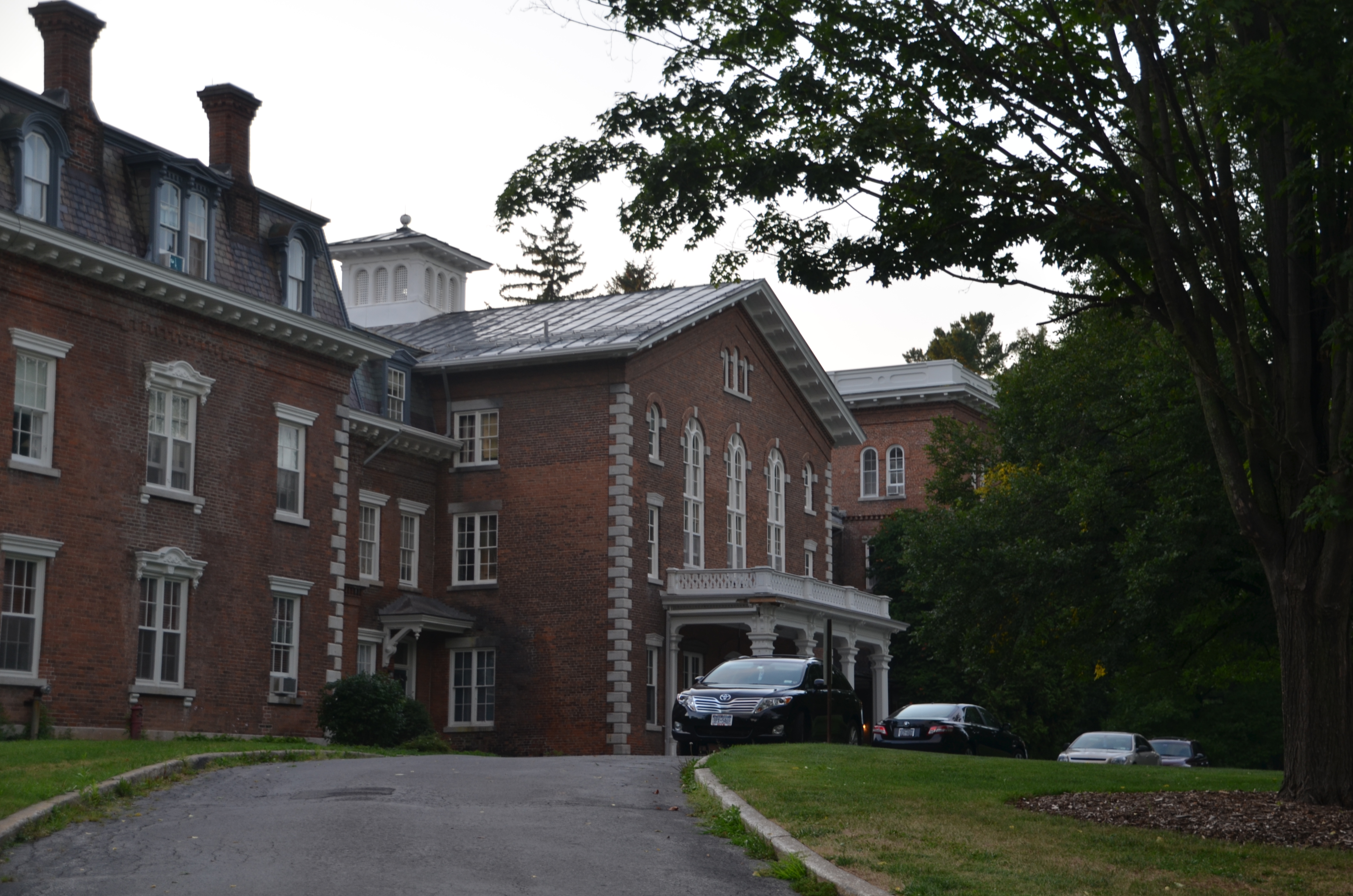
The Mansion House consists of a cluster of buildings sitting in a campus like environment where members of the community lived and prospered.

None of the members of my family were members of the Oneida Community, but it is, nonetheless, a part of what shaped our family values.  Because my  grandfather worked for the Oneida Silver Company, he and my father, aunt and uncle were surrounded by former members of the community and were constantly influenced by the best of its values: equality of the sexes, cultural advancement, education and hard work.

To facilitate the complete integration of women into the life of the community, women rejected the heavy petticoats and restrictive clothing of outside society and wore short, but modest, dresses over long pantaloons. Women were included among the leadership of the community. Men and women shared work duties, rotating among those duties so that each person shared in more routine and more specialized tasks, as well as sharing traditionally male and female tasks.

Criticism of members of the community was considered a significant aspect of the goal of achieving perfection.  Primary reasons for criticism were what was considered inappropriate “special love” such as love of a mother for her birth child that exceeded her love of the children of other women.  I am told that the unwillingness of the community to recognize the inevitability of close ties between a mother and her own child was one of the reasons for the downfall of the commune.  Victorian values in the outside world may have been another. Squabbling among members surely also took a toll.

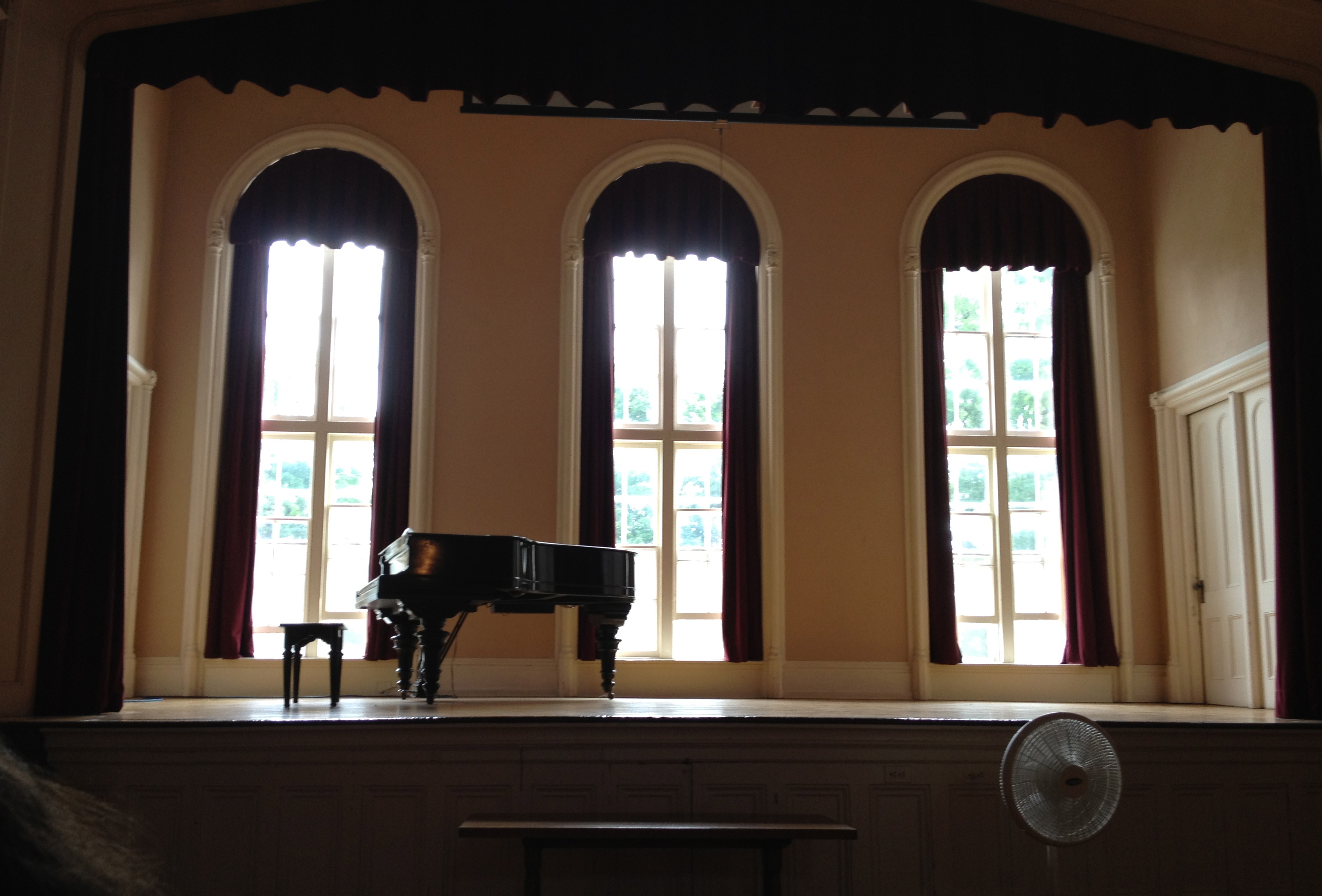
Pride, vanity were often the subject of criticism.  Individuals called for criticism by leaders of the community were expected to remain silent, accept the criticism and use the criticism as a means of furthering their efforts to obtain perfection. This lovely hall served as a center for cultural events, concerts, meetings but also the location for individual criticism.

For many years the community prospered due to its farming, silk and canning operations, but more important as a primary producer of animal traps.  After the commune disbanded the founders and their descendants remained closely connected financially and geographically.  By about 1899, the former members of the commune, under the leadership of P.B. Noyes, son of the founder, acquired a failing silver ware company. Oneida and its employees, including my grandfather, Frank C. Mesle, moved the company from Niagara Falls to Oneida where the company prospered through hard work and innovation.

Many utopian values were incorporated into the life of the company, particularly the concept of sharing wealth and sharing economic challenges.  Executives of the company were given raises only when raises were given to line workers. In periods of recession and depression, all employees shared the available work such that while their hours and their incomes were reduced, no one bore the overwhelming burden of difficult times.

The company reached the height of its financial success in the 1980’s but its revenues declined, and the company essentially disappeared, due to its inability to compete with foreign flatware.  But many of the best the values of the community continue to this day.  Literature, culture, music and hard work resonate throughout the community.  Beautification projects can be seen in Oneida and neighboring Sherrill, NY. even today.

A music-filled Sunday afternoon at Rancho Nicasio

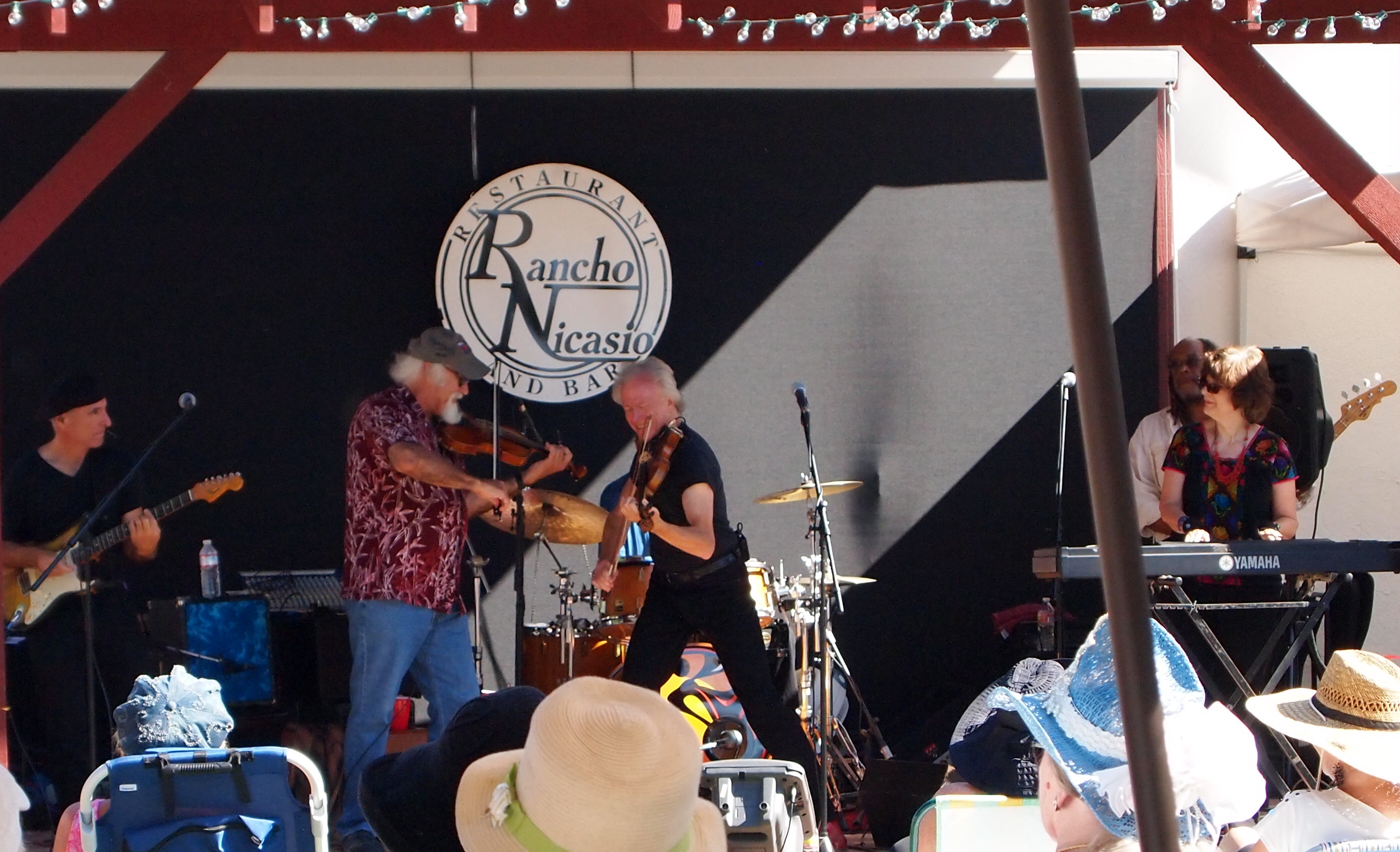
There are many things that are completely fabulous about living in California, and spending a Sunday afternoon listening to cajun music at Rancho Nicasio is definitely one of them! Last weekend, we had the pleasure of joining some of our favorite folks out at the ranch, listening to cajun/zydeco music out on the lawn and eating some delicious bbq. What a way to spend the day!

The two groups playing that day were Flambeau, with fiddler Tom Rigney, and Beausoleil, with fiddler Michael Doucet. Auntie tells me both of these gentlemen are two of the best, if not THE best fiddlers in the world. Lucky for me, I got to see them both for the first time on the very same stage!

It was a lovely afternoon, hopefully something we’ll get to do again in the very near future. Thank you to Auntie and Tio for extending my fabulous birthday celebration with this amazing outing! – MB:)

Sunday mornings with Terry–In the shade of Kauffman Center for the Performing Arts

Terry and I are pretty independent souls.  Our work lives keep us busy during the day and our clubs, committees and boards take much of our spare time.  But Fridays after work and Sunday mornings are our time.  Virtually every Sunday morning you will find us in the car with our dog, Casey, with a destination in mind, preferably pet friendly.  We combine breakfast with a drive through an area of the Kansas City metropolitan area that remains unexplored or, in this case, under-explored. This morning was no exception.

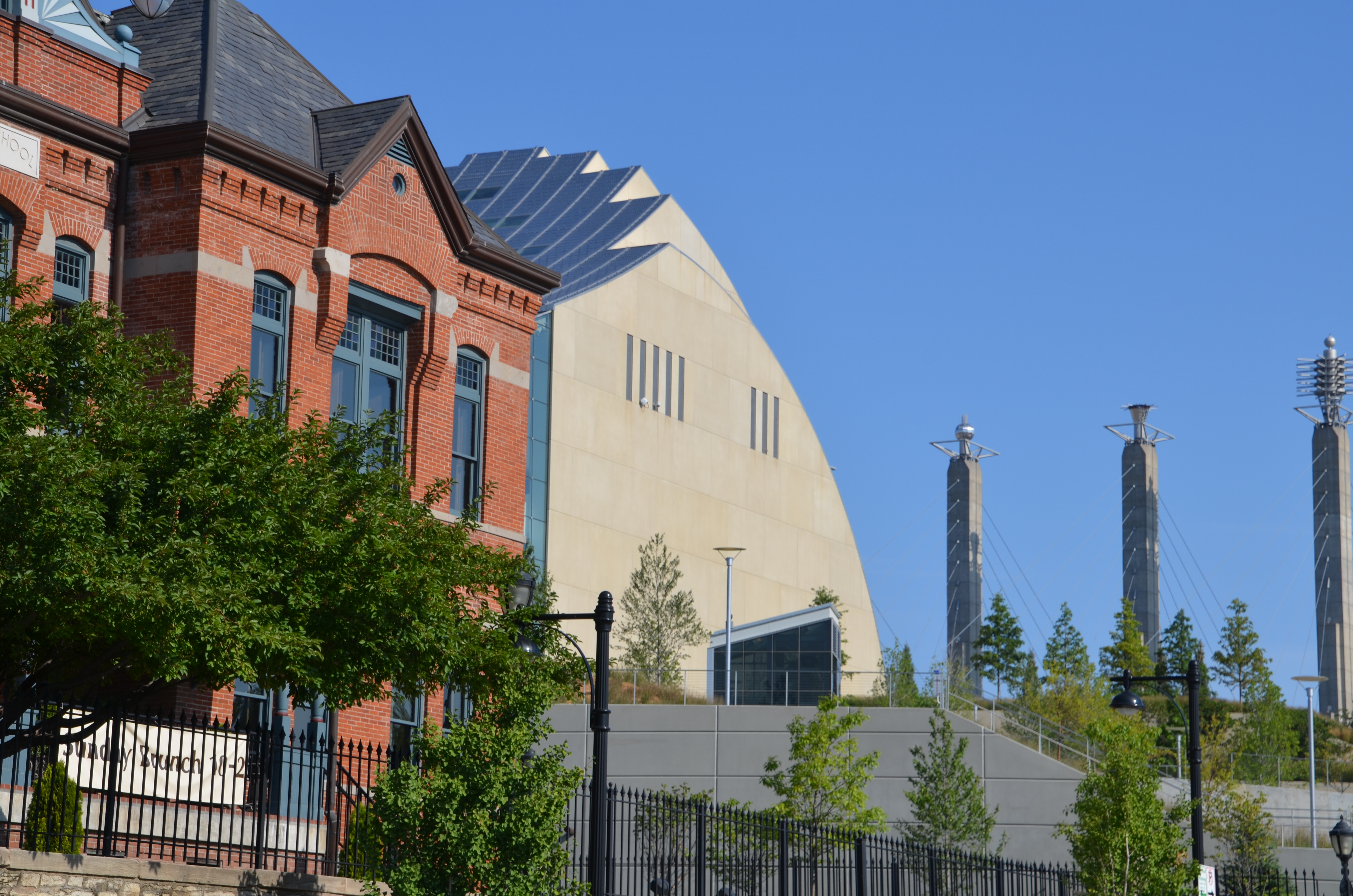
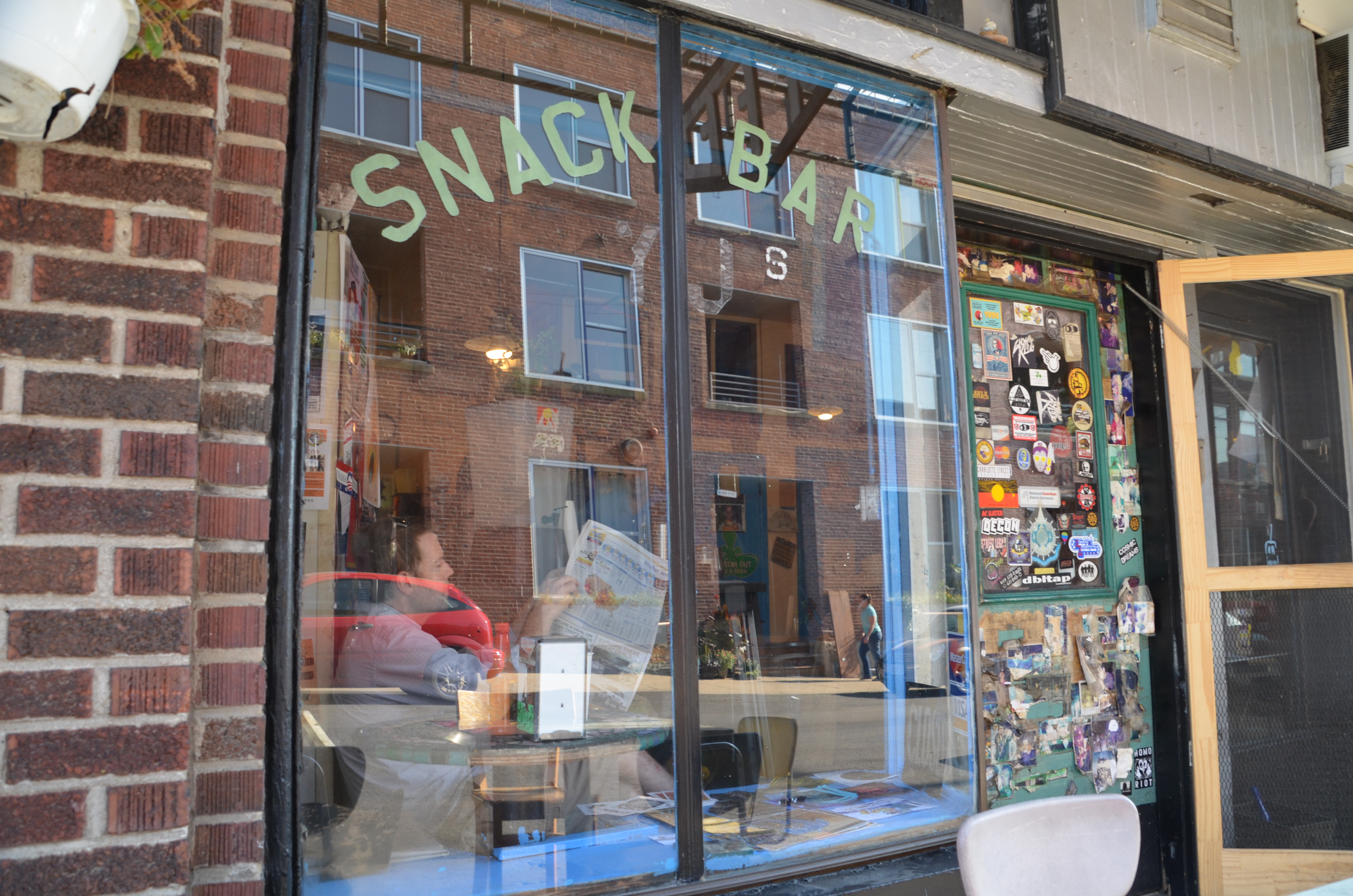
It is hot here.  But Casey would not understand if we don’t include him in the morning explorations. That significantly limits the restaurants where we can eat to those that are dog friendly.   He knows, really knows, the rhythm of our lives and which day of the week is for the three of us.  Today Terry selected a restaurant on the North edge of the Crossroads District of Kansas City.  I walked just a block to photograph this  view of Kauffman, Webster House and the Bartle Hall pylons. Y & J’s Snack Shop is eclectic to say the least.  Obviously a haunt for both young city dwellers and middle age professionals , I had never noticed it until this morning.  But it was inexpensive, the food was good, and Casey was content.  The staff even provided water for pets. The aesthetics of the so-called “snack bar” were minimalist at best.  Tiny, with a kitchen smaller than my own, the cook served such standards as bacon and egg sandwiches, coffee and a variety of breads.  The decor was not even shabby-chic, it was just shabby.  The door was covered with stickers of various sorts.  The tables and chairs were plastic and metal.  Nothing really matched.  But the environment was casual and accepting.  Obviously, many patrons were regulars and felt right at home.  Even for first timers it was a happy place to spend some time.  We wandered the block or so surrounding Y & J’S, and were surprised by the variety of retail stores, coffee shops, businesses and an urban garden, all sharing adjoining spaces.  I can’t even tell you the address, because street signs were few and far between.  But one business had prominently displaced its address as 1818 something.  It was a true urban experience made more satisfying because we know it is part of the rebirth of our central city.

Everything’s up to date in Kansas City–For the 2012 All Star Game

July 10, 2012: the American and National Leagues’ best players compete in the 83rd All Star Game, right here in Kansas City.  If you live here, you just can’t avoid the excitement.  Cowtown has always been in love with sport–and celebrations of all sorts. We also love to show off our city.  The best of all worlds for us.

Kansas City is all spiffed up to look its best for the athletes, their wives, the fans and the tourists who have blessed our fair city with their presence, and their dollars.  And everything is blue.  Bright blue.  Fountains on the Country Club Plaza, Barney Allis Plaza and at Crown Center spew out vivid blue water.

The last All Star game in Kansas City was in 1973.  The National League won.  39 years later, we are ready to again host this spectacular event.  In fact 3 days of special events are being scheduled throughout the Kansas City to Plaza corridor, all of the places that most symbolize our home town spirit.  Well, and Kauffman Stadium, of course!

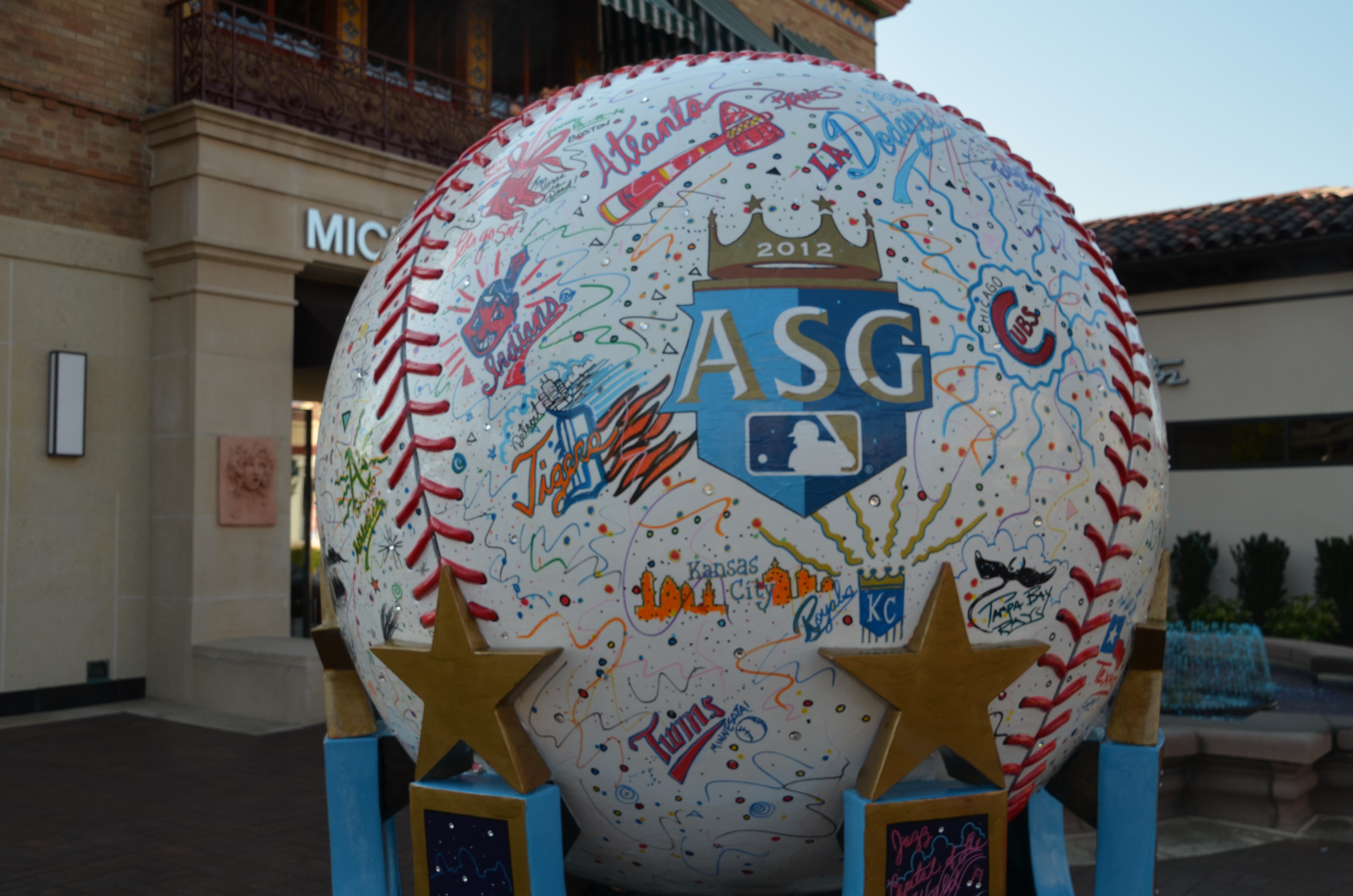
Hotels in and around Kansas City are full.  Streets on the Plaza began to close by late afternoon Sunday in preparation for Tuesday’s parade. This giant baseball sits on Wornall Road, adjacent to Michael Kors, on the Plaza.  It is directly on the route of the All star parade scheduled Tuesday afternoon.

Justin Verlander of the Detroit Tigers and Matt Cain of the San Francisco Giants face each other as starting pitchers.  Kansas City’s only home town player is Billy Butler.  But every Royals fan will be rooting for him.  Kauffman Stadium is all dressed up and ready to take center stage.   There is so much energy in the air.

Kansas City takes great pride in showing off our wonderful city during the festivities.  Not only are key intersections labeled with All Star regalia, even fire hydrants have been painted for the occasion, blue of course.

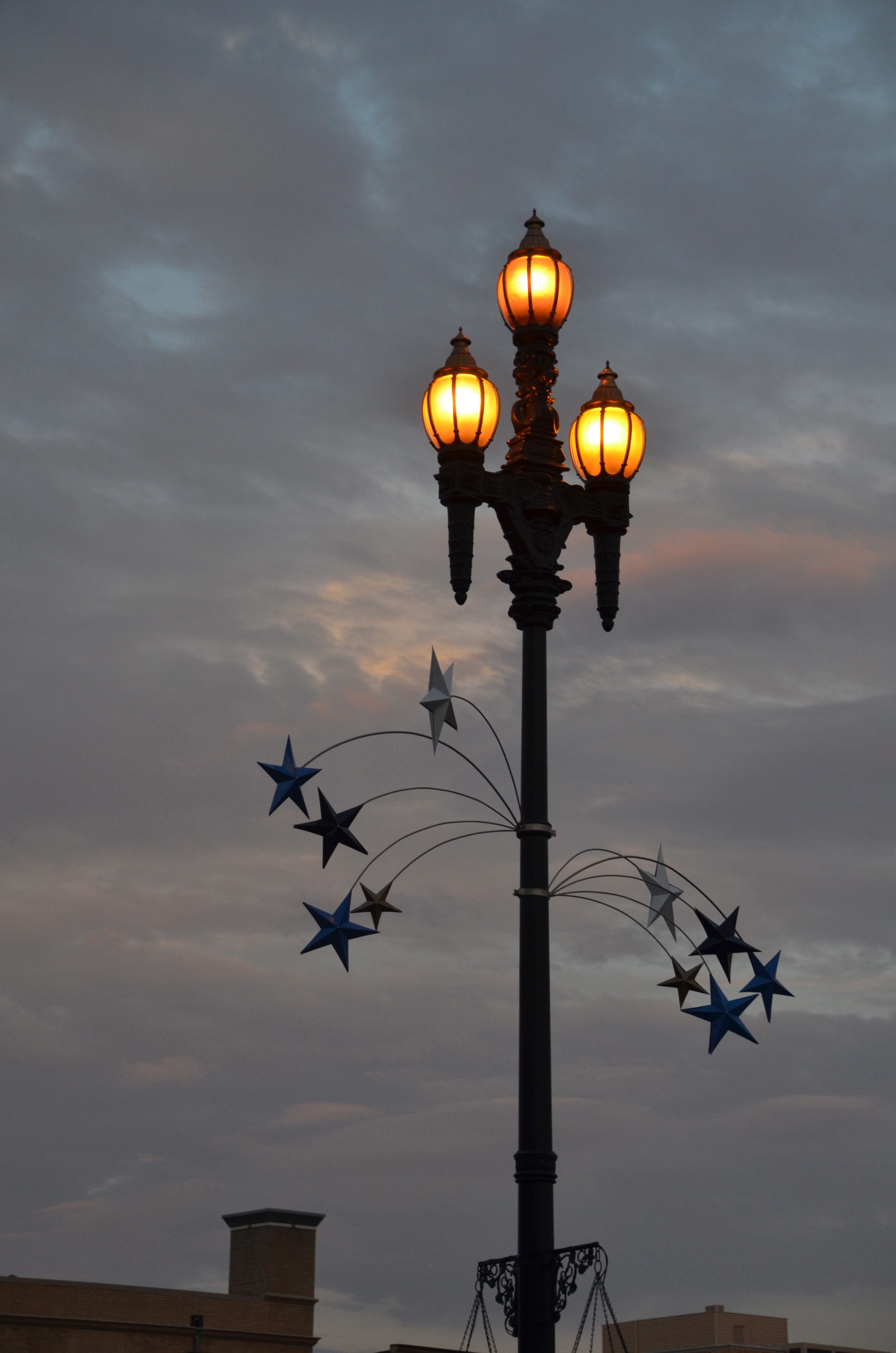
There are decorations on store windows, intersections and even a bit of whimsy on the lamp poles.  As the day ends Monday, it is quiet on the Plaza.  The entertainment tonight is at Kauffman Stadium.The game culminates tomorrow’s events.

Even the elegant Intercontinental Hotel has succumbed to baseball fever, and shares the frenzy for royal blue.

Take us out to the ballgame!

Are we making wise decisions about our charitable contributions?

   [1]

Hopefully, each of us has a charitable heart.  Whether we support educational programs, the arts, disabled veterans, disaster relief, Native Americans, or (name your own favorite cause), we want our charitable moneys to be well spent.  So, the question is, how do we make good decisions about our charitable contributions.

I took this photograph of my dog in an attempt at a little levity.  But it is a significant matter.  Charities and foundations solicit and receive millions of dollars a year from caring contributors like ourselves.

I could set up a charity, comply with the legal requirements and begin to solicit contributions for Kansas City dogs like Casey who have sustained minor injuries.  I could pay myself a salary and an expense account and give nearly nothing for the care of injured animals.  Would anyone contribute?  I hope not, since organizations like Wayside Waifs do such a great job of caring–and finding forever homes–for dogs and cats like Casey.  As evidenced by the fact that Casey is a product of that wonderful organization.

Over $300 billion dollars a years is contributed annually to U.S. charities.  That is an amazing outpouring of generosity from individuals and corporations.  As staggering as the amount of money, we can’t afford to have any of that money wasted.  But it is likely that millions of our dollars fall through the cracks.

All of us have seen, heard or read the tragic stories of human or animal suffering accompanied by a request for money?  I have received solicitations from charities enclosing pennies, dollar bills or a piece of a blanket, accompanied by a request for a contribution.  More important, my 97 year old father has: over, and over, and over again.  Often the same charity sends mailings on a weekly basis.  Sometimes charities with different names, but the same return address, solicit contributions from unknowing but caring individuals–like my dad, who gives generously, but (sorry dad) not always cautiously.  But seriously, why would any charity take my contribution and use my money to send pennies or dollars or trinkets to other potential donors?

Anderson Cooper recently did a special entitled Charity Cheats.   He focused on investigations conducted through AC 360, his program, and research conducted by CNN’s Drew Griffin and David Fitzpatrick.  He focused on charities and fundraising organizations that solicit and collect millions of dollars, but provide almost no funding for services. Primarily, Cooper focused on  the high cost of building mailing lists, and the abuse of in-kind gifts to intended recipients of charitable dollars.

In addition to the abuses on which Anderson Cooper has focused his attention, there are  also charities that pay hundreds of thousands of dollars in salaries to key employees.  A few have been targeted for having huge financial holdings, vast amounts of real estate and supporting elaborate lifestyles for their founders and employees. If these claims are true, how do we protect ourselves from the abuses addressed by Cooper, and others?

Before you open your checkbook to make a contribution to a charity about which you have little information, beware. Most organizations work hard to squeeze every penny out of the donations they receive.  But a few, large and small, are very poor stewards of our money.  So what to do? Find out about charities to which you wish to donate. Numerous watchdog agencies offer assistance in helping us spend our money carefully.  Among them are The Philanthropic Advisory Service of the Council of Better Business Bureaus, the American Institute for Philanthropy, GrantSmart, GuideStar, the National Charities Information Bureau and Charity Navigator. Their methodologies may differ, but they provide information not easily available from other sources.

For many of us, the adage to “put your money where your mouth is” may be the best advise.  When we contribute our time and our money to the same organization, we significantly increase the chances that our money is well spent.  When our goal is provide assistance outside of our own areas of knowledge, looking to the wisdom of experts on evaluating charities may be the best way to protect our contributions and those we seek to benefit.

The opinions expressed in this post do not necessarily represent the opinions of our families, our friends or our employers.  Obviously, Anderson Cooper and the investigative reporters at CNN take seriously the issues in “Charity Cheats” and similar reports.   


[1]Casey was obviously an unwilling model for my photo-shoot.  Hard as I tried to get him to appear in distress, he was having none of it.

Night lights from the American Restaurant

We were invited by friends to a special event at the American Restaurant in Crown Center, in Kansas City, Missouri.  It is one of Kansas City’s finest restaurants.

Alas, not expecting any need or desire for a camera, it didn’t occur to me to drag along my Nikon. And I could barely squeeze a lipstick and iPhone in my fancy (meaning tiny) evening bag.  I was facing the center of the restaurant.  Terry was beside me and had been talking with our host.  He suddenly pulled out his iPhone and took a photograph of the western sky.  If Terry noticed the view, I knew I needed to turn around to see what he discovered.  The sun had just set and there was still some light in the sky.  But the buildings were ablaze with color.  I dug out my own iPhone and took a series of photographs.  Here they are.

This is the sky looking North West from Crown Center toward the Kauffman Performing Arts Center. Directly below us there was a nearly deserted street fair with a sky-walk that weaves through the center of the image.

With my iPhone camera already at work, I turned back to the center of the restaurant and refocused my attention on the pattern of lights in the ceiling.

Finally, I became that another window reflected the lights of the American Restaurant. When nearly all the residual light was gone, I took a final series of photographs.

Funny that a lot of wonderful shots are just waiting to be noticed.

Election politics–Respecting our own values

It is July, Independence Day is just around the corner.  We are in the thick of a Presidential election campaign. Stories concerning President Barack Obama and his Republican opponent, Mitt Romney, fill our newspapers, our television and radio stations and the internet news.

                                                                                                               NYDailyNews.com Samad/Getty

                                                                                                Washington Post  Charles Dharapak-AP

There are weeks you would swear that the insults and barbs are directed at an enemy nation, not at an individuals who are lead and/or seek to lead, this great nation.  Listening to the venom in the political debate, you would swear that neither candidate is fit to be President.  In fact, both of these men are good men.  They are flawed, as are we all.  Their values, and the values of their parties, may be different than yours and mine.  But they are not evil, incompetent or stupid.

Francis John McConnell, a bishop in the Methodist Church and president of DePauw University from 1909-1912, said it well:

“We need a type of patriotism that recognizes the virtues of those who are opposed to us”.

We are so fortunate to live in a country that values its citizens.  Our government is a model for the world.  We are so fortunate to live in a nation with a United States Constitution that speaks to fundamental rights such as freedom, democracy, liberty and the rule of law.  Wouldn’t our founding fathers weep at the level of venom directed at our government leaders; not only our Presidential candidates, but all levels of elected office (and this isn’t the day to talk about the election of judges.)

As fortunate as we are, and have been, our nation has serious problems, and we aren’t going to solve them by demeaning our government leaders through campaigns of hate.  And can’t we stop throwing insulting comments at family and friends who vote for “the other guy”.  Can’t we recognize their virtues?

Isn’t this a time to direct our attention to finding solutions to serious national problems: the economy, immigration policy, strengthening our position as a leader within the community of nations.  Can’t we look for answers together.  Can’t we set aside our anger long enough to find common ground and to focus on solving problems together rather than focusing on new ways to embarrass and harangue those with whom we disagree.  Can’t we make our leaders and each other look good, not bad?

Support the candidate of your choice.  Raise money, go door to door, help the processes of democracy work well.  But at the end of the day, can’t we just find each other’s virtues?

In this opinion we do not intend to speak for our employers, our spouses, our families or our friends.  

Good Morning Petaluma

I went for an early morning run the other day, right along the fence line on the east side of Petaluma. With everything going on lately, I find my morning runs to be the most relaxing.

It was a beautiful morning. The sun was coming up, the birds were chirping, and even the cows gave me a “good morning” nod as I passed by. I took this photo from my phone, right along my favorite running trail. It was a beautiful start to a beautiful day.

I hope you have a wonderful day!

Welcome to our family: Caroline Marie Soper

She is a beauty.  I just have to say it!  Born at St. Luke’s Hospital on June 26, 2012, at 2:08 a.m., she didn’t make her entry into this family easy on mom or dad. As is always the case, mom (Dana) bore the brunt of it.  But dad (Jon) was also a trooper.  He was with Dana for the duration.

The maternity ward seemed full with just Caroline’s grandparents and step grandparents.  Caroline, of course, has no idea that she is the source of such joy for her parents and all the members of her extended family.  It will take her years to understand the traditions, stories and values that come with any family, and certainly ours.  It will take a lifetime for her to understand her own value to each of us and to the families of which she is a member.

Sweet Caroline.  Welcome to the family.  You have cousins, parents, grandparents, a great-grandfather, and aunts and uncles all waiting to meet you.  May your life be filled with love and happiness as you bring love  and happiness to us.