Goodbye Havana

Our trip to Cuba ended much as it began. We were overwhelmed by the beauty and the poverty of this tiny island nation.  But now, after months of preparations, days filled with visual images we will never forget, and photographs that will end up in posts far into the future, it was finally time for us to pack our bags for the journey home.

As we were preparing our bags Saturday night for an early morning departure, I watched the hustle and bustle of Havana.  Neither the city’s great beauty, nor its decay, were visible in this nighttime shot.  Left to admire is just the vibrancy of the city.

It was a memorable experience.  While our visit only touched the edges of this wonderful country, I feel fortunate to have had the opportunity to experience its rich culture, wonderful people and incredible beauty.

If you haven’t experienced Cuba, put it on your bucket list!

Old World Architecture Graces a Cuban Harbor

The Palacio de Valle is located in Cienfuegos, the second largest harbor in Cuba.  Sometimes referred to at the “Pearl of the South”,  Cienfuegos was declared a UNESCO World Heritage Site in 2005 as a result of the blending of old world architecture and modern urban design.

The Palacio de Valle is a masterpiece of styling, art and history.  When Amparo Suero married a wealthy Cuban businessman, Acisclo Valle, her father gave them Palacio de Valle as a wedding gift.  The couple renovated the property between 1913 and 1917, at a cost of 1 1/2 million pesos.

Italian architect Alfredo Colli, created this masterpiece, incorporating Italian and French into a building which is dominated by the unique character of Moorish style, carvings and color.  The Moslem crescent moon and the words Arabic words meaning “Only God is God” from the Koran, solidify the Moorish influence.

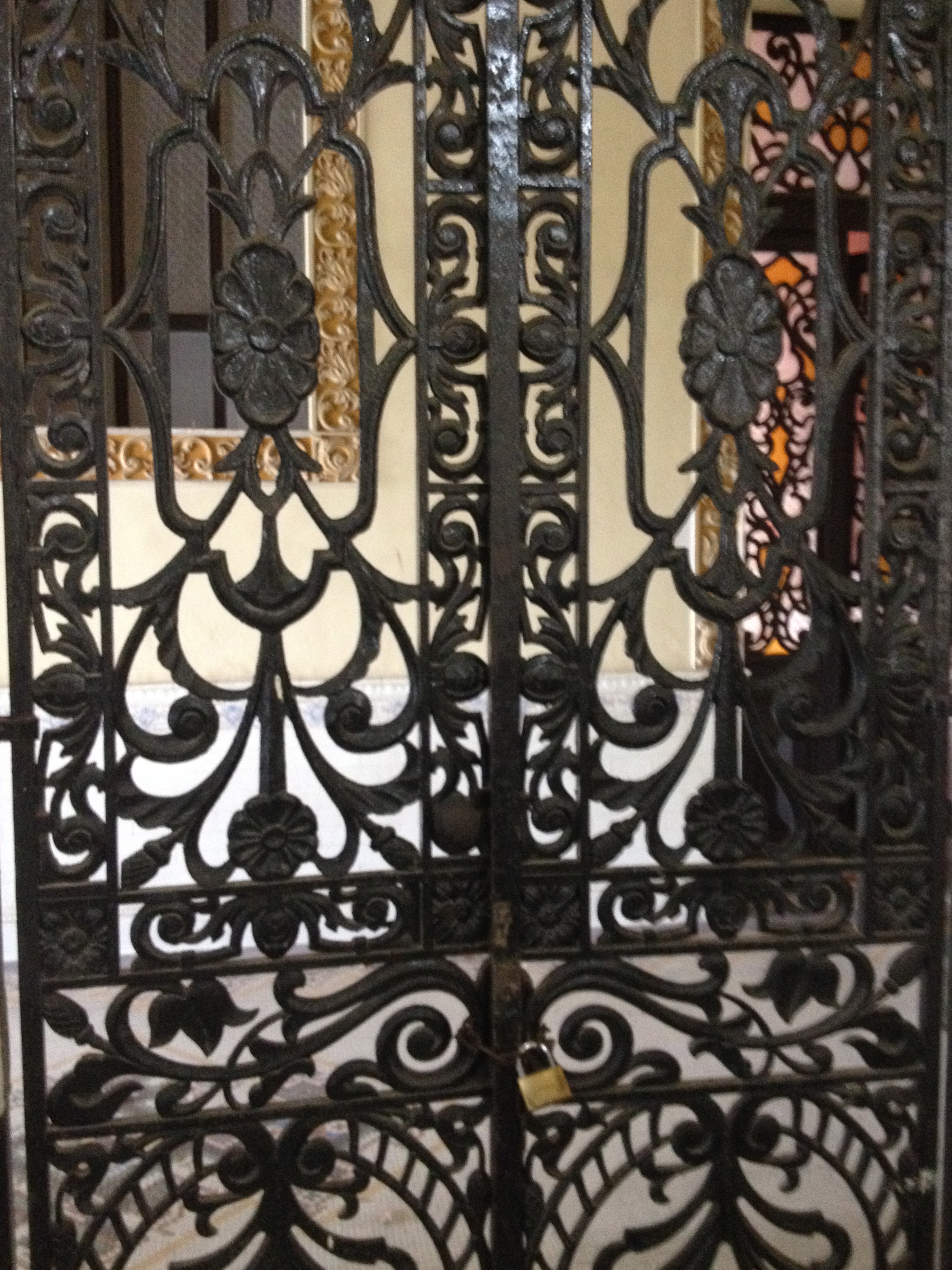
The construction of the building itself relies heavily on Carrara marble, alabaster, Venetian ceramics, Spanish ironwork and the carvings of renowned Spanish artist, Antonio Barcenas to blend much of the beauty of the old world  combining the best of Spanish, Muslim, Italian, French and even Egyptian design.

The exterior reflects the beautiful carvings seen throughout the Arab world.  The Sphinx guarding the main doorway reflect Egyptian symbols.

Bronze railings of Spanish design are seen throughout the interior and exterior of the building.

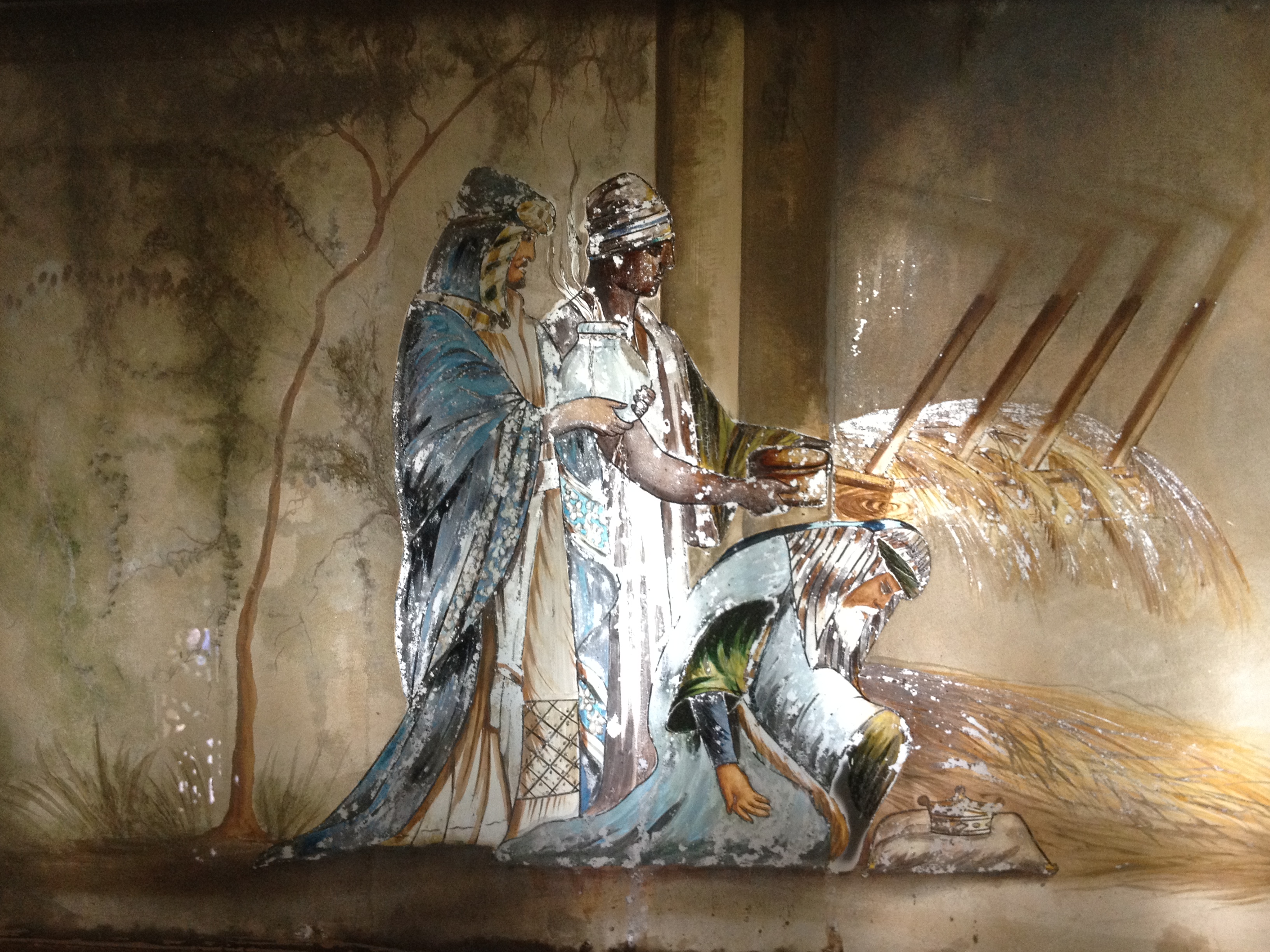
The art reflects the interconnections of the Muslim and Christian beliefs.  This lovely painting of the Magi, ie. the “Three Kings from the East” focuses on the Magi themselves, relying on the crown to symbolize the Christ child.

This tile Crusader depicts a Christian in full battle attire presumably prepared to fight the Moors.

There is little to explain the reasons for this combination of clashing cultures, representing the images and art of all the involved cultures with beauty, accuracy and respect.  Yet the flow of interweaving of the best of the old world, works effectively, playing the grace of Venice with the power of Spain.  It is not surprising then, that this building, now a restaurant, is itself recognized as a National Heritage Memorial.

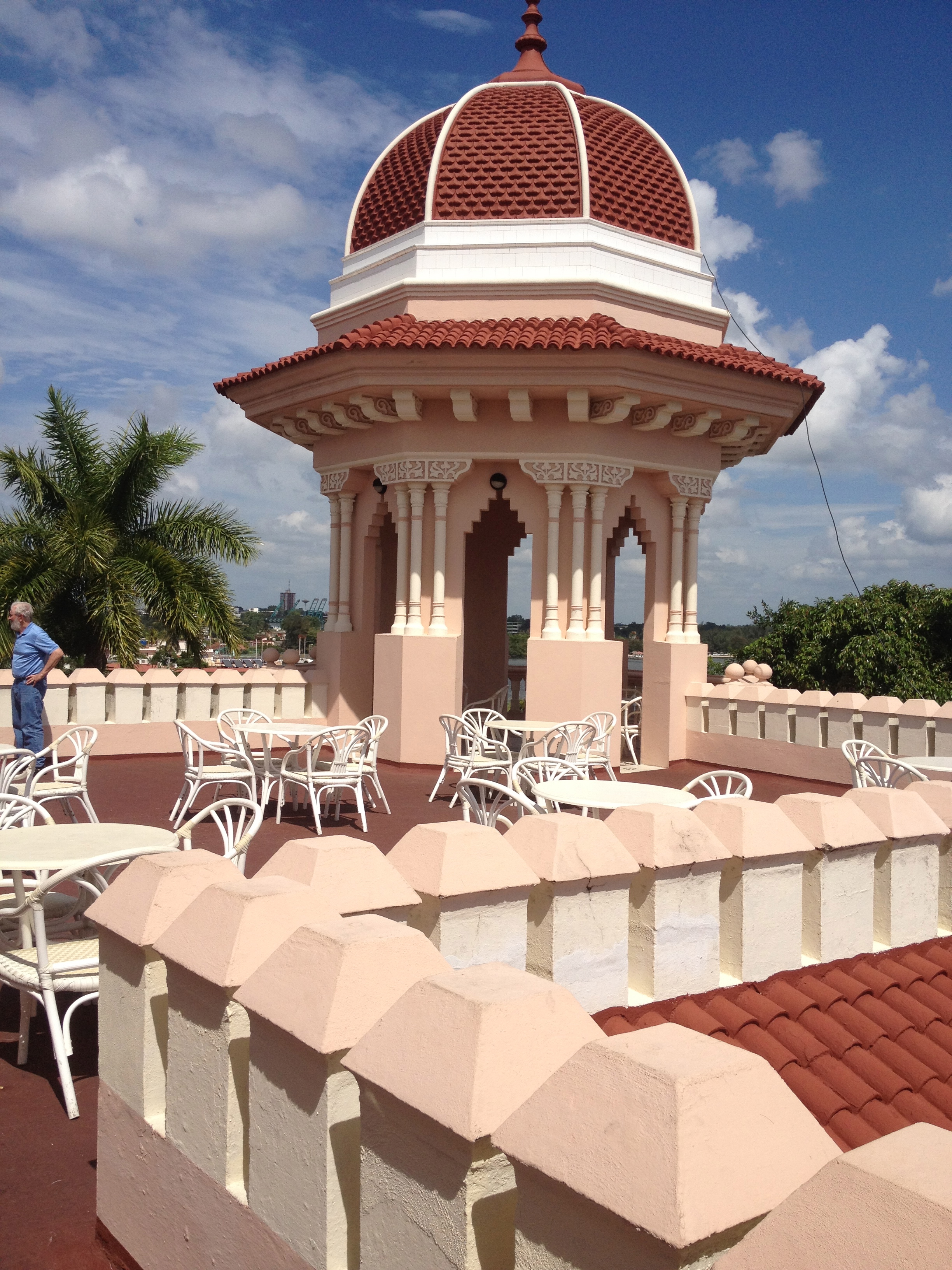
By the standards of any religion or influence, the Palacio is a masterpiece.  While the cultural aspects of the building predominate our visit, the timeless beauty of the rooftop bar, with its view of Cienfuegos and the ocean, completed the experience for all of us.

Are the Beaches the Solution to Cuba’s Poverty?

Is Cuba’s beauty the solution to bettering the lives of its citizens?

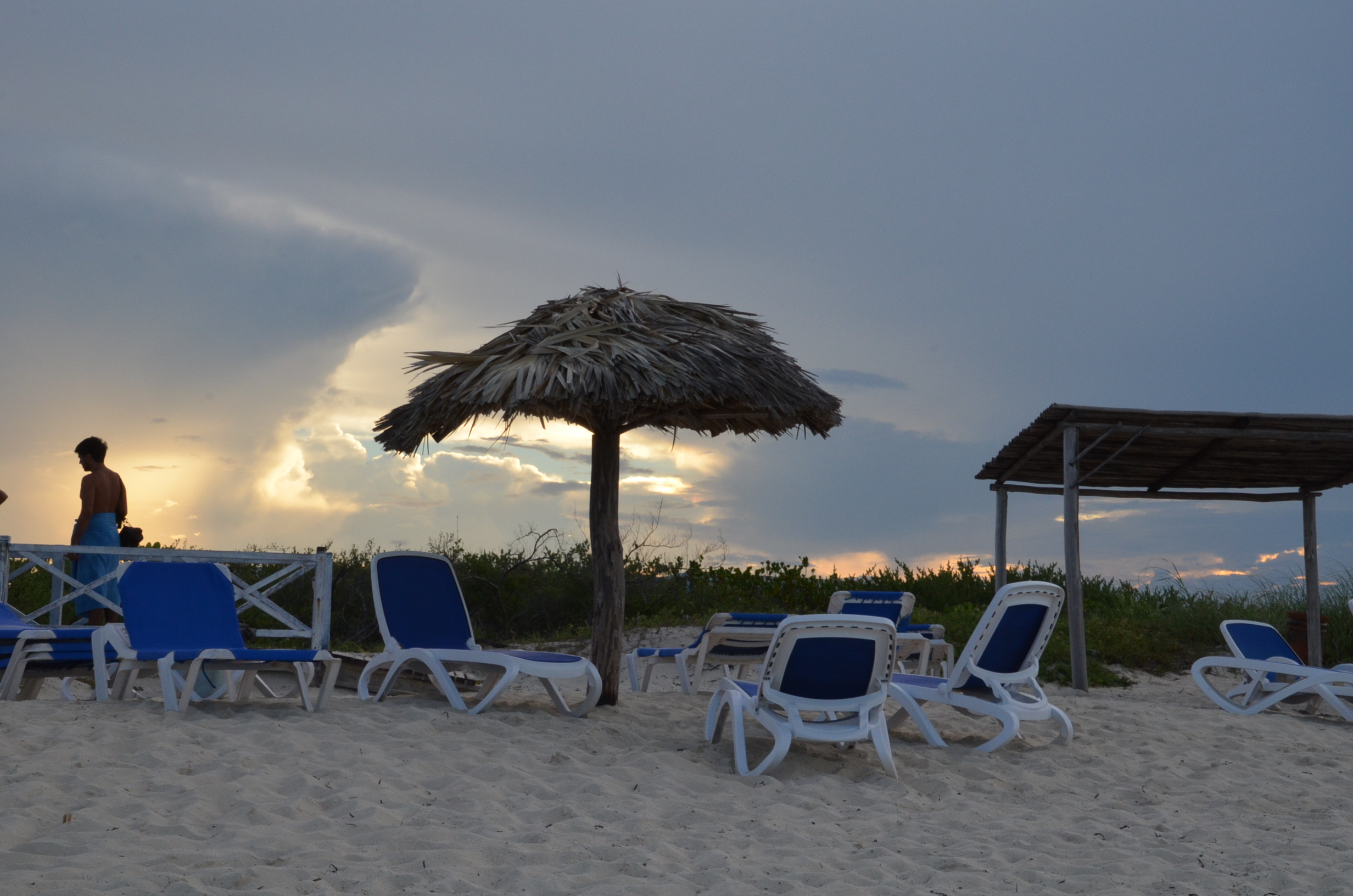
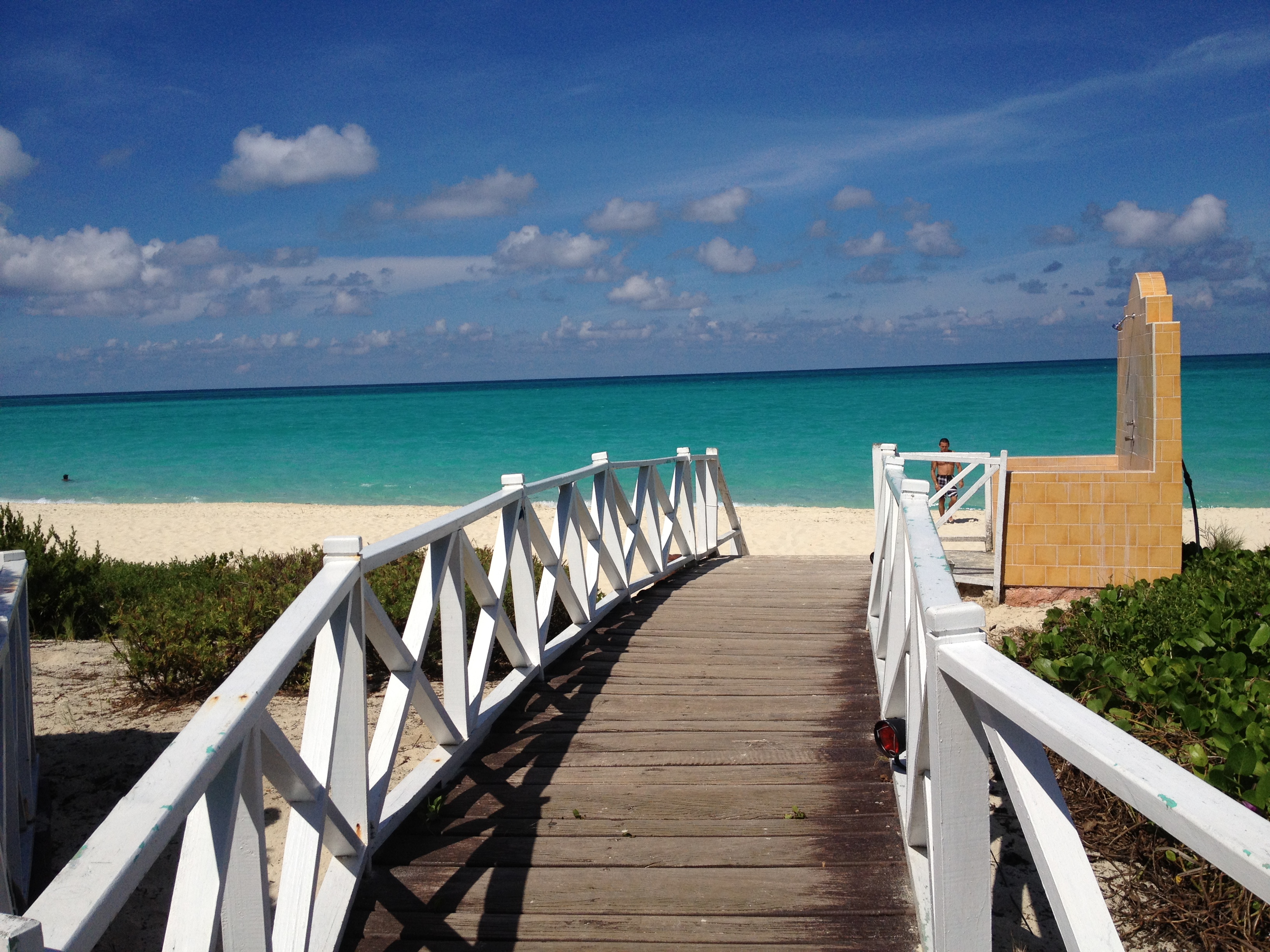
Just look at the water and the sand and the sun.  The island is long, and narrow.  The Atlantic Ocean and the Caribbean flank Cuba, offering up some of the most beautiful beaches in the world.

This is good, right?

Today, the Cuban people share this beauty with only a small number of sail boats and a few tourists in space nearly undisturbed by commerce.

Cuba is, in some respects, comparable to the Cancun of 40 years ago.  Having traveled there several times, I have watched the seashore change from open land with a scattering of 2 and 3 story hotels, (as pictured below adjacent to a Cuban beach) to high rise hotels that are packed one on top of another until only the tourists share the beauty.  Today, Cuba’s resort hotels are still lovely, small and in harmony with the sea.

The walkways to the sea draw you to the water and the sand.

As we were ending our trip to Cuba, we encountered a member of another tour that had just arrived.  This gentleman explained his theory that what Cuba needs is to open itself up to investors who could bring in casinos and “a Trump Tower like Panama” to provide jobs for poor workers.  Seriously?  Cubans should be excited to have its beauty snapped up by rich “Americans” [1] so that they can earn minimum wage.  Again, seriously?

I am no fan of Cuban’s economic or political system.  I would never wear a Che t-shirt or hat.  I remember the brutality of revolution.  But surely there is more to solving the challenges of the Cuban people than to provide tourists with luxury vacations.

I am grateful for the couple of hours we spent by the water because it was such a compelling visual statement to the true beauty of Cuba’s beaches and was a reminder of the role of the beaches in the challenges facing the island nation in the inevitable post-Castro era.

Swim anyone?

__________________

[1]  I asked our guide why the Cubans speak of the United States as “America”.  He indicated that they have accepted the reality that the United States as the dominant nation in the Americas has essentially assumed the term America as its own.

The Fortifications of Havana Bay

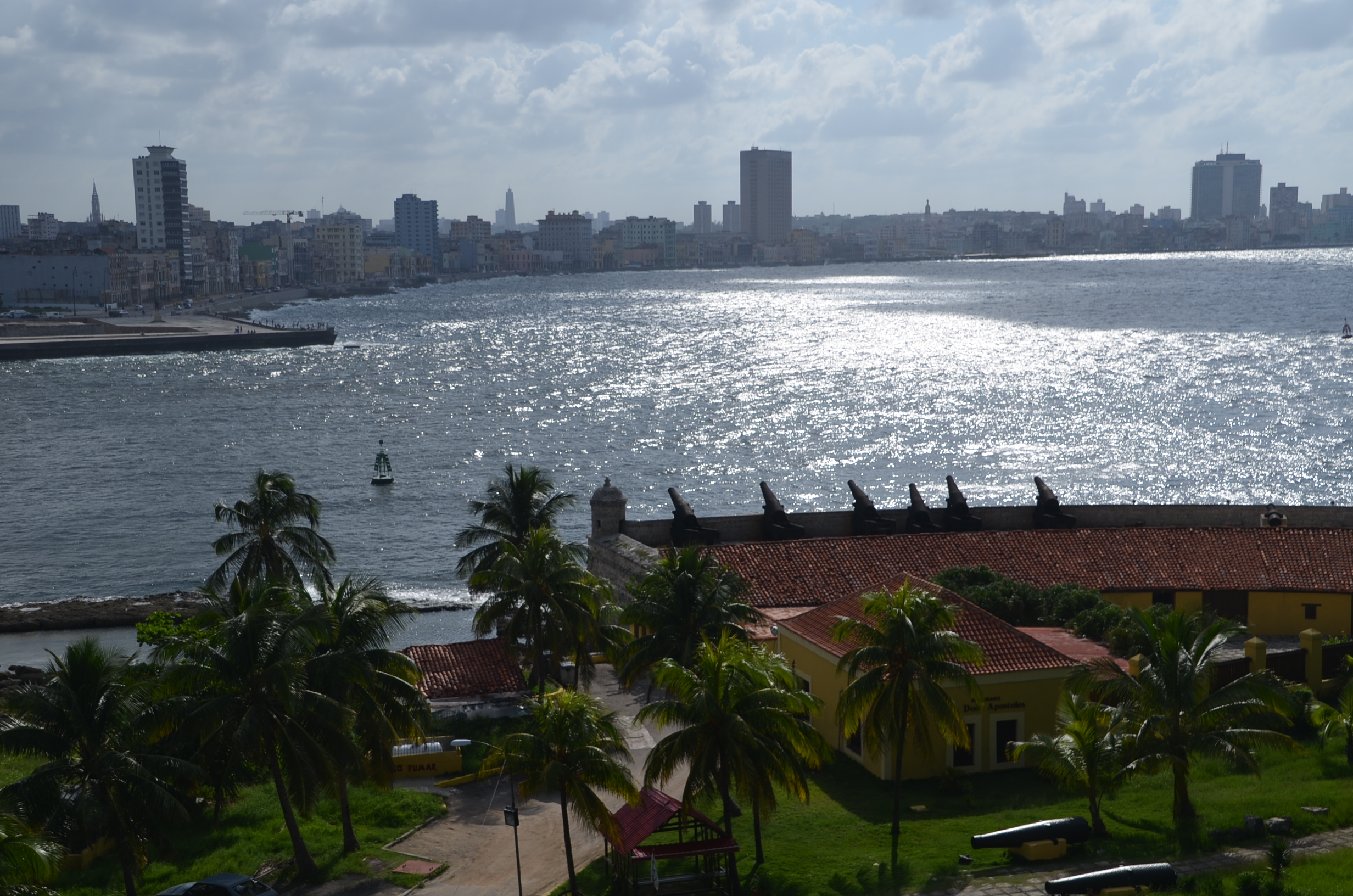
The Havana Bay Harbor has a past as violent as its revolution.  The Spanish founded Havana in about 1519 as a part of its colonial empire.  Spain’s interest in Havana rested, in large part, because the Bay of Havana offered a secure port for the Spanish Galleons crossing from the New World to Spain.

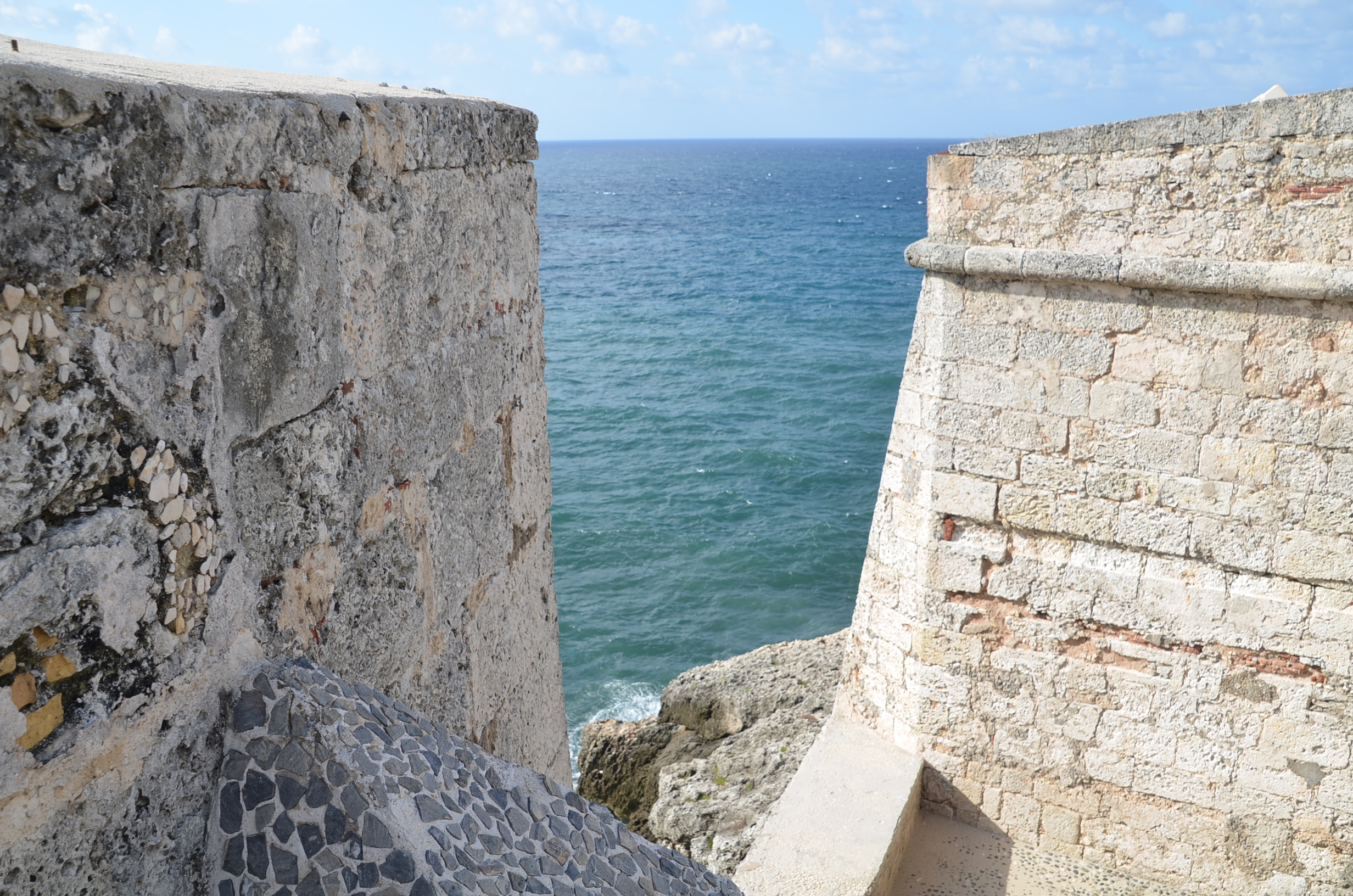
Because of the wealth that passed through the city, old Havana was vulnerable to French, English and Dutch Corsairs. [1] The massive fortifications of Morro Castle/Castillo de los Tres Reyes del Morro were constructed by the Spanish beginning in 1589 to protect against attacks by these pirates.  Morro Castle sits across the harbor from another similar fortification, the Castillo de San Salvador.  With the protection of these two fortifications, and others along the Coast, Old Havana was considered to be impregnable to attack.

Considered the major fortification of the Havana’s defense system, Morro Castle stood for 150 years until it fell  during the Seven Years after a two month siege by the onslaught of English ships.

The fortifications were rebuilt and continued to protect and defend the harbor. They were used as a military base and prison.

In 1898 the USS Maine exploded and sank in Havana Harbor, in sight of these fortifications, its sinking was considered a significant cause of the Spanish-American War.

In 1959 Che captured another of the series of fortifications in the harbor, La Cabana and used it as a headquarters during one of the most brutal periods of the revolution.

For the last 63 years the forts have served no military purpose.  They are, instead, powerful symbols of Cuba’s colonial past.  The fortifications which serve as picturesque reminders of past battles, are now besieged by tourists, not enemy ships.

In 1972 Old Havana and its Fortifications was designated a UNESCO World Heritage Site because of its importance to cultural and/or natural heritage.  A total of nine sites in Cuba have been recognized for inclusion on the list of World Heritage Sites.   All of these sites were founded by early Spanish colonists.  All of these designations are reasons for pride among the Cuban people and memories among the travelers fortunate enough to visit them.

[1] Corsairs were privateers/pirates and their ships.  They plundered enemy ships and communities in the Caribbean and the Mediterranean Seas. Unlike more traditional pirates, corsairs were authorized to plunder the wealth of nations with which their governments were at war.

Finca Vigia: Hemingway’s Island in the Storm

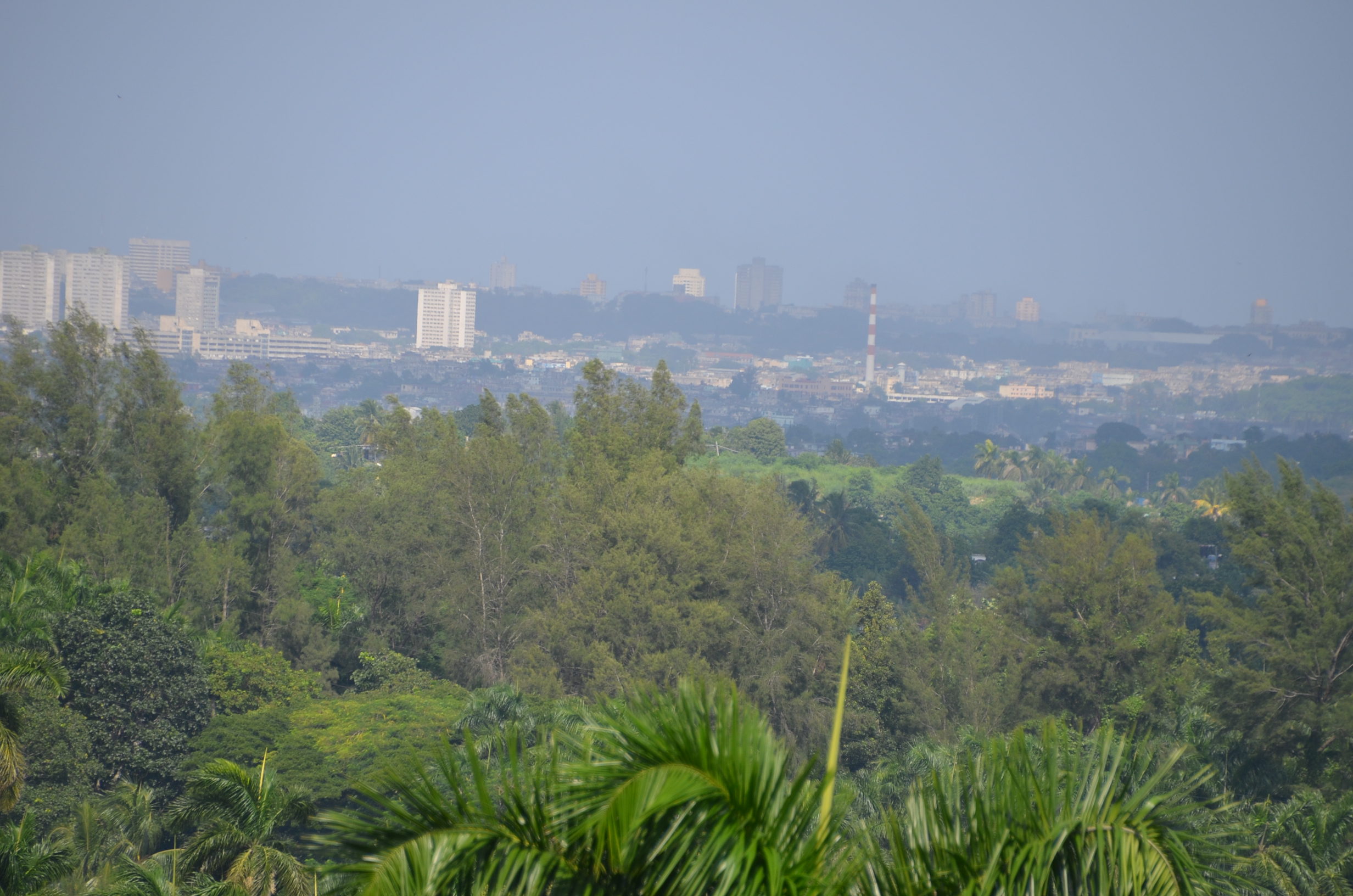
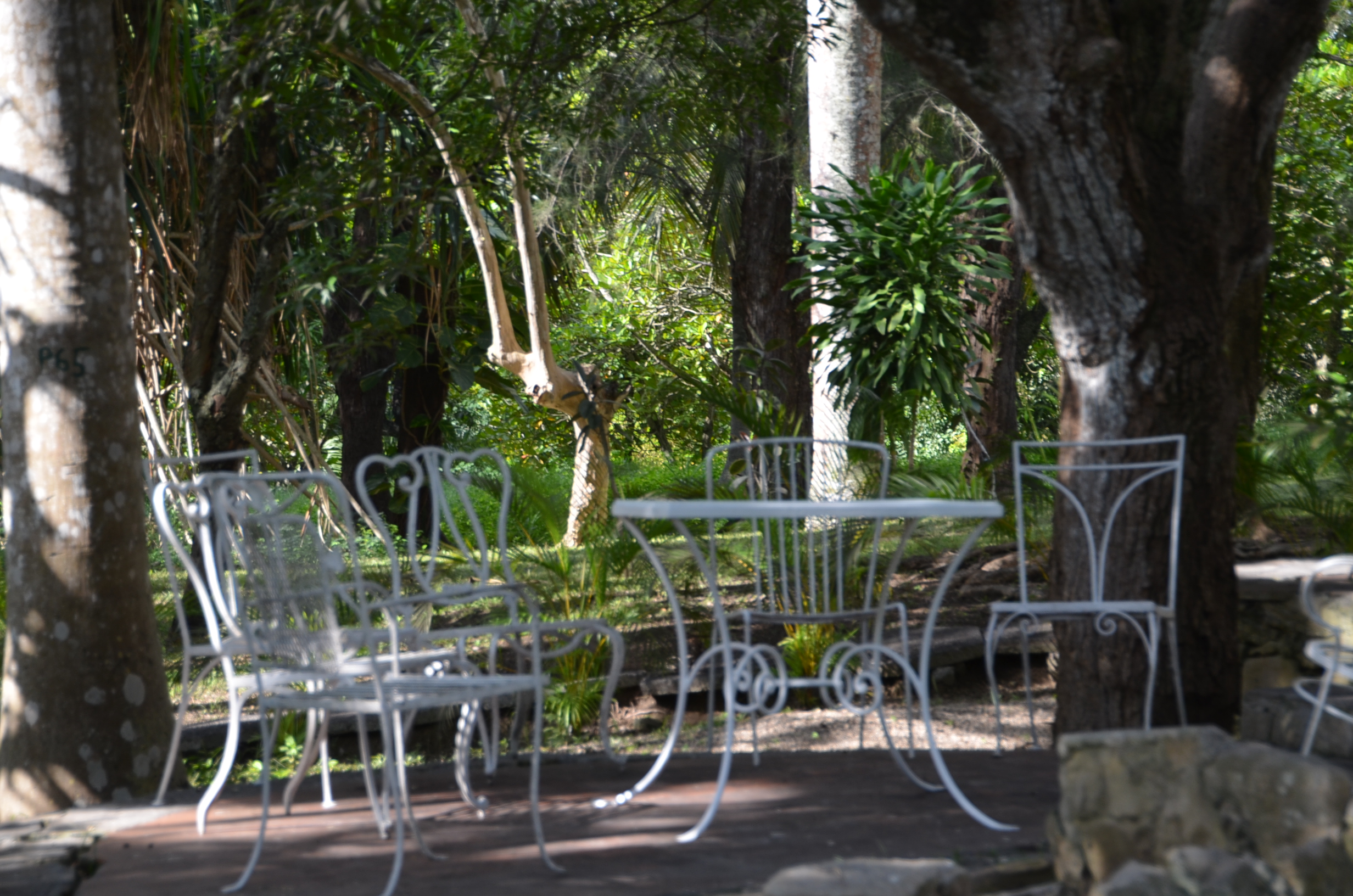
Martha Gellhorn, Hemingway’s third (and last) wife discovered this late 19th century house and grounds in 1939.  It became their home for more than twenty years.  The villa sits in San Francisco de Paula, on the outskirts of Havana.  The lands, vegetation and imposing walls created a tropical paradise and a tranquility conducive to the peace Hemingway must have craved to enable him the ability to craft his art.

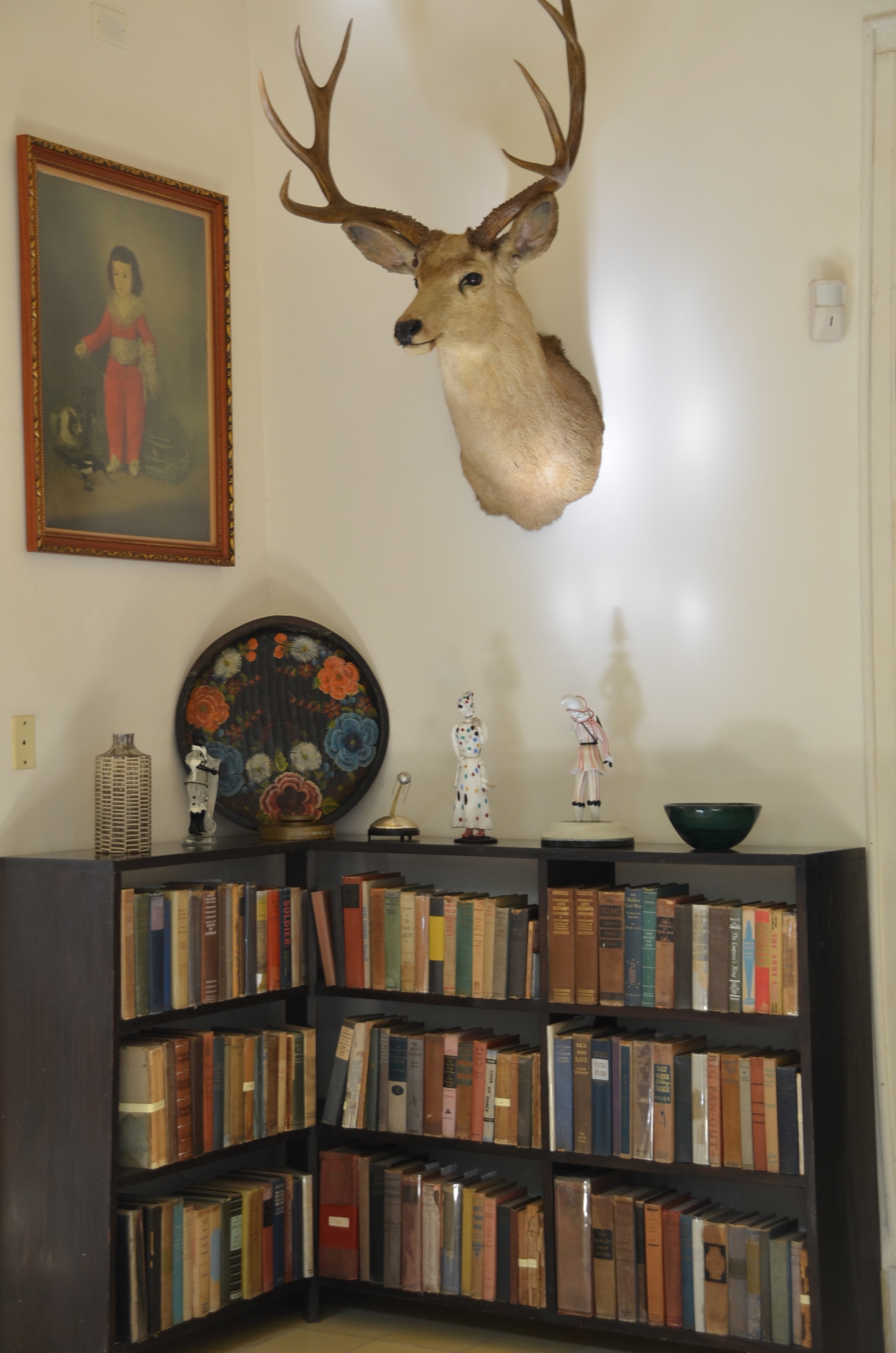
The house and gardens reflect Hemingway’s life and personality. His hunting trophies are spread throughout the house.

Understanding as she did her husband’s propensity to drink heavily, Gellhorn apparently preferred that Hemingway have a panoramic view of Havana without being close enough to the city to be subject to its many temptations.  The protection from the city may also have some responsibility for the protection the Hemingway’s seemed to have had from the violence of the revolution.

It is at Finca Vigia that he wrote seven books, including The Old Man and the Sea, Islands in the Stream, and A Moveable Feast.  

Hemingway seems to have had a love affair with Cuba as he did with Key West, Florida.  While he is reputed to have continued his heavy drinking in Cuba as well as his romantic escapades, he must have been drawn to the Cuban people with a strength that remained unabated through the revolution.

In 1960, Washington made the decision to cut off relations with Castro’s government.  During that period, the U.S. ambassador to Cuba, Philip Bonsall, apparently requested Hemingway to abandon his Cuban home as a demonstration of his patriotism to the U.S. Hemingway refused to do so.  When he did leave Cuba, he left his furniture, clothing, personal property, manuscripts and his library. Local guides suggest that the U.S. pressure on Hemingway to leave Cuba contributed to his death. I know of no support for this claim.  Nevertheless, it is, perhaps, because Hemingway anticipated returning to the island that he left his home virtually intact.

Visitors can observe the conditions in which Hemingway lived and worked through the last years of his career.  Evidence of his personality and his love of literature are everywhere. Over 9000 volumes remain in the residence.

Three buildings are situated on the property, the main residence, this separate children’s/guest quarters, and Hemingway’s office where most of his typing appears to have been done.
His ability to remain in the property despite the reality of the revolution around him suggests at least a cordial relationship with the Fidel Castro, with whom he was occasionally photographed.

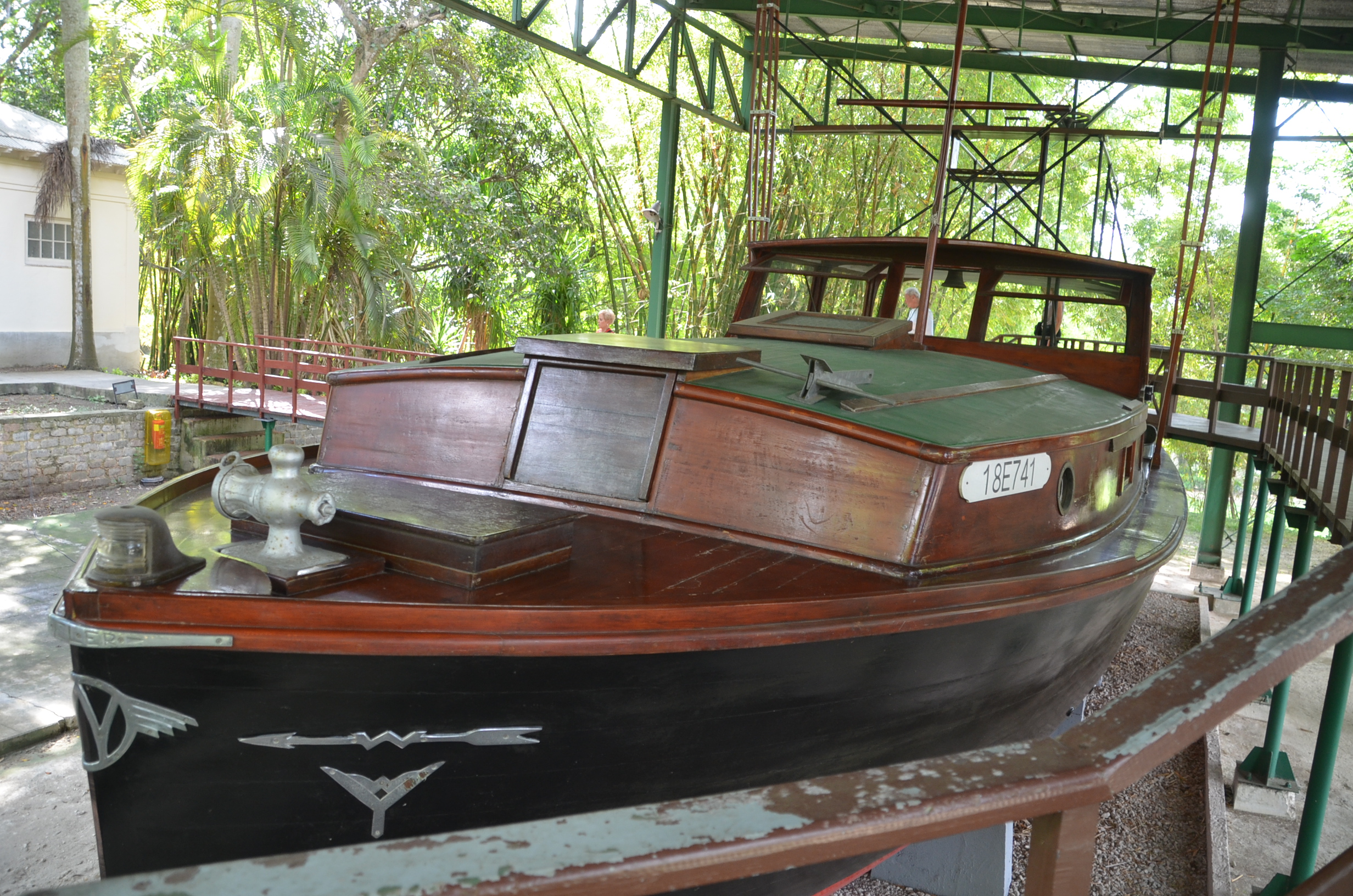
He also left his beloved boat: Pilar.  It now sits adjacent to the swimming pool where Ava Gardner swam nude while visiting Hemingway’s home.

Hemingway donated the estate to the Cuban government.  The property has been restored through the combined efforts of the U.S. and Cuban governments, in one of the few cooperative endeavors in which the two countries have engaged.

Our travels continue.

Cuba: The Cult of Che

Che Guevara was executed in the jungles of Bolivia on October 9, 1967.  Forty five years later he is venerated in Cuba. He has attained something akin to “rock star” status.  His face is on Cuban money, t-shirts, banners, and tourist art.  Billboards with his image encourage the Cuban people to work hard and support the revolution.

Even in the U.S., celebrities wear Che’s signature beret.  He is featured in a movie, The Motorcycle Diaries,whose executive producer, Robert Redford,[1] has depicted Che’s 1952 journey across South America; a journey generally credited with planting the seeds for his future radicalization.

Born Ernesto “Che” Guevara, on May 14, 1928, he was educated as a physician and was already active in social reform when he met Raul and Fidel Castro.  He quickly became Fidel’s 2nd in command and played a key role in the success of the Cuba Revolution against Batista.  He is credited with his work on Cuba’s literacy campaign and its agrarian land reform.  He was a bank president and diplomat for Castro’s government.  He represented Cuba throughout the international community, speaking on behalf of socialism and against the exploitation of the Southern Hemisphere by Western countries.  Ultimately, he  became critical of the Soviet Union, also condemning it for exploiting Cuba.
Celebrated by many as an idealist, he was a lifelong, and very charismatic, revolutionary.  While revered by many for his struggle to liberate the poor, focused primarily in Africa and South and Central America, he is reviled as a guerilla leader ruthless in his discipline of his troops and brutal as the revolution’s chief executioner, instrumental in the war trials and summary executions of Castro’s adversaries.

The nature of his relationship with the Castros at the time of his death is unclear.  On October 3, 1965, two years before Che’s death, Castro made public a letter from Che resigning his positions with the Cuban government, and giving up his Cuban citizenship. Whether his actions result from disagreements with Castro or merely a belief that he should be engaged in a wider campaign of “social justice” is unclear. He returned to Cuba only briefly after authoring that letter. His death changed a questionable relationship to martyrdom.

Che and twenty-nine comrades who fought with him in Bolivia are buried in the Che Guevara Mausoleum.  It is located outside Villa Clara, Cuba, near one of his most significant military campaigns.  It is treated as a shrine, almost a place of worship.  Cameras are forbidden inside the Mausoleum, hats were required to be removed.

Nelson Mandela described Che as “an inspiration for every human being of our era who loves Freedom”.  Jean Paul Sartre described him as “the most complete human being of our age.”  Surely, Cuban exiles living in the U.S., whose family members were executed by Che’s firing squads, find no humanity in his deeds.

Such totally different images of a human being long dead seem incapable of reconciliation. For purposes of this post, I will not try.  Instead, the question may be whether those who exalt him as a hero are influenced to do good or ill. And, from an entirely different perspective, whether his veneration impacts the nature of the short-term–and mid-term–relationships between the United States and Cuba.

________

[1] Robert Redford is photographed with Fidel Castro on the wall of the National Hotel, one of the few luxury hotels in Habana, presumably taken during a brief encounter between the two men during Redford’s trip to Cuba for a private screening of The Motorcycle Diaries for Che’s widow and children.

The opinions of this post do not reflect the views of our employers, our families or–necessarily–each other.

Forty Eight Hours in Rural Cuba

Forty-eight hours isn’t much time to get a sense of a nation and its rural challenges.  The poverty is overwhelming.  If there is relief from the poverty it is the fact that Cubans have little opportunity to experience the frustration that results from observing others who do not live in poverty.  But there is no question that Cuba has seemed to work tirelessly to prevent the development of a middle class.

One of the questions raised with regard to rural Cuba was why there are no tractors.  The answer was that by sharing the land among the rural families, individual plots were small enough to be worked relying solely on horses and oxen.  As a result, there is no need for tractors.  So there are none.  Wow.

Not only is the land tilled by animals, they are a primary means of transportation.  Riders on horses, wagons used for transporting people and materials.

__

Visiting a country in which we were surrounded by horses and oxen is an exciting, beautiful and exotic and experience. But it is no less a step back into history for most visitors.

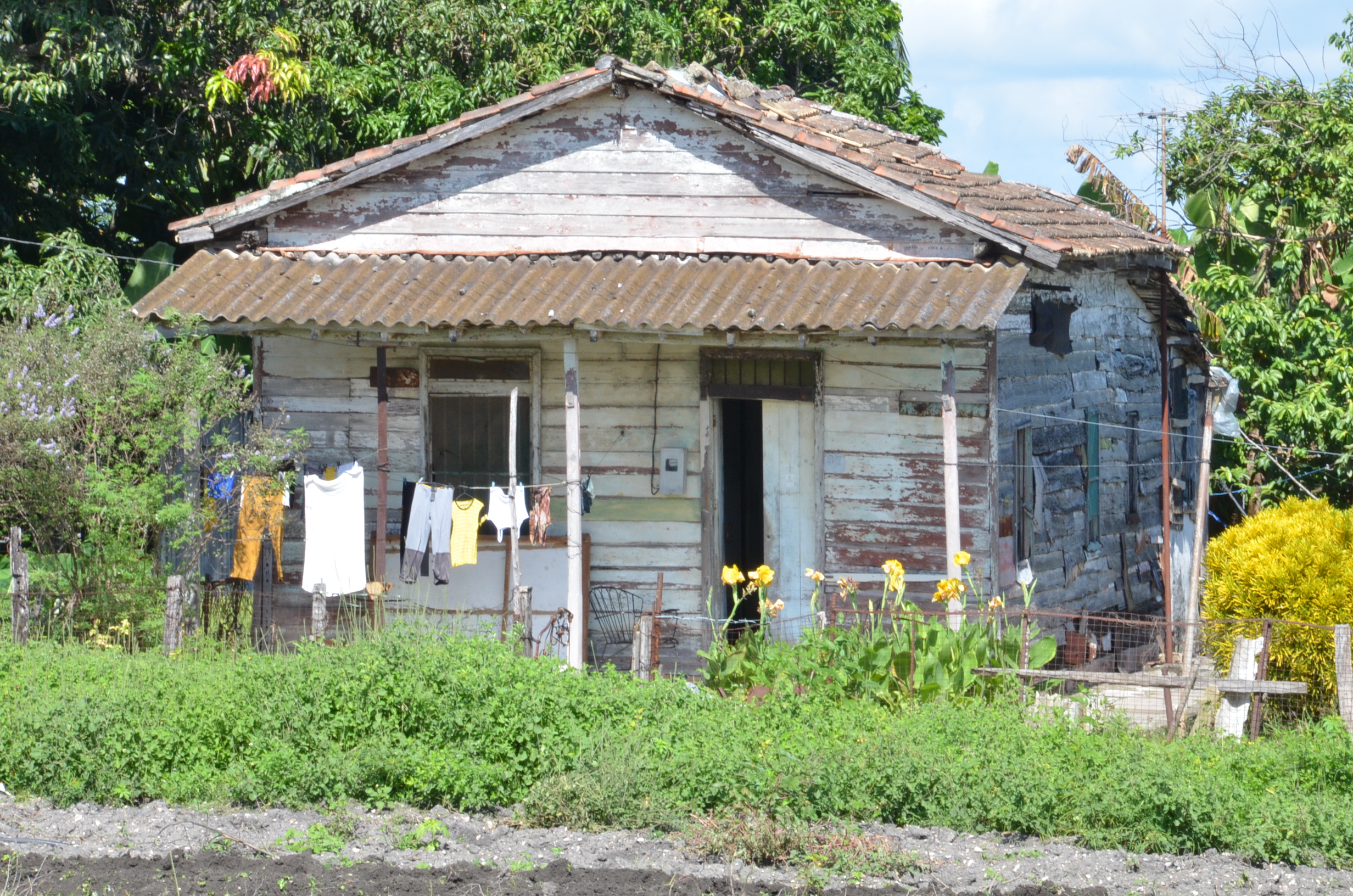
The housing is both humble and primitive.  Many homes had only three walls, with the open end of the house facing against the roads, giving families some element of privacy.

We never saw any evidence of affluence in rural Cuba.

And everywhere along the road we saw laborers, walking with their hats, their bags of unknown purpose, following paths through the countryside, symbolic of the lifestyle that has been chosen for them.

x

Habana: Sunrise Over a Once Forbidden City

Habana, Cuba.  In the states we refer to the city by the name Havana.  But it is their country and it seems they should receive deference in how to spell it.  Long forbidden to U.S. citizens, it is a place like no other.  Just 90 miles from the United States, it is shrouded in mystery.

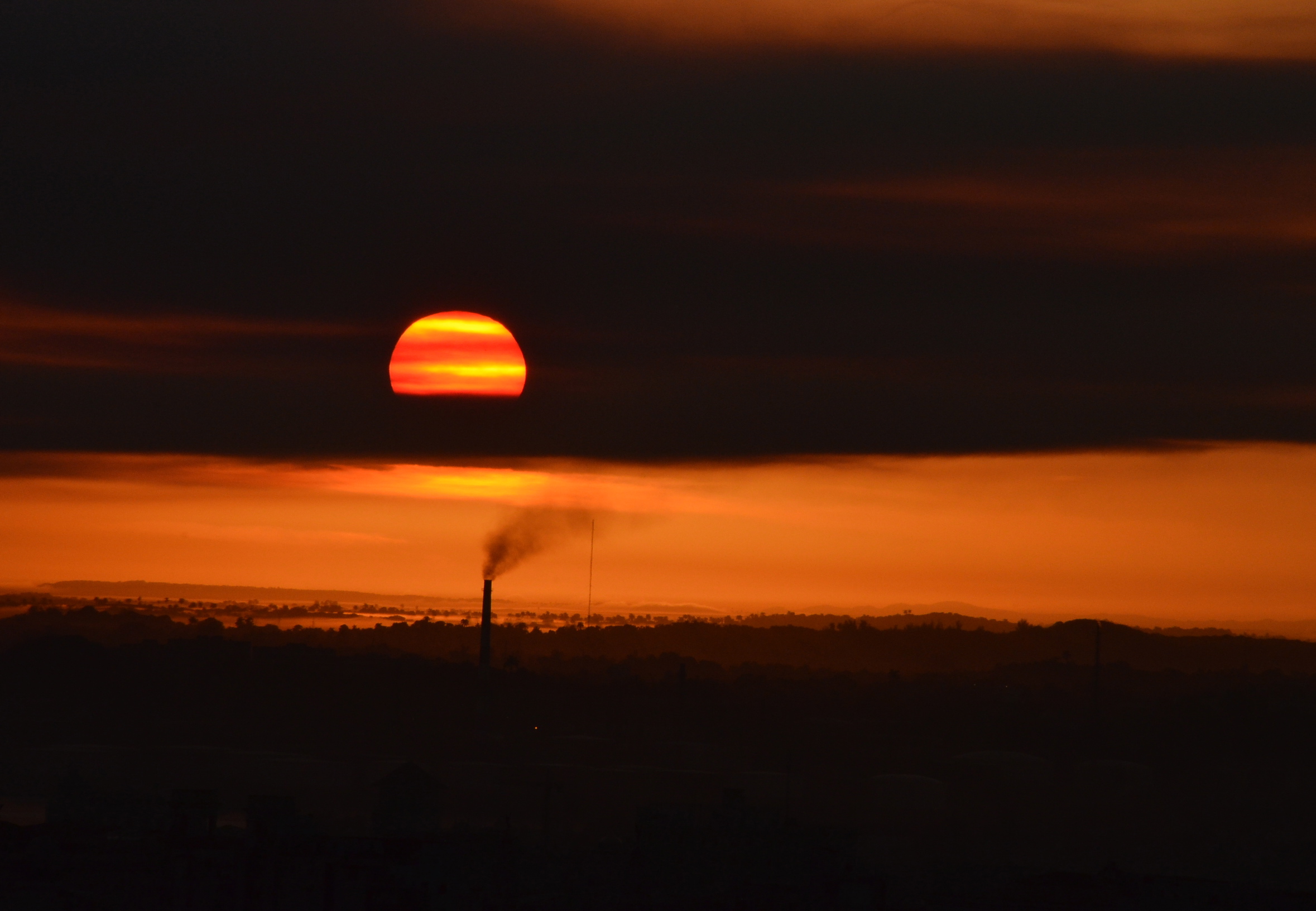
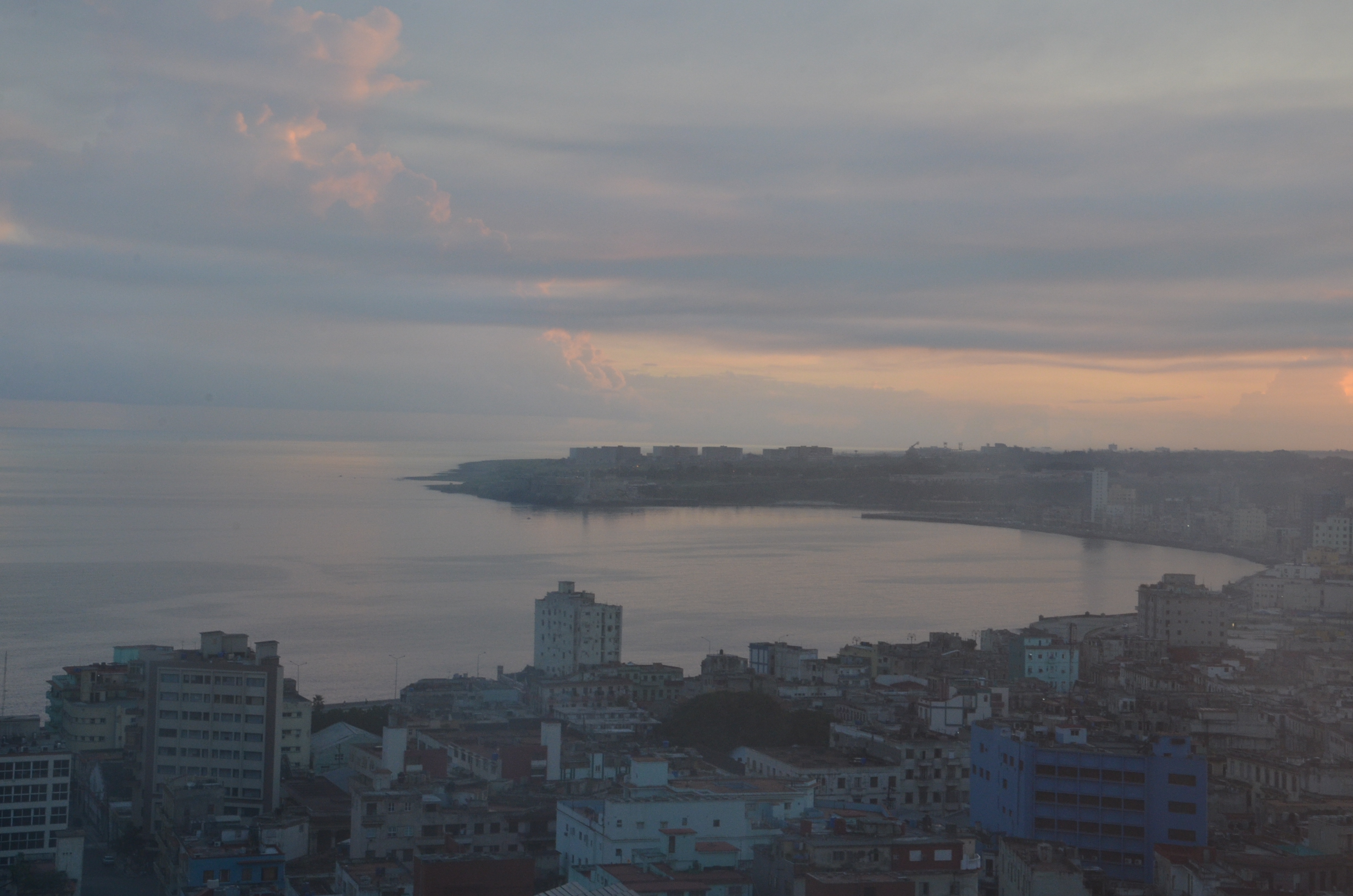
The sunrise over Habana Harbor on the second morning of our visit was as dramatic as the city.  The sun was an intense reddish-orange and the clouds were dark as night.[1]

As I watched, the sunlight produced a softer image of the city around us illuminating the sky and the Atlantic Ocean in muted shades of grays and blues.

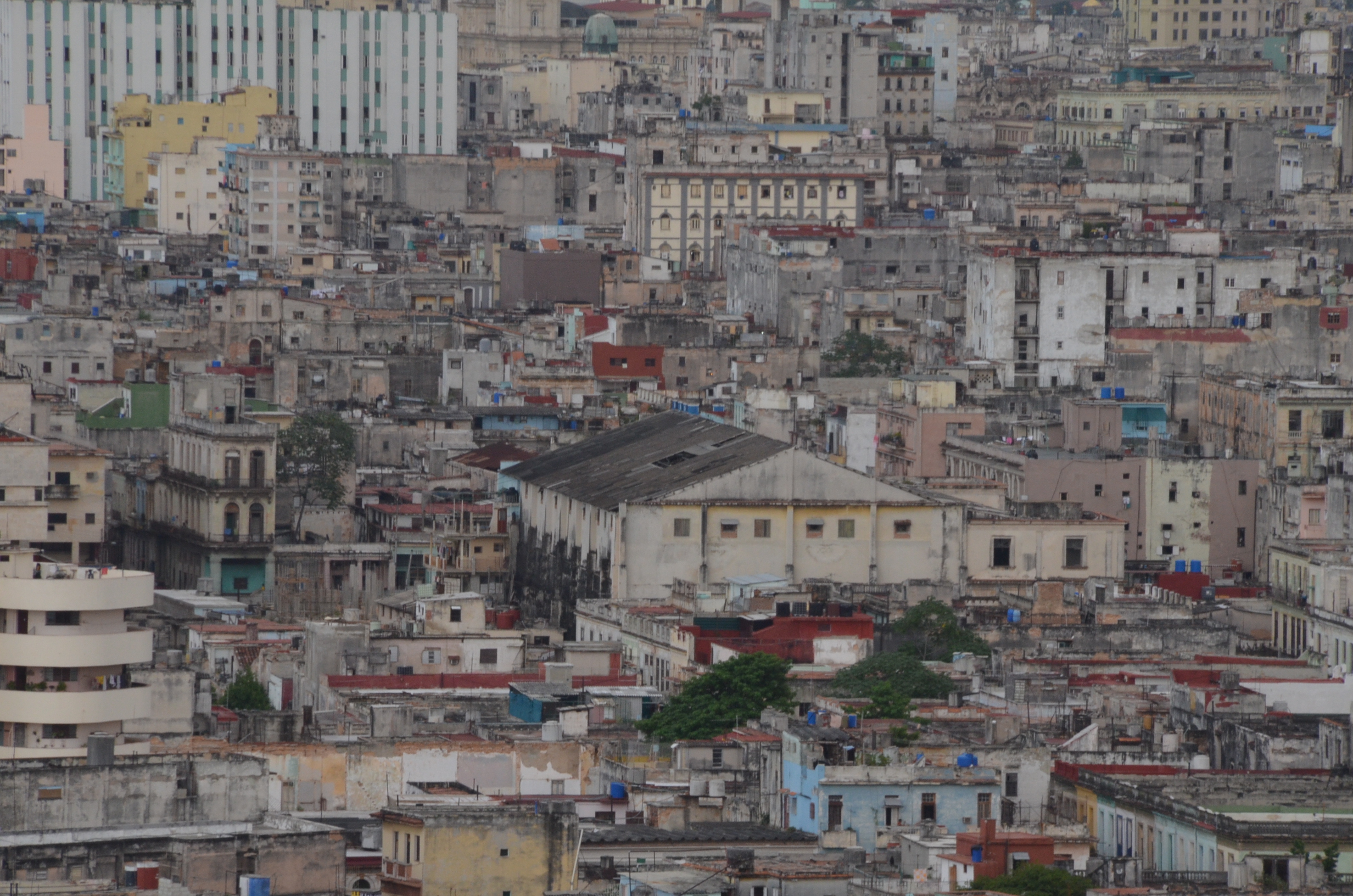
Within just a few additional minutes, the colors and the texture of the city were in full view.  This photograph reveals the contrast of the beauty and the decay that have enveloped Havana since Fidel Castro’s revolution. A revolution that has resulted in changes that continue to dominate life in Cuba more than 60 years later.

I had anticipated our trip to Cuba would be an exciting and a constantly changing experience for me, and for all the members of our tour.  I was right.
Our journey had really just begun.

[1]  These photographs were taken with my Nikon D5100 camera using a Tamron telephoto lens.  They are not altered or enhanced.  Their beauty and their flaws are all my own.  To stabilize my camera for these slow shots, I leaned against the railing on my 17th floor hotel room and held tight.

Where old cars and young horses collide

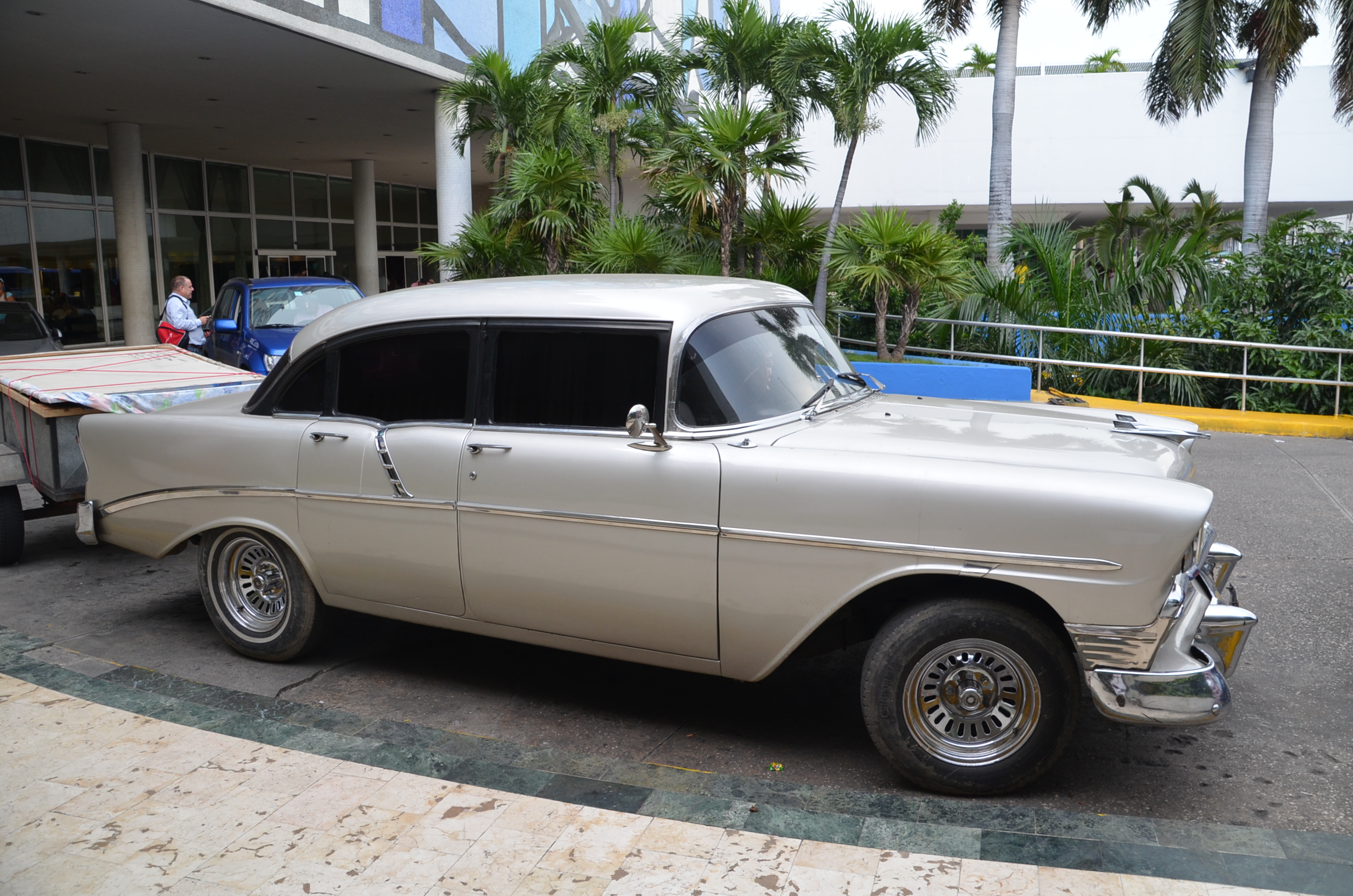
Terry and I are home.  We had a wonderful week.  Terry wanted me to ask you to guess where we went, based on that which has long identified this island nation: old U.S. made cars.  More particularly, cars from the 50’s and into 1960 just a smidge.  Visiting this nation is truly like taking a step–well several steps–back in time!

You will find Chevrolets, Buick’s and Fords serving as taxis standing in front of tourist hotels and in the yards of farmers who have inherited them from their parents.

These ageless automobiles are generally filled with passengers.  No seat is left vacant.  Gasoline is far too precious to assume that anyone would drive alone for long.

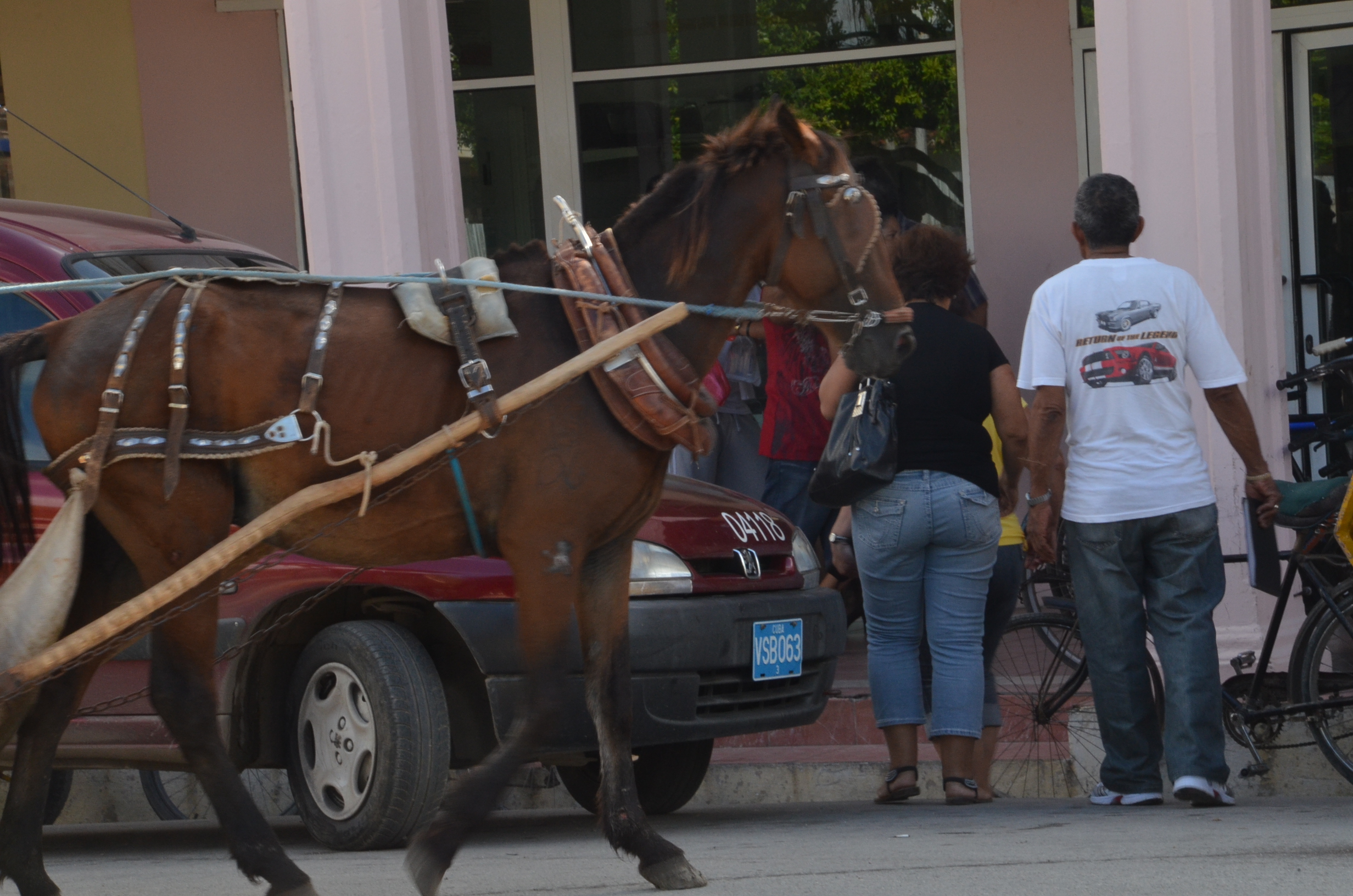
But U.S. made automobiles aren’t the only means of transportation–there are horse and oxen drawn carts; as well as Chinese, Korean and Soviet Block cars.

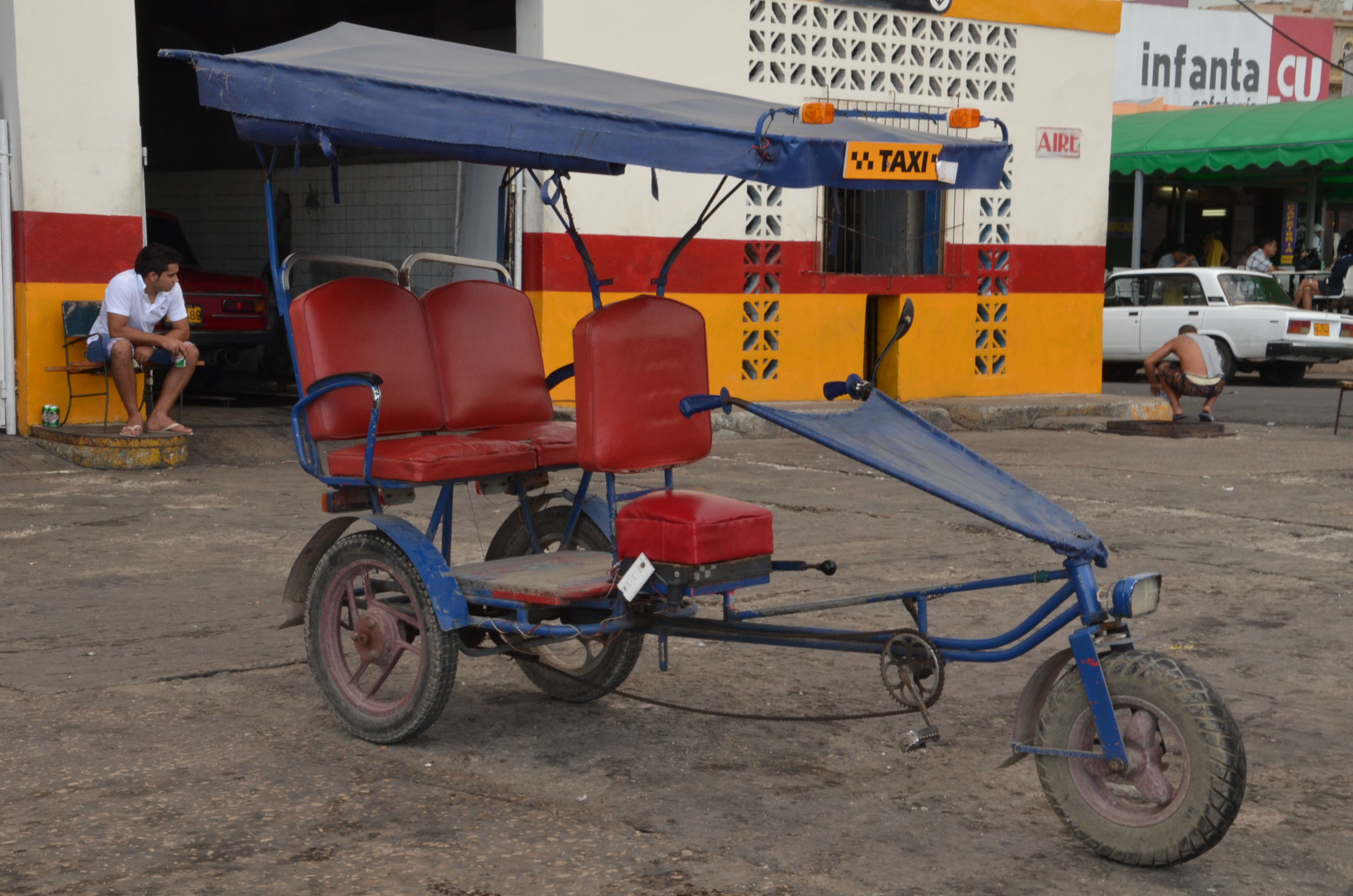
Years ago the Chinese apparently provided a bicycle for nearly every resident of the island.  They are rarely seen in the cities.  They are everywhere in the countryside.  At least as important, these bicycles, old motorcycles and wagons have been altered into shapes and combinations never anticipated by their manufacturers.

Somehow, the horses, oxen, antiques automobiles all seem to share the road in harmony.  Can you guess the country where we visited?  Of course you can.  But I will share more about our experiences in my next post.

Prague, Glorious Prague-Charles Bridge

Prague, Czech Republic is truly glorious.  Described as one of the most beautiful cities in the world, it also has been a cultural and economic center throughout much of European history.  Among the wonders of this ancient city is the Vltava River that winds by Old Town. The river is a source of transportation;  power, supplying much of Prague’s electricity; and also a major source of commerce.
18 bridges span the width of the Vltava.  Most prominent of these bridges is the massive Charles Bridge. Built in the gothic style,  construction began in 1357 and was completed in the early 1400s.  It is offers majestic views of the city and serves as a promenade for locals and tourists.  The bridge is approximately 33 feet wide and provides a venue for artists and vendors of all sorts.
The Old Town Bridge Tower, completed in 1380, is one of three watch towers guarding the bridge.  It was originally designed and built as part of the city’s fortifications to guard the Old Town from invaders.  Now it watches over locals and visitors with more peaceful plans-shopping and celebrating life.
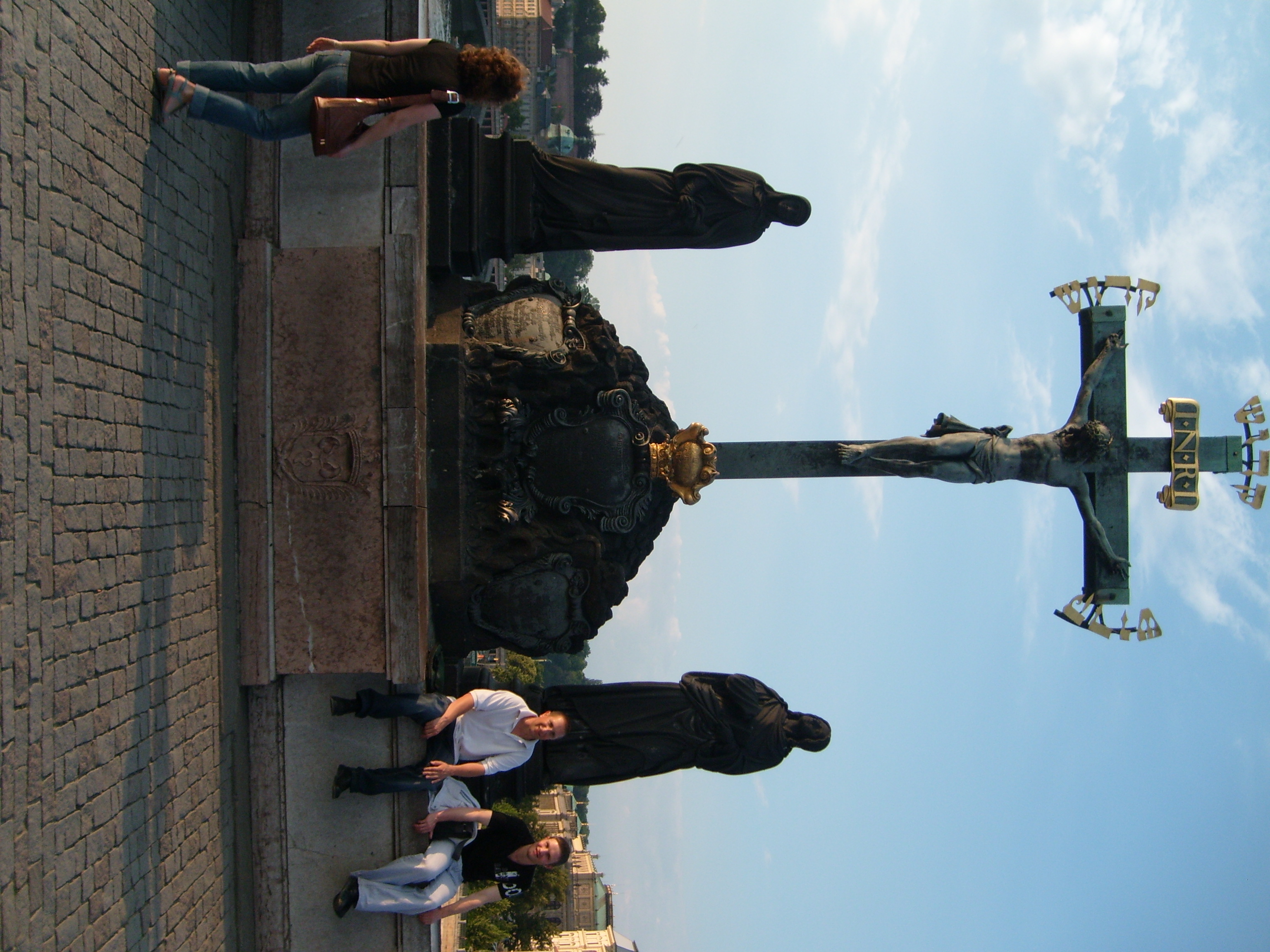
In addition to the commercial, military and tourist uses of the bridge, it also has a significant religious place in the life of the community.  Thirty statues mounted on the Charles Bridge sit in two rows, one row on each side of the Bridge. St. Francis of Assisi, St. Wenceslas, St. John the Baptist and St. Francis Xavier are among those depicted on the statues. An elaborate statue of Christ on the Cross dominates the rest.  This sculpture replaces earlier statues of Christ erected since the 1300s. The two figures depicted here  below the cross are of the Virgin Mary and John the Baptist.
If a visitor to Prague had only one day to spend in the city, the bridge itself would be among the “must see” sites.  Prague Castle, the Jewish Cemetery and Old Town itself would also be on my must see list.  All are easily accessible and within minutes of the bridge.  What are you waiting for?