My Beautiful Babies: Lily & Cousteau

Most of you know that Jake and I have two beautiful greyhounds, Lily and Cousteau, who we often refer to as “the kids.” Lily just turned 10 in March, and Cousteau turned 3 in October. Both came to us through the rescue group Kansas City REGAP (Retired Greyhounds As Pets).

Lily came to us first. When we set out to rescue our “first-born” back in the summer of 2009, we came across the rescue group at a Petsmart one day. After meeting greyhounds for the first time and getting to know the REGAP volunteers, we definitely felt that greyhounds would be a good fit for us. Sure enough, about a month and an application later, we walked into the group’s kennel, Pooches Paradise, and met Lily. It couldn’t have been 10 seconds before she looked at us, leaned against Jake’s leg, and said, “Okay, you’re taking me home now!” We didn’t stand a chance, and it was one of the best decisions we ever made!

So fast forward to January 2011. Lily was (and still is) such a perfect angel, and we had started fostering with the group. The first 3 fosters were darn close to perfect. They were all sweet, loving, well-behaved, and really difficult to let go of when they got adopted. It was the first Tuesday of the year, and Lily and I drove over to Pooches to meet a new boy that we were going to foster. We weren’t planning to take him home that night, but I wanted Lily to meet him to make sure he was acceptable to her standards. He was. So much so, that she looked up at me and said, “Mommy, I hate to break it to you, but we’re taking him home tonight.” At some point you’d think I had enough will power to tell my little girl “no,” but of course, I do not.

So that night, we took home Cousteau, a beautiful brindle boy. He had way too much energy, carried our throw pillows around the house, and was terrible at walking on a leash. None of those things changed, but pretty soon, we adopted our second child. Now they are like two peas in a pod. They really have nothing in common, except that they are both beautiful, lazy, loving greyhounds. However, they complement each other well, and together, they make up the perfect pair of canine children.

I highly recommend rescuing a greyhound. They are fast, yes, but mostly they just like to lay around and be loved. Lily and Cousteau have been absolute blessings for us, and every single person I know with a greyhound feels the same way. They truly are angels.

In Kansas City, you can contact KCREGAP at www.kcregap.org for more information. In the wine country here in California, you can contact Wine Country Greyhound Adoption at www.winecountrygreyhounds.com.

Springtime in Petaluma

It is cloudy in Petaluma today, but you can still feel spring in the air. The flowers are blooming, the air is warming up, and the scent of fresh-cut grass looms under your nose. Spring is definitely here, and our backyard is finally starting to show it.

Down the street, there are a few beautiful blooming trees. I couldn’t resist playing with my camera for these.

What a beautiful afternoon.

A Kansas City Weekend

Jake and I were in Kansas City for a quick visit this weekend. Jake was in the first of three wedding we’ll be attending in KC this year. We barely sat down for a second the whole weekend, but it was great to see family and visit some of our old favorites.

Our first stop on Saturday morning (after a brisk run around Loose Park, of course) was Jake’s personal request: breakfast at Eggtc. It’s definitely one of the best places around, and for us it’s very convenient. Right at the intersection of 51st and Main. I highly recommend it. Plus, the restaurant on the corner has such wonderful phrases painted in the window.

Later in the day, Mum and I drove out South to drop Jake off at the church to get ready with the boys. On our way back, we stopped at one of my personal favorites: Topsy’s. I’ve been going there since I was a little person. They make a delicious cherry limeade.

On Sunday, we were lucky enough to get to see some of the family on our way back to the airport. My cousin Jon and his wife Dana are pregnant, so Mum and I (okay, mostly Mum) put together a little celebration brunch. A short visit, indeed, but always wonderful to see the Mesle clan. My granddad, who turned 97 last October, still joins us in the festivities.

So after a very short weekend, Jake and I headed home to California. We are always sad to leave Kansas City, but it does make it a little easier that we get to come home to sunshine, coastlines, and wine country. It’s a good life.

For the Beauty of the Earth

Today is Earth Day, a day focused on the protection and celebration of our natural environment. Earth Day is a global celebration.  The health of our environment is important here in the U.S., in Central America, in Africa, in Europe and throughout the world.  Our very survival is dependent on clean and adequate water and a plentiful harvest.

So today, we celebrate the beauty of the earth:

We are grateful for clean water for bathing, drinking and farming:

We recognize the importance of our oceans, lakes and rivers and their role in providing food, transportation, drinking water, and other necessities and pleasures in our lives:

We respect the importance of protecting our water, our air and our soil so that we have adequate food to eat and water to drink here in the United States and throughout the world.  We recognize that adequate food and water are important for the health and security of our own families and for our worldwide populations.

While none of us can individually solve the problems of environmental pollution, we can each help to protect our world resources by planting trees, recycling trash, avoid polluting our water, soil and air and reducing our energy consumption.

As we honor the importance of water, earth and air in meeting our basic necessities, we are also grateful for nature’s beauty in our parks and gardens that feed, not the body, but the soul.

On Earth Day 2012, and every day, we wish you well and ask you to GO GREEN.

Jayhawk Pride: Rock Chalk Jayhawk, Go KU!!

My husband and I both went to University of Kansas for undergrad. We are Jayhawks through and through. Naturally, we have been glued to our big screen during the last several weeks of March Madness. With KU’s amazing history of basketball, it’s hard not to get sucked in to the Rock Chalk madness. Beginning in 1898, with the father of KU basketball, James Naismith, the Jayhawks have always been a force to be reckoned with. I even learned a few years ago that Phog Allen, one of Naismith’s players and his successor as head coach, grew up in the same house my grandparents lived in for years. So there you have it, I was destined to be a Jayhawk, and to love KU basketball.

For last night’s big game against Kentucky, we drove into the city to meet some friends (mostly PHS crew: Ryan, Ted, Eddie, Stephanie). We went to the Mad Dog, completely decked out in Kansas gear, some of us wearing the exact same attire we’d worn throughout the whole tournament. Even though we didn’t pull out a win, we still had a blast. I didn’t realize how many Jayhawks there are in San Francisco! Once inside the bar, the level of Jayhawk pride almost made me feel like I was down on Mass. Bill Self would’ve been proud.

Our loss against Kentucky last night was a tough pill to swallow. We all feel a little wounded today, but our guys played their hearts out. Withey even scored a new blocking record. And while we may not yet have another national title under our belt, I’m proud of our players. Trust me, we’ll still be there for them next year, and every year after, no matter how the games end.

For all the other Jayhawks out there, Rock Chalk!

Springtime in Kansas City’s Country Club Plaza

It is a beautiful week in Kansas City. The tulips are in full bloom.

Pansies are everywhere, even in a “wishing well”.

The trees are starting to bud.

The Plaza is all decked out for Easter, with an oversized rabbit, turtle and other brightly colored animals for children to climb on and be photographed with.

Most exciting, the first of the Plaza’s fountains have been turned on.  It is our own little bit of heaven.  Pomona, an original sculpture by Donatello Gabrielli, is the Roman Goddess of the Earth.  She stares out on the Plaza as though aware of our comings and goings.

The Plaza is at it’s very best.  Ready for tourists and locals alike.

Have a great day!

A Place Like No Other–Prague’s Jewish Cemetery

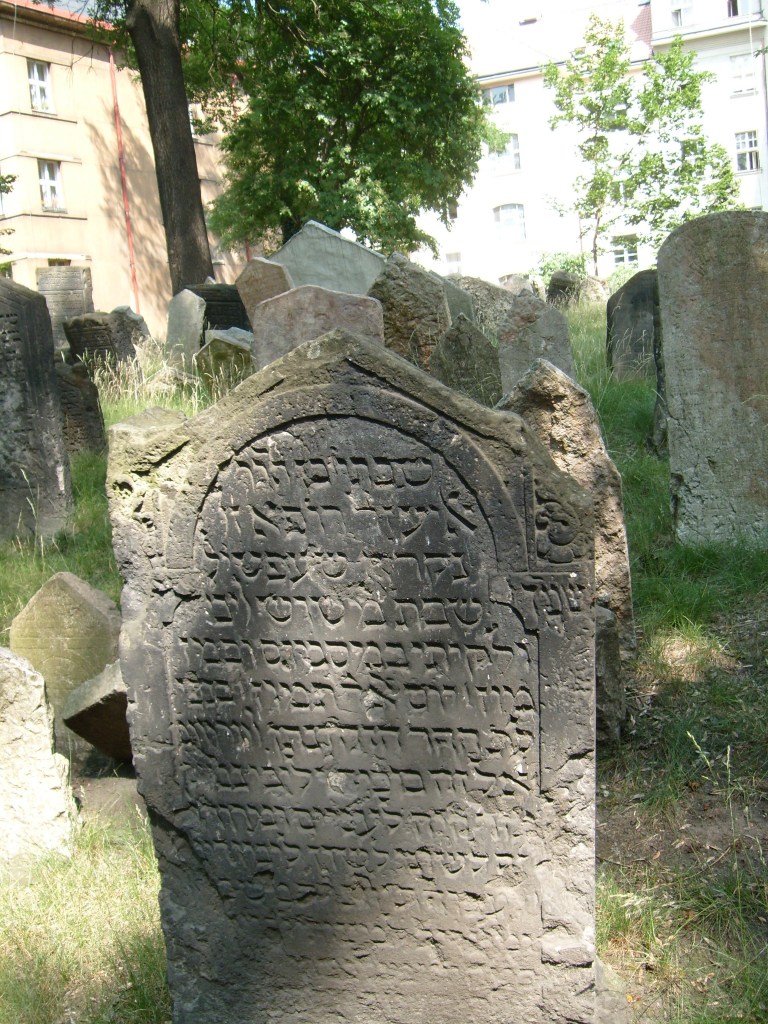
The old Jewish Cemetery in Prague is among the oldest surviving Jewish burial grounds in Europe.  It sits in what is considered the best preserved complex of Jewish historical monuments in Europe, including the Jewish Town Hall and six synagogues. It is a monument to the Jewish Golden Age in Prague.   It was established in about 1439, with the last burial in about 1787.

Unique among cemeteries, the tombstones are so tightly packed that many literally rest one on top of another. The ancient trees wrap themselves around the tombstones as though born from the stone.

For 350 years the Jews of Prague were buried here. It is the resting place of Jews who made Prague their home  when Prague was the cultural center of Jewish Europe.  Especially during the 16th century, Jewish intellectuals throughout Europe gathered in Jewish Town. Many of these greats rest here, in the same cemetery that served the community in times of repression.

The cemetery is surrounded by a massive stone wall, as though the wall alone is sufficient to protect the remnants of this rich culture that extends nearly 650 years into the past.

Madeleine Albright visited this ancient cemetery on a visit to Prague in 1997.  This was not just any trip, but a pilgrimage of sorts.  Within the year, she had learned of her Jewish heritage, a heritage hidden from her family who fled Czechoslovakia in fear of the Nazis and again, years later, the communists.  When she explored the cemetery, she must have learned of the leaders buried here, who, like herself, exercised great power and influence in their times.

Secretary Albright will have been told of the first burial about April 25, 1439, of Avigdor Karo, the “chief rabbi” of Prague, a poet and a scholar of the Kabbalah.  Rabbi Karo lived through the destruction of Prague’s Jewish community in the 1389 Easter massacre in which over 3000 Jews died.  She will have been told of  Mordecai Marcus Meisel, (died 1601), a Philanthropist and leader in Prague, who lived through the persecutions of Jews in the mid-1500’s, financed the construction of Meisel synagogue in 1590-92.  Meisel built a hospital, expanded the cemetery and paved the Jewish ghetto. She will have heard the stories of Rabbi Loew Ben Bezalel, Chief Rabbi of Prague, a significant Talmudic scholar and philosopher,  buried there in 1609. Perhaps she will have been told of Rabbi David Ben Abraham Oppenheim, Chief Rabbi of Prague prior to his death in Sept. 12, 1736. Rabbi Oppenheim, a highly successful business  man, a prolific author and a student of the cabal is said to have had a library of more than  7,000 books.  Many of these books are now housed in Oxford’s library. These are only a few of the 100,00 people buried in these walls.

As powerful as these images must be, with the cemetery symbolizing both life and death, there was more for her to experience. The Pinkas Synagogue sits in the same complex.  Now serving as a museum, the synagogue’s walls identify over 77,000 Czech and Slav holocaust victims.  Among those names are Secretary Albright’s paternal grandparents.  Her grandfather Arnost Korbel, died at Theresienstadt in 1942.  Her grandmother, Olga Korbel, died in Auschwitz in 1944.

My husband I visited the Cemetery and Pinkus Synagogue in 2007.  The list of the dead is a visual testament to those killed in the holocaust.  I  cannot imagine the profound sense of loss that Secretary Albright must have felt, on seeing her Korbel names on those walls. But I wonder, what might happen if I awoke on some future day to learn, as she did, that my heritage was not what I had been raised to believe.  What if I learned I was Chinese, or African,  or Persian, or Jewish.  Would I develop a better understanding of the struggles, hopes and challenges of people of other races and other religions? Can I do that anyway?

The Mighty and the Almighty–Diplomacy and Faith

In my quest for greater understanding of the role of faith in government and diplomacy, I have focused on two books.  Senator John Danforth’s Faith and Politics and Secretary of State Madeleine Albright’s The Mighty and the Almighty.  Senator Danforth is a lifelong Republican.  Secretary Albright has been a Democrat since college.  Both are Episcopalian.  Each served as Ambassador to the UN.  Both advocate that people of faith should be active in government.  Both believe it is essential that there be respect for diversity both within the Christian community and that this respect must extend to those of other faiths and philosophical beliefs.

I focused on Senator Danforth in an earlier post.  Now I will focus on Secretary Albright.  She was born in Czechoslovakia.  Her father was a diplomat.  She was a child when Adolf Hitler was in power.  She emigrated with her family from Czechoslovakia to the United States after communists seized power in her homeland.  Educated at Georgetown University’s Walsh School of Foreign Service, she received her PhD from Columbia University.  Raised Catholic, she converted to the Episcopal faith and, as an adult, came to learn of her Jewish heritage.  Appointed United States Secretary of State during President Clinton’s administration, she served with great distinction from January 1997 to January 2001.

Her unique family history and academic and professional experiences give her a unique perspective on the subject of her book, the role of faith in international diplomacy.  Because of her childhood experiences, she also has special insight into what a privilege it s to live in a free and democratic society.

Secretary Albright’s book is dedicated to “those of every nation and faith who defend liberty, build peace, dispel ignorance, fight poverty, and seek justice.”  Secretary Albright weaves this dedication, and her personal family history, into a scholarly but easily readable narrative of the role of faith in the earliest years of colonial America, through the founding of the Republic and through to the challenges of international diplomacy in a nuclear age.

She discusses separately and together the roles of religious belief and morality.  Her definition of what is moral as essentially that which “we associate with good:  life, liberty, justice, prosperity, health, and peace of mind.”  She describes these characteristics as the opposite of “death, repression, lawlessness, poverty, illness, and fear.”

She worries about the dangers and challenges resulting from the increase in religious passions throughout the world.  She shares the wisdom of religious scholars that effective diplomacy requires that government leaders become more knowledgeable about the faiths and cultures of the countries with whom we interact.  She believes such knowledge is essential in our endeavors to work toward reconciliation rather than toward armed conflict.  Even as she identifies herself as an optimist, she worries “the prospect of a nuclear bomb detonated by terrorists in purported service to the Almighty is a nightmare that may one day come true.”

The Mighty and the Almighty is a goldmine for those who want a brief history of the role of religious conflict on the founding of some of the earliest American colonies, about the religious perspectives of our first four Presidents, George Washington, John Adams, Thomas Jefferson and James Madison.  Because there is no way to do more than touch the surface of the issues raised by Secretary Albright.  It is wonderful material for further posts.

My Beautiful Birthday Girl: Happy 10th Birthday Lily!

Today, my little Lily turns 10 years young. We adopted her almost 3 years ago from a rescue group in Kansas City called Retired Greyhounds As Pets (REGAP). Well actually, she picked us. As our “firstborn” greyhound, she is a bit spoiled, but she is such a perfect little girl. For her birthday, she is spending the day being extra lazy, though I suppose that’s nothing new. Perhaps her goal today is to see if she can be more lazy than usual. It’s a hefty goal! But I’ll bet she can do it. For example, this is Lily on the love seat this morning…

Here are some photos of little missy and her very busy year. She became a big sister just over a year ago to our little boy, Cousteau. She made a cross-country move to California. She’s been to the beach.

It’s been a wonderful year with my little girl. Here’s hoping for many more:)

HAPPY BIRTHDAY LILY!

Faith and Politics–Views of a Statesman and a Preacher: John Danforth

John Danforth: U.S. Senator, Ambassador, Special Envoy to Syria, attorney and Episcopal Priest.  His preparation for public office was as unique as the man.  He received his undergraduate degree at Princeton. In 1963 he received graduate degrees from Yale Law School and Yale Divinity School.  He is an Episcopal priest and has been so for almost 50 years.  He is recognized as a true statesman and a person of integrity.  A lifelong Republican, he remains widely respected by “both sides of the aisle.”

In a 2009 interview with Michel Martin, host of NPR’s TELL ME MORE, he described his view of the role of religion in public life:  Religious people are going to be involved in government and in politics, and that’s good and I’m one of them.  But I think when you  do it, it’s important to do it with a great degree of humility and recognize that your point of view is not necessarily God’s point of view, it’s just your political point of view.  And that you have to be tolerant of people who don’t agree with you and not just assume that, well these are evil people.  It’s just a difference in opinion.  

In 2006 he authored Faith and Politics-How the “Moral Debate” is Dividing  America and How to Move Forward Together. I first read his book to understand his opinions on such issues as stem cell research, the Terri Schiavo “right to die” case, school prayer, and  Justice Clarence Thomas’ confirmation proceedings. When I returned to his book, my focus changed to his views on the role of religion in politics.

While Senator Danforth identifies himself as a devout Christian, he rejects the notion that his political positions are God’s positions, and considers the concept very divisive.  He expresses concerns throughout his book about the “takeover” of the Republican Party by the religious right, while supporting the participation of  conservative and liberal Christians in politics.  He continues on to say that the problem is not that Christians are conservative or liberal, but that some are so confident that their position is God’s position that they become dismissive and intolerant toward others and divisive forces in our national life.

He believes that Christianity is supposed to be a ministry of reconciliation, but has become, instead, a divisive force in American political life…something is terribly wrong and we should correct it.  I think there are two aspects to what is wrong: first, our certainty that our political agenda must be God’s agenda, and second, our ineffectiveness in proclaiming the message of reconciliation.   He further states: our attempts to be God’s people in our politics are, at best, good efforts, subject to all the misjudgments and mixed motives that characterize human behavior. We are seekers of the truth, but we do not embody the truth.  And in humility, we should recognize that the same can be said of our most ardent foes.    

Much of Senator Danforth’s focus is general, but he is specific about one element of political life, the character attacks on candidates for governmental positions:  We may never agree on the issues, but we should all agree that in America, the pursuit of a political cause does not warrant the intentional destruction of a fellow human.  

While a primary focus of his book is directed toward Christianity in the political process he rejects the concept that the United States is a “Christian country”.  He  believes that term indicates non-Christians are of some lesser order, not full-fledged citizens of our nation.  He expresses regret about incidents in his life which he considers insensitive to non-Christians participating in two events;  the first at his non-sectarian high school when students, including non-Christians, were expected to sing the hymn “Onward Christian Soldiers”, which concludes “God in three persons, blessed trinity”.  The second a prayer he gave at Yale University which he ended with a reference to the Trinity (God the Father, the Son and Holy Spirit).

Senator Danforth does not minimize the risks arising from the polarization of politics. He writes eloquently of why our political dialogue should move to the middle through compromise of extreme conservative and liberal political and religious beliefs.  He condemns what he considers to be the intentional perpetuation of wedge issues, which he says are harmful to the national interest.  He describes the risks of divisive politics based on religion this way: ...religion has the capacity to draw people together.  But it can also be a powerful force that drives people apart. In the Middle East, Iraq, Sudan, the former Yugoslavia and Northern Ireland, and many other places in the world, religion has been so divisive that people have killed one another, believing they were doing the work of God.

If Danforth is right, if no one has a pipeline to God, doesn’t it mean that he is also right that people of good will should seek to respect our differences as we work together for a better world.  If he is wrong, if there are political leaders who understand perfectly the one ultimate truth, how is that truth to be known and accepted?  The ballot box? The battlefield?  Do we try to force each other to adhere to our separate versions of the truth? What if the wrong “truth” wins?

I’m now ready to move on to retired Secretary of State, Madeleine Albright’s book:  The Mighty and the Almighty. Let’s see what she has to say.