A Splash of Color

This wonderful wildflower reminded me of the “poor little Buttercup” from the operetta, HMS Pinafore.  I took the photo in Northern California with my iPhone camera.  It was a surprise to me that it was able to clearly capture the detail of the center of the bloom and the foliage behind it, leaving the wonderful golden petals delicately blurred.  Smart iPhone.  Who knew?

Mother nature at her finest!

The Little Free Library–Blue Springs Style

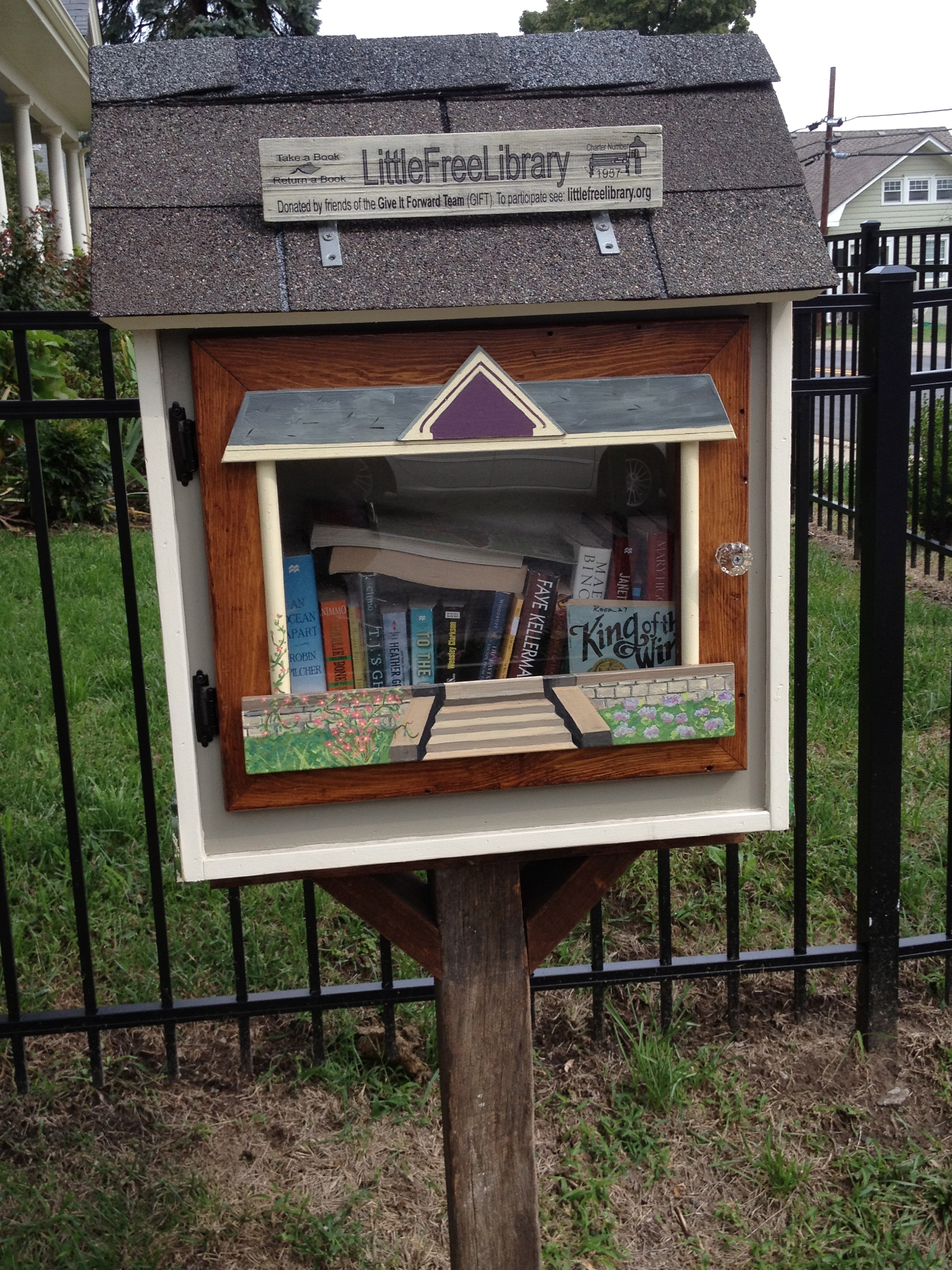
As I was photographing the Brownfield House for yesterday’s post, I saw what appeared to be a slightly oversized bird house.  Fascinated, I aimed my camera for a shot only to see through the viewfinder the words “Little Free Library”.

Last week I first heard about “The Little Free Library”.  It is such an exciting concept.  Begun in Madison, Wisconsin, it has already spread to California and has recently begun making its way into the heartland.

The goal of The Little Free Library project is to encourage businesses and individuals to establish their own tiny libraries to make books easily available throughout the community.  While focused on encouraging literacy and a love of learning, a secondary goal is to encourage healthy and interactive communities.  What is unique about these libraries is their size.  They are tiny, really tiny.  The largest may be redesigned telephone booths.  The smallest aren’t much larger than bird houses.  And they are so cute.

  The way the library works is that containers are placed to be easily accessible to the public.  Neighbors–and strangers–are encouraged to borrow a book, take a book, leave a book or borrow a book at one library and return it at another.

It is truly a “public” library in the best sense of the word.  While the containers have doors of some sort to allow for easy access to take a book or donate a book, and to protect books from the weather, the containers have no locks or keys.  This library simply instructs the observer to “Take One”.  No lecture about rules, due dates, fines or fees.  Just take one.

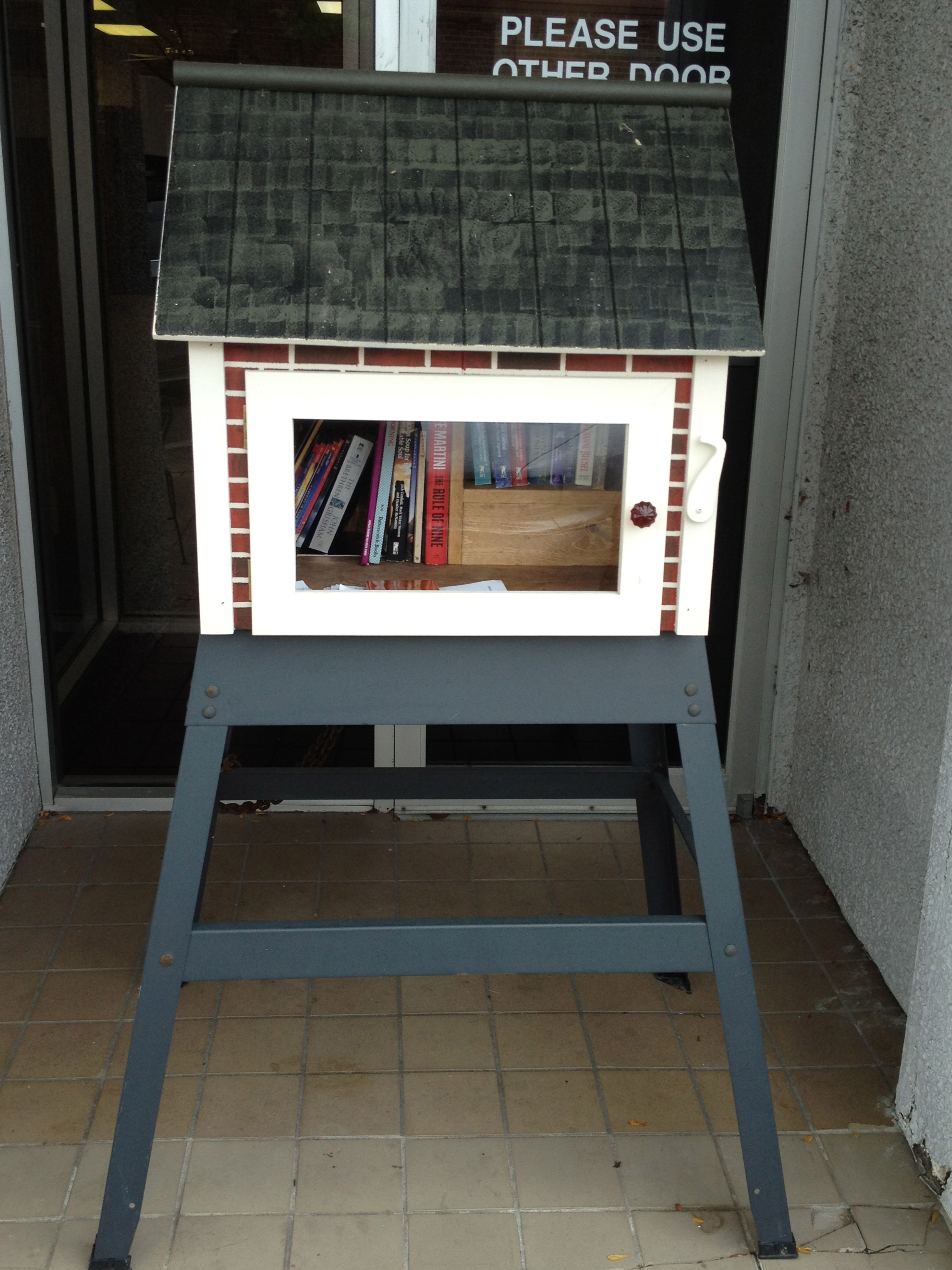
The goal of the movement’s founders is to create over 2510 libraries.  Since this was the first such library I have encountered, I assume the movement is far from reaching its goal.  But with the support of America’s Community Bank, there is now also a second tiny library in Blue Springs.  Hopefully more are on the way. The owners of the Brownfield House, excited by my excitement, told me about their interest in the project and directed me to this tiny library in front of the bank building.

Do you want to be the first in your neighborhood to provide a library?  No staff, no employment taxes, no payroll.  All it takes is a little creativity and the best books to share with others–your own.

Happy reading!

David Brownfield: He Lived Through 89 Years of Blue Springs’ History

David R. Brownfield, Sr. was born December 18, 1922, to Wade Brownfield and Margaret Dillingham Brownfield.  He died September 13, 2012. He was the son and grandson of pioneers who settled in Eastern Jackson County, Missouri.  He was devoted to his family and his community.  He was a good man.
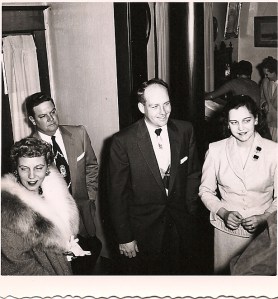
His funeral was yesterday.  The funeral was held only a block from his childhood home.

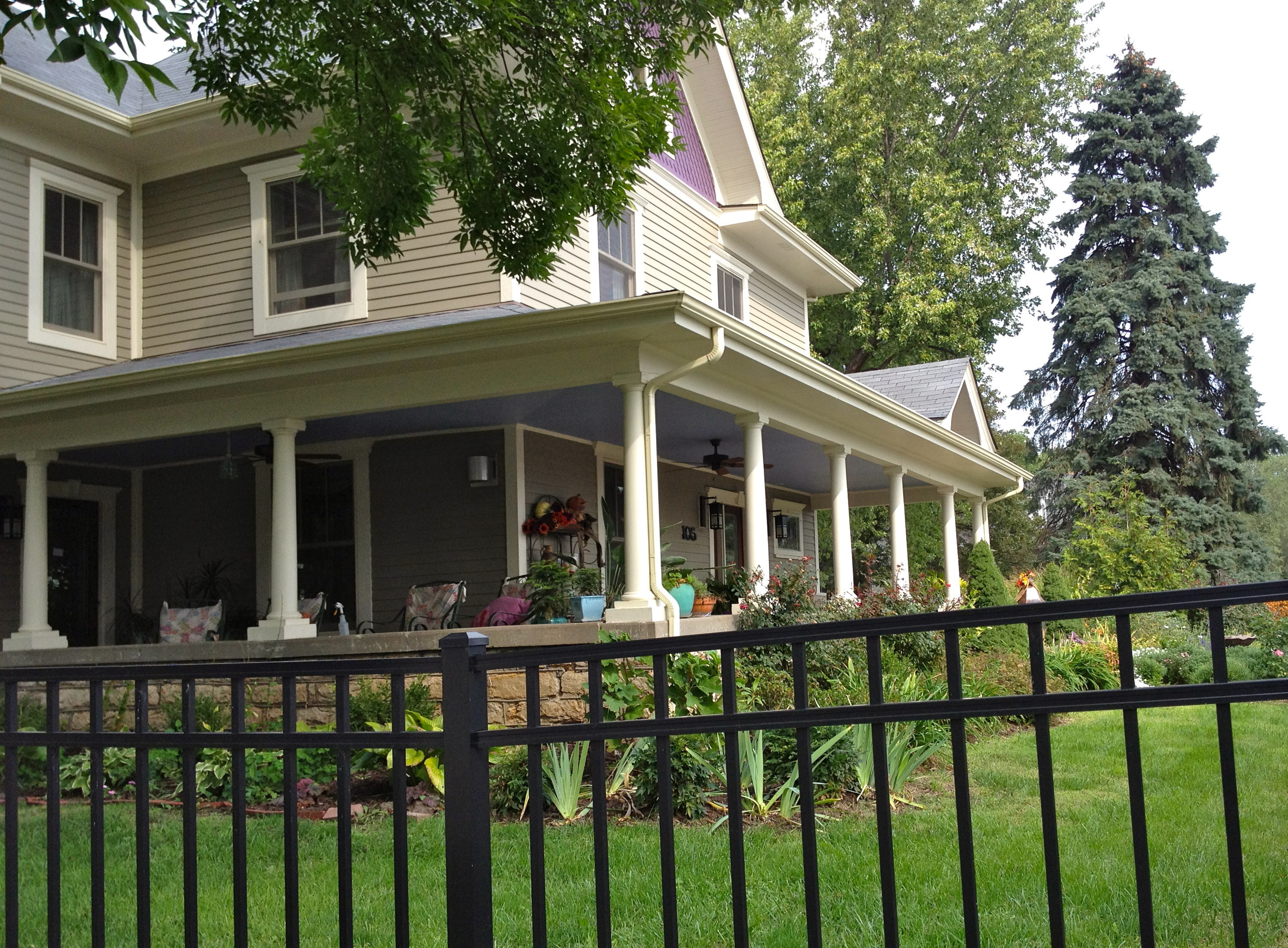
His home, the “Brownfield House” is a historic landmark in Blue Springs. It sits next door to his grandparents’ home, which became, fittingly, the “Dillingham

Museum”. The homes are located at 15th and Main Street.  They are in the heart of the Blue Springs Historic District.  In fact, they appear to “be” the historic district.

The portrait of his mother, Margaret Dillingham, is a prominent feature of the museum. Often, people who are born, live and die in one relatively small town live lives with a minimum of adventure.  But nothing could be further from the reality of David’s life.

David served in the United States Navy during World War II.  He was trained at Cornell University before being given his orders to serve in the Pacific Theatre.  His assignment was to build runways for U.S. military planes that were moving through the Pacific after Pearl Harbor, often in advance of U.S. troops.

On his return from the war he went to work for AT&T , where he built his career.  He was assigned to Alaska, where he helped build Alaska’s telephone infrastructure. Separated from his family, he nonetheless loved his experiences in what was in the 1950’s truly a wilderness.

He returned home where he remained an AT&T employee for the remainder of his career. On his retirement, he became an active member of the “Pioneers”, a service organization for long time Bell System retirees. In the midst of this he married twice, each of his wives preceded in him death. He raised a family and was an extraordinary influence in the lives of his grandchildren, including Jake Hodge, Meg’s husband.

When Meg and Jake began dating, David immediately won her heart by faithfully attending the annual performances of the Messiah, performed by the Independence Messiah Choir.  (Those faithful to our blog are aware that Meg sang in the choir before graduating from law school and moving to California.)  Meg and David developed a special bond, focused, I am sure, on their mutual affection for Jake.

When Jake spoke at his grandfather’s funeral, he focused on his love and deep connection to him.  He talked about David as a role model. He talked about his grandfather’s wisdom “to put family first”, and quoted from his grandfather that: “If you work hard enough, you can accomplish great things–and even surprise yourself.”  Jake has certainly followed this sage advice, loyal to his family, and working long hours to put himself through the University of Kansas and now succeed in his career.  Jake, Meg and Jake’s family will miss this wonderful man.

David Brownfield was a wonderful representative of what Tom Brokaw has so aptly described as “The Greatest Generation.”  He will be missed.

My DNA–What? Surely you Jest!!

Seriously.  I do a little DNA test and what do I get?   Total confusion.  I mean, seriously, who did I think I was?? Wrong, wrong, wrong.

Based on more than 5 years of research relying on Ancestry.com, google, family records, public records, photographs and other research, I expected my DNA results to look something like this:

British Isles: 60%, Western Europe: 35 %, Other: 5 %.

Ancestry.com even includes on its site a clever little circle graph showing the nature of the information that members would receive about their genetic markers.  It seemed so simple.  Once again, wrong, wrong, wrong.

I expected, and found, strong evidence of family roots in the British Isles.  Mom’s family (Harrises, Bayes and Wrights) and my maternal grandmother’s family, (Lewises), all have strong ancestral ties there.  But where I expected my heritage to be dominated by British and Western European ancestors, instead I now understand I have lots of ancestors from Scandinavian countries.  I had not anticipated a single Swede, Dane or Norwegian in my entire family tree.  My Middle Eastern and Southern European roots–seriously, where do they come from. My anticipated heritage is so different from the heritage established by my DNA.  I am intrigued.

The question I raised in my last post about my DNA test indicated I expected to see some data in the “other” column as a result of the somewhat obscure origins of the Lumbee “tribe” of North Carolina.  My ancestor, Morris Teeter, who was born in 1737 and died in 1812, was buried in the Cummings Cemetery near Pembroke, NC.  Apparently, he was a Lumbee or married to a Lumbee.  If that information is correct, then I certainly have no native American DNA indicators.  Perhaps the rumors that the Lumbee are descended from early sailors to the New World (obviously Scandinavian and maybe Persian) is true.  I don’t know.  I don’t want the Lumbee tribe to take my word for it.  But they may want to be DNA tested themselves. Really.

But I digress–kind of!

Where are the Mesle/Kirsch Western European ancestors?  What about the centuries I expected granddad’s family to have lived in Western Europe before moving from Germany to the United States?  Nowhere.  Absolutely nowhere. I have 5 years invested in learning about the migration of the Mesle name from St. Maixent, France, spreading throughout France and into Germany, Belgium.  5 years trying to determine where in the small world of Mesles my own family had its origins before appearing in the record books in Stuttgart, Germany in the early 1800s.  Now, I do not know whether I am, at all, connected by blood to those Mesles.  Maybe they are, as I once read, descended from Vikings. But could they have lived in Western Europe for 800 years without picking up even a hint of German or French DNA markers?  Of course not.

The question, of course, is “Does it matter?”  If my interest is in tracing the religious, ethical and educational history of my family, it may not matter at all.  If my interest is in my blood line, then maybe the most important message is that none of us may be who we think we are.

Now that, is something to chew on!

Ben

Benjamin Franklin is one of our nation’s most beloved and celebrated founder. Truly a leader of men, he was a diplomat to France, author of the original Poor Richard’s Almanack, authored portions of the Declaration of Independence and was a delegate to the Constitutional Convention. And that is just the beginning of his talents and accomplishments.

Noted for both his eloquent descriptions of life and government, he could be witty, pithy and wise.  This wonderful sculpture of Franklin, created by George Lundeen, [1] sits by Latte Land on the Country Club Plaza.  Feel free to sit with him for a while.  There is plenty of room on the bench.

                                                   Where liberty dwells, there is my country [2]

[1]George Lundeen sculpted this wonderful bronze statue of Benjamin Franklin.  It is a warm representation of Franklin, one of a series of similar sculptures, large and small.  Lundeen’s creations include national heroes, child athletes, newspaper boys, Native Americans and others are charming and seem to capture the spirit of our national character.

[2] Widely attributed to Benjamin Franklin

Last Days of Summer on Martha’s Vineyard

It is the last days of summer.  Vacations have ended. The summer crowd has left the beaches. I comfort myself with a friend’s reminder that much as we love summer, winter is when things happen.

Still, we already yearn for the return of the lazy days of summer!

Wandering the Grounds at the Kemper Atkins Museum of Art

Weekends are for wandering, pondering and enjoying life.  Especially gorgeous September weekends.  What could be better?  Casey is almost always with us on our weekend jaunts.  He is not a particularly well-disciplined dog.  We forgive him since his sense of adventure is similar to ours.  

Sunday evening we headed to the Nelson-Atkins Museum of Art.  It is elegant and inviting.  While most of my museum time has been spent wandering the galleries inside the buildings, Sunday we focused on the grounds.

Since my earliest childhood, Auguste Rodin’s, The Thinker, has symbolized the Nelson for me.  Originally inside the museum, he now sits outside, prominently displayed near the front entrance.  The question has always been “What is he thinking about?”  I have no answer.

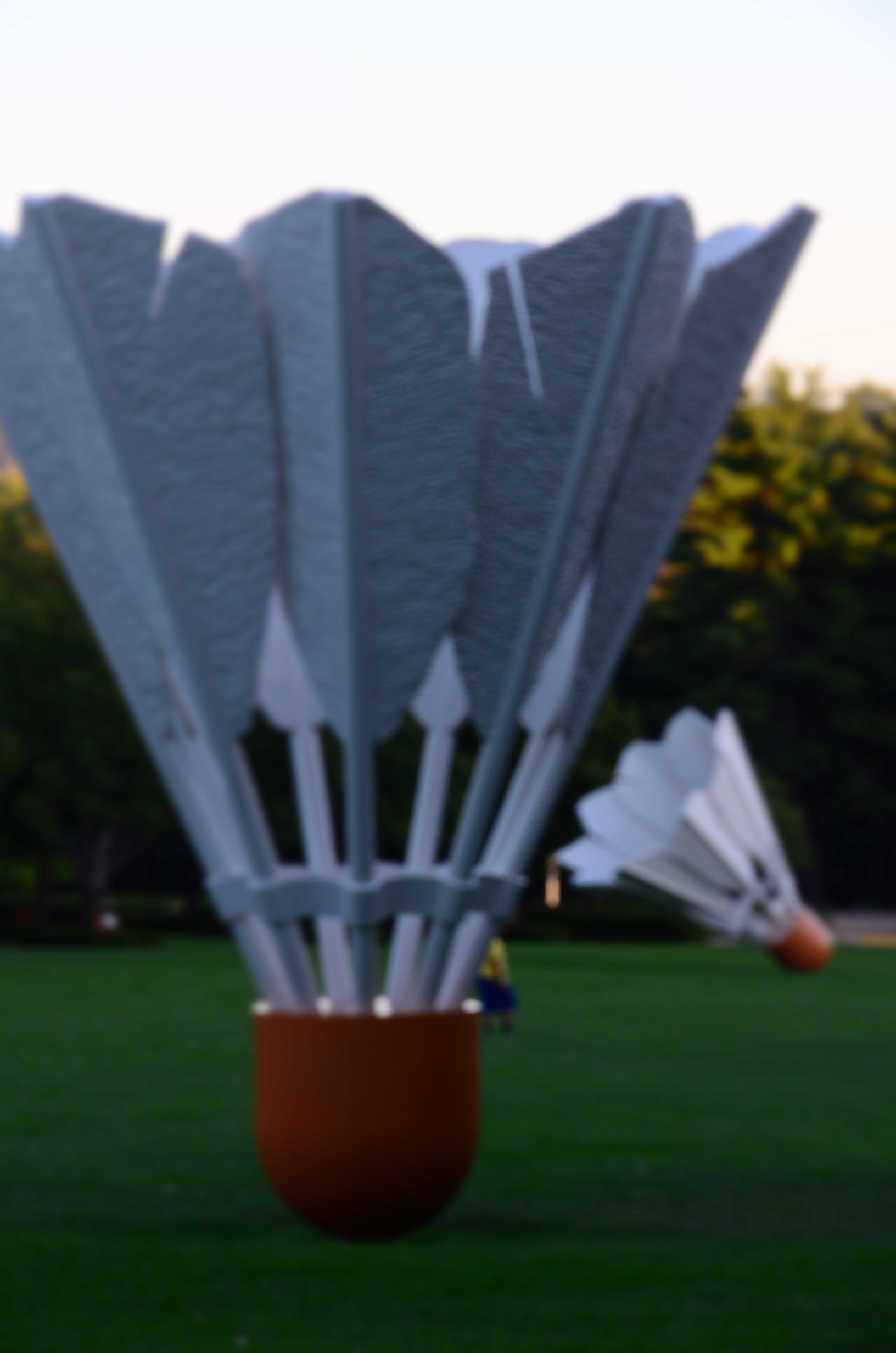
Sharing the front lawn with The Thinker are the shuttlecocks.  A total of four shuttlecocks  rest on the front and back lawns.  Presumably, the museum itself is the net.

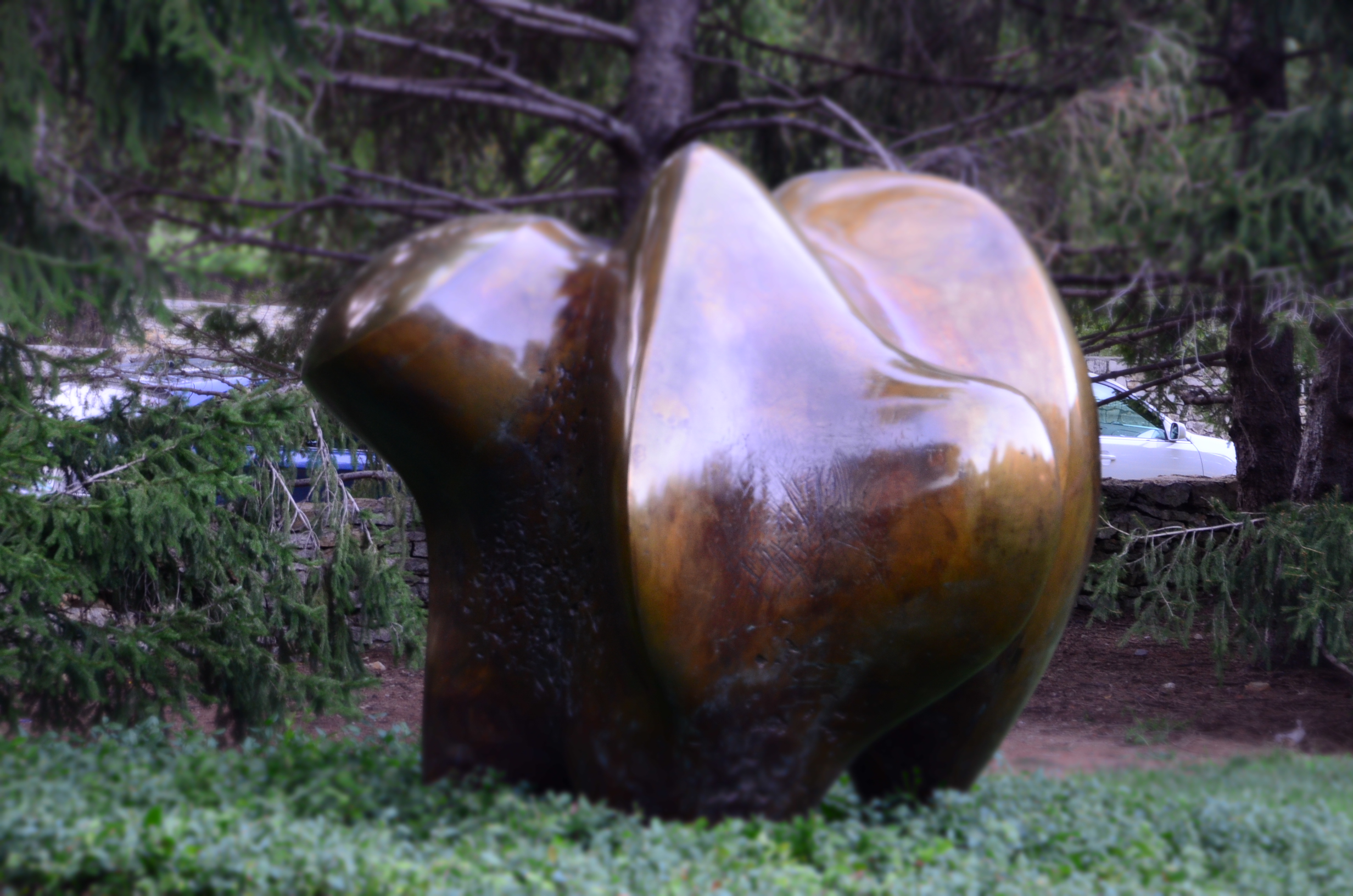
The Kansas City Sculpture Park, located on the grounds, includes formal and more casual gardens with more than 30 sculptures by 20th and 21st century world-class artists.   It includes the largest collection of Henry Moore bronze sculptures outside England, as well as works by Magdalena Abakanowicz, (one of my favorites), Isamu Noguchi and Pierre-August Renior.

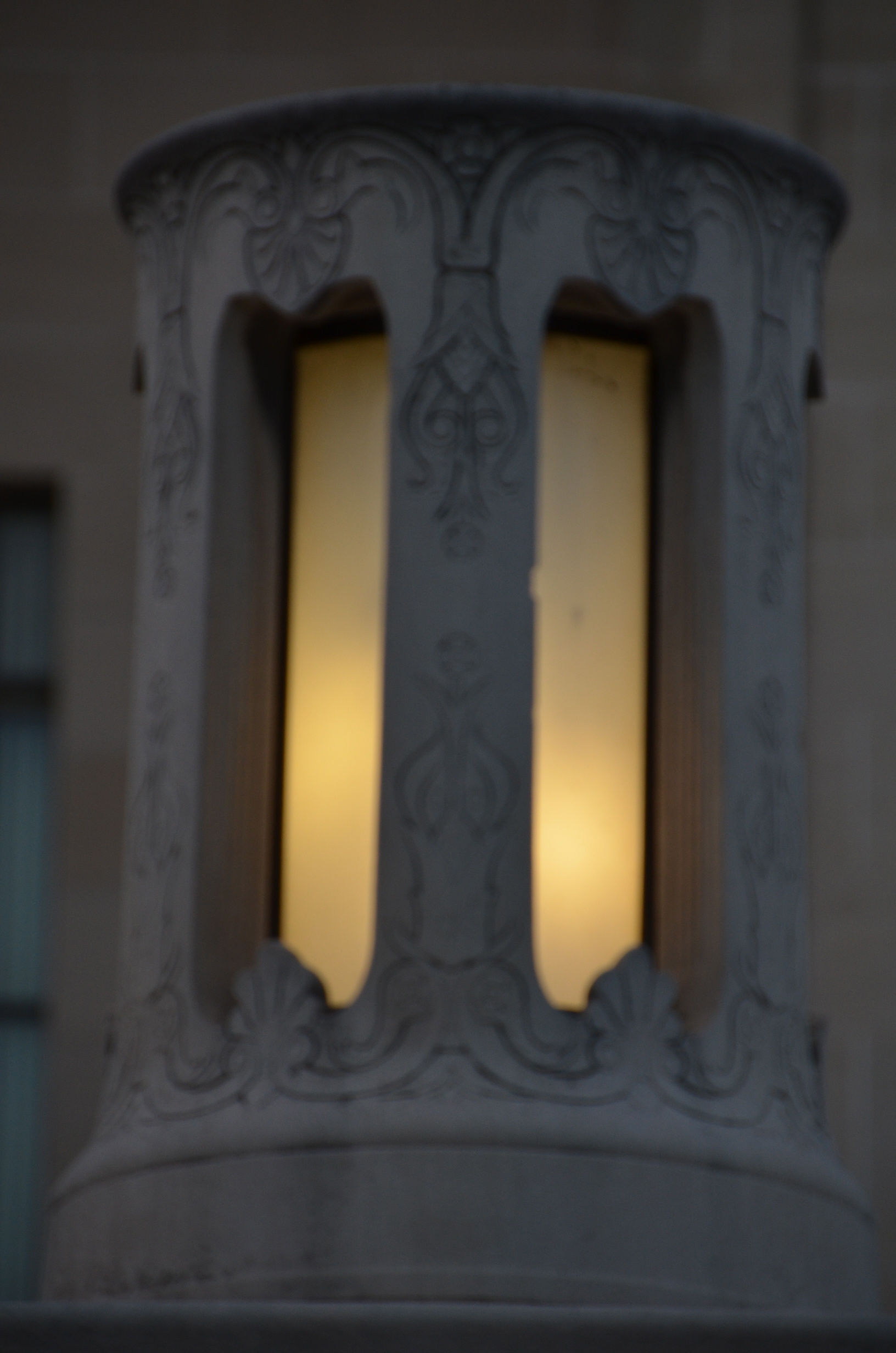
The original museum building is an architectural treasure.  Designed in the neoclassic style by Wight and Wight architects, it was completed in 1933.  Even the exterior lighting displays the grace of the design.

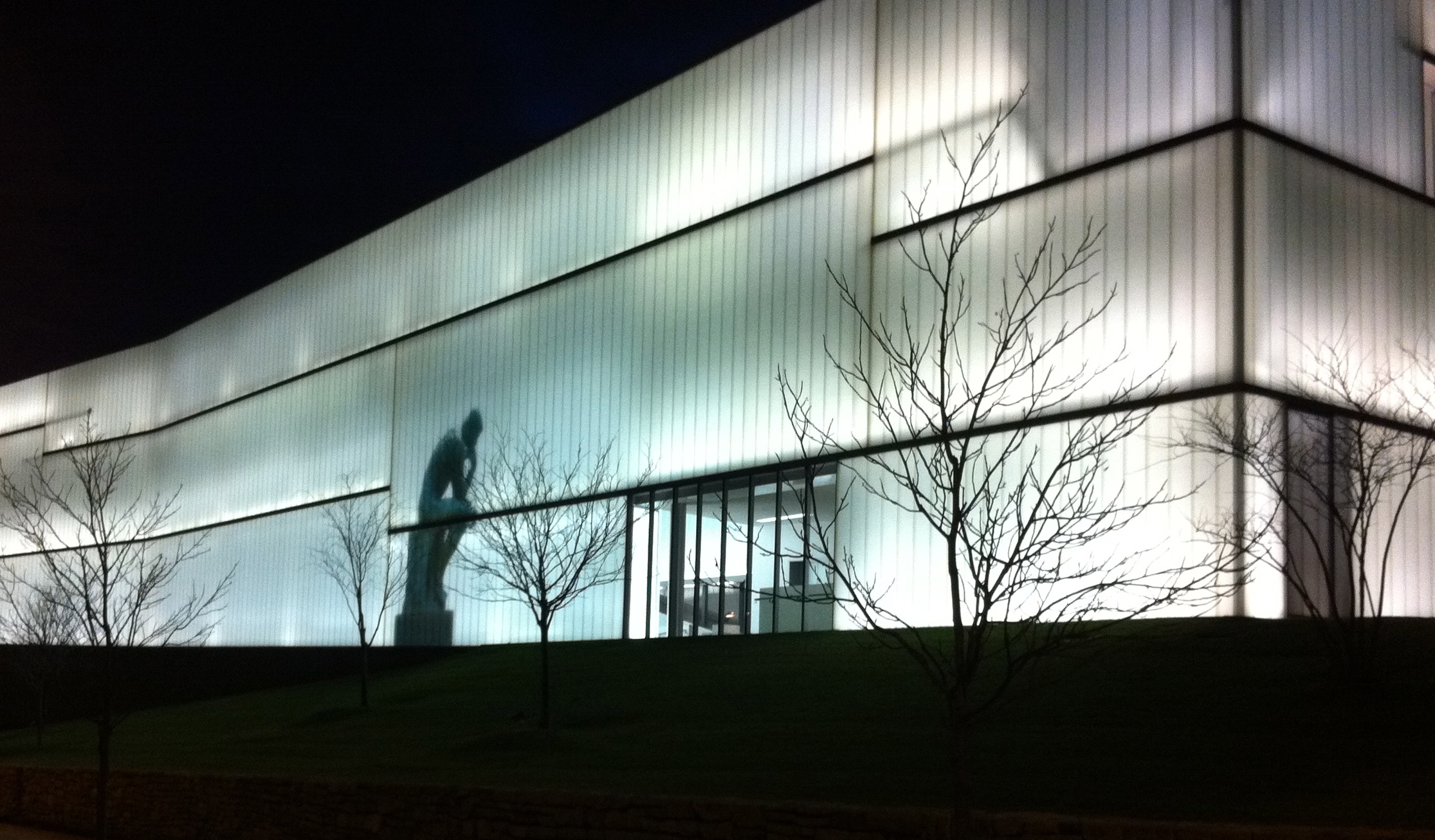
When the decision was made to expand the museum, the project was awarded to a renowned contemporary architect, Steven Holl.  He created a building strikingly different from the original museum; focused on fusing light, shadow and water.

Not to be ignored is the artistic nature of the landscaping itself.  Pathways meander through the trees, encouraging visitors to explore the nooks and crannies of the gardens in search of the art spread throughout the park.

If you live in Kansas City, visit the gallery for an afternoon.  If you are from out-of-town, spend a weekend.  Enjoy!

Bug on a Tree

After Meg and Jake’s somewhat relaxed weekend with family and friends, they are back at work.  Meg is working crazy hours for a couple of months so she asked me to take primary responsibility for the blog in her absence.

All is not lost.  She did contribute a great photograph of a locust she took here in Kansas City with her Olympus camera. The scientific name for the locust is “cicada” or even more technical “cicadodea”.  But we all know them as locusts.  Whether cicadodea, cicada, or locust, it is, apparently, among the most widely recognized of all insects.

Shakespeare might have said, “a cicada by any other name” is still a funny looking creature.  So is its shell!