Who are the Lumbee and Who am I?

Who is my tribe?  That question has long fascinated me.  Family history research only takes me so far.  Now there is another tool in my search.  DNA testing.

Ancestry.com recently offered its  members a DNA test for a cost of $99.  In the blink of an eye, I paid my money and received a packet in the mail to begin the process. My saliva sample was sent back to Ancestry.com by return mail.   I now wait approximately 6 weeks. Then I will see whether a DNA test will actually help unlock the secrets of my heritage.

I have some experience with the power of DNA evidence.  Experts tell us they can determine from a saliva specimen, or blood or sweat, the one person in history who could have committed a crime down the block last Saturday night.  Seriously.  But can such a test tell me about my own past?  Can it tell me when my Mesle ancestors left France?  I don’t know?  Can it tell me whether I have Jewish ancestors?  I will see.

Can it tell me whether I am descended from the Lumbee tribe in the North Carolina?  Yes.  I think so. Why do I believe I can learn whether I am part Lumbee and what that really means?  Simple.  If I am part Lumbee, through Morris Teeter, my DNA should include markers distinctively associated with a Lumbee heritage.

But what is a Lumbee heritage?  I first heard of the Lumbees less than a year ago while researching my mother’s family line.  The tribal origins are unclear.  Lumbees are recognized as a Native American tribe by North Carolina but not by the federal government. They are not primarily descended from European stock–like all of my other known ancestors.  My Lumbee markers would almost certainly include evidence of Native American ancestors.  But my DNA could also provide some evidence as to whether the Lumbee tribe is pure Native American blood, or whether their ancestors–and  mine–are from a mix of races who created their own unique culture and ethnicity hundreds of years ago.

So, who is my tribe?  Does it matter?  Does it make me any difference to an understanding of who I am?  What about the Lumbee?  I don’t know.  But, maybe it does.  I will let you know when I figure it out.

____________________

Our blog does not represent the opinions of our family, our friends or our employers.

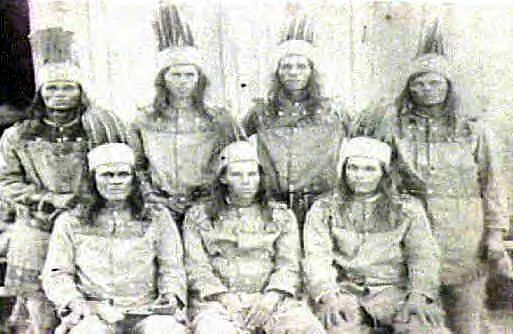
According to Wikipedia, the above photograph of members of the Lumbee tribe is in the public domain.

Meg and Jake are Back in Town

Nothing warms my heart more than Meg’s presence in my town, my house, and my car. Hanging out, talking about life, work, and the challenges of both, are the basis of solid bonds.  Despite the sudden cooling of the weather around me, my heart overflows with the warmth of Meg’s presence.

Meg and Jake were in town for a brief visit in the midst of their frantic lives.  Visiting Kansas City for a wedding they made full use of the weekend with visits with family, friends and elderly relatives (no, I don’t mean Terry and me).  They kept a schedule almost as busy as if they were working back in California.  Much of the weekend was fun, but it was fun with a purpose. Because of that, the luxury of lunch on the Country Club Plaza was our special time, just the two of us enjoying a gorgeous afternoon. We shopped for clothing to spiff up her wardrobe, focused on outfits that she can transition from office to work related social events to casual weekend outings.  Our friend, Martha Jane, now works at this great little shop we learned might have clothes for Meg’s needs.  Her expertise made this a fun and successful adventure. But no, the glittery gold dress was not among our purchases. Friday we attended a wedding of Meg’s friend from UMKC Law School.  While scheduled for the Rose Garden at Loose Park, the weather, particularly the remnants of Hurricane Issac, had other plans.  It rained all day, forcing the wedding inside.  Californo’s, in Westport, efficiently transitioned the reception area to a wedding venue and back to a reception hall in record time.  The bride looked great, we had a fun evening and our parks and gardens got much needed moisture. Friday was a record day for “views” on our blog.  We didn’t understand it until Jake explained that he used our blog as the equivalent of an old-fashioned scrapbook, showing his family photographs from their travels and California adventures.

Ultimately it was time for their return to Petaluma.  I will miss them, but it is a happy sadness, knowing that their lives, and ours, are rich and full of adventure.

Living In the Midst of a Utopian Community

My grandfather, Frank Carl Mesle was born in Buffalo, NY on March 18, 1884 and died in Sherrill, NY on August 24, 1964.  His parents left Germany three years before his birth.  His father, Franz Mesle, died when Frank was 9 years old.  His mother, Kate Kirsch Mesle raised 4 children alone.

He had only a limited education when, at age 13, in 1997, he was hired to be an errand boy by Oneida Community, Ltd.  It changed his life forever.  By age 16 he was a plant foreman.  In 1914, when the company moved its headquarters from Niagara Falls to Sherrill, NY, Frank was one of many employees making that move.  In 1915, my grandparents moved into their house, just up the hill from the plant, where they lived until their deaths.

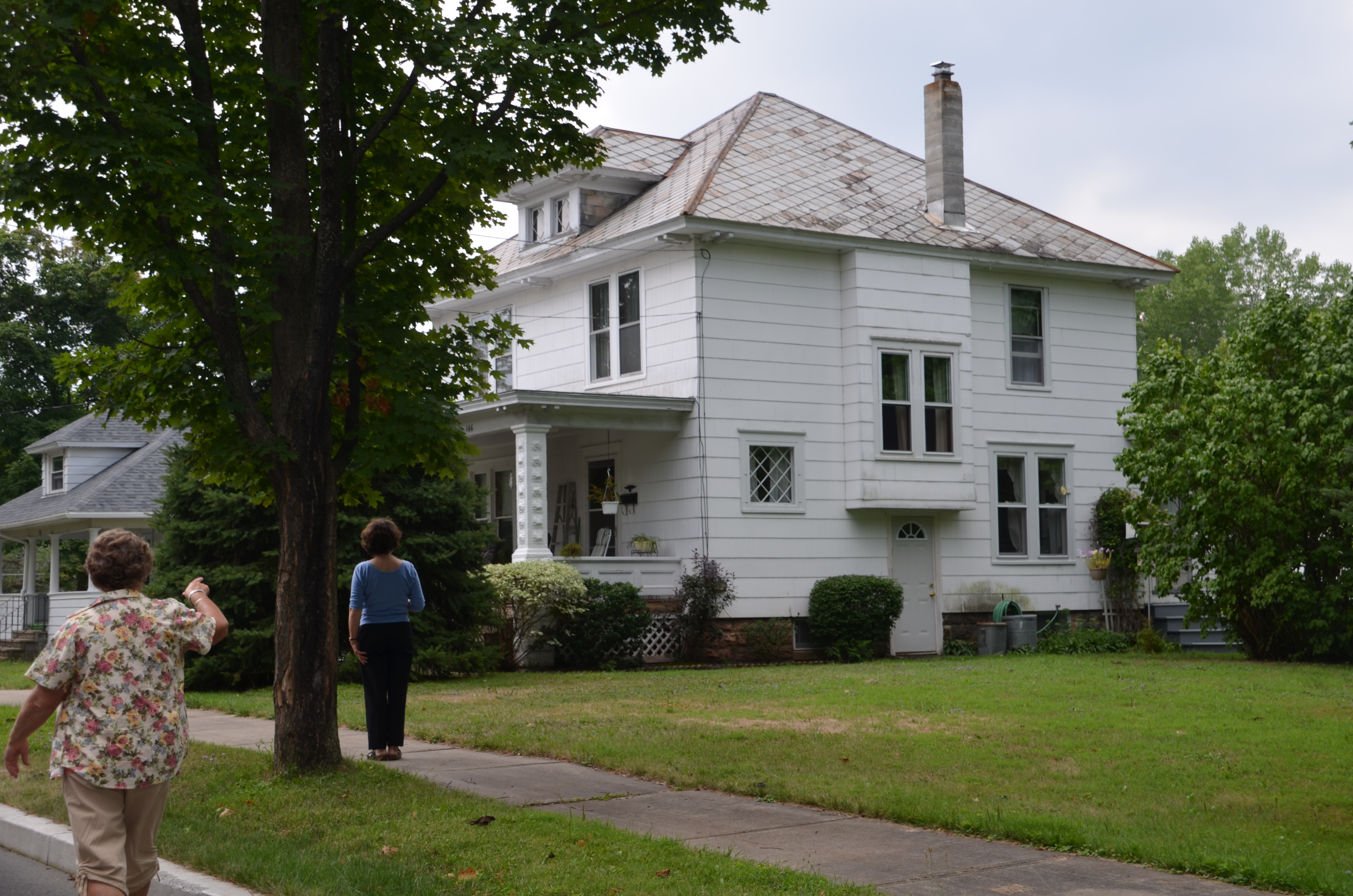
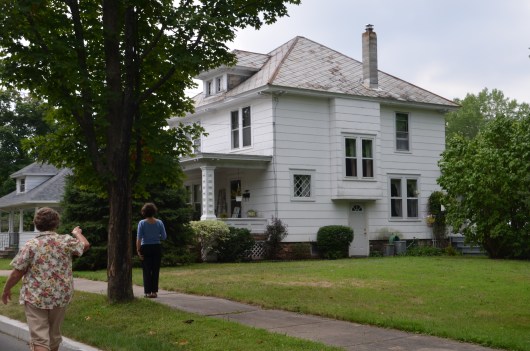
Because our “cousins trip” to New York was focused on family history, Sherrill was one of our primary destinations.  All the cousins remember happy visits to Sherrill, wandering the streets in and around their home at 166 Willow.  We visited again in July, 2012.  The house looked the same as it looked  on my last visit 50 years ago.
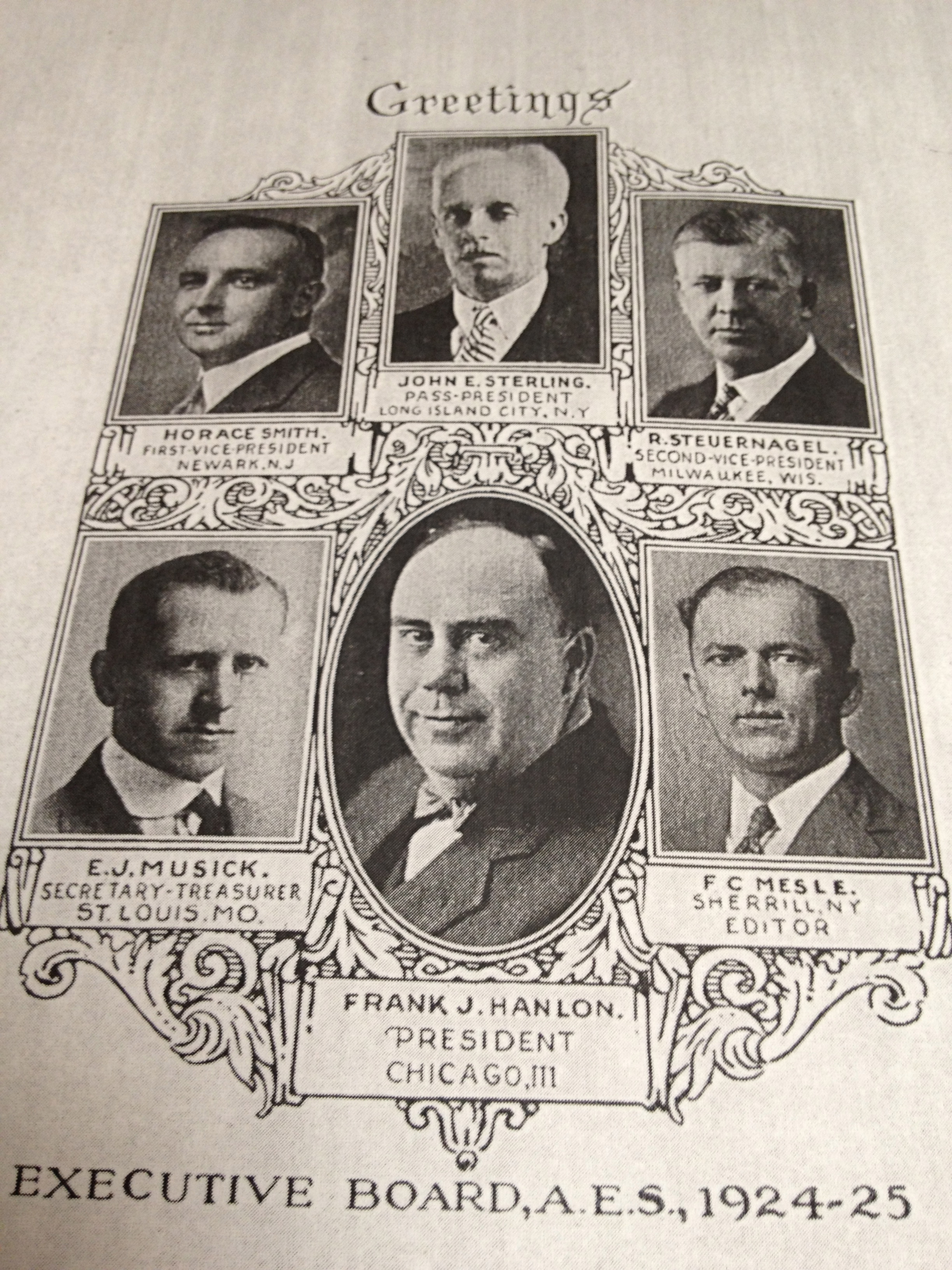
Frank was a pioneer in electroplating processes that revolutionized the production (and quality) of silver-plating.  Ultimately, he rose to the position of Superintendent of the Plating Department.  He directed silver plating of artillery shells in World War I and the silver plating of aircraft bearings in World War II.  He served as Editor of The Monthly Review and in 1926 became President of the American Electroplaters’ Society.  He received the Society’s Founder’s Gold Medal in 1929, 1938, 1940 and 1943. He received the key to the city of Toronto, Canada, during an international conference of electroplaters.

For many years Oneida, Ltd. was a major producer of high quality silver plate flat ware.  Ultimately, it became unable to compete with foreign products. My grandfather had a significant role in the company’s successes and would have grieved the company’s losses.
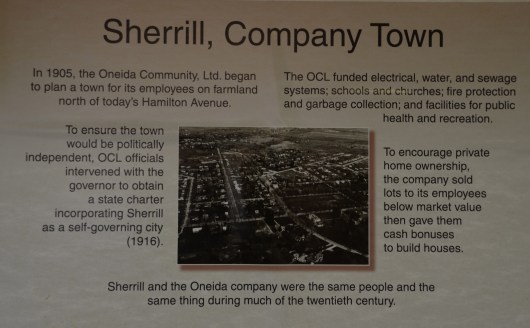
The company was good to granddad and he was good for the company.  When Sherrill became a self-governing city in 1916, he was elected to Sherrill’s original governing Commission.  In 1917 he was elected a member of the Board of Education of Sherrill’s public schools.  He was President of the PTA, Superintendent of Schools, Counselor to Boy Scouts and a member of the Library Board.  He was a charter member of Sherrill’s chapter of the Masonic Order and an ordained minister.  He was recognized in the American Men of Science and Who’s Who in American.  He was given the key to the city of Toronto, Canada and was featured in the “Leader’s in the Industry” edition of the Journal of the American Electroplaters’ Society.  He never spoke of these accomplishments.

The above is really just statistical information about a man.  What matters more to me are the factors that shaped the family we are today.  My visit to Sherrill gave me some insight.  When we toured the Community’s Mansion House, the Curator of the Mansion House, described the values of the Oneida Community in words I remember vividly as the morality lessons and beliefs I learned as a childhood.   Granddad joined Oneida, Ltd. just 16 years after the end of the utopian experiment.  By then the radical ideas of the community were in the past. The commitment to working toward perfection on earth continued.  The company–and my granddad–tried to create an environment that provided a high quality of life for the Sherrill community.  If unable to achieve perfection, perhaps, however briefly, they created their own “Camelot”.

Oneida Ltd’s values, and my grandparents’ values, focused on religion, academic achievement, commitment to healthy living, love of music and the arts, hard work and the equality of the sexes. My grandparents’ early letters evidenced their belief in the equality of the sexes. Granddad’s commitment to education resulted in his educating himself as an adult so that he became widely recognized as a scientist and chemical engineer.

The utopian community emphasized that members of the community, and the company, should share the successes and failures of the community.  Oneida, Ltd. embraced this concept by insisting that top management share financial successes and hardships with laborers; taking pay cuts during economic downturns and receiving salary increases only when workers received them as well.  My father still advocates that during economic downturns companies should share available work so all employees will keep a portion of their income.

In supporting the community, Oneida, Ltd. contributed significant resources to develop a park, school, tennis courts, and recreational activities.  The company even created a “swimming hole” in the stream so kids would have a place to swim.  It is still there today, less than a block from our family home.

The values of the community formed the essential elements of my father’s and my grandparents lives.  They dedicated their lives to community, God, and family.  Granddad served on the boards that provided for Sherrill  what the Utopian community believed were essential prerequisites of a “perfect” life.  My grandmother, Mary Lewis Mesle, was also active in the community, was a prolific writer and correspondent and was, like her father before her, active in temperance organizations.  My dad shares all those goals and traits.

The Oneida Community’s utopian experiment ended just 16 years before my grandparents joined the company established by its former members.  As we drove through Sherrill I was overwhelmed with the understanding that the best values established by a utopian community in the mid-1800’s continue to influence the lives and personalities of the people of Sherrill and my own family.   I am grateful for it.

Rejoice! The Mesle Family Welcomes Nora Parker Mesle

Welcome to the family, Nora Parker Mesle (Parker).  This is another exciting day for the family.  Parker entered the world early last night. Weighing in at a healthy 7 lb 12 ounces she is already surrounded by the love of her mom and dad, Abbey and Mark, and her paternal grandparents, Bob and Barb.  I can only assume Abbey’s parents are there as well, full of joy and excitement with the rest of us.

News is a little sketchy.  Parker was born in Chicago.  Bob and Barb had a long drive from Lamoni, Iowa to be there for her birth.  The word we have is that Parker and Abbey are healthy and the family is exhausted.

We are excited about the arrival of this youngest Mesle.  Surprised, no.  Delighted, yes.  We all knew Mark and Abbey were full of life and hopes for the future when we saw this great smooch in pictures from their wedding on the beach of Belize.

Dear Parker, you are one lucky young lady.  Your mom is a warrior princess and your dad is the kindest person in the world.  There are so many great stories you will hear as you grow up.  You will be loved and nurtured by your wonderful parents, grandparents and all your family.  I guarantee your cousins, and all of us, are eager to meet you.

Mark, Abbey, and Parker, we love you all!!

Drought and our Corn Crop

Surely just about everyone is tired of reports about the drought throughout much of the U.S.  As the political campaign heats up, news of the drought slows down.  Politics are exciting.  The drought is not.  None of us will be without food this winter because of the loss of corn, soy beans or other agricultural products.  After all, our grocery stores and neighborhood markets have plenty of fresh, nearly-perfect corn for our summer picnics and barbecues.  Right?

I have been reading about the drought for some time, and have watched as the bushes, trees and grass in our neighborhood have gone dormant, or simply died.  When Terry and I were at  the car wash–of all places–we entered into a conversation with a crop insurance adjuster who gave us a real life view of what this all means.  He explained he was getting his car washed because he is working 15 to 18 hour days driving from farm to farm to identify the percentage of the corn crop already lost to the drought. He estimates that in his territory (the exact perimeters of which are unknown to me) farmers have lost an average of 75 % of their corn crop.  He worries the soy bean crop is next.  While his statistics are not unknown to others, it presented me with a testimonial that is far more compelling because it is based on this gentleman’s real life experience.

In addition to describing the statistics, he described that the farmers are plowing their crops under or harvesting their corn and soy bean crops as hay.  When we drove to the Ozarks Friday, proof of his observations concerning the plight of the farmers was all around us.  Fields of corn were brown, from Kansas City to Bagnell Dam.  All along our route, fields have been plowed under, leaving only strips of corn a couple of yards wide.  This is consistent with his explanation that farmers with crop insurance are required to preserve sufficient patches or strips of corn and soy beans to allow crop adjusters to evaluate the farmers’ losses?  It is a tragedy to behold.

In addition to the huge toll on the farmers, as a result of skyrocketing grain prices, livestock sales are at an all time level.  Some cattle ranchers are selling off their herds because they can’t afford to buy adequate corn to feed their cattle. As a result, meat will also become more expensive.

While some farmers on the coasts have bumper crops of corn, they may be the only beneficiaries of the drought.  Consumers throughout the country face significantly higher prices at the grocery store for all corn-based product, soy products and beef.

Those most seriously impacted by this drought are likely to be those in the poorest nations that are often the same nations that  constantly face famine or near famine.  While there are areas of the world where harvests are bountiful, overall, there will likely be significant reductions in food aid.  Record high prices for corn and other products as well as a lack surplus crops for export will hamper the efforts of government and charitable organizations that traditionally help those worldwide who face the greatest need.

The tragedy associated with this drought only begins to be felt here in the midwest in August. The long-term repercussions may be far more dramatic here and worldwide.

________

The opinions in this post are not the opinions of our families, our friends or our employers

A Lazy Day on Martha’s Vineyard

At the end of my “cousins trip” I met my husband and friends on Martha’s Vineyard.  The only way to get to the island is by ferry, private boat or plane, or Cape Air.  Visitors should only fly Cape Air if they have absolutely no schedule, since Cape Air’s schedule is as relaxed as the island.  We took Cape Air.

We had absolutely nothing to do for the weekend, but–to do nothing.  The company was great, the environment was soothing to the soul.  Martha’s Vineyard is all about being lazy.  And oh, we did that so well.  On the island, it seems that no one is in a hurry.  The boats are slow, the birds are tranquil and the need for speed seems nonexistent.  Even the critters are calm.  We found this old chair sitting abandoned on the beach.  apparently the owner just wants it there in case s/he comes by and wants to sit.  The bicycle seemed to be the same situation.  I did not see any children anywhere nearby. Perhaps the islanders not only live a relaxed lifestyle, but also a trusting one.

Boats are everywhere, but canoes, trawlers and similar low speed boats are preferred to power boats.  And like everything else, there seems to be a casual attitude about guarding one’s possessions.  I suspect nearby clam diggers may have been responsible for this boat.

While life is casual, laid back and relaxed, food, especially lobster, is serious business.  There is nothing better than fresh lobster, fresh corn and key lime pie shared with friends.

Hope you have a great and restful weekend.

For Aunt Kathie

Aunt Kathie is Lily and Cousteau’s “Aunt” in Kansas City. Kathie is a greyhound rescuer, REGAP volunteer, and foster mom. She was Lily’s foster mom before we adopted her, and she has since adopted the name “Aunt Kathie” since she sat for our kiddos often when we lived in Kansas City.

Well, Lily and Cousteau have been running around the house “naked” lately (meaning, without their collars), and Aunt Kathie wasn’t very happy about that. SO, being the good mommy that I am, I have put their collars back on.

Aunt Kathie, this one’s for you!

For those of you who are not familiar with greyhounds, they are absolutely the sweetest and most loving dogs I’ve ever known. They have very difficult lives while in the racing industry, yet still make amazing companions despite their hardships. Please consider rescuing a retired racer. You can visit your local greyhound rescue group, or visit one of the following groups we’ve worked with: Kansas City REGAP www.kcregap.org, and Wine Country Greyhounds www.winecountrygreyhounds.com.

Cousin Trip–In the Shadow of My Ancestors

My Uncle Dick Mesle was the family historian.  Until I found family photographs, Bibles and other evidences of generations’ past, I had little knowledge of my family history.  For my parents, it was religion that bound us together as a family, not the ancestors whose blood flows through our veins.  But I have long wanted to know “who is my tribe”, where do I belong in this great world.  As a result, when I began to find windows into our family past, I was anxious to pursue them. I have done so from that day to the present, a quest that has continued more than 9 years.

I am not looking for lost treasures, nor am I interested in kingdoms or proof of nobility.  But I am fascinated by the values that unite us as family.  Surely family values, beliefs and even professional interests are likely to continue from generation to generation.  Bankers are likely to raise bankers, teachers are likely to raise teachers.

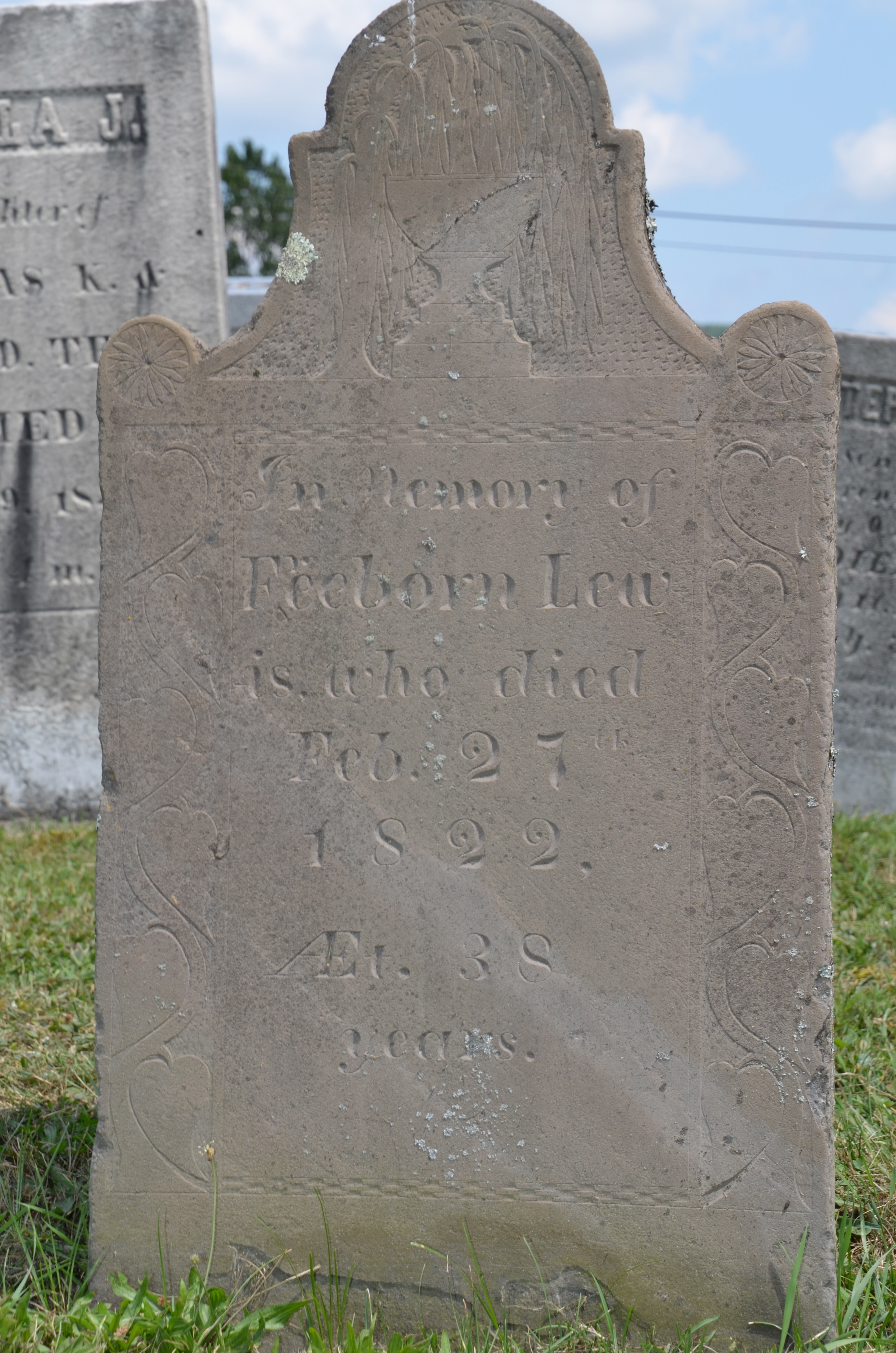
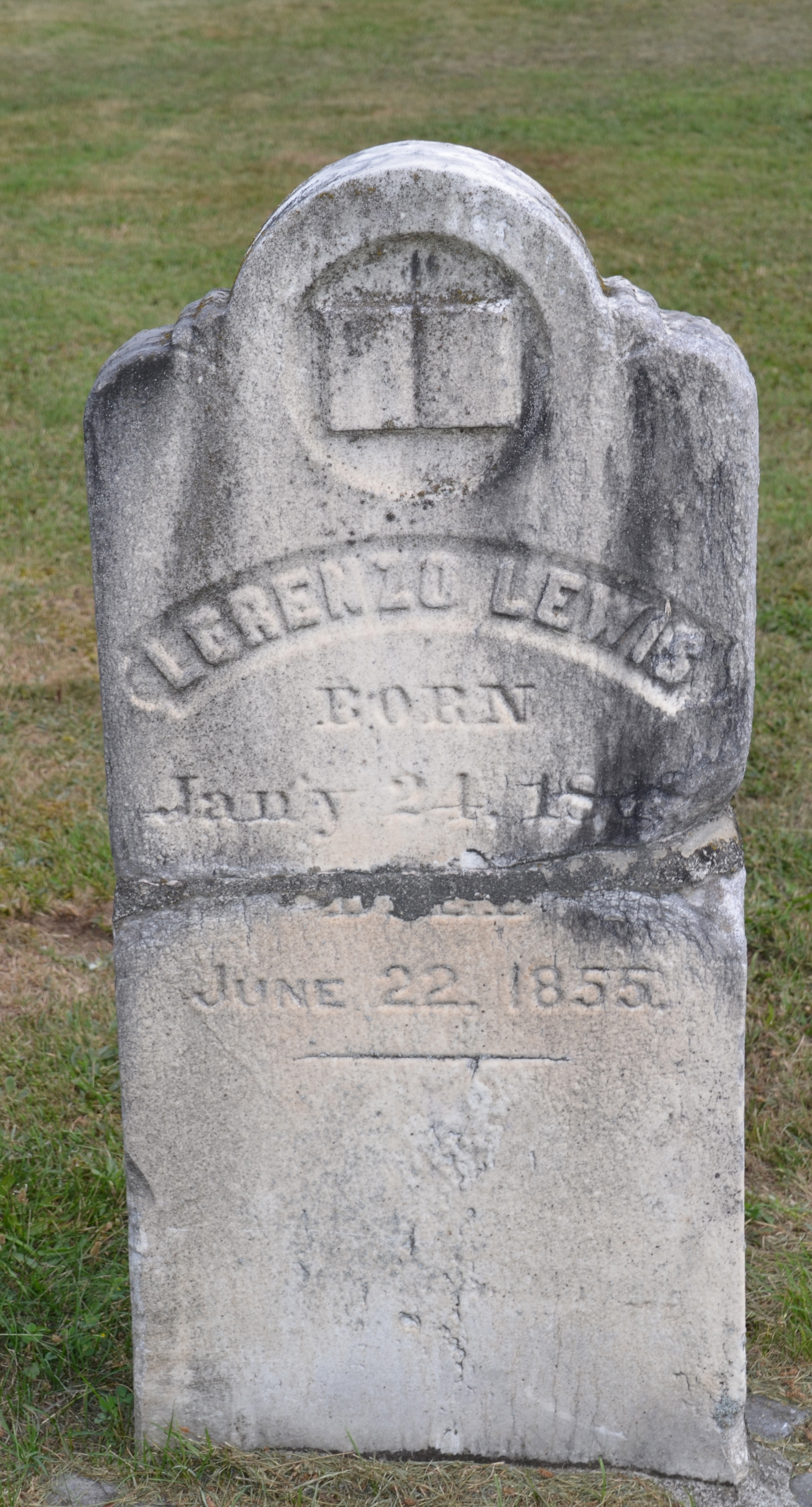
With my husband I have travelled to find where John Lewis was buried in 1691 under an asphalt patch of land in Westerly, Rhode Island.  Now my sister, my cousins and I have walked Section A of Mt. Hope Cemetery, in Norwich, NY.  Here rest generations of Lewis and Terry ancestors: my family.  While I can incorporate these photographs of their gravestones into my genealogical research, for now, the photographs themselves document the close ties that bound the family together in Norwich for more than 100 years.  Here are some of the ancestors I found:

Elnathan Terry (1758-1840): American Revolutionary Soldier.  Served under Captain Gorton, under command of Lt. Caleb Lewis.

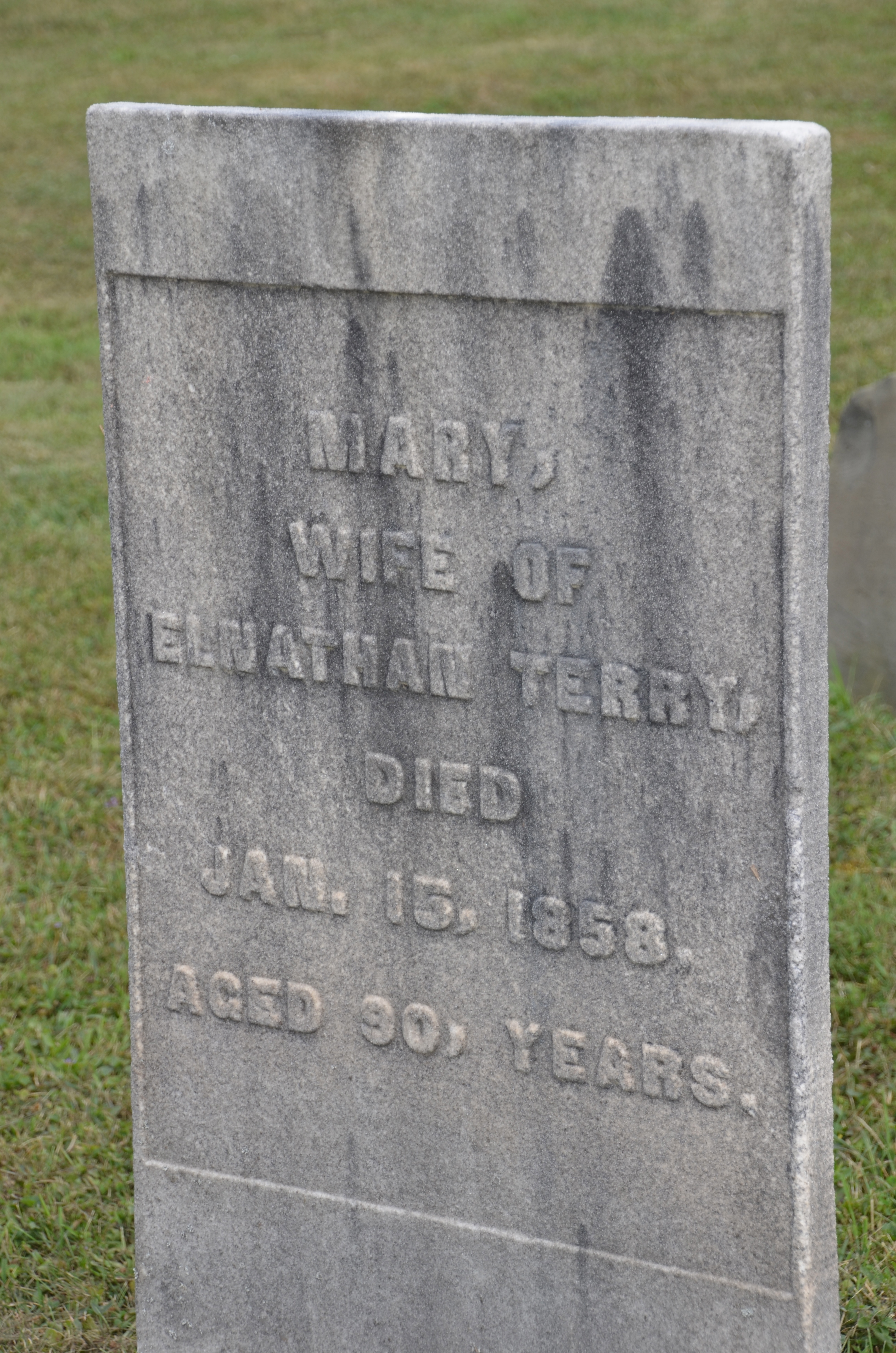
Mary Kinyon Terry (1768-1858): Wife of Elnathan Terry.  Mary is a direct descendent of Thomas Rogers, Richard Warren, Francis Cooke and John Cooke, all of whom arrived on the Mayflower.  Elnathan and Mary moved to New York before 1810.

Freeborn Lewis (1784-1822): Married Esther Terry (1787-1865) daughter of Elnathan Terry and Mary Kinyon Terry.  She remarried on Freeborn’s death and is buried in Little Sioux, Harrison County, Iowa.  Freeborn also moved to NY with other Terrys and Lewises by 1810.

Lorenzo Lewis (1808-1855) is the son of Freeborn Lewis and Esther Terry Lewis.  Lorenzo married Mary Ocelia Smith (1815-1879). Lorenzo owned a saw mill in Norwich. He died when his son, Horatio,  was only a year old.  His sons continued and expanded the milling operations.

Daniel Horatio Lewis (1854-1917):  I was elated to finally locate the tombstone of my great-grandfather, Daniel Horatio Lewis. He is the son of Lorenzo Lewis and Mary Ocelia Smith.  He married Victoria Belcher Lewis. He and his brothers Herman and Harris Lewis were in the lumber business, were builders, and owned and operated saw mills in and around Norwich. Herman and another brother, Willard, served with the Union in the Civil War.  Willard died of disease in a prison camp in New Orleans in 1855.

Horatio was also a temperance lecturer.  Victoria was a teacher.  Horatio and Victoria moved with their family to Boston and ultimately moved to Sherrill, NY where they died.  They are buried in Norwich in the Lewis family plots.

After years of research, Mt. Hope Cemetery in Norwich was a wonderful day of discovery.  All along the way, i was aided by the ground crew of the cemetery, who were gracious and enthusiastic about our adventure; and abetted by my sister and cousins, who seemed to thrive on every discovery as much as I did.  A quest, an adventure and a bonding experience.

Oneida Community–Where Giants Walked

“Where giants walked”.  Those are the words our tour guide, the curator of the Mansion House in Oneida, New York, used to describe the Oneida Community.  Disbanded more than 120 years ago, the community grounds still emit a feeling both vibrant and tranquil.

I didn’t know what to expect when the “cousins trip” arrived in Oneida.  What we found far exceeded even my enthusiastic expectations.  We spent a night in the Mansion House where our rooms were simple but lovely.  The environment was so much more.

The Oneida Community was founded in the belief that individuals can become free from sin while still here on earth.  Beyond their religious aspirations, their practical reality involved a focus on hard community labor, culture, music, art and literature.  These values resonated throughout the community.  Beautification of the grounds of the Mansion House and of the surrounding community are evident today.

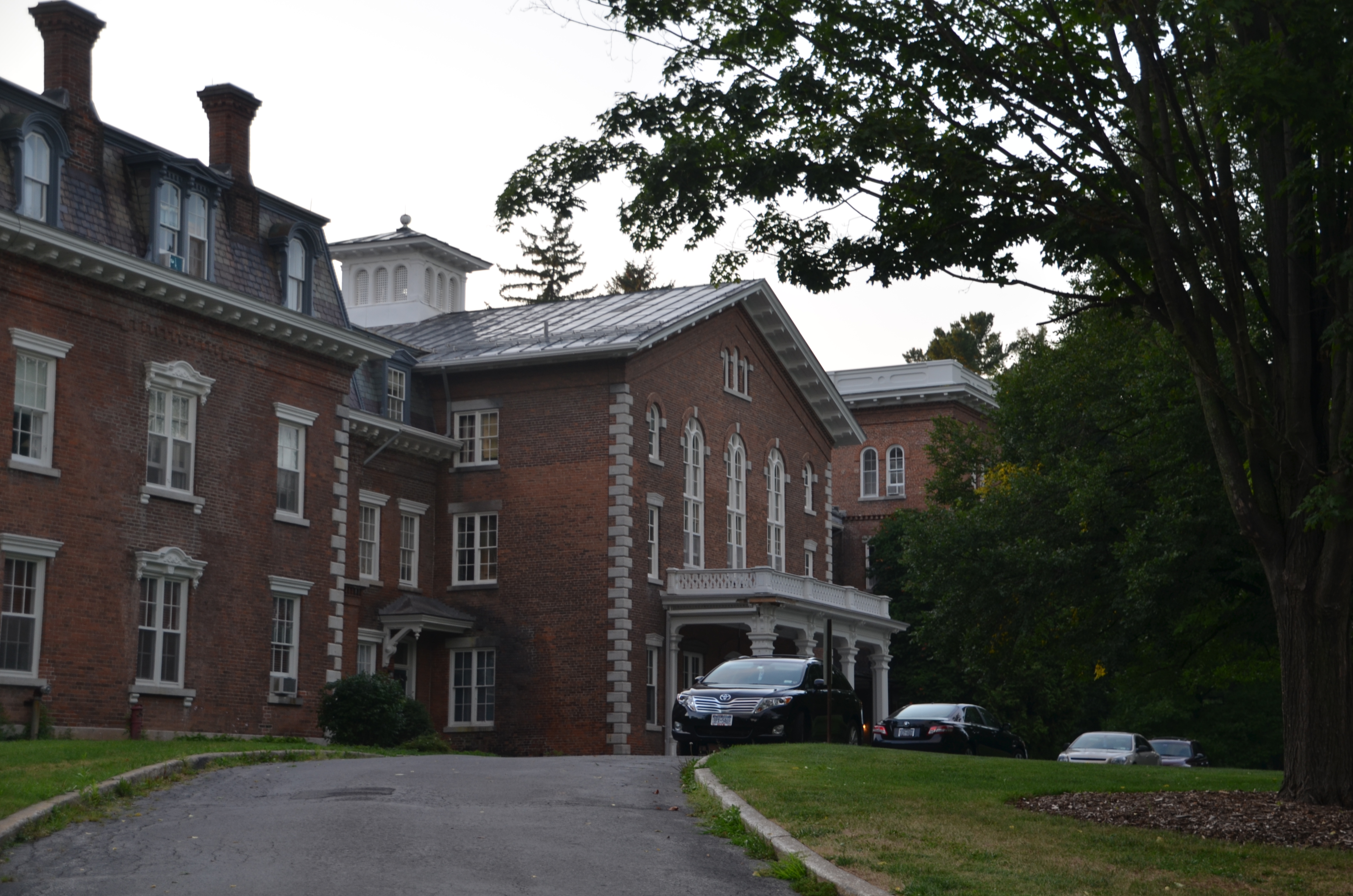
While much of the Mansion House is plain, befitting a society based on de-emphasizing private property, there was an emphasis on beauty of the common areas.  The great hall that was a central meeting area demonstrates the community’s commitment to perfection in its culture and art.

The grounds are lovely, incorporating gardens, simple fountains and open areas surrounded by trees.


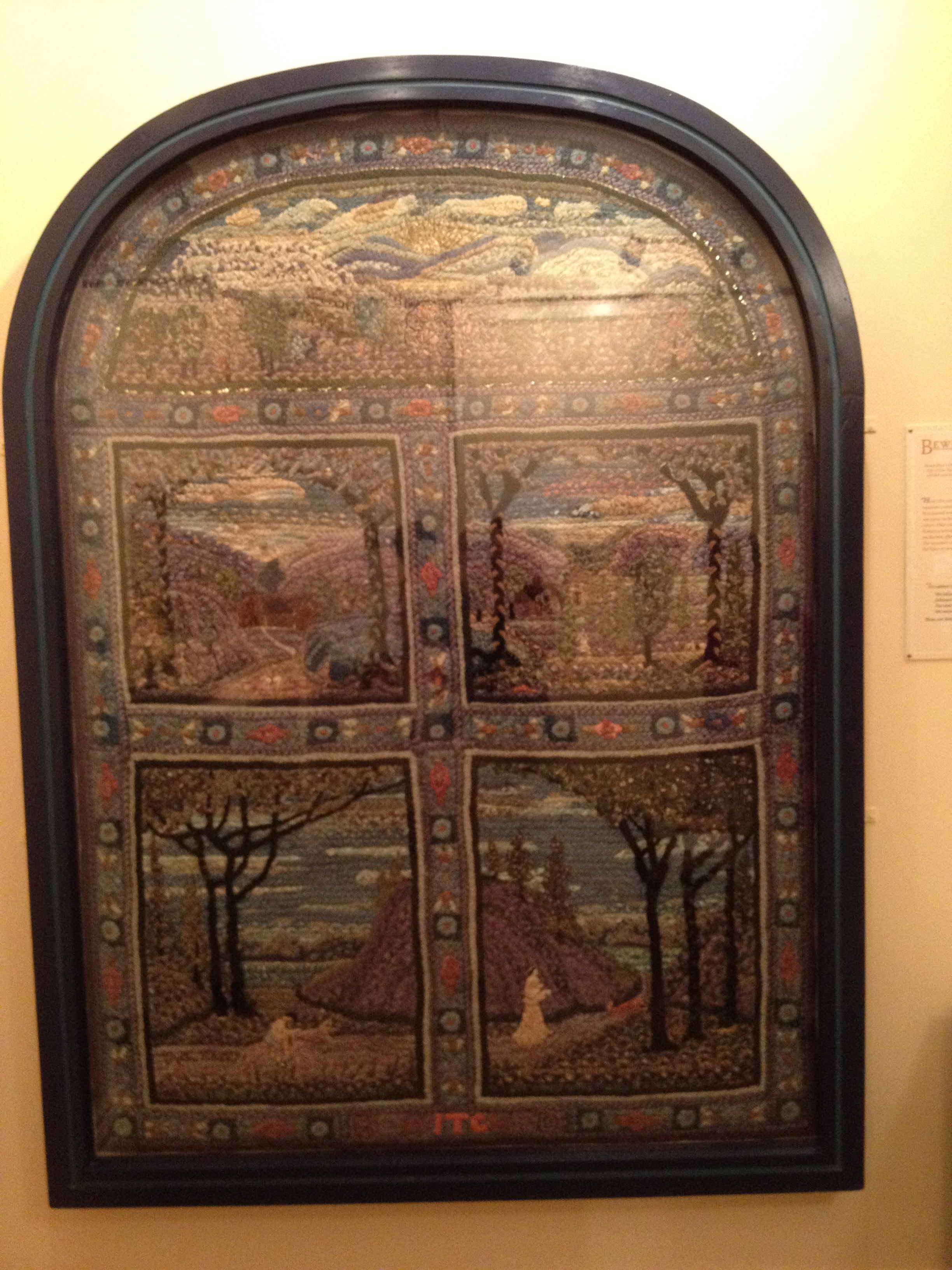
Artistic endeavors were encouraged.  The museum displays beautiful art such as this unique braided rug that are  wonderful works of craftsmanship.

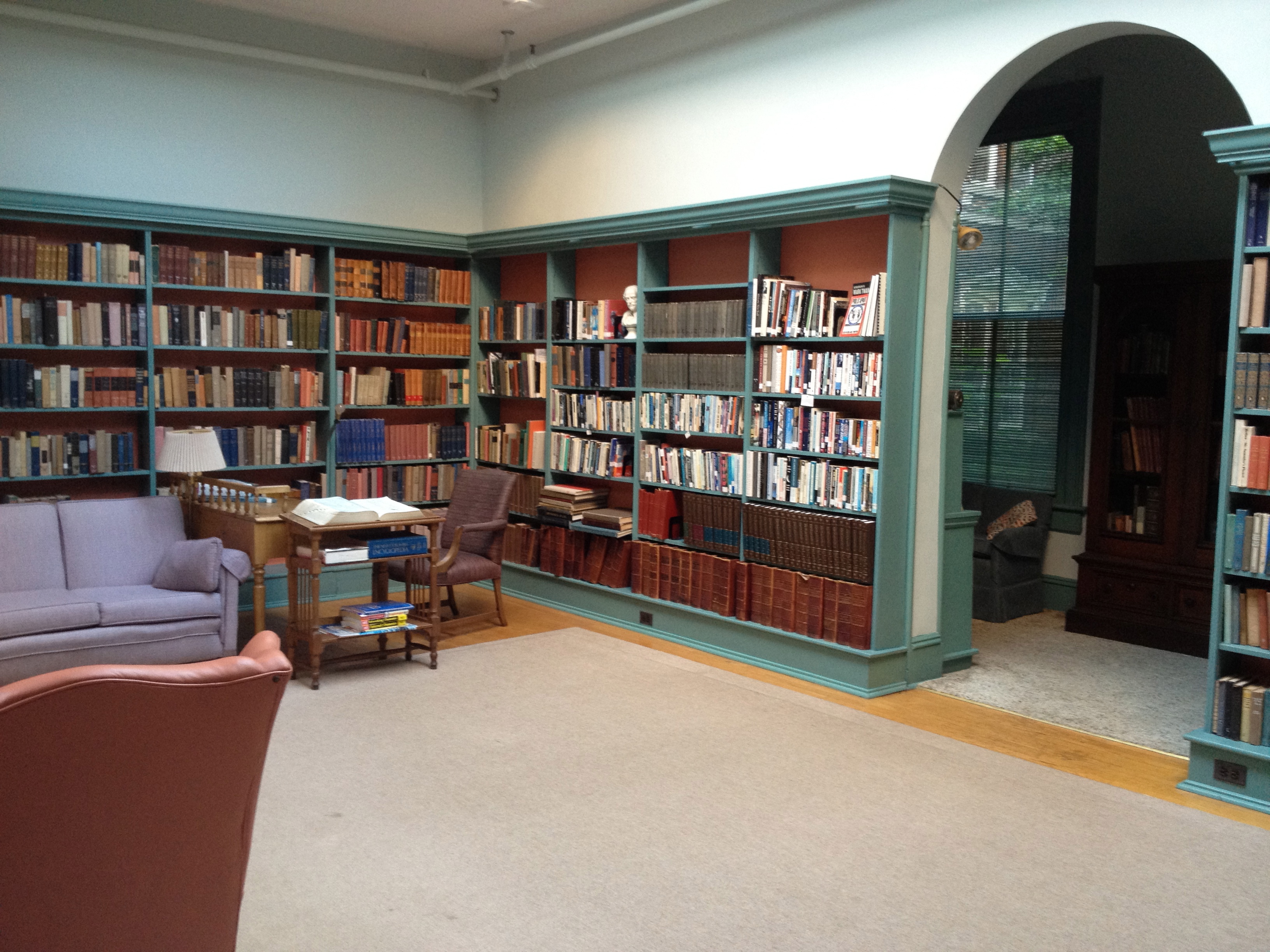
The library was a focal point of daily life, filled with books that were identified as incorporating all of the knowledge important to a learned community.  It remains a great place to visit and study.

While long disbanded as a religious community, descendants of community members continue to live in the shadow of the Mansion House.  While their homes are not elegant, they are as graceful, well-groomed and inviting as the people who live there.

Welcome to “Utopia”.

Oneida Community: From Utopian Community to Silverware Manufacturer

Founded by John Humphrey Noyes in 1848, the Oneida Community was based on the premise that individuals can be free of sin and perfect on earth, not just in Heaven.  The community practiced what has been described as “Bible communism”, in the sense that it practiced a form of communal property based on a belief that freedom from possessions facilitated achieving perfection.  At its peak, shortly before it dissolved in 1881, it had a membership of 306.  While the community has been disbanded well in excess of 100 years, descendants of the members continue to live in apparent harmony and grace in the shadow of the Mansion House, which was at the center of community life.

The Mansion House consists of a cluster of buildings sitting in a campus like environment where members of the community lived and prospered.

None of the members of my family were members of the Oneida Community, but it is, nonetheless, a part of what shaped our family values.  Because my  grandfather worked for the Oneida Silver Company, he and my father, aunt and uncle were surrounded by former members of the community and were constantly influenced by the best of its values: equality of the sexes, cultural advancement, education and hard work.

To facilitate the complete integration of women into the life of the community, women rejected the heavy petticoats and restrictive clothing of outside society and wore short, but modest, dresses over long pantaloons. Women were included among the leadership of the community. Men and women shared work duties, rotating among those duties so that each person shared in more routine and more specialized tasks, as well as sharing traditionally male and female tasks.

Criticism of members of the community was considered a significant aspect of the goal of achieving perfection.  Primary reasons for criticism were what was considered inappropriate “special love” such as love of a mother for her birth child that exceeded her love of the children of other women.  I am told that the unwillingness of the community to recognize the inevitability of close ties between a mother and her own child was one of the reasons for the downfall of the commune.  Victorian values in the outside world may have been another. Squabbling among members surely also took a toll.

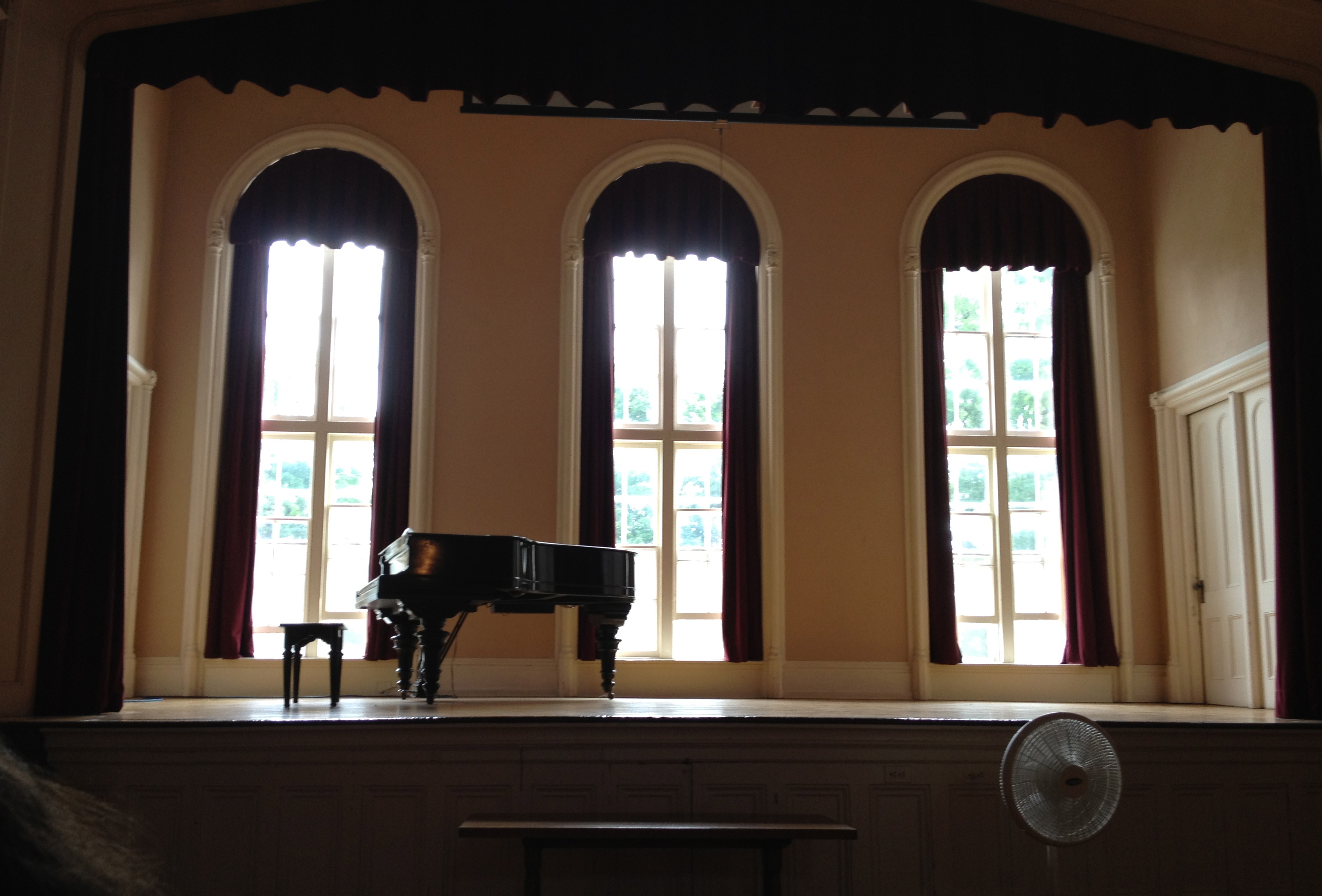
Pride, vanity were often the subject of criticism.  Individuals called for criticism by leaders of the community were expected to remain silent, accept the criticism and use the criticism as a means of furthering their efforts to obtain perfection. This lovely hall served as a center for cultural events, concerts, meetings but also the location for individual criticism.

For many years the community prospered due to its farming, silk and canning operations, but more important as a primary producer of animal traps.  After the commune disbanded the founders and their descendants remained closely connected financially and geographically.  By about 1899, the former members of the commune, under the leadership of P.B. Noyes, son of the founder, acquired a failing silver ware company. Oneida and its employees, including my grandfather, Frank C. Mesle, moved the company from Niagara Falls to Oneida where the company prospered through hard work and innovation.

Many utopian values were incorporated into the life of the company, particularly the concept of sharing wealth and sharing economic challenges.  Executives of the company were given raises only when raises were given to line workers. In periods of recession and depression, all employees shared the available work such that while their hours and their incomes were reduced, no one bore the overwhelming burden of difficult times.

The company reached the height of its financial success in the 1980’s but its revenues declined, and the company essentially disappeared, due to its inability to compete with foreign flatware.  But many of the best the values of the community continue to this day.  Literature, culture, music and hard work resonate throughout the community.  Beautification projects can be seen in Oneida and neighboring Sherrill, NY. even today.